Industrial interior design is more than just a trend. It is a celebration of utility and raw beauty. This style draws inspiration from old factories and industrial spaces. It turns “unfinished” looks into sophisticated environments.
Today, we see this aesthetic in urban lofts, modern offices, and even suburban homes. It feels bold yet welcoming.
DEFINITION
Industrial interior design style is an aesthetic that prioritizes the use of raw, unfinished materials like exposed brick, weathered wood, and metal elements. It emphasizes structural transparency by showcasing building components that are usually hidden, such as pipes and ducts.
Key Characteristics of Industrial Interior Design
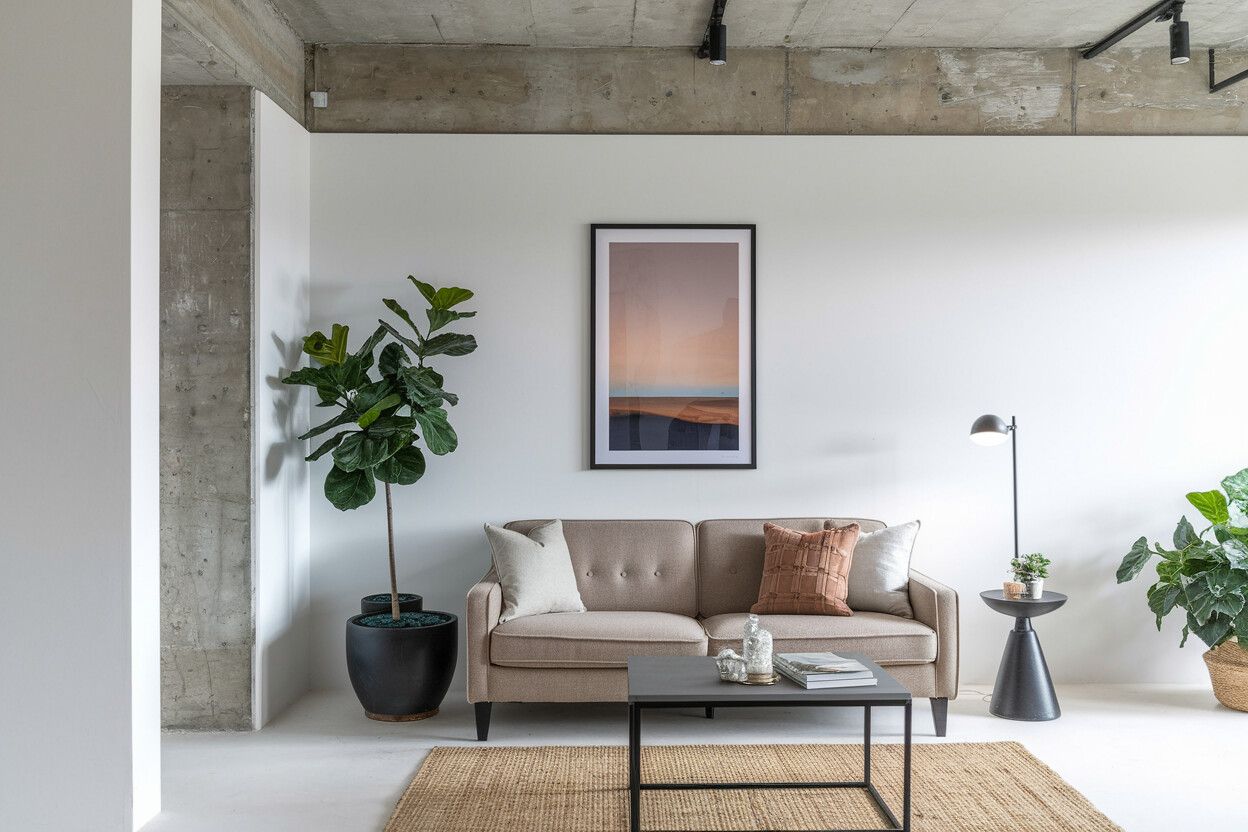
The soul of industrial design lies in its lack of pretension. It does not hide how a building is made. Instead, it highlights it.
Exposed Architecture
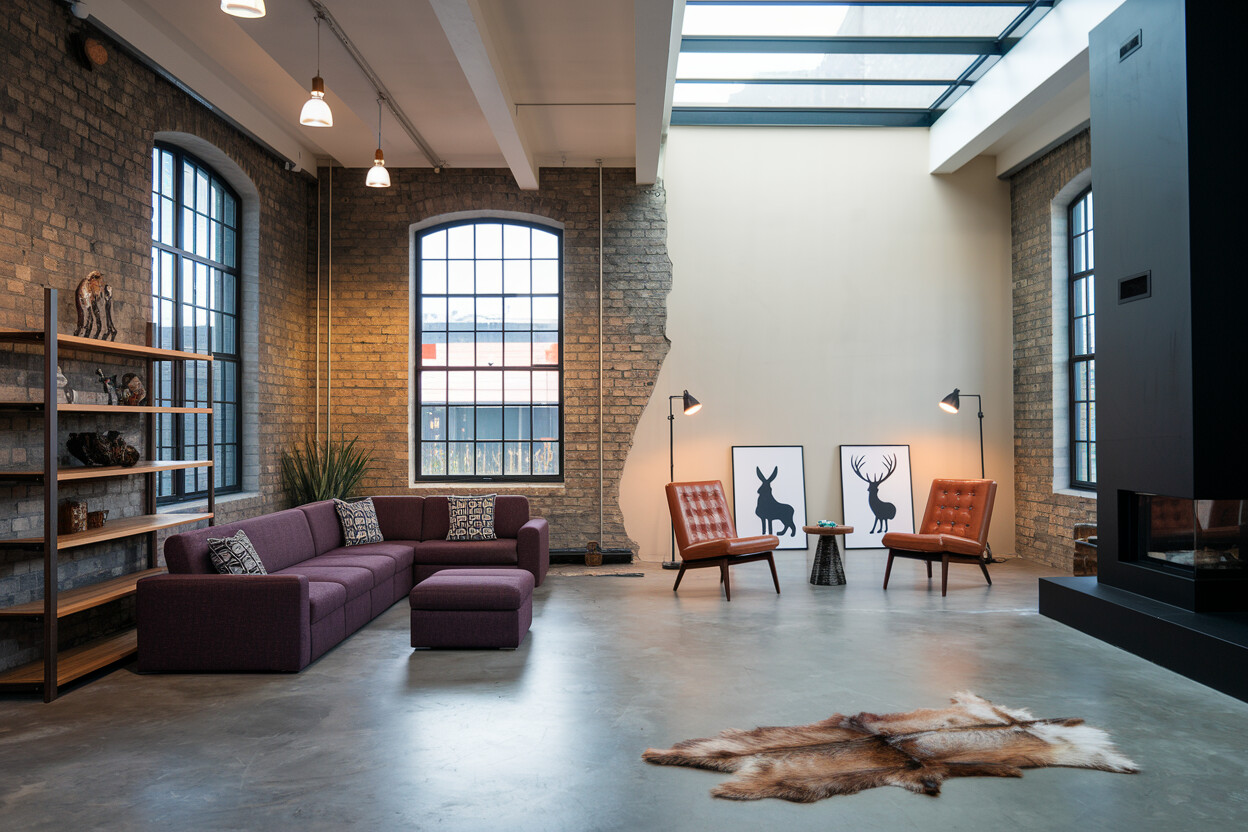
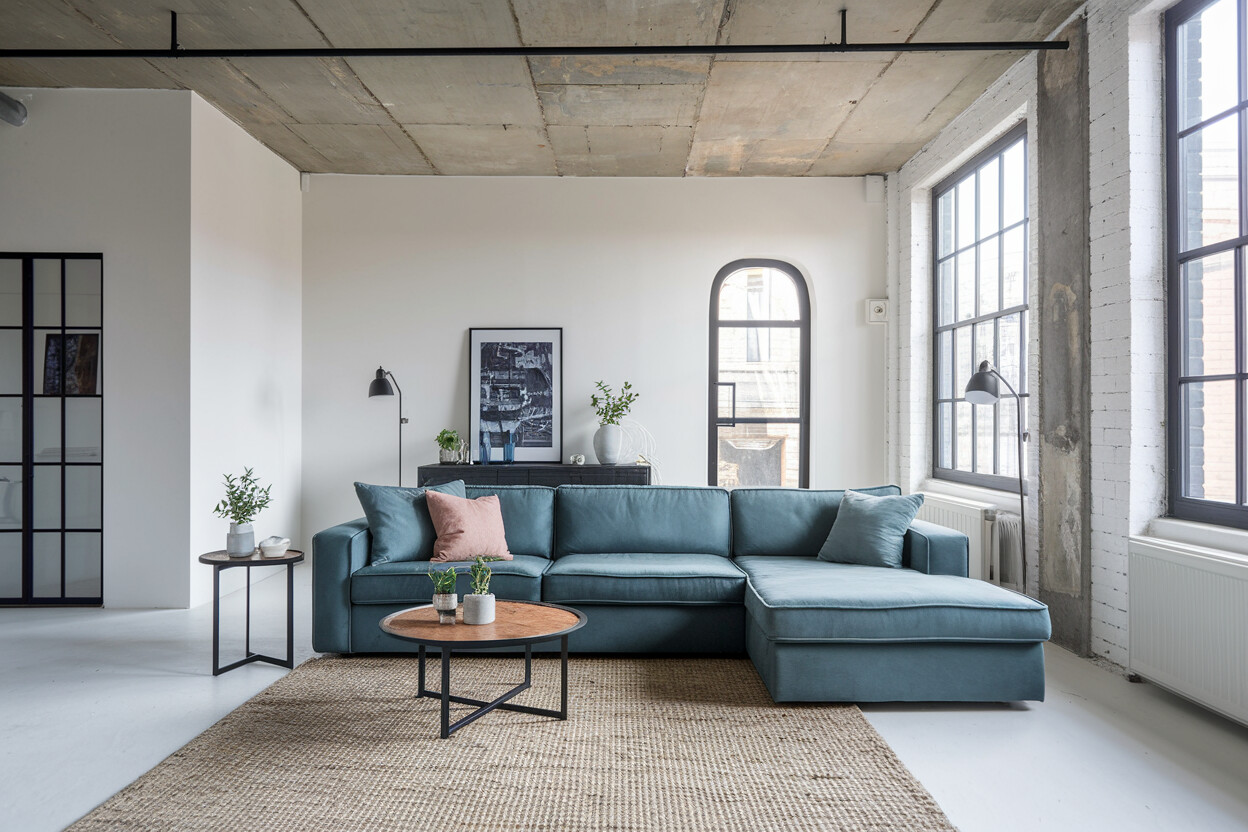
One of the most recognizable features is the exposure of structural elements. Think of brick walls and steel beams. In most styles, these are covered by drywall. In an industrial style home, they are the main attraction.
Material Palette
The palette is usually limited. You will find plenty of metal, specifically iron and steel. Wood is almost always reclaimed or distressed. Concrete floors are a staple. These materials feel cold but look incredibly textured.
Neutral Color Schemes
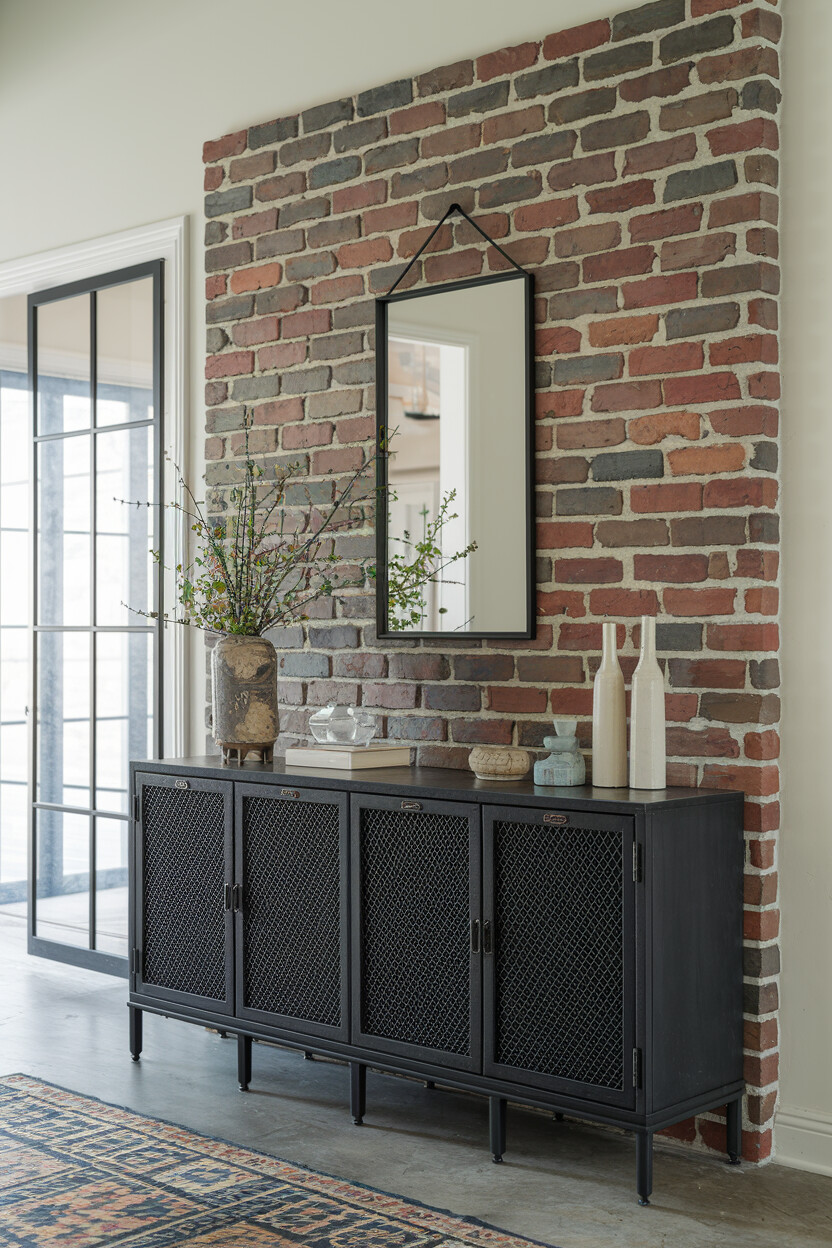
Color plays a supporting role here. Most rooms focus on shades of gray, black, and white. This allows the natural colors of the materials (like the red of brick or the tan of wood) to pop.
Why Is Industrial Style Gaining Popularity?
People are moving away from “perfect” furniture. They want things with a story. Industrial interior design offers a sense of history. It feels permanent and sturdy.
It is also a sustainable choice. Many people use salvaged materials for their projects. Upcycling an old metal crate into a coffee table fits this vibe perfectly. It combines environmental consciousness with high-end style.
Essential Tips for Achieving the Industrial Look
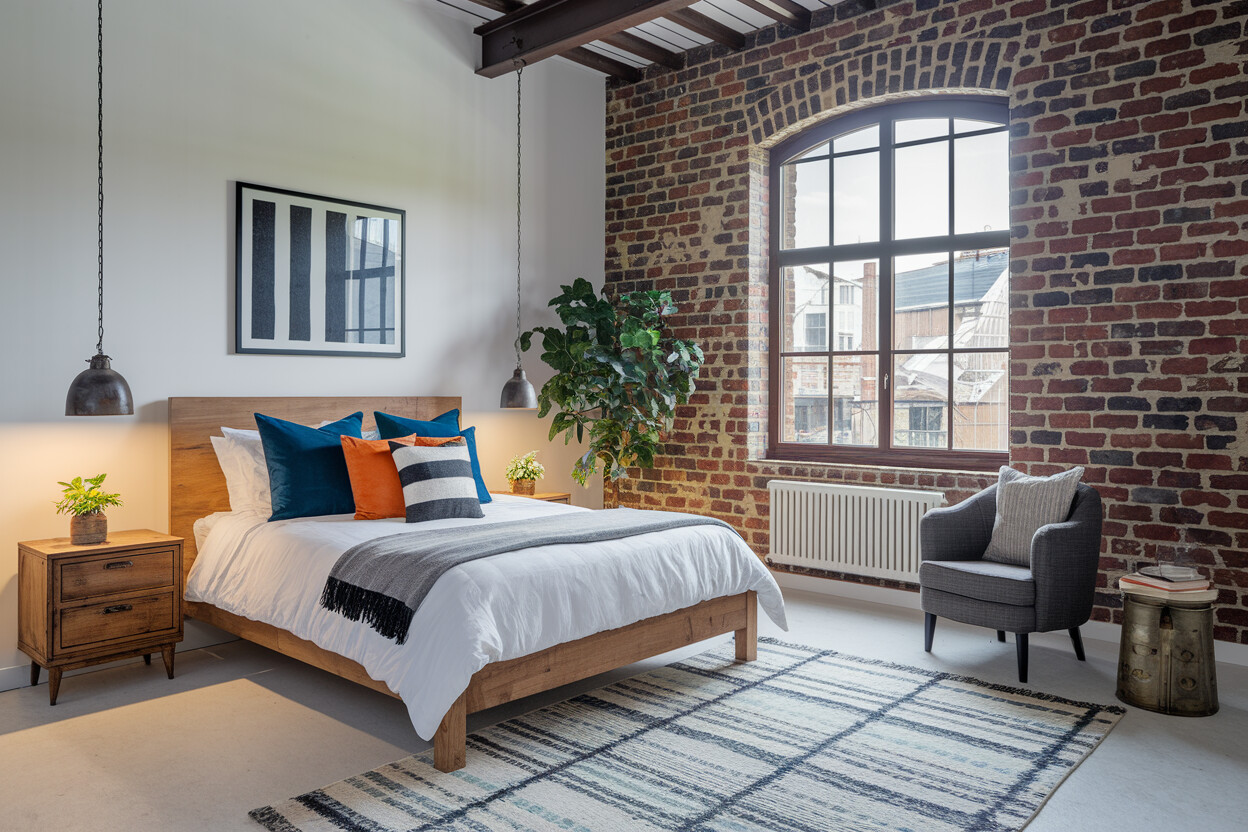
Starting from scratch can feel overwhelming. Here is how you can master the industrial interior design style in your own space.
- Focus on Open Space: Industrial buildings were large and open. Keep your layout airy. Avoid cluttering the room with too many small objects.
- Mix Wood and Metal: This is the golden rule. Too much metal feels like a laboratory. Too much wood feels like a cabin. The magic happens when you pair a heavy wooden table with sleek black metal chairs.
- Choose the Right Lighting: Lighting is the “jewelry” of this style. Look for Edison bulbs and cage-style pendants. Large floor lamps with metal finishes work well in corners.
- Embrace Imperfection: Do not worry about a scratch on the floor or a dent in a metal cabinet. These marks add character.
Examples of Industrial Interior Design in Practice
Industrial Kitchen
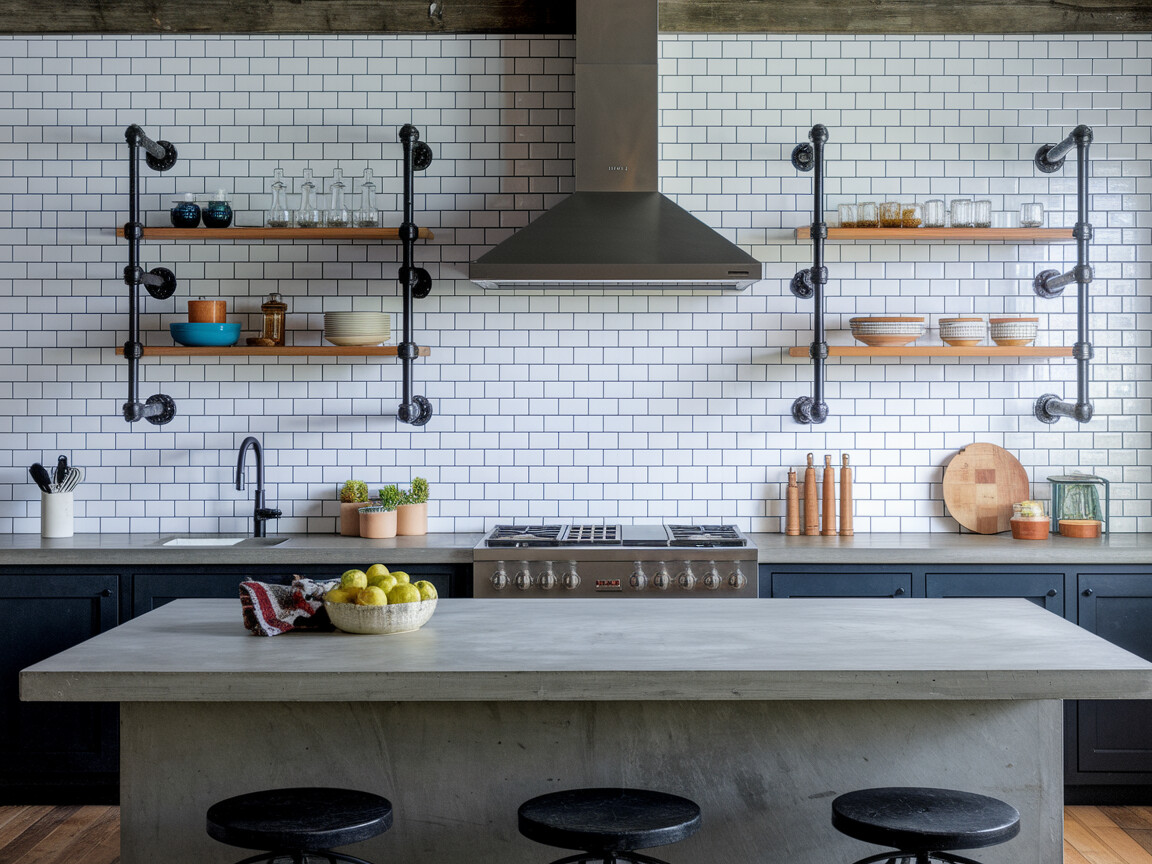
Imagine a kitchen with open shelving made of black iron pipes. The backsplash is classic white subway tile with dark grout. The island features a thick concrete countertop.
Industrial Living Room
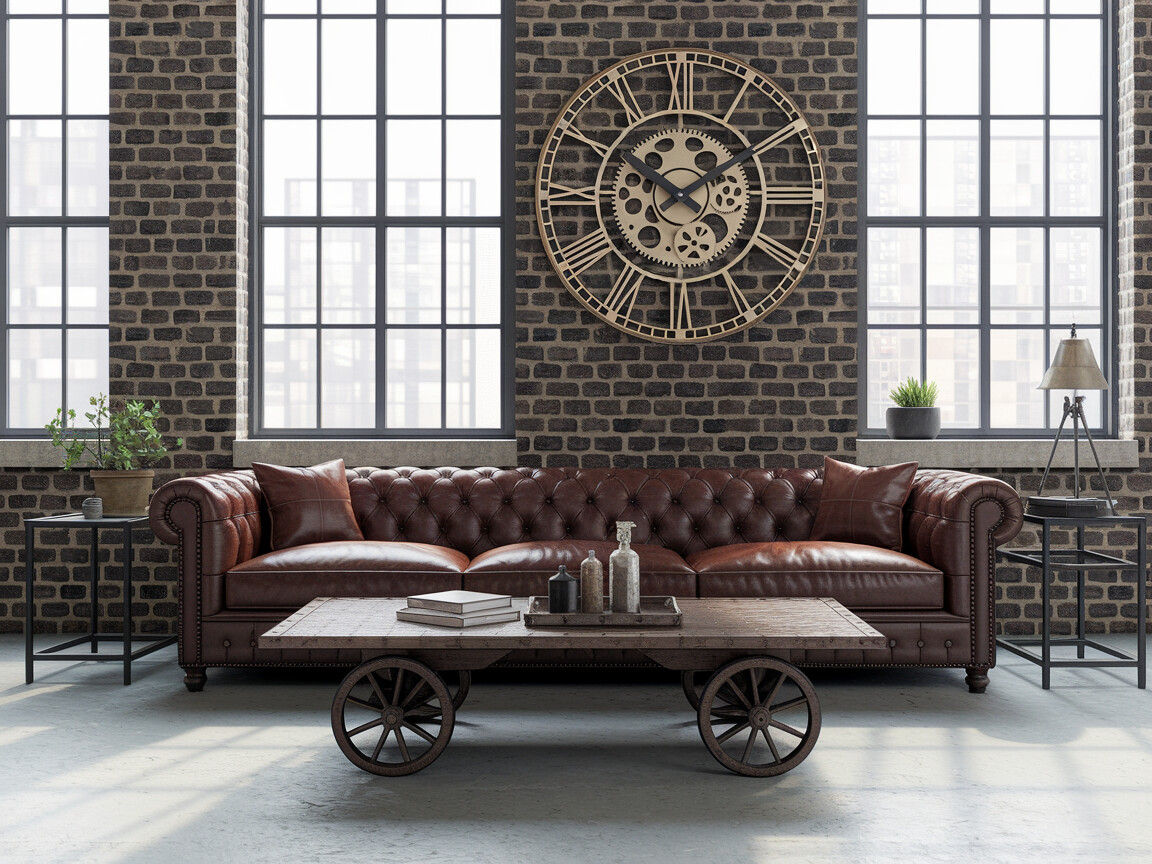
A large leather sofa sits against an exposed brick wall. A low-profile coffee table made from a reclaimed factory cart takes center stage. A large, oversized clock hangs on the wall, showing its inner gears.
Industrial Bedroom
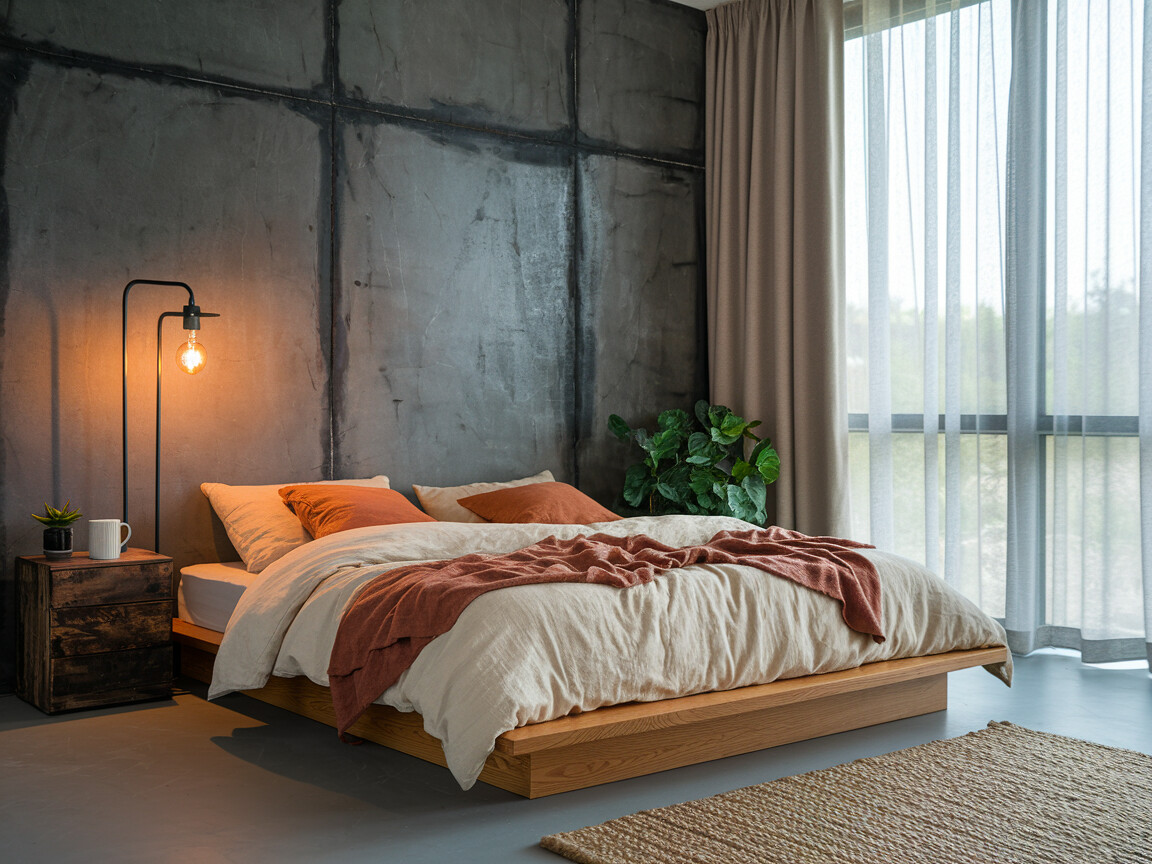
The industrial-style bedroom has a charcoal-gray concrete wall behind the bed. A low oak platform bed frame adds warmth. A black metal floor lamp with an exposed bulb casts a soft amber glow. Linen bedding in cream and rust tones feels relaxed and lived-in. A reclaimed wood nightstand holds a mug and a small plant. A thick woven rug warms the floor. Sheer curtains filter light from a large window, keeping the space calm and modern.
Furniture and Decor Selection
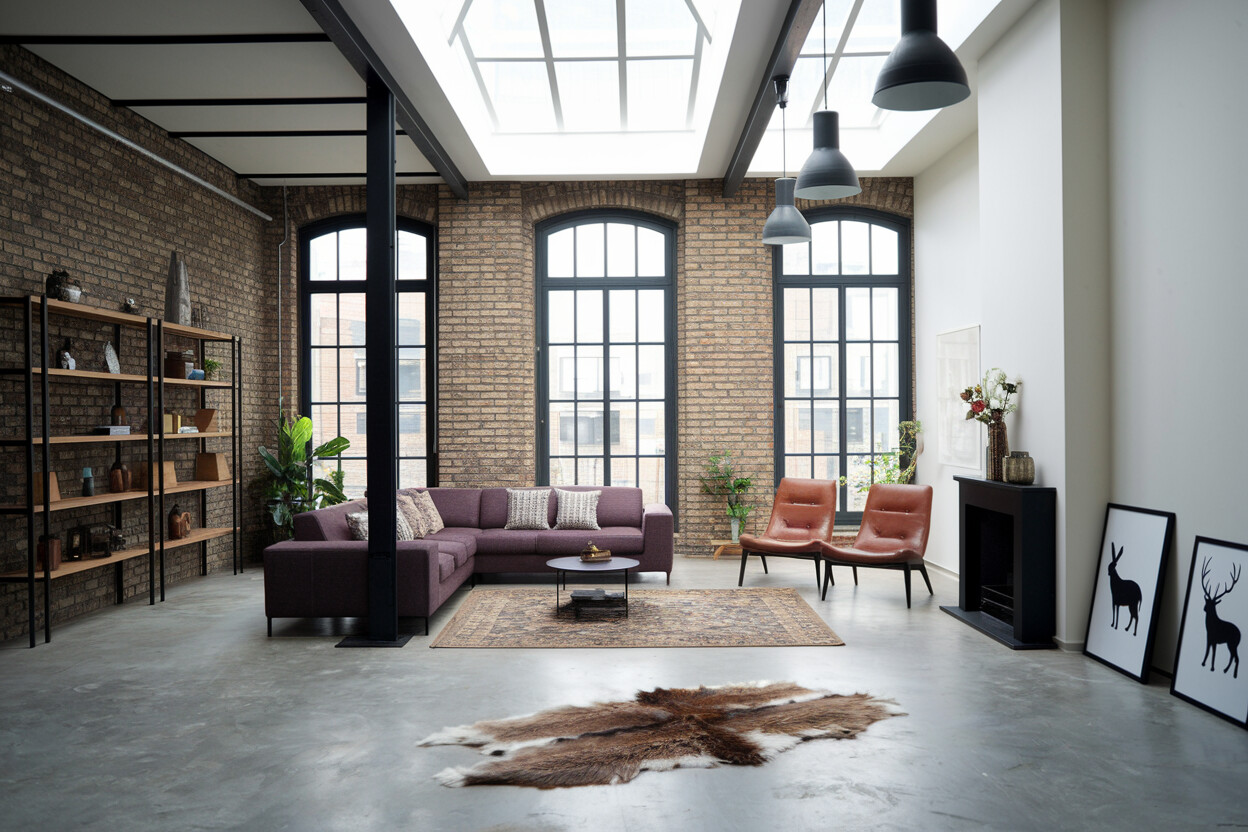
When shopping, look for “hard” lines. Soft, curvy furniture rarely fits well in an industrial setting.
Select leather that looks worn-in. It adds a layer of comfort to the otherwise rugged atmosphere. For decor, use vintage items like old typewriters, cameras, or blueprints. These items serve as conversation starters.
FAQ: Understanding Industrial Interior Design
Can I use industrial style in a small apartment?
Yes. Use lighter shades of gray and keep the floor as clear as possible. Wall-mounted shelving made of metal can save space while keeping the theme.
Is industrial design expensive?
It doesn’t have to be. Since the style values “raw” items, you can often find pieces at thrift stores or architectural salvage yards.
Does it feel cold or uninviting?
It can if you only use metal. To make it cozy, add textiles. Wool rugs, soft throw blankets, and leather pillows soften the hard edges of the room.
What is the difference between Industrial and Rustic interior styles?
Rustic style focuses on nature and the outdoors. Industrial style focuses on the city and the machine age. While both use wood, industrial style emphasizes metal and factory-inspired elements.
Final Thoughts on Industrial Aesthetics
This style is about honesty. It celebrates the worker and the machine. By stripping away the fluff, you are left with a space that feels grounded and authentic. Whether you live in a city loft or a quiet suburb, the industrial style brings a unique edge to any interior.