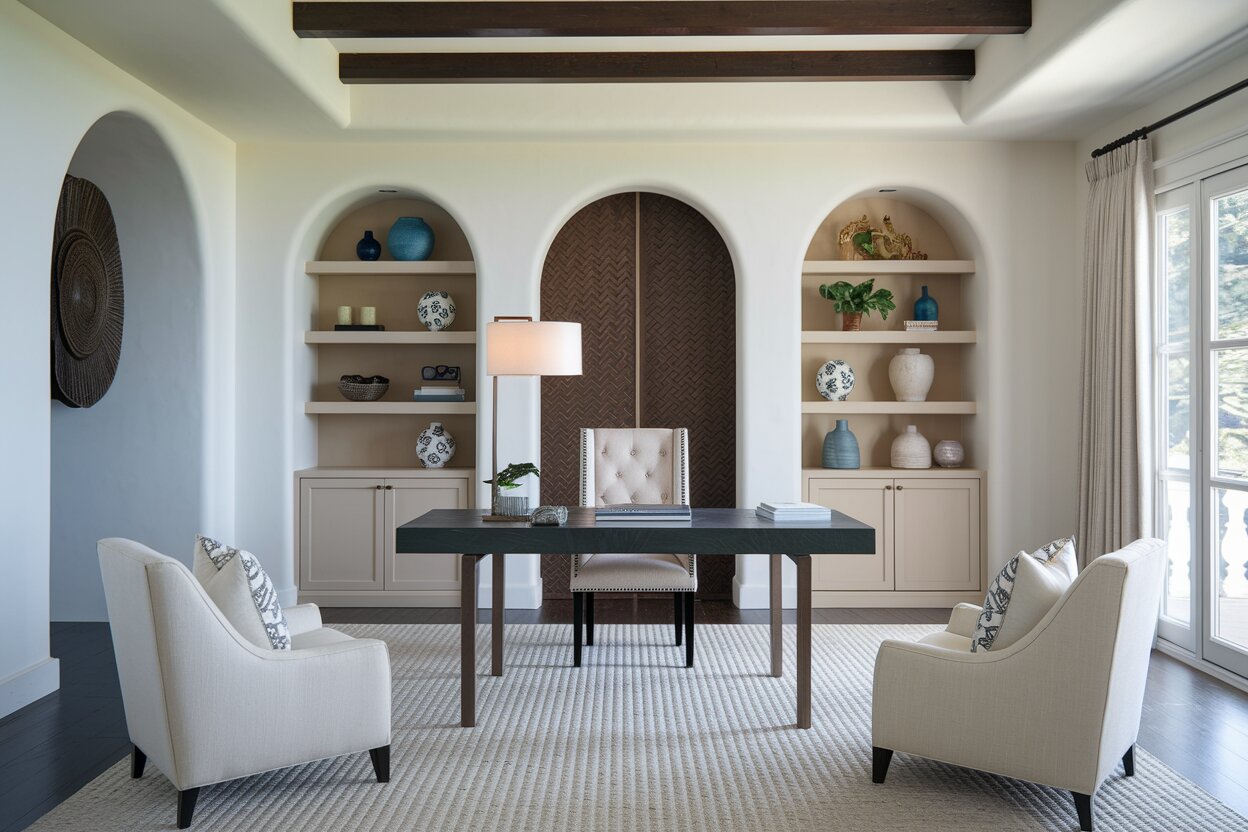
Mediterranean design borrows its mood from centuries-old villas along the coasts of Spain, Italy, and Greece. Think lime plaster, sun-worn terracotta, and hand-glazed tile in shades of cobalt and sea foam. Wood looks weathered, not polished. Iron looks hand-forged, not stamped. The whole effect feels unhurried, warm, and a little bit timeless.
A home office doesn’t usually get this kind of care. Most workspaces default to gray desks and stark white walls, chosen for function over feeling. Mediterranean style is different. Earthy color grounds a room without overwhelming it. Natural texture softens the glare of a laptop screen. And a few well-chosen materials can turn a spare corner into a place you actually want to sit down and work in.
You don’t need a full renovation to pull this off. A single textured wall, one arched mirror, or a rattan chair in the right spot can shift the whole feeling of a room. Small changes add up fast. These Mediterranean home office ideas will show you exactly where to start.
- 01 of 10
Sun-Baked Terracotta
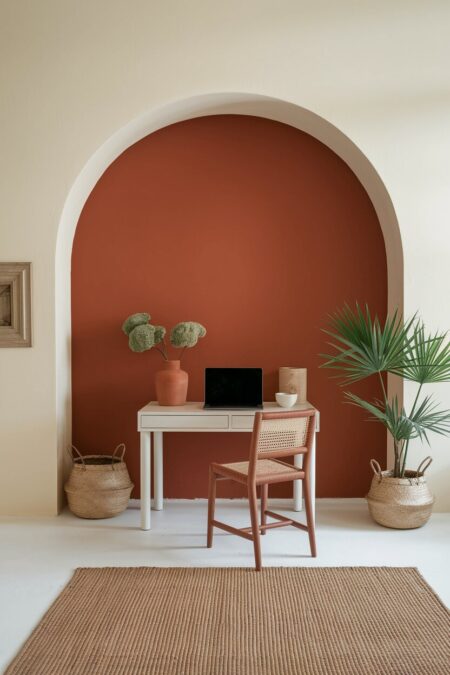
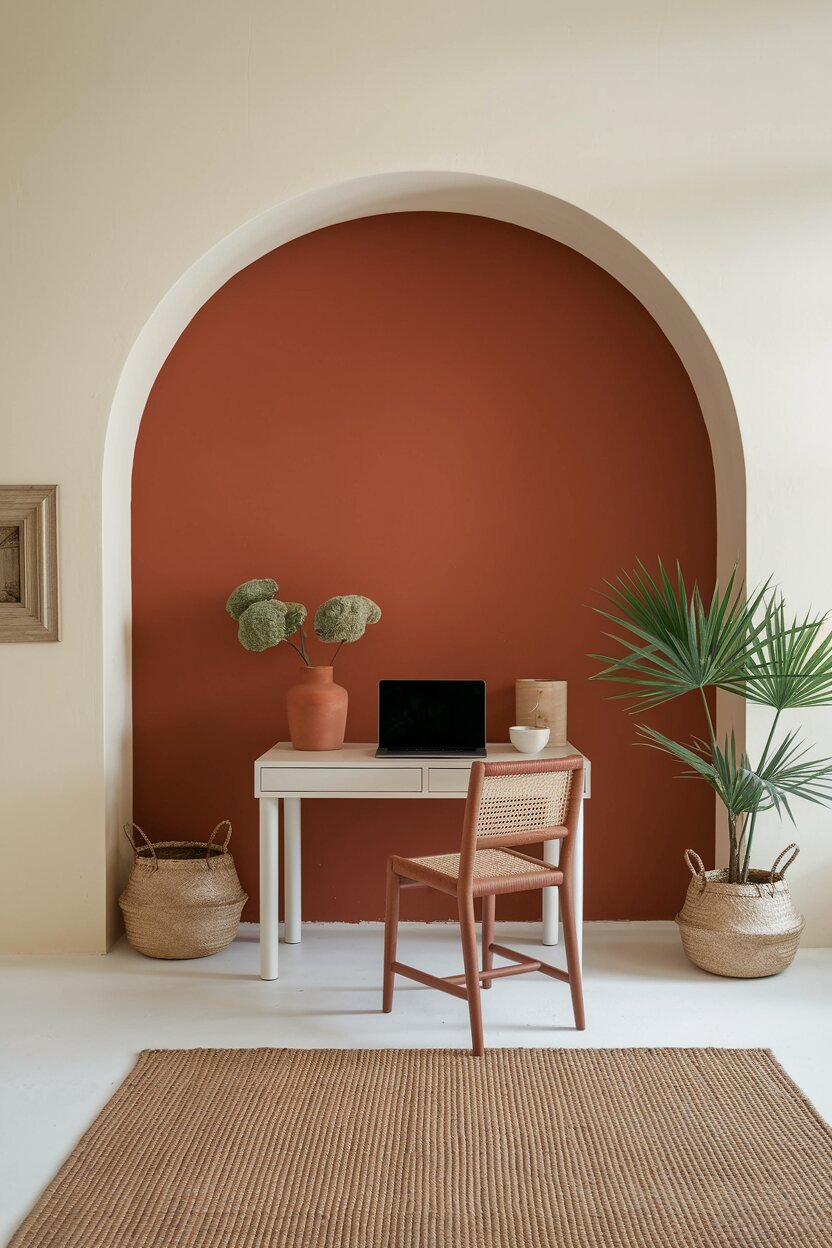
Terracotta is the color most people picture first when they think of Mediterranean style, and for good reason. The warm, clay-red tone instantly makes a home office feel sun-drenched, even on a gray afternoon. Paint a single accent wall behind your desk, or work the color in more subtly through a rug, a set of ceramic pots, or a woven basket. Terracotta pairs beautifully with cream, white, and deep green. Keep the rest of the palette simple, and let this one color carry the warmth.
- 02 of 10
Lime Plaster Walls
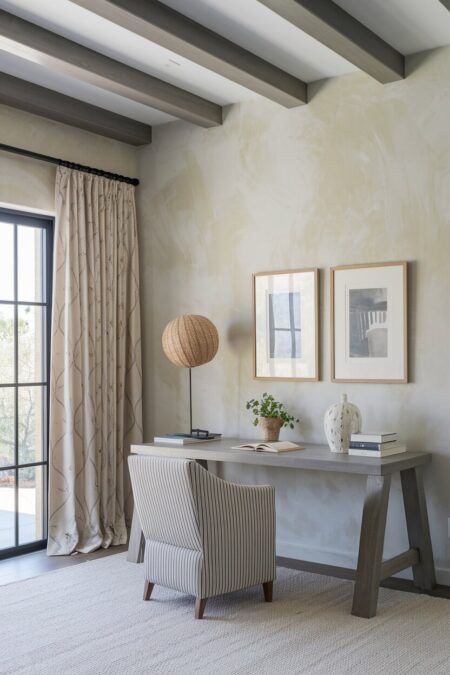
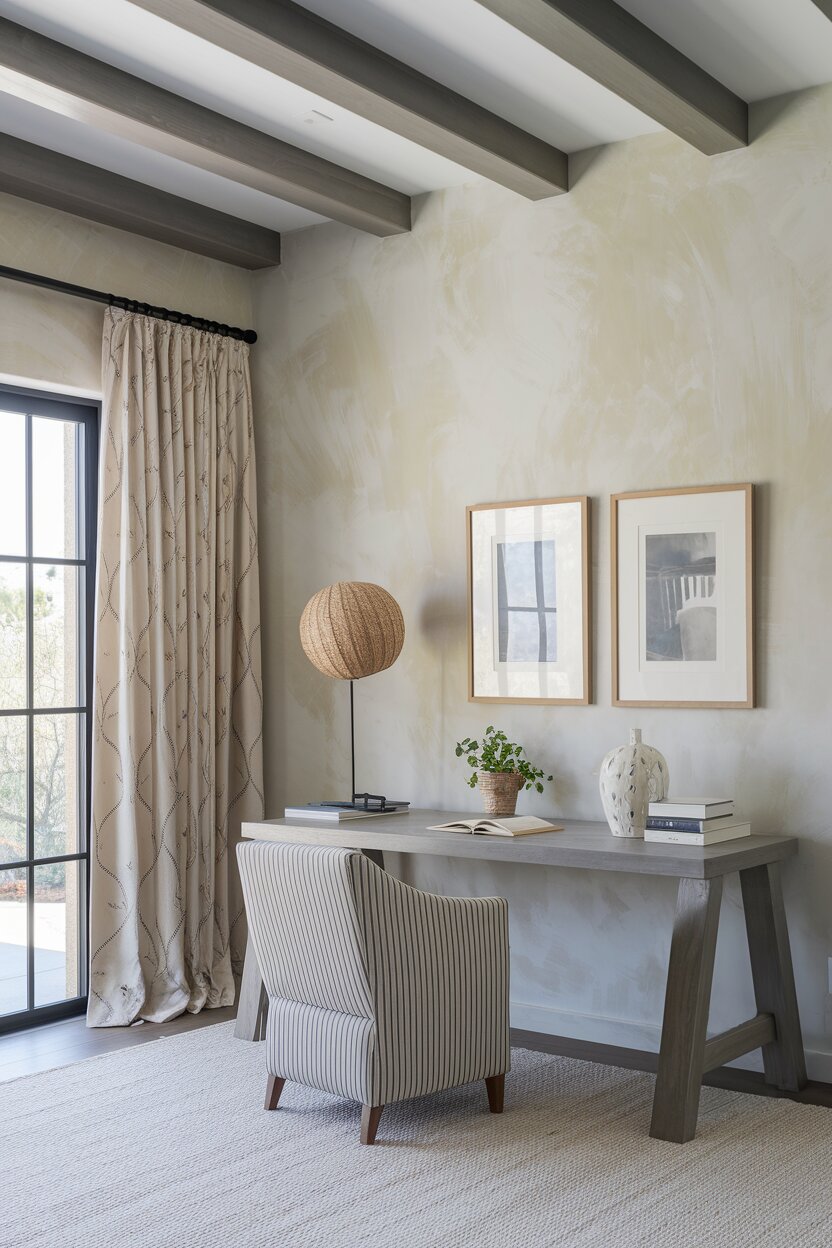
Smooth, bright walls are the backdrop for almost every Mediterranean interior, and a home office is no exception. Traditional lime plaster has a soft, slightly uneven texture that catches light in a way flat paint never quite manages. If a full plaster job feels like too much, a limewash paint kit can mimic the look on drywall in an afternoon. The result is a wall with quiet depth. It still keeps the room feeling airy and calm enough to concentrate in.
- 03 of 10
Wrought Iron Details
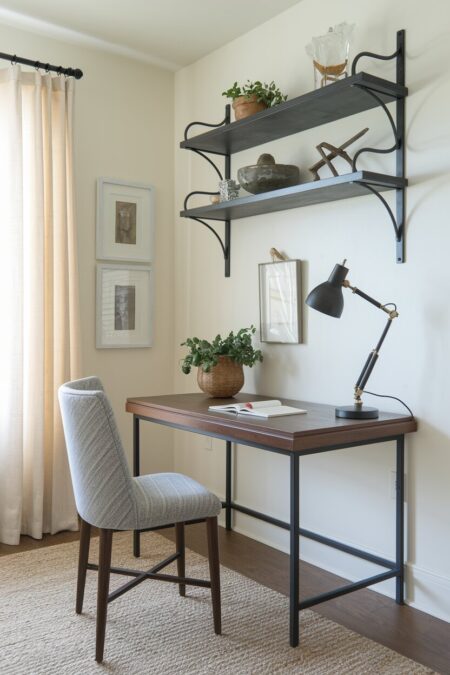
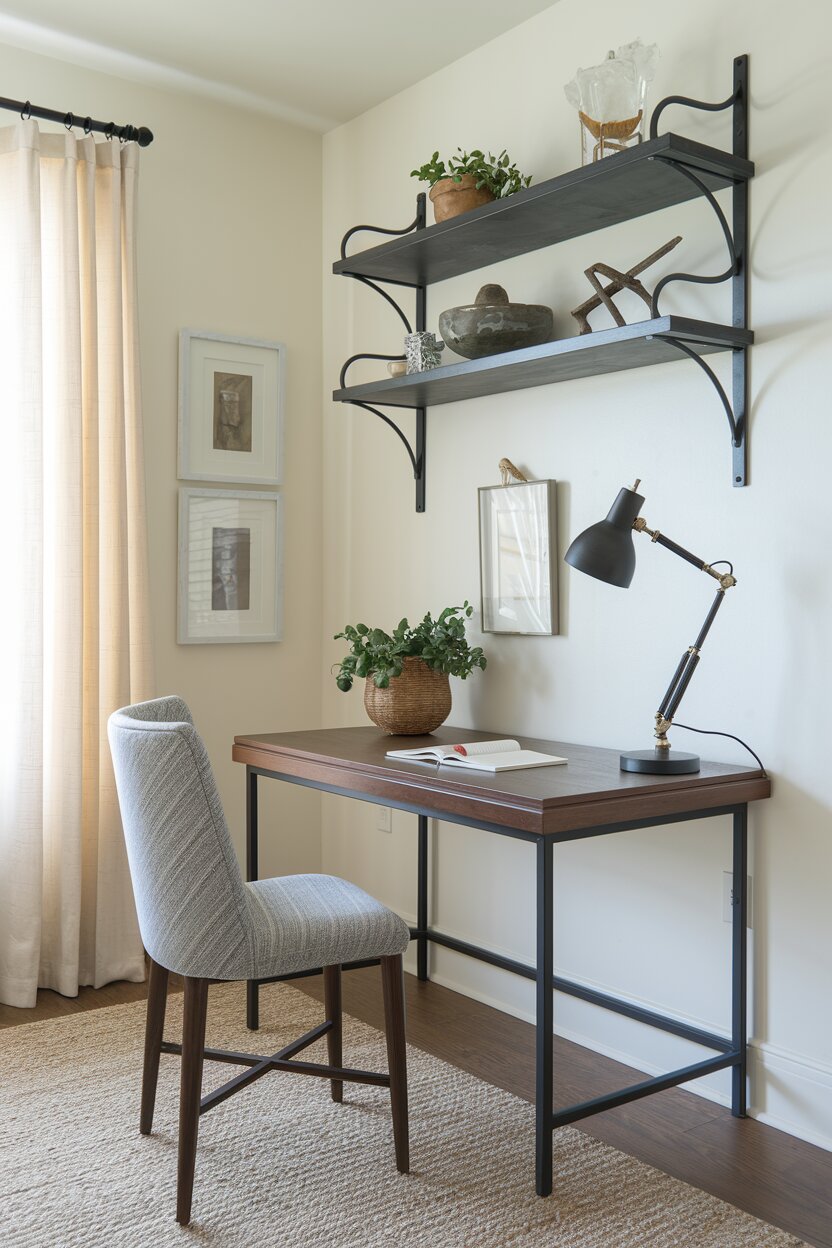
Iron has a long history in Mediterranean homes, from window grilles to candle sconces, and it works just as well at a smaller scale. Swap a plain desk lamp for one with a hand-forged iron base. A slim iron shelf bracket or a wall-mounted magazine rack adds the same character to a home office without taking up floor space. Look for pieces with visible hammer marks or an uneven finish. That bit of imperfection is what makes the material feel authentic rather than mass-produced.
- 04 of 10
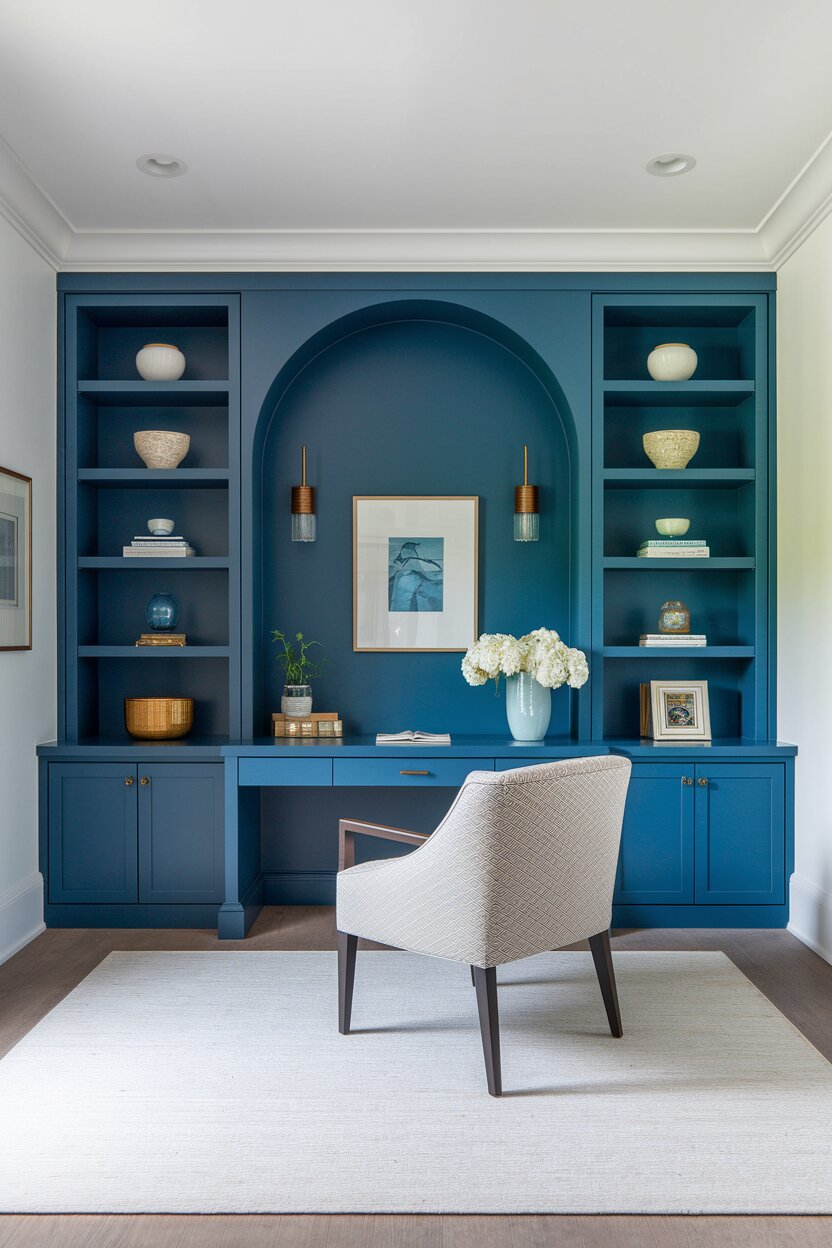
An Arched Wall Niche
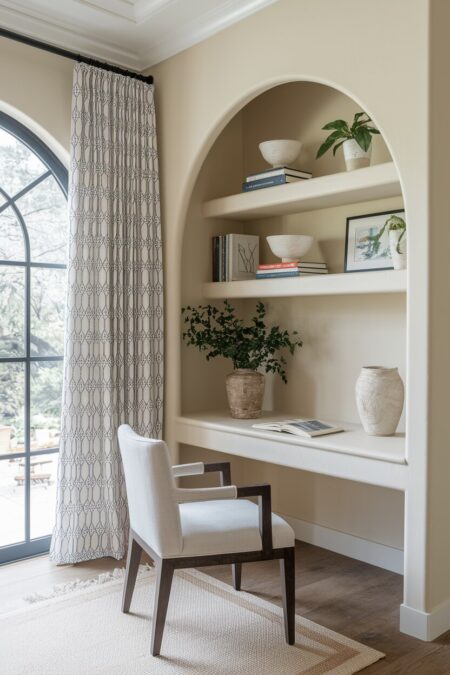
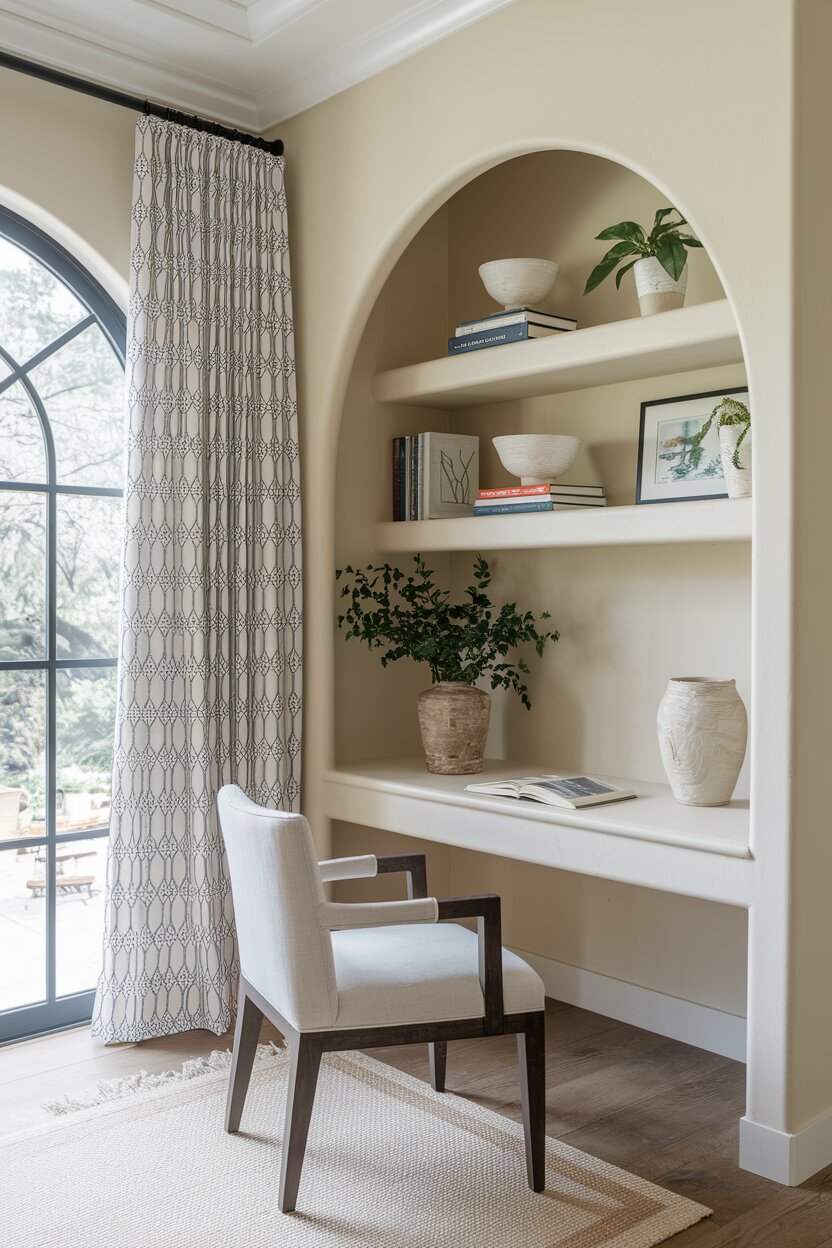
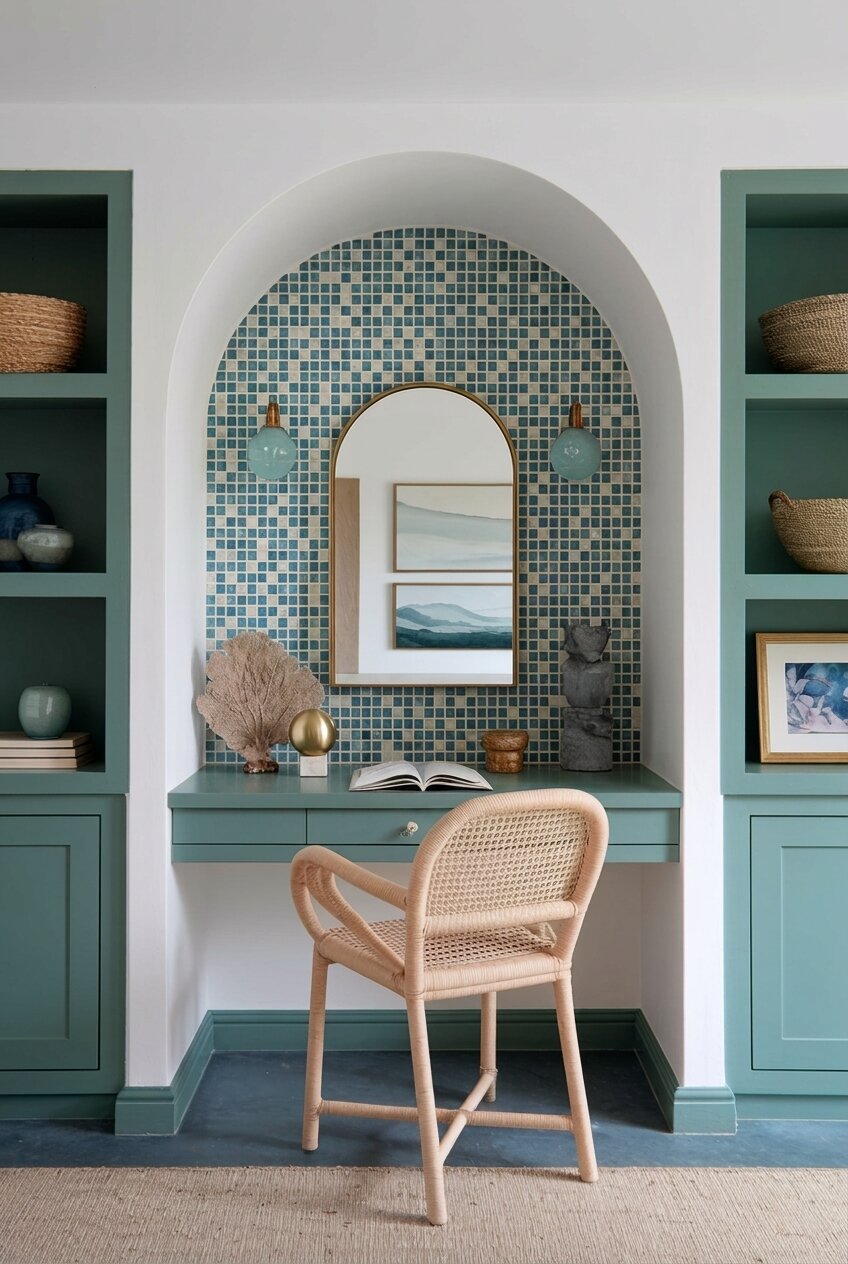
Arches show up everywhere in Mediterranean architecture, from doorways to garden walls, and a small niche brings that same shape indoors. If your office has an alcove or a built-in bookshelf, curve the top edge instead of squaring it off. It’s a subtle change. But it softens the whole room. Style the niche with a few books, a small plant, or a ceramic bowl, and leave enough empty space around each piece so the shape itself stays the focal point.
- 05 of 10
Rattan and Wicker Textures
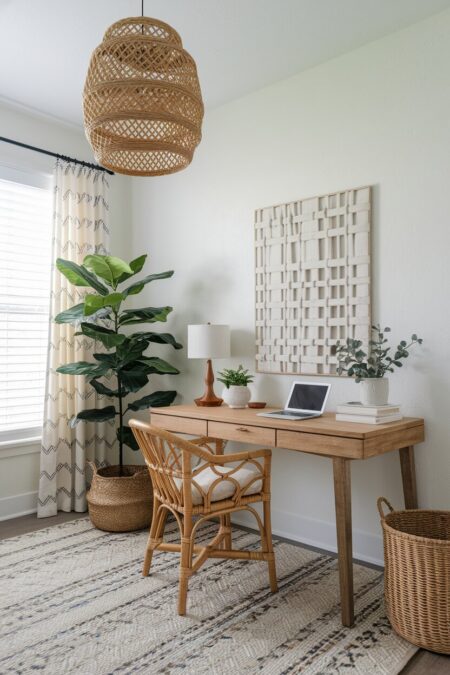
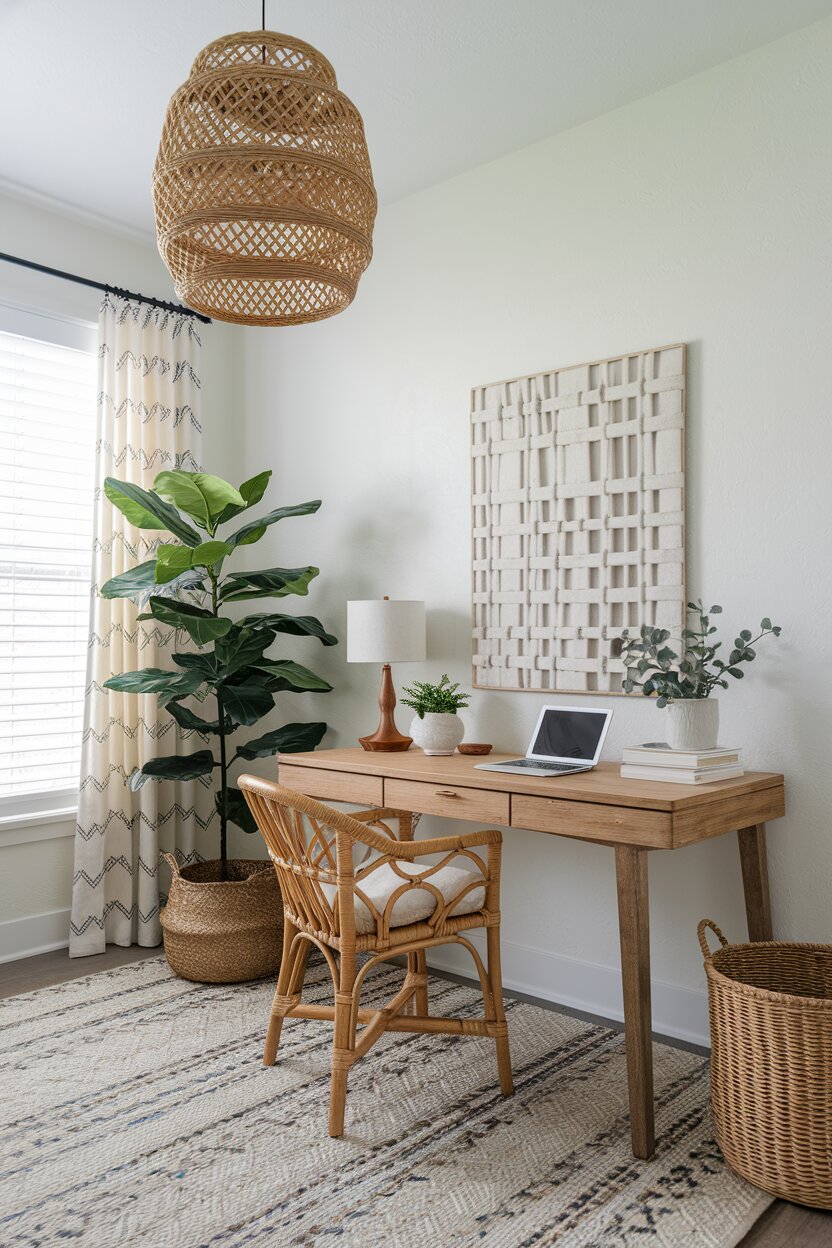
Natural fiber furniture is a staple of coastal Mediterranean rooms, and it’s one of the easiest ways to add texture without adding visual weight. A rattan desk chair, a woven pendant light, or a simple wicker storage basket under the desk brings in warmth instantly. These pieces also tend to be lightweight, which matters in a small office where furniture gets moved around often. Mix in a cushion in one solid color so the woven texture doesn’t compete with itself.
- 06 of 10
Blue and White Zellige Tile
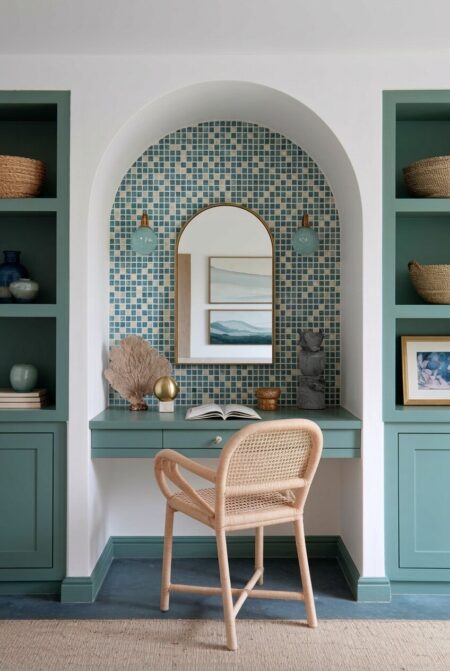
A small run of hand-glazed tile can do a lot of work in a home office. Zellige, the traditional glazed tile from North Africa and southern Spain, has a slightly irregular surface that catches light differently in every piece. No two tiles look quite the same. Use it as a splashback behind a built-in desk, or frame a mirror with a narrow tiled border. Stick to blue and white, or a soft green and cream, to keep the tile feeling distinctly Mediterranean.
- 07 of 10
A Potted Olive Tree
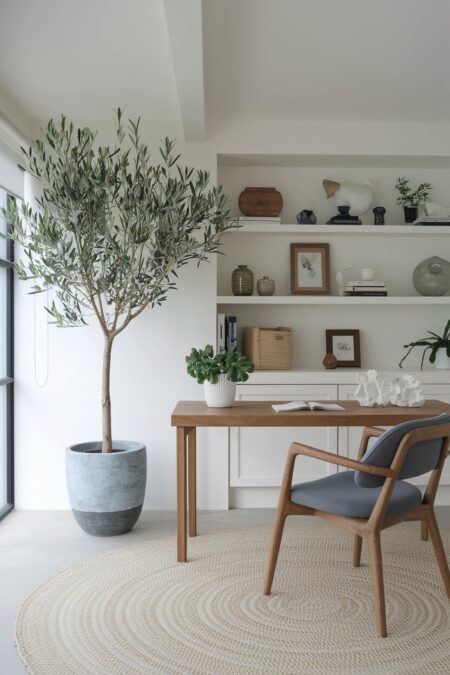
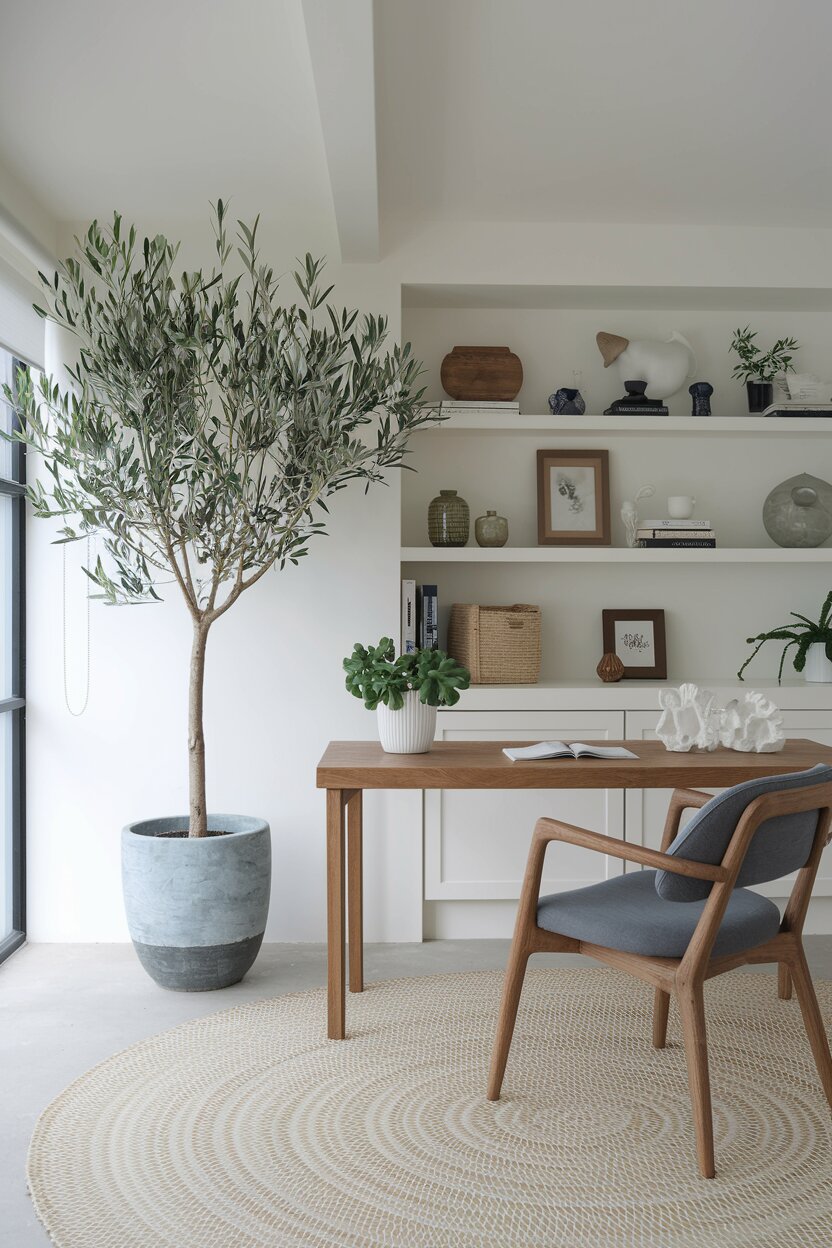
Greenery is essential to Mediterranean style, and nothing says it quite like an olive tree. A potted olive tree brings height, a bit of silvery color, and a loose, natural shape that softens all the straight lines of a desk and bookshelf. It also tolerates low-maintenance care and bright, indirect light, which makes it realistic for a room where watering on schedule isn’t always top of mind. Set it near a window if you can, and let its shadow move across the wall through the day.
- 08 of 10
Exposed Wood Beams
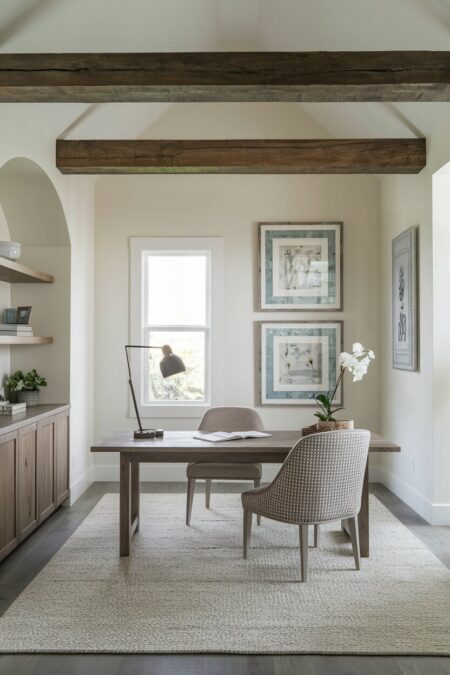
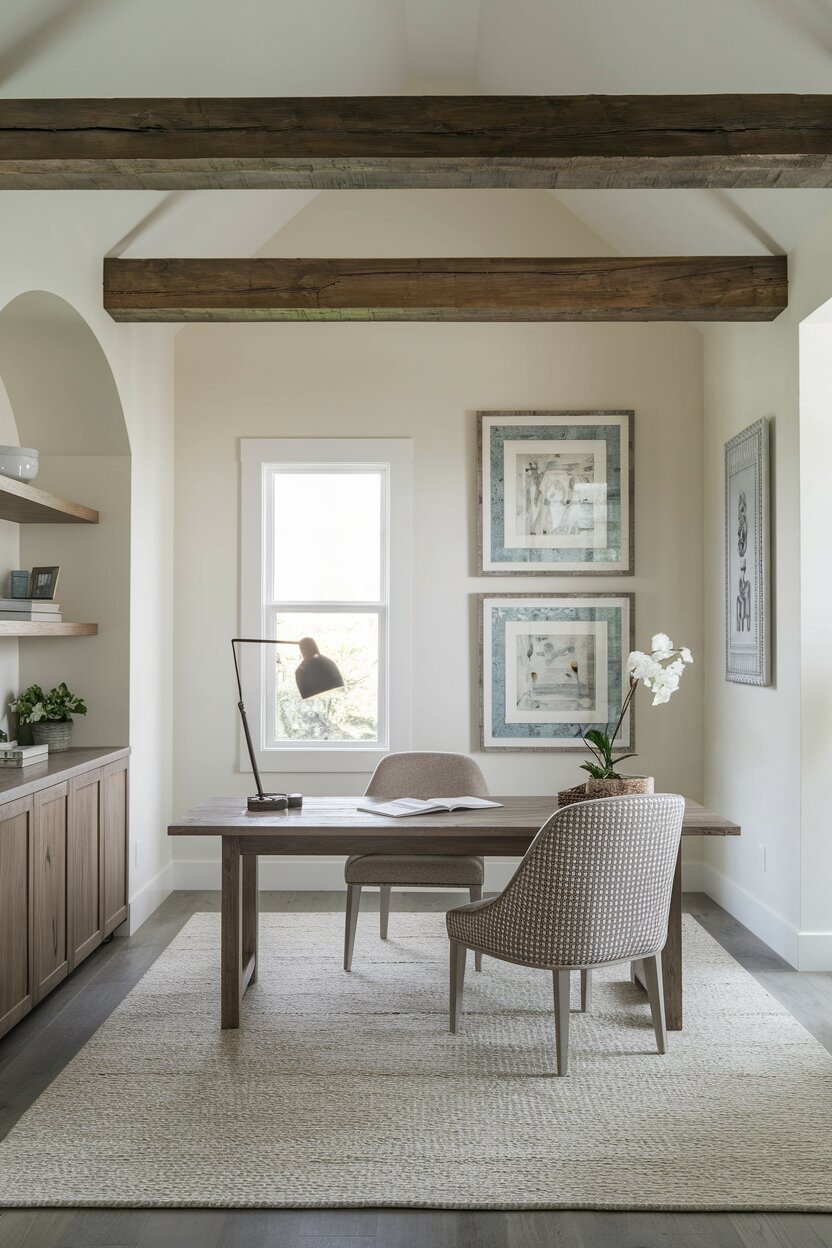
A flat, unremarkable ceiling can undercut an otherwise well-designed office. Wood beams add the kind of texture that pulls the whole Mediterranean look together. Real structural beams aren’t practical for most rooms, but lightweight faux beams install in a weekend and give the same visual weight. Choose a warm, weathered wood tone rather than a polished finish, and space the beams evenly for a rhythm that feels intentional. Paired with white walls, they make even a small room feel grounded.
- 09 of 10
Aegean Blue Accent Wall
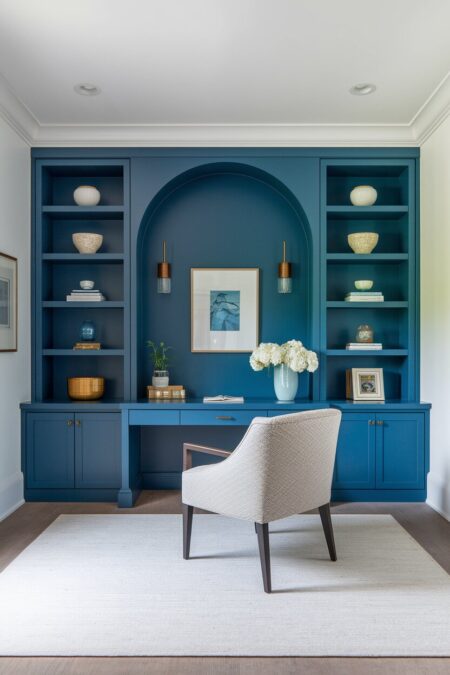
Terracotta gets most of the attention, but a deep Aegean blue is just as central to the Mediterranean palette. Use it sparingly, on one wall or the inside of a built-in shelf, so it reads as an accent rather than the main event. This shade works especially well behind a desk. It creates just enough contrast to keep the eye interested without becoming distracting during a long workday. Balance it with plenty of white trim and a few warm wood or brass details nearby.
- 10 of 10
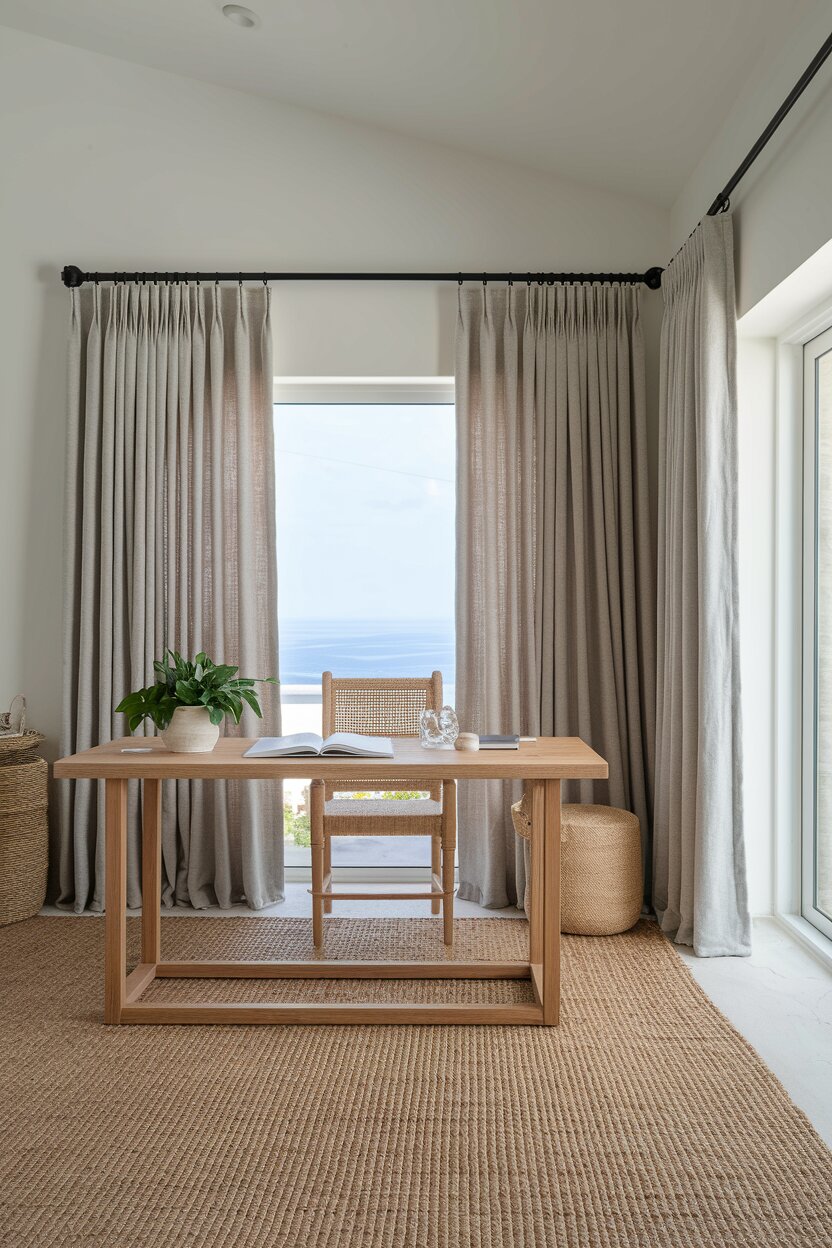
Woven Linen and Jute
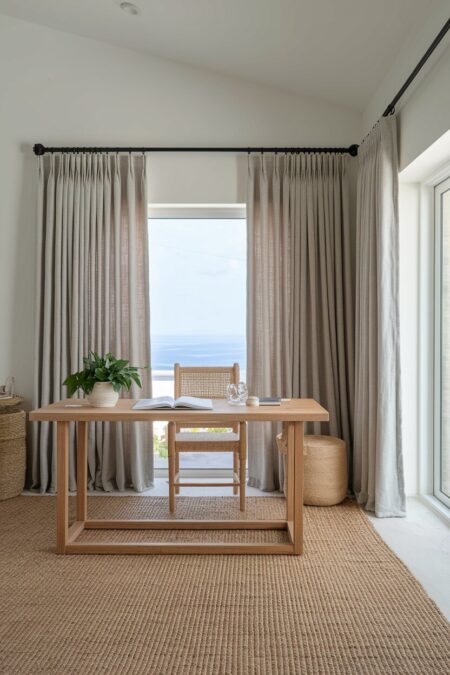
Soft textiles finish off a Mediterranean home office the same way they finish off a coastal villa. Linen curtains let in a diffused, gentle light instead of the harsh glare of bare windows. A jute or sisal area rug adds texture underfoot and helps ground the more polished pieces in the room. Both materials are naturally a little imperfect, with visible weave and texture. That imperfection is exactly what keeps the whole space feeling relaxed instead of overly styled.