Japandi blends two design traditions that already share a lot of common ground. Japanese style brings order, quiet, and respect for natural materials. Scandinavian style adds light, warmth, and everyday comfort. Together, they create a living room that feels peaceful without feeling cold.
The look is easy to spot. Think low furniture, soft neutrals, and plenty of open floor. Every piece earns its place, and nothing shouts. That restraint makes these Japandi living room ideas a good fit for busy households that want a calm place to land at the end of the day.
If you’re ready to simplify, start here. The ideas below cover color, texture, lighting, and layout. Borrow one detail or rebuild the whole room.
- 01 of 11
Warm Neutral Color Palette
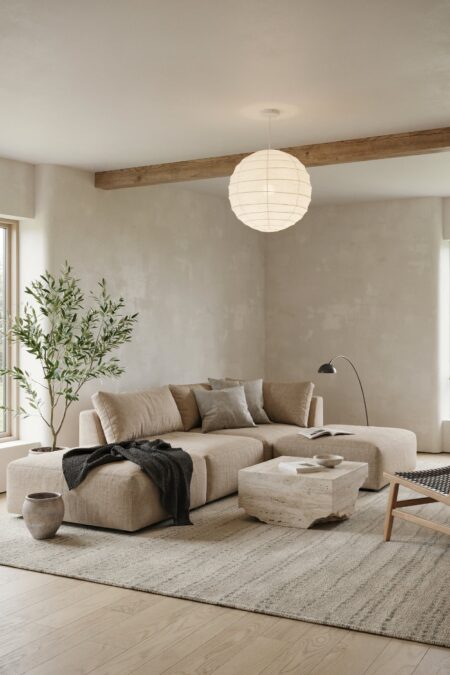
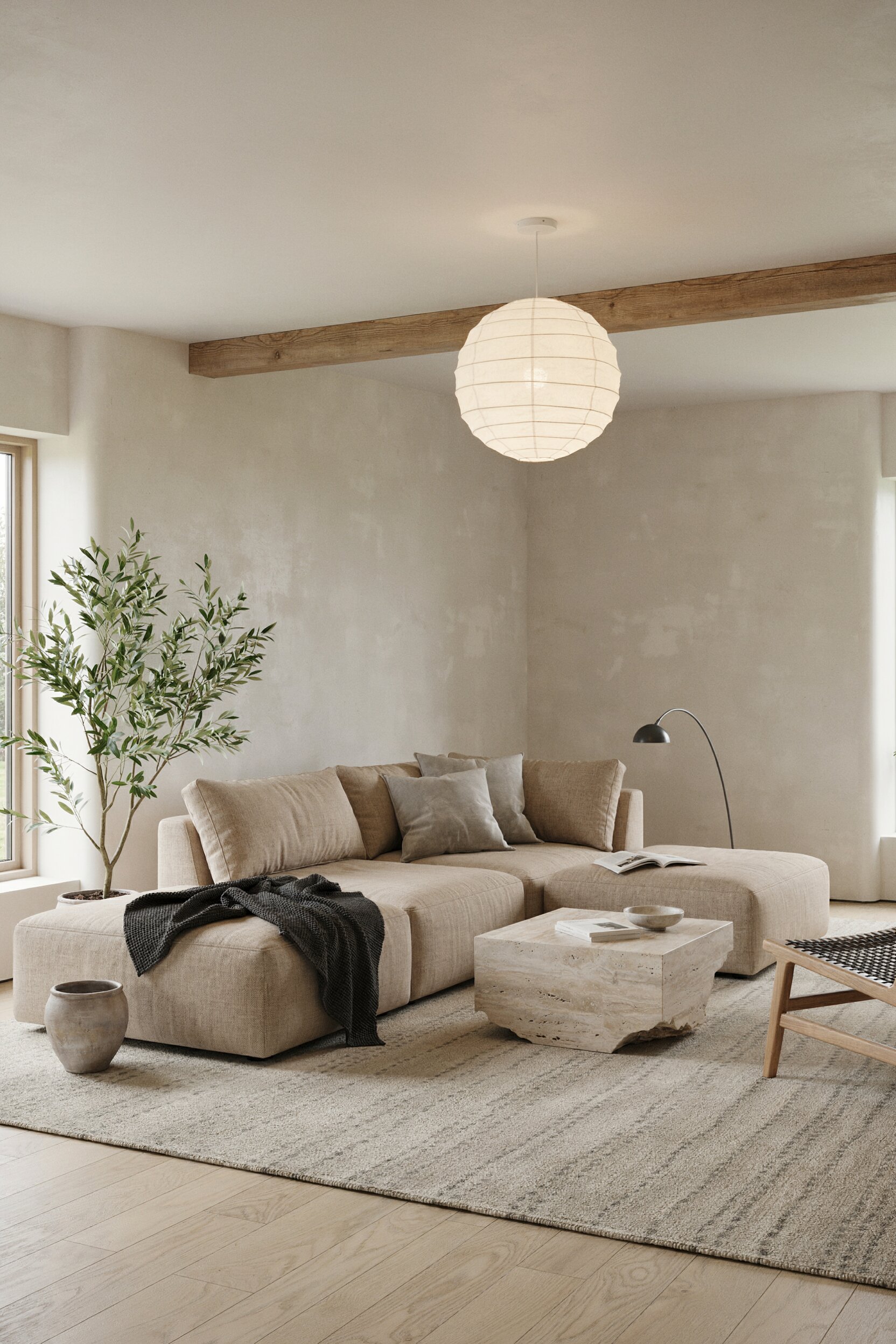
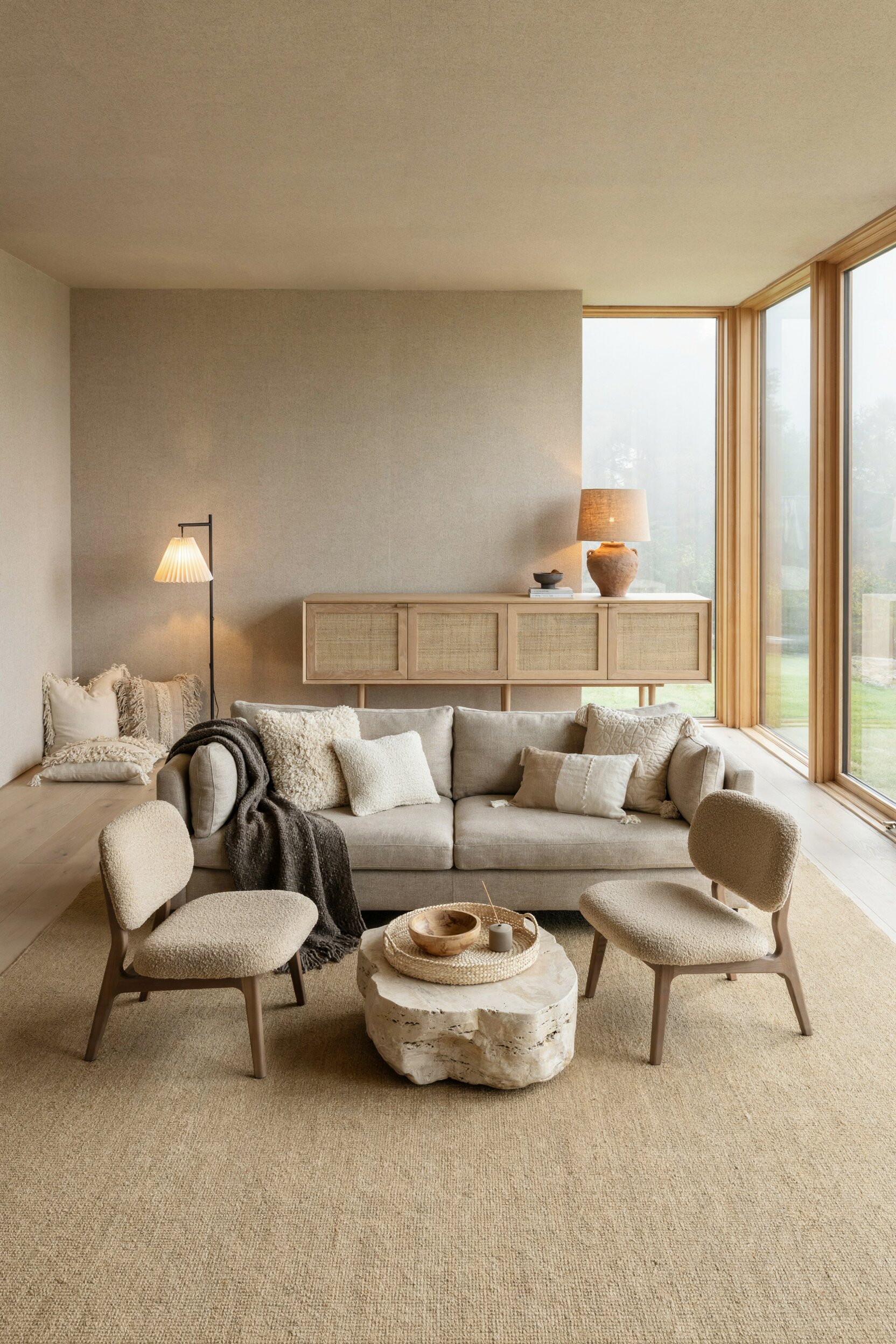
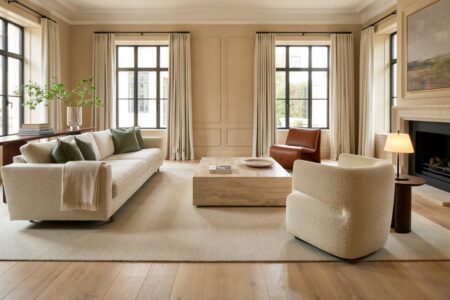
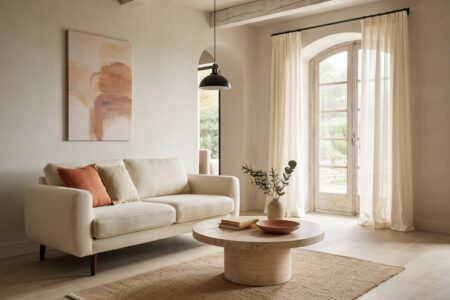
Color sets the mood first, so begin there. Japandi favors muted shades pulled from nature: oat, sand, clay, stone, and soft greige. Keep the walls light and the undertones slightly warm. Pure white can feel stark in this style, while a creamy off-white reads softer and lets daylight do more work. Add one or two deep accents, such as charcoal or black, to anchor the scheme.
- 02 of 11
Low-Profile Sofa with Clean Lines
Choose a sofa that sits close to the floor. A low back and slim wooden legs keep sightlines open, which makes the room feel larger. Look for a solid, quiet color in linen or a cotton blend. Skip heavy tufting and bulky arms. Simple shapes work best. In a small space, pair the sofa with two compact armchairs instead of a sprawling sectional.
- 03 of 11
Light Oak Meets Dark Walnut
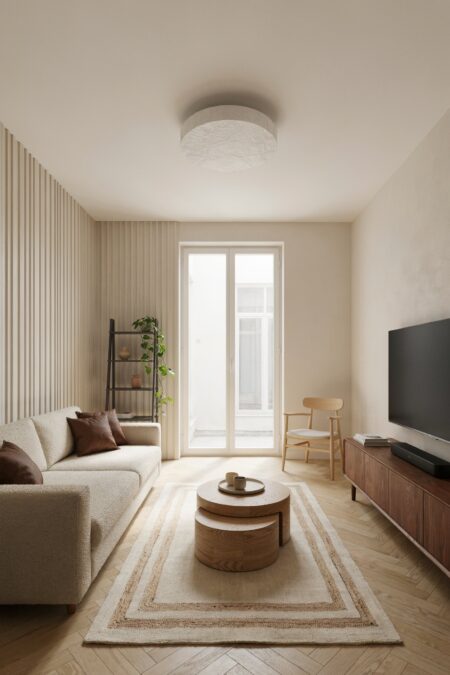
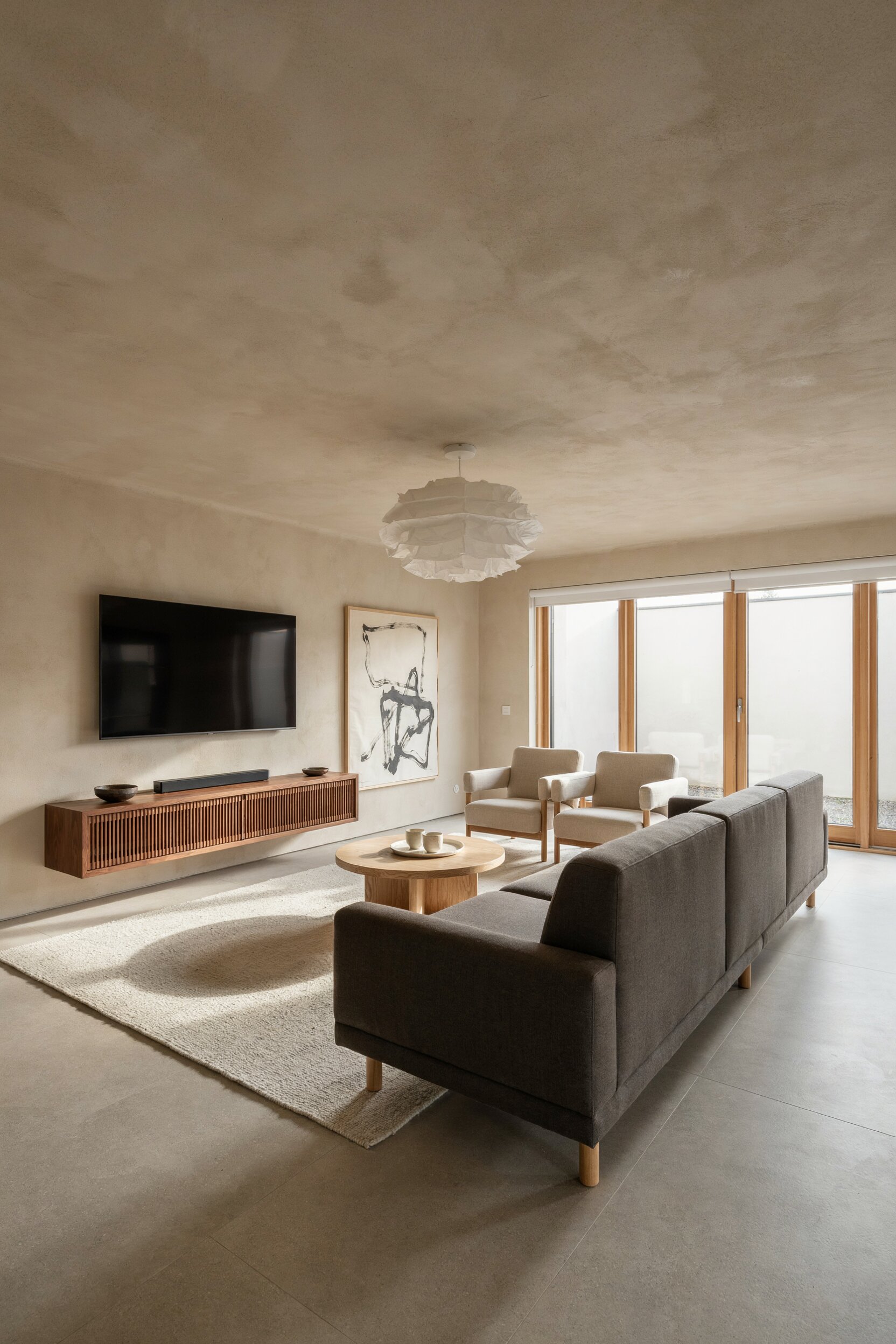
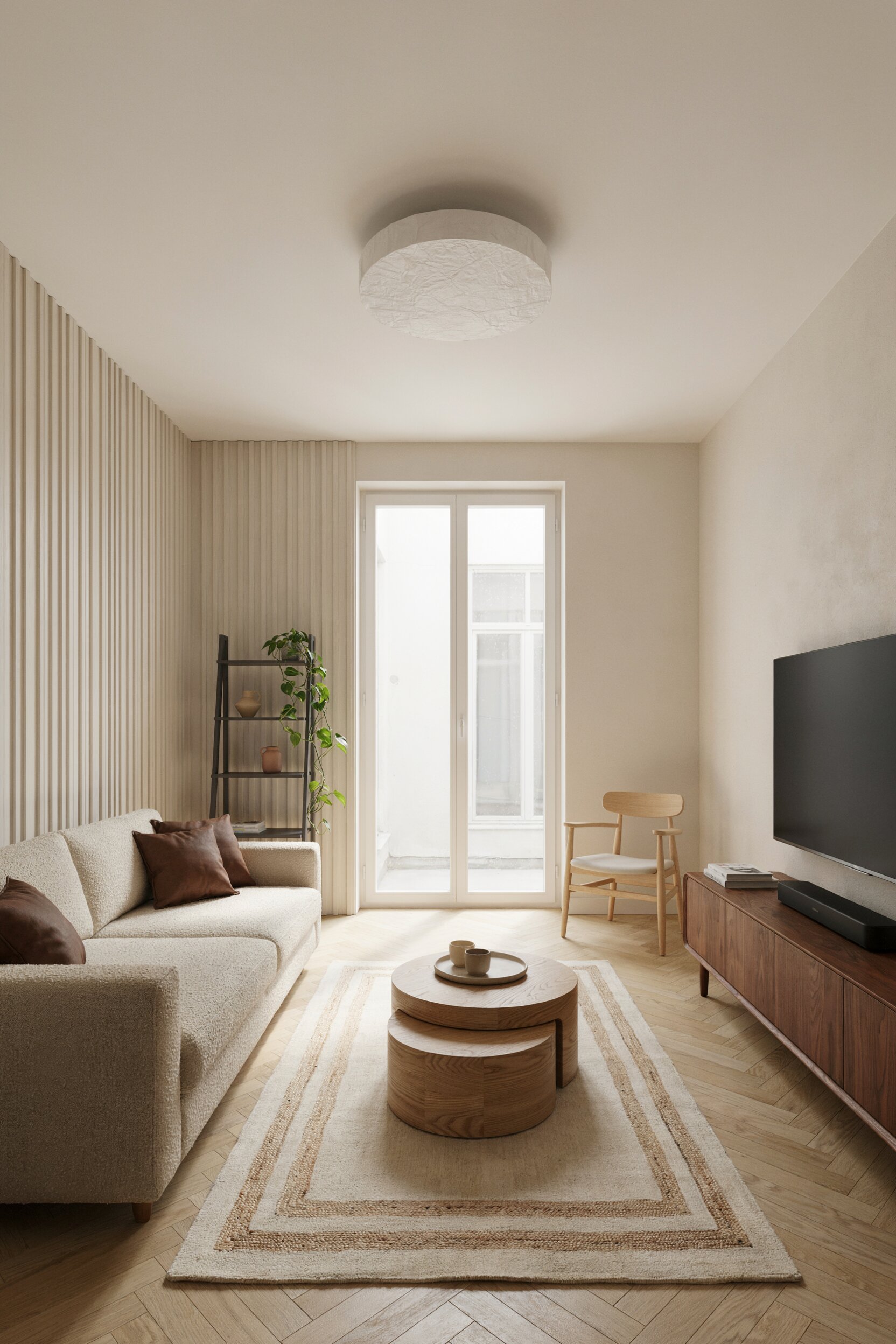
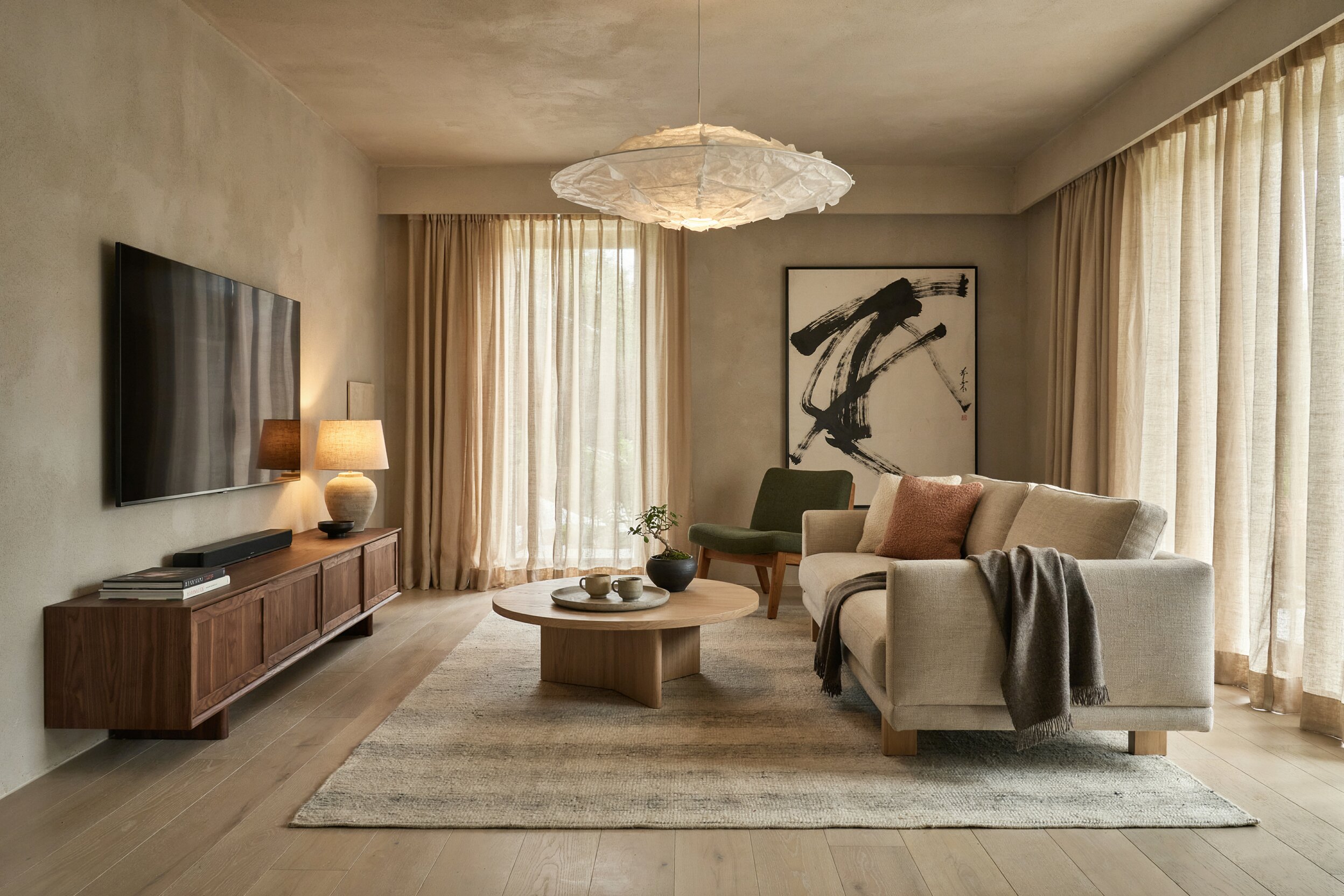
Wood is the heart of the Japandi look. Instead of matching every piece, mix tones on purpose. Light oak or ash on the coffee table brings Scandinavian brightness. A darker walnut console adds Japanese depth and weight. Let the grain show. Matte finishes look more honest and calm than glossy ones.
- 04 of 11
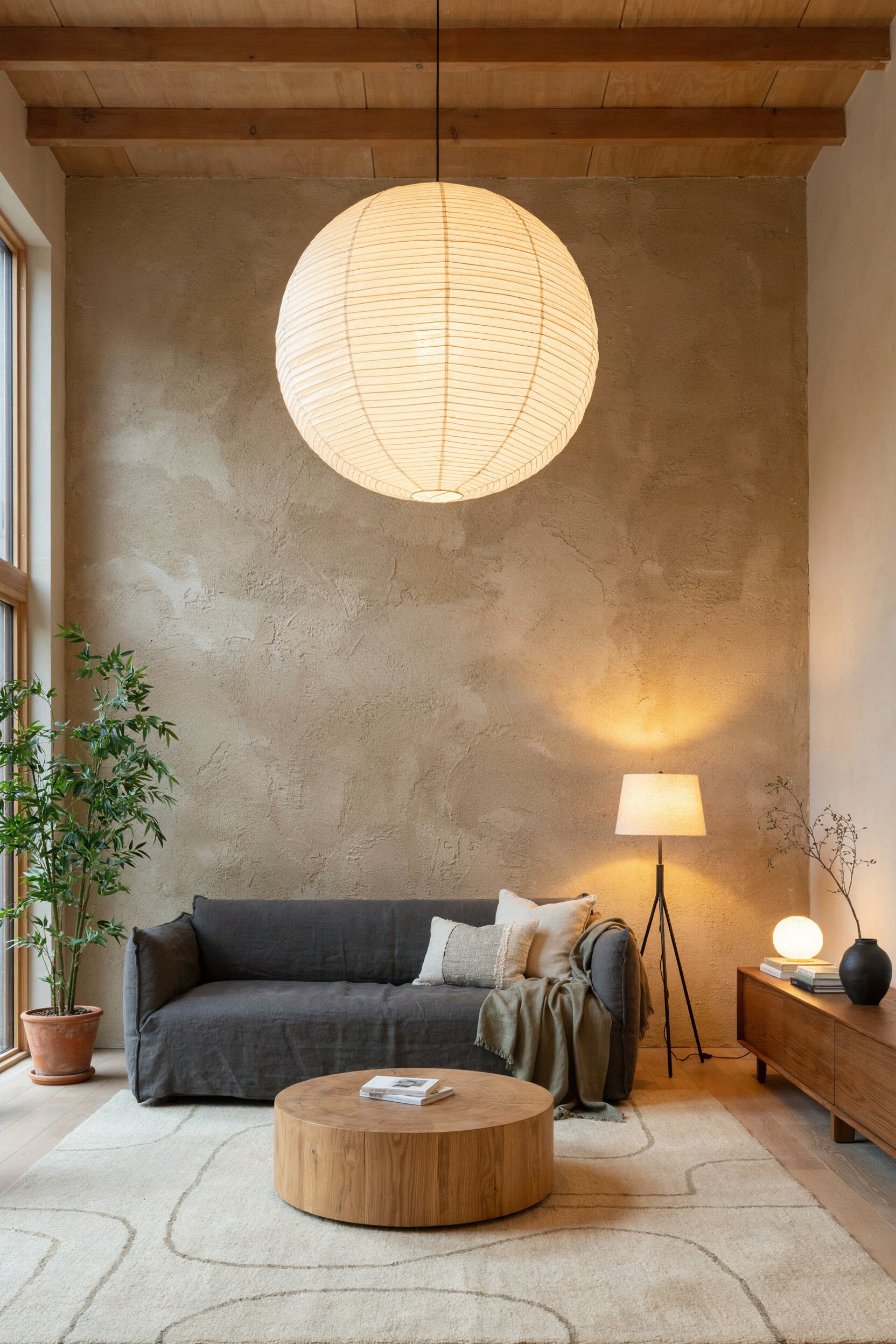
Paper Lantern Lighting
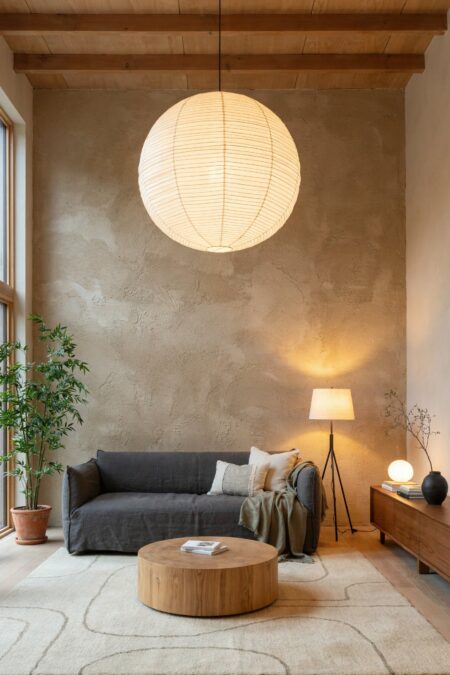
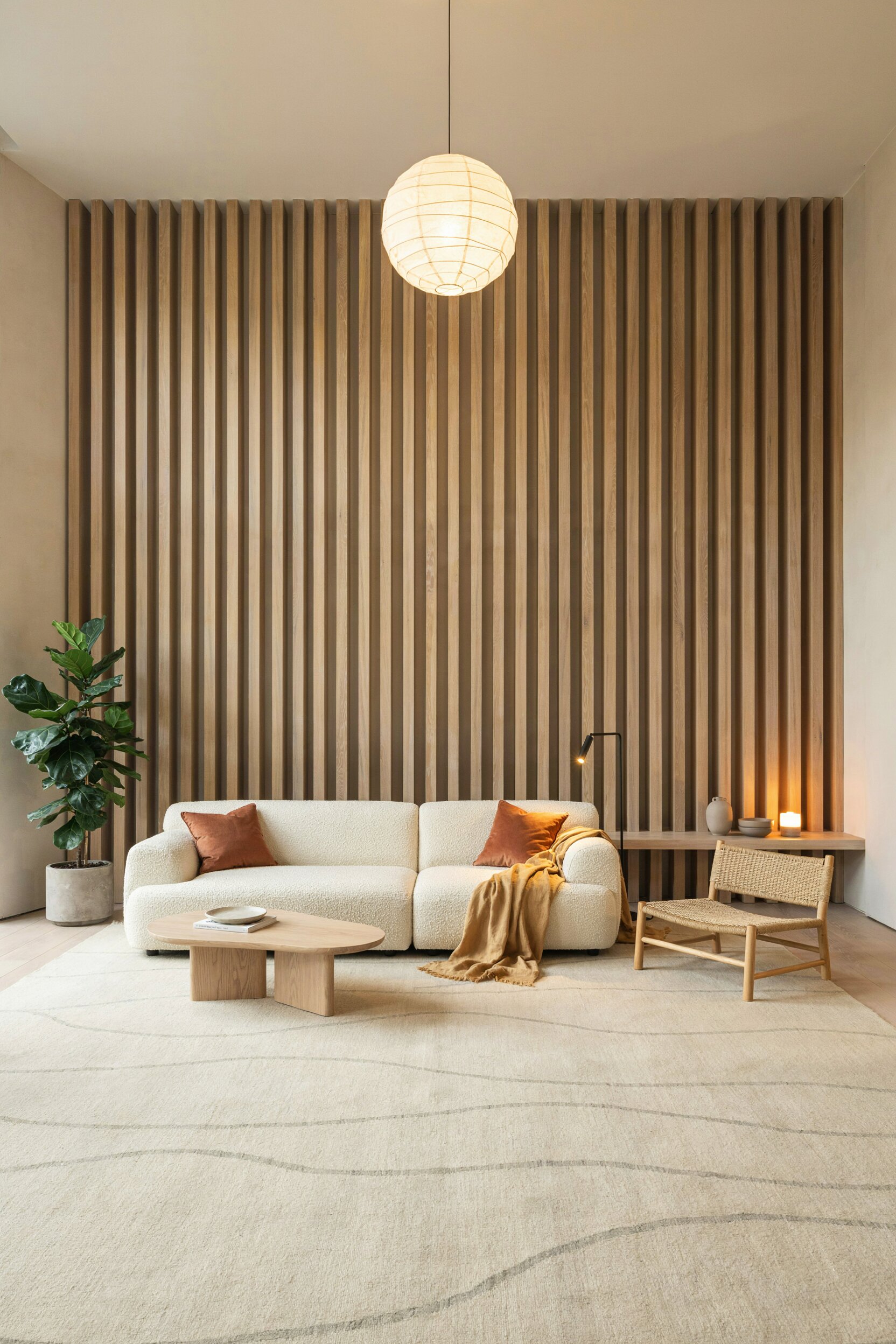
Lighting should glow, not glare. A round paper lantern pendant spreads soft, even light that flatters every surface. Floor lamps with fabric or washi shades work well beside the sofa. Layer two or three sources at different heights. That lets you dim the room in the evening and keep the mood relaxed. Stick with warm bulbs.
- 05 of 11
Layered Natural Textiles
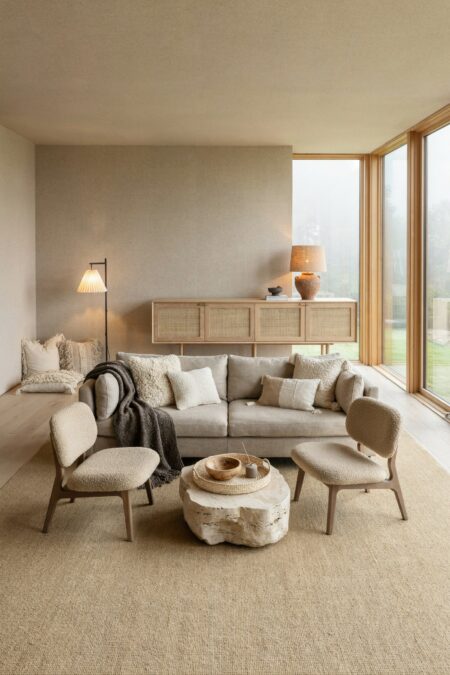
Texture takes the place of pattern in a Japandi living room. Drape a chunky wool throw over a linen sofa. Add cushions in bouclé, cotton, and raw silk. Lay a jute or wool rug under the seating area. Stay within one color family so the mix feels soft rather than busy. Each fabric should invite touch. That is where the Scandinavian comfort comes in.
- 06 of 11
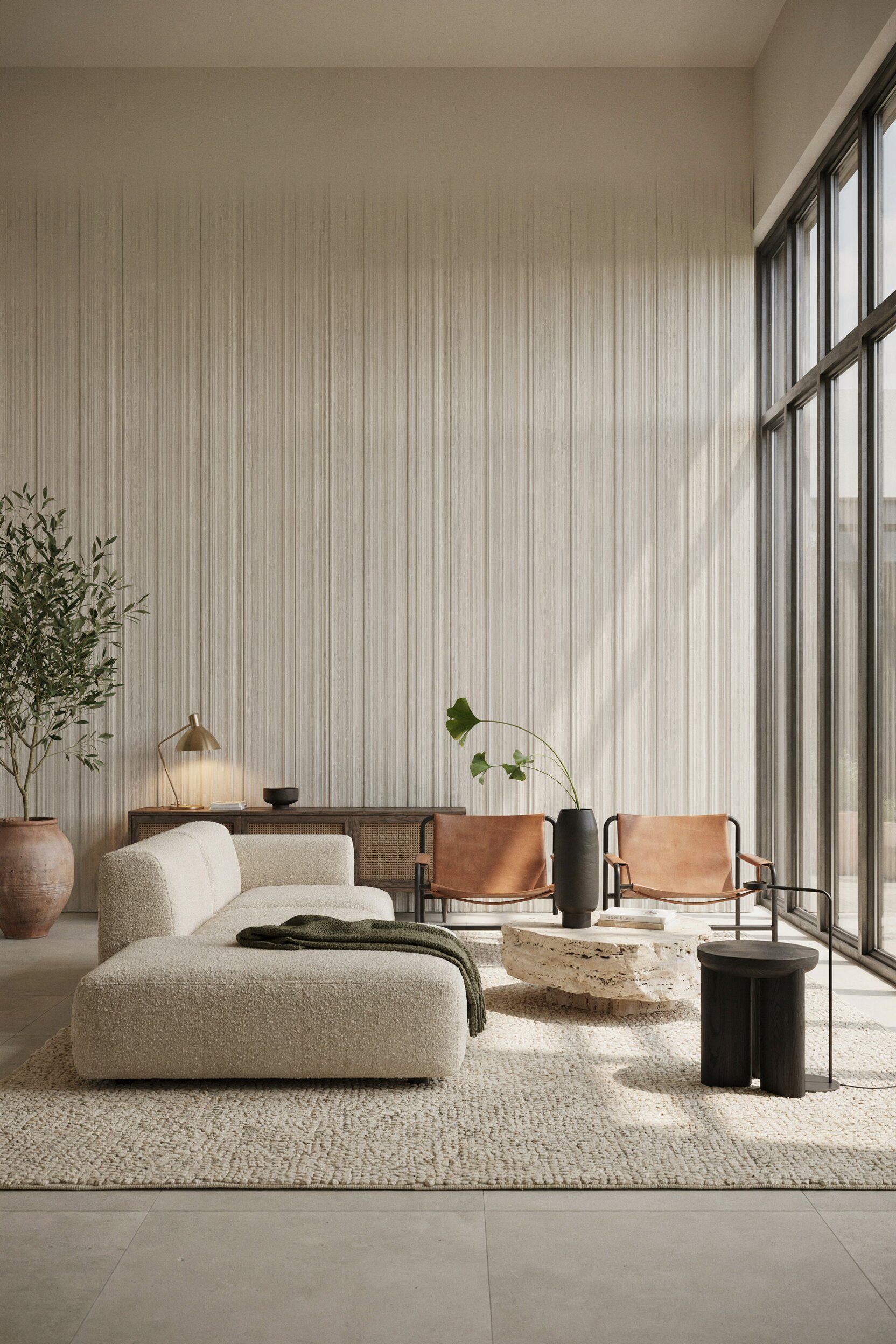
Slatted Wood Feature Wall
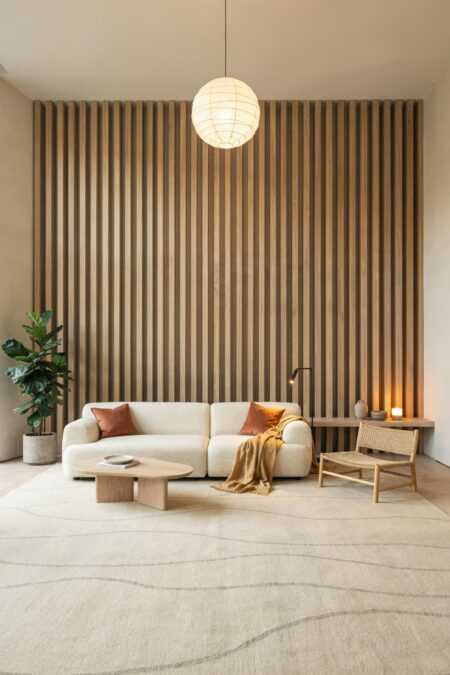
Vertical wood slats add rhythm to a plain wall. They echo traditional Japanese screens while staying crisp and modern. Install them behind the sofa or television to create a clear focal point. Light oak slats keep the room airy, and darker ones feel more dramatic. Some panels also have acoustic backing, which helps tame echo in an open-plan space.
- 07 of 11
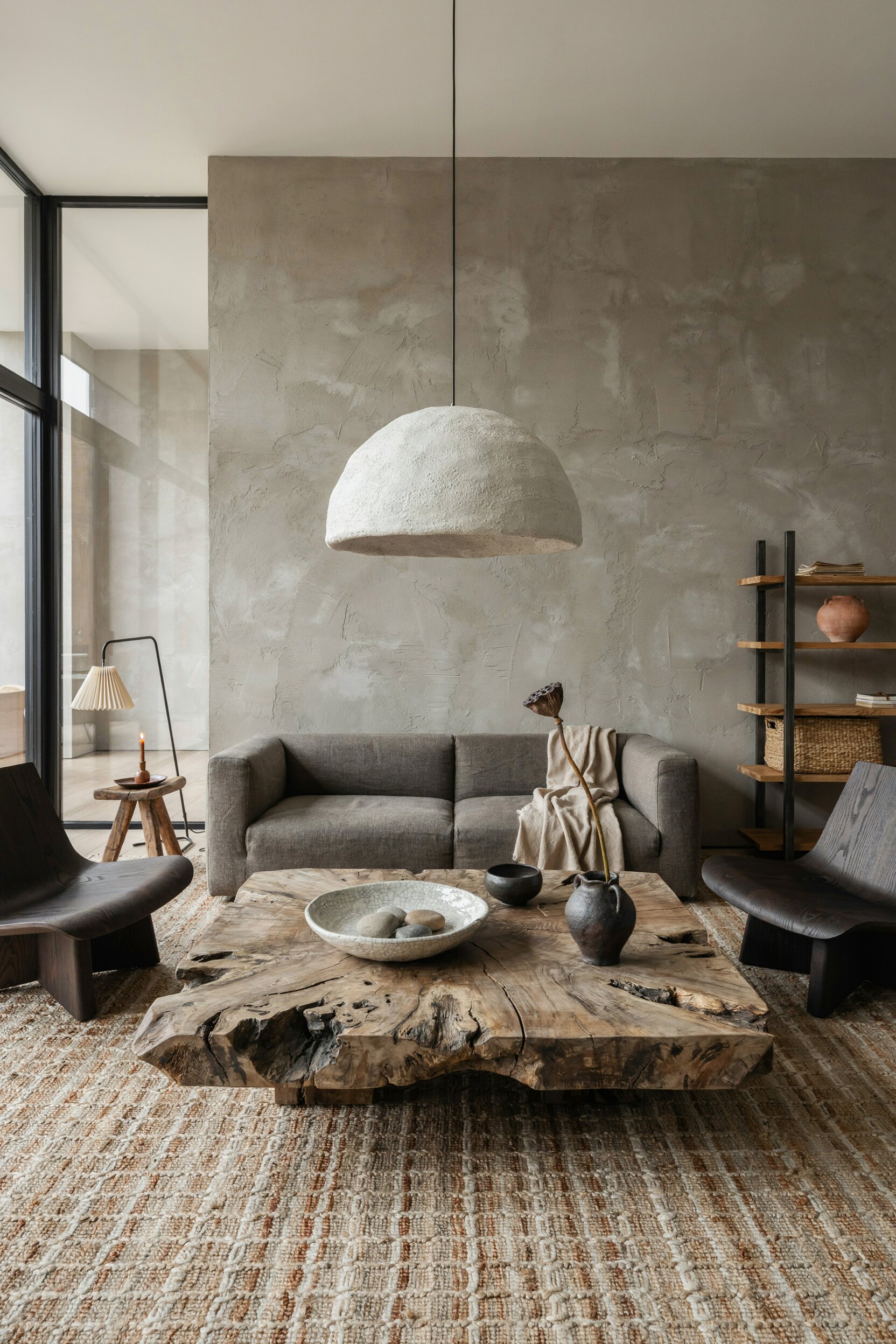
Textured Plaster or Limewash Walls
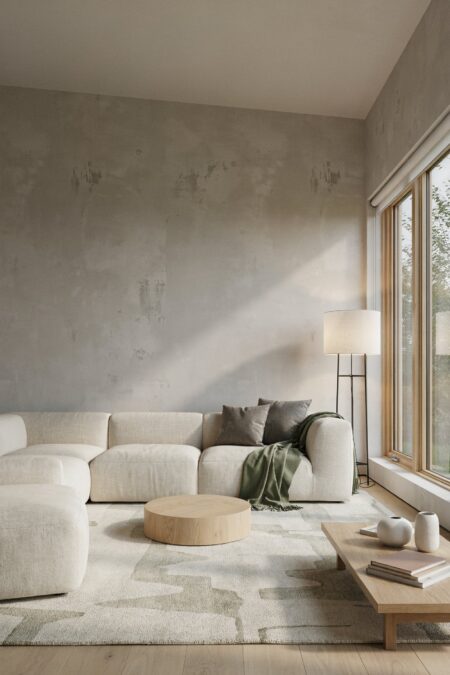
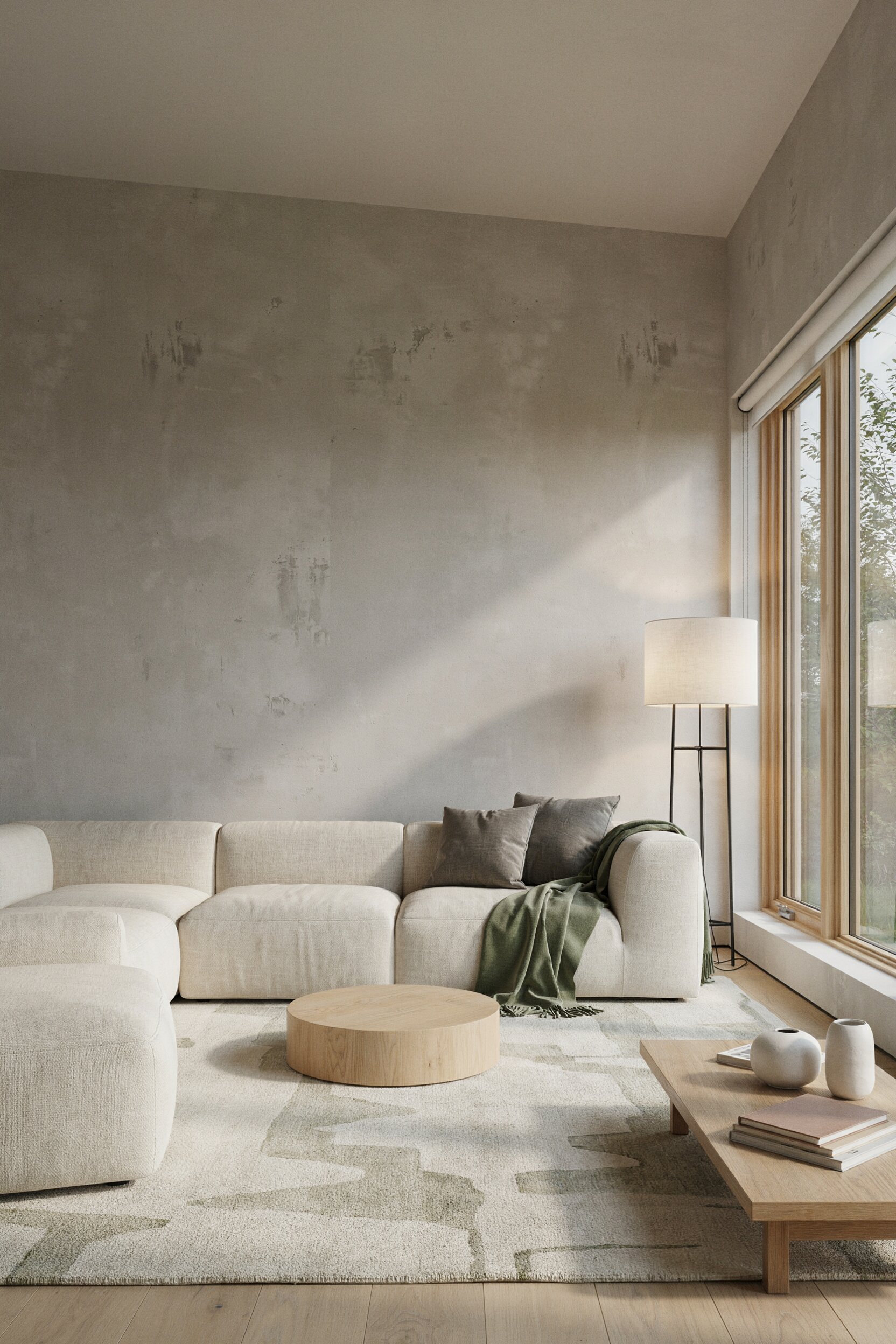
Flat paint can look lifeless. Limewash or plaster in a soft clay or putty shade gives walls a gentle, cloudy finish. The slight variation nods to wabi-sabi, the Japanese idea that imperfection holds beauty. Because the finish shifts with daylight, the room never looks quite the same twice. Keep the rest of the decor simple and let the walls lead.
- 08 of 11
Open Shelving with Room to Breathe
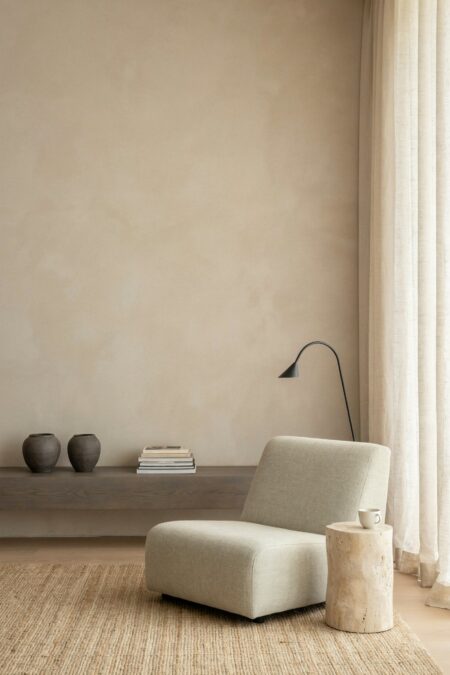
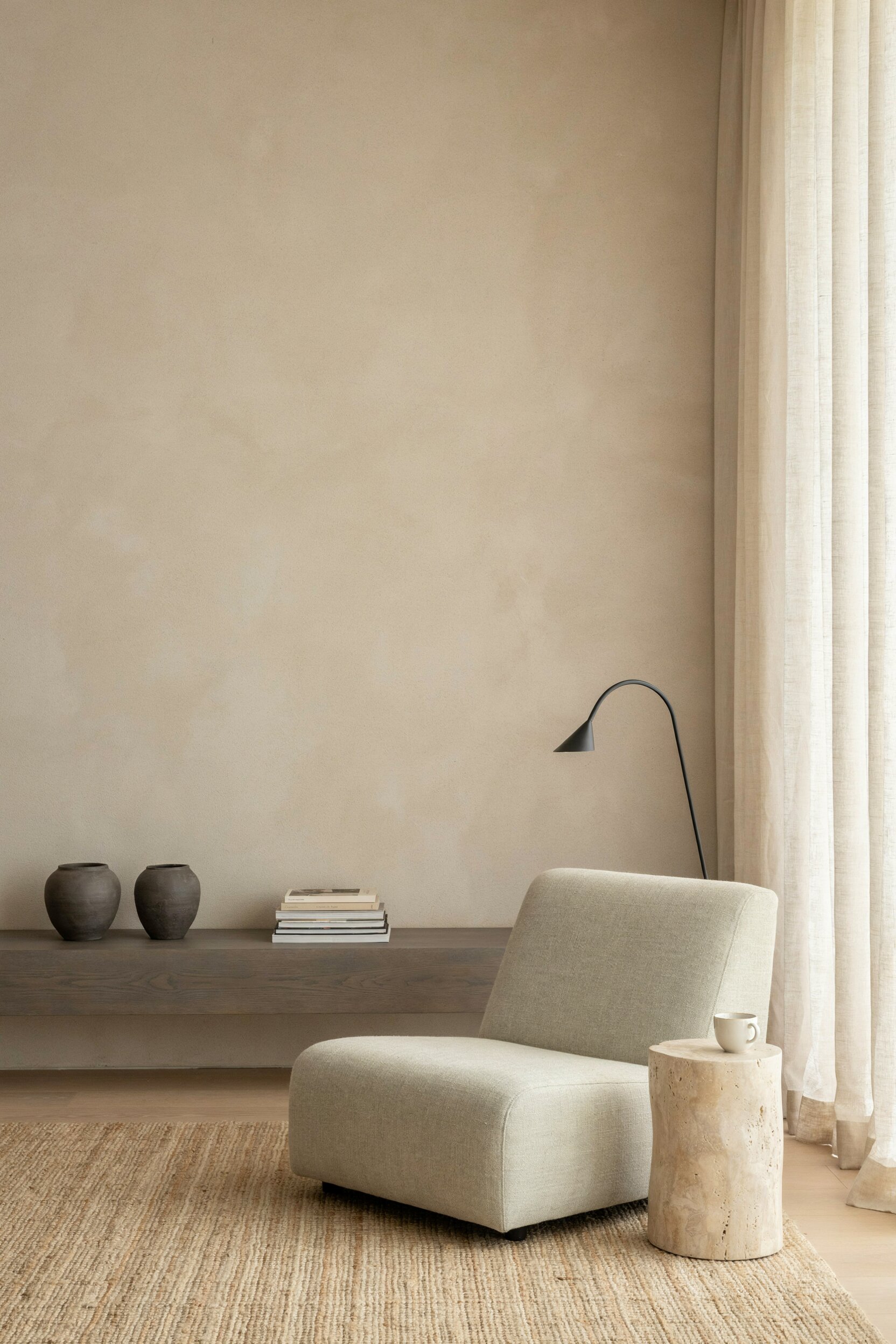
Empty space is a design feature here. Use a low, open shelf and display only a few things. Two ceramics. One neat stack of books. A small framed print. Then stop. Leave generous gaps so each object can be seen. Rotate pieces with the seasons instead of adding more. This habit keeps clutter away and the room feeling light.
- 09 of 11
Greenery with Restraint
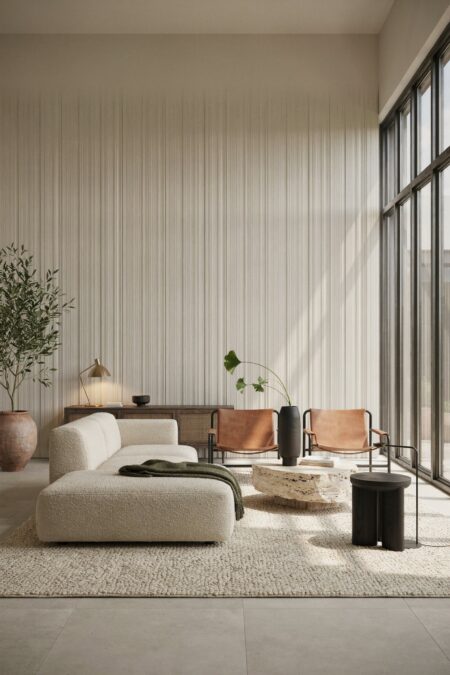
Plants soften clean lines, but go easy. One sculptural branch in a tall vase can do more than a crowded plant shelf. Try a small bonsai on the coffee table or a single olive tree in the corner. Ikebana-style arrangements, with just a few stems, suit the look well. Choose pots in stone, clay, or matte ceramic. Bright, glossy planters feel out of place.
- 10 of 11
Handmade Ceramics and Wabi-Sabi Touches
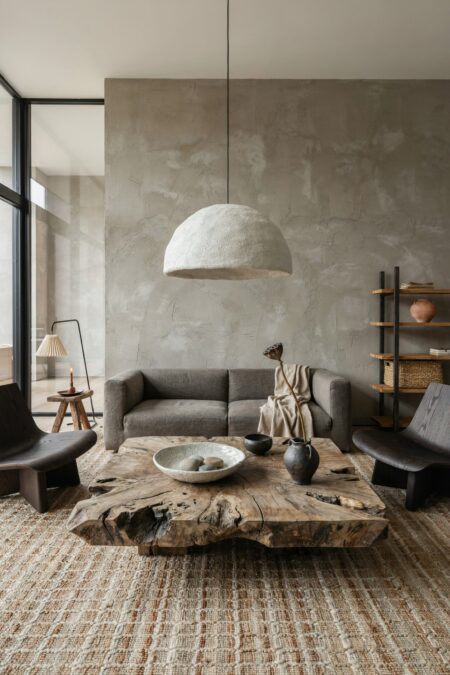
Finish the room with objects that show a human hand. A hand-thrown vase with an uneven glaze. A woven tray. A stoneware bowl on the coffee table. These small, imperfect pieces give a Japandi living room its soul, and they keep minimalist spaces from feeling like showrooms. Choose fewer items and choose them well. That is the spirit behind the best Japandi living room ideas.
- 11 of 11
Contemporary Japandi (Grounded & Cozy)
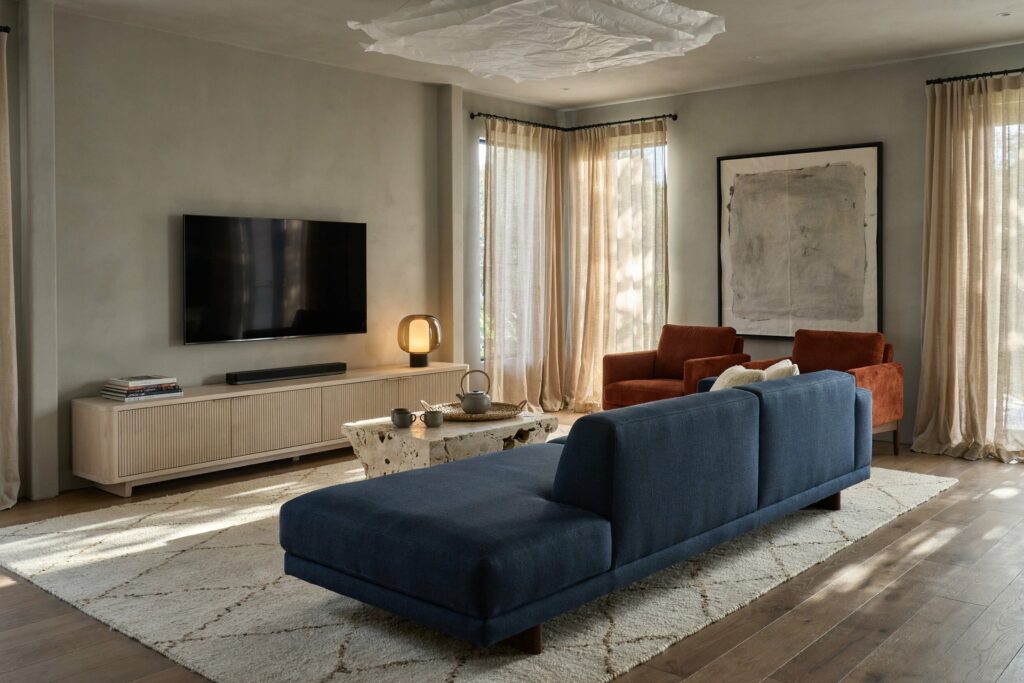
In modern rooms, you can combine elements from different interior design styles, and no one will judge you for it. For example, in a Japandi-style living room, you can add a few objects in a contemporary style.
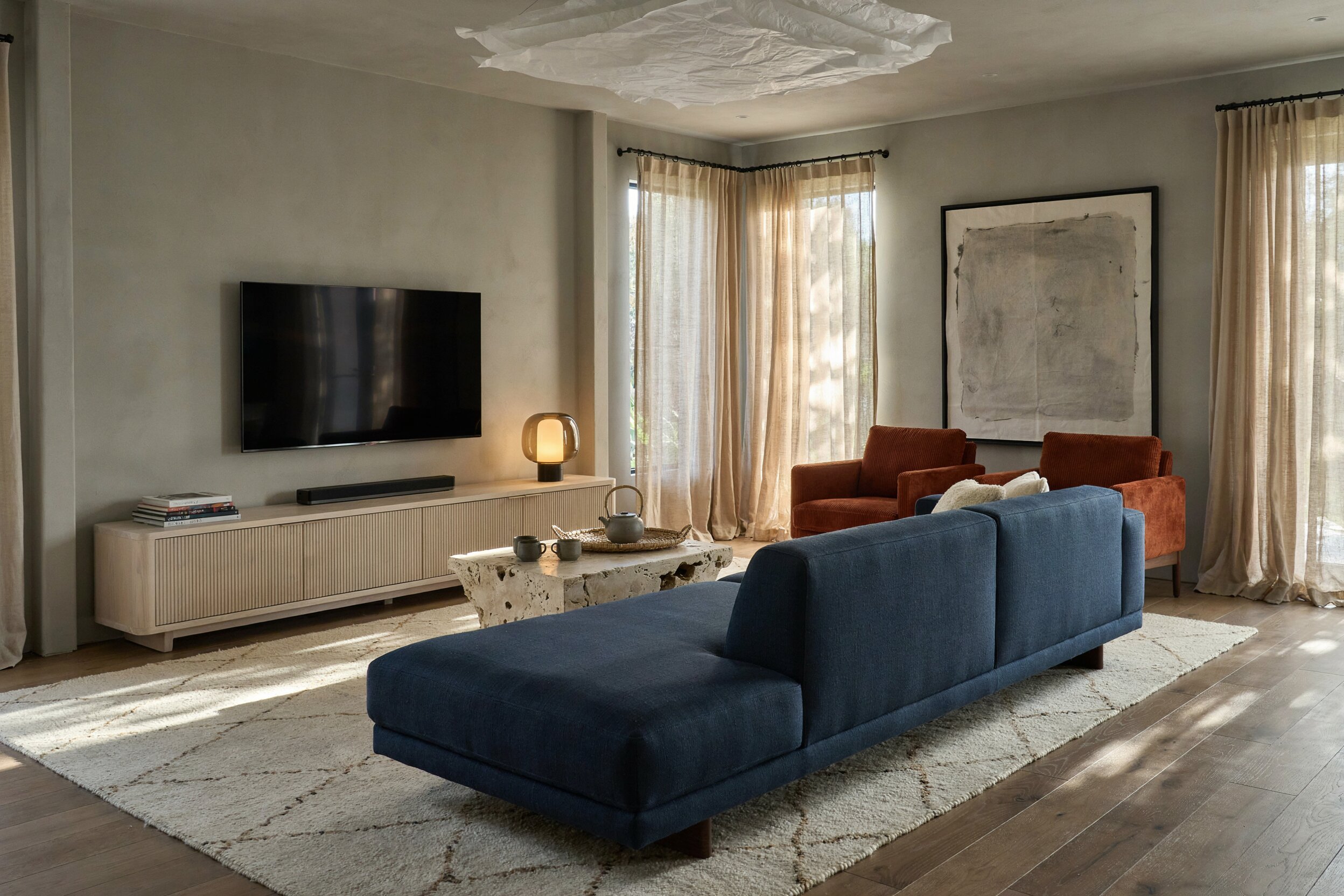
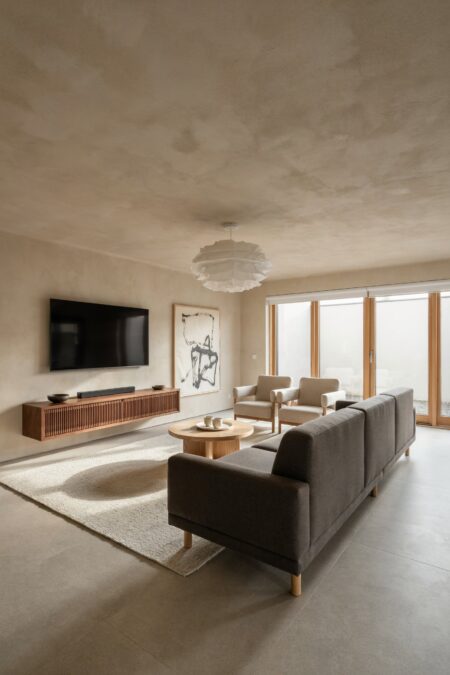
In this contemporary Japandi living room, a striking, deep slate-blue sofa is paired with two warm terracotta/rust armchairs. A large sofa acts as a serene, grounding anchor for the room. It functions almost like a neutral and won’t feel overwhelming over time. Best materials for it: flat-weave linen, denim-linen fabric, textured bouclé, or a soft brushed cotton. Using the warm rust orange on the armchairs adds a perfect pop of warmth and visual interest across from the sofa without overpowering the space.
Why This Room Successfully Nails the Look
- The 60-30-10 Color Rule: Notice how the background is completely calm. The greige/concrete-effect walls (a smooth, matte clay plaster tinted in a soft tone), the deeply grained, wire-brushed dark walnut wood floors, and the neutral textured rug make up the dominant 60%. The blue and rust tones are strictly contained to the seating (30%), and the black accents (TV, curtain rods, artwork frame) act as the sharp 10% contrast.
- Textural Balance: The space avoids feeling cold because every surface has a tactile texture. You can see the textured weave on the blue sofa, the plush corduroy-style ribbing on the rust armchairs, and the raw, porous stone of the travertine coffee table.
- Organic Minimalist Shapes: The lighting is very Japandi — featuring a multi-tiered, crumpled paper pendant light on the ceiling and a soft, ambient smoked-glass table lamp by the TV console. The clean, handleless slatted media console keeps the lines of the room sharp and uncluttered.
Adding these specific rich colors doesn’t ruin the minimalist vibe — it actually makes it feel incredibly high-end, inviting, and grounded.