
Looking for the best Etsy alternatives? Whether you sell handmade jewelry, artwork, clothing, vintage items, or personalized gifts, there are plenty of other places to sell your products online.
Some platforms, such as Amazon Handmade and Folksy, offer established marketplaces where you can reach potential customers. Others, including Shopify and WooCommerce, let you build your own online store and develop an independent brand.
In this guide, we’ll compare 14 Etsy alternatives, explain their pricing and features, and help you choose the right platform for your business.
Looking to sell digital products instead? Check out our separate guide to the best Etsy alternatives for digital products, covering platforms for printables, templates, eBooks, and digital downloads.
Best Etsy Alternatives (Quick Look)
Here is a quick comparison of the best alternatives to Etsy, depending on what you sell and how you want to run your business.
| Platform | Best For | Platform Type |
|---|---|---|
| Shopify | Building an independent online store | eCommerce platform |
| Amazon Handmade | Handmade products | Marketplace |
| eBay | Handmade, vintage, and general products | Marketplace |
| WooCommerce | Customizable online stores | eCommerce platform |
| Big Cartel | Artists and independent makers | eCommerce platform |
| Wix | Beginners and small businesses | Website builder |
| Squarespace | Creative brands and visual stores | Website builder |
| MakerPlace by Michaels | Handmade crafts in the US | Marketplace |
| Handmade.com | Independent handmade artisans | Marketplace |
| Folksy | UK handmade products | Marketplace |
| Redbubble | Artwork and print-on-demand products | Marketplace |
| Facebook Marketplace | Local and regional selling | Marketplace |
| Artfinder | Original artwork | Art marketplace |
| Faire | Wholesale handmade and lifestyle products | Wholesale marketplace |
Which Etsy Alternative Should You Choose?
If you don’t have time to compare all 14 platforms, here are some recommendations based on your business needs:
- Best for building your own online store: Shopify.
- Best for selling handmade products: Amazon Handmade.
- Best for independent handmade artisans: Handmade.com.
- Best for UK-based makers: Folksy.
- Best for artists selling original artwork: Artfinder.
- Best for print-on-demand products: Redbubble.
- Best for selling wholesale: Faire.
- Best for a customizable WordPress store: WooCommerce.
- Best for a simple independent store: Big Cartel.
This is the author’s personal opinion. The order of the alternative platforms in our list is random. Now, let’s take a closer look at each platform.
14 Best Etsy Alternatives for Sellers
1. Shopify
Best for: Sellers who want to build their own online store and develop an independent brand.
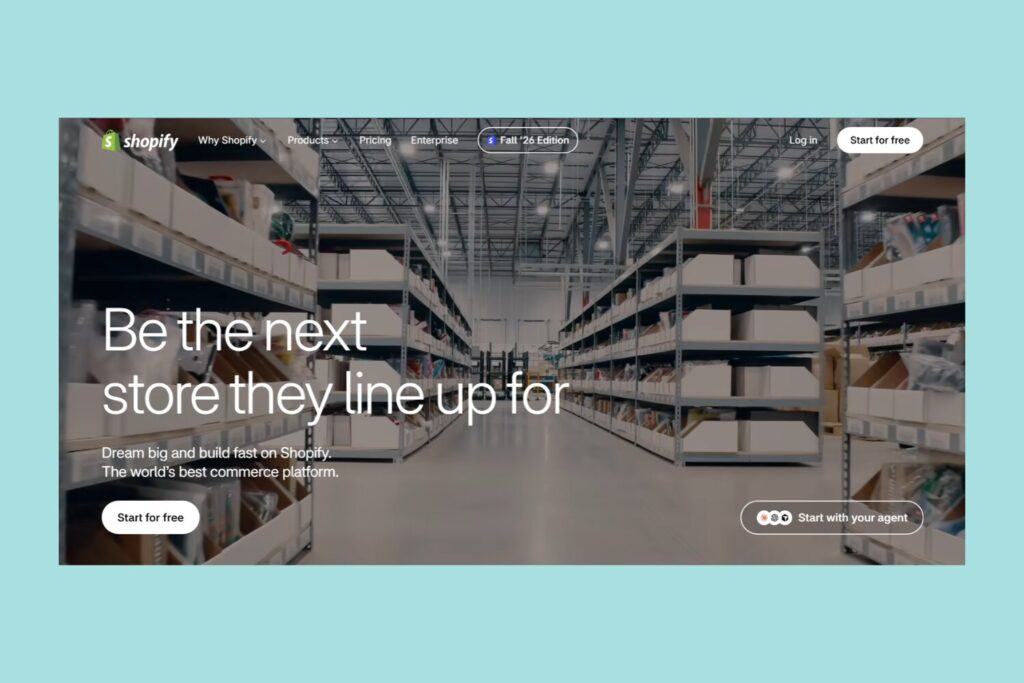
Shopify is one of the most popular eCommerce platforms for businesses that want to sell products through their own websites.
Unlike Etsy, Shopify doesn’t operate as a marketplace where shoppers browse products from different independent sellers. Instead, it gives you the tools to create your own online store, manage products, process orders, and build your brand.
You can sell handmade jewelry, clothing, home decorations, personalized gifts, accessories, and many other types of physical products.
Shopify also supports digital products, subscriptions, and various integrations for expanding your store.
Key features:
- Customizable storefronts and website themes.
- Product and inventory management.
- Integrated payment options.
- Marketing and customer management tools.
- Social media and marketplace integrations.
- Applications for extending store functionality.
Pricing: Shopify’s Basic plan starts at $29 per month with annual billing in the US. Monthly billing and pricing in other countries differ. Online card processing fees also apply, and additional transaction fees may apply when using third-party payment providers instead of Shopify Payments. See the official Shopify pricing page for current rates.
| Pros | Cons |
|---|---|
| Extensive customization options. | Requires a monthly subscription. |
| Suitable for businesses of different sizes. | You need to generate your own website traffic. |
| Supports physical and digital products. | Some advanced features require paid applications. |
| Numerous integrations and marketing tools. | Costs can increase as your business grows. |
| Greater control over your brand and storefront. |
Our take: Shopify is one of the strongest Etsy alternatives for sellers who want to move beyond a marketplace and build an independent online business. It’s particularly suitable for businesses that already have an audience or are prepared to invest in marketing.
2. Amazon Handmade
Best for: Artisans and businesses selling handmade products.
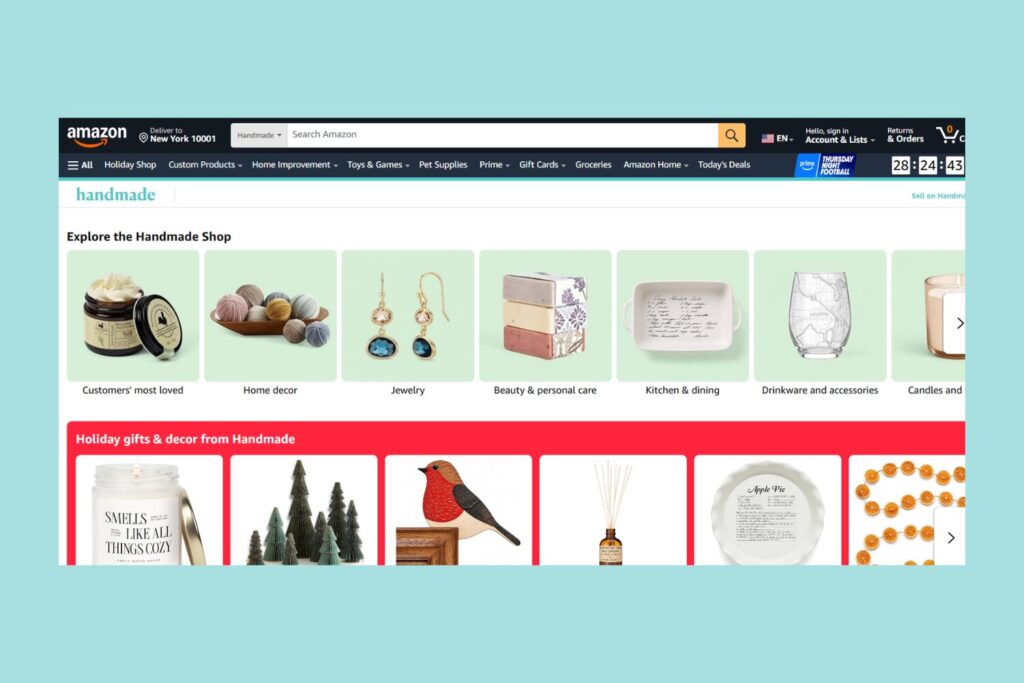
Amazon Handmade is a dedicated section of Amazon for products made by artisans.
It allows approved sellers to reach Amazon customers who are looking for handcrafted and individually designed products.
You can sell items in several categories, including jewelry, clothing, home decorations, accessories, artwork, toys, and beauty products.
Amazon Handmade requires sellers to apply and undergo an approval process to verify that their products meet its handmade requirements.
Key features:
- Access to Amazon’s existing customer base.
- Dedicated handmade product categories.
- Custom artisan storefronts.
- Product fulfillment options, including Fulfillment by Amazon for eligible products.
- Integration with Amazon’s seller tools.
Pricing: Approved Handmade sellers pay a 15% referral fee or a $0.30 minimum per item, whichever is greater, under the US Handmade fee structure. The standard Professional selling plan monthly fee ($39.99) is waived for approved Handmade sellers after the initial month. Additional fulfillment and shipping costs may apply.
See Amazon Handmade’s official seller information for details.
| Pros | Cons |
|---|---|
| Large potential customer base. | Seller application and approval required. |
| Customers already familiar with Amazon. | Less customization than an independent store. |
| Dedicated handmade categories. | Strict product and marketplace policies. |
| Opportunity to expand into international markets, subject to seller eligibility. | Referral fees can affect profit margins. |
Our take: Amazon Handmade is a good Etsy alternative for artisans who want to reach a larger marketplace audience. However, its requirements and fees make it important to calculate your margins before moving your entire product catalog.
3. eBay
Best for: Selling handmade products, vintage goods, collectibles, and other physical items.
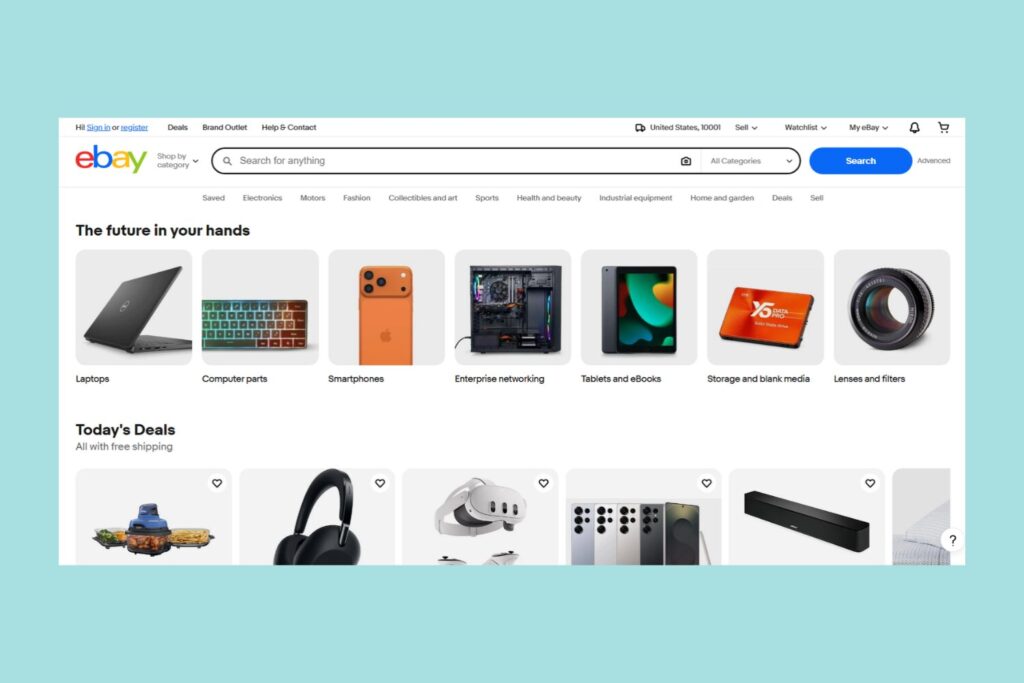
eBay is one of the oldest and most established online marketplaces.
Although it’s not specifically dedicated to handmade products, it offers sellers an opportunity to reach shoppers interested in a wide variety of items.
You can list handmade decorations, jewelry, vintage accessories, collectibles, clothing, crafts, and other products.
Unlike Etsy, eBay also supports auction-style listings alongside traditional fixed-price listings.
Key features:
- Large international marketplace.
- Fixed-price and auction listings.
- Product categories for different types of goods.
- Seller tools for managing listings and orders.
- Options for promoting products.
Pricing: Most casual sellers receive up to 250 zero-insertion-fee listings per month in the US, subject to category restrictions. Final value fees vary by category and generally include a percentage of the sale plus a per-order fee. For current rates, check eBay’s official seller fee guide.
| Pros | Cons |
|---|---|
| Large existing customer base. | Less focused on handmade and creative products. |
| Suitable for various product categories. | Strong competition from other sellers. |
| Opportunity to sell vintage and collectible products. | Selling fees vary depending on product category. |
| Auction listings provide additional selling flexibility. | Less control over branding and store design. |
| No monthly subscription required for basic casual selling. |
Our take: eBay is worth considering if you sell unique physical products, vintage items, collectibles, or handmade goods that appeal to a broad audience. It’s also a useful additional sales channel for sellers who don’t want to rely exclusively on Etsy.
4. WooCommerce
Best for: Sellers who want complete control over their online store.
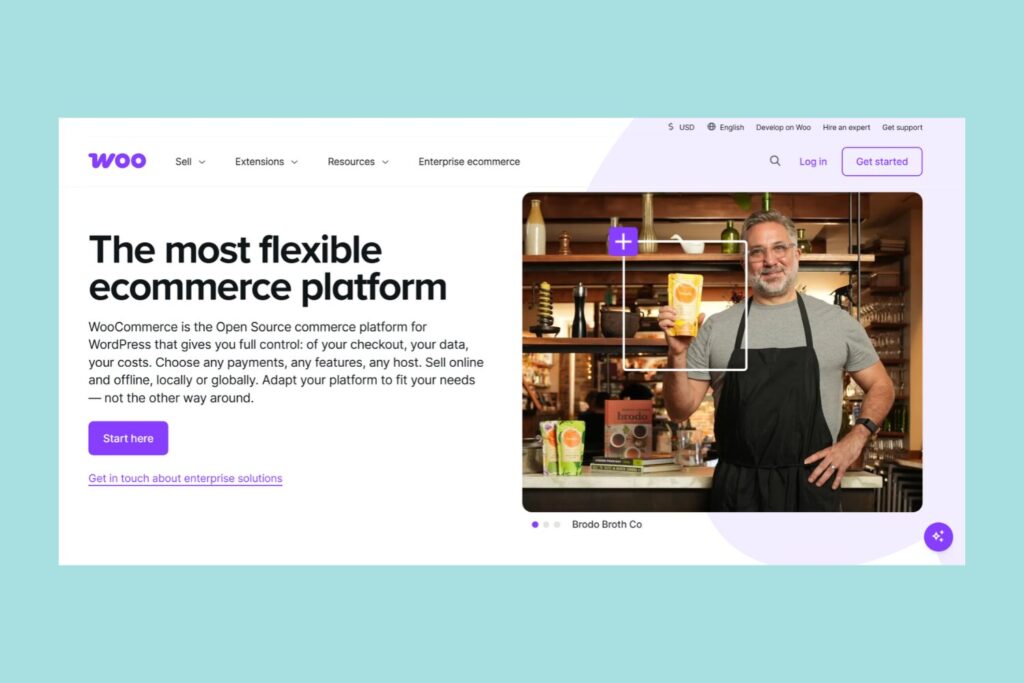
WooCommerce is an open-source eCommerce platform that works with WordPress.
It allows you to transform a WordPress website into a fully functional online store.
Unlike Etsy, WooCommerce doesn’t provide a marketplace where shoppers browse products from different sellers. Instead, you build your own website and manage your products, orders, payments, and store design.
You can sell handmade products, clothing, jewelry, artwork, digital downloads, subscriptions, and much more.
Key features:
- Full control over store customization.
- Product and inventory management.
- Multiple payment gateway integrations.
- Extensions for marketing and shipping.
- Support for physical and digital products.
- Access to a large WordPress ecosystem.
Pricing: The core WooCommerce software is free and open source. However, you need to pay for website hosting, a domain name, payment processing, and potentially premium themes or extensions. WooCommerce does not charge a platform revenue share. You can review its official pricing information.
| Pros | Cons |
|---|---|
| No monthly platform subscription for the core software. | Requires more technical knowledge than Etsy. |
| Extensive customization possibilities. | You are responsible for hosting and website maintenance. |
| More control over website content and customer data. | Additional plugins may increase costs. |
| Suitable for both physical and digital products. | You must attract visitors to your website. |
| Large ecosystem of plugins and extensions. |
Our take: WooCommerce is an excellent alternative to Etsy for sellers who want flexibility and independence. It’s particularly suitable for businesses that already have a WordPress website or want full control over their eCommerce operations.
5. Big Cartel
Best for: Independent artists, designers, and small creative businesses.

Big Cartel is an eCommerce platform designed primarily for artists and independent creators.
It allows you to create a simple online store without the complexity of some larger eCommerce solutions.
You can customize your storefront, add products, manage inventory, and accept payments.
Big Cartel is especially suitable for creators selling artwork, prints, handmade jewelry, clothing, accessories, and other independent designs.
Key features:
- Simple online store builder.
- Customizable store themes.
- Inventory and order management.
- Discount codes and promotional tools.
- Integration with payment providers.
- Support for physical and digital products.
Pricing: Big Cartel offers a limited free Gold plan, a Platinum plan at $15 per month, and a Diamond plan at $30 per month. Digital product selling is available on paid plans. Big Cartel charges no additional platform transaction fee for digital products, although payment processing fees still apply.
See the official Big Cartel pricing page for current plan details.
| Pros | Cons |
|---|---|
| Easy to set up and manage. | Fewer advanced eCommerce features than larger platforms. |
| Designed with independent creators in mind. | You need to attract your own customers. |
| Simple store customization. | Some useful features are available only on paid plans. |
| No additional platform transaction fee on digital product sales. | May not be ideal for larger businesses with complex operations. |
| Suitable for small product catalogs. |
Our take: Big Cartel is a good option for artists and small creative businesses that want a simple independent store without investing in a complicated eCommerce system.
6. Wix
Best for: Beginners who want to create a customizable online store without coding.

Wix is a website builder that also provides eCommerce functionality.
It’s particularly popular among small businesses and creative entrepreneurs who want to build a professional-looking website without technical experience.
You can choose a template, customize its appearance, add product pages, configure payments, and manage orders from one dashboard.
Wix supports various product categories, including handmade goods, clothing, accessories, artwork, and digital products.
Key features:
- Drag-and-drop website editor.
- Customizable website templates.
- Product and inventory management.
- Payment integrations.
- Marketing and SEO tools.
- Blogging functionality.
- Online booking and other business features.
Pricing: Wix offers a free website-building option, but you need an eligible paid plan to accept online payments and operate an eCommerce store. Pricing depends on your country, subscription period, and selected plan. You can compare options on the official Wix pricing page.
| Pros | Cons |
|---|---|
| Beginner-friendly website builder. | No marketplace traffic by default. |
| Extensive design customization. | eCommerce functionality requires a paid plan. |
| No coding required. | Some advanced features may require additional subscriptions. |
| Built-in website and marketing features. | Changing website templates can involve extra work. |
| Suitable for small creative businesses. |
Our take: Wix is worth considering if you want to create your own online store but don’t have experience with website development. It provides a convenient combination of website building, product management, and marketing tools.
7. Squarespace
Best for: Artists, designers, and creative businesses that prioritize website aesthetics.

Squarespace is another website builder with built-in eCommerce functionality.
It’s known for its visually appealing templates and is particularly popular among photographers, artists, designers, and creative entrepreneurs.
With Squarespace, you can create an attractive online store that reflects your brand identity and showcases your products professionally.
You can sell handmade goods, artwork, clothing, accessories, and various digital products.
Key features:
- Professional website templates.
- Customizable product pages.
- Built-in eCommerce tools.
- Blogging and content marketing features.
- Customer management.
- Integration with payment providers.
- Marketing and analytics tools.
Pricing: Squarespace offers several subscription plans. Under its current US plan structure, the Basic plan charges a 2% commerce transaction fee, while Core, Plus, and Advanced have 0% commerce transaction fees. Payment processing fees still apply. Digital products have separate transaction fees depending on the plan.
Check the official Squarespace pricing and transaction fee information before choosing a subscription.
| Pros | Cons |
|---|---|
| Attractive and professional templates. | Requires a paid subscription for a full online store. |
| Good customization options. | No built-in marketplace audience. |
| Suitable for visual brands and portfolios. | Some eCommerce features depend on your plan. |
| Website and store management in one place. | Can be less flexible than WooCommerce for advanced customization. |
| Built-in blogging features. |
Our take: Squarespace is a great alternative for artists and creative businesses that want their website to look as professional as their products. It’s particularly useful if your business relies heavily on visual presentation.
8. MakerPlace by Michaels
Best for: US-based sellers offering handmade products and crafts.
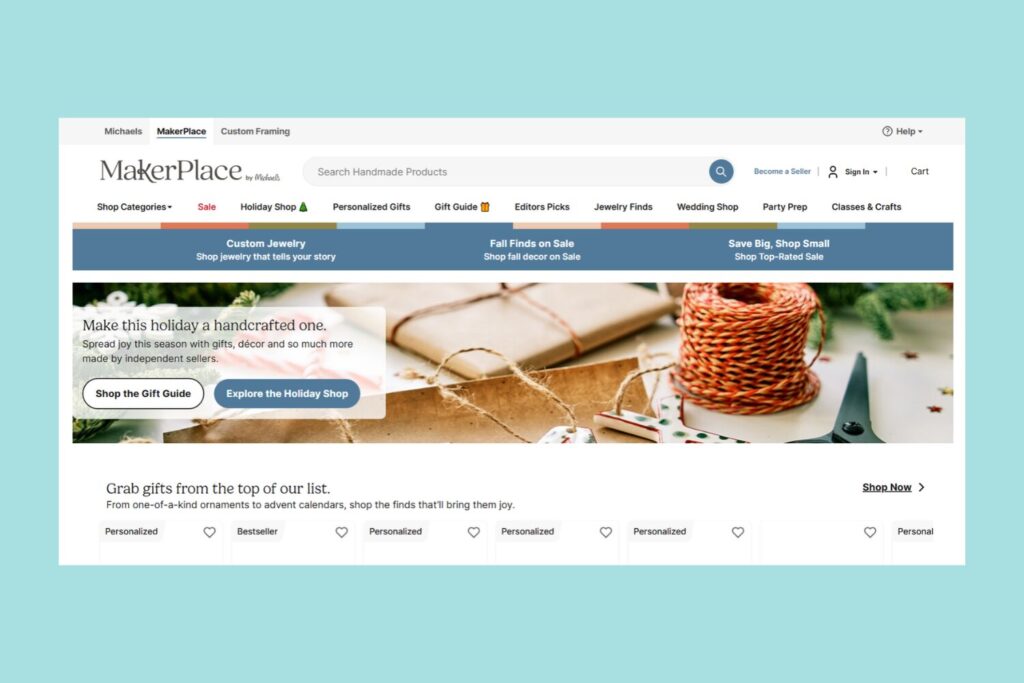
MakerPlace by Michaels is an online marketplace created by Michaels, a well-known arts and crafts retailer.
The platform is dedicated to handmade products, unique creations, and independent makers.
It gives artisans an opportunity to list their products in a marketplace aimed at shoppers interested in handmade items and creative goods.
Product categories include home decorations, jewelry, accessories, personalized gifts, artwork, and crafts.
Key features:
- Dedicated handmade marketplace.
- Free product listings.
- Seller storefronts.
- Product promotion tools.
- Seller education and resources.
- Classes and tutorials for makers.
Pricing: MakerPlace offers a free Standard seller plan with a 4% transaction fee and a Premium plan with a 2% transaction fee. The Premium plan is unlocked after spending $500 on eligible Michaels purchases during the calendar year.
An additional order processing fee applies: 3% plus $0.20 per order. These fees should be considered together when calculating your costs.
You can find the breakdown in the official MakerPlace seller support center.
Important: MakerPlace currently operates only in the United States. Sellers must have a US-based business, US bank account, and EIN or SSN. Sales and shipping are restricted to the US.
| Pros | Cons |
|---|---|
| Dedicated audience for handmade products. | Only available to US-based sellers. |
| No listing fees. | Limited international selling opportunities. |
| Established retail brand behind the platform. | Additional order processing fees apply. |
| Seller education and promotional resources. | Less flexibility than owning an independent website. |
| Relatively straightforward seller setup. |
Our take: MakerPlace is an interesting Etsy alternative for American artisans and small craft businesses. Its handmade focus and free listings make it worth considering, provided your business meets its geographic requirements.
9. Handmade.com
Best for: Independent artisans and sellers offering authentic handmade products.
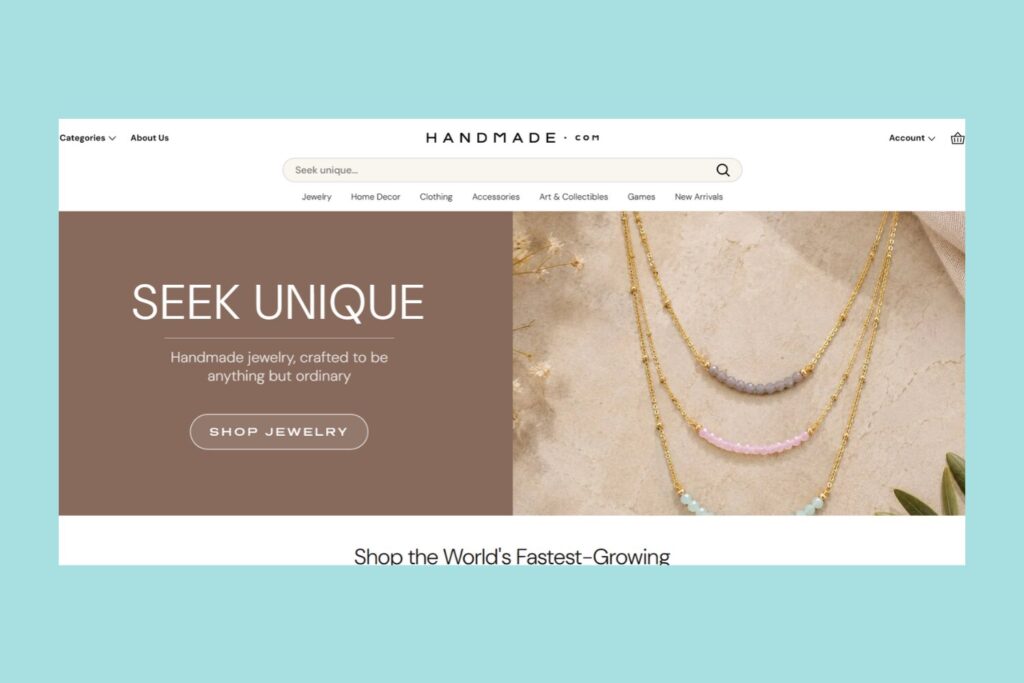
Handmade.com is a marketplace dedicated to handmade products and independent makers. It’s backed by the team behind NOVICA, an established artisan marketplace, and aims to connect shoppers with creators offering original, handcrafted goods.
The platform is particularly interesting for sellers who want to be part of a marketplace focused on handmade products rather than competing with mass-produced items.
You can apply to sell handmade jewelry, home decorations, artwork, accessories, ceramics, and other unique creations.
Handmade.com has also welcomed Jon Lincoln and Stephanie Romkey, the former CEO and creative director of Goimagine, to help shape its maker community and platform development.
Key features:
- Curated marketplace for handmade products.
- Seller applications reviewed by a juried panel.
- Individual maker storefronts.
- Emphasis on handmade authenticity and ethical business practices.
- Connections to the NOVICA artisan network.
- Seller profiles that allow makers to share their stories.
Pricing: Handmade.com currently offers an early-access program for individual makers.
Qualifying early-access sellers receive free monthly and new-listing fees permanently. However, other fees still apply:
- Transaction fee: 14.9% plus $1 per order.
- Payment processing: 3% plus $0.49.
- Platform marketing fee: 8%, reduced to 7.5% after reaching 50 shop followers.
Under the regular rate structure, the monthly fee is $3, new listings cost $0.15 per item for 90 days, and the platform marketing fee is 10%. Relisting costs $0.20.
The early-access program is subject to availability, and sellers are being onboarded in waves. See the official Handmade.com seller pricing page for the full breakdown.
Important: Handmade.com currently onboards sellers from the US and selected countries serviced by NOVICA’s Artisan Empowerment Hubs. Applications are reviewed, and joining the waitlist does not guarantee immediate acceptance. Its current buyer shipping coverage is limited to the 50 US states and Washington, DC, while international selling arrangements are still developing.
| Pros | Cons |
|---|---|
| Dedicated focus on authentic handmade goods. | Seller application and approval required. |
| Curated seller community. | Onboarding availability is limited. |
| Opportunity to share your story and develop a maker profile. | Transaction and marketing fees can be significant. |
| Early-access benefits for qualifying sellers. | International selling and shipping options are still developing. |
| Connection to NOVICA’s established artisan network. | Not suitable for mass-produced products. |
Our take: Handmade.com is an interesting Etsy alternative for independent artisans who want to sell through a dedicated handmade marketplace. Its connection to NOVICA and the involvement of former Goimagine leadership make it particularly worth watching. However, sellers should carefully calculate the combined fees and check their eligibility before applying.
10. Folksy
Best for: UK-based artisans and independent makers.
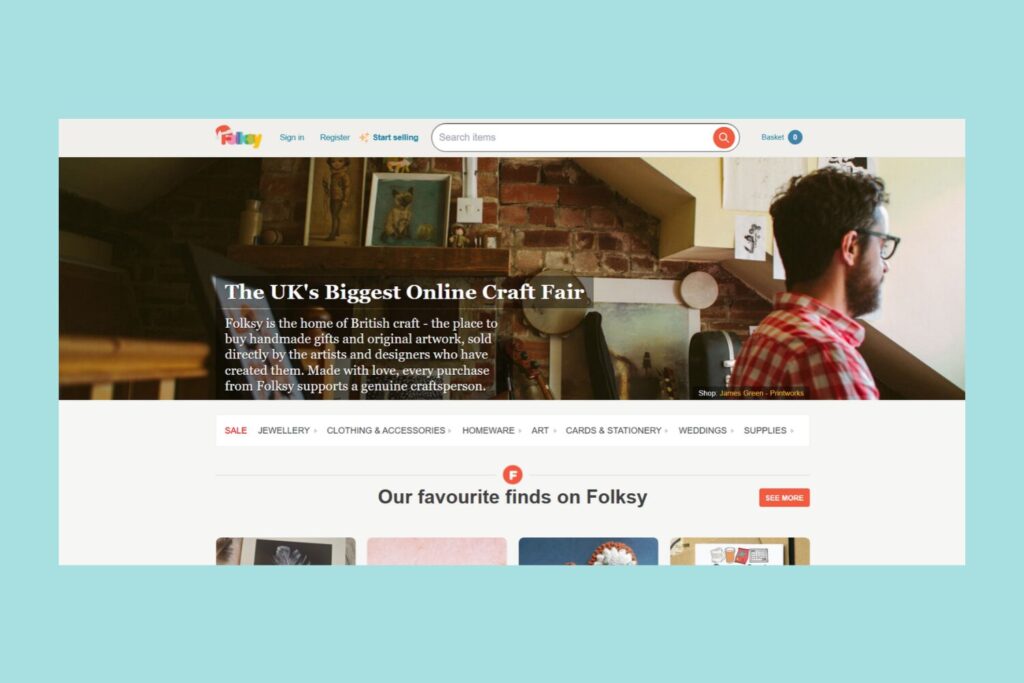
Folksy is a UK-focused marketplace dedicated to handmade goods and independent creative businesses.
It’s designed to help artisans showcase and sell products made by themselves rather than compete directly with mass-produced goods.
You can find and sell products such as handmade jewelry, artwork, home decorations, clothing, accessories, ceramics, and other creative items.
Folksy is particularly interesting for sellers who want to reach customers specifically interested in handmade products.
Key features:
- Handmade-focused marketplace.
- Individual seller storefronts.
- Product categories for different crafts.
- Community of independent makers.
- Basic and subscription-based selling options.
Pricing: Folksy offers three free initial listings. After that, its Basic account charges £0.15 plus VAT per item quantity listed, along with a selling commission. Folksy Plus offers unlimited listings for a subscription fee.
You can check the official Folksy fee policy for the latest pricing.
| Pros | Cons |
|---|---|
| Focused on handmade products. | Primarily aimed at the UK market. |
| Established UK creative community. | Smaller potential audience than Amazon or eBay. |
| More relevant audience for independent artisans than general marketplaces. | Listing and commission fees apply. |
| Simple selling structure. | Less control over storefront customization than independent platforms. |
| Subscription option for sellers with larger inventories. |
Our take: Folksy is a good Etsy alternative for UK-based sellers who specialize in handmade products and want to reach shoppers who appreciate independent craftsmanship.
11. Redbubble
Best for: Artists and designers who want to sell their designs on print-on-demand products.
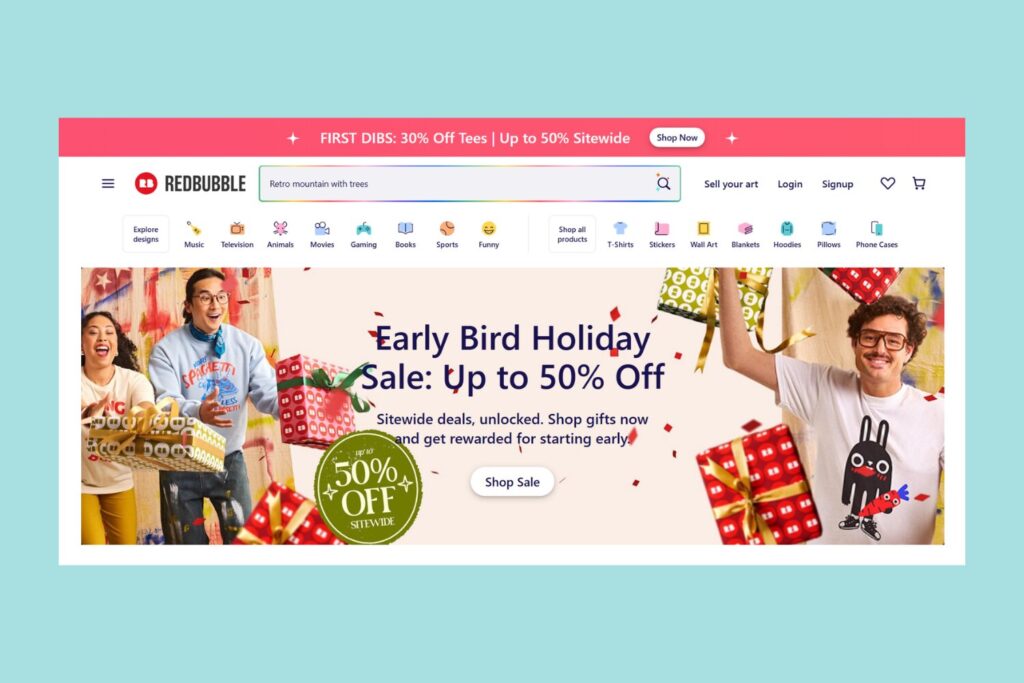
Redbubble is an online marketplace that allows independent artists to upload their designs and sell them on various products.
Rather than manufacturing and shipping products yourself, you upload your artwork, choose the products on which it appears, and let Redbubble’s fulfillment partners handle production and shipping.
Products include T-shirts, stickers, phone cases, wall art, home decorations, and accessories.
This model makes Redbubble particularly attractive to artists who want to monetize their designs without managing physical inventory.
Key features:
- Print-on-demand fulfillment.
- Large product catalog.
- Artist storefronts.
- Product customization and pricing.
- International customer reach.
- Production and shipping handled by fulfillment partners.
Pricing: Creating an account and uploading designs is free. However, Redbubble uses Standard, Premium, and Pro account tiers.
Under its published fee structure, Standard accounts are charged a platform fee equal to 50% of monthly earnings, while Premium accounts are charged 20%. Pro accounts are exempt. Additional fees may apply to earnings from markups above 20% for Standard and Premium accounts.
These charges make it especially important to check your account classification and calculate your actual earnings.
See Redbubble’s official account tier and fee explanation.
| Pros | Cons |
|---|---|
| No need to manufacture products. | Less control over the customer experience. |
| No inventory management. | Platform fees can significantly reduce earnings. |
| Production and shipping are handled for you. | Limited product customization compared with independent stores. |
| Suitable for artists and graphic designers. | Strong competition from other artists. |
| Access to an established marketplace. |
Our take: Redbubble is an interesting Etsy alternative for artists who want to sell their designs without managing inventory or shipping. However, its current account fee structure deserves careful consideration before committing to the platform.
12. Facebook Marketplace
Best for: Local sellers and small businesses testing demand for physical products.
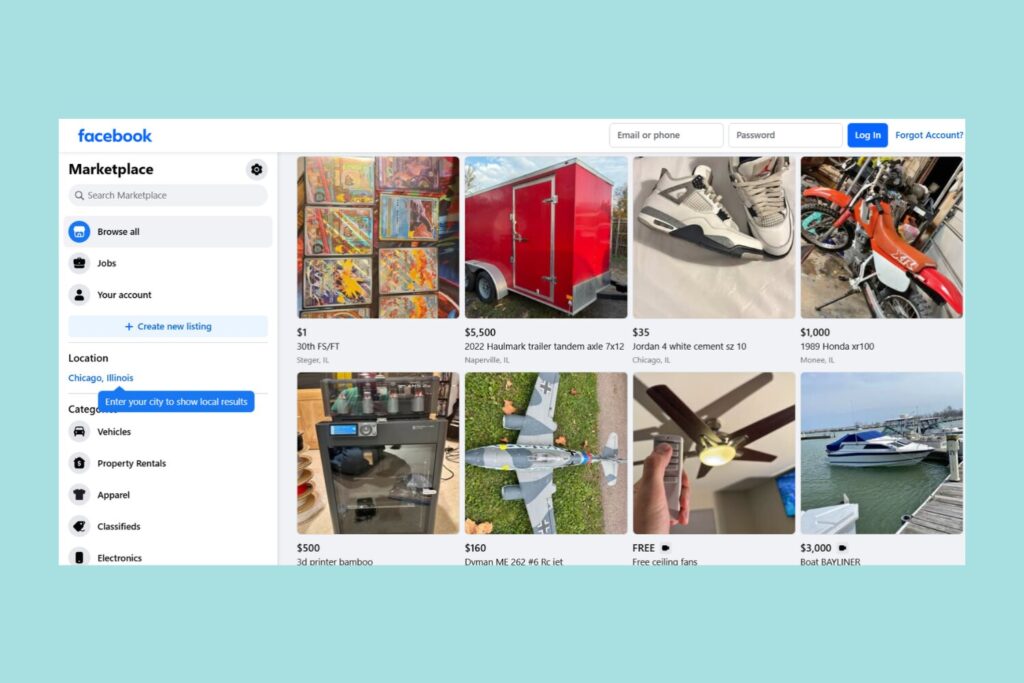
Facebook Marketplace is a platform where people can list products and connect with potential buyers in their local area or other supported markets.
Although it’s not specifically designed for handmade goods, it can be useful for small businesses selling crafts, clothing, accessories, decorations, and other physical products.
One of its main advantages is the ability to connect directly with potential customers through Facebook.
Key features:
- Product listings.
- Local buyer discovery.
- Direct communication with potential customers.
- Integration with Facebook.
- Local pickup and other supported selling arrangements.
Pricing: Listing and selling costs depend on the available Marketplace features and the way a transaction is completed. Local transactions and shipped checkout can have different fee arrangements. Check the applicable rules for your country.
| Pros | Cons |
|---|---|
| Access to local shoppers. | Not specifically focused on handmade products. |
| Useful for testing product demand. | Less suitable for building a recognizable creative brand. |
| Direct communication with buyers. | Selling and payment features vary by country. |
| Suitable for small businesses and individual sellers. | Not a complete replacement for a dedicated eCommerce store. |
| Can complement an existing online store. |
Our take: Facebook Marketplace is better viewed as an additional sales channel than a direct replacement for Etsy. It’s particularly useful for sellers who want to reach nearby buyers and test new physical products.
13. Artfinder
Best for: Independent artists selling original artwork.
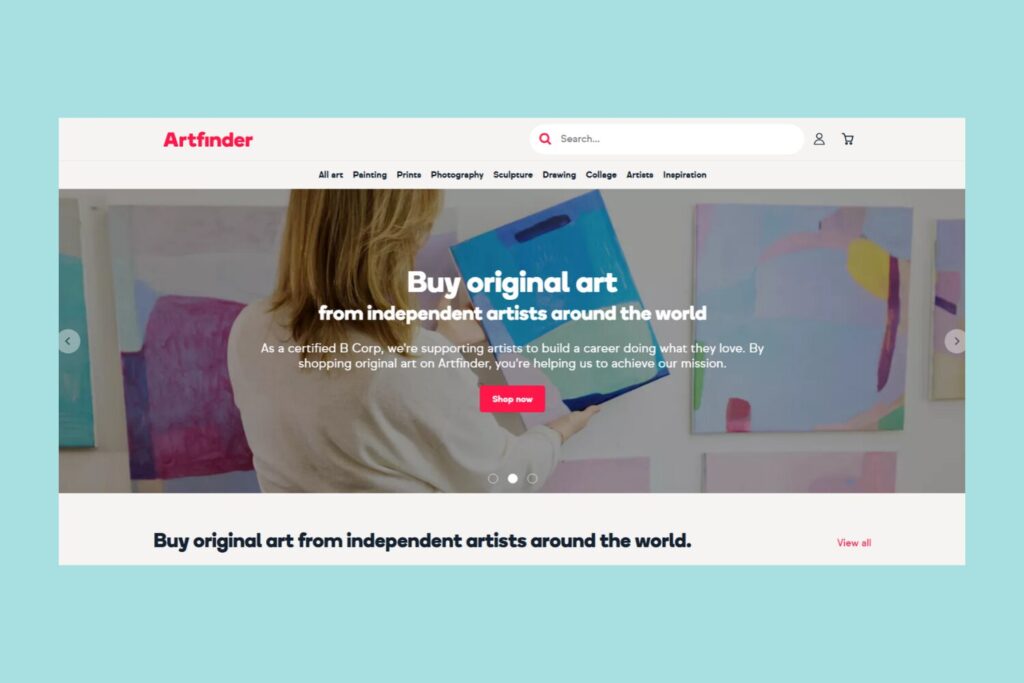
Artfinder is an online art marketplace that connects independent artists with people looking to purchase original artwork.
Unlike general marketplaces, Artfinder focuses specifically on creative work and independent artists.
It supports different artistic styles and mediums, including paintings, drawings, photography, sculptures, and mixed-media artwork.
The platform uses a curated application process, which means artists must apply before opening a seller account.
Key features:
- Marketplace dedicated to original art.
- Artist storefronts.
- Curated seller applications.
- Tools for listing and managing artwork.
- International customer reach.
- Artist promotion and discovery features.
Pricing: Artfinder offers three seller plans. Under its published US pricing structure, the Starter plan is free and charges 50% commission. The Core plan costs $14 per month and charges 45% commission, while the Premium plan costs $40 per month and charges 40% commission. Check the official Artfinder seller plan information before applying.
Important: Artfinder focuses on original artwork and has country-specific seller eligibility requirements. It also currently does not accept AI-generated artwork.
| Pros | Cons |
|---|---|
| Dedicated audience for original art. | Application and approval required. |
| Opportunity to showcase your work professionally. | Relatively high commission rates. |
| Curated marketplace environment. | Monthly subscription fees on paid plans. |
| Artist-focused features and resources. | Not suitable for mass-produced products or general crafts. |
| Different subscription options. |
Our take: Artfinder is worth considering for artists who sell original artwork and want to reach an audience specifically interested in art. It’s less suitable for sellers offering general handmade products, mass-produced accessories, or digital templates.
14. Faire
Best for: Handmade and lifestyle brands looking to sell wholesale to independent retailers.
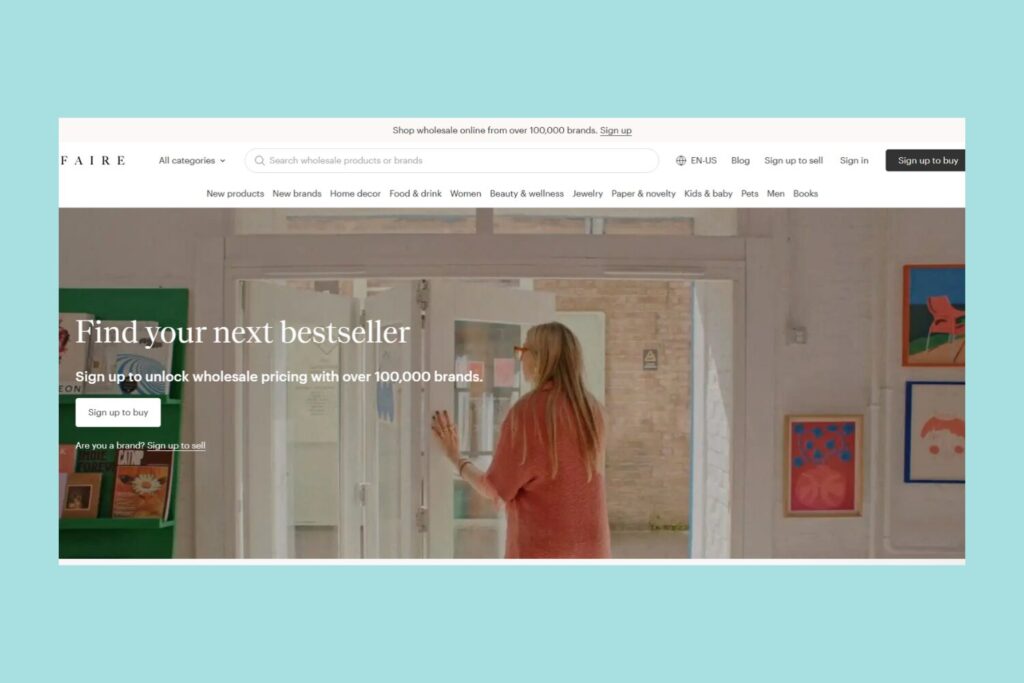
Faire is slightly different from the other Etsy alternatives on this list.
Instead of primarily connecting individual sellers with everyday shoppers, Faire is a wholesale marketplace where brands can sell their products to independent retail stores and other qualified buyers.
For example, imagine you produce handmade candles, jewelry, ceramics, stationery, accessories, or home decorations. Instead of selling every item individually, you can offer wholesale collections to boutiques that want to stock your products.
This makes Faire an interesting option for established makers and creative businesses looking to expand beyond direct-to-consumer sales.
Key features:
- Wholesale marketplace for independent brands.
- Connections with retailers and boutiques.
- Wholesale product catalogs.
- Order and inventory management tools.
- Retailer discovery and business tools.
- Faire Direct for bringing your own retail customers to the platform.
Pricing: Faire is free to join for brands. For North American sellers, marketplace orders generally carry a 15% commission and a one-time $10 new-customer fee on the retailer’s first order. Orders through qualifying Faire Direct links have 0% commission. International commission arrangements can differ, so check the rates for your region.
See Faire’s official brand pricing guide for details.
| Pros | Cons |
|---|---|
| Access to independent retailers and boutiques. | Not designed primarily for individual consumer sales. |
| Opportunity to sell larger wholesale orders. | Wholesale pricing requires sufficient profit margins. |
| Useful for growing established product brands. | Retailers may have minimum order requirements. |
| No upfront marketplace subscription required. | Commission rates can be significant. |
| Faire Direct offers a way to bring existing retail relationships to the platform. | Not suitable for every type of handmade business. |
Our take: Faire is not a direct replacement for Etsy, but it’s an excellent additional channel for makers who want to grow their businesses through wholesale. If you already sell handmade products and have the capacity to fulfill larger orders, it’s worth exploring.
Why Are Sellers Looking for Etsy Alternatives?
Now that we’ve covered the available platforms, it’s worth looking at why sellers consider moving away from Etsy or expanding to other sales channels.
Etsy offers access to an established marketplace, but that convenience comes with certain limitations. Depending on your products, sales volume, and business goals, another platform might offer a better fit.
Here are some of the most common reasons sellers look for alternatives to Etsy.
1. High Selling Fees
One of the biggest concerns among Etsy sellers is the number of fees involved in making a sale.
Sellers may have to account for listing fees, transaction fees, payment processing fees, and additional advertising costs. These expenses can significantly affect profit margins, especially for businesses selling inexpensive products.
For example, when you sell a $10 handmade item, even relatively small fees can represent a noticeable portion of your earnings.
Other platforms have different pricing structures. Some charge monthly subscriptions, others take a percentage of each transaction, and some offer open-source software without platform transaction fees.
The important thing is to compare the total cost of selling rather than looking at just one advertised fee.
2. Too Much Competition
Etsy attracts sellers from different countries and product categories. While its large marketplace can help customers discover unique products, it also means that sellers compete with many other shops.
Popular categories such as jewelry, printable planners, home decorations, clothing, and personalized gifts can be particularly competitive.
Even products with excellent photography and descriptions may struggle to get noticed.
Selling through another marketplace or building your own store can help diversify your sales channels and reduce dependence on competition within Etsy.
3. Limited Store Customization
Etsy provides sellers with a ready-made storefront, but customization options are relatively limited.
You can add product photos, descriptions, banners, and shop information, but you don’t have the same freedom to design an independent website.
For sellers who want to build a recognizable brand, customize their shopping experience, and create a unique online presence, platforms such as Shopify, WooCommerce, Wix, and Squarespace offer more flexibility.
4. Less Control Over Your Business
When you sell through a marketplace, you operate within its rules, policies, and technical limitations.
Changes to fees, search visibility, seller requirements, or marketplace policies can affect your business.
Having your own online store gives you more control over branding, website design, customer communication, and marketing.
However, it also means taking responsibility for attracting visitors and building customer relationships.
5. Dependence on One Marketplace
Relying entirely on Etsy means that much of your business depends on one platform.
If your listings lose visibility, your account encounters problems, or your sales decline, your entire business may be affected.
Selling through multiple channels can help diversify your revenue and reach different types of customers.
You don’t necessarily have to leave Etsy. In many cases, adding another marketplace or launching your own website is a more practical strategy.
Best Etsy Alternatives for Selling Handmade Products and Crafts

If you sell handmade goods, crafts, or personalized products, you don’t necessarily need a platform that supports every type of online business.
A marketplace focused on handmade products may provide a more relevant audience than a general eCommerce platform.
Here are some options worth considering:
| Platform | Best For | Main Advantage |
|---|---|---|
| Amazon Handmade | Handmade products | Access to Amazon shoppers |
| MakerPlace by Michaels | Handmade crafts in the US | Dedicated maker marketplace |
| Handmade.com | Independent handmade artisans | Curated handmade community |
| Folksy | UK handmade products | Handmade-focused community |
| Shopify | Independent craft businesses | Brand and store customization |
| Big Cartel | Small creative businesses | Simple online store |
The best option depends on your location, product category, and business goals.
For example, if you’re based in the US, MakerPlace may be worth considering. Handmade.com is another option for makers who meet its current seller eligibility and application requirements. If you’re in the UK, Folksy provides access to a dedicated handmade marketplace.
On the other hand, Shopify and Big Cartel are more suitable if you want to build your own brand and operate independently.
Best Etsy Alternatives for Artists and Selling Art

Artists have different requirements from sellers of general physical products.
Some want to sell original paintings, while others focus on prints, illustrations, stickers, or designs for print-on-demand products.
Here are several platforms that may be particularly suitable:
| Platform | Best For | Selling Model |
|---|---|---|
| Artfinder | Original artwork | Art marketplace |
| Redbubble | Illustrations and graphic designs | Print on demand |
| Big Cartel | Independent artists | Personal online store |
| Shopify | Building an art brand | Independent online store |
| Squarespace | Artists and photographers | Portfolio and online store |
If you create original artwork, Artfinder offers a specialized audience.
If you want to put your designs on T-shirts, stickers, and other products without handling fulfillment, Redbubble may be worth exploring.
For artists who want complete control over their storefront and brand identity, Big Cartel, Shopify, and Squarespace offer more flexibility.
Etsy Alternatives: Marketplaces vs. Your Own Online Store
One of the most important decisions when looking for websites like Etsy is choosing between an established marketplace and an independent online store.
Although both options allow you to sell products online, they work quite differently.
Online Marketplaces
Marketplaces such as Amazon Handmade, eBay, Folksy, Handmade.com, and Artfinder bring different sellers together in one place.
Customers visit these platforms to browse products, compare options, and make purchases.
Main advantages:
- Potential access to existing shoppers.
- Easier to start selling without building a website.
- Marketplace tools for managing listings and orders.
- Less technical maintenance.
Main disadvantages:
- Competition from other sellers.
- Platform fees and commissions.
- Limited control over store design.
- Dependence on marketplace rules and visibility.
Independent Online Stores
Platforms such as Shopify, WooCommerce, Big Cartel, Wix, and Squarespace allow you to create your own online store.
Instead of competing for visibility within a shared marketplace, you build your own website and develop your brand.
Main advantages:
- More control over branding and customization.
- Greater flexibility in managing products.
- More control over website content and customer relationships.
- Opportunity to build an independent business.
Main disadvantages:
- You need to attract visitors yourself.
- Website hosting or subscription costs.
- More responsibility for marketing and customer acquisition.
- Some technical setup may be required.
Which Option Is Better?
There isn’t one answer that works for everyone.
If you’re just starting out and don’t have an existing audience, an established marketplace can make it easier to reach potential customers.
If you already have a following or want to build a recognizable brand, an independent online store may be a better long-term option.
Many sellers use both approaches: they maintain their marketplace presence while gradually developing their own website.
How to Choose the Best Etsy Alternative
With so many platforms available, choosing the right one can seem overwhelming.
Rather than selecting the most popular option, consider what actually matters for your business.
Here are six things to evaluate before making a decision.
1. Consider What You Sell
Start by identifying your main product category.
For example:
- Handmade jewelry and accessories: Amazon Handmade, Folksy, MakerPlace.
- Artwork and illustrations: Artfinder, Redbubble, Big Cartel.
- Clothing and personalized gifts: Shopify, eBay, Wix.
- Handmade home decorations: Amazon Handmade, MakerPlace, Shopify.
- Wholesale crafts and lifestyle products: Faire.
Some platforms are designed for specific product categories, while others support a wider variety of products.
2. Compare Selling Fees
Don’t choose a platform simply because it advertises low fees.
Consider all the costs involved, including:
- Monthly subscriptions.
- Listing fees.
- Transaction commissions.
- Payment processing.
- Advertising costs.
- Additional applications or extensions.
- Shipping and fulfillment expenses.
For example, WooCommerce has no monthly subscription for its core software, but hosting and other operating expenses still apply.
Shopify charges a subscription, while marketplace platforms may take a percentage of each sale.
The cheapest option on paper isn’t necessarily the most affordable one for your particular business.
3. Check Whether the Platform Has Built-In Traffic
This is especially important when comparing marketplaces with independent stores.
A marketplace may already have people searching for products.
An independent store usually requires you to generate traffic through SEO, social media, advertising, email marketing, or other channels.
For beginners, access to existing marketplace shoppers can be valuable.
For established businesses, having control over their own traffic and marketing strategy may be more important.
4. Evaluate Customization Options
Consider how much control you want over your storefront.
Do you simply need a place to list products, or do you want a website that reflects your brand identity?
Platforms such as Shopify, WooCommerce, Wix, and Squarespace provide more customization options than traditional marketplaces.
If building a recognizable brand is important to you, an independent store may be worth the additional effort.
5. Check Seller Eligibility in Your Country
Not every Etsy alternative is available everywhere.
Some platforms restrict seller registration, payment processing, shipping destinations, or specific product categories.
For example, MakerPlace is currently limited to US-based sellers, while Folksy is primarily focused on the UK market. Handmade.com also has country-specific onboarding requirements.
Before creating an account, review the platform’s seller requirements and confirm that your country and preferred payment methods are supported.
6. Think About Long-Term Growth
The platform that works best for a small shop today might not be suitable when your business expands.
Consider whether the platform can support:
- A growing product catalog.
- Higher order volumes.
- Multiple sales channels.
- International customers.
- Inventory management.
- Marketing automation.
- Wholesale orders.
Choosing a platform that can grow with your business may save you time and money in the future.
Should You Leave Etsy or Sell on Multiple Platforms?
Finding alternatives to Etsy doesn’t necessarily mean you need to close your existing Etsy shop.
In fact, selling through multiple channels can be a practical way to diversify your business.
For example, you could:
- Keep your Etsy shop to benefit from marketplace traffic.
- Launch a Shopify or WooCommerce store to build your own brand.
- Use Amazon Handmade to reach another group of shoppers.
- Explore Faire if you’re ready to offer wholesale products.
- Sell locally through Facebook Marketplace where supported.
This approach allows you to test different platforms without immediately abandoning your existing sales channel.
However, managing multiple stores requires organization.
You’ll need to keep inventory updated, monitor orders, maintain consistent product information, and manage customer communication.
Inventory synchronization tools can help reduce manual work, particularly when you sell the same products on several marketplaces.
The most important thing is to avoid depending entirely on one platform for your business.
Frequently Asked Questions About Etsy Alternatives
What is the best alternative to Etsy?
The best Etsy alternative depends on what you sell and how you want to operate your business.
Shopify is a strong choice for sellers who want an independent online store. Amazon Handmade is suitable for artisans who want access to a large marketplace, while WooCommerce offers extensive customization and control.
For independent handmade artisans, Handmade.com is another option worth exploring, subject to its seller approval and availability requirements.
What websites are like Etsy for selling handmade items?
Several marketplaces and eCommerce platforms allow you to sell handmade products.
Popular options include Amazon Handmade, MakerPlace by Michaels, Handmade.com, Folksy, Shopify, Big Cartel, and eBay.
Some focus specifically on handmade goods, while others support a much broader range of products.
What are the cheapest Etsy alternatives?
The answer depends on how many products you sell and how much revenue you generate.
WooCommerce has no monthly subscription for its core software, but hosting and maintenance cost money. Big Cartel offers a limited free plan, while MakerPlace provides free product listings for eligible US sellers.
Compare total operating costs, including processing and transaction fees, before making a decision.
What is the best Etsy alternative for artists?
Artfinder is a specialized marketplace for original artwork. Redbubble is suitable for artists who want to sell designs through print-on-demand products.
Big Cartel, Shopify, and Squarespace are good options for artists who prefer to create their own online stores and establish independent brands.
Are there Etsy alternatives for small businesses?
Yes. Platforms such as Shopify, WooCommerce, Wix, Squarespace, Big Cartel, and eBay can all work for small businesses.
The right choice depends on your products, budget, technical experience, and whether you want access to an existing marketplace or prefer to build your own website.
Can I sell on Etsy and other marketplaces at the same time?
Yes. You can operate an Etsy shop while selling through other marketplaces and your own online store, provided you follow each platform’s rules.
However, you’ll need to manage inventory, orders, and product availability across all your sales channels.
Is Shopify better than Etsy?
Shopify and Etsy serve different purposes.
Etsy is an established marketplace where customers can discover products from different sellers. Shopify allows you to build and manage your own online store.
Shopify offers more customization and brand control, while Etsy can provide access to existing marketplace traffic.
The better option depends on your business goals.
Is Handmade.com a good Etsy alternative?
Handmade.com is an interesting alternative for sellers offering authentic handmade products.
It provides a curated marketplace with a focus on independent makers and ethical business practices. However, sellers need to apply, meet the platform’s requirements, and consider its transaction, payment processing, and marketing fees.
It’s worth exploring, but check the latest seller rates and country eligibility before applying.
Is Faire a good Etsy alternative?
Faire is a good option for established makers and brands that want to sell wholesale to independent retailers.
However, it’s not a direct replacement for Etsy because its primary audience consists of retail businesses rather than individual shoppers.
It can be a useful additional sales channel for businesses that have the capacity to fulfill larger orders.
Are there Etsy alternatives for digital downloads?
Yes. Several platforms support selling digital downloads, including Shopify, WooCommerce, Big Cartel, and other specialized digital product platforms.
For a more detailed comparison, read our guide to Etsy alternatives for selling digital products.
Final Thoughts
There are plenty of Etsy alternatives available in 2026, ranging from established marketplaces to independent eCommerce platforms.
The best option depends on your products, location, budget, and long-term business goals.
If you want access to an existing audience, platforms such as Amazon Handmade, eBay, Folksy, and Handmade.com are worth considering. If you want to build your own brand and have more control over your online store, Shopify, WooCommerce, Big Cartel, Wix, and Squarespace offer more flexibility.
Artists may prefer specialized platforms such as Artfinder or Redbubble, while businesses ready to sell wholesale can explore Faire.
And remember, you don’t necessarily have to leave Etsy to benefit from these alternatives. Selling through multiple channels can help you diversify your business, reach new customers, and reduce your dependence on a single marketplace.
Take the time to compare fees, features, seller requirements, and customer audiences before making your decision. The right platform isn’t necessarily the biggest or most popular one. It’s the one that best supports the way you want to run and grow your business.


