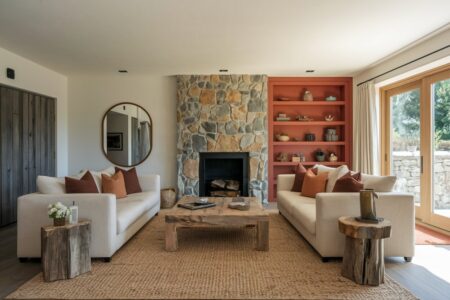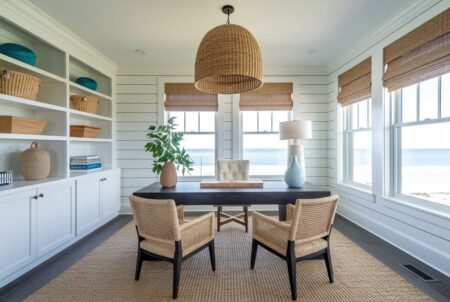
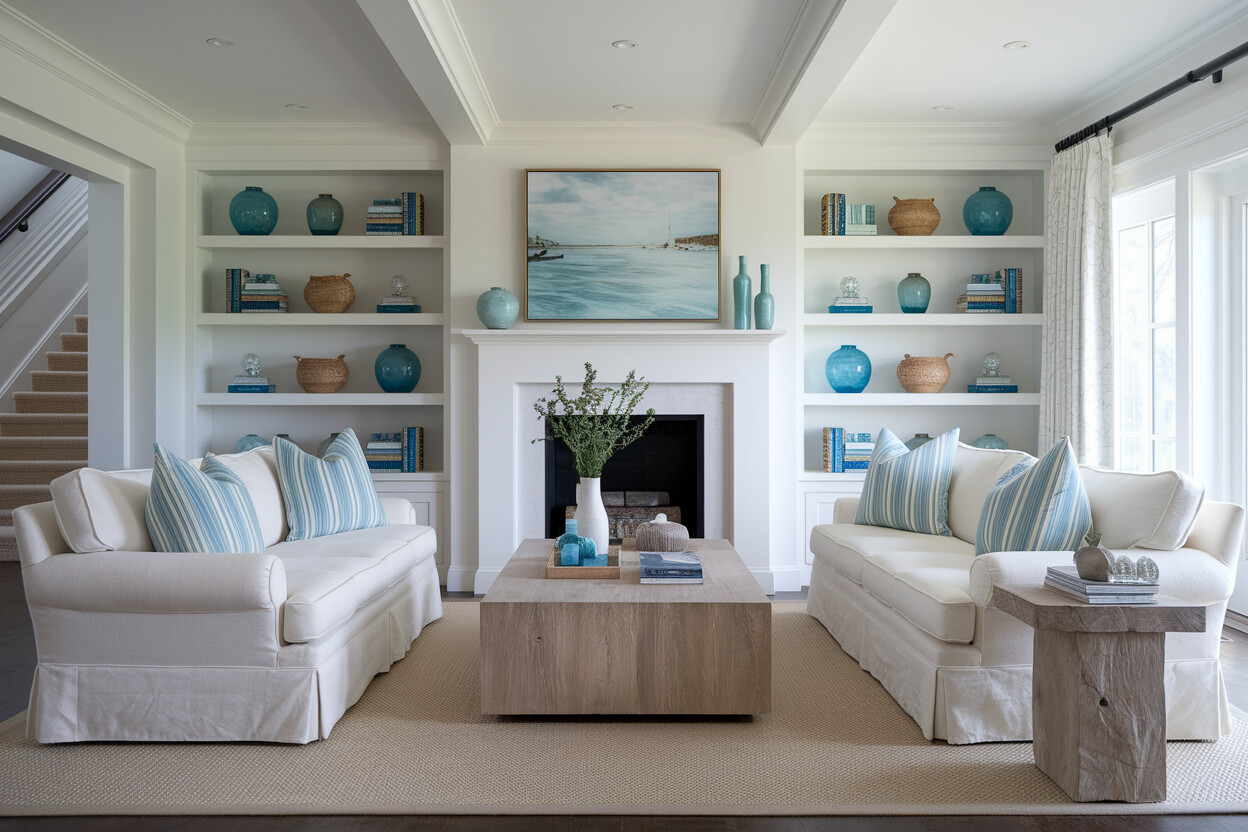
Coastal interior design is more than just a decor trend. It is a philosophy of light, air, and ease. Many people confuse it with “nautical” themes, but true coastal design is far more sophisticated. It focuses on the bridge between the indoor environment and the natural beauty of the shoreline.
DEFINITION
Coastal interior design is an aesthetic centered on creating a light, airy, and relaxed atmosphere that mimics the seaside. It relies on a palette of neutrals and blues, an abundance of natural light, and organic textures like jute, linen, and weathered wood to evoke the serenity of the ocean.
Key Characteristics of Coastal Interior Design Style
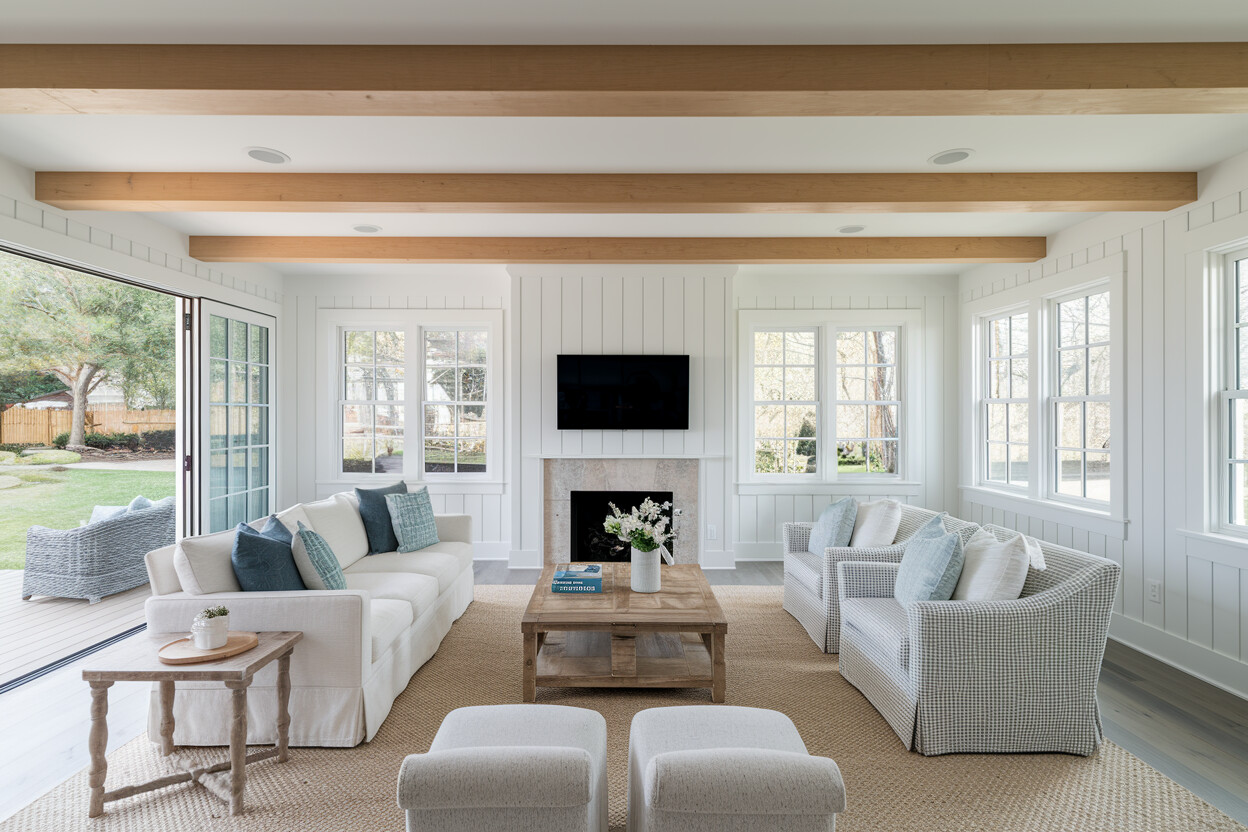
To master the coastal style, you must understand its foundation. It is not about cluttering a room with anchors and ropes. Instead, it is about the “feeling” of the coast.
Abundant Natural Light
In coastal design, light is the most important element. Large windows are often left bare or dressed in sheer, breezy fabrics. The goal is to let the sun wash over every surface. This creates a blurred line between the porch and the living room.
A Crisp, Clean Palette
White is the primary color here. It acts as a canvas. Designers then layer in “coastal” tones. Think of seafoam green, soft navy, sand beige, and pale sky blue. These colors should feel like they were pulled directly from a morning walk on the beach.
Natural Materials and Textures
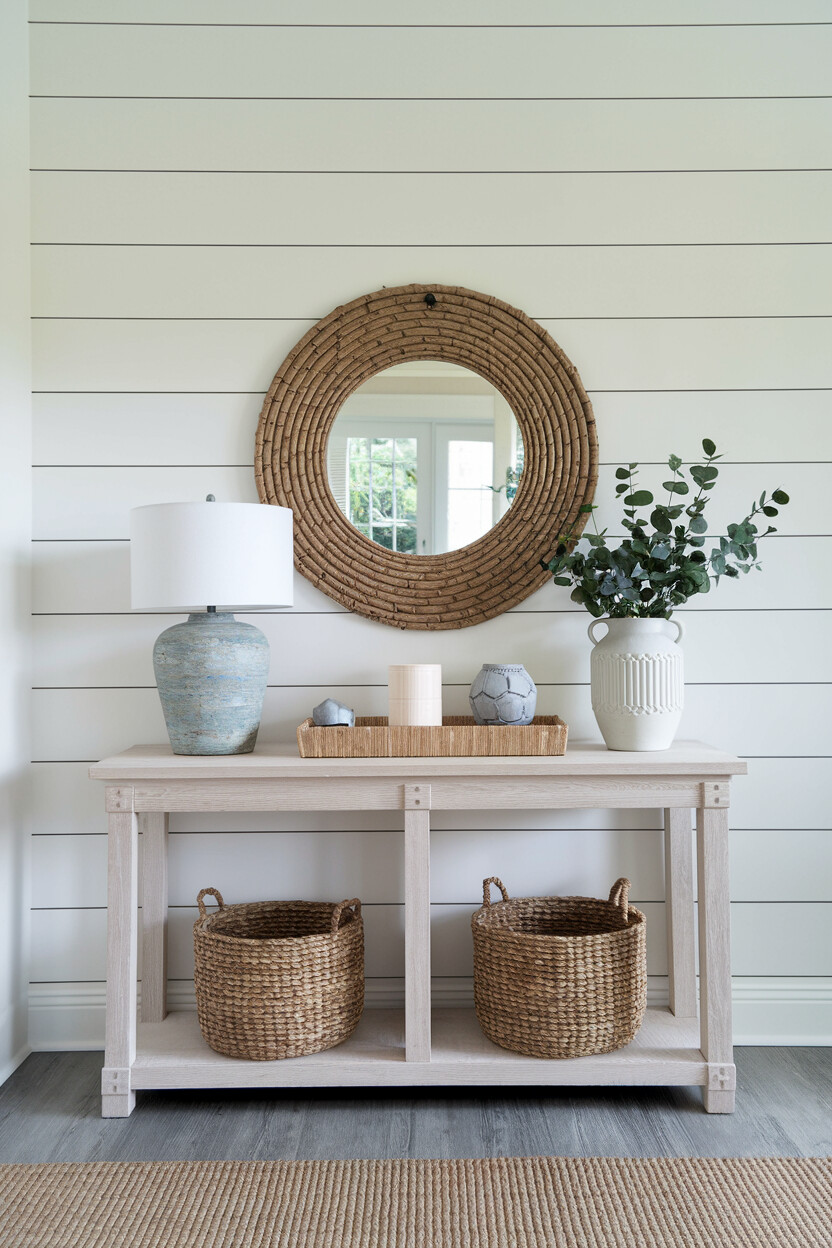
Since the style is rooted in nature, synthetic materials are rare. You will see plenty of:
- Woven seagrass and jute rugs.
- Light-toned woods like white oak or driftwood.
- 100% linen upholstery.
- Rattan or wicker furniture.
Essential Tips for Achieving the Coastal Look
Creating this look requires a “less is more” approach. Avoid the temptation to over-decorate.
- Prioritize Comfort: Coastal homes are meant for living. Choose deep, slipcovered sofas that invite people to sit down.
- Layer Your Textures: A room with only white walls and white furniture can feel cold. Add a chunky knit throw or a sisal rug to bring warmth.
- Keep Greenery Simple: Use indoor plants that thrive in bright light. Fiddle leaf figs or palms add a tropical touch without looking forced.
- Open Up the Floor Plan: If possible, arrange furniture to promote flow. Coastal design hates cramped spaces.
Examples of Coastal Design in Modern Homes (Mix with Other Styles)
Modern Farmhouse Hybrid
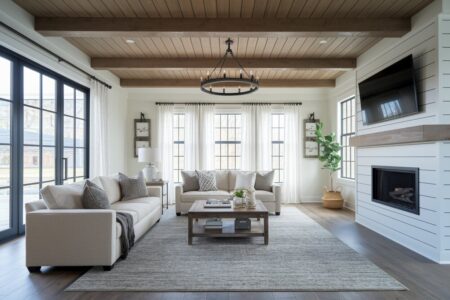
This involves taking the structure of a farmhouse (high ceilings and exposed beams) and applying a coastal palette. It uses matte black hardware against soft blue cabinetry.
Scandinavian Coastal Escape
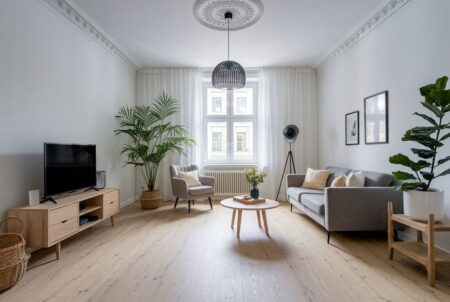
This style is very “hygge.” It uses the minimalism of Nordic design but adds Mediterranean textures. Think light-colored wood floors paired with soft, sandy-colored textiles.
Traditional Hamptons Style
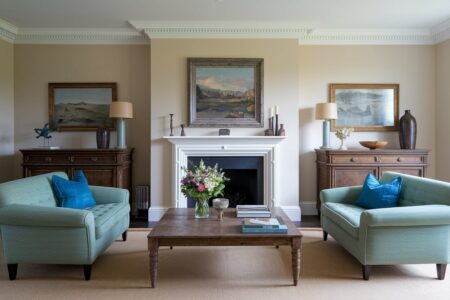
This is the “high-end” version of coastal. It features more structured furniture, navy blue accents, and polished brass fixtures. It is coastal, but with a formal, symmetrical edge.
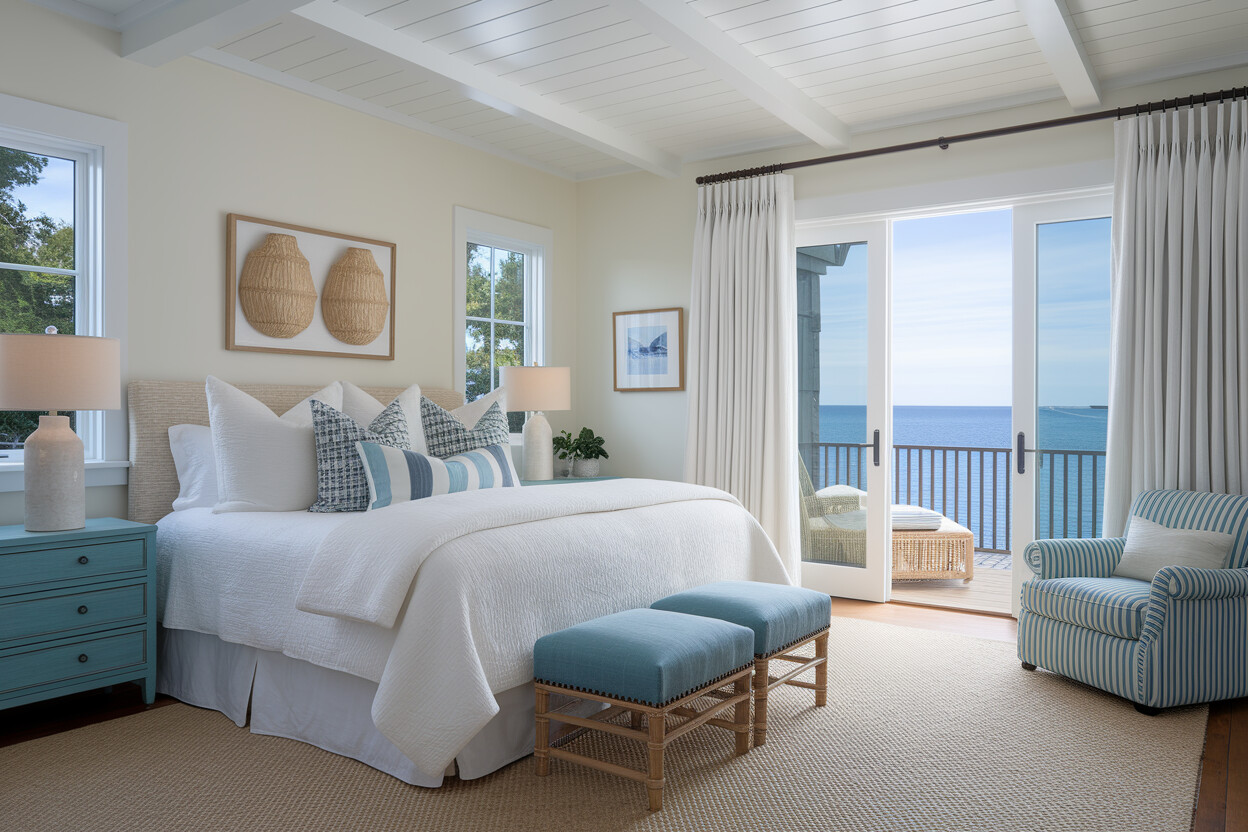
Also, check how this interior design style looks in different rooms:
Why Coastal Interior Design Remains Timeless
Trends come and go, but the coastal interior design style persists. Why? Because it addresses a fundamental human need: the desire for tranquility. Our lives are loud and fast. A coastal home offers a visual “hush.”
The focus on organic materials also aligns with modern sustainability goals. When you choose wool, wood, and linen, you are making choices that are better for the planet and your indoor air quality.
Maintenance and Longevity
Coastal style is surprisingly practical. Because it favors slipcovers and “weathered” finishes, it ages beautifully. A scratch on a driftwood table only adds character. A linen sofa that looks slightly lived-in fits the aesthetic perfectly. It is a low-stress style for high-traffic families.
FAQ: Common Questions About Coastal Style
Is coastal design the same as nautical?
No. Nautical design is literal. It uses anchors, maps, and bright red accents. Coastal design is metaphorical. It uses the colors and textures of the beach without being literal.
Can I do coastal design in a dark apartment?
Yes. Use high-gloss white paint to bounce what little light you have. Use mirrors strategically to reflect windows. Stick to a very pale color palette to keep the space from feeling heavy.
What are the best window treatments for this style?
Bamboo shades or sheer linen curtains are best. Avoid heavy velvet or dark drapes, as these block the “airy” feel essential to the coastal style.
Does coastal furniture have to be white?
Not at all. While white is common, you can use light gray, driftwood tones, or even washed-out blues for your larger furniture pieces.