The world of high-end aesthetics often returns to one specific era for inspiration. Art Deco interior design represents the pinnacle of early 20th-century glamour. It is a style that refuses to be ignored.
Born in the 1920s and flourishing through the 1930s, this movement changed how we view luxury. It moved away from the flowing, organic lines of Art Nouveau. Instead, it embraced the machine age. It celebrated industry, travel, and the future.
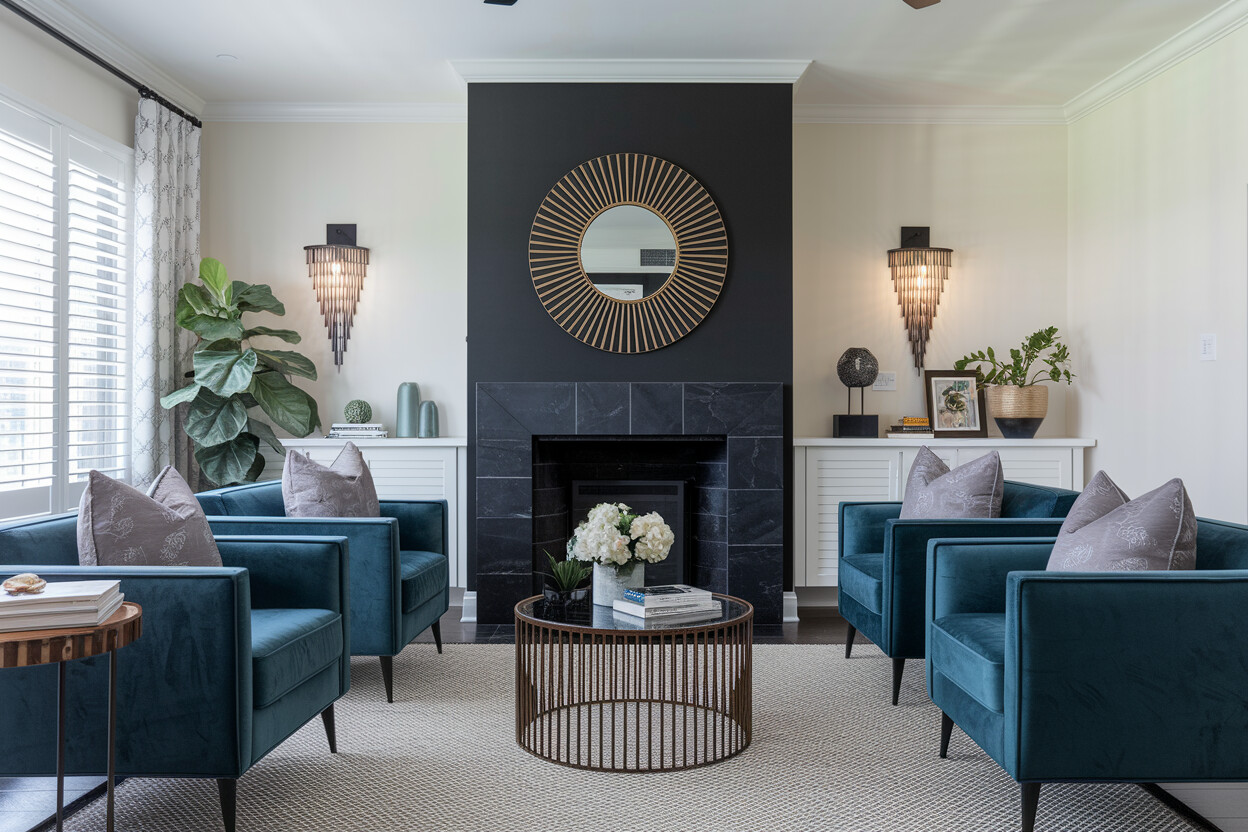
Today, Art Deco style remains a favorite for those who want their homes to feel cinematic. It is bold. It is structured. Above all, it is unmistakably high-end.
DEFINITION
Art Deco interior design is a visual style characterized by bold geometric shapes, symmetrical patterns, and the use of expensive, man-made materials. It emphasizes verticality and streamlined forms, blending traditional craftsmanship with modern industrial aesthetics to create a sense of opulence and progress.
The Origins of Art Deco Design
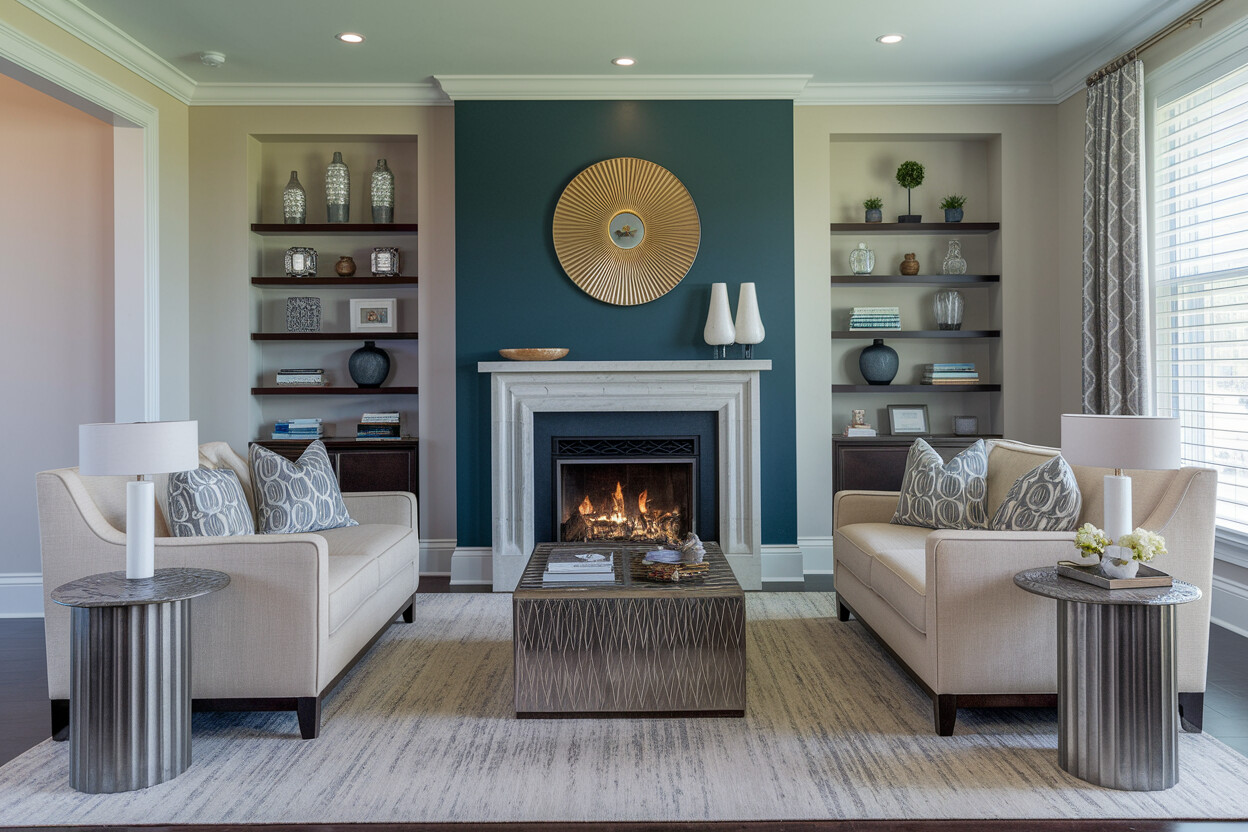
The movement officially debuted in 1925 at the International Exhibition of Modern Decorative and Industrial Arts in Paris. It was a reaction to the constraints of the past. Designers wanted something fresh. They looked toward the discovery of King Tut’s tomb and the rise of Hollywood.
As travel became more accessible, Art Deco design absorbed global influences. You can see hints of Egyptian, Aztec, and African motifs within its structure. It wasn’t just a trend; it was a global phenomenon that touched everything from skyscrapers to jewelry.
Key Characteristics of Art Deco Interior Design Style
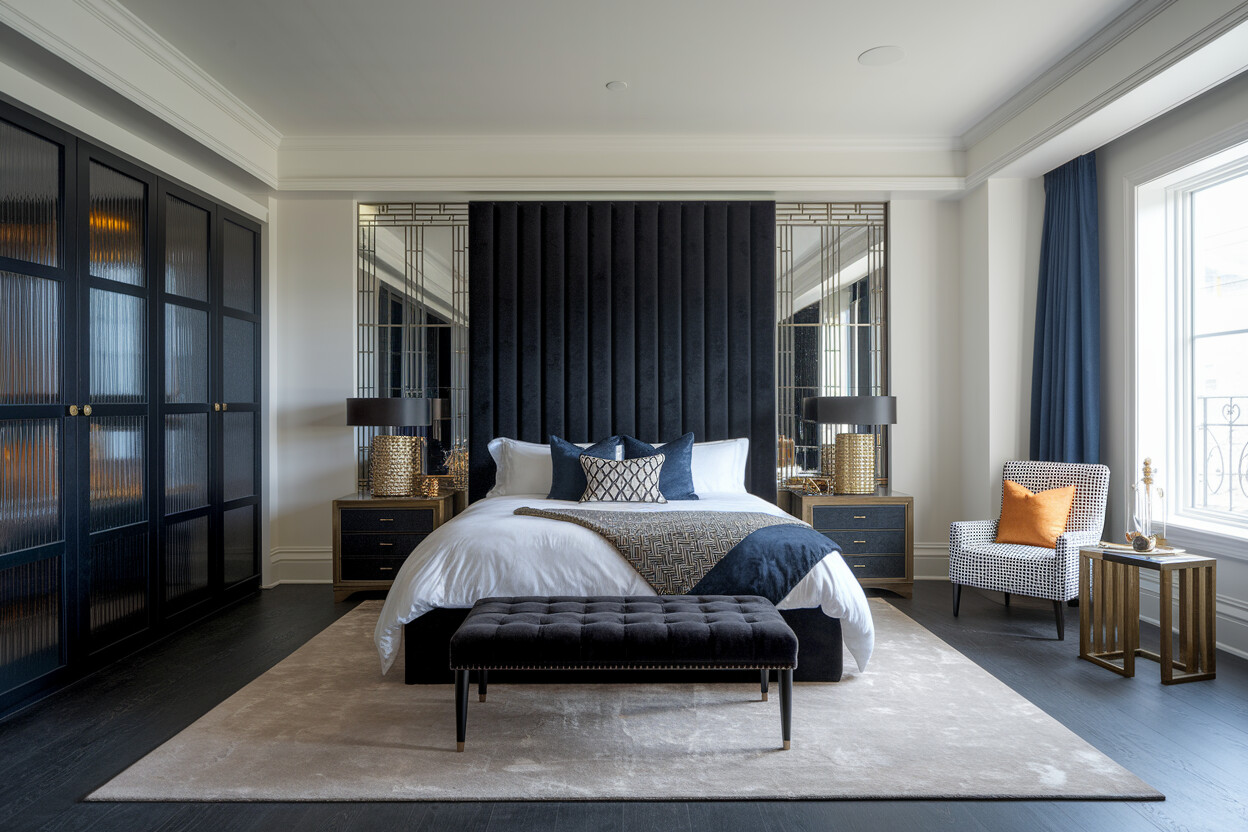
To master this look, you must understand its core pillars. This style relies on a specific visual language.
Bold Geometrics
Geometry is the soul of Art Deco. Think of sunbursts, chevrons, and stepped patterns. These shapes create a sense of rhythm and energy. Circles and triangles are often layered to provide depth.
Luxurious Materials
Authentic Art Deco doesn’t do “modest.” It uses high-shine finishes. You will find exotic woods like ebony and rosewood. Chrome, brass, and gold leaf are standard for accents. Mirror-finished surfaces are a must to reflect light and enhance the sense of scale.
Symmetrical Balance
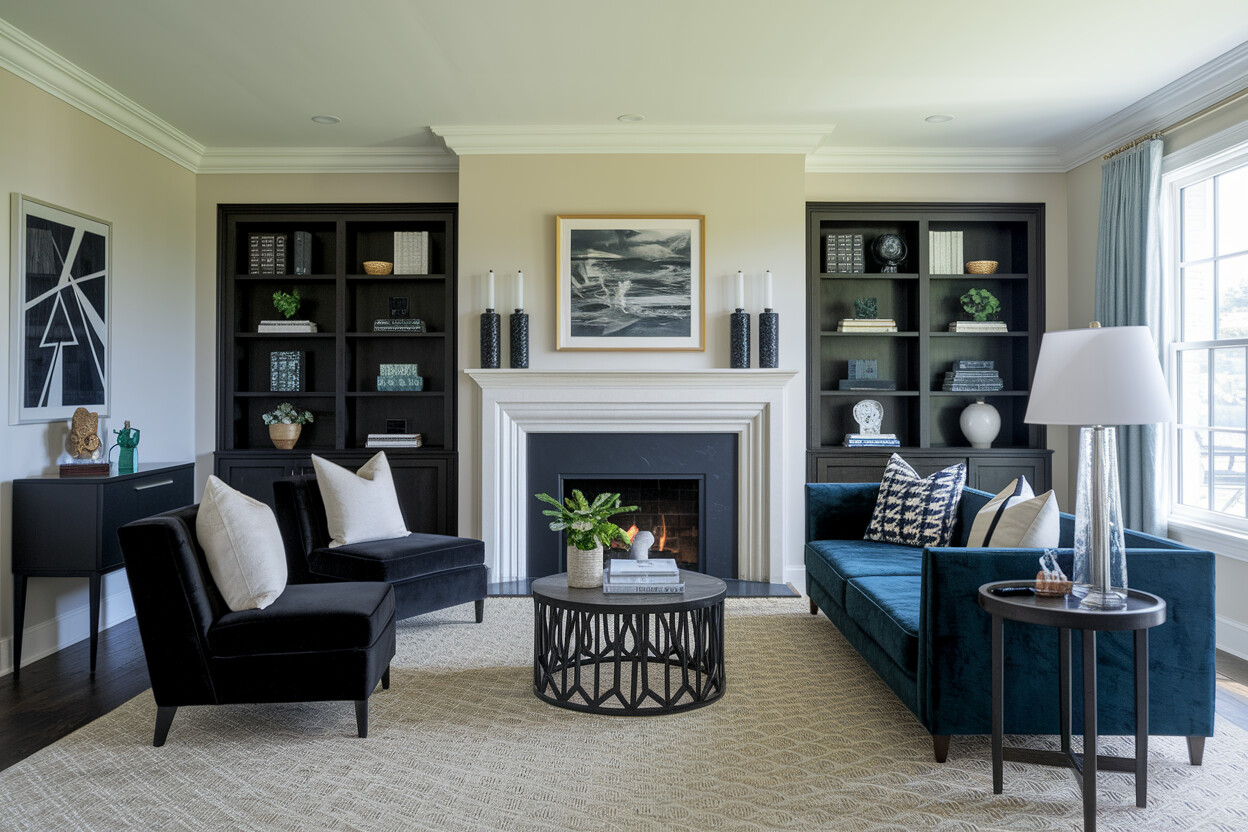
Order is vital. Everything has a place. Furniture is usually arranged in pairs. This symmetry creates a formal, organized atmosphere that feels intentional and expensive.
Rich Color Palettes
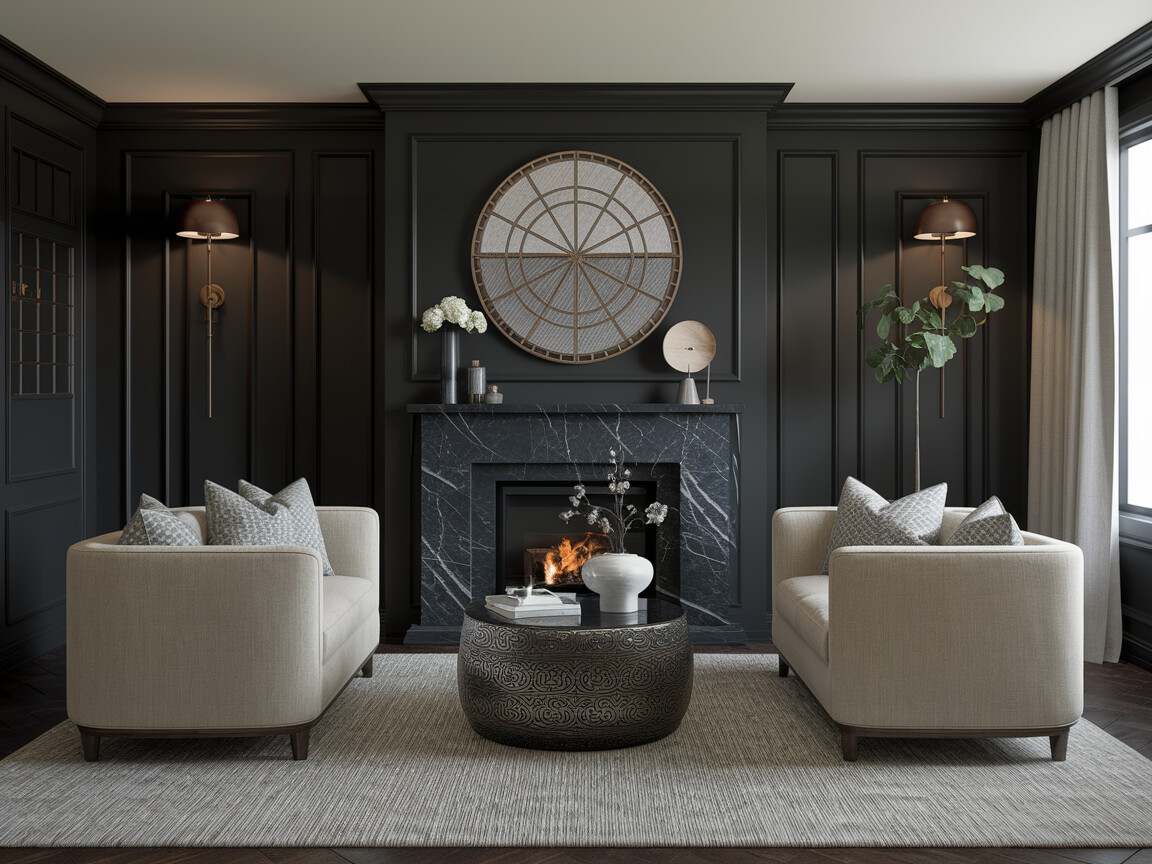
The colors are deep and dramatic. Charcoal, navy, and emerald green are popular base colors. These are contrasted with bright metallics. For a softer look, designers use creams and beiges accented with silver or black.
Practical Tips for Implementing Art Deco Style
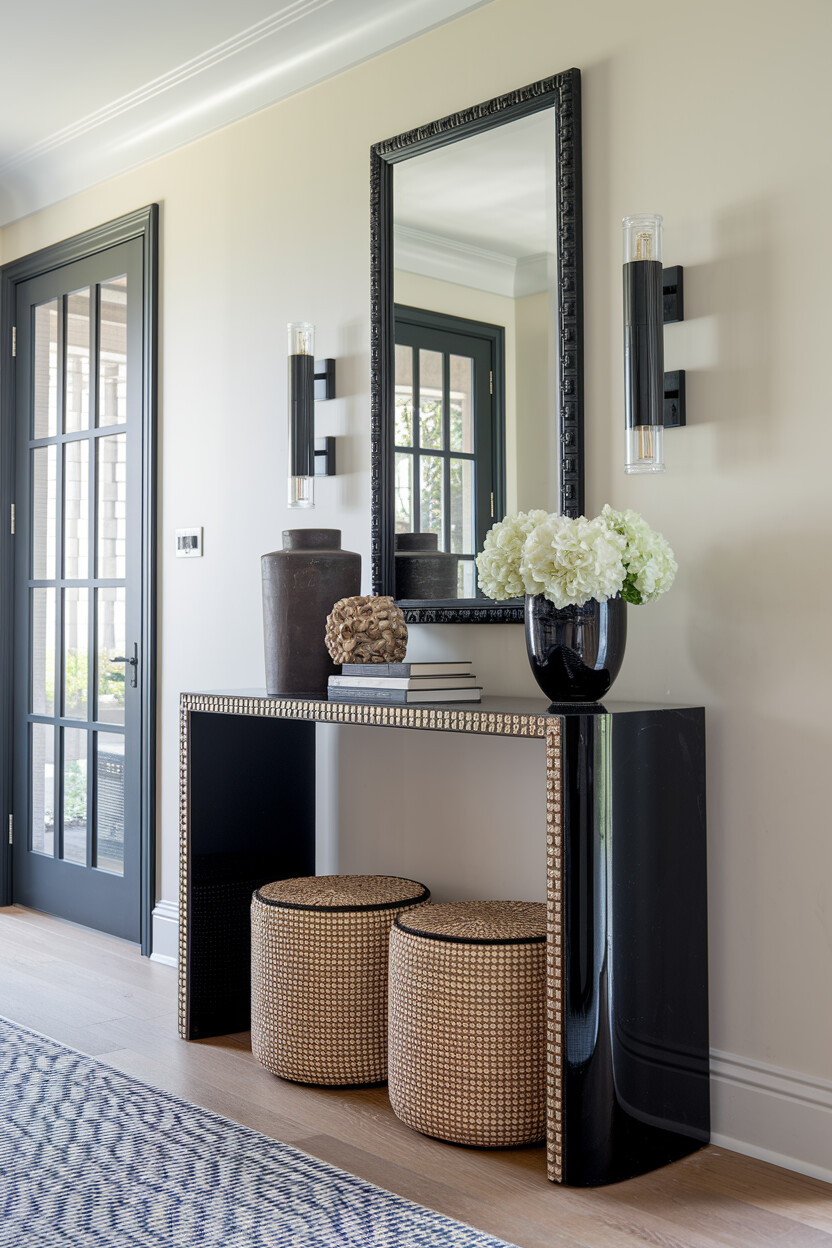
Bringing this look into a 21st-century home requires a delicate touch. You want to avoid making your space look like a movie set.
- Start with Lighting: Chandeliers with frosted glass and geometric frames are the fastest way to signal Art Deco. Choose fixtures with tiered levels or fan shapes.
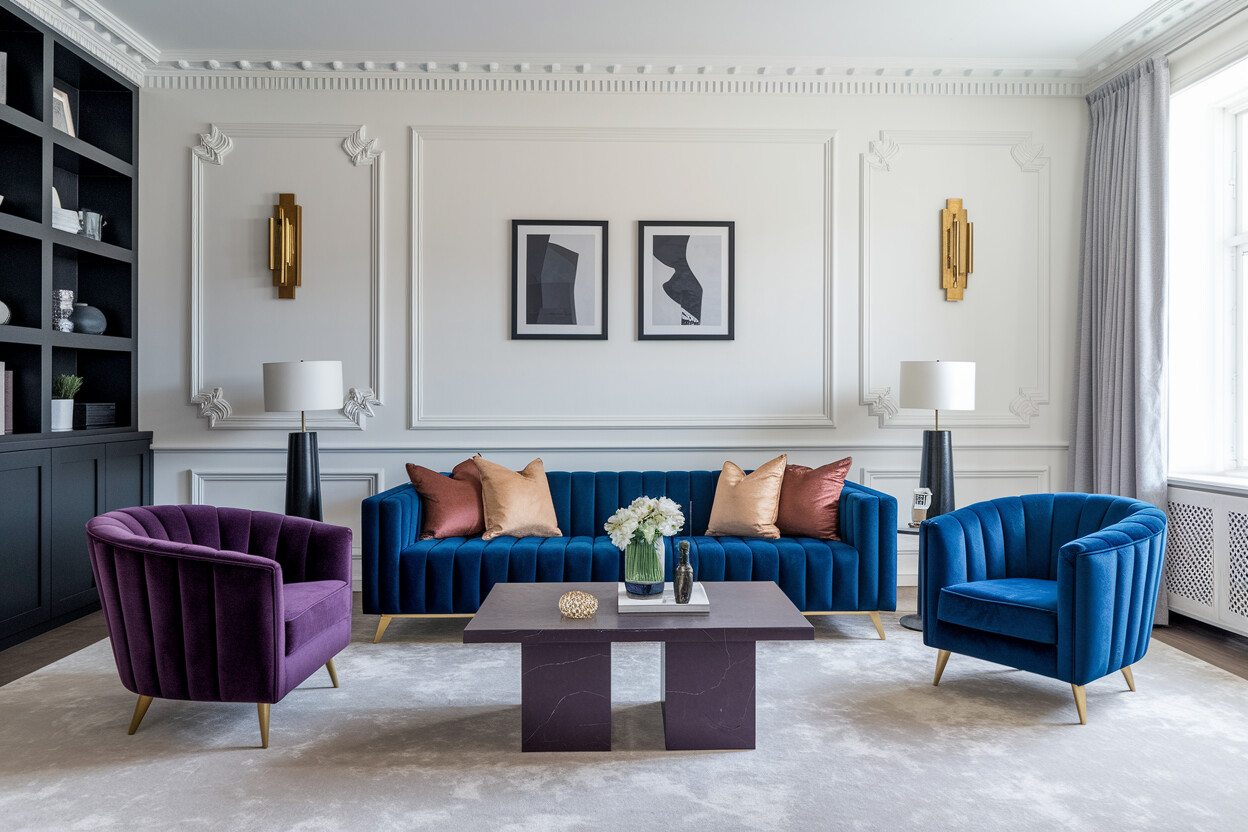
- Invest in Statement Furniture: Look for large, heavy pieces. Sideboards with inlaid wood or velvet-upholstered chairs with curved backs are perfect.
- Use Bold Wallpapers: A feature wall with a gold-foiled geometric pattern adds immediate texture.
- Layer Your Textures: Mix hard surfaces like marble floors with soft, plush rugs. This contrast is a hallmark of the style.
- Focus on the Flooring: Parquet wood flooring or black-and-white checkered tiles provide a strong foundation.
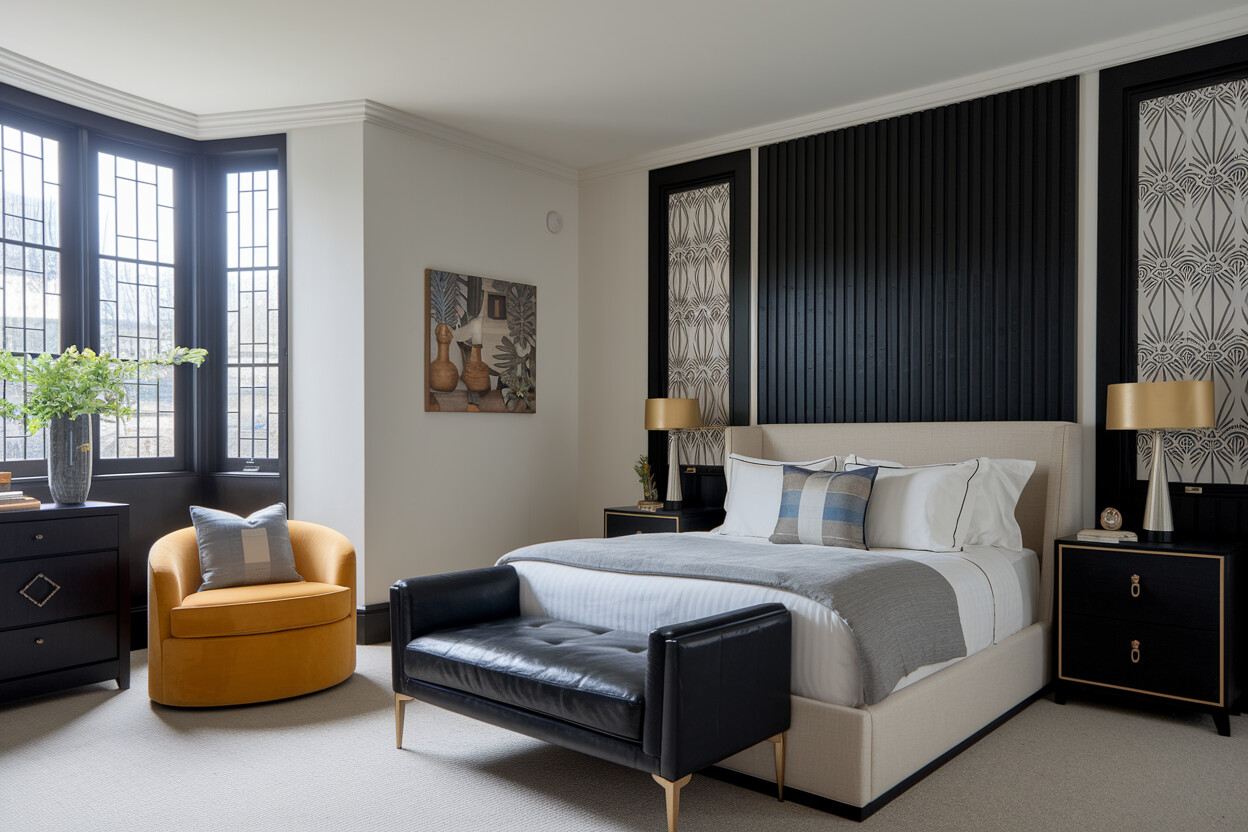
You might want to see some ideas on how this can be implemented in different rooms of the house:
Iconic Examples of Art Deco Interior Design
When we think of this style, specific landmarks come to mind. These structures define the aesthetic.
The Chrysler Building in New York is perhaps the most famous example. Its sunburst crown is a masterpiece of the era. Inside, the elevators feature intricate wood inlays that perfectly represent Art Deco design.
In residential terms, the Eltham Palace in London showcases how the style transitioned into living spaces. It features a stunning circular entrance hall and lavish bedrooms that utilize high-contrast materials.
Many Miami hotels along Ocean Drive also display the “Streamline Moderne” branch of the style. These buildings focus on long horizontal lines and nautical themes, showing the versatility of the movement.
Why Choose Art Deco for Your Home?
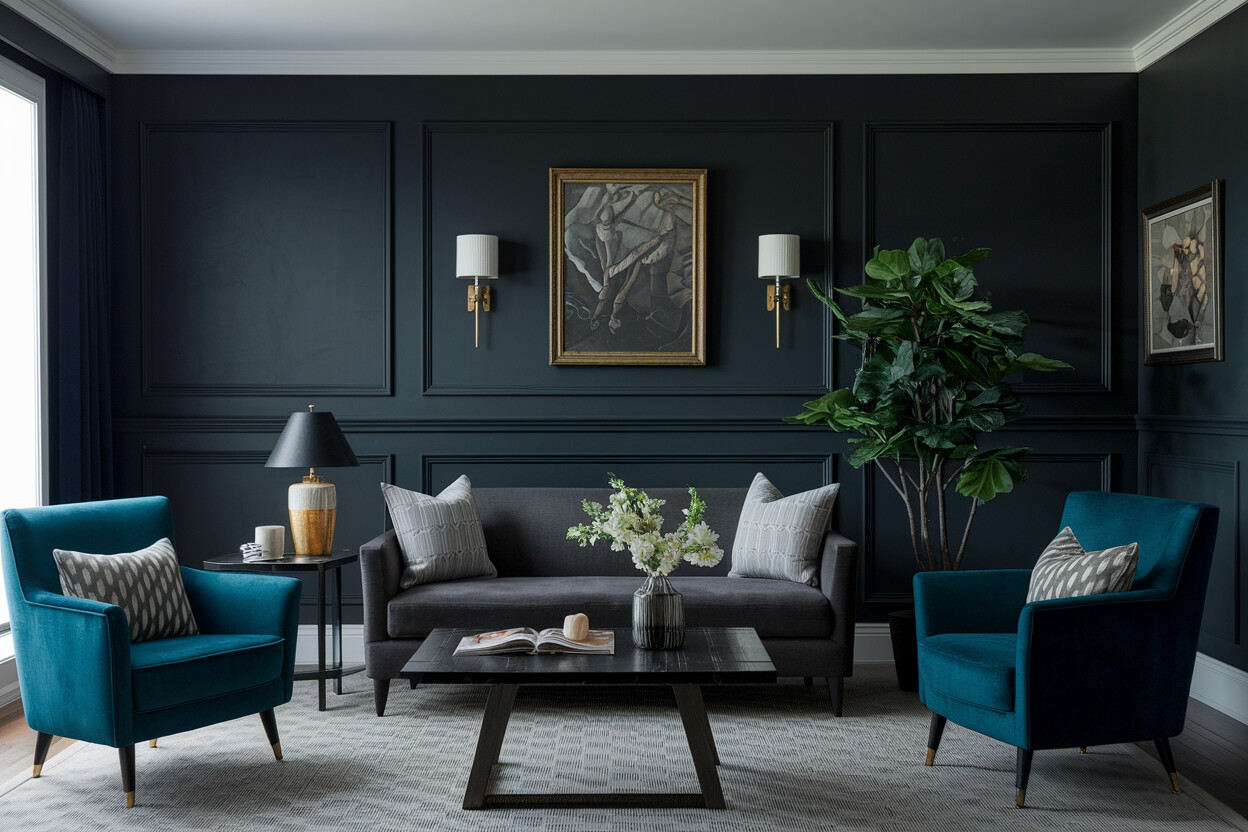
Art Deco interior design style is perfect for those who enjoy entertaining. It creates a “cocktail lounge” vibe that feels sophisticated. It is a style that grows with you. Because it relies on high-quality materials, the pieces often become family heirlooms.
Furthermore, it bridges the gap between vintage and modern. Many contemporary minimalist designs actually borrow from Art Deco’s clean lines.
Frequently Asked Questions (FAQ)
What is the difference between Art Deco and Art Nouveau?
Art Nouveau is inspired by nature, featuring flowing, asymmetrical curves and floral motifs. Art Deco is the opposite; it focuses on rigid geometry, industrial materials, and symmetry.
Can Art Deco be minimalist?
While the style is traditionally maximalist, you can adopt a “Modern Deco” approach. This involves using one or two bold geometric pieces in an otherwise clean, neutral room.
Is Art Deco expensive to achieve?
It can be, as it traditionally uses luxury materials. However, modern reproductions allow you to get the look using metallic paints, velvet-finish fabrics, and affordable geometric wallpapers.
Which colors are most common in Art Deco?
Black, gold, silver, and white are the foundational colors. These are often paired with jewel tones like ruby red, sapphire blue, or emerald green.
Final Thoughts on the Art Deco Style
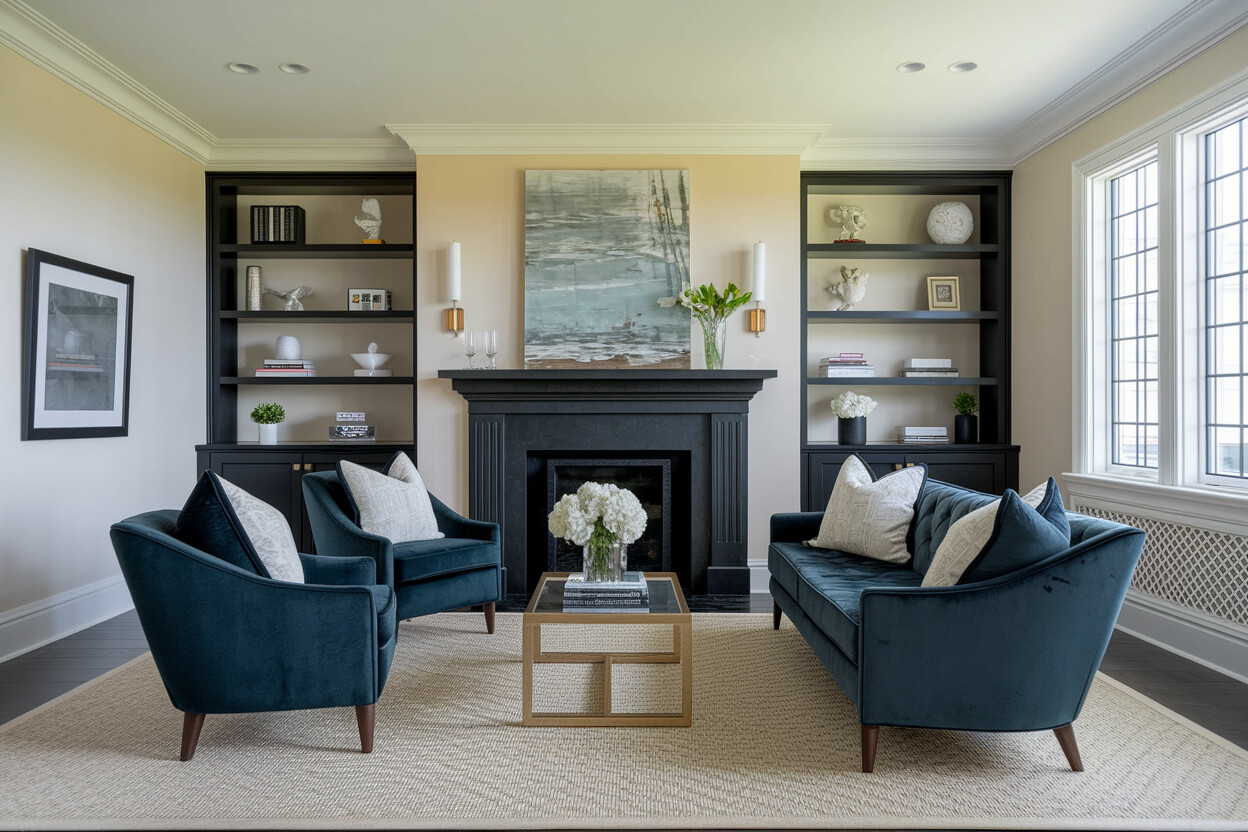
Art Deco interior design is more than a historical footnote. It is an enduring symbol of optimism and elegance. By focusing on quality, geometry, and light, you can transform any room into a space of timeless luxury. Whether you choose a single velvet sofa or a full room transformation, the impact of Art Deco is always profound.