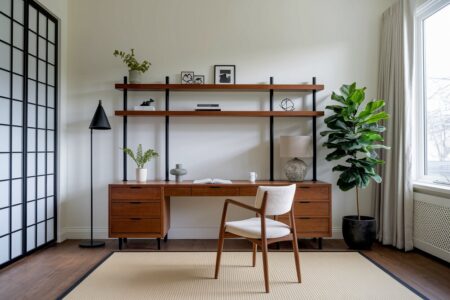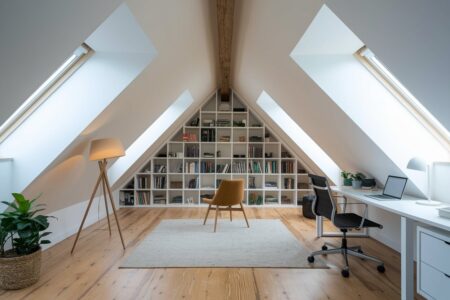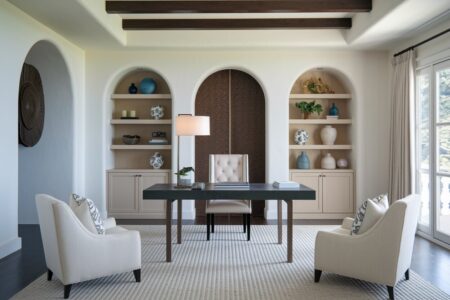
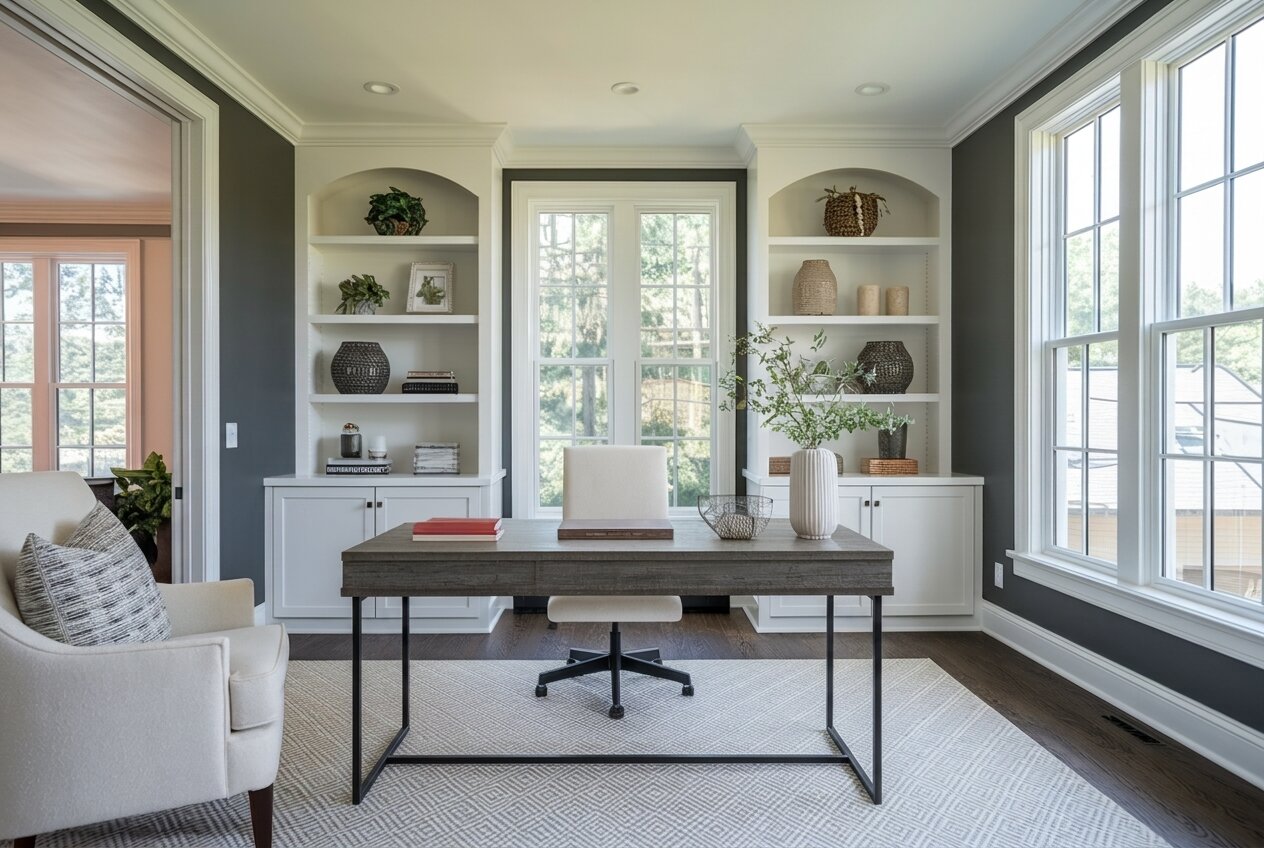
A great home office doesn’t have to choose sides. Transitional style blends the warmth of traditional furniture with the clean simplicity of modern design, and that combination is exactly what makes transitional home office ideas so easy to live with. Nothing about the style screams trend. You won’t feel pressure to redo the whole room in a few years just because your taste shifted slightly.
What makes transitional design work so well in a workspace is restraint. Curved or turned furniture legs sit next to clean-lined shelving. A neutral palette does the heavy lifting while a few textured or metallic details add personality. The goal isn’t to split the room down the middle between old and new. It’s to let both sensibilities speak quietly, so the space stays calm enough to actually get work done in.
A home office should feel like somewhere you want to sit down, not just somewhere you have to. These transitional home office ideas cover everything from paint and lighting to furniture and layout, so you can borrow a few details or use the whole list as a blueprint for your own workspace.
- 01 of 11
Start With a Warm Neutral Wall Color
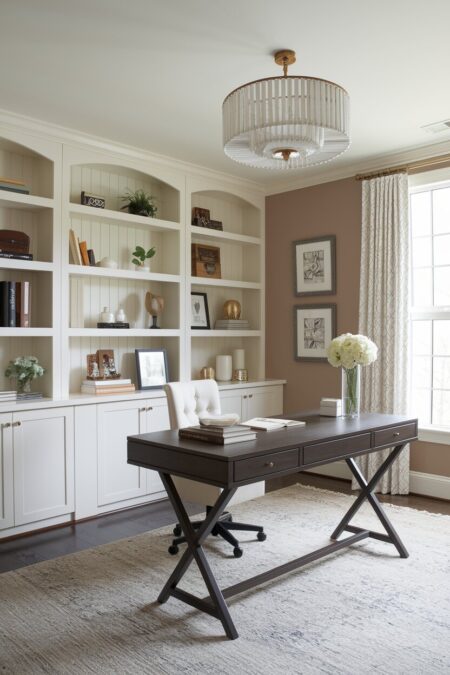
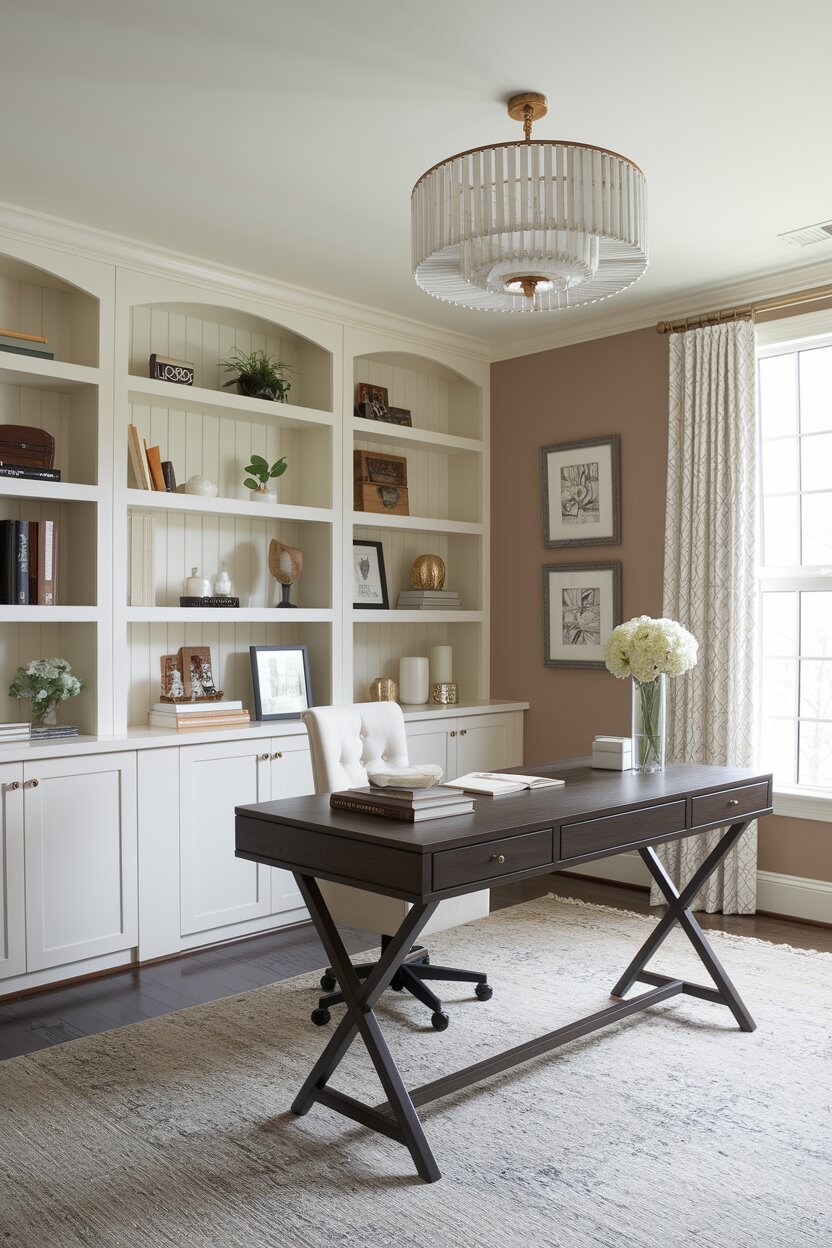
Skip stark white and heavy color alike. A soft greige, oatmeal, or warm taupe gives a transitional home office a calm backdrop without feeling clinical. This kind of neutral also holds up over time. You can change your desk, your art, even your rug, and the walls will still work. Pair it with crisp white trim for a finish that reads classic but never dated.
- 02 of 11
Pair a Traditional Desk With a Modern Chair
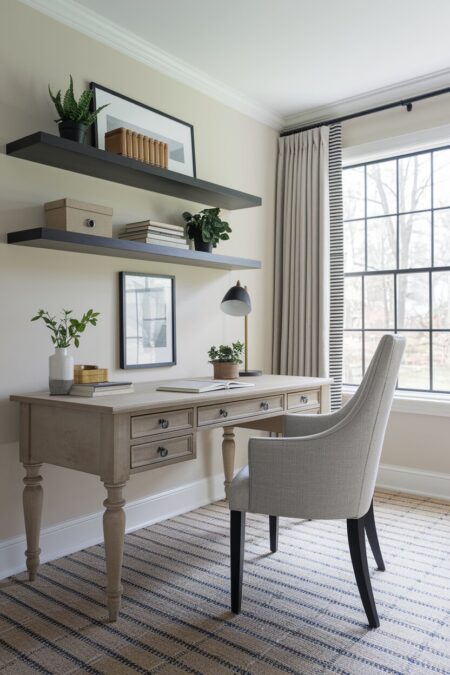
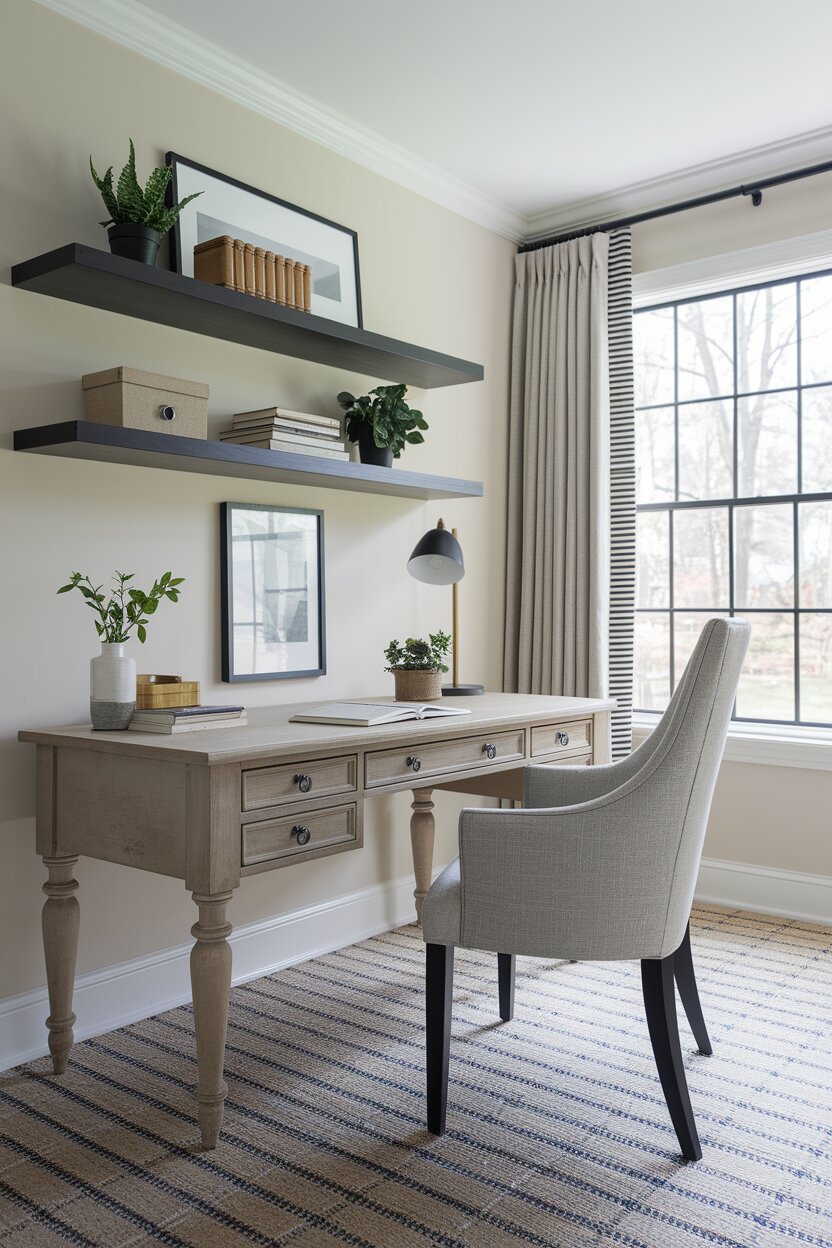
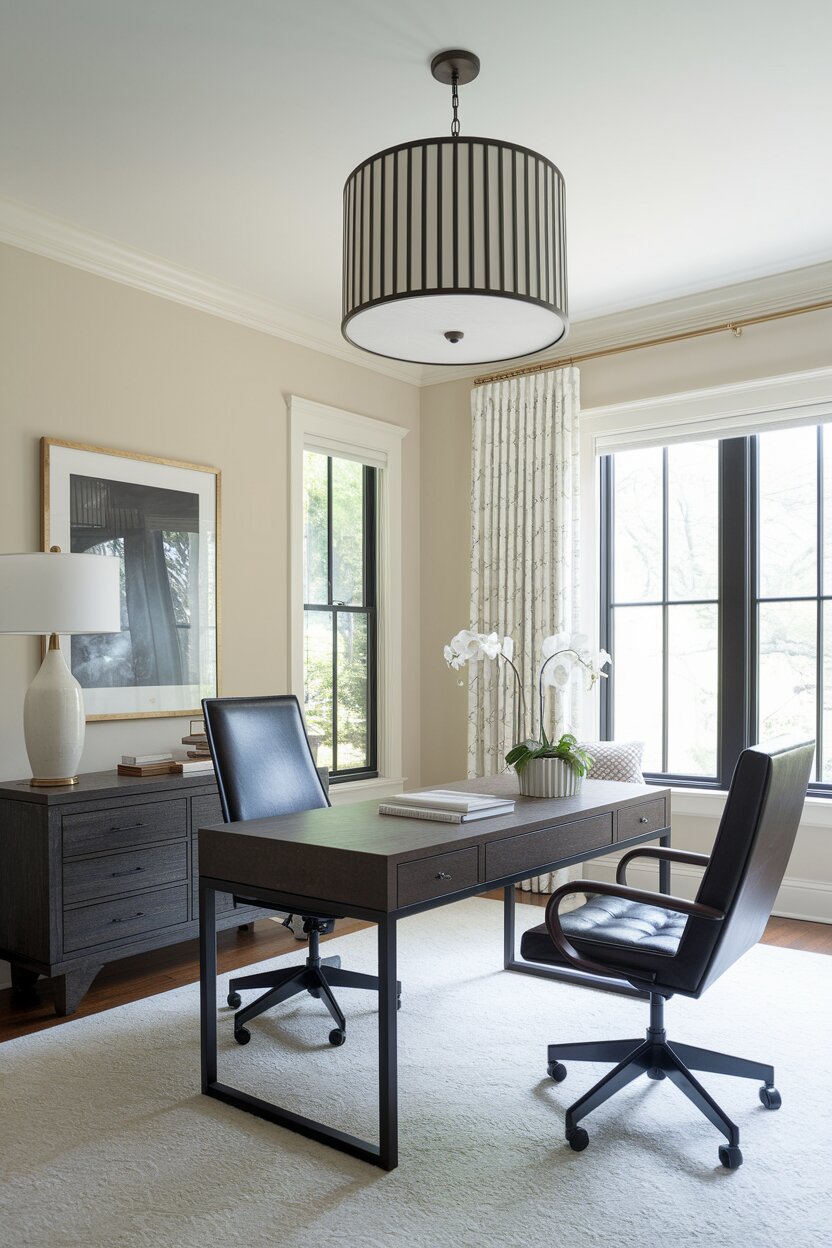
One of the simplest transitional home office ideas is to mix furniture from two different eras on purpose. A desk with turned legs or paneled drawers brings in traditional shape. A sleek upholstered task chair balances it with modern ease. Neither piece needs to be fancy. The contrast is what makes the pairing work, so keep the chair’s fabric neutral and let the desk’s detailing stand out.
- 03 of 11
Add Built-Ins With Simple Trim
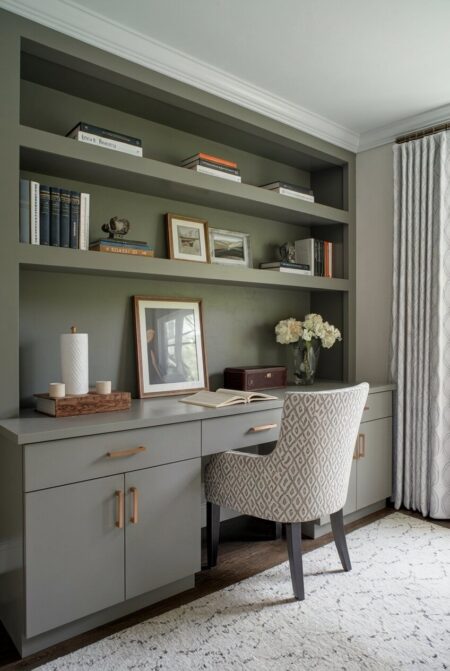
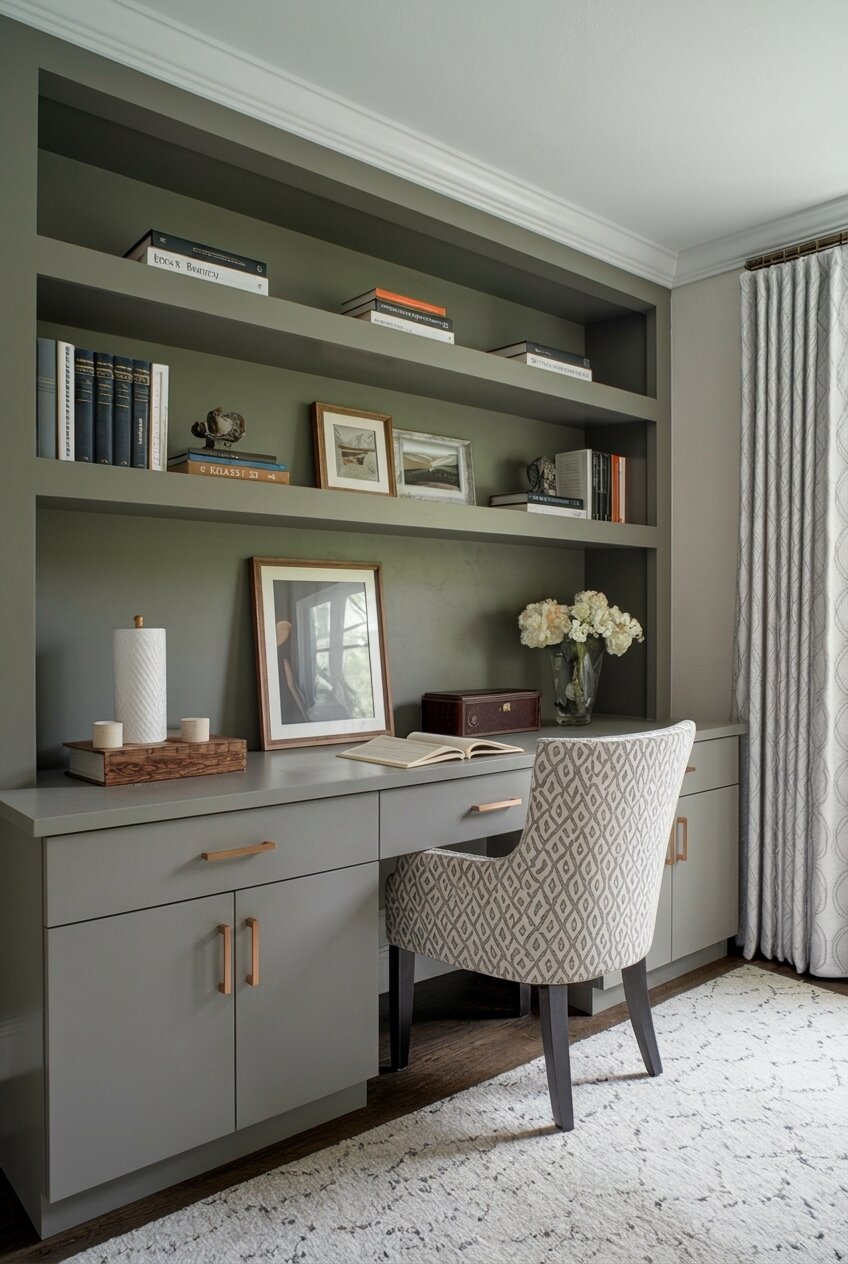
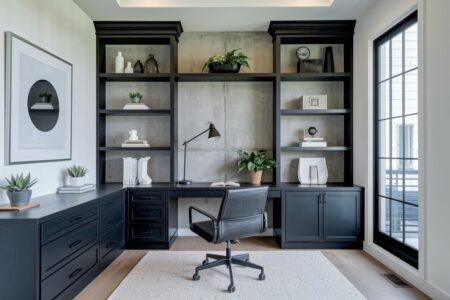
Built-in shelving is practically made for transitional style. Flat-panel cabinetry topped with a strip of classic crown molding gives you both worlds at once. Use the lower cabinets to hide the clutter and let the open shelves above hold books, framed photos, and a few well-chosen objects. Resist the urge to style every shelf perfectly. A slightly loose, lived-in arrangement keeps the room from feeling stiff.
- 04 of 11
Mix Your Metal Finishes
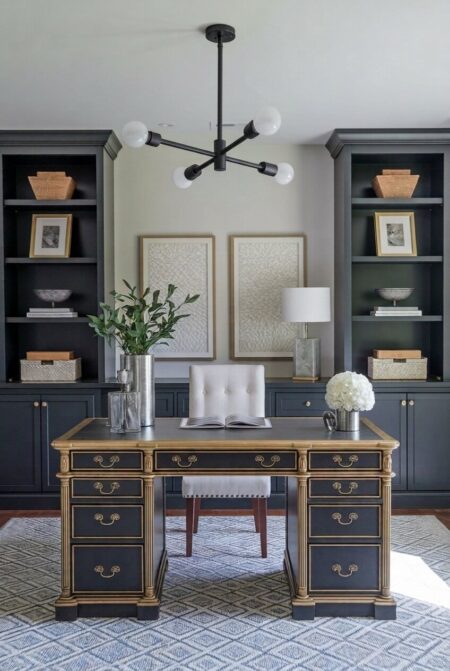
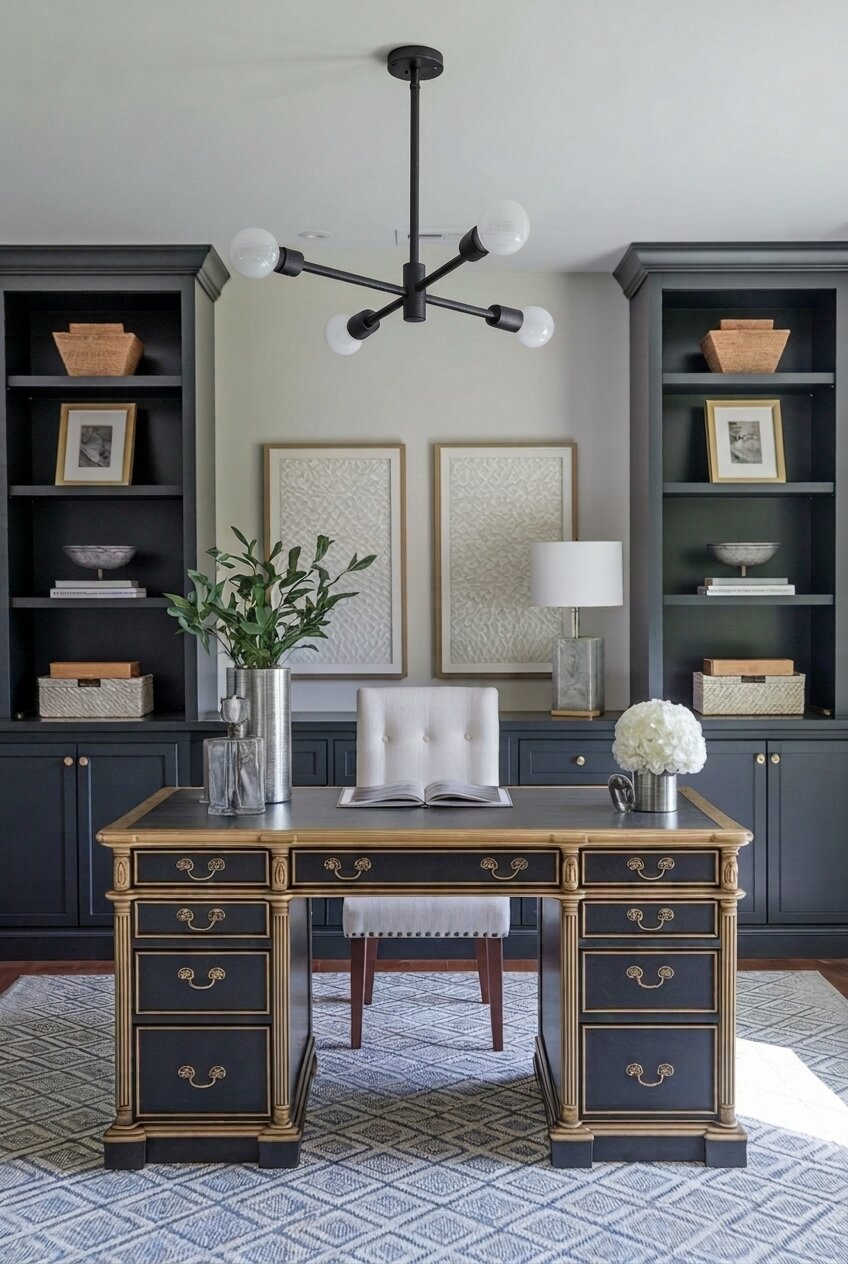
Don’t lock yourself into one metal throughout the room. Brass hardware on a traditional desk looks great next to black or brushed nickel on a modern light fixture. This kind of mixing is a signature move in transitional home office ideas, and it stops the space from feeling too matched or too safe. Just pick two finishes and repeat them a few times, so the mix reads as intentional.
- 05 of 11
Bring in a Sculptural Light Fixture
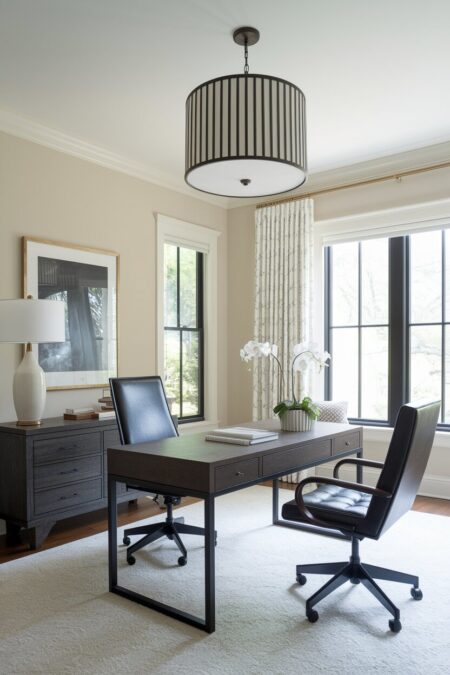
Lighting is an easy place to add a more current shape without touching the furniture at all. A sculptural pendant or a simple drum shade over the desk adds visual interest, while a table lamp with a classic silhouette softens the room at eye level. If your office doubles as a reading nook, that second, more traditional lamp does double duty as ambient light.
- 06 of 11
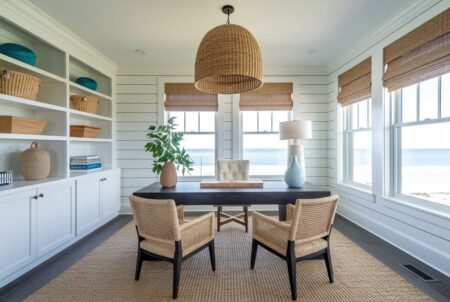
Layer in Texture
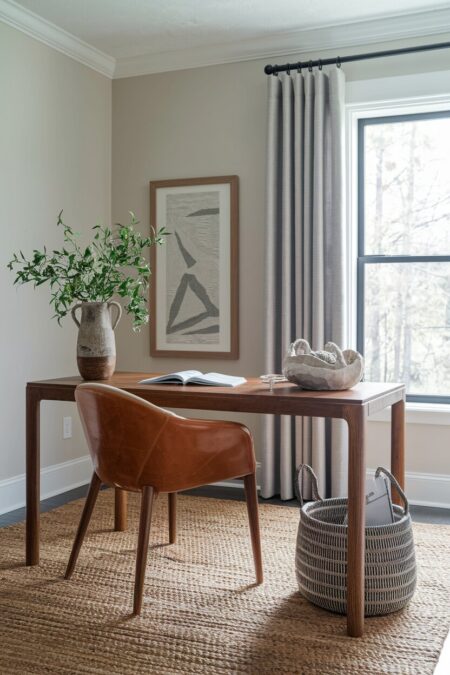
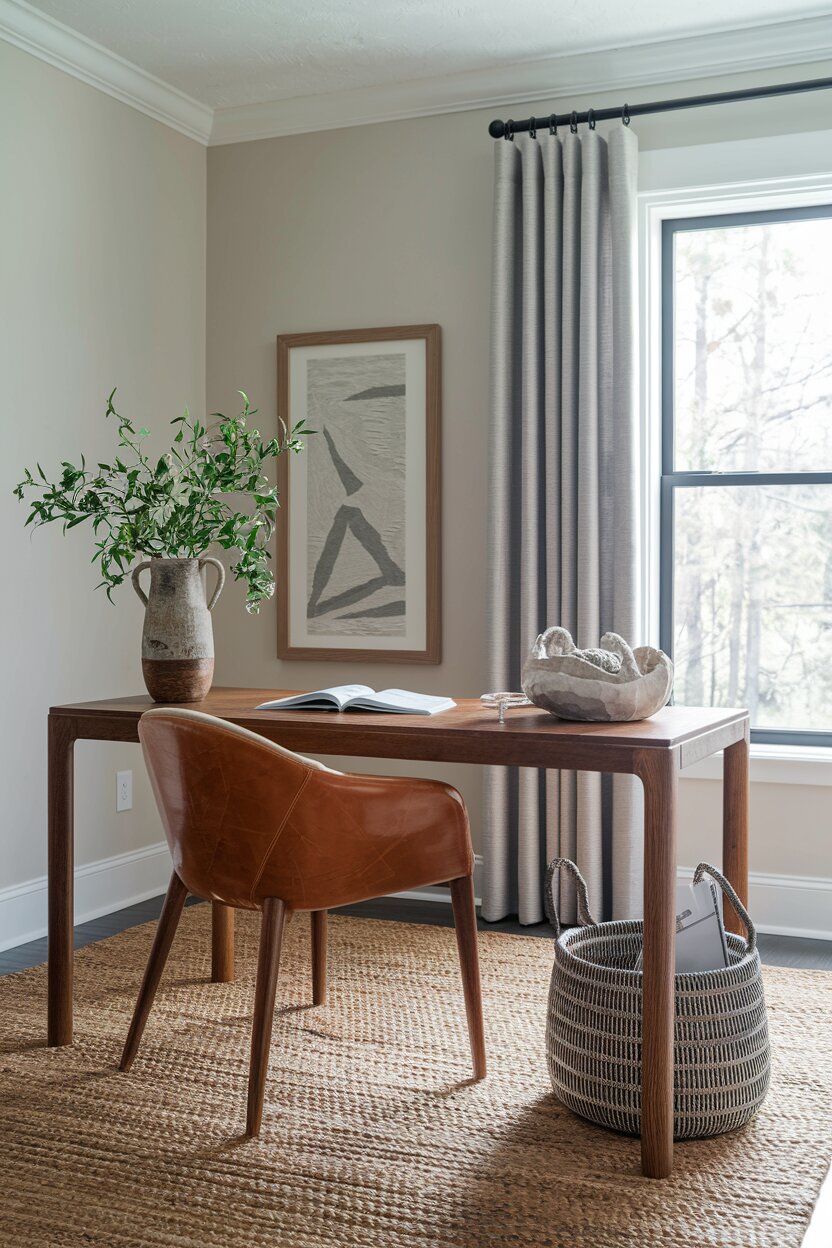
A neutral room needs texture, or it falls flat. A wool or jute rug grounds the space, linen drapery softens the windows, and a leather or velvet chair adds a bit of richness. Mixing rough with smooth and matte with shine is what gives a transitional home office its warmth. Even a simple woven basket for files or magazines adds texture without adding clutter.
- 07 of 11
Try a Subtle Wallpaper
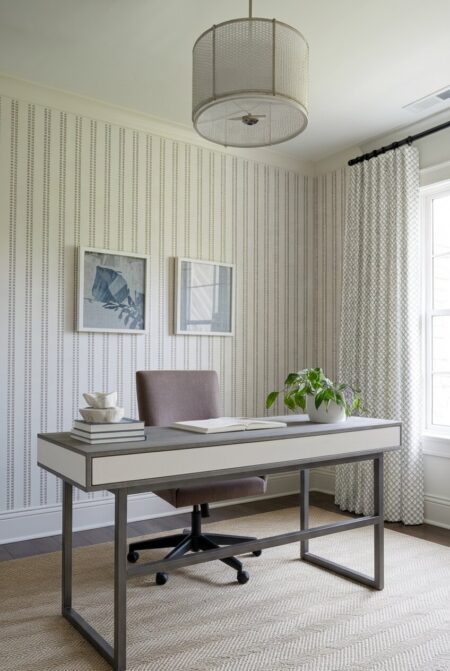
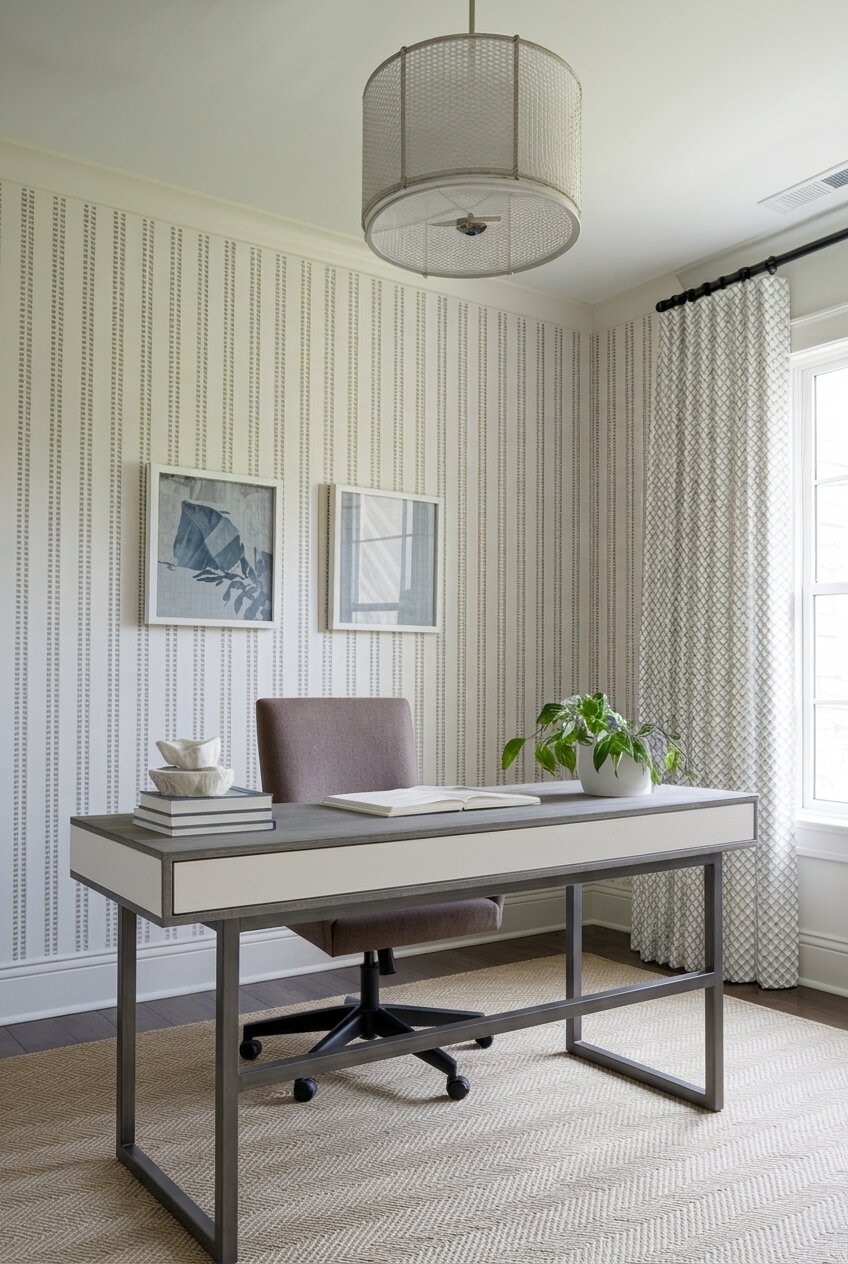
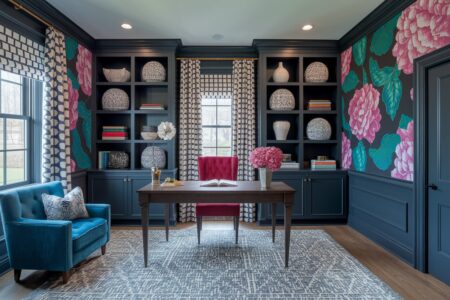
If a solid color feels a little flat, look at a quiet wallpaper instead. A faint stripe, a soft trellis, or a textured grasscloth adds depth without taking over the room. Keep everything else simple so the wallpaper stays the highlight. This works especially well on the wall directly behind your desk, since it becomes the backdrop for every video call.
- 08 of 11
Add a Reading Chair in the Corner
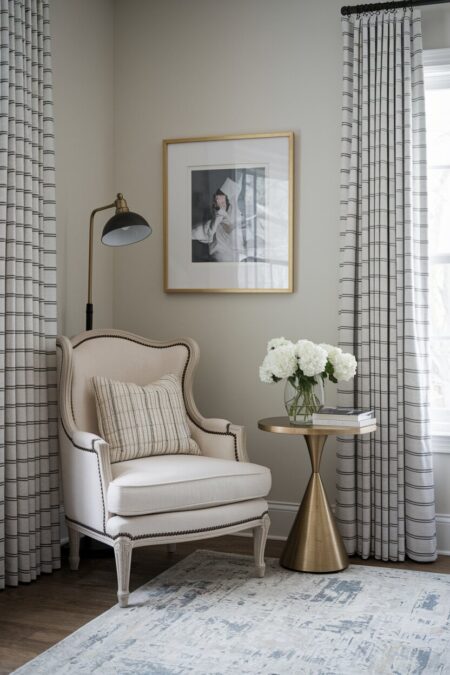
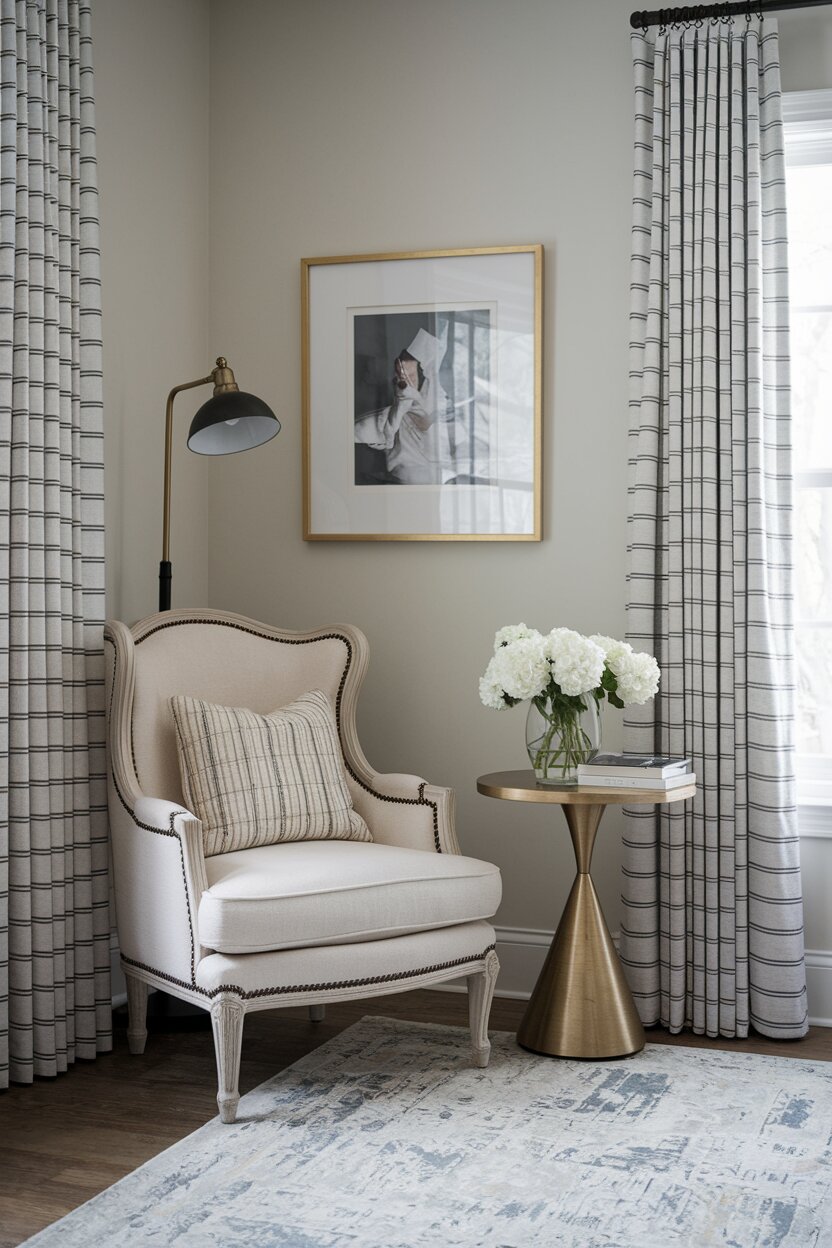
A home office isn’t only about the desk. Tuck a single upholstered chair into an empty corner for calls, reading, or a break from the screen. A bergère-style chair is a classic transitional choice, especially in a solid neutral fabric. Add a small side table and a floor lamp, and that corner becomes a second workspace of its own.
- 09 of 11
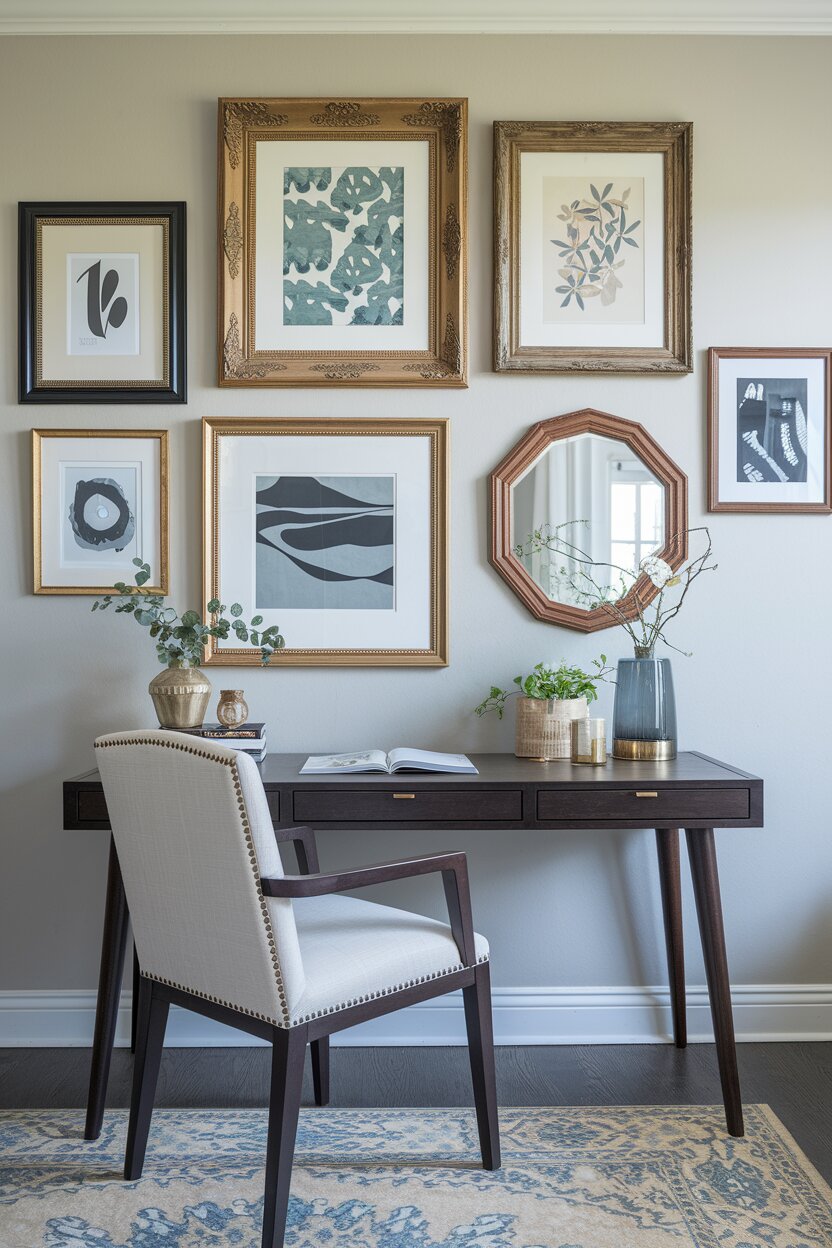
Build a Gallery Wall That Spans Eras
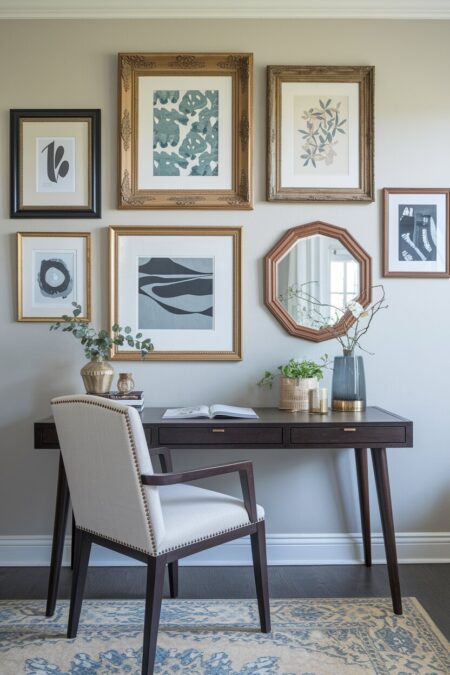
Skip the single oversized print and build a gallery wall instead. Mix traditional frames, wood or gilded, with a few contemporary prints or abstract pieces. The combination feels collected rather than decorated all at once. It’s one of the more affordable transitional home office ideas on this list, since it just takes a thoughtful arrangement of art you already own or can find secondhand.
- 10 of 11
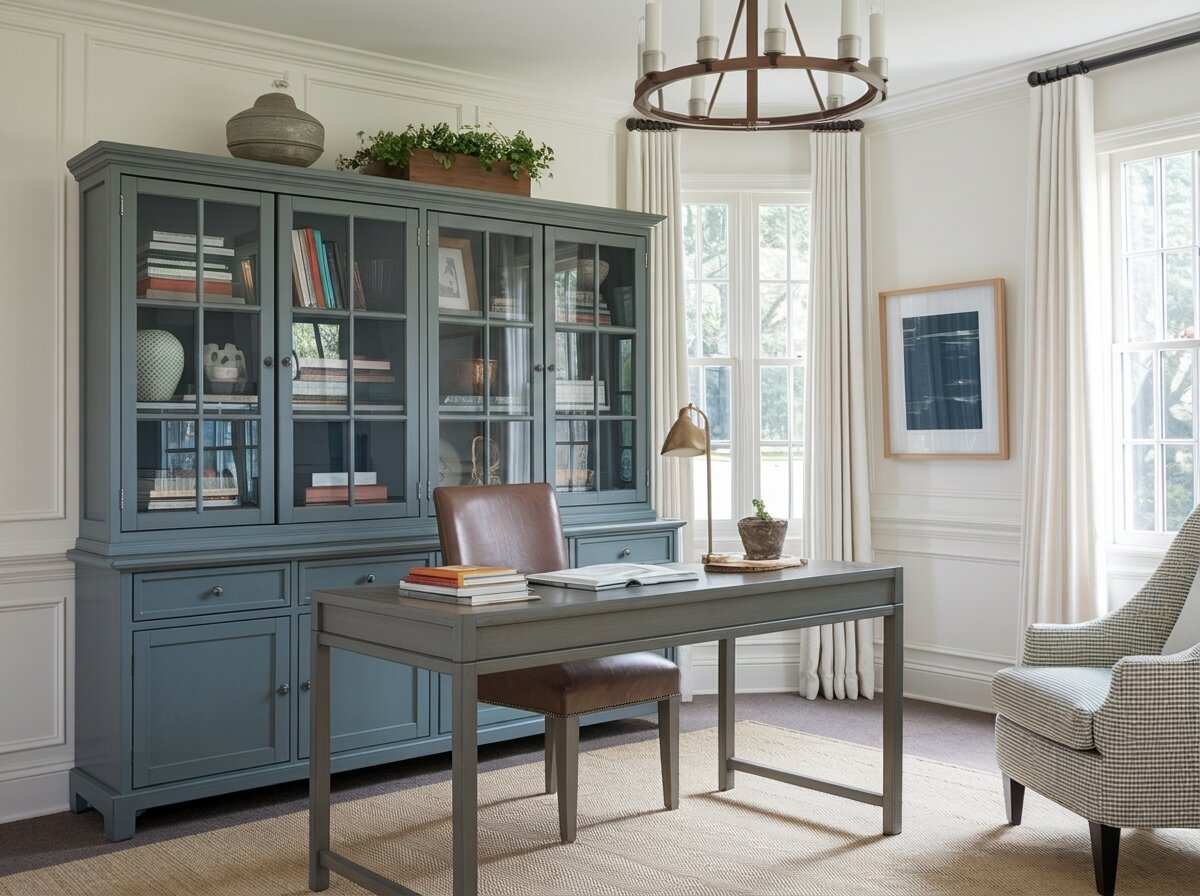
Choose Glass-Front Storage
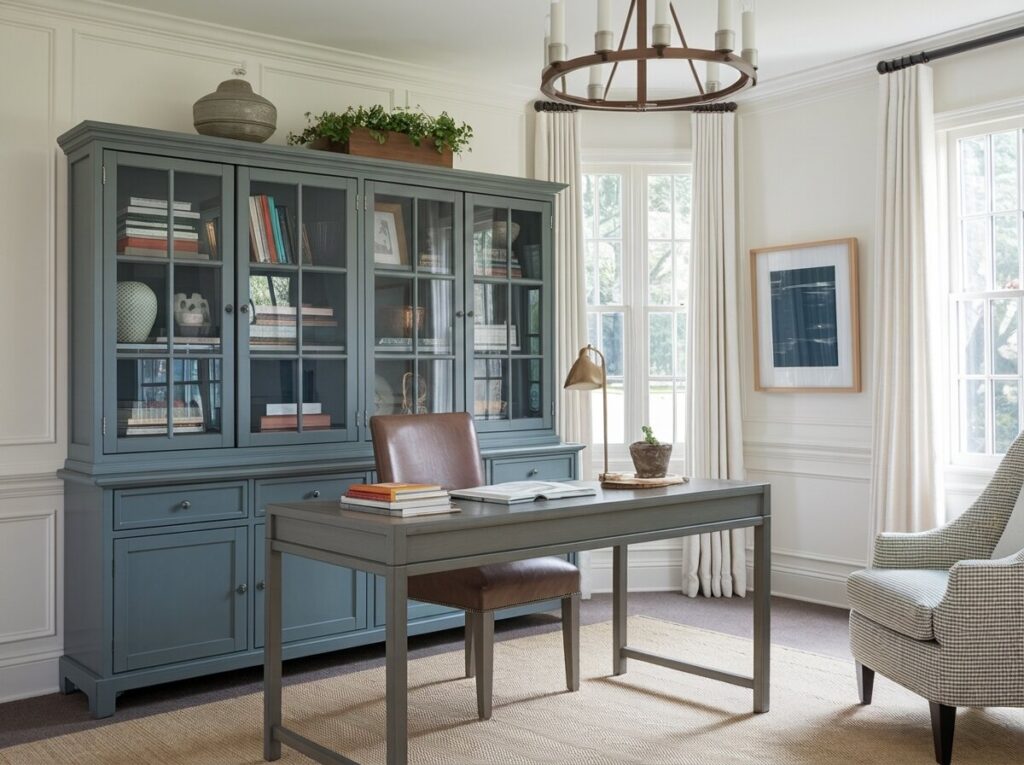
Closed storage doesn’t have to feel heavy. A glass-front cabinet or hutch keeps books and supplies tidy while still letting you see what’s inside, which helps a small transitional home office feel more open. Pick a piece with simple, classic lines rather than heavy carving, then pair it with modern hardware so it doesn’t skew too traditional.
- 11 of 11
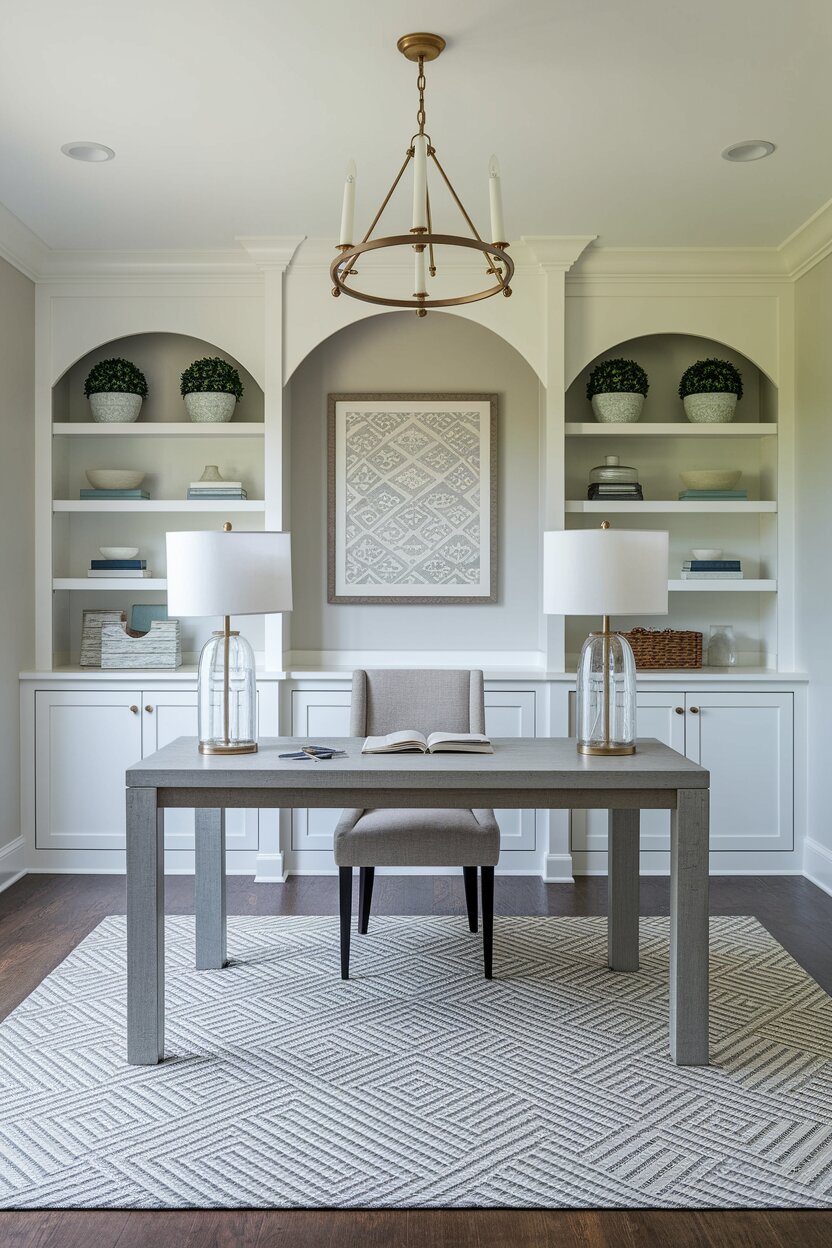
Keep the Layout Symmetrical
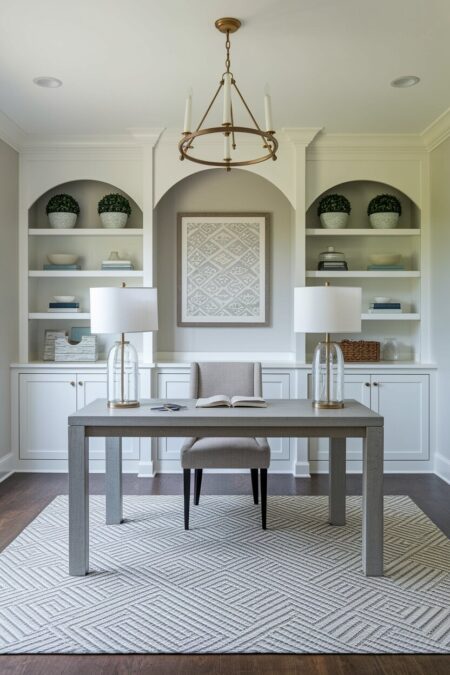
Transitional design favors balance over asymmetry. A layout that mirrors elements on either side of the desk, matching lamps, matching shelves, even a pair of chairs facing each other, creates the sense of order this style is known for. Symmetry doesn’t have to mean boring, though. Leave room for one unexpected piece, like a bold art print or a patterned rug, to keep the office from feeling too formal.