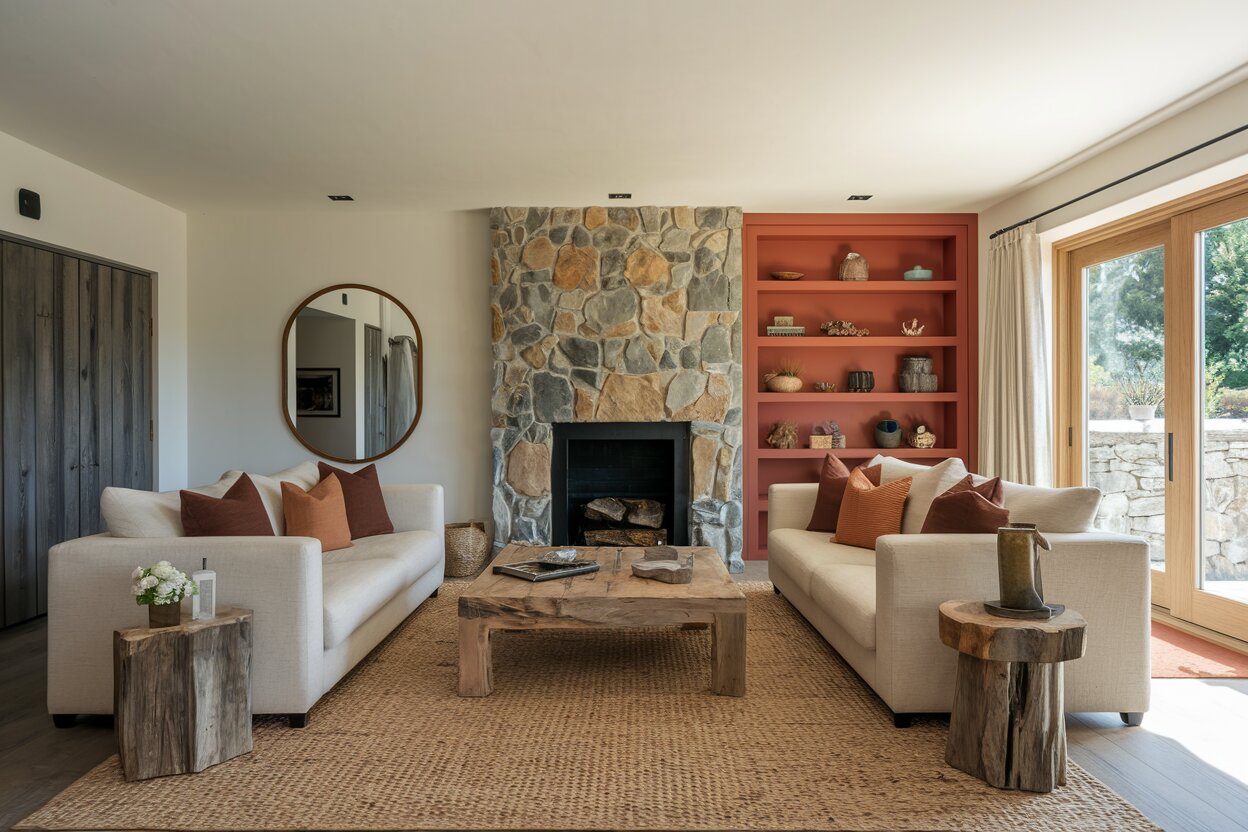
Rustic design has a simple goal: make a room feel lived-in. It leans on raw, natural materials instead of polished finishes — weathered wood, rough stone, worn leather. Nothing here looks brand new. That’s the whole point. A rustic living room celebrates texture and imperfection over shine, and it wears its age well.
This style borrows from cabins, farmhouses, and old barns, but it doesn’t have to look dated or heavy-handed. Pair a reclaimed wood beam with clean, modern furniture, and the room reads fresh instead of themed. Add soft textiles and warm, low lighting, and it turns cozy fast. Rustic also plays nicely with other styles. It blends easily with Scandinavian minimalism, industrial edge, and even a touch of glam, so there’s plenty of room to make it your own.
Ready to add some rustic charm to your space? Below are rustic living room ideas built around natural materials, earthy color, and comfortable, lived-in style. Borrow one element, or mix a few together, and you’ll end up with a room that’s hard to leave.
- 01 of 10
Exposed Ceiling Beams
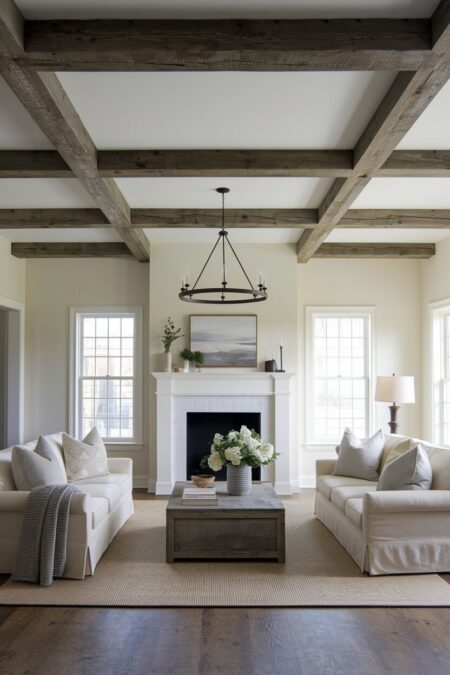
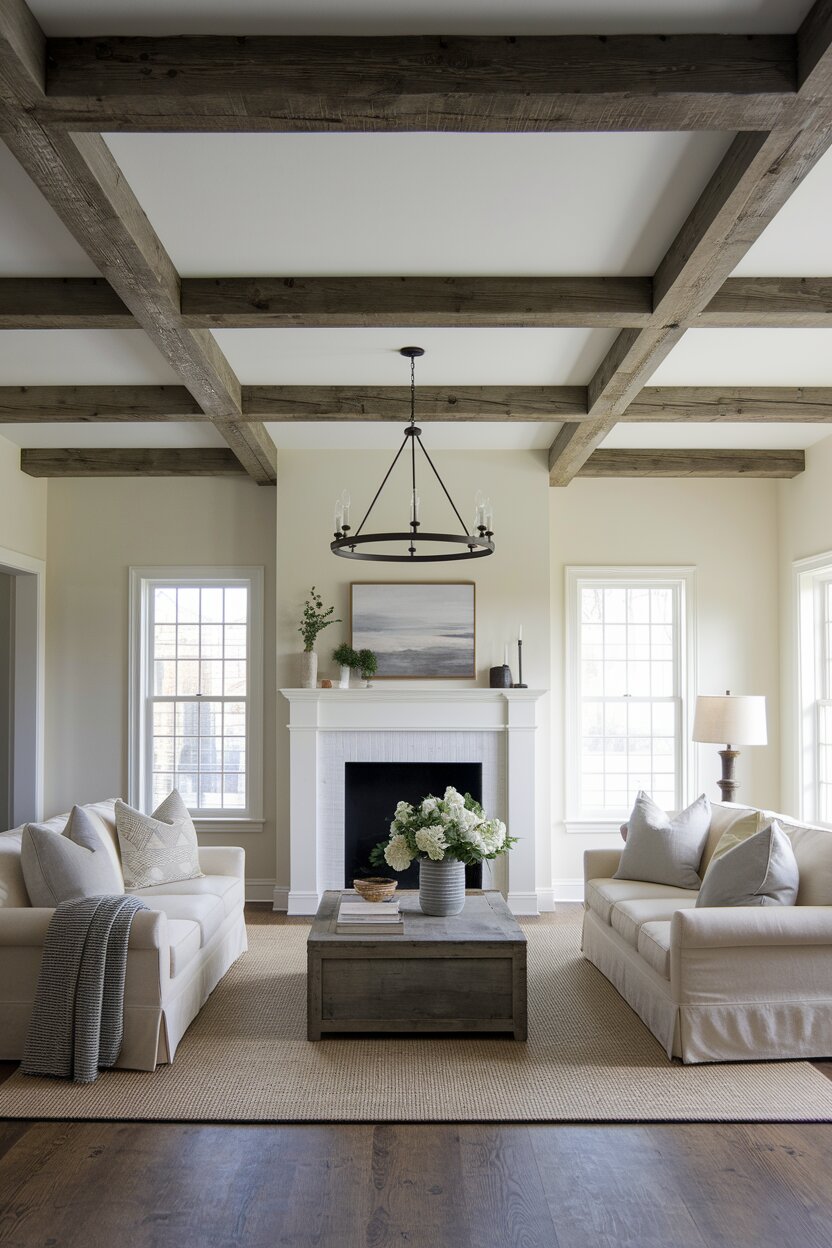
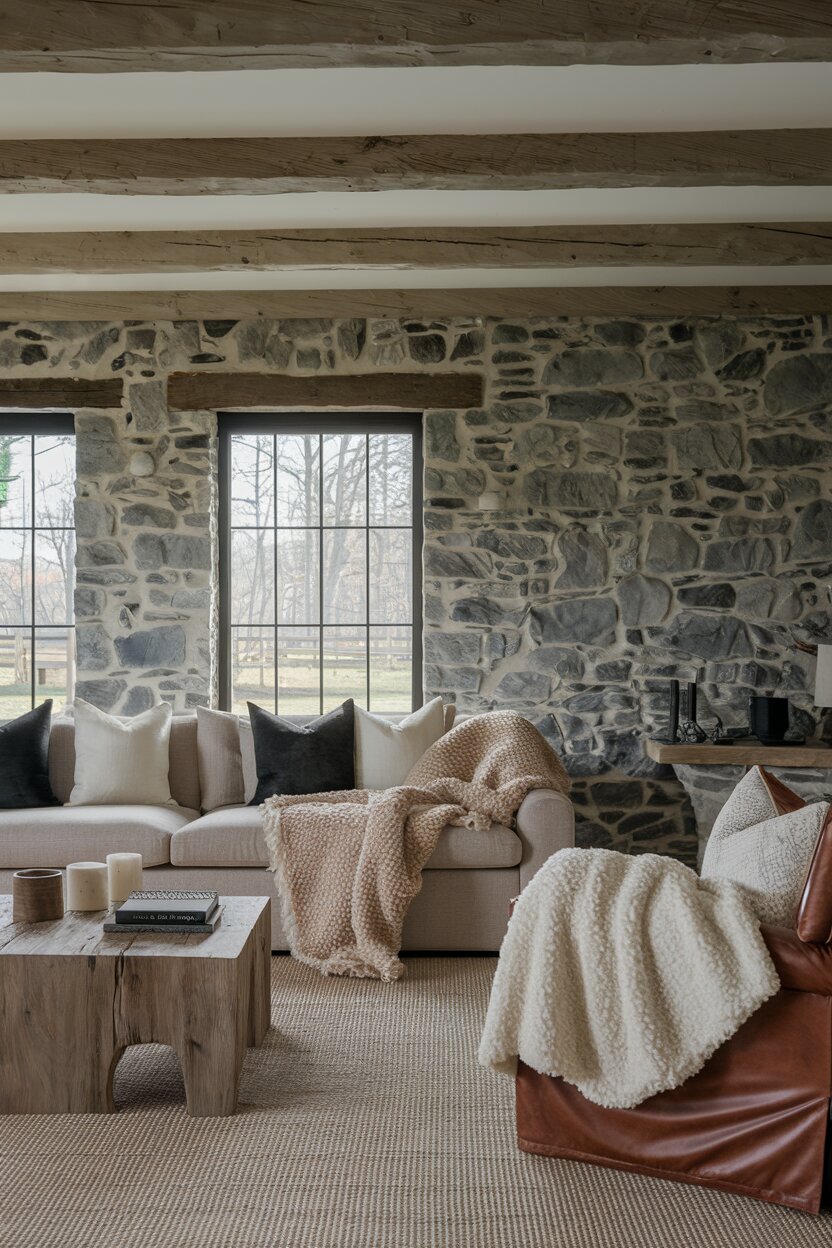
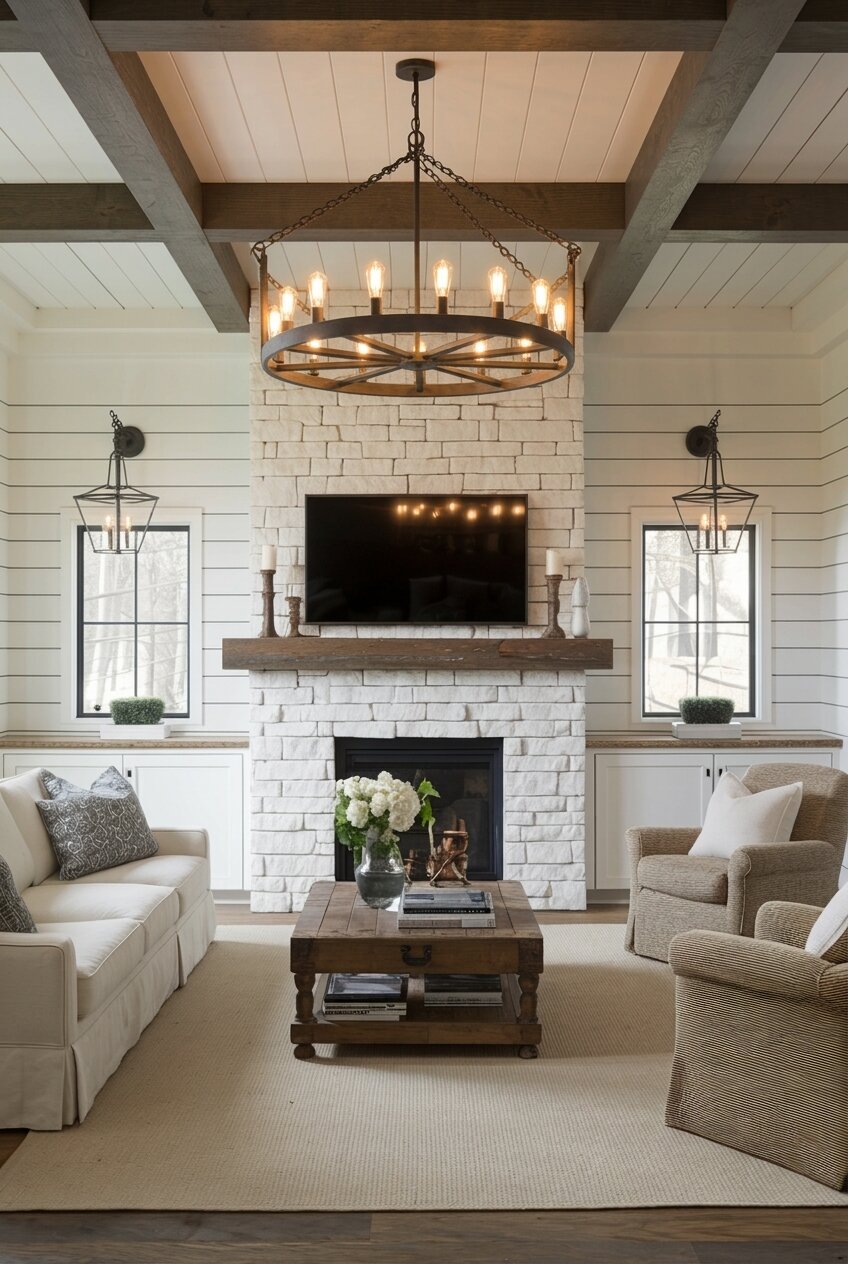
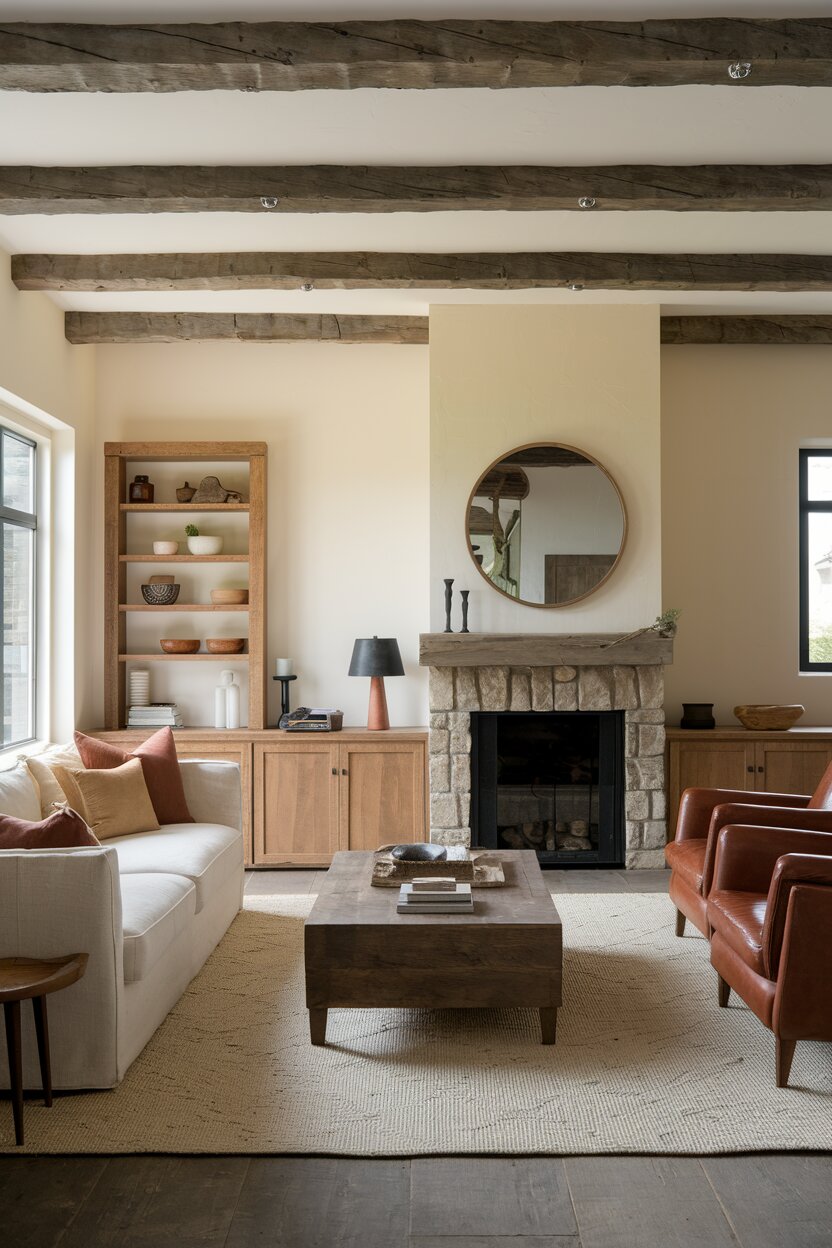
Rustic living rooms often start at the top. Exposed wood beams add instant architectural interest to a ceiling that would otherwise go unnoticed. Reclaimed barn beams bring the most character — knots, saw marks, a weathered gray-brown finish that’s tough to fake. Working with a flat, low ceiling? Faux beams made from lightweight wood or polyurethane can mimic the look without any structural changes. Keep the rest of the ceiling white or soft cream so the beams stand out. A simple pendant or an iron chandelier hung between them keeps the eye moving upward.
- 02 of 10
Stacked Stone Fireplace
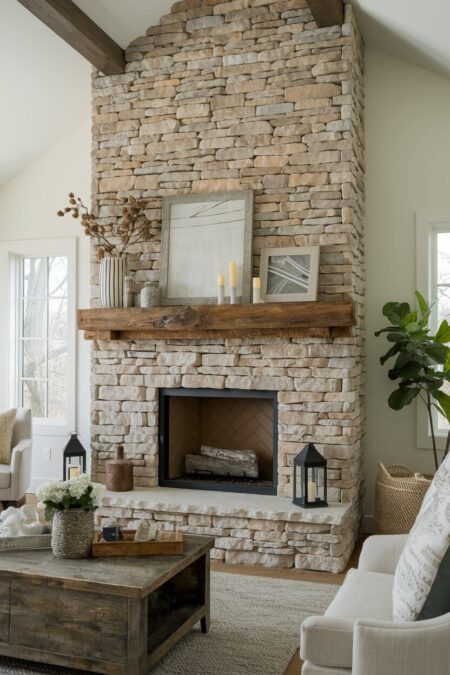
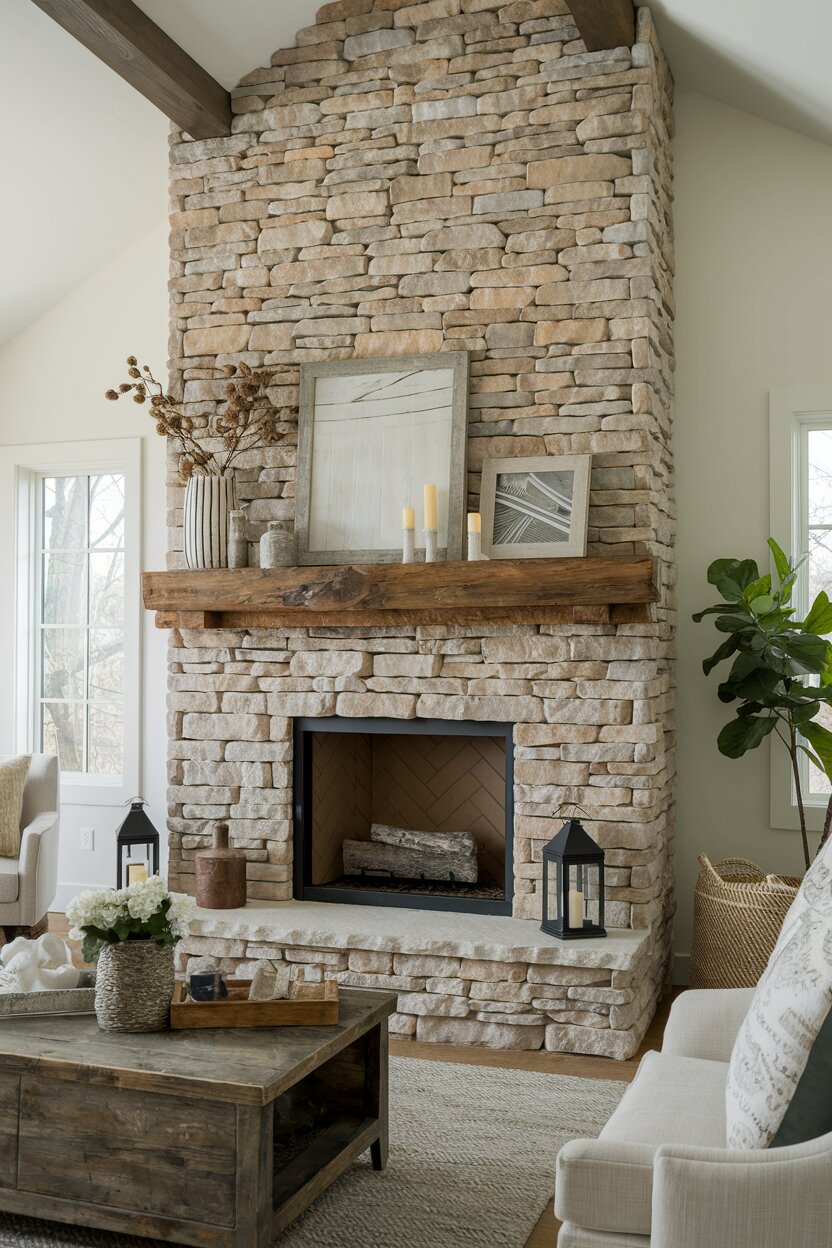
A stone fireplace is one of the fastest ways to ground a rustic living room. Rough-cut fieldstone or river rock adds texture and a sense of permanence you just can’t get from drywall. Stack it floor to ceiling for real drama, or keep it modest if the room is small. Warm stone tones — tan, rust, soft gray — echo the rest of a rustic palette well. Top it with a thick wood mantel. It softens the hard edges and gives you a spot for lanterns, candles, or a few framed photos.
- 03 of 10
Reclaimed Wood Coffee Table
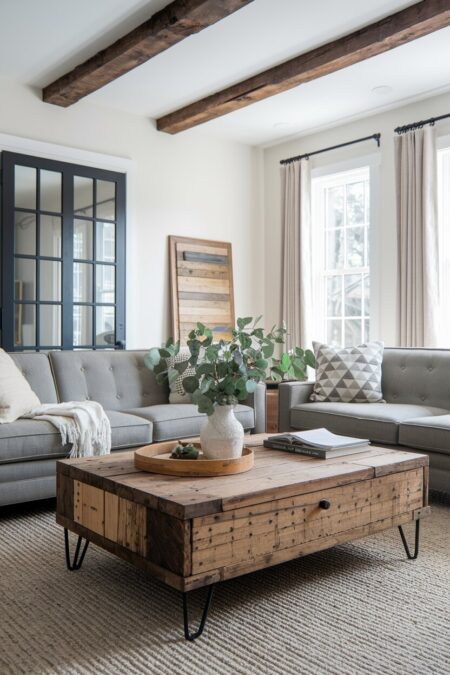
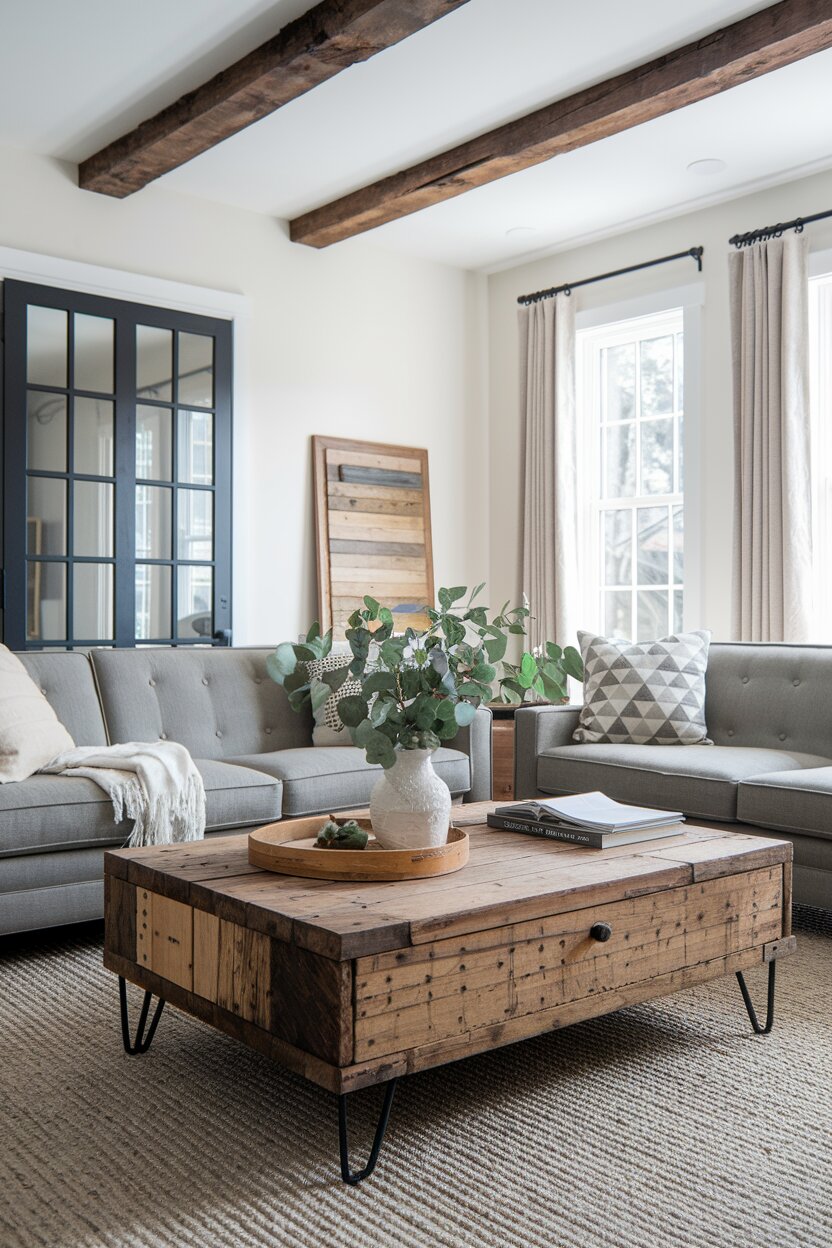
Furniture with a past brings real character into a room. A coffee table built from reclaimed barn wood or salvaged timber carries visible grain, old nail holes, and color variation that new lumber simply can’t fake. Look for a chunky, low-slung shape with simple iron or hairpin legs, so the piece doesn’t feel too heavy. Round tables soften a room full of straight lines. A long rectangular option, on the other hand, works well in front of a sectional. Either way, this table becomes the quiet anchor of the whole seating area.
- 04 of 10
Buttery Leather Seating
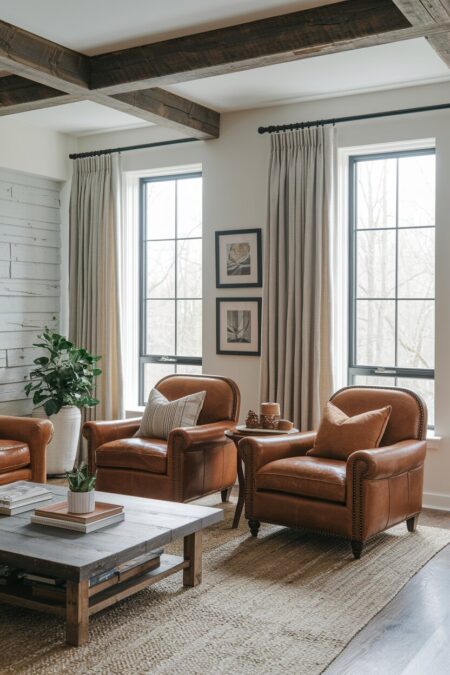
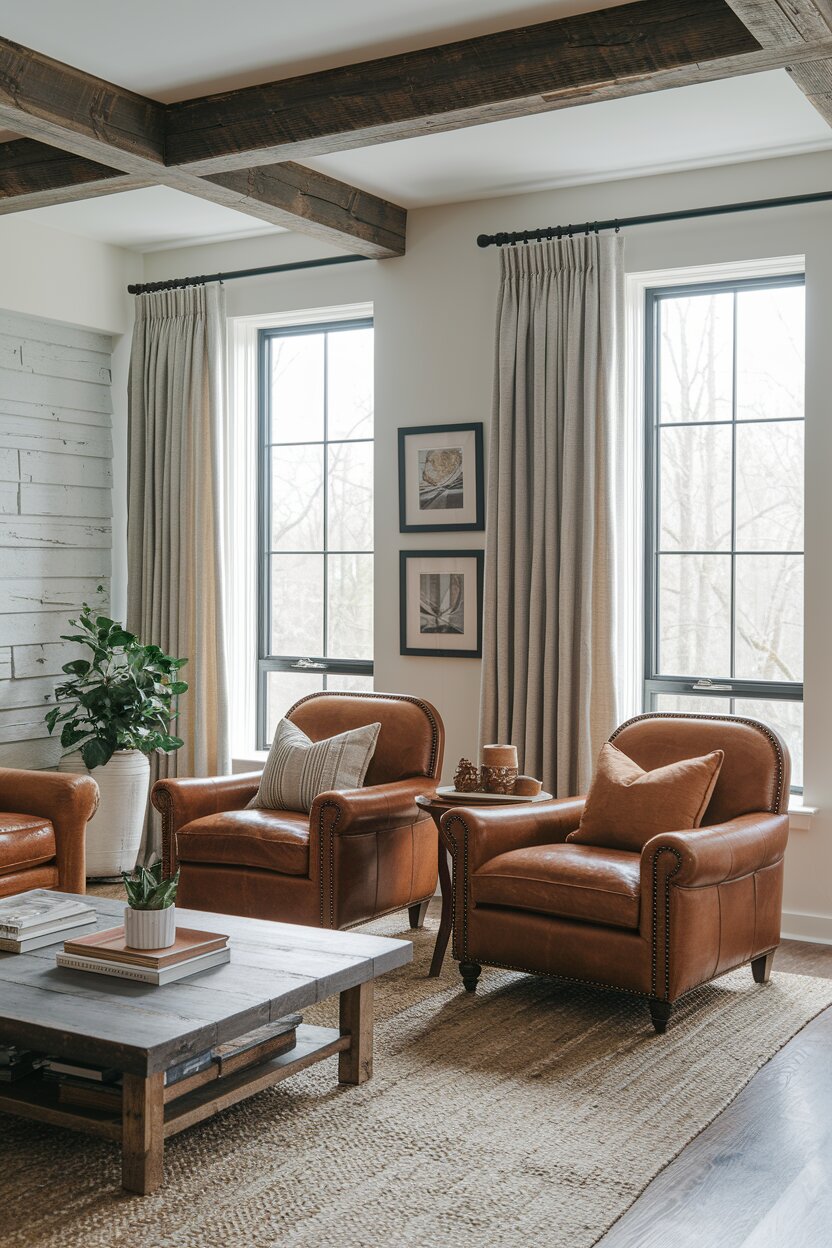
Leather ages the way rustic style wants everything to age — slowly, with character. A worn leather sofa or a pair of leather club chairs bring warmth without feeling fussy. Skip anything glossy. Go for a distressed, vintage-look leather in cognac, chestnut, or deep chocolate brown instead. The material only improves with use, developing soft creases and a richer patina over time. Mix it with linen or wool cushions so the room doesn’t feel too heavy, and toss on a chunky knit throw for extra texture.
- 05 of 10
Layered Wool and Sheepskin Textiles
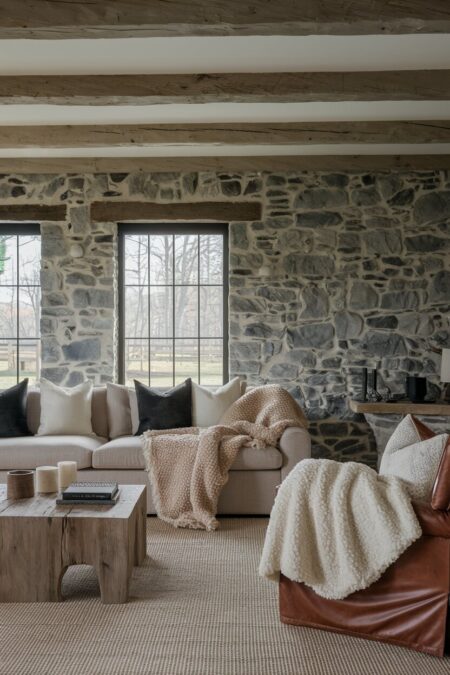
Soft textiles keep a rustic living room from feeling like a cabin showroom. Chunky wool throws, sheepskin hides, and nubby knit pillows add softness against all that wood and stone. Layer two or three textures on one sofa rather than matching everything perfectly. Drape a sheepskin over the arm of a leather chair, and the whole seat warms up instantly. Stick to a muted palette — cream, oatmeal, charcoal — so the textiles support the room instead of competing with it.
- 06 of 10
Vintage-Inspired Area Rug
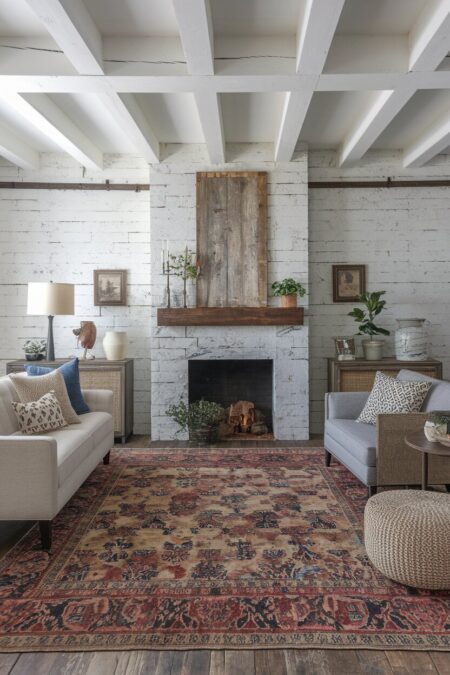
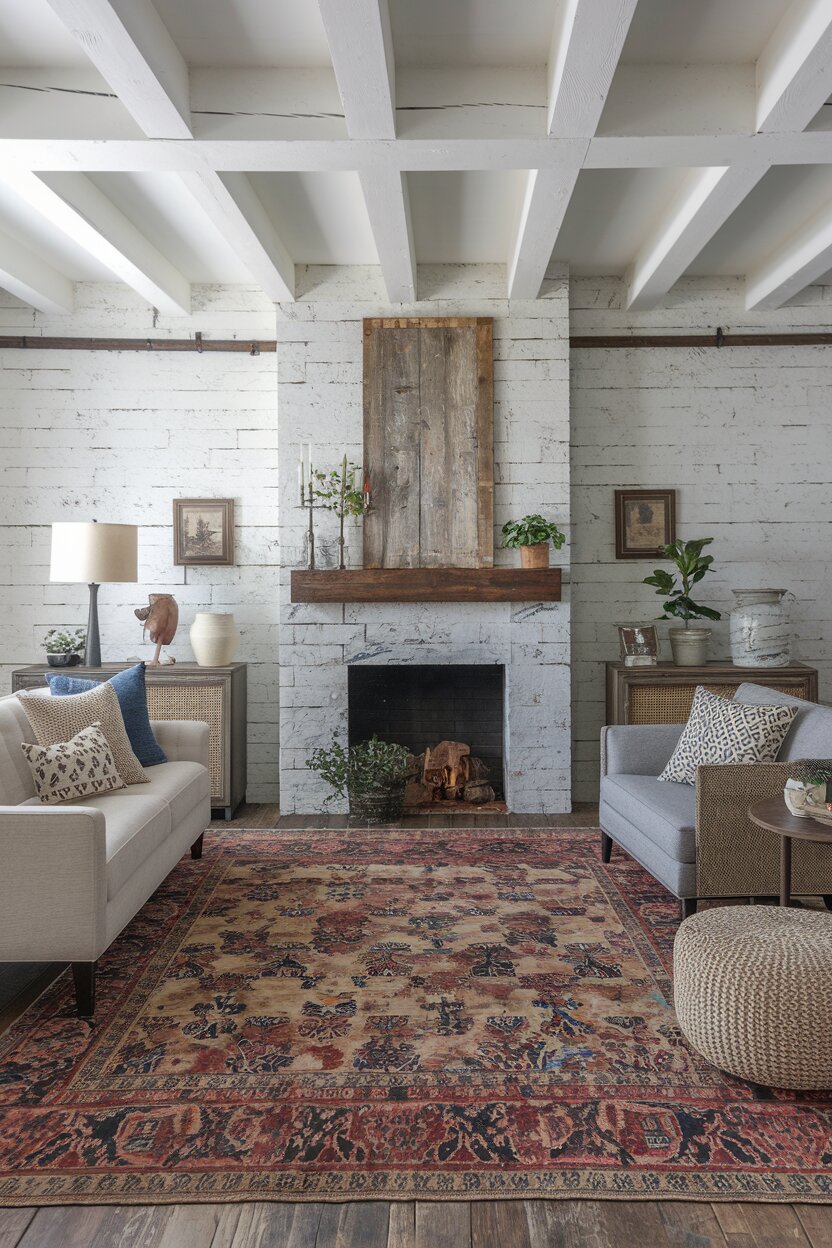
An area rug grounds the furniture and brings pattern into a rustic living room without overwhelming it. Persian and Turkish-style rugs in faded red, blue, and cream have long been rustic favorites, since their worn-in look already fits the aesthetic. A jute or sisal rug works too, if you want something more textural and neutral. One rule matters most here: size. Choose a rug large enough that at least the front legs of your furniture rest on it, or the whole room ends up feeling disconnected.
- 07 of 10
Wrought Iron Lighting
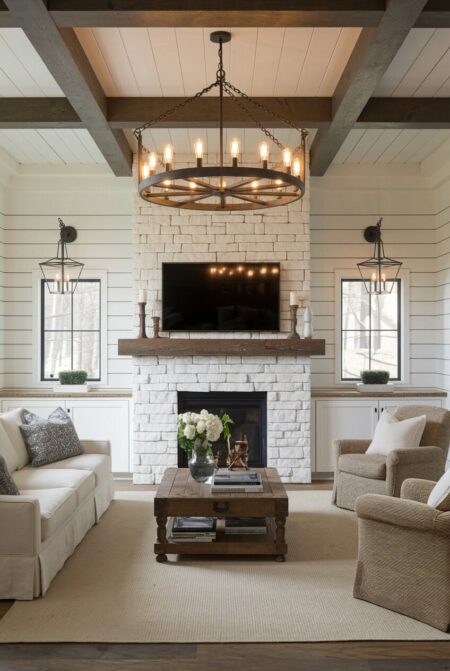
Metal accents keep rustic decor from tipping into pure country cottage. Wrought iron chandeliers, sconces, and lantern-style pendants add just enough edge to balance all that soft wood and fabric. Look for fixtures with visible hardware, scrollwork, or a slightly blackened finish — nothing polished, nothing chrome. A wagon-wheel chandelier is the classic choice for a cabin-style room. A simple iron pendant works just as well in a more understated space. Warm bulbs help, too. They make the metal glow instead of feeling cold.
- 08 of 10
Wood-Paneled Accent Wall
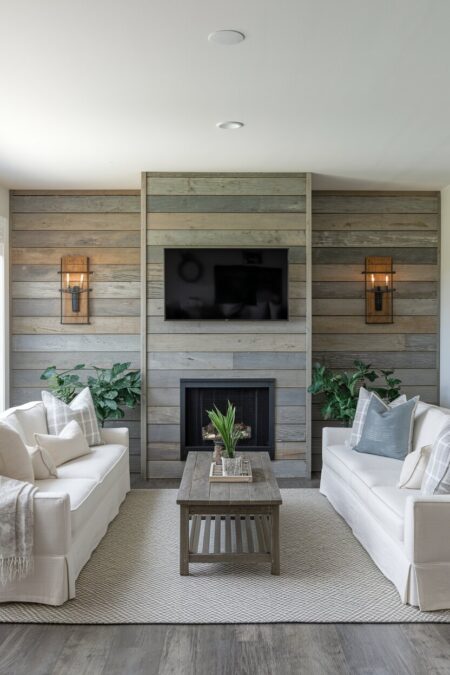
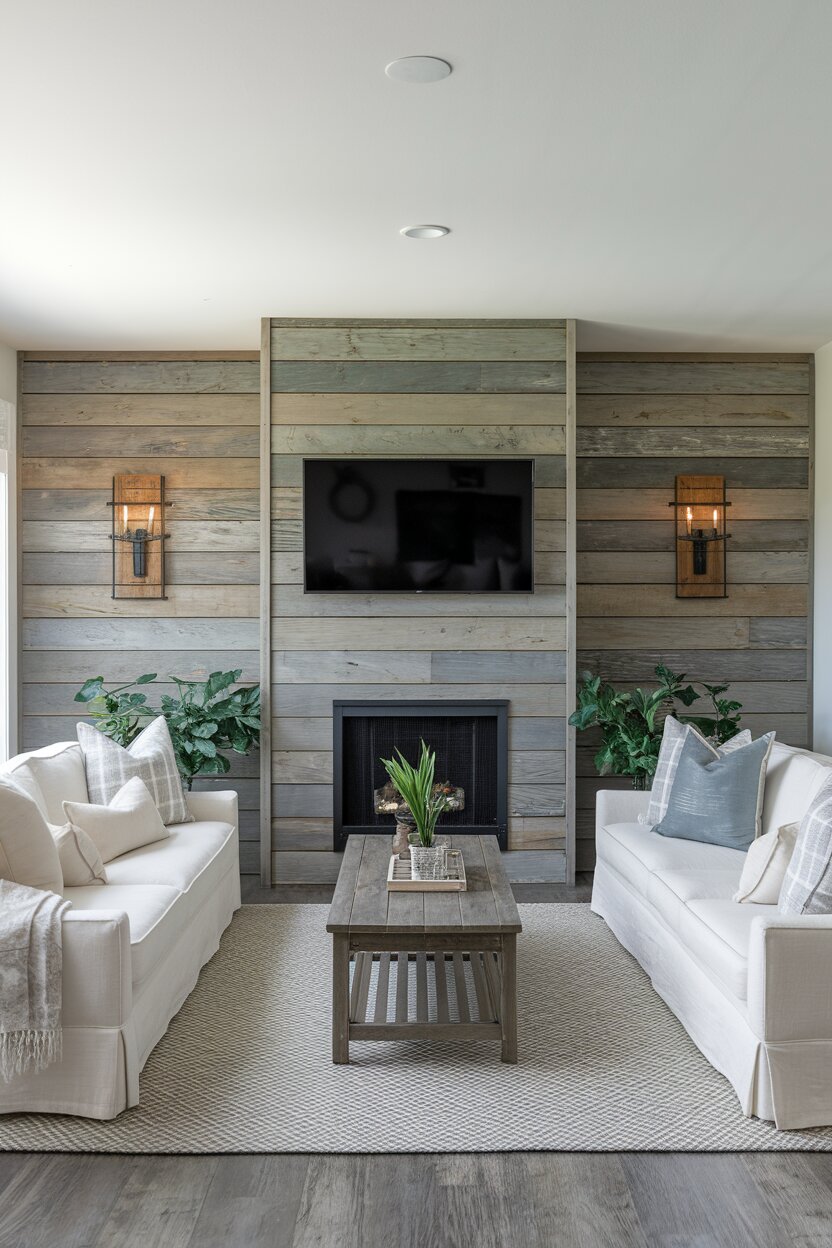
A single wall of wood paneling can transform a rustic living room more than almost any other change. Shiplap is the most familiar route, but board-and-batten or reclaimed wood planks bring even more texture. Leave the wood natural, or add a light whitewash if you want the grain to peek through a softer finish. Pick one wall — usually behind the sofa or around the fireplace. Paneling the whole room can start to feel dark and closed-in fast.
- 09 of 10
Open Wood Shelving
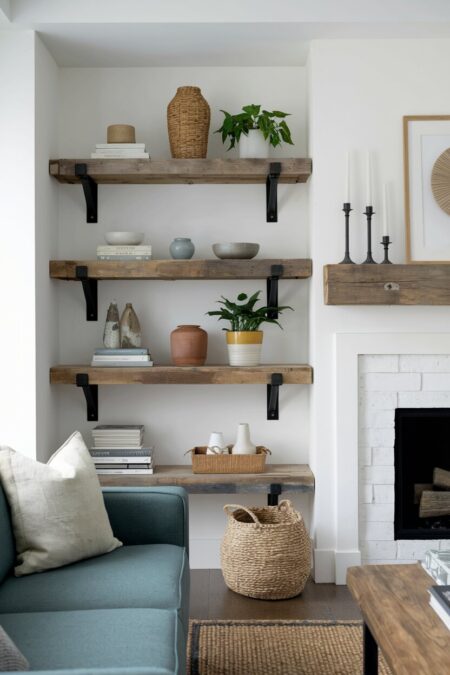
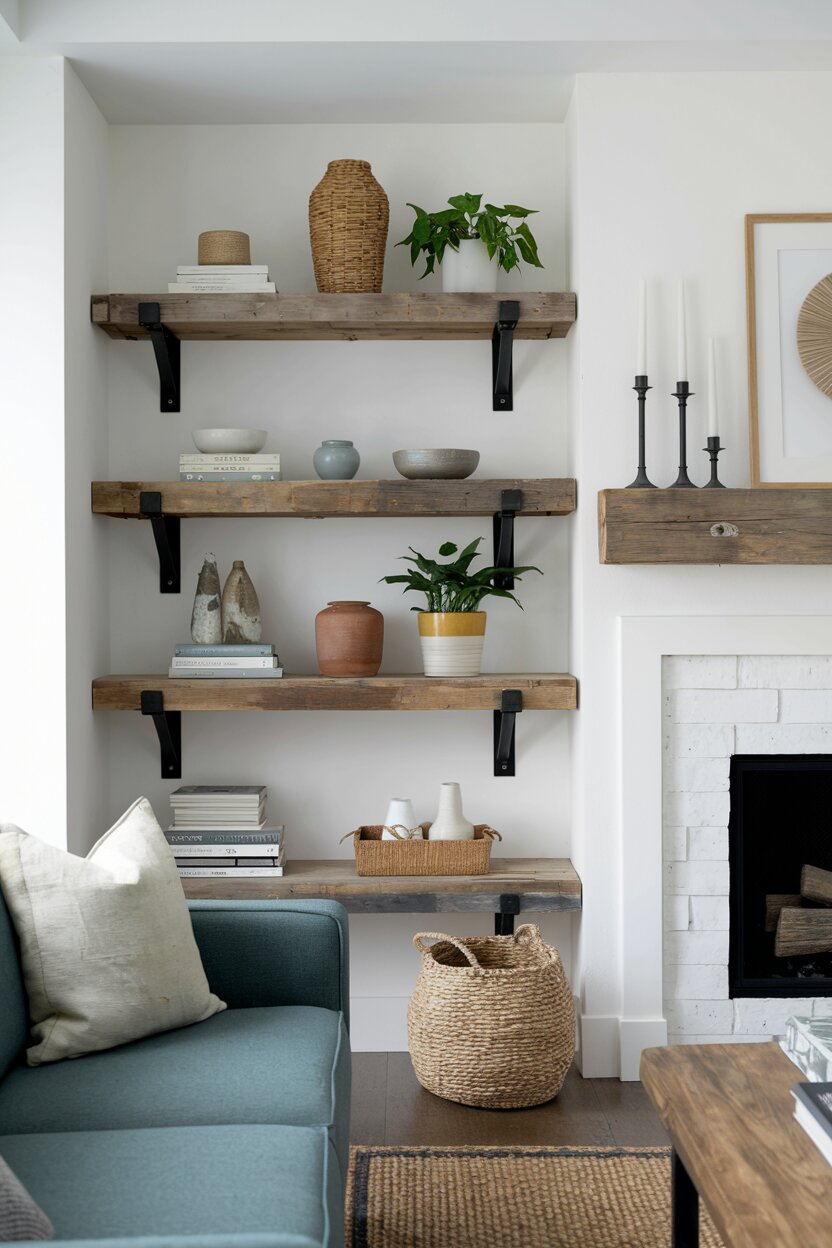
Open shelving built from raw or reclaimed wood gives you a place to show off books, pottery, and plants, while adding one more layer of natural material to the room. Simple wood planks on iron brackets look intentional without feeling overly styled. Keep each shelf loosely grouped rather than perfectly symmetrical. A stack of books, a small plant, one woven basket — that’s it. It reads as collected, not curated. This kind of shelving also works well flanking a fireplace or filling an awkward corner.
- 10 of 10
Warm, Earthy Color Palette
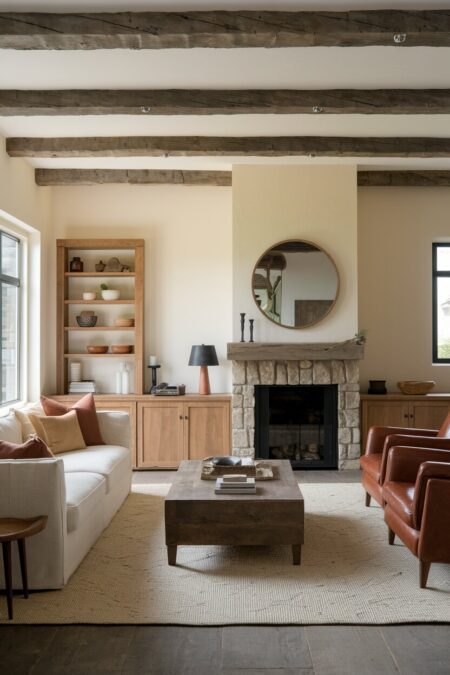
Color does a lot of quiet work in a rustic living room. Skip stark white and cool gray. Lean into warm neutrals instead: cream, tan, terracotta, deep brown. These tones echo the wood, stone, and leather already in the space, so everything feels cohesive rather than assembled. A few deeper accents — forest green, rusty orange — add depth without breaking the earthy theme. Save the bright, cool colors for another room. In a rustic space, they tend to fight the natural materials instead of complementing them.