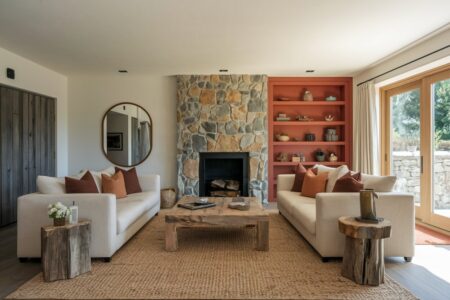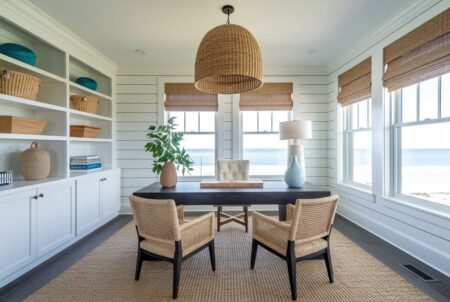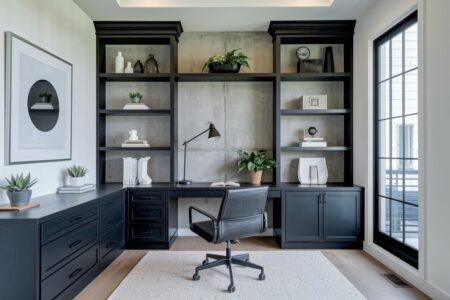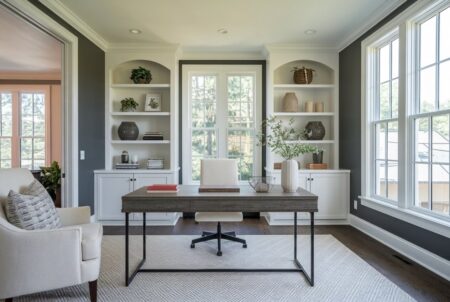
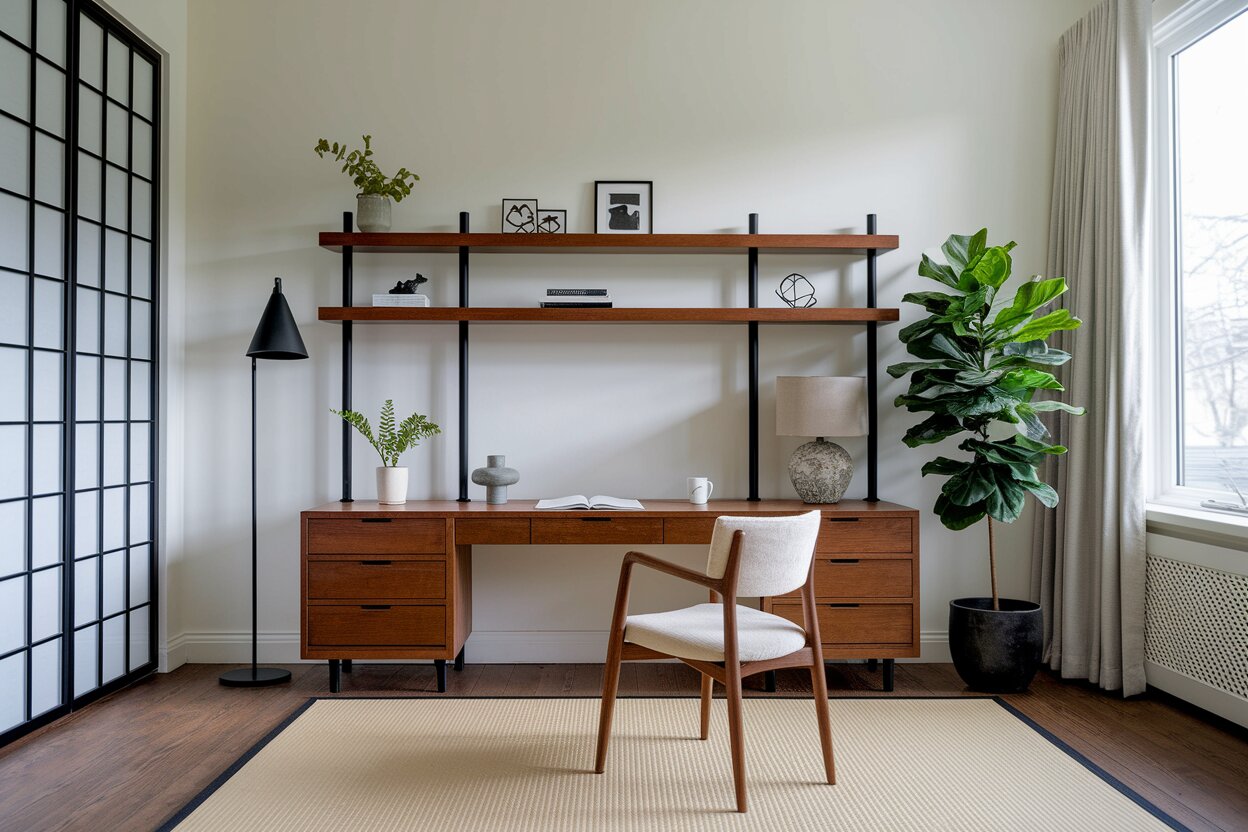
Japandi didn’t appear out of nowhere. It grew out of two design cultures that already had plenty in common: Scandinavian hygge and Japanese wabi-sabi. Both value function over flash. Both lean on natural materials, quiet colors, and rooms that feel unhurried. Bring that thinking into a home office, and you get a workspace that calms rather than clutters — exactly what most of us need before a deadline.
A Japandi home office isn’t about strict rules. It’s a mood built from a handful of repeating choices: warm wood, soft neutrals, low furniture, and enough negative space for the room to breathe. Almost nothing in the room is purely decorative. Every object earns its spot, and that restraint is a big part of why the style holds up as well in daily use as it does in photos.
Below are Japandi home office ideas to try, covering furniture, color, lighting, and storage. Pick a few rather than all. Restraint is kind of the point.
- 01 of 10
A Warm Wood Desk as the Foundation
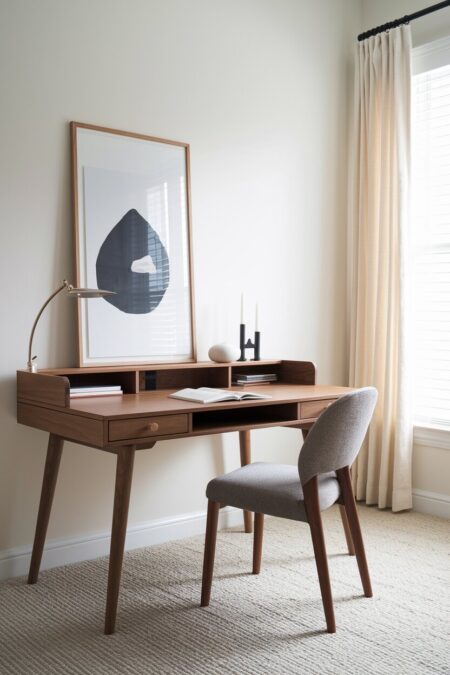
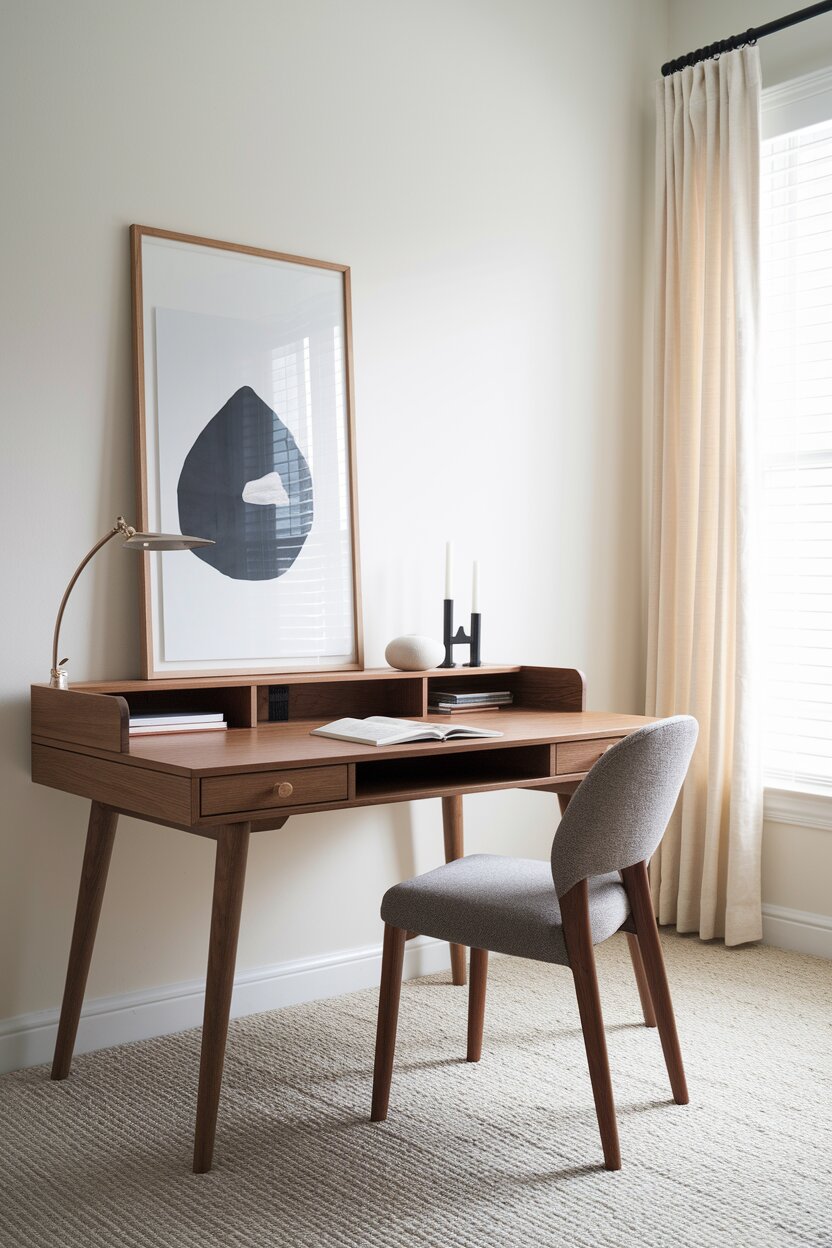
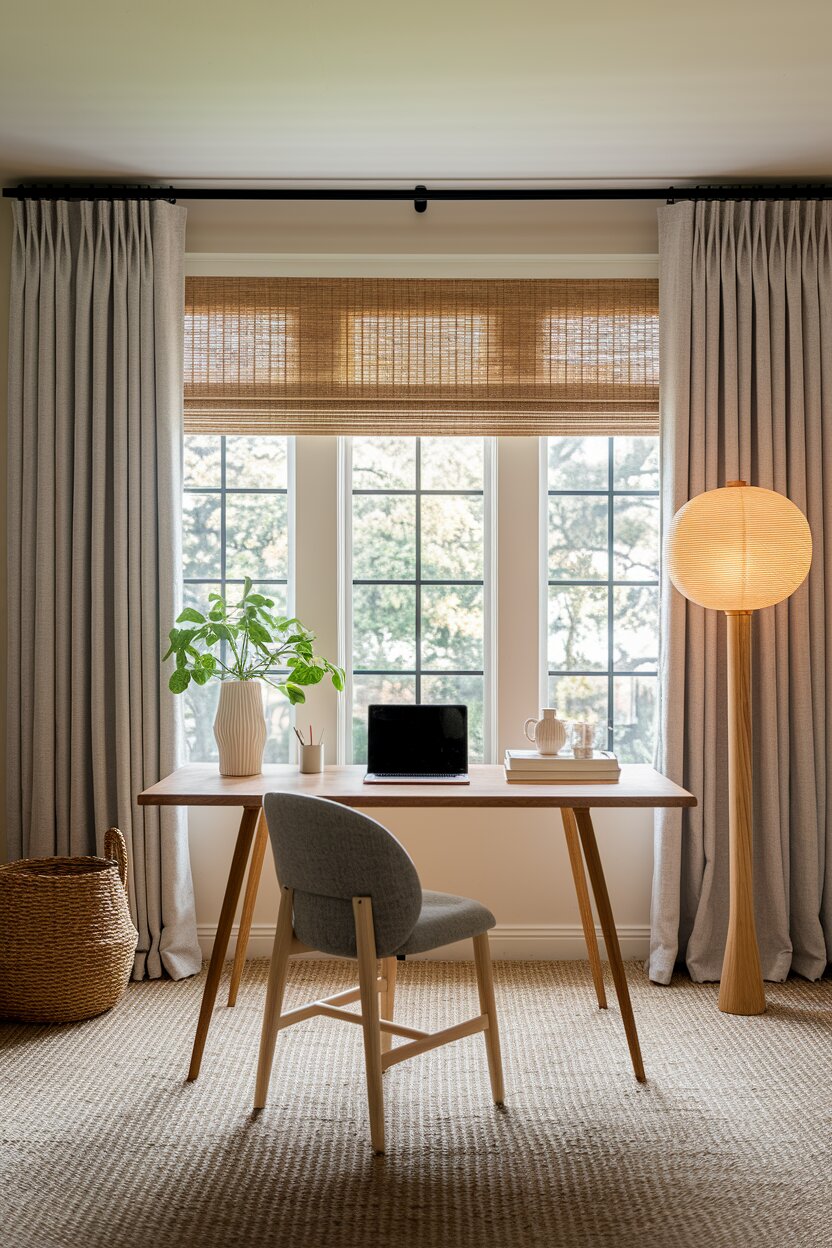
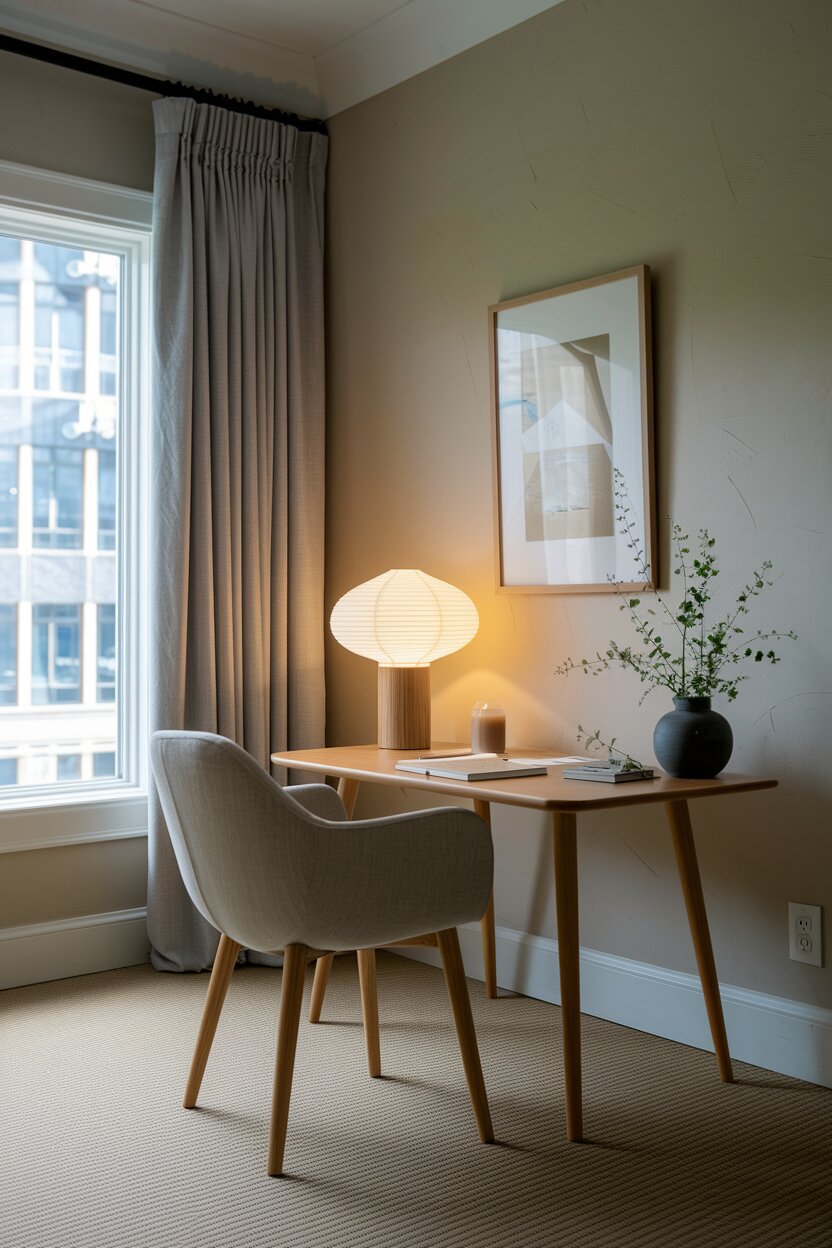
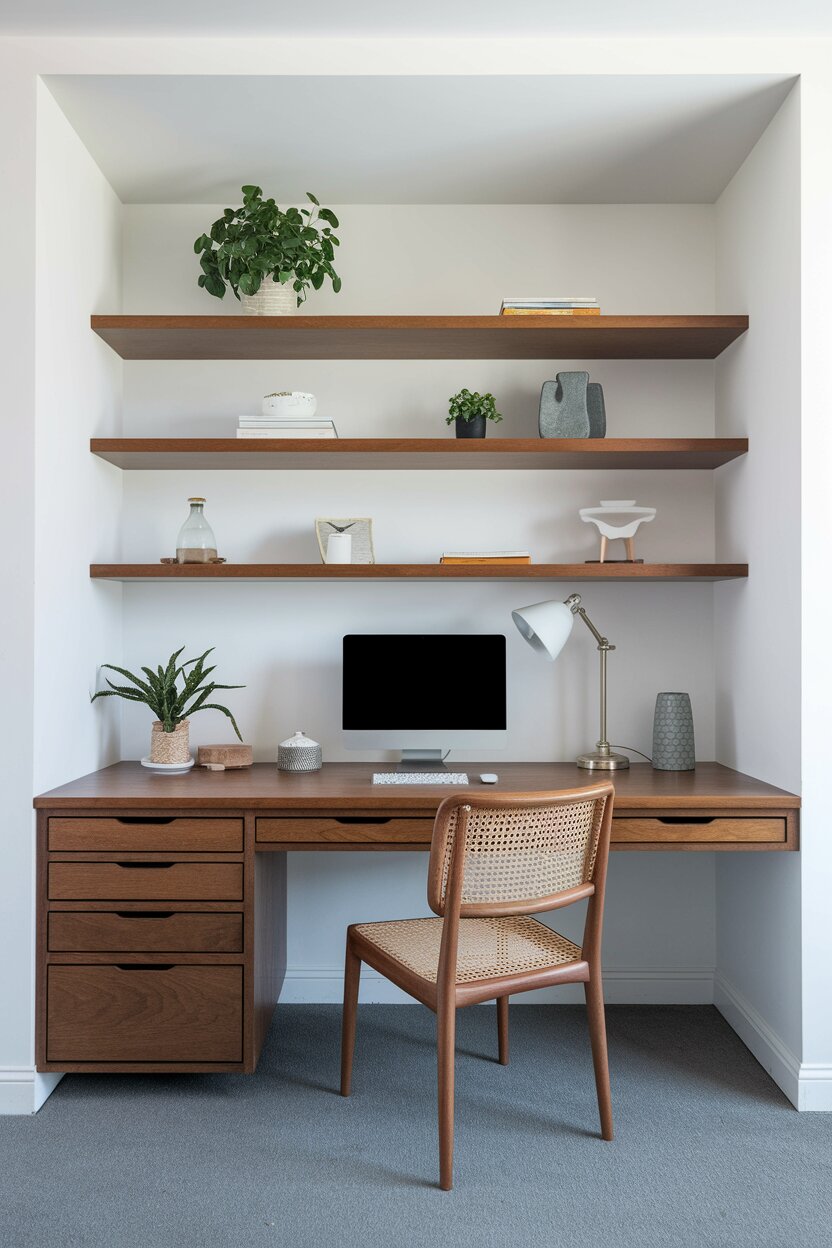
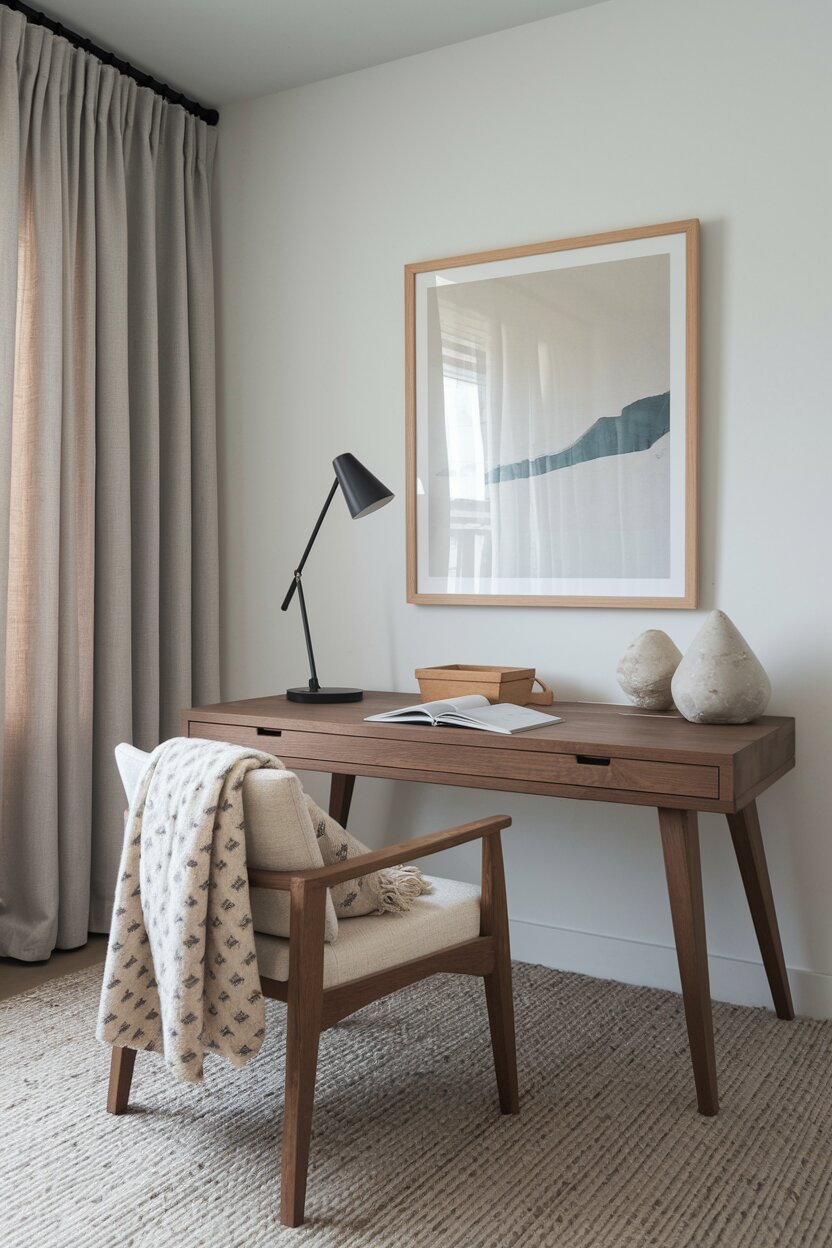
Start with the desk, since it’s the piece you’ll notice most. Look for solid wood in a warm, honeyed tone — oak, ash, and walnut all work well. Skip the glossy finish. A matte or lightly oiled surface reads more natural and ages with character instead of looking dated. Pair it with slim, tapered legs so the piece stays visually light, and it becomes the anchor of the whole Japandi look.
- 02 of 10
Keep the Palette Muted and Earthy
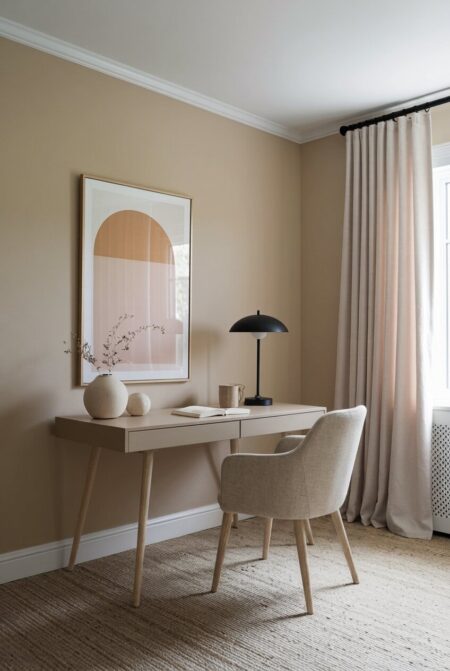
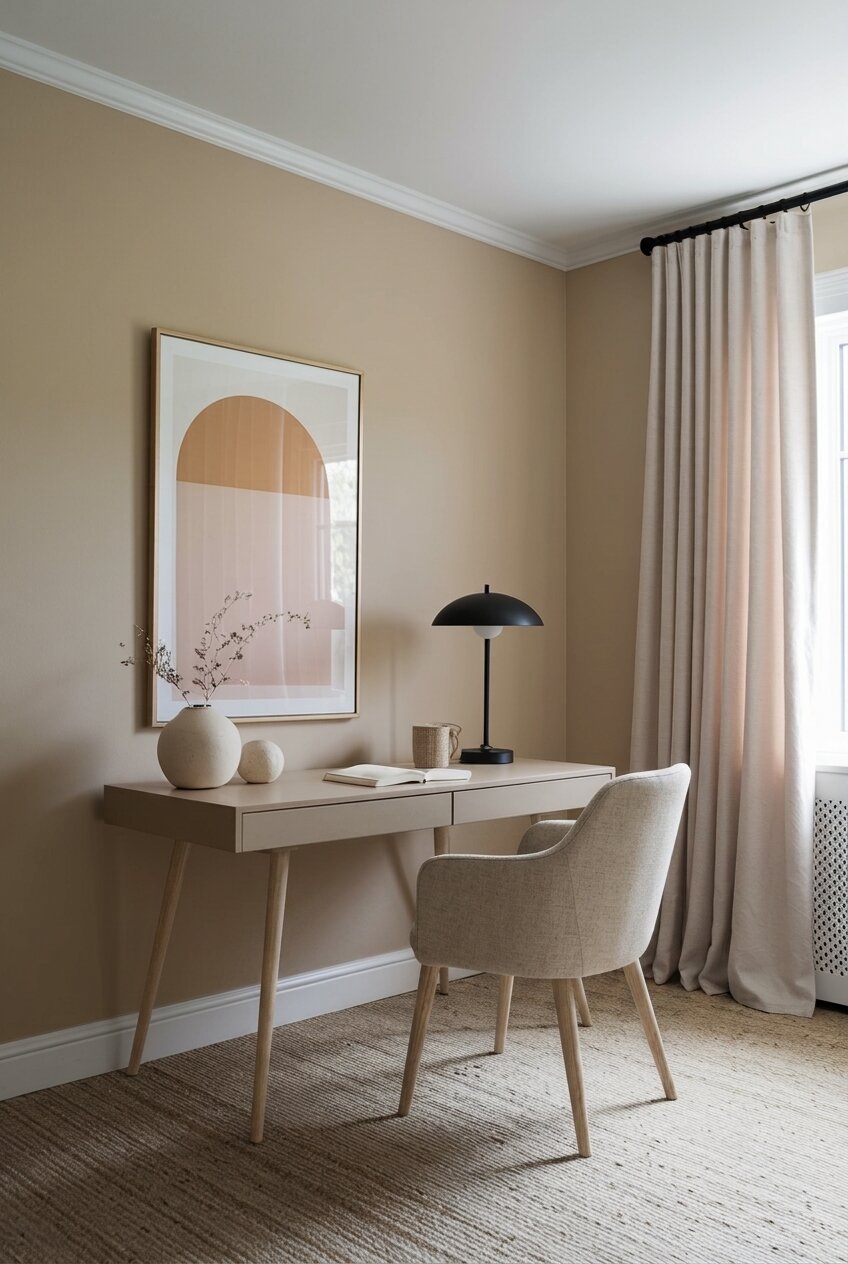
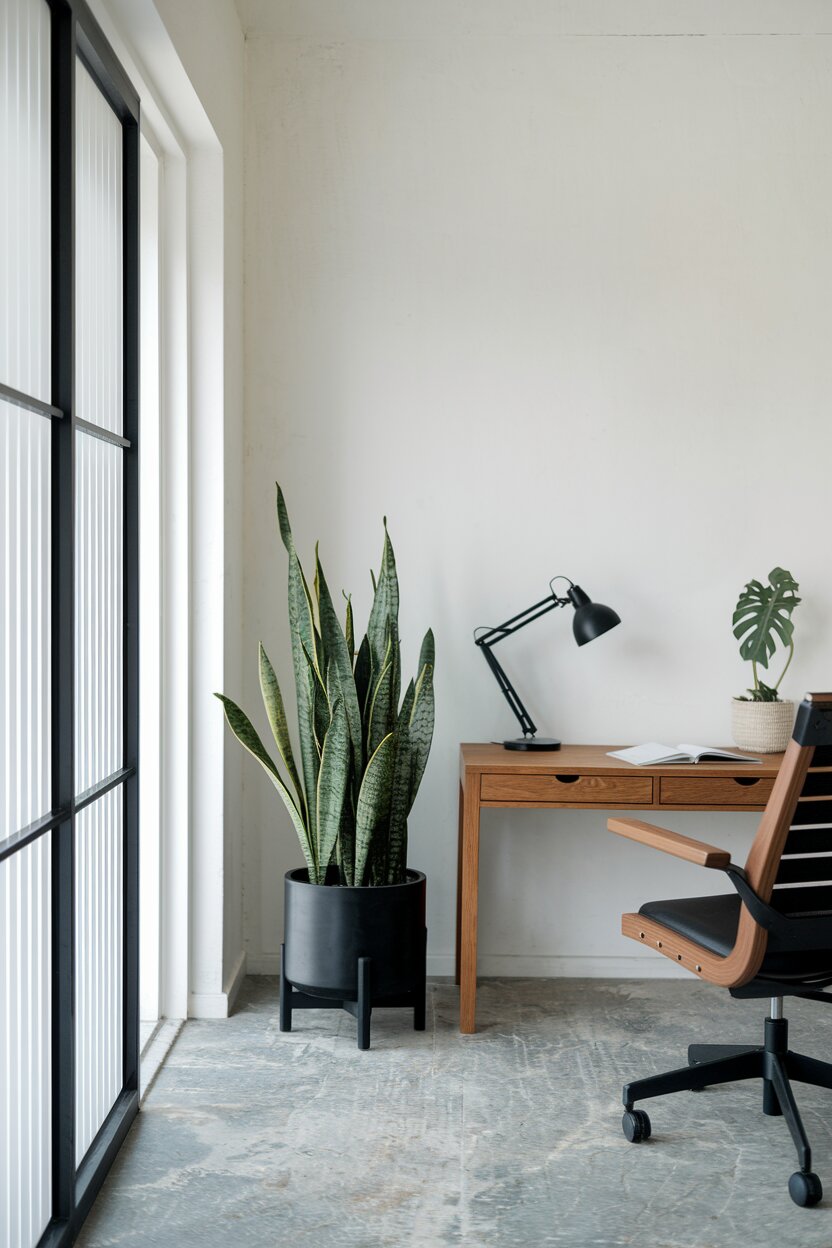
Japandi color schemes stay close to the ground: sand, oatmeal, stone, and soft charcoal. Skip pure white, which can feel a little clinical in a workspace, and skip anything saturated. One or two shades of warm neutral on the walls is usually plenty. If you want contrast, add it through a single dark object — a black desk lamp or a charcoal chair — rather than a bold accent wall.
- 03 of 10
Choose Low-Profile, Minimalist Furniture
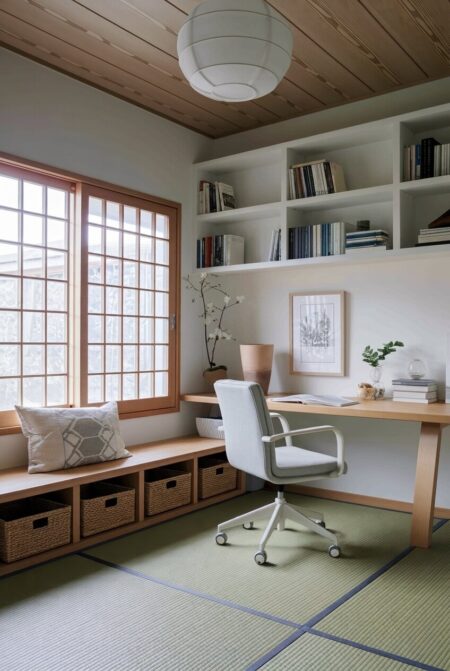
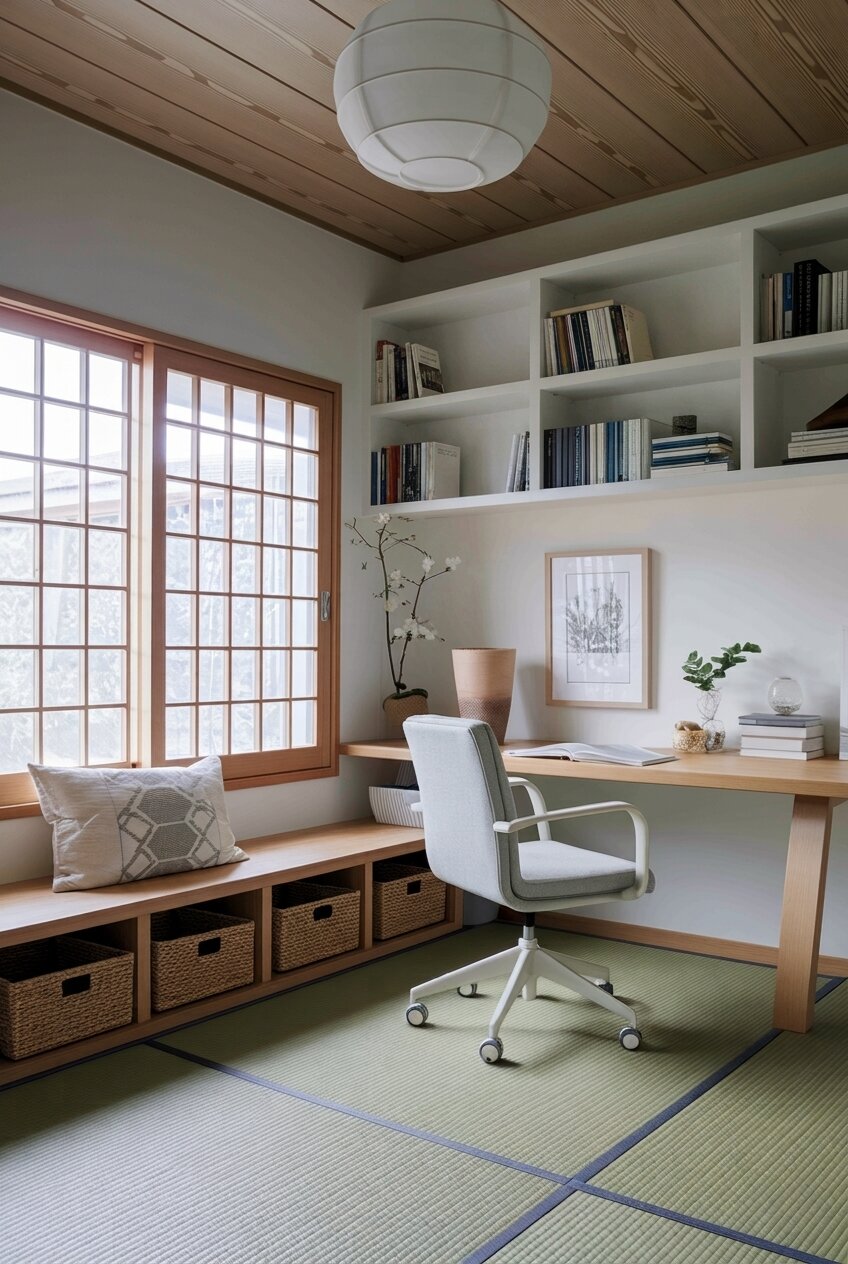
Japanese interiors favor furniture that sits low to the ground, and that habit translates well to a home office. A low bookshelf or a floor-level storage bench keeps sightlines open across the room. Even your desk chair benefits from a simpler, lower profile — exposed wood legs read calmer than a bulky ergonomic frame. The goal is a room that feels spacious even when the square footage isn’t on your side.
- 04 of 10
Swap Closed Cabinets for Floating Shelves
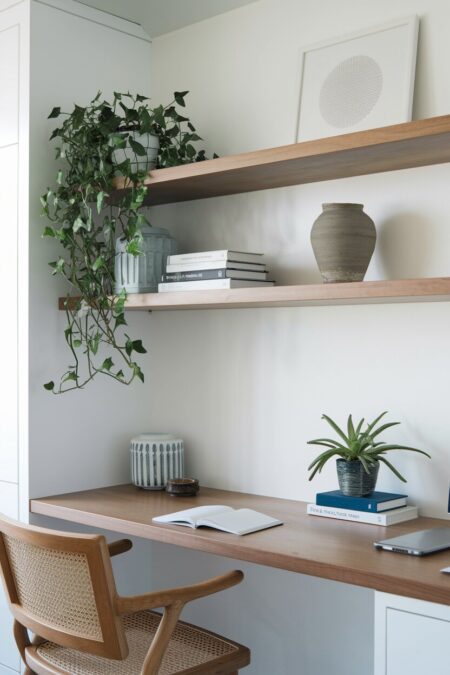
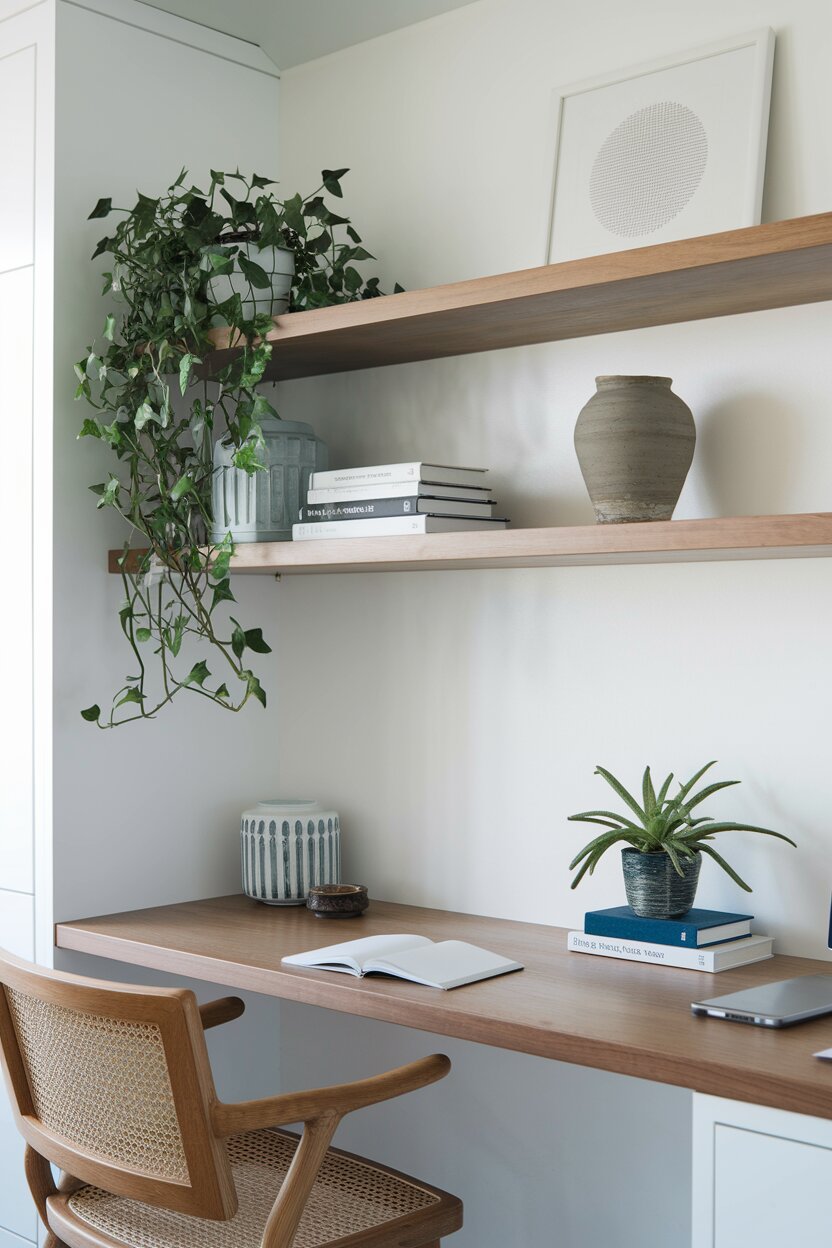
Floating shelves do double duty in a Japandi home office: storage and display, without the visual weight of a full cabinet. Keep what sits on them sparse — a few books, a plant, one piece of pottery. Leave gaps between objects on purpose. That empty space, sometimes called ma in Japanese design, is a big part of what keeps the room feeling settled instead of crowded.
- 05 of 10
Let in Soft, Filtered Light
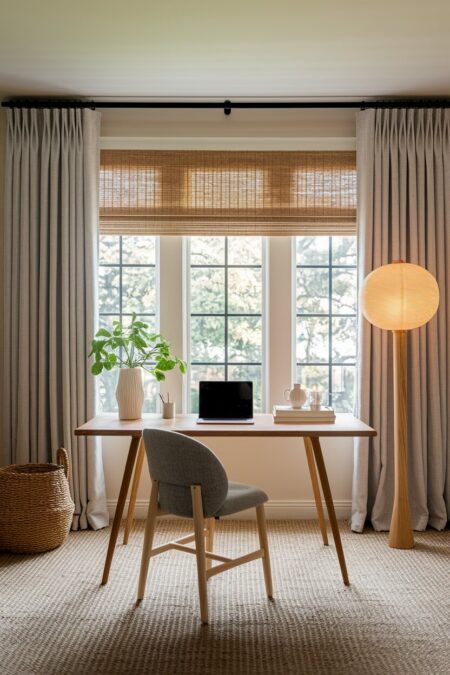
Natural light matters a lot here, but it should feel gentle rather than harsh. Linen curtains or a simple woven shade diffuse direct sun into something softer. If your desk sits near a window, angle it to catch that filtered light instead of facing straight into the glare. On darker days, a warm-toned floor lamp gets you close to the same effect.
- 06 of 10
Add Handmade Ceramic Accents
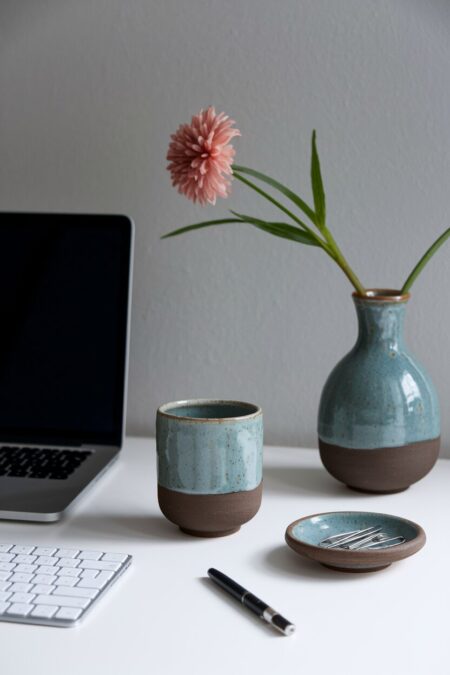
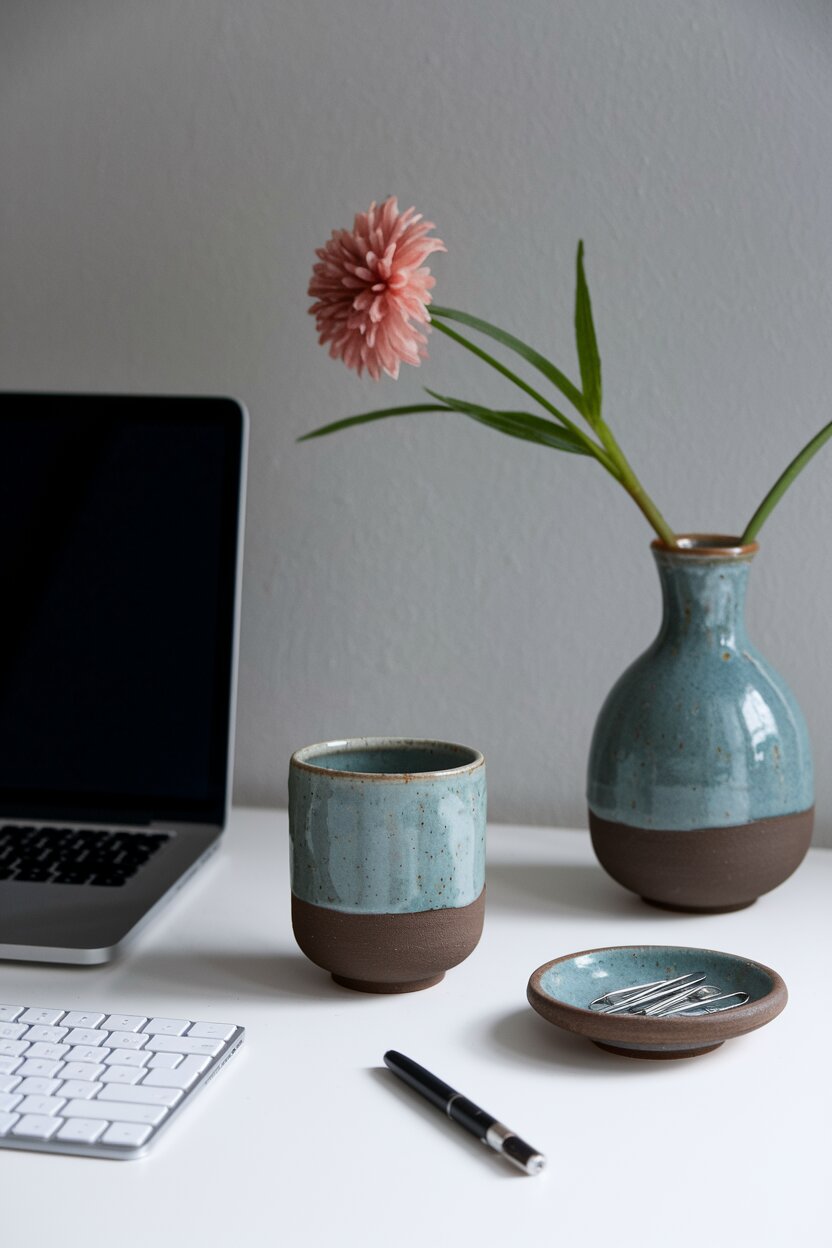
A few pieces of handmade pottery — a mug, a small vase, a catch-all dish for paperclips — bring texture into an otherwise streamlined room. Look for glaze variation or a slightly uneven shape rather than anything too polished. That imperfection is intentional in wabi-sabi design. It’s also what keeps a minimalist office from feeling sterile.
- 07 of 10
Bring in One or Two Plants
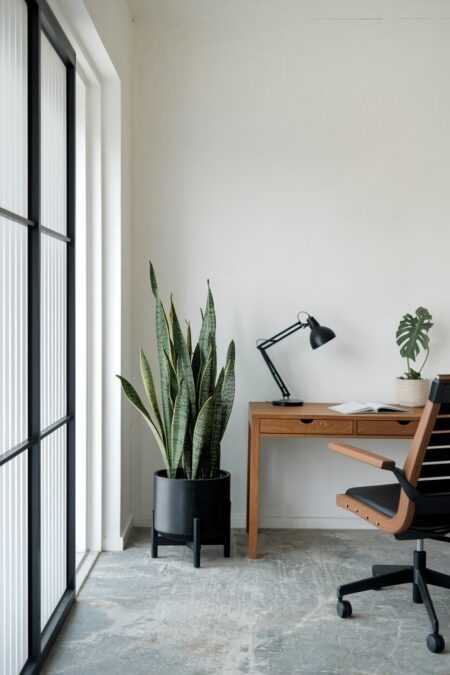
Greenery softens all the clean lines and neutral tones around it. A single well-placed plant does more for a Japandi home office than a whole windowsill of them. Snake plants and ZZ plants tolerate low light and irregular watering, which suits a desk that doesn’t always get attention during a busy week. A small bonsai works too, if you’d rather have something more deliberate.
- 08 of 10
Choose Paper-Shade or Woven Lighting
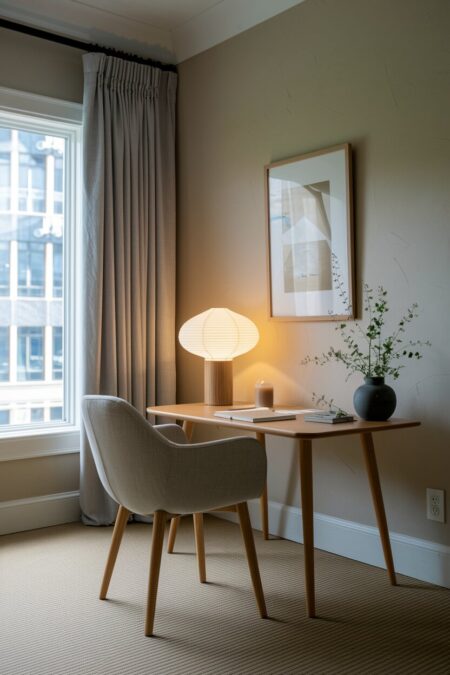
Lighting is where the Japanese half of Japandi really shows up. A pendant or table lamp with a paper or rice-paper-style shade casts a soft, even glow and adds shape without adding clutter. Woven rattan shades work as a slightly sturdier alternative. Either option beats a harsh overhead light, which tends to flatten a room and make it feel more like a break room than a place to think.
- 09 of 10
Hide the Clutter, Not the Function
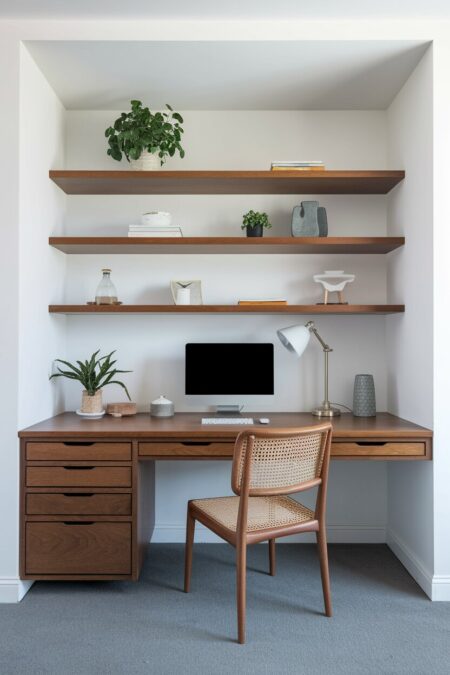
Cords, chargers, and loose paperwork are the enemies of a calm home office. Use a closed drawer or a woven basket to tuck away anything not currently in use, and route cables along the back of the desk instead of letting them dangle. The point isn’t to hide that you work here. It’s to make sure the objects on display are ones you actually chose.
- 10 of 10
Layer in Natural Textures
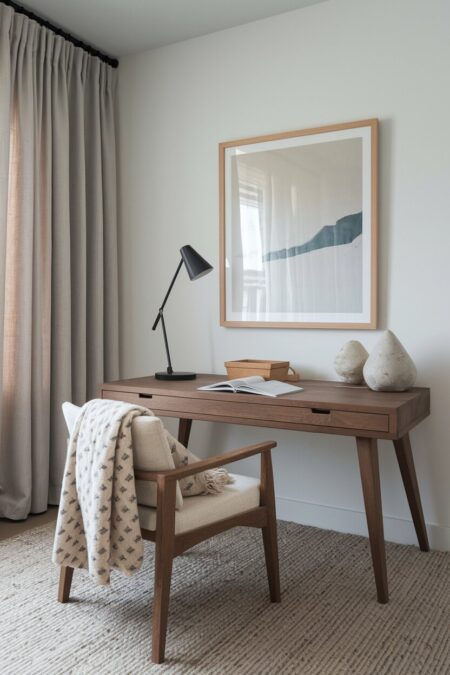
Wood, linen, wool, and stone sit at the core of Japandi design, and layering a few together adds warmth without adding color. A wool throw on a low chair, a linen cushion, a stone paperweight on the desk — small touches like these keep the room from feeling flat. Mix textures more than colors, and the space still reads as cohesive.