Toys multiply fast. One day it’s a few blocks and a stuffed bear. A few birthdays later, it’s a mountain of action figures, board games, and stray puzzle pieces wedged under every couch cushion. A good toy storage plan doesn’t just clear the floor. It gives each item a home, turns cleanup into something a toddler can manage alone, and saves your furniture, and your patience, in the process.
There’s no single right way to store toys. A family in a small apartment needs a different setup than one with a dedicated playroom, and what works for a two-year-old looks nothing like what a ten-year-old with a growing Lego collection actually needs. Some solutions are practical and hide everything behind closed doors. Others put toys on display, almost like decor, so kids can see their options and choose for themselves.
These toy storage ideas cover both approaches, along with a few small-space and budget-friendly options in between. Pick the ones that fit your space, your kids’ ages, and how much visual clutter you’re willing to live with.
- 01 of 9
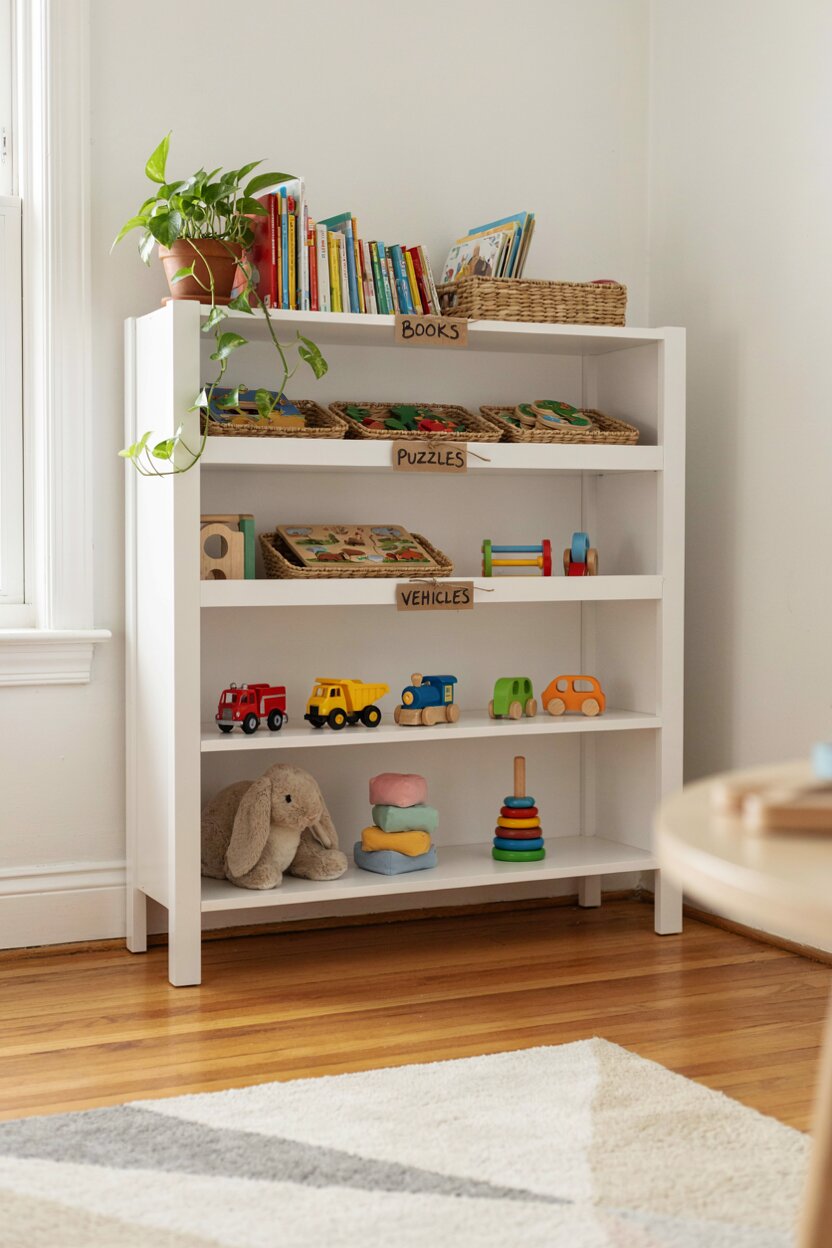
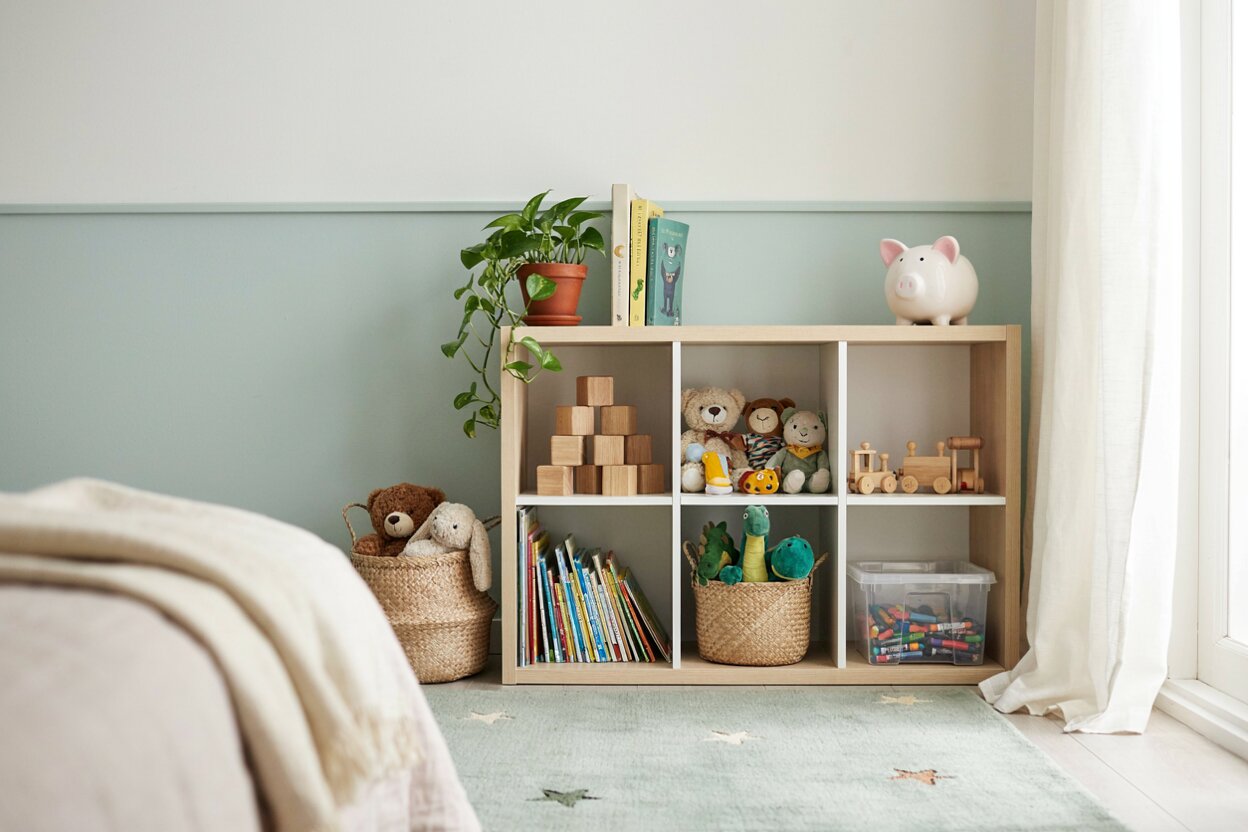
Open Shelving
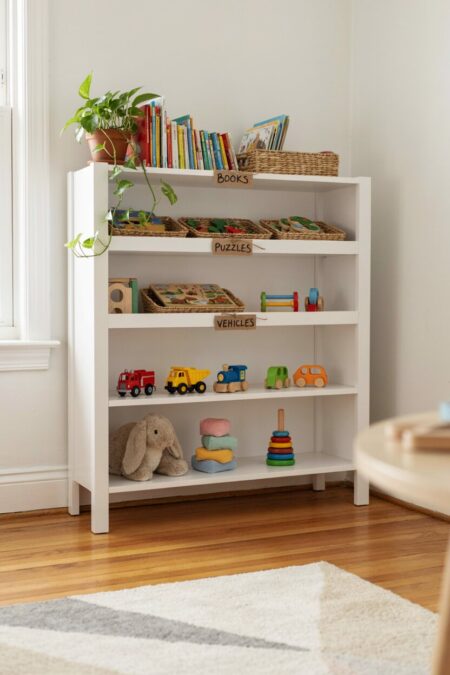
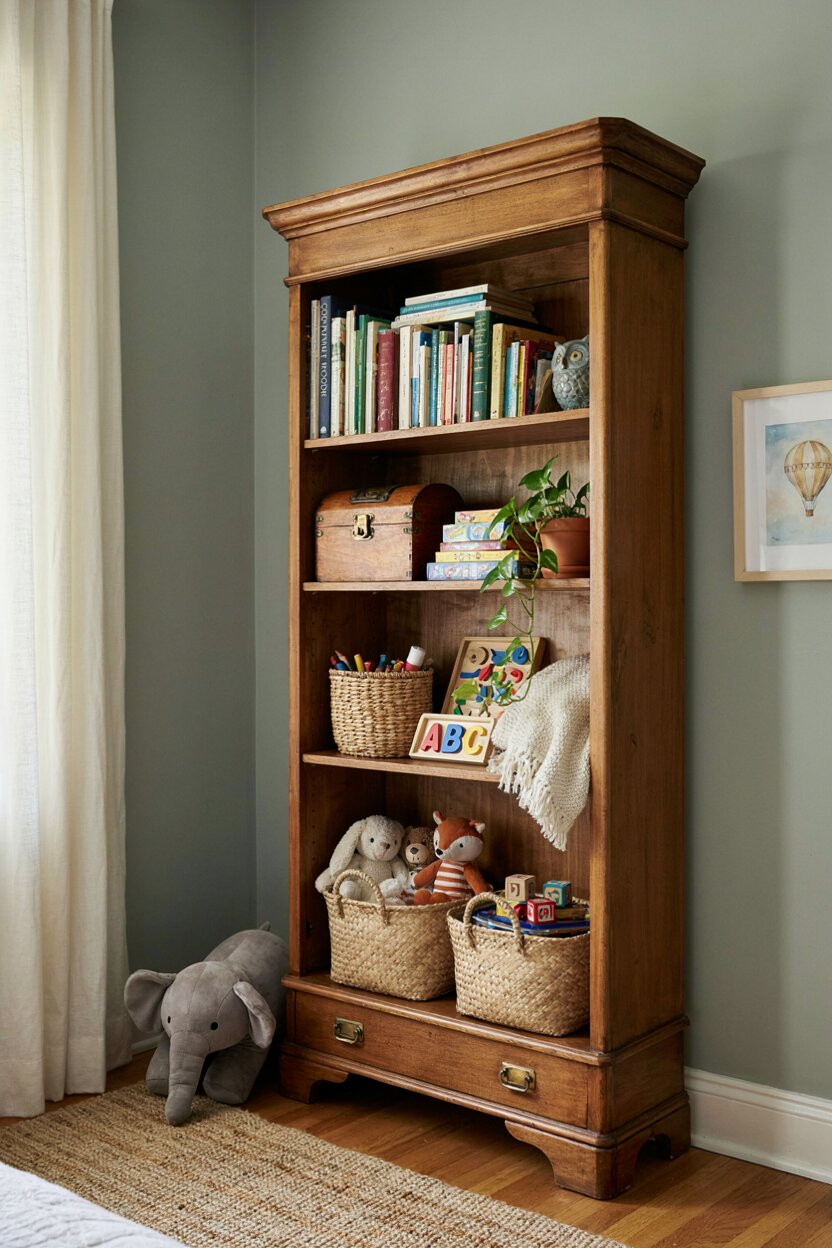
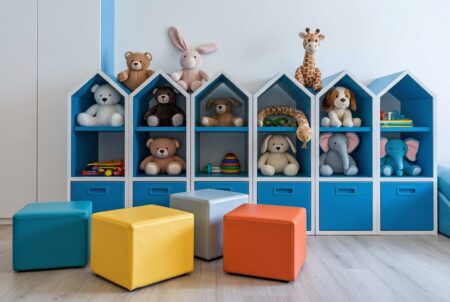
Low, open shelving is one of the easiest toy storage upgrades you can make, and it works especially well for toddlers and preschoolers. Everything stays visible and within reach, so kids can grab what they want without asking for help, and putting things back becomes just as simple. Group similar toys together, puzzles on one shelf, vehicles on another, so kids start learning categories on their own. A plain bookcase works fine here. You don’t need anything fancy, just something sturdy and low enough for small hands.
- 02 of 9
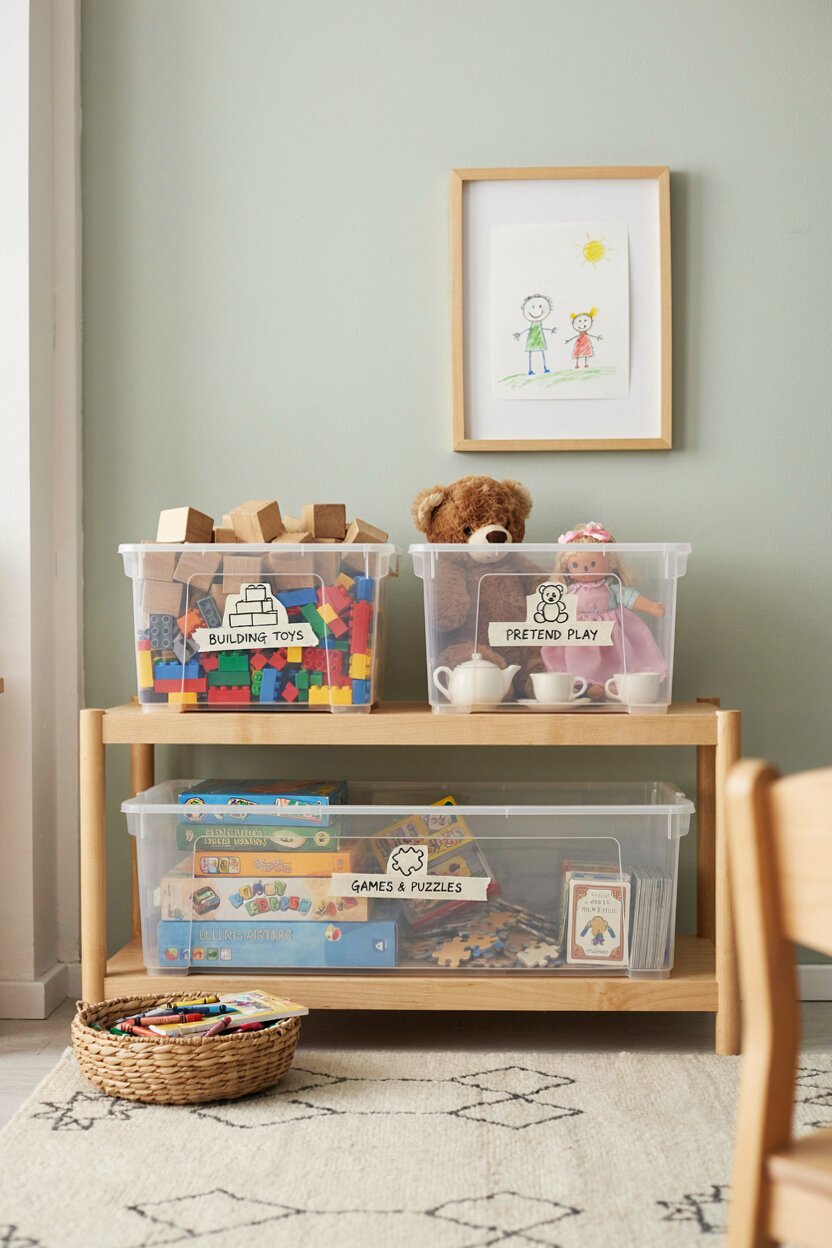
Clear, Labeled Bins
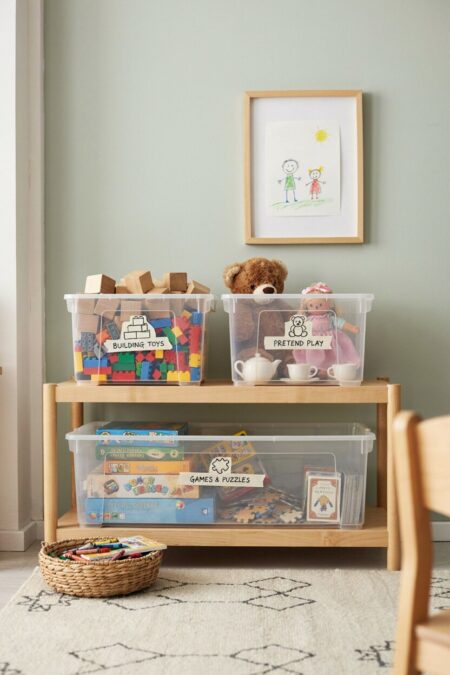
Bins solve a problem shelving can’t: small toys that scatter the moment they’re dumped out. Clear plastic bins let kids see what’s inside without pulling everything onto the floor first, and labels, whether words, pictures, or both, teach even non-readers where things belong. Sort by category rather than by toy type. “Building toys” and “pretend play” work better as labels than a dozen narrow bins for every individual item. Stackable bins save floor space too, which matters more than you’d expect once the collection grows.
- 03 of 9
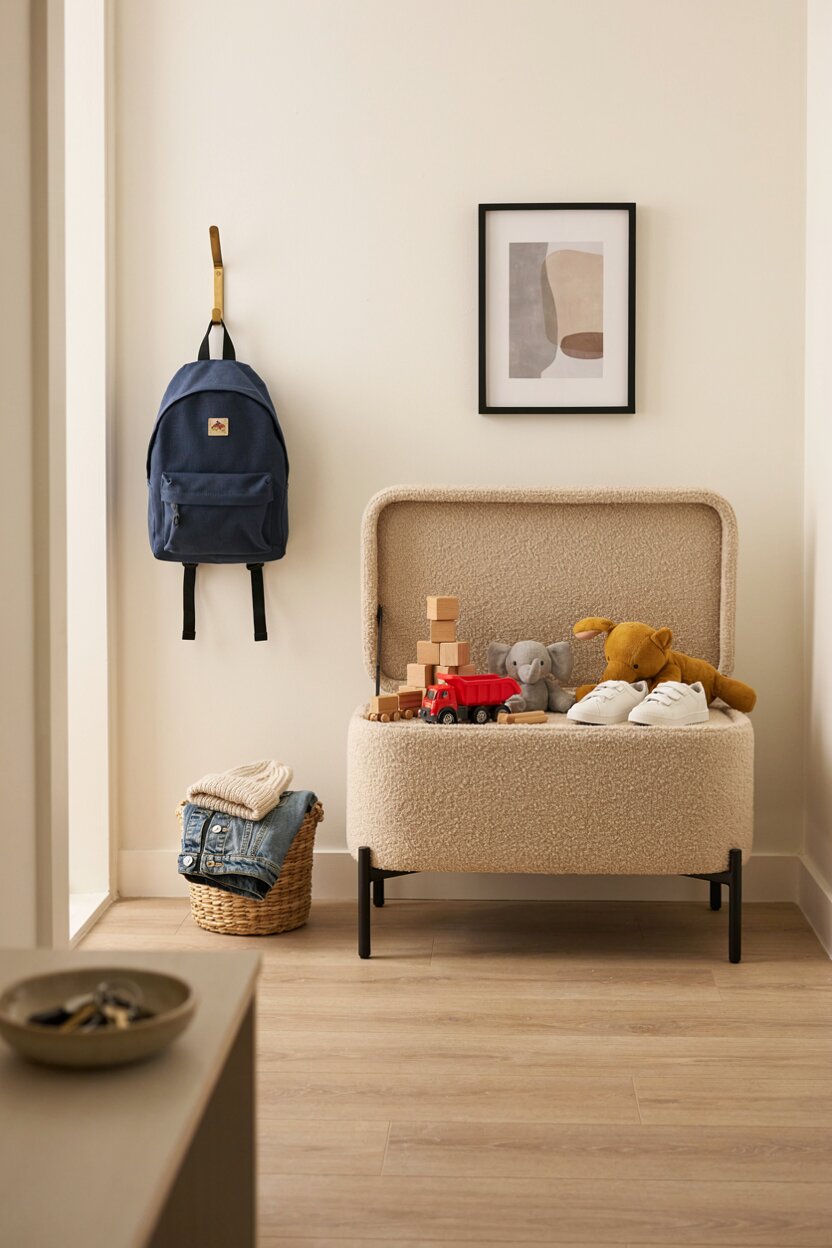
A Storage Bench
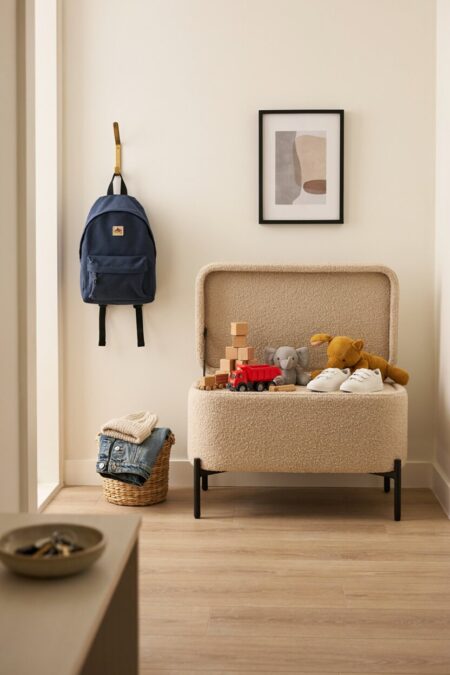
A bench with a lift-up seat or built-in cubbies does double duty. It’s a place to pull on shoes, and it’s toy storage that doesn’t look like toy storage. This works especially well in an entryway or at the foot of a bed, where floor space is tight and a dedicated toy shelf just isn’t practical. Choose one with a soft-close lid so little fingers stay safe, and keep the heaviest toys near the bottom so the bench doesn’t tip when a kid climbs on top.
- 04 of 9
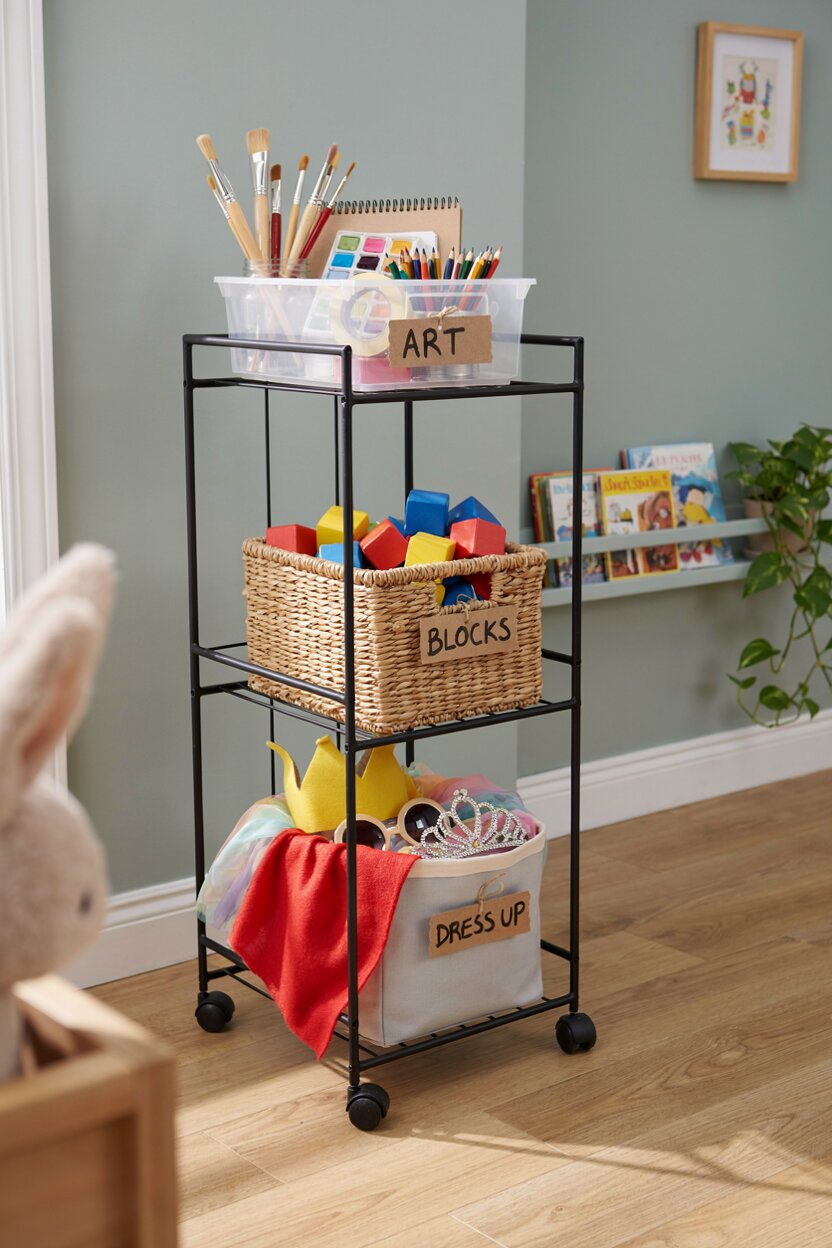
Rolling Carts
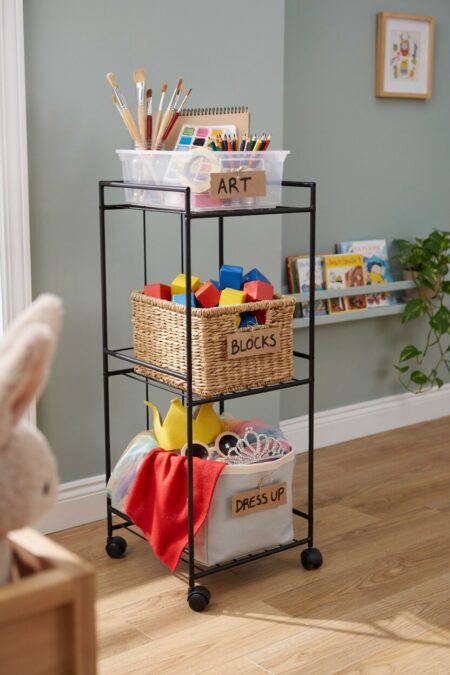
A rolling cart turns toy storage into something portable. Fill each tier with a different category, art supplies, building blocks, dress-up clothes, and wheel the whole thing from the playroom to the kitchen table or out to the yard. It’s a genuinely useful option for families without a dedicated play space, since the cart tucks into a closet or corner when it’s not in use. Metal wire carts hold up well over years of use, while a fabric-bin version looks softer in a younger kid’s room.
- 05 of 9
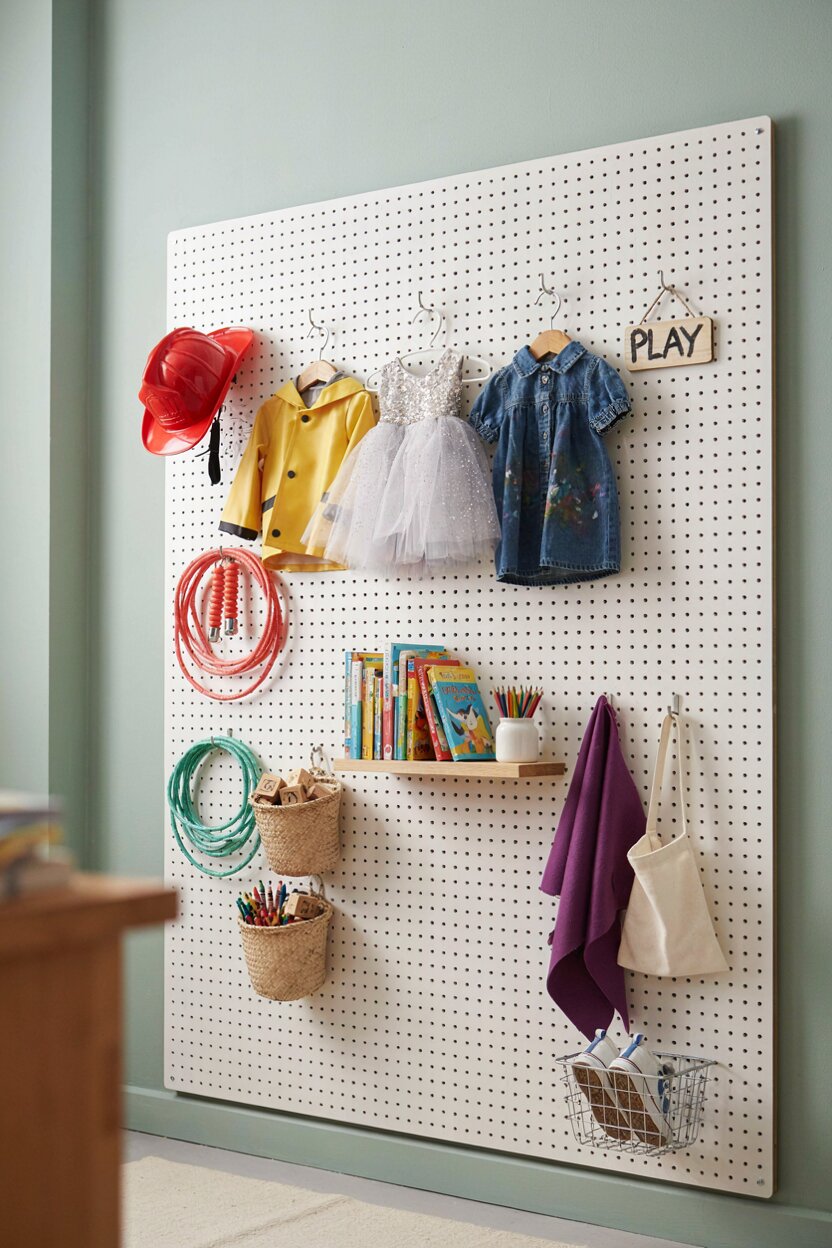
A Wall-Mounted Pegboard
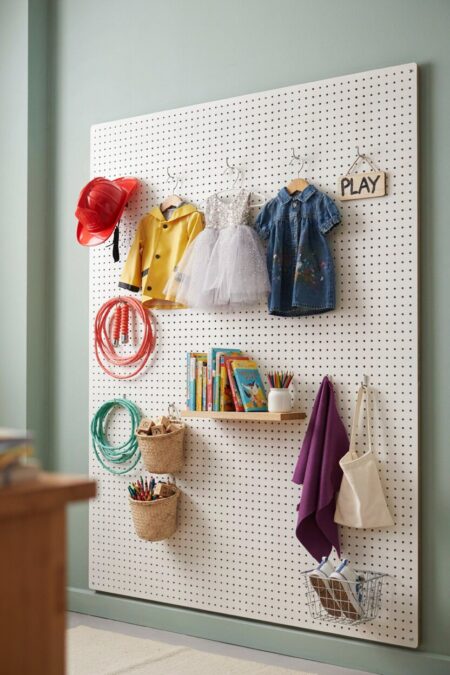
Pegboards aren’t just for garages. Mounted at kid height, one turns dress-up costumes, jump ropes, art smocks, and small bags into a display instead of a pile on the floor. Add a mix of hooks, small baskets, and shelves so the board handles odd-shaped items that never fit neatly into a bin. It’s a particularly good toy storage idea for a room with limited floor space, since nearly all the storage happens on the wall instead of the ground.
- 06 of 9
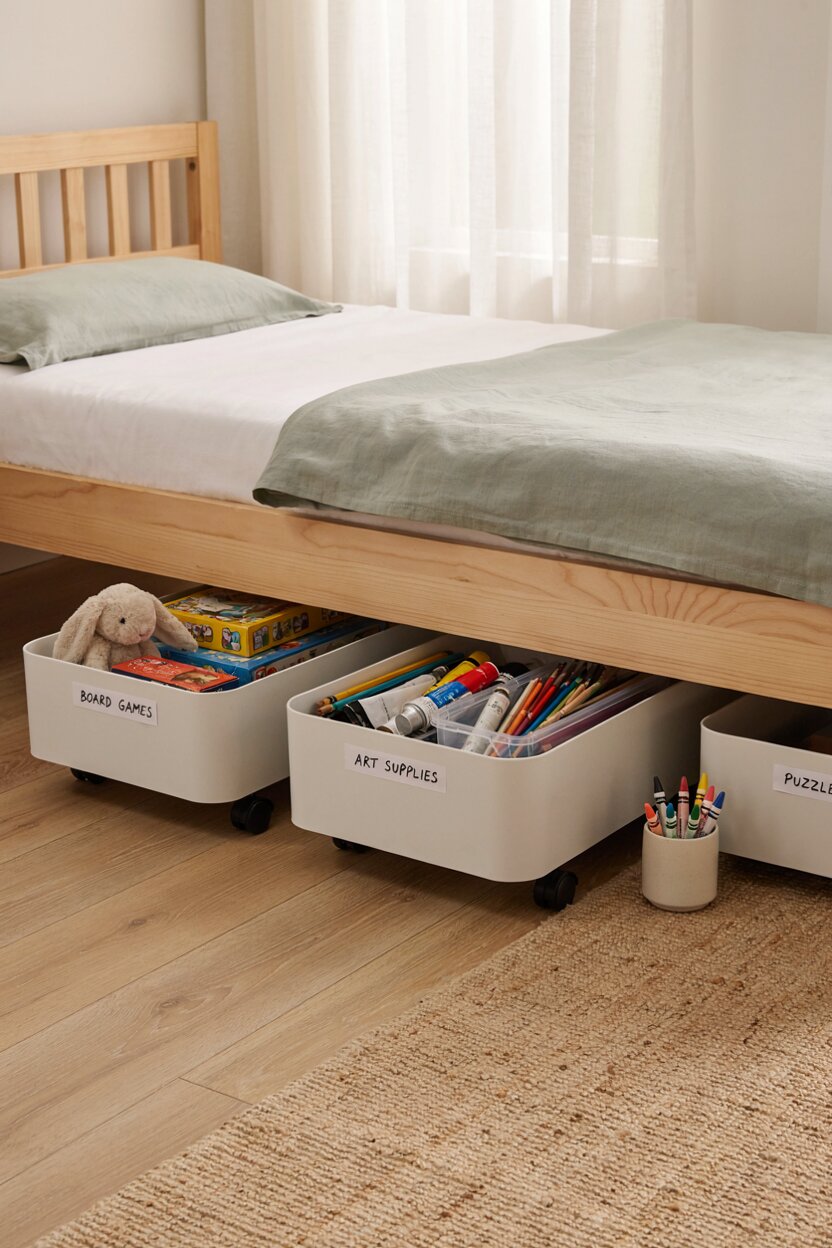
Under-Bed Drawers and Bins
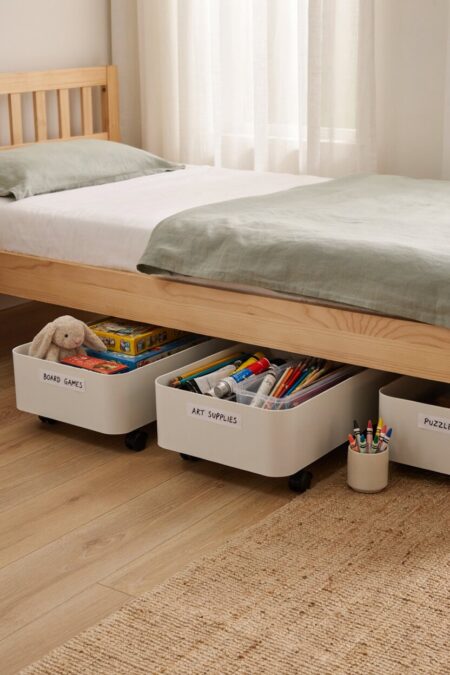
The space under a bed is some of the most overlooked storage in a kid’s room. Rolling drawers or flat lidded bins keep out-of-season toys, extra art supplies, or bulkier items like puzzles and board games out of sight but still within reach. It’s a smart toy storage solution for small bedrooms where every other surface is already spoken for. Label the end that faces out, so kids can find what they need without dragging every bin into the middle of the room first.
- 07 of 9
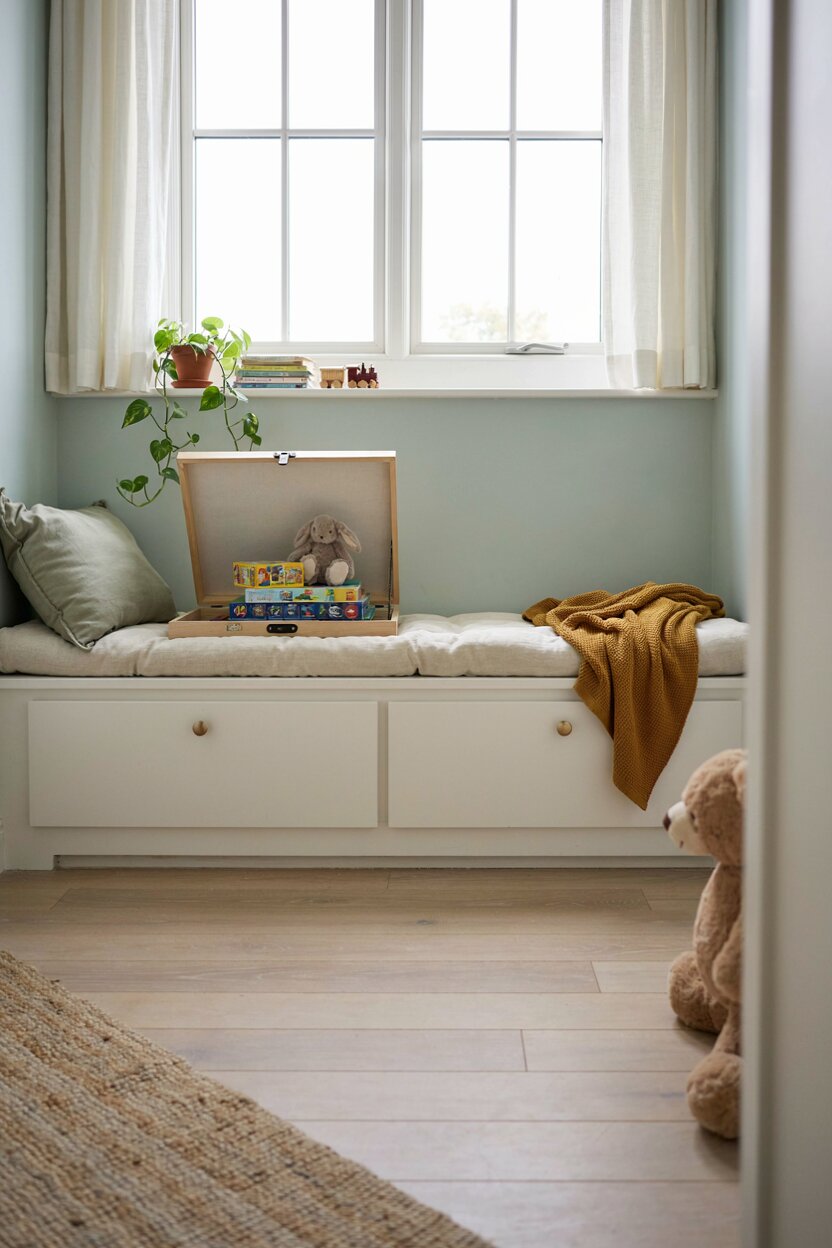
A Built-In Window Seat
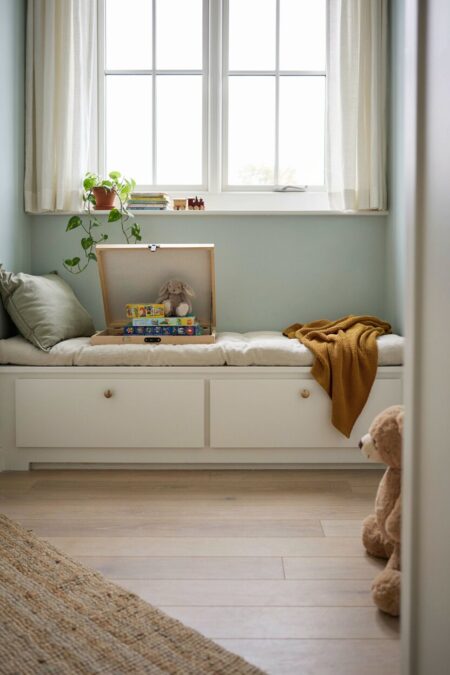
If a kid’s room has a sunny window nook, a built-in bench with storage underneath makes use of space that would otherwise sit empty. Hinged lids give access to bulkier toys, and the cushion on top doubles as a reading spot or a quiet corner for pretend play. It’s a bigger project than a bin or a shelf. Still, it adds real function to a room without eating into floor space anywhere else.
Alternatively, you might prefer a version with built-in drawers.
- 08 of 9
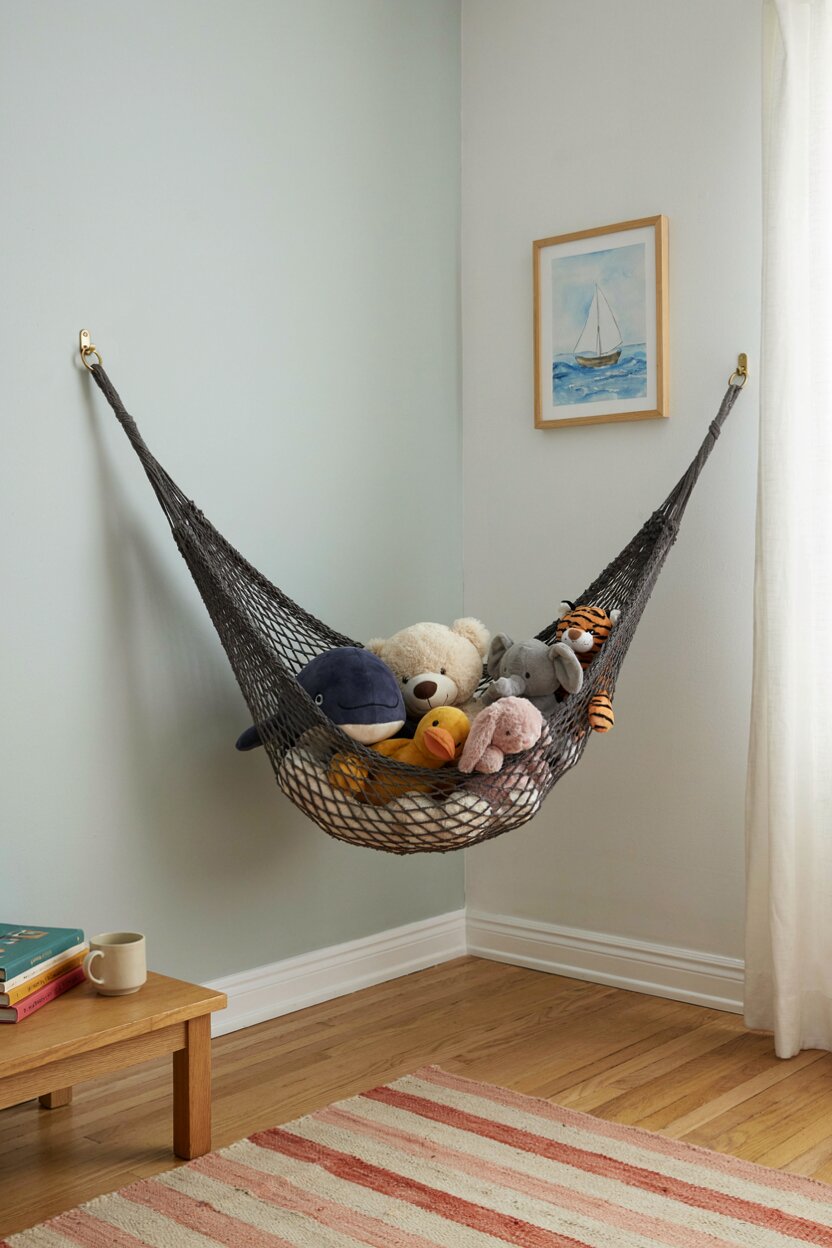
Hanging Mesh Hammocks
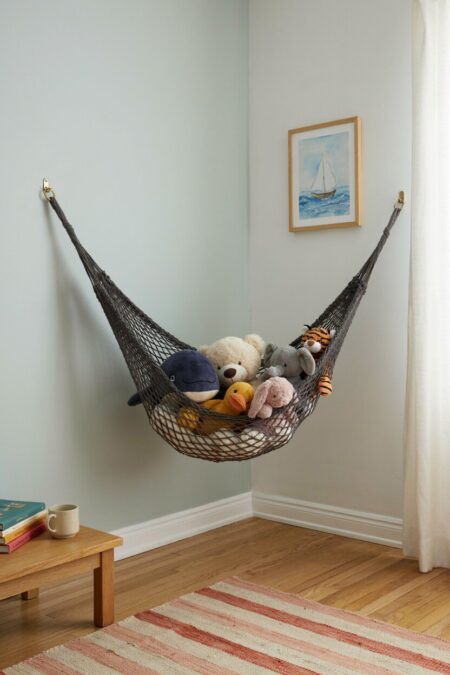
Stuffed animals are famously hard to store. They’re an odd shape, they don’t stack well, and a single collection can take over an entire bed. A mesh hammock strung across a corner of the room lifts the whole pile off the floor and out of the way, and once it’s full, it looks almost like a piece of art. It’s an inexpensive fix. It also works for dolls, plush toys, or lightweight sports gear that doesn’t have another obvious home.
- 9 of 9
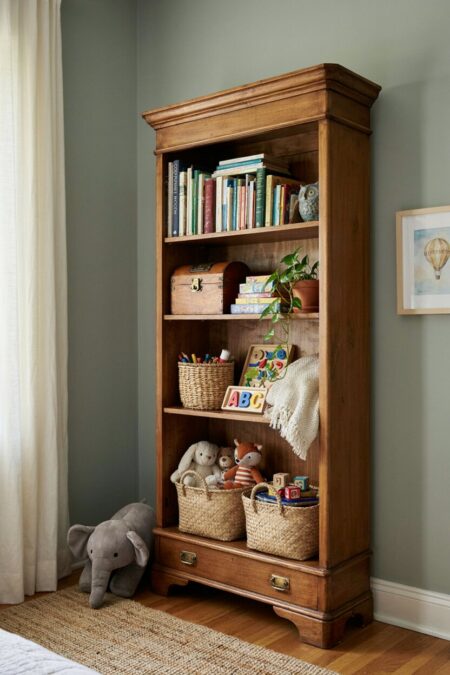
A Repurposed Bookcase or Dresser
Not every toy storage piece has to be sold as one. An old bookcase, a dresser with deep drawers, even a kitchen hutch, can all be repurposed to hold toys, and the switch often looks more like real furniture than a plastic bin ever could. Add baskets to open shelves to keep small items corralled, and use drawer dividers inside a dresser to stop everything from turning into one jumbled pile. It’s a smart option if you already own a piece that’s sitting unused somewhere else in the house.