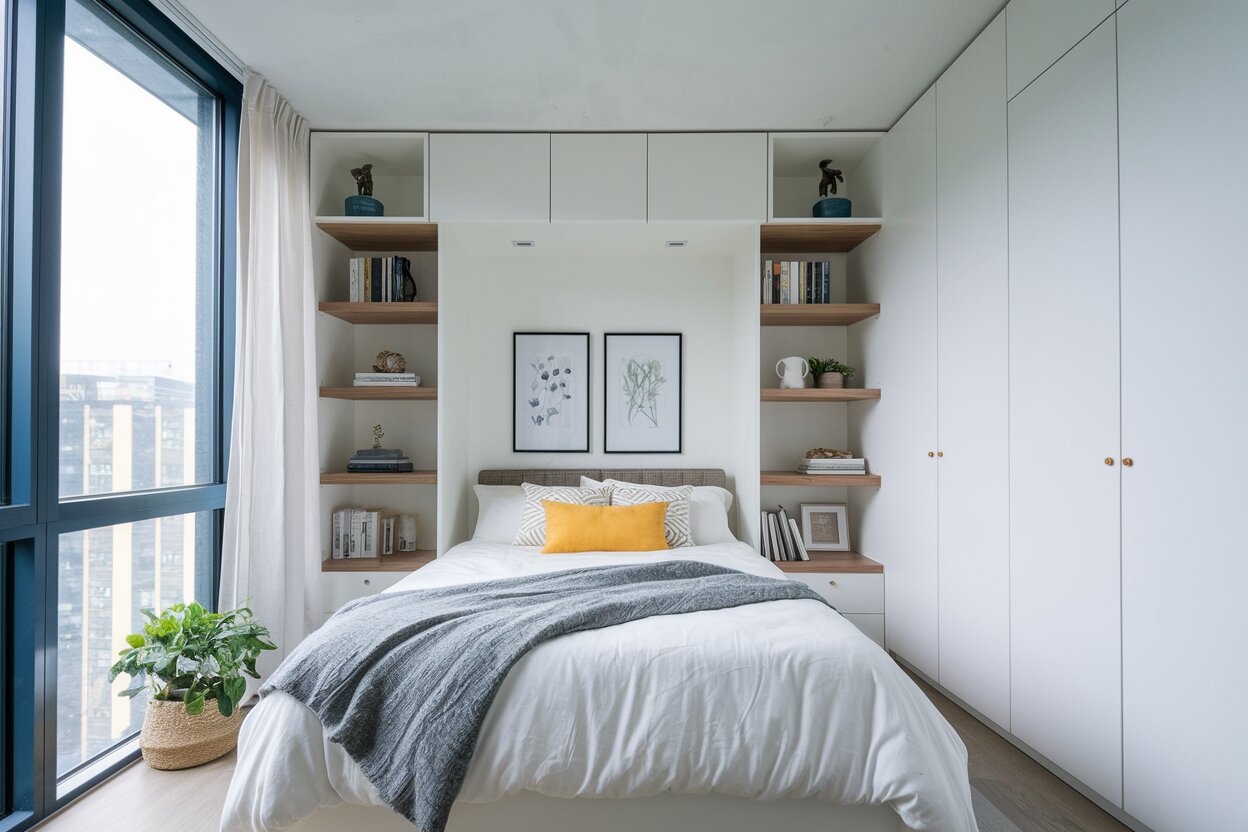
A small bedroom can feel like a losing battle against clutter. Clothes pile up. Shoes multiply by the pair. Books stack themselves into leaning towers on the nightstand, or worse, the floor. When square footage is tight, every inch has to earn its keep, and that means rethinking storage from the ground up instead of just squeezing in a bigger dresser.
The good news is that small bedroom storage doesn’t require sacrificing style, or ripping out a wall to make it work. Some of the smartest solutions hide in plain sight, tucked under the bed, mounted behind the door, or built straight into a piece of furniture you were already planning to buy. A bed frame with drawers in the base. A bench that opens to reveal a blanket chest inside. The idea is simple: choose pieces that work harder, so you don’t need to buy more of them.
These small bedroom storage ideas focus on the spots most rooms waste, including vertical wall space, awkward corners, and the dead zone underneath a mattress. Try one, or combine a few. Either way, your floor will thank you.
- 01 of 10
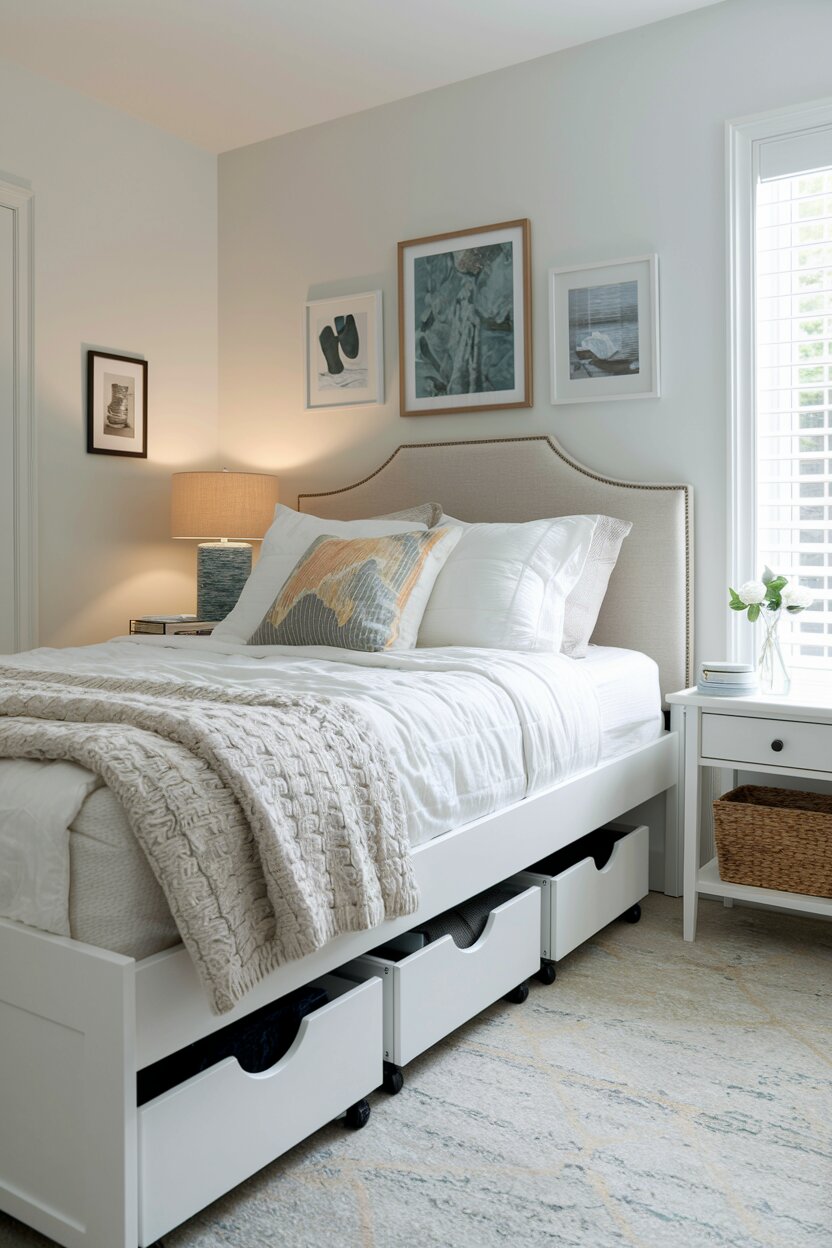
Under-Bed Storage Drawers
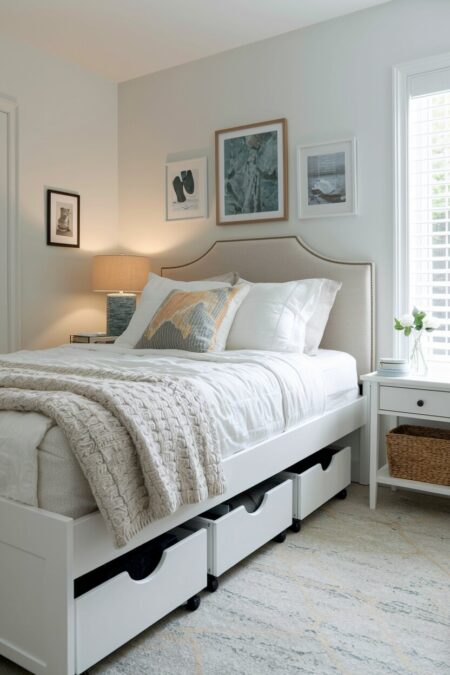
The space beneath a bed frame is usually six or eight inches of pure waste. Fill it instead. Rolling bins or shallow drawers slide in and out easily, and they’re a natural fit for off-season clothing, spare bedding, or shoes you don’t reach for every day. If your frame sits too close to the ground, a set of bed risers can lift it just enough to make room. For anyone serious about small bedroom storage, this is usually the first place to look, since it adds real capacity without touching a single square foot of visible floor.
- 02 of 10
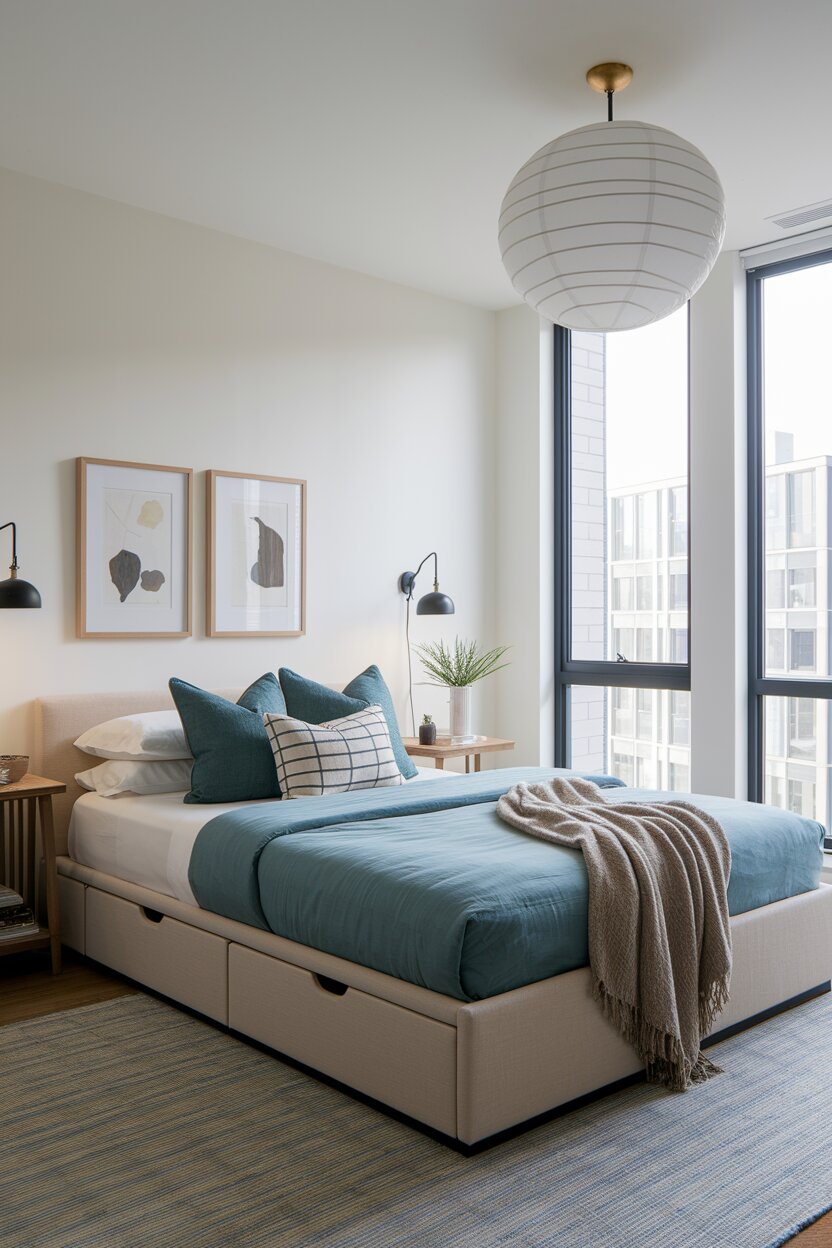
A Storage Bed Frame
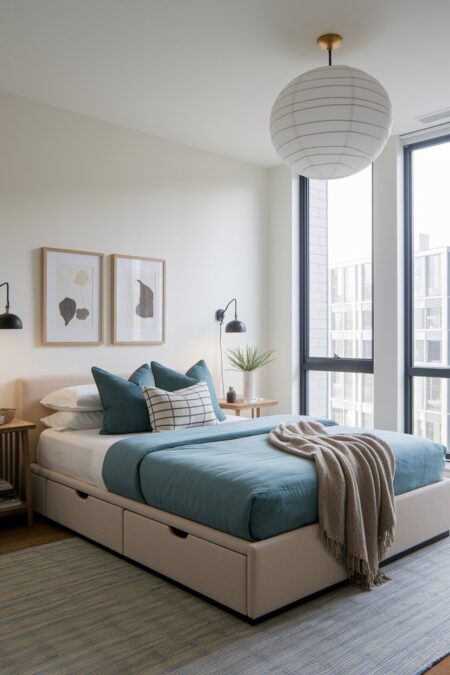
If you’re shopping for a new bed anyway, skip the frame that’s just four legs and a headboard. Platform beds with built-in drawers, or ottoman-style frames that lift from the base, turn the entire footprint of the bed into hidden storage. These work especially well for bulky items that are awkward to store elsewhere, like luggage, winter coats, or an extra set of pillows. Yes, they cost more than a basic frame. But they often replace a dresser you’d otherwise need to buy, which tends to even things out.
- 03 of 10
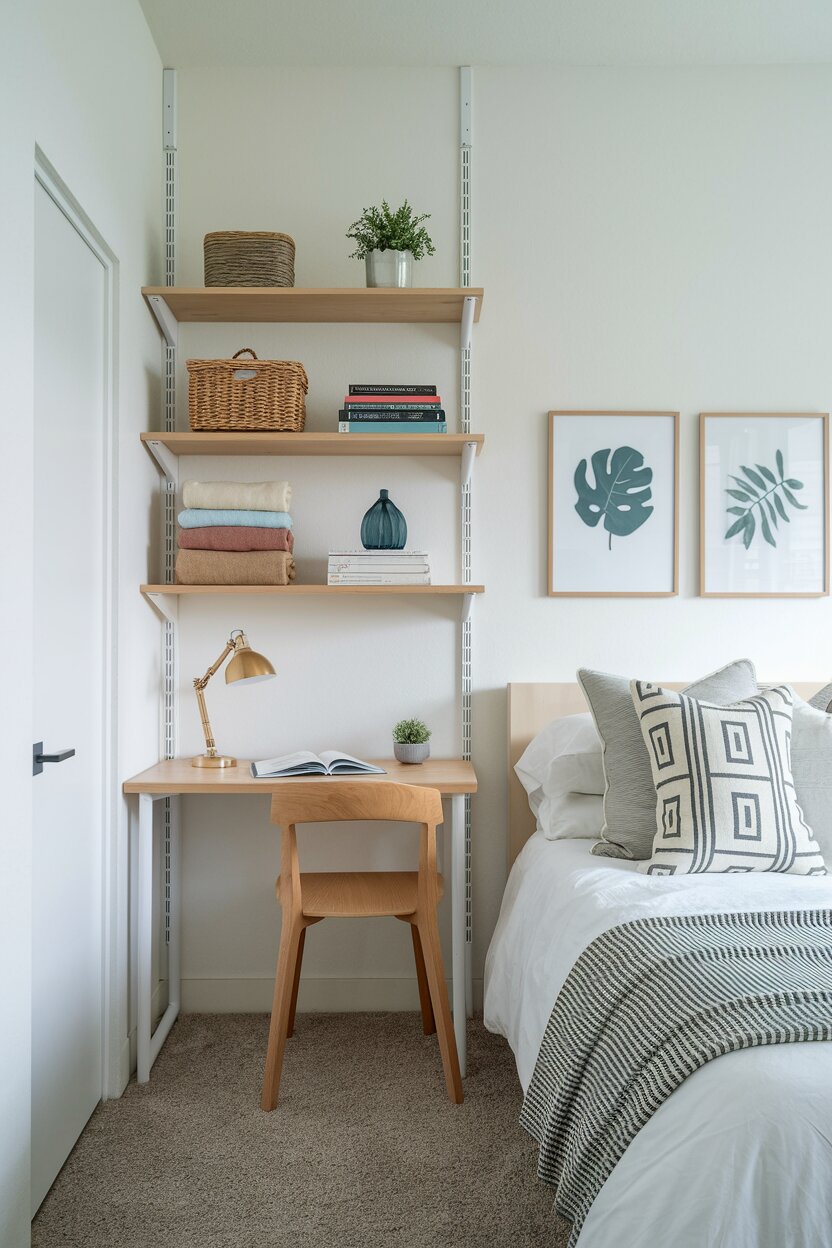
Floating Wall Shelves
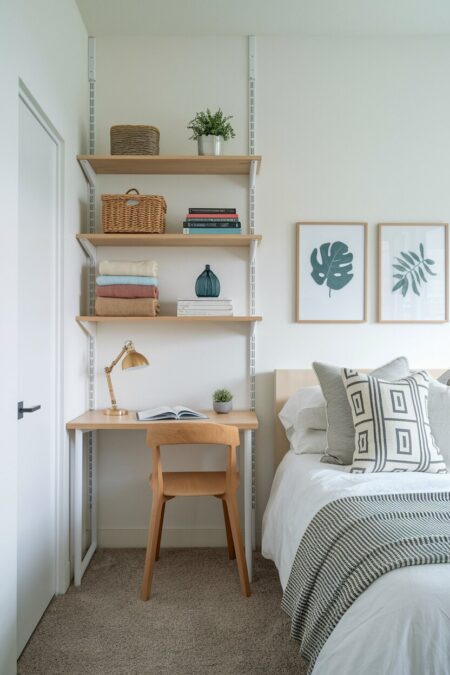
Dressers and bookcases eat up floor space a small bedroom can’t spare. Floating shelves solve the same problem from a different angle: they climb the wall instead of spreading across the floor. Install a few above a desk, beside the bed, or along an empty stretch of wall, then use them for books, folded sweaters in baskets, or the small decor that would otherwise clutter a nightstand. Because they’re mounted, there’s no footprint to plan around, which makes shelves one of the easiest small bedroom storage upgrades to finish in a single weekend.
- 04 of 10
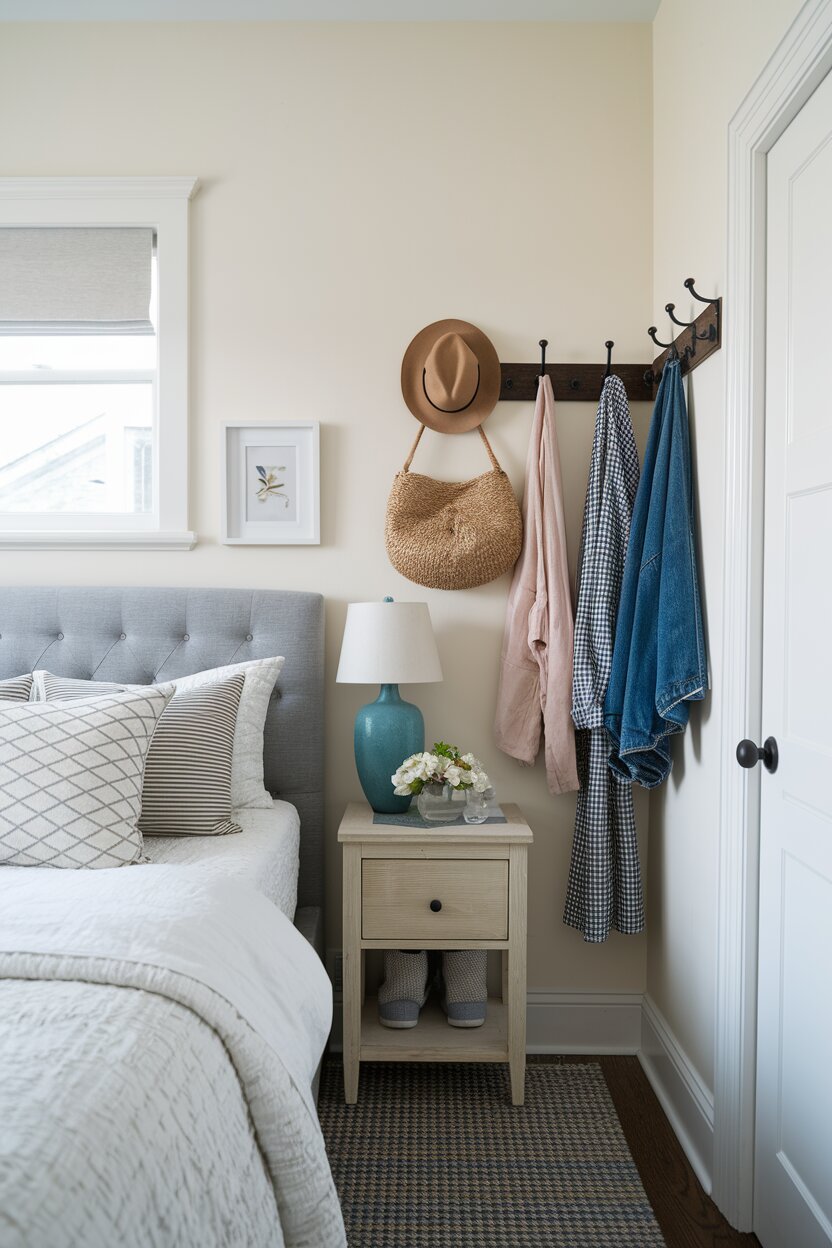
Wall-Mounted Hooks and Pegboards
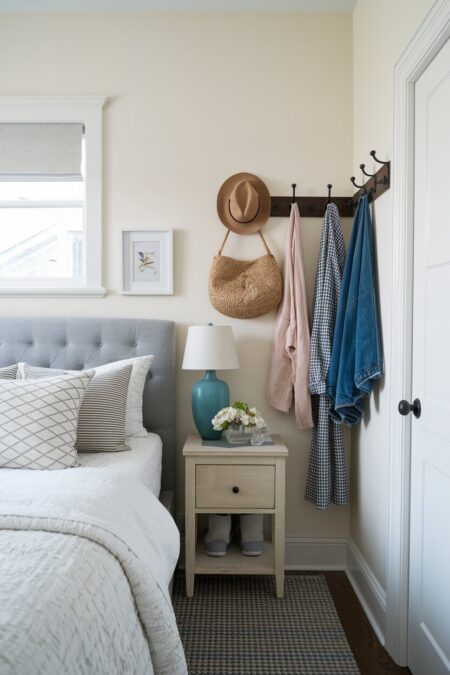
Not everything needs a drawer. Bags, robes, hats, and the jacket you’ll wear again tomorrow are all better off on a hook than draped over a chair. A row of hooks near the door catches these items before they turn into clutter, and a pegboard takes the idea further, offering adjustable pegs and small shelves for jewelry, headphones, or a reading lamp. Both options use wall space that would otherwise sit empty, and both cost very little to set up.
- 05 of 10
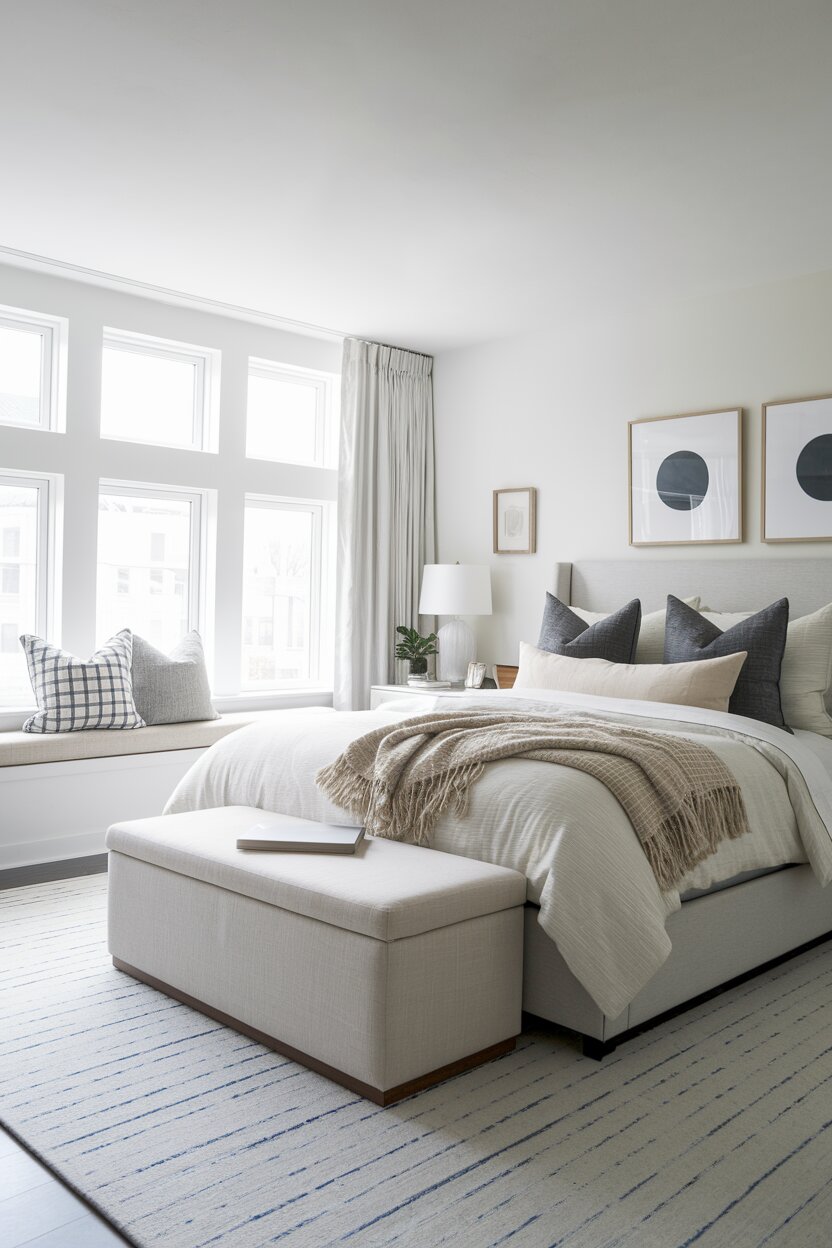
A Storage Ottoman at the Foot of the Bed
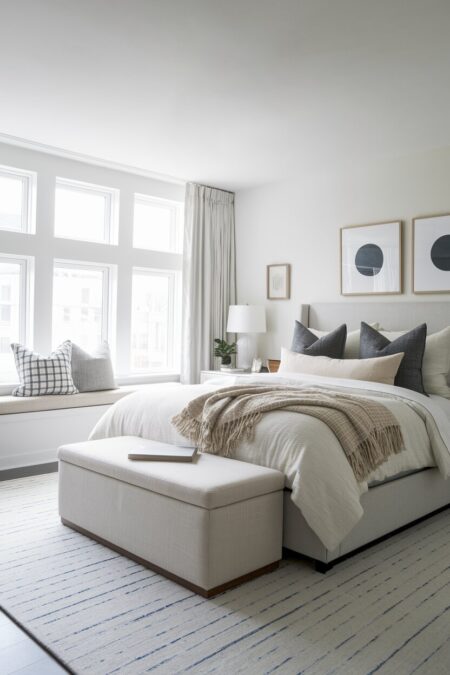
A bench at the foot of the bed looks intentional and does real work, especially when the lid lifts to reveal storage underneath. Use it for extra blankets, out-of-season clothing, or anything you want nearby but out of sight. It also adds a spot to sit while getting dressed, something a small bedroom rarely has room for otherwise. Look for a low profile so it doesn’t compete visually with the bed, and an upholstered top that can double as extra seating when guests stop by.
- 06 of 10
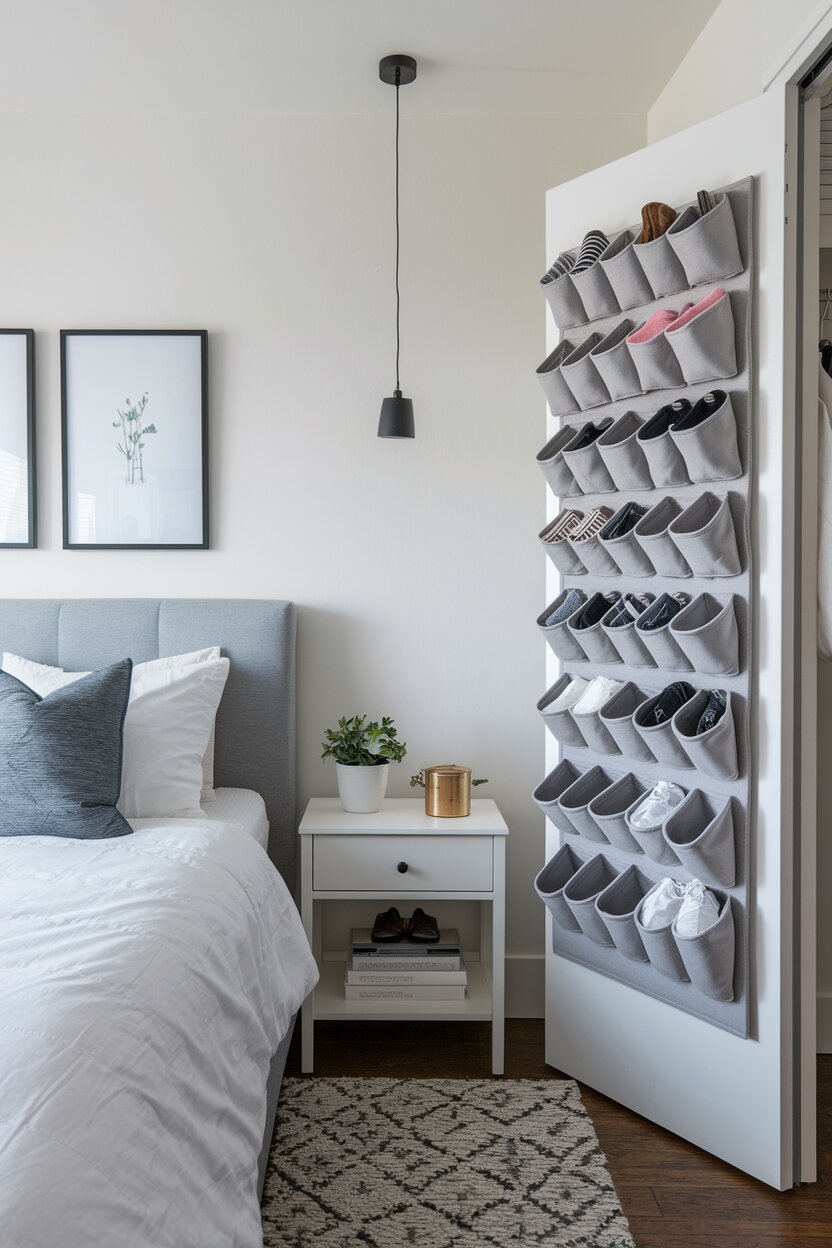
Over-the-Door Organizers
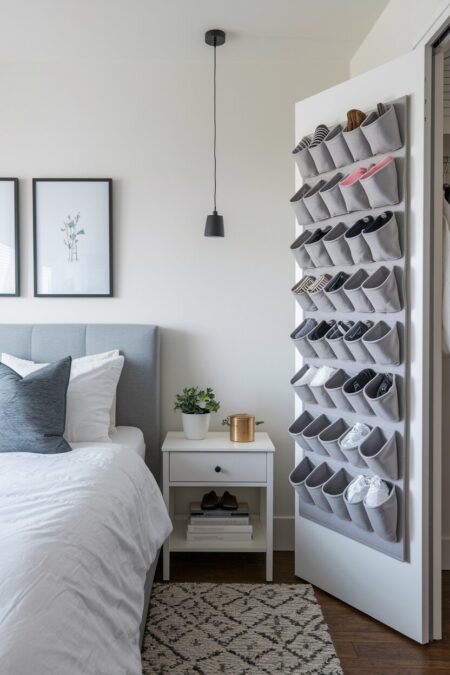
The back of a bedroom or closet door is one of the most overlooked spots for small bedroom storage. A hanging shoe organizer holds far more than shoes; the pockets work just as well for socks, accessories, or small electronics. Slimmer hook-style organizers handle scarves, belts, or bags instead. Best of all, none of it requires drilling or mounting hardware, which makes it just as workable for renters as it is for homeowners.
- 07 of 10
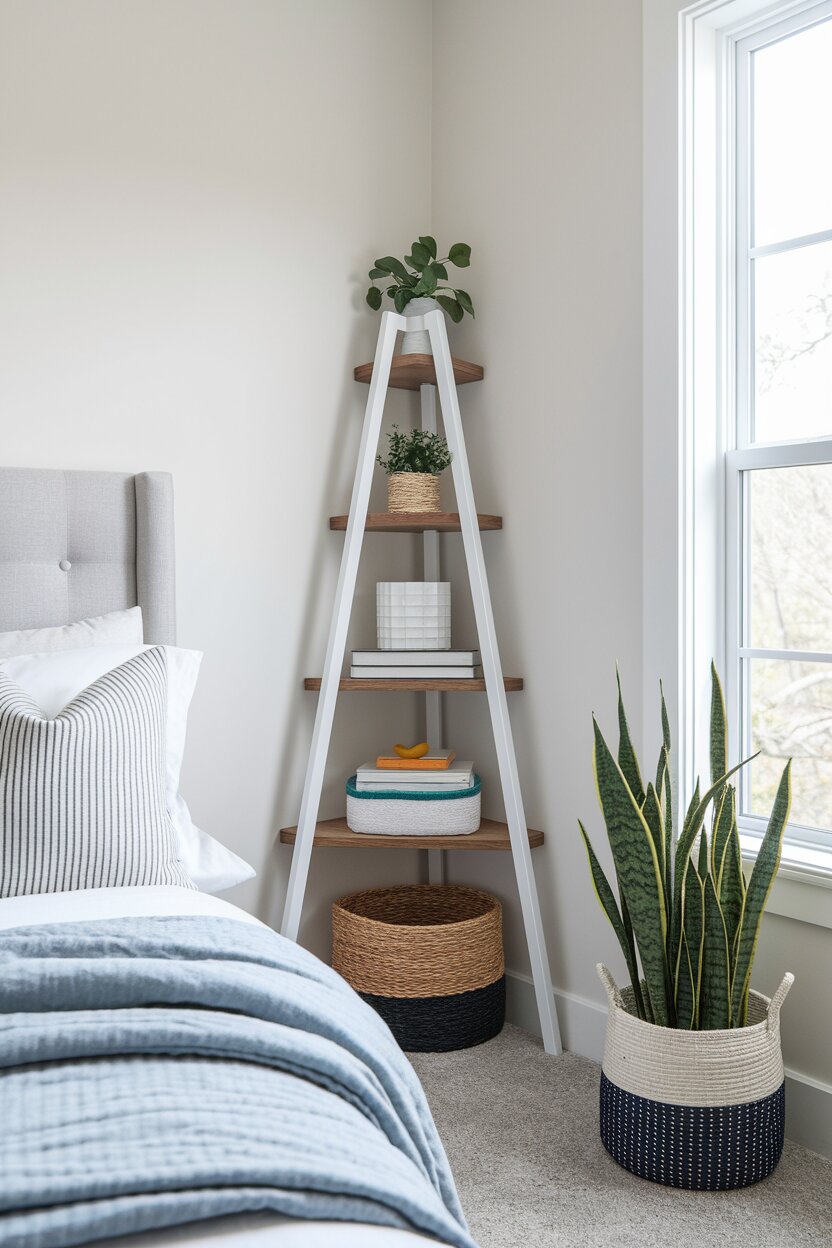
Corner Shelving for Dead Space
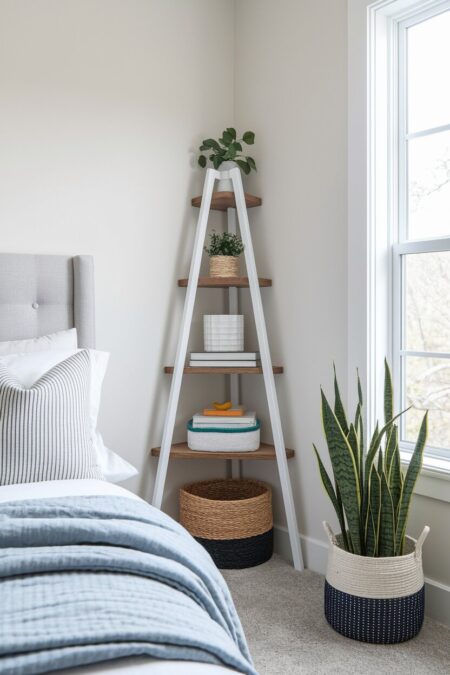
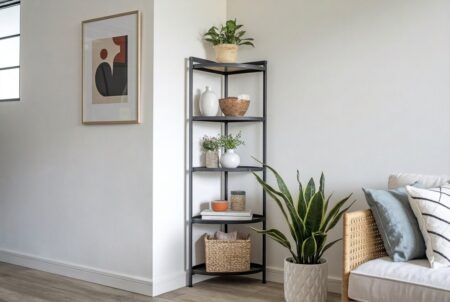
Corners are the quiet waste of most bedrooms. A slim corner shelf, or a ladder-style shelf angled into the gap, turns that unused triangle of space into something functional. Save the lower shelves for baskets and the higher ones for books or a plant, since corners get less foot traffic and suit things you don’t need to reach every day. It’s a small addition on its own, but in a tight room, it adds up fast.
- 08 of 10
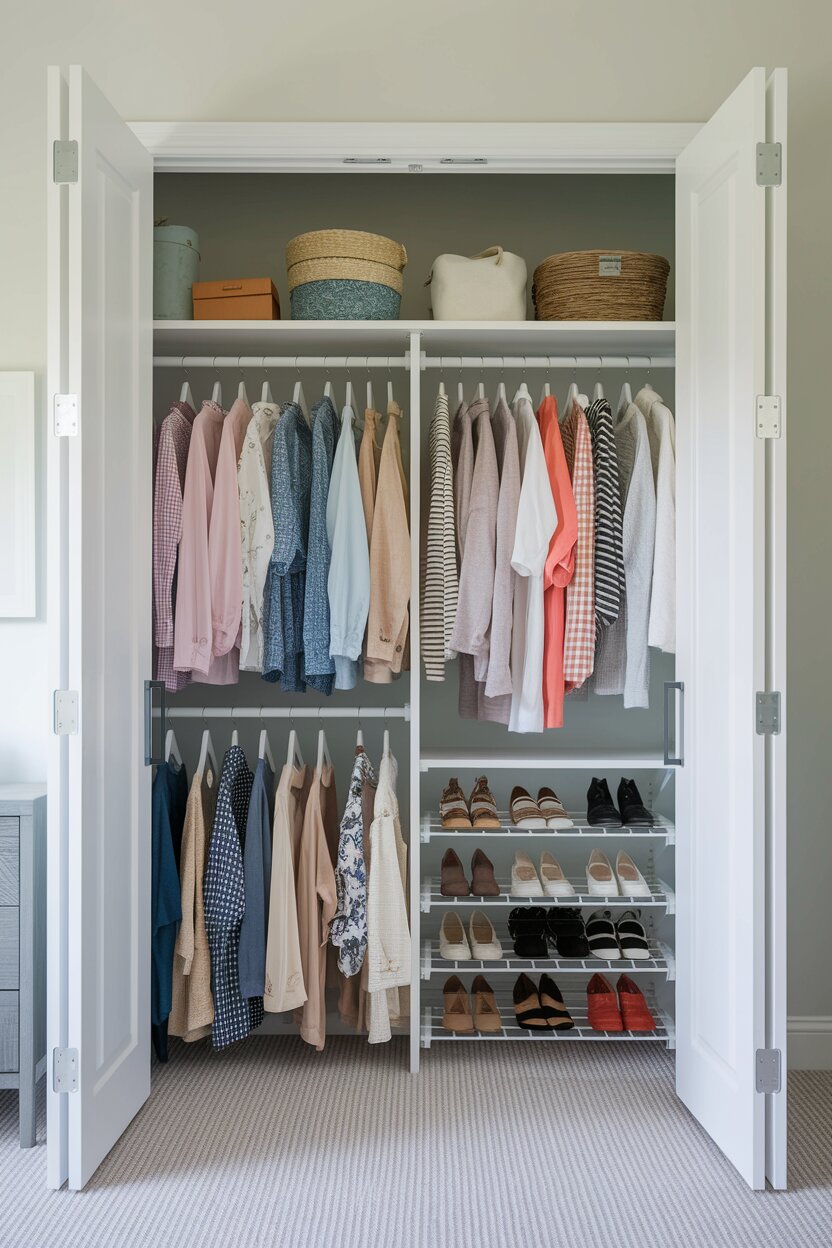
A Customized Closet System
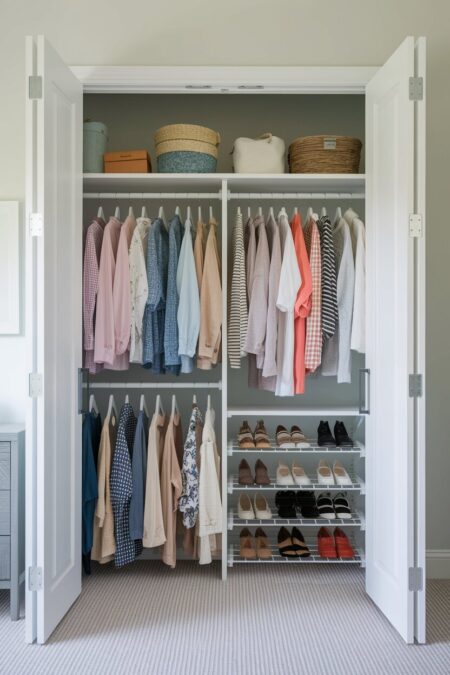
Wire shelving is the default in most closets, and it wastes an enormous amount of vertical space. Swapping it for a closet organizer with double hanging rods, stacked shelves, and a shoe rack can roughly double what the same closet holds. A full renovation isn’t necessary to see the benefit, either. Even a modular kit installed over an afternoon makes a noticeable difference, and it’s one of the few small bedroom storage upgrades that stays completely out of sight once the door is closed.
- 09 of 10
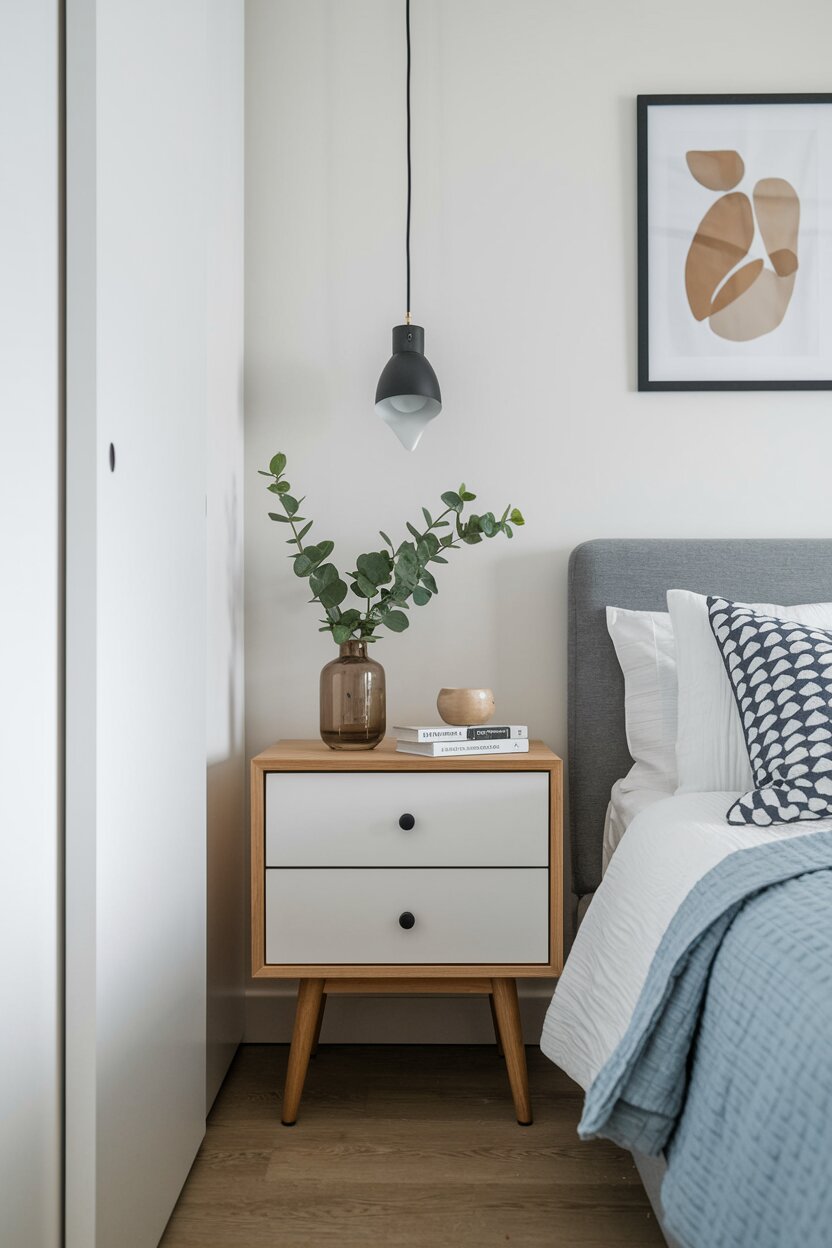
A Nightstand That Works Harder
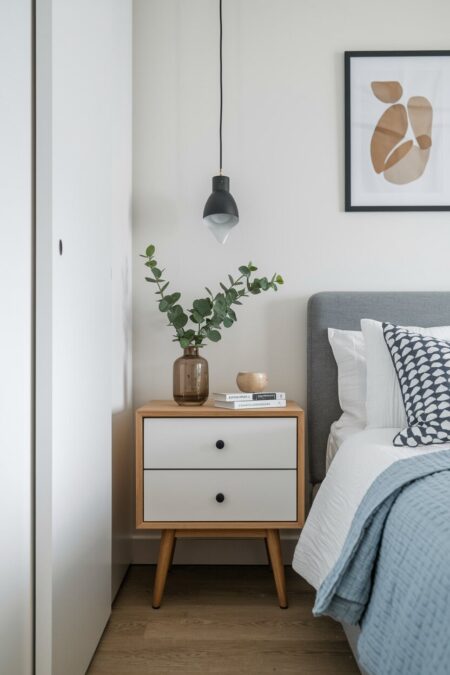
A small bedside table with one open shelf looks fine, but it does very little. Swap it for a nightstand with two or three drawers, and suddenly there’s a home for chargers, glasses, books, and everything else that tends to collect on top instead. The footprint barely changes. What changes is how much of that clutter disappears into a drawer rather than spreading across the surface.
- 10 of 10
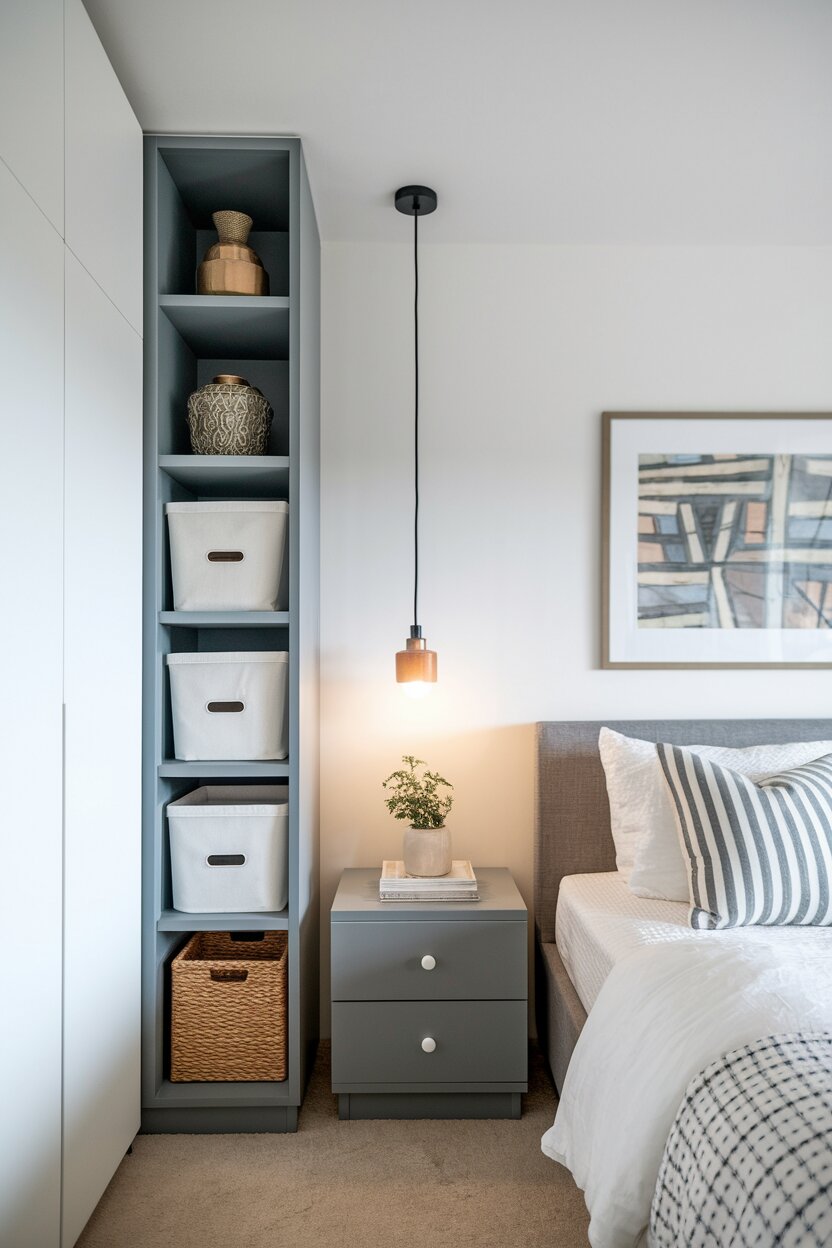
A Tall, Narrow Bookcase
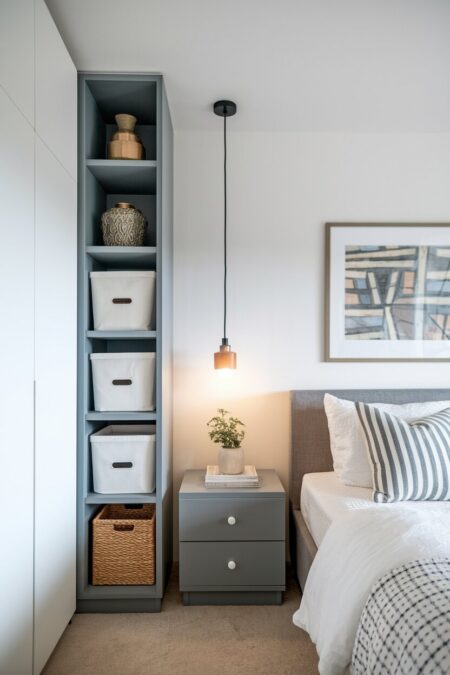
Wide, low dressers use a lot of floor space to hold a modest amount of stuff. A tall, narrow bookcase flips that ratio: roughly the same footprint as a nightstand, but several shelves’ worth of capacity stacked upward instead of outward. Use bins on the lower shelves to keep things tidy, and open shelving up top for books or display items. In a small bedroom, height is usually the resource you have more of, so it’s worth putting to use.
You don’t need all of these to make a difference. Start with whatever bothers you most, maybe the shoes piled by the door, or the drawer that never quite closes anymore. A couple of well-chosen changes can make a tight bedroom feel like it finally has room to breathe.