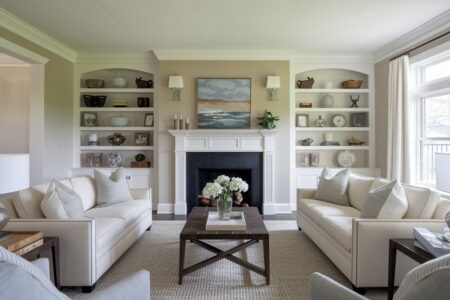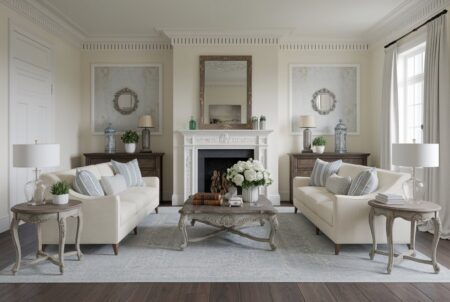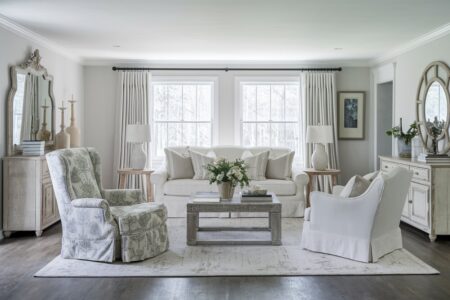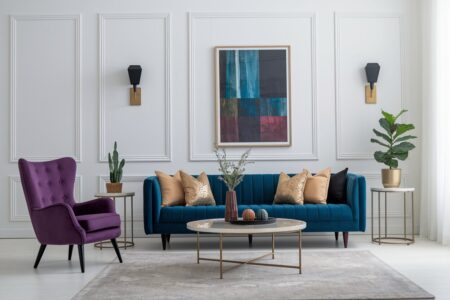
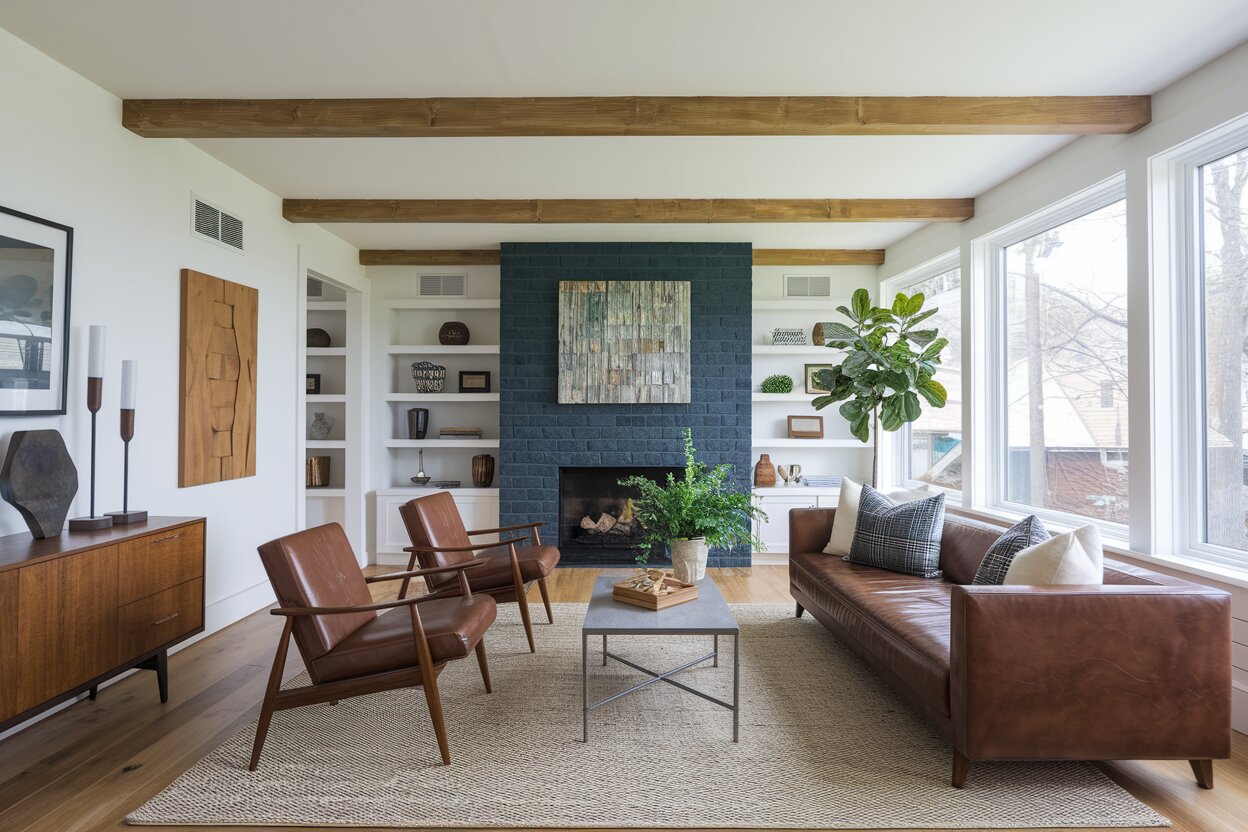
Few design movements have aged as gracefully as mid-century modern (MCM). Born in the decades after World War II, the style still feels fresh today. Clean lines. Warm wood tones. A quiet confidence that never tries too hard. That combination is exactly why so many homeowners keep coming back to it.
At its core, mid-century modern design is about function first. Furniture sits low to the ground. Legs taper to a point. Materials like walnut, teak, and brass do most of the talking, while a single bold color, think mustard, olive, or burnt orange, gives the room its personality. The look works in a sprawling open-plan house just as well as it does in a compact city apartment, which is part of why it has stuck around for seventy years and counting.
Updating a living room with this aesthetic doesn’t require a full renovation or a designer’s budget. A few well-chosen pieces can carry the whole look. Here are mid-century modern living room ideas to help you get started, from statement furniture to the small details that pull a space together.
- 01 of 12
Warm Walnut Wood Tones
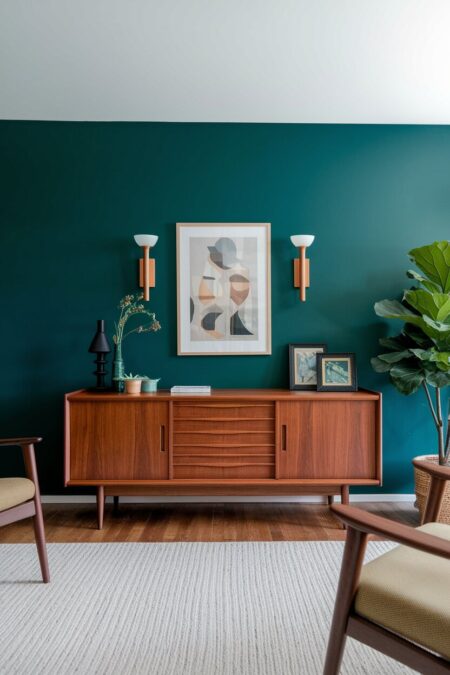
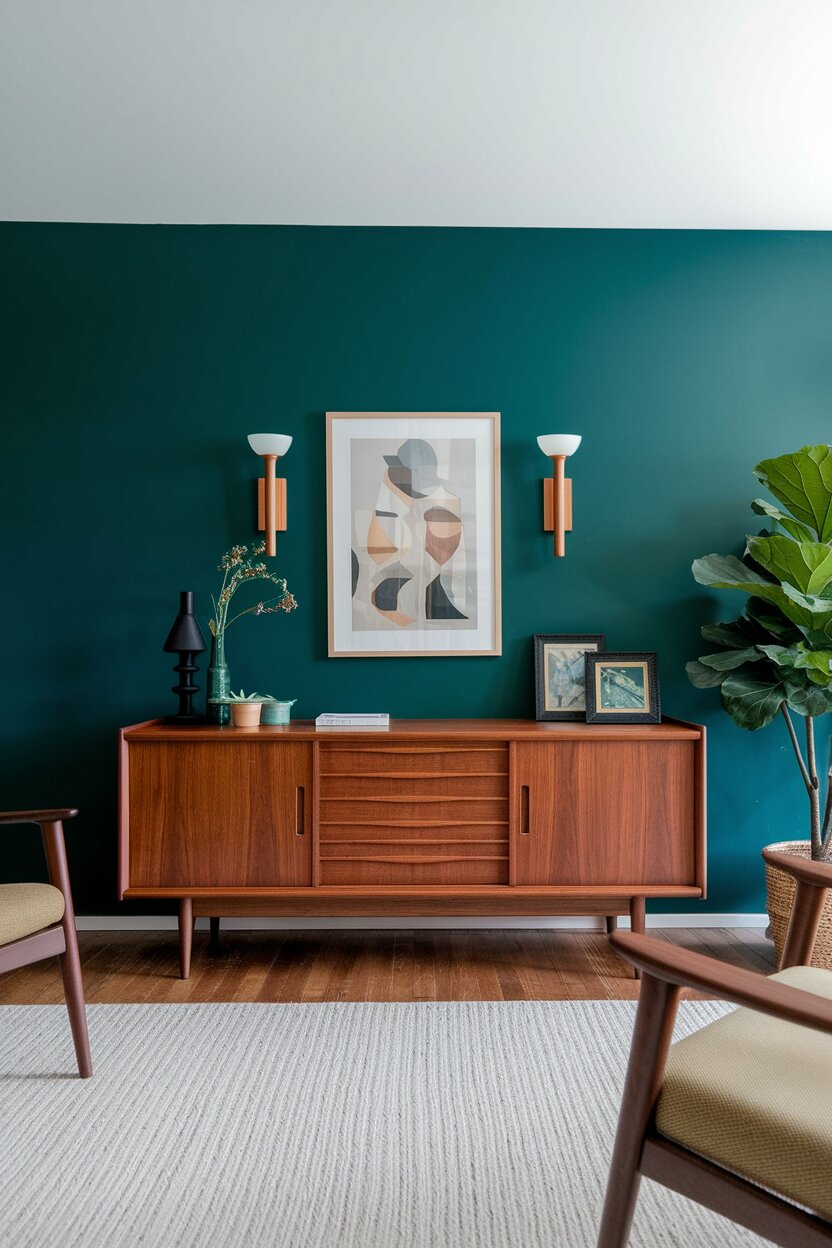
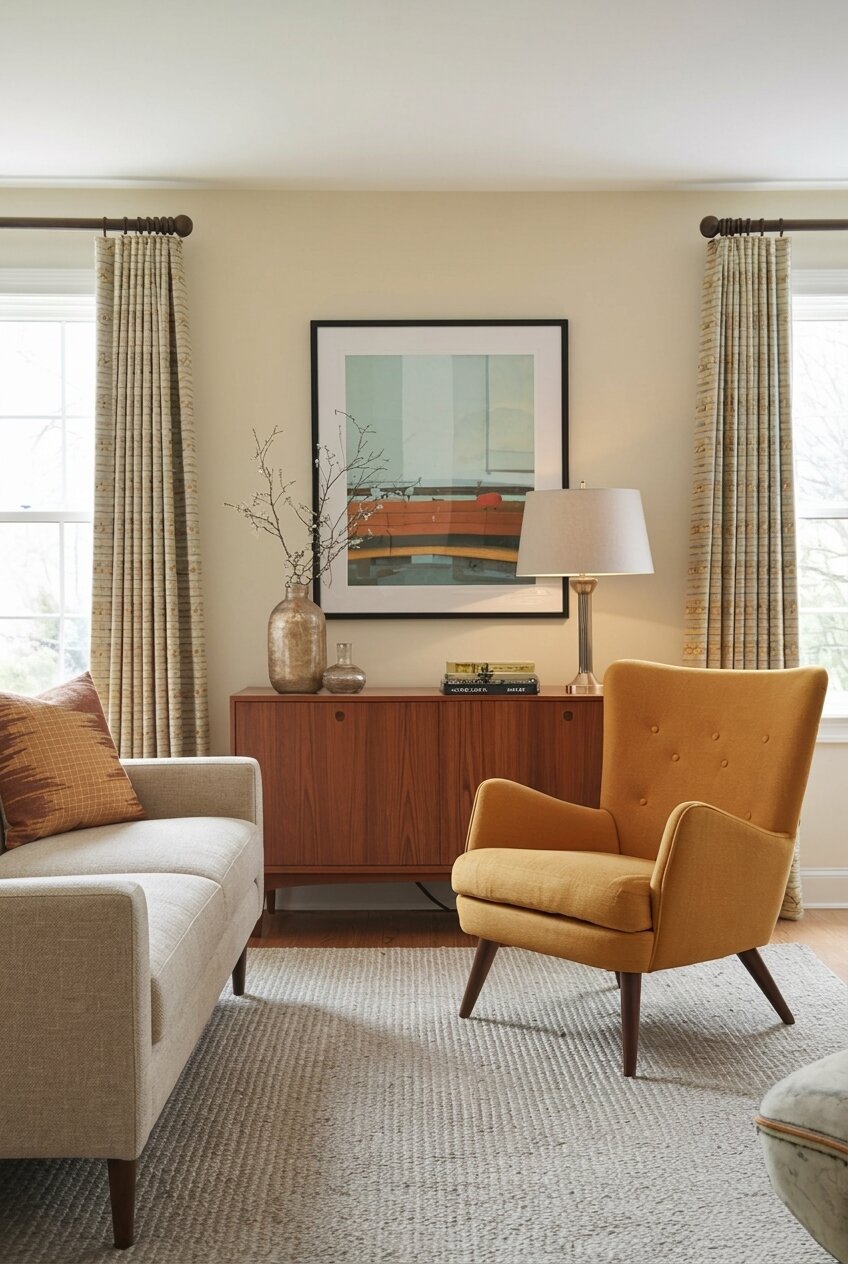
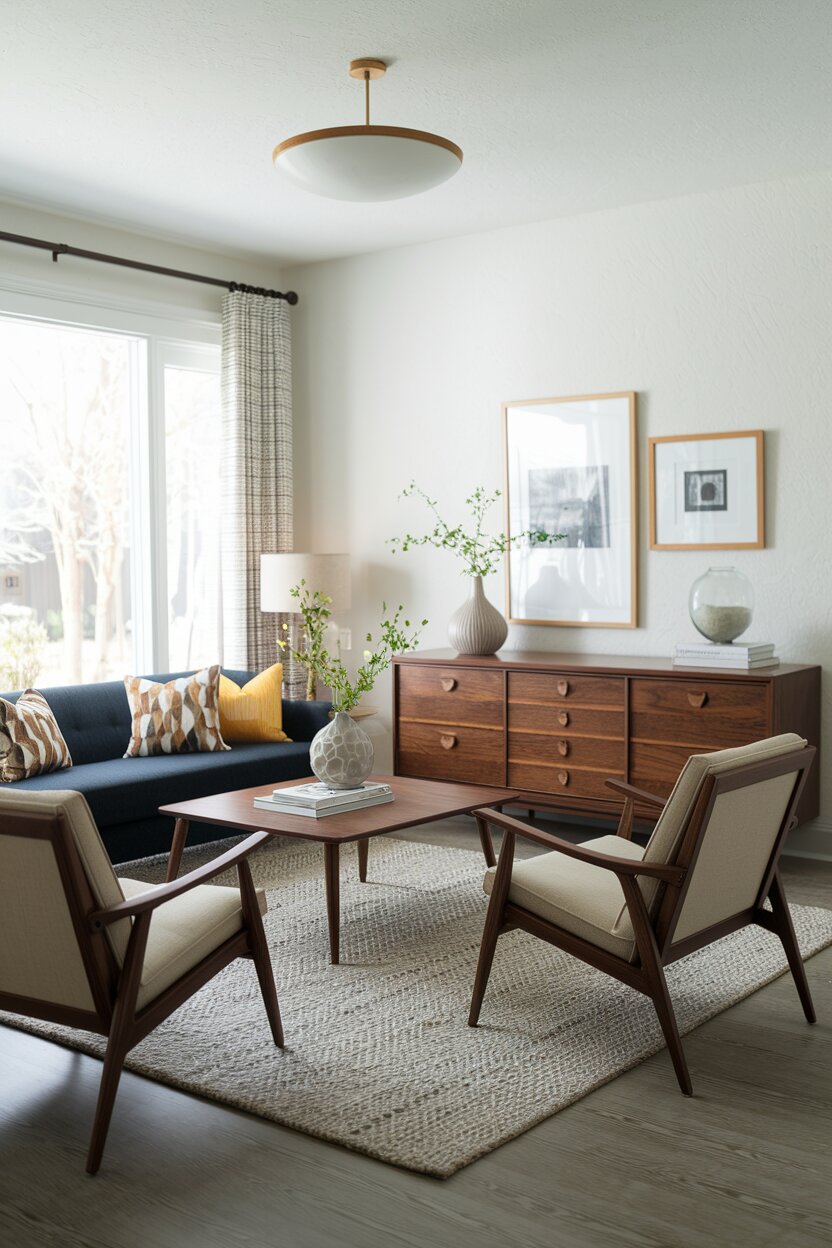
Walnut is the backbone of nearly every classic mid-century modern living room. Its warm, reddish-brown grain pairs well with almost any wall color, from crisp white to a moody forest green. A walnut credenza or media console instantly grounds the room and gives it that unmistakable retro warmth. Look for pieces with visible wood grain and minimal hardware, since the material itself should be the star.
- 02 of 12
A Bold Geometric Rug
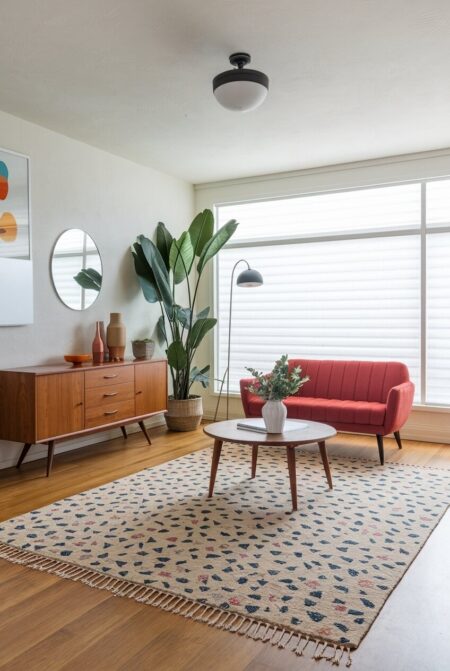
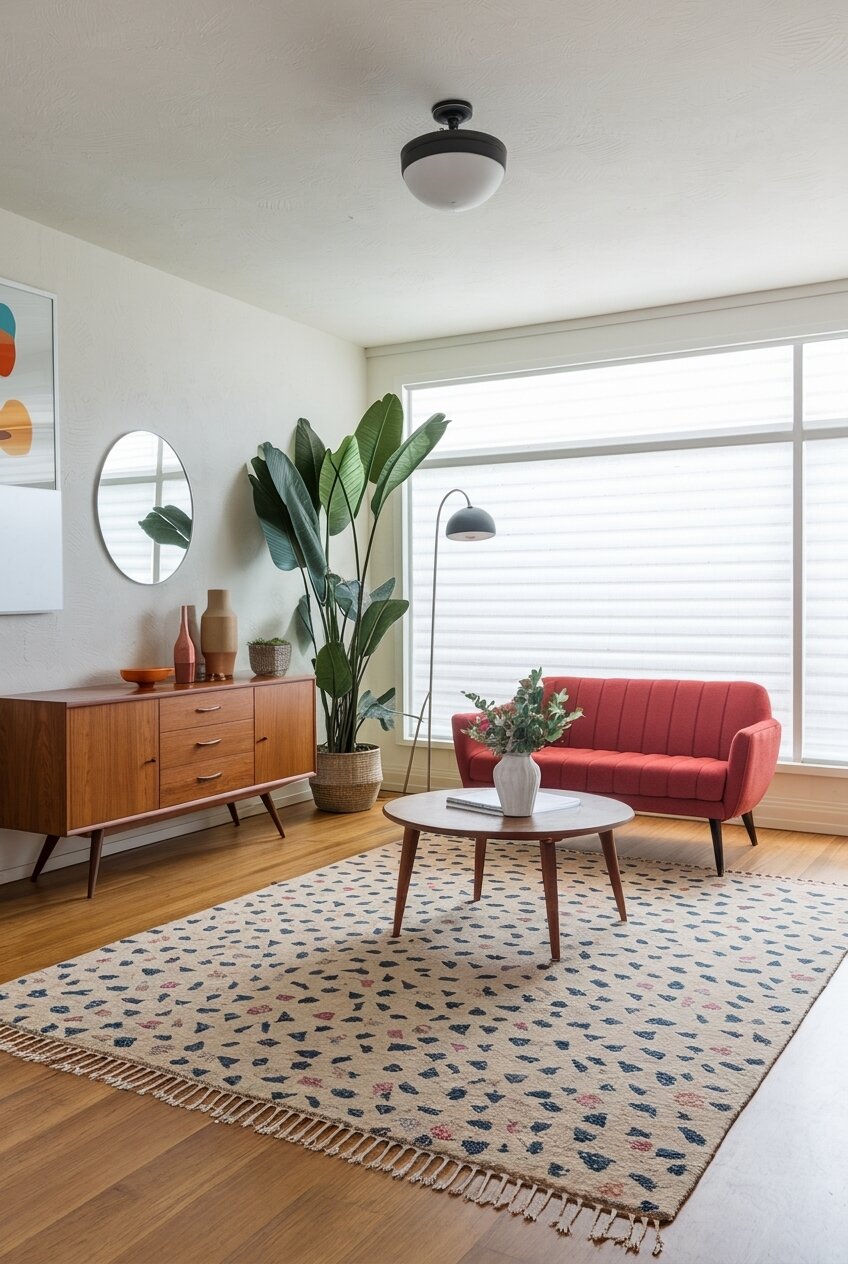
An area rug does a lot of heavy lifting in a mid-century modern living room. Choose one with an abstract, geometric, or terrazzo-style pattern instead of a traditional floral design. The right rug pulls together the room’s accent colors and adds visual movement underfoot. A low pile also keeps the room feeling grounded, since mid-century furniture tends to sit close to the floor.
- 03 of 12
Low, Lean Sofa Silhouettes
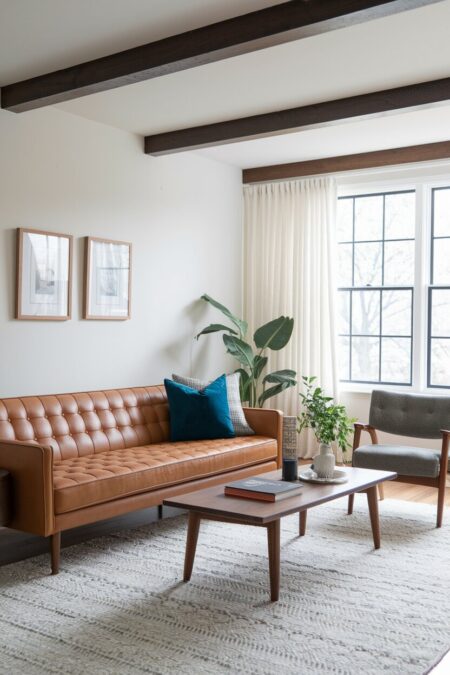
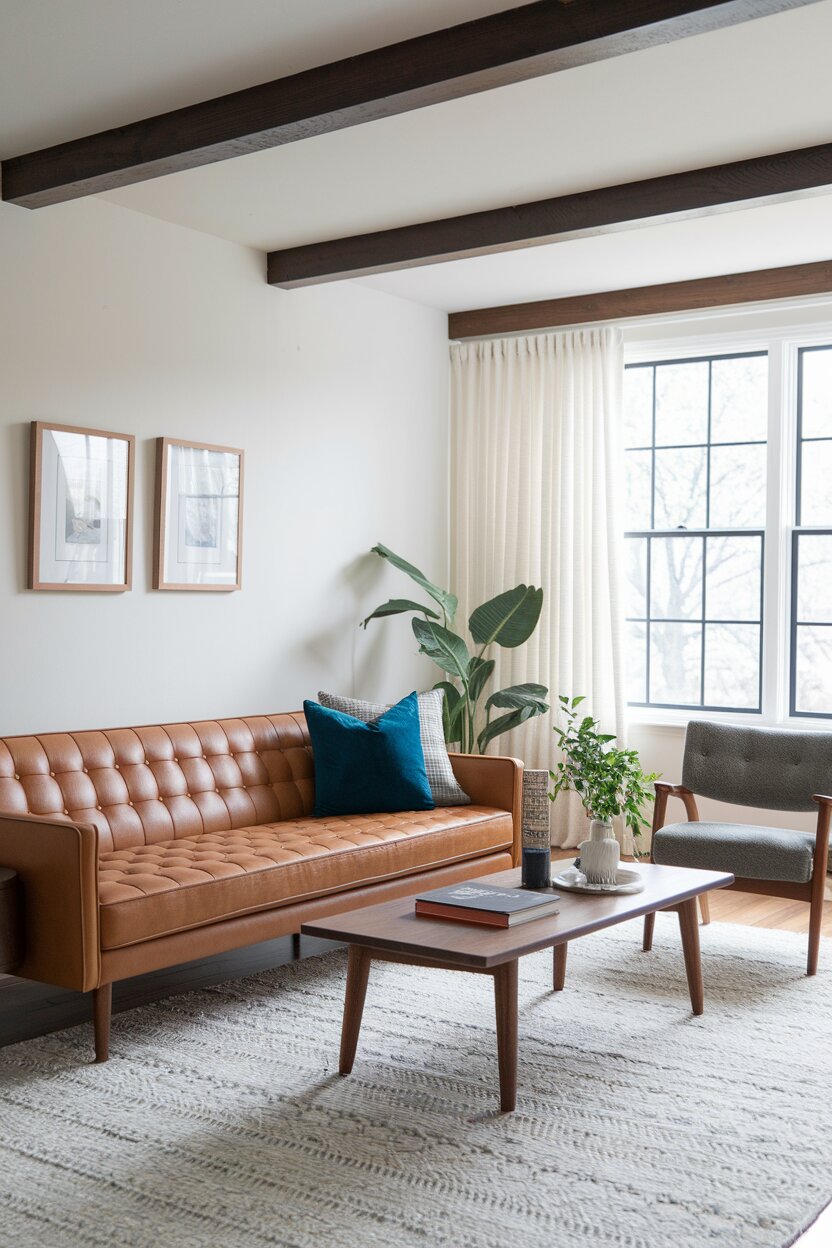
Forget the oversized, overstuffed sectional. Mid-century modern sofas sit lower and leaner, with slim arms and exposed tapered wood legs. A tufted back adds texture without weighing down the design. Bouclé or a nubby wool blend is a popular upholstery choice right now, and it softens the sofa’s otherwise geometric shape.
- 04 of 12
A Statement Sunburst Mirror
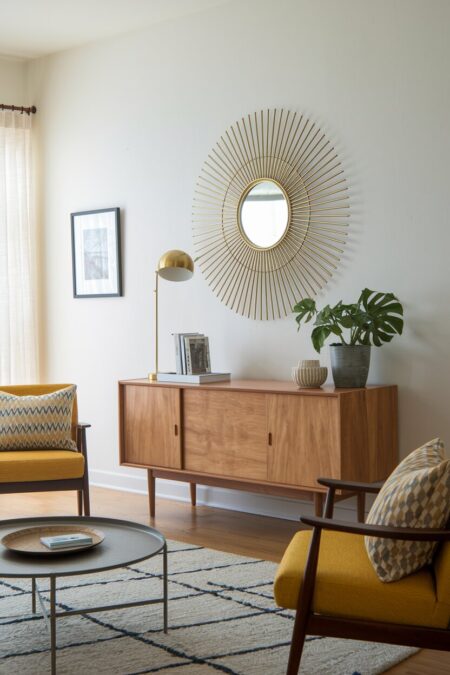
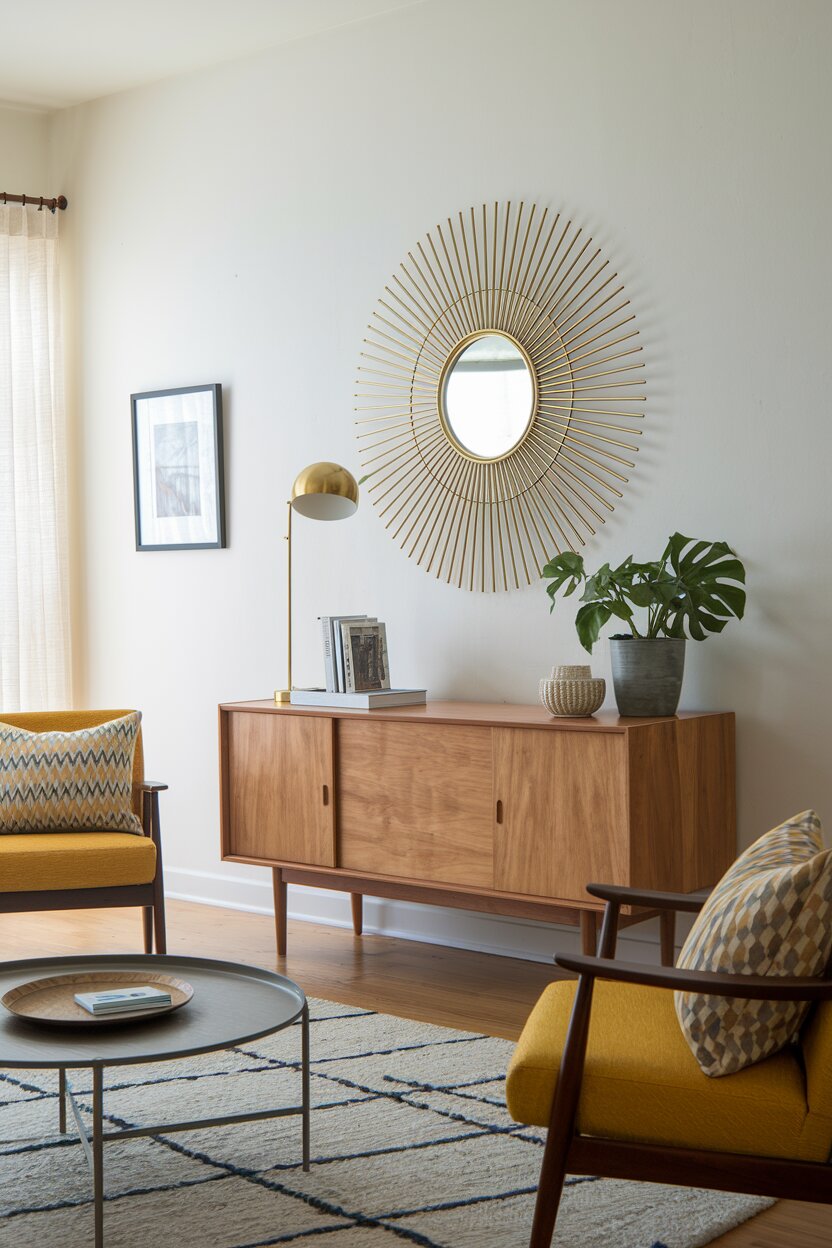
A sunburst mirror is almost a signature of the mid-century modern living room. Hung above a sofa, credenza, or fireplace, it draws the eye upward and bounces light around the space. Brass or natural wood spokes both work beautifully, depending on the rest of your metal finishes. It’s a small addition, but it adds instant character.
- 05 of 12
A Pop of Mustard Yellow
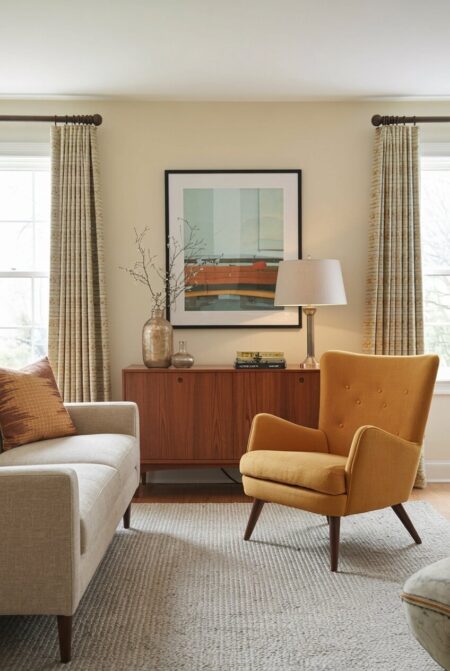
Mid-century modern design leans on a specific palette: warm neutrals punctuated by one saturated color. Mustard yellow is one of the most recognizable choices, and it works whether you use it on a single accent chair or scatter it across a few throw pillows. Pair it with walnut wood and cream walls for a look that feels period-accurate without going overboard. A little mustard goes a long way.
- 06 of 12
Tapered Wood Legs Everywhere
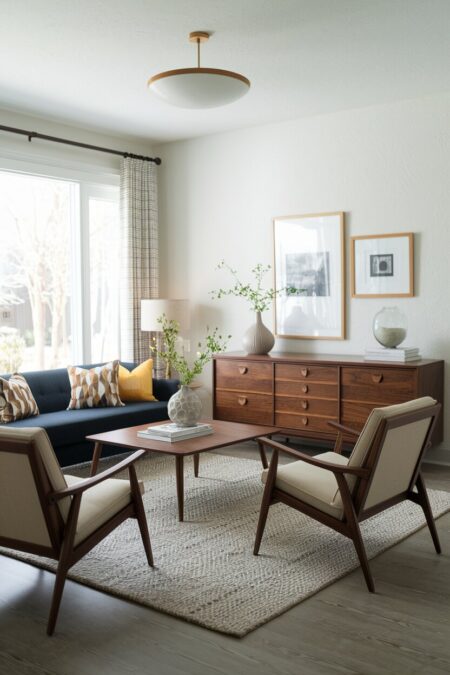
Tapered wood legs are one of the easiest ways to spot mid-century modern furniture, and they’re also one of the easiest details to shop for. Look for them on sofas, chairs, coffee tables, and even television stands. Keeping this detail consistent across your furniture creates a sense of cohesion in the room. It’s a small design rule, but it makes a noticeable difference.
- 07 of 12
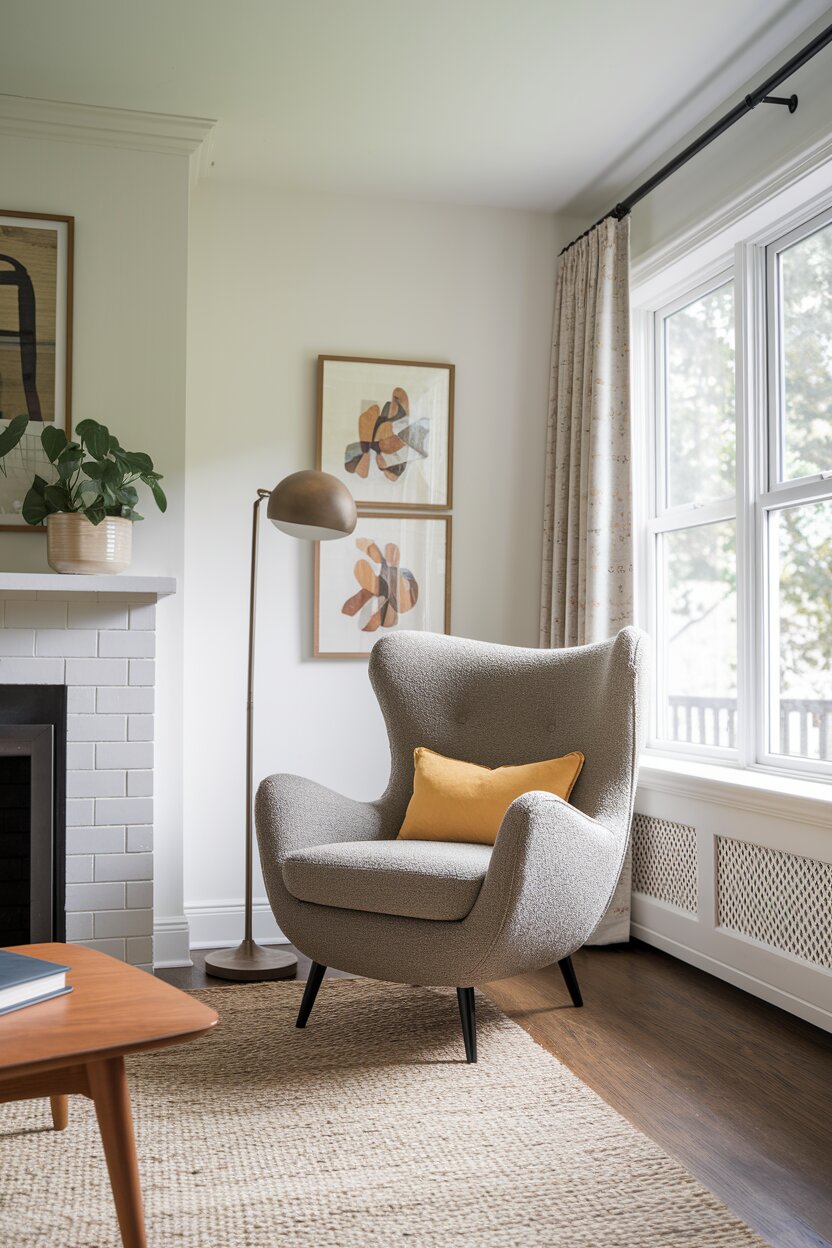
A Sculptural Floor Lamp
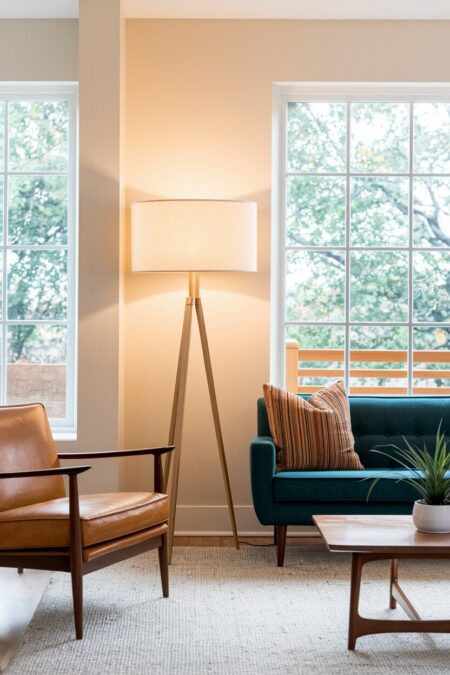
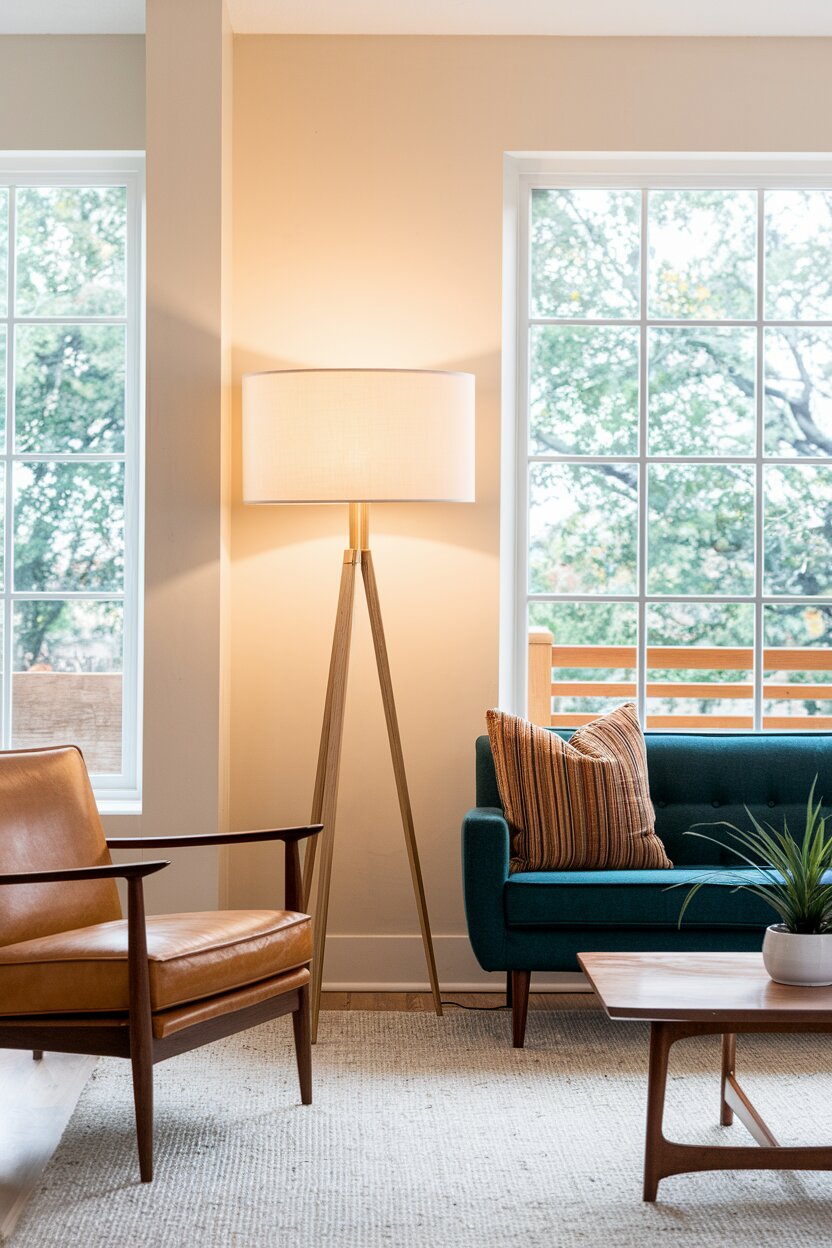
Lighting in a mid-century modern living room should feel like a piece of art on its own. A tripod floor lamp with a wood or brass frame adds height and visual interest to an empty corner. An arc lamp positioned over a reading chair brings a sculptural quality while still doing its job. Either option adds warmth once the sun goes down, which matters just as much as how the room looks in daylight.
- 08 of 12
Open Shelving Display
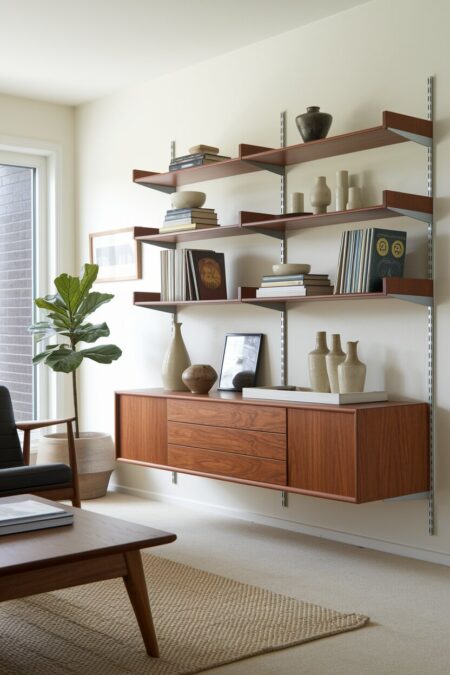
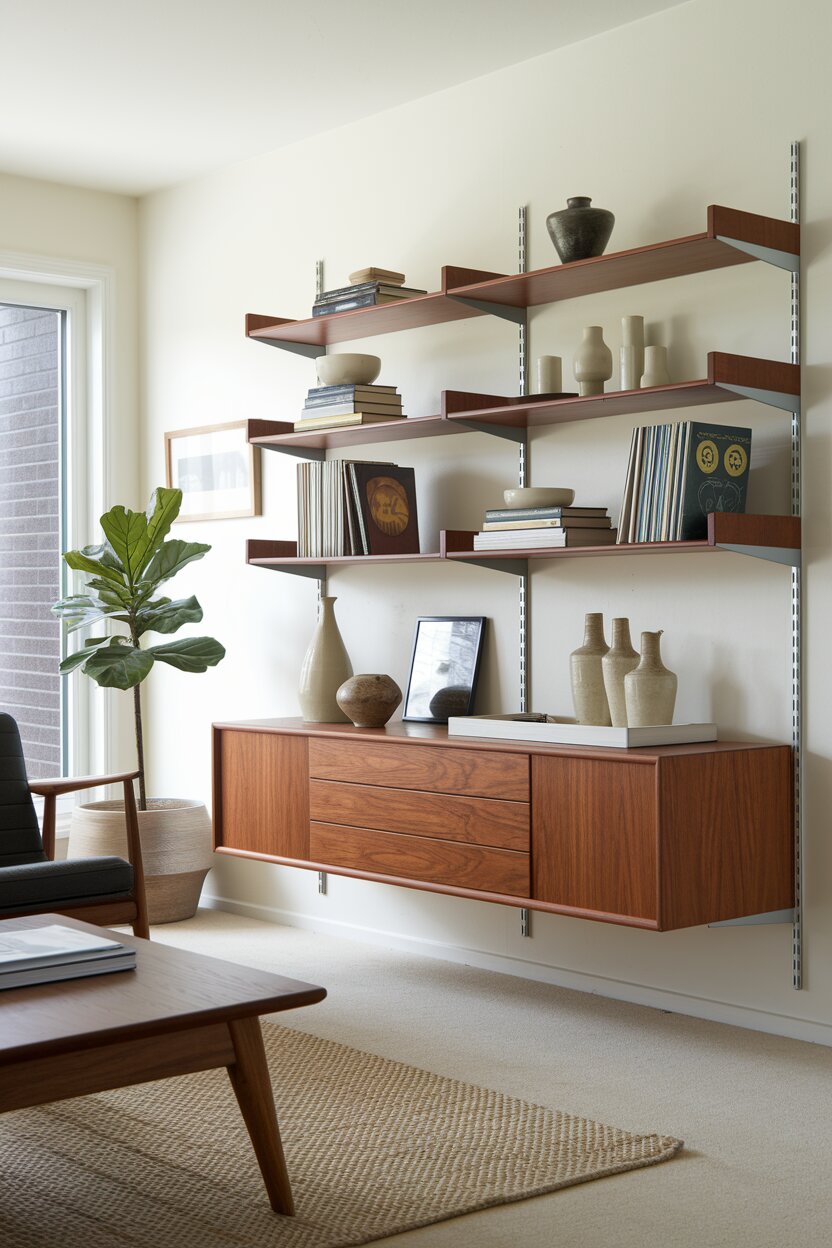
Open shelving is a practical way to bring mid-century modern style into a living room without adding bulk. A slim wall-mounted unit in walnut or teak gives you a spot to display books, pottery, and record collections. Leave a little breathing room between objects rather than packing every shelf. That restraint is very much in keeping with the era’s design philosophy.
- 09 of 12
An Organic Curved Accent Chair
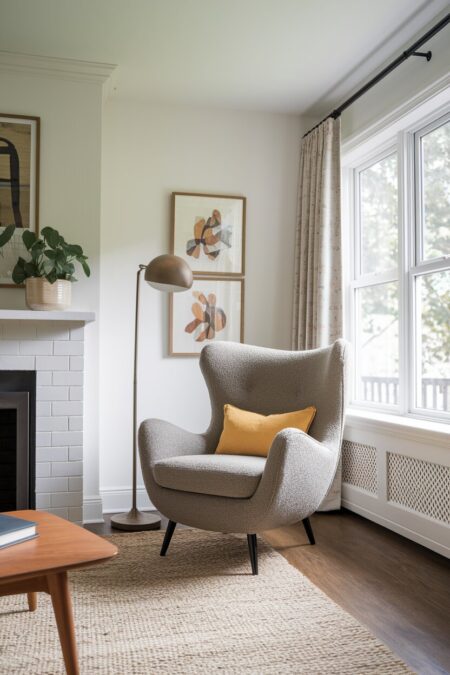
Not every piece in a mid-century modern living room needs sharp, geometric lines. A curved accent chair, like a barrel or egg-shaped design, softens the room and adds a bit of playfulness. Upholster it in a bold color or a bouclé fabric for texture. Placed near a window, it also makes a cozy reading spot.
- 10 of 12
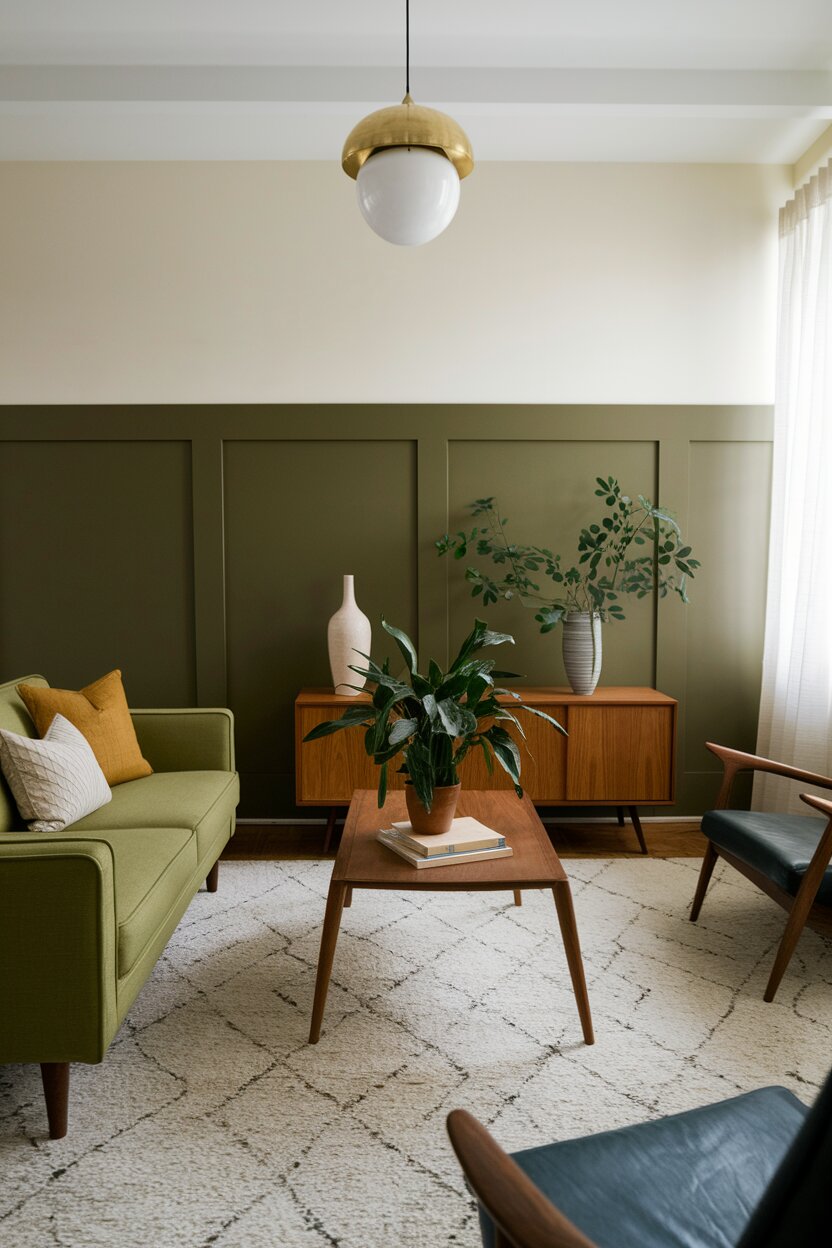
A Bold Two-Tone Color Palette
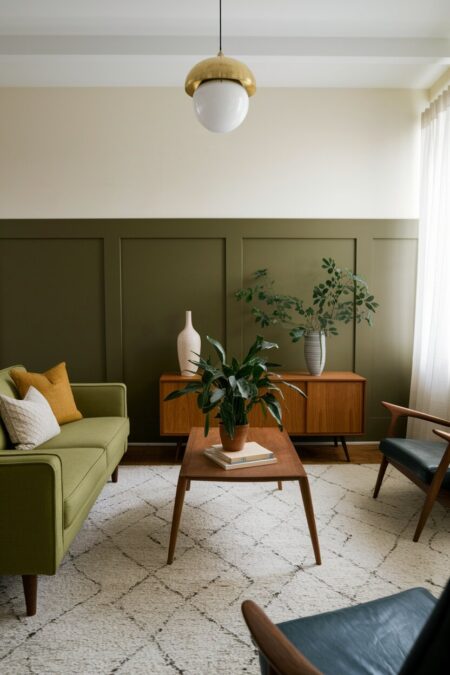
Mid-century modern rooms often build around just two dominant colors instead of a full rainbow. Olive green and cream is a classic combination, as is burnt orange and navy. Try painting one wall in the bolder shade while keeping the rest of the room neutral. This approach adds depth without overwhelming the space.
- 11 of 12
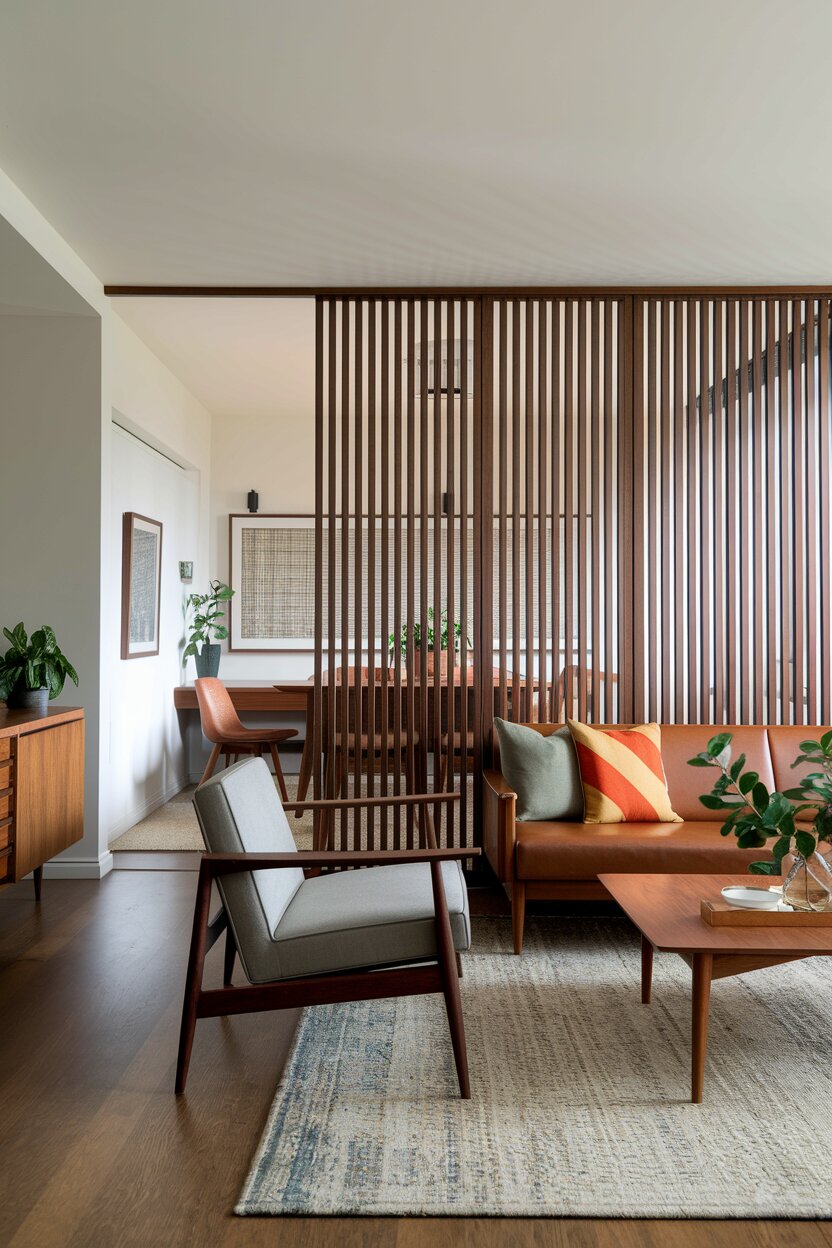
A Slatted Wood Room Divider
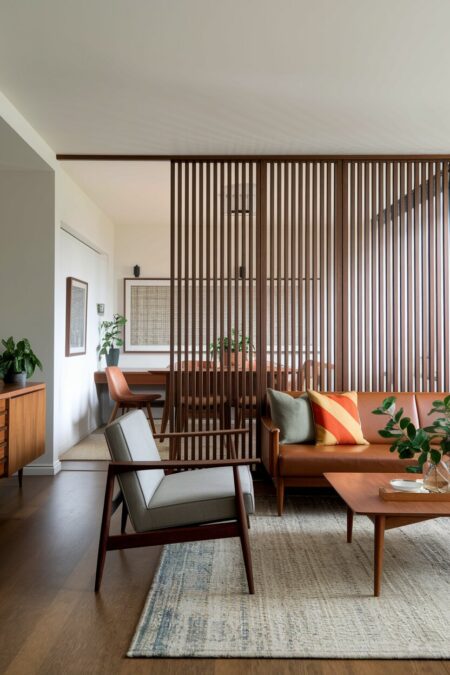
If your living room shares an open floor plan with a dining area or entryway, a slatted wood room divider is a functional way to add definition. The vertical slats let light pass through while still creating a visual boundary. Walnut or teak slats tie in nicely with other wood furniture in the room. It’s a detail borrowed straight from mid-century architecture.
- 12 of 12
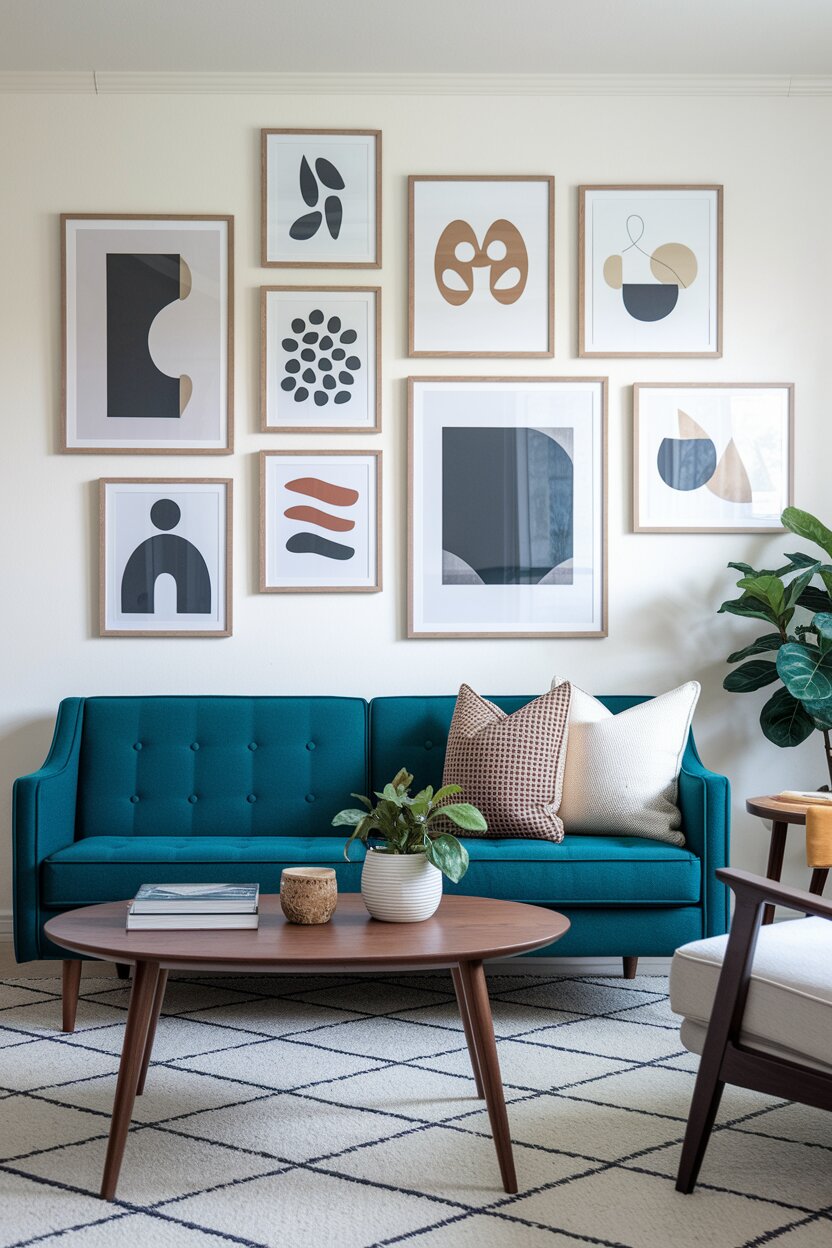
A Gallery Wall of Vintage Art
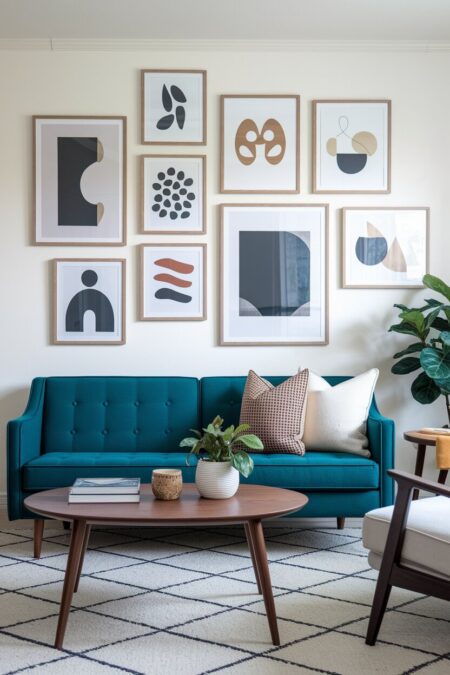
A gallery wall pulls a mid-century modern living room together without adding any bulky furniture. Stick to abstract prints, botanical illustrations, or vintage travel posters in thin wood or brass frames. Mix a few different frame sizes for visual interest, but keep the color palette consistent with the rest of the room. It’s an easy, budget-friendly way to finish the space.