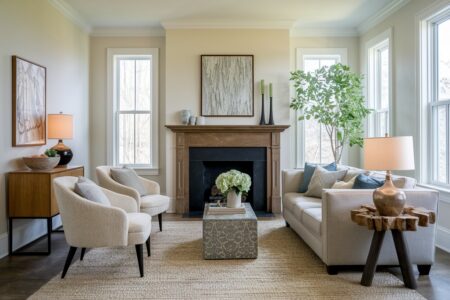
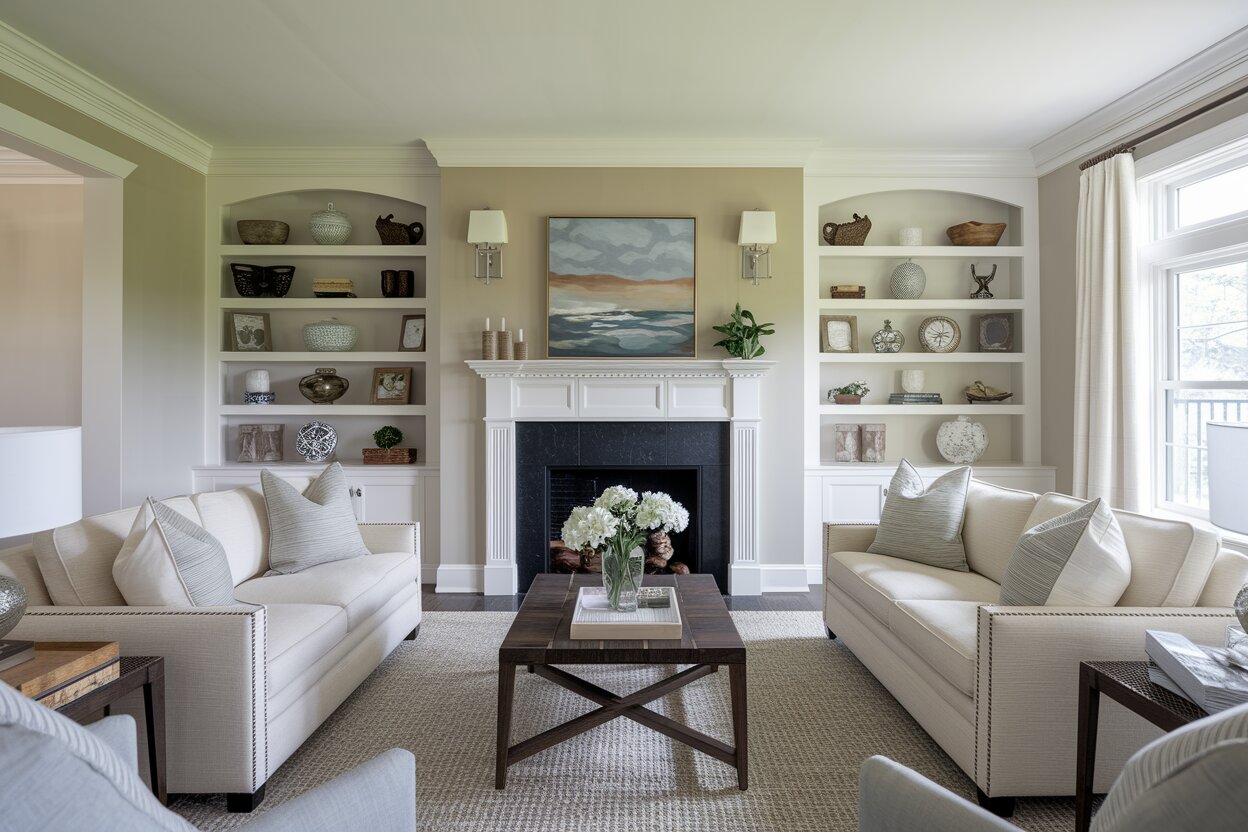
A traditional living room has a certain gravity to it. Rich wood tones, formal furniture arrangements, and layered textiles all work together to create a space that feels grounded and established. This style draws from 18th- and 19th-century European interiors, but it hasn’t gone anywhere. Homeowners still gravitate toward it because it feels comfortable, familiar, and a little bit grand.
What makes traditional design so durable is its flexibility. It isn’t stuck in the past. You can mix inherited antiques with newer upholstery, or pair a classic Chesterfield sofa with contemporary art, and the result feels collected rather than staged. It works just as well in a century-old colonial as it does in a brand-new build. Traditional living room ideas also tend to age gracefully, which means fewer major overhauls down the road.
Ready to bring some of that old-world charm into your own space? These traditional living room ideas cover everything from furniture and lighting to color and pattern, so you can build a room that feels polished, comfortable, and completely yours.
- 01 of 12
Warm Wood Paneling
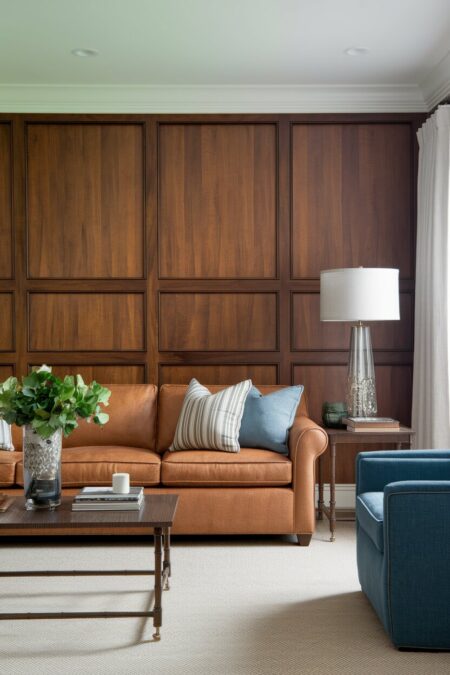
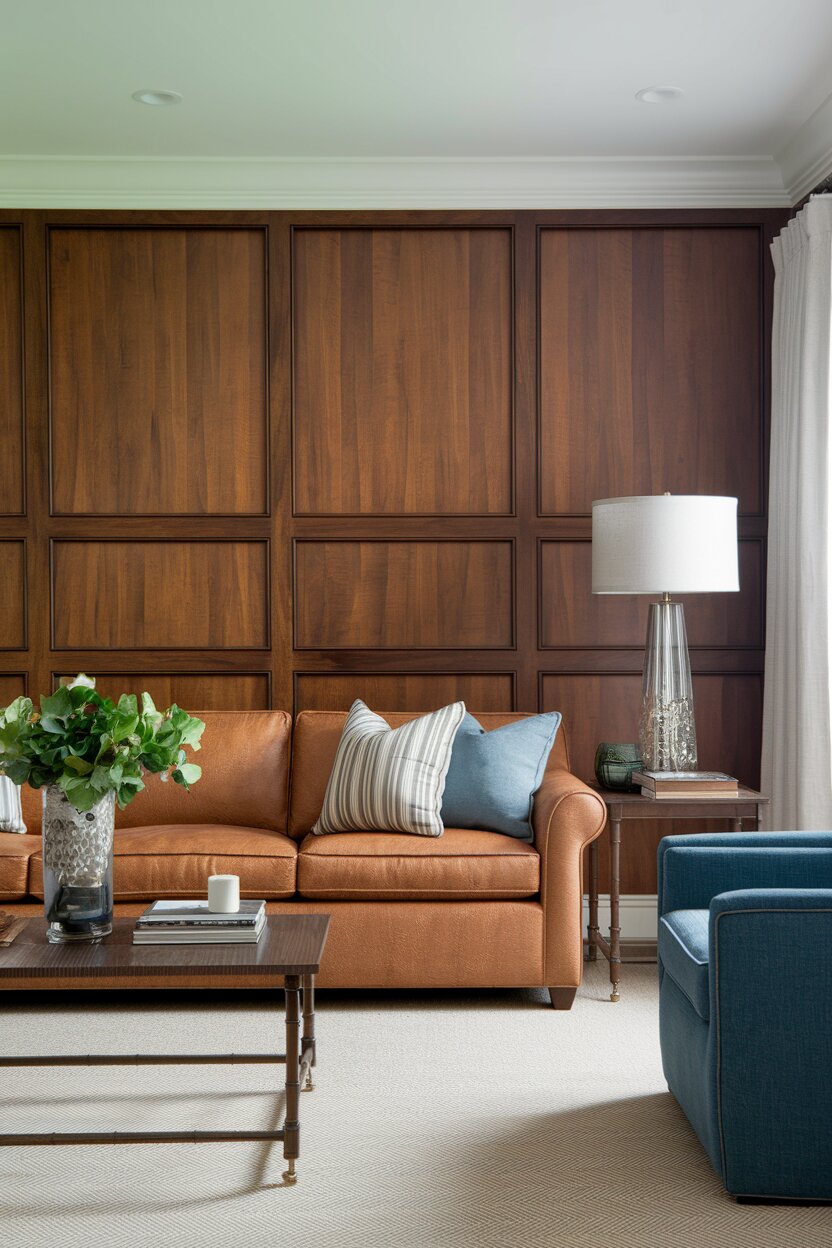
Wood paneling is a hallmark of traditional living room style. It adds warmth the moment you walk in. Rich walnut or mahogany panels can cover an entire wall, while lighter oak keeps smaller rooms from feeling heavy. A popular option is wainscoting that reaches waist height, topped with a soft paint color above it. The mix adds depth without overwhelming the space. Even MDF paneling can mimic the look for a fraction of the cost.
- 02 of 12
Classic Chesterfield Seating
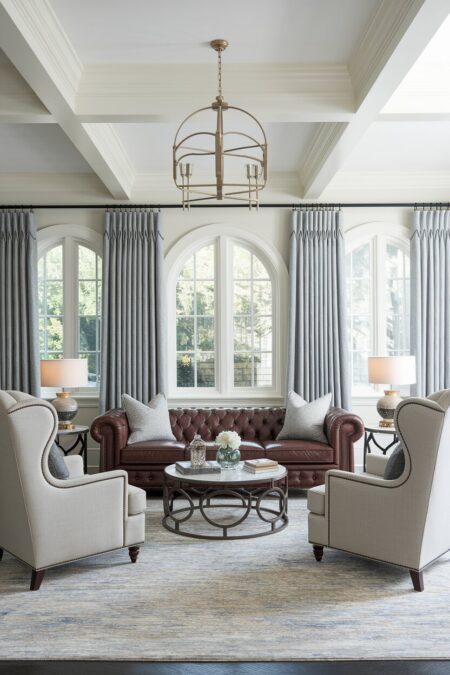
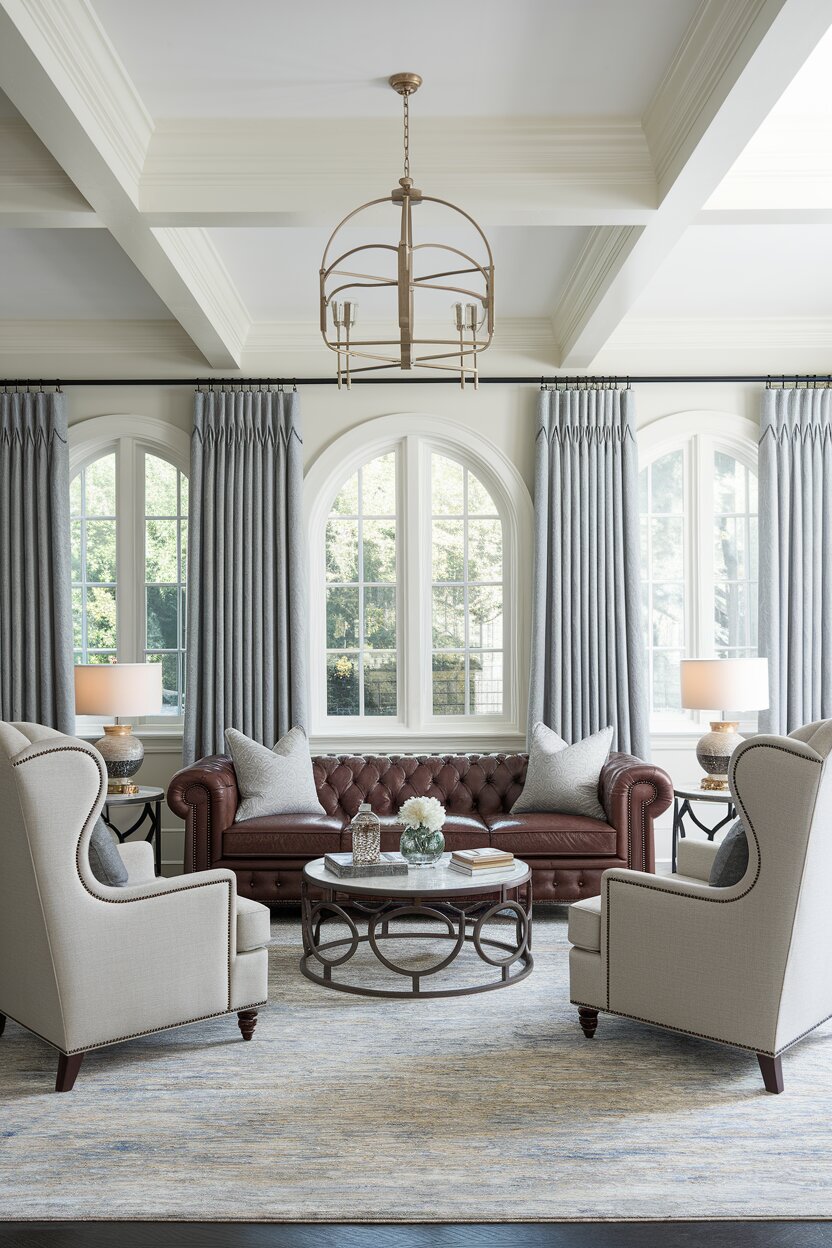
A Chesterfield sofa might be the most recognizable piece in traditional living room design. Deep button tufting. Rolled arms. Leather upholstery. Together, they bring instant sophistication to a seating area. Pair the sofa with two matching wingback chairs for a balanced, symmetrical layout. A cognac or burgundy leather makes a bold statement, while a soft fabric version keeps things quieter. Either way, this shape has staying power.
- 03 of 12
Layered Area Rugs
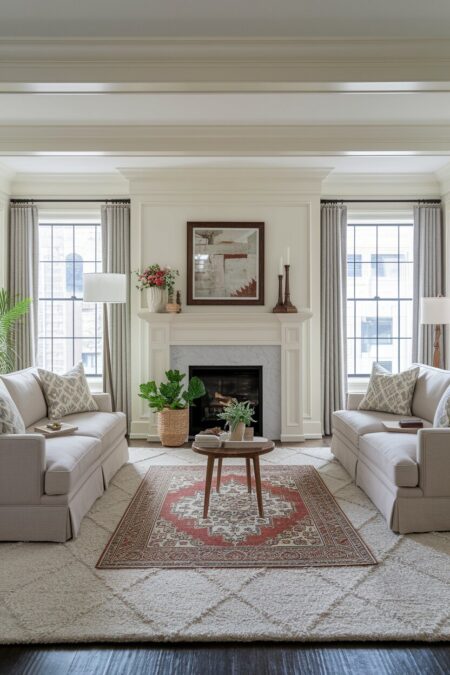
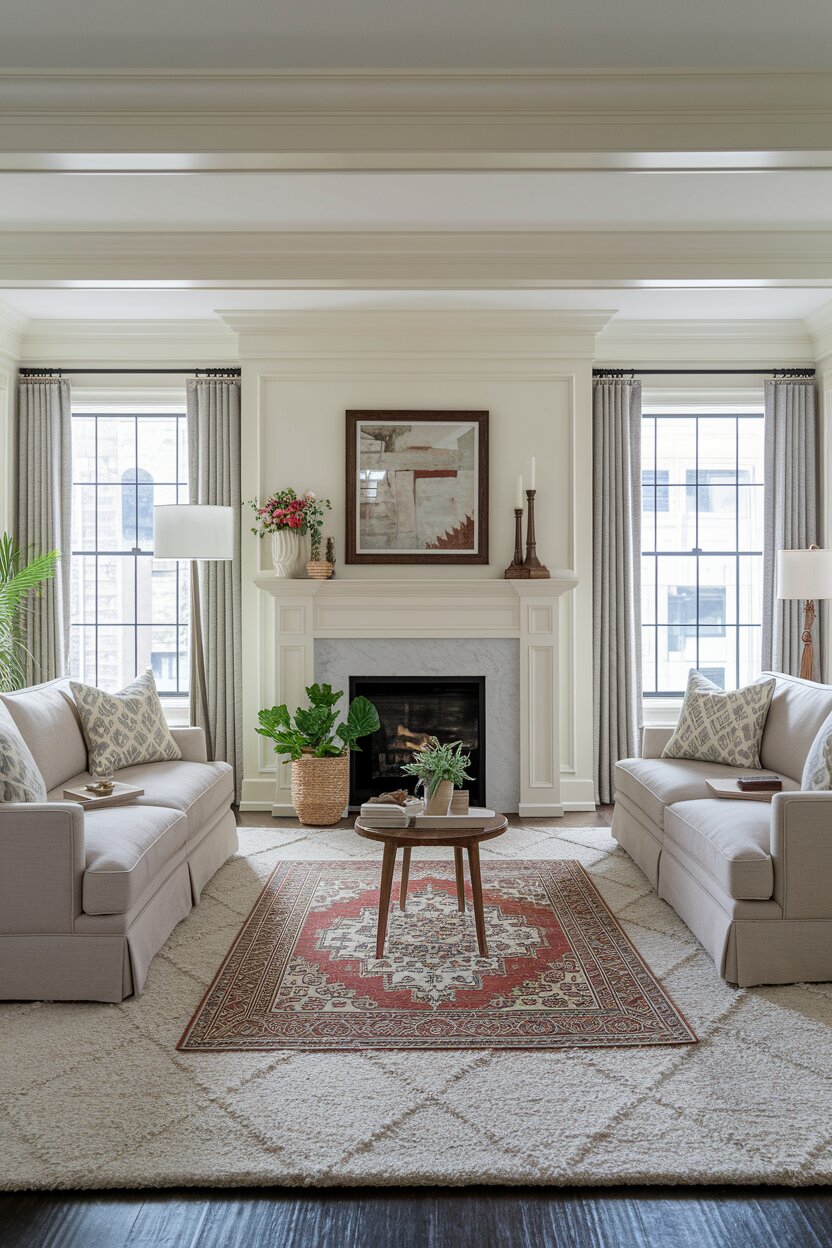
Layering rugs is an easy way to add texture underfoot. Start with a large, neutral wool rug as your base. Then add a smaller patterned rug, such as an Oriental or Persian design, on top. This combination grounds the furniture and introduces color without a full redesign. It also softens hard flooring in older homes with stone or hardwood floors. A rug with a bit of age, or at least an antique-inspired pattern, gives the room its most authentic traditional feel.
- 04 of 12
Symmetrical Furniture Layout
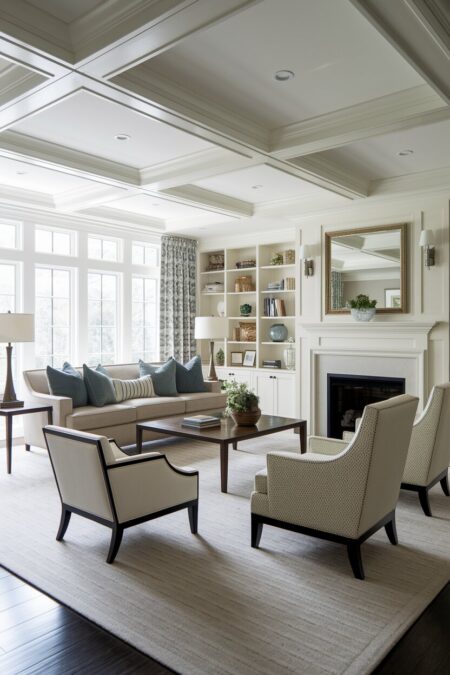
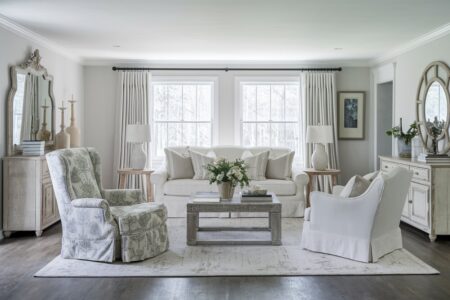
Balance sits at the center of most traditional living room ideas. Arrange your sofa and chairs so they mirror each other around a focal point, like a fireplace or a large window. Matching end tables and lamps reinforce the effect. It’s a formal look, but a practical one too, since seating naturally faces inward for conversation. Even in a small room, a few mirrored details can make the space feel larger and more intentional.
- 05 of 12
A Traditional Fireplace Focal Point
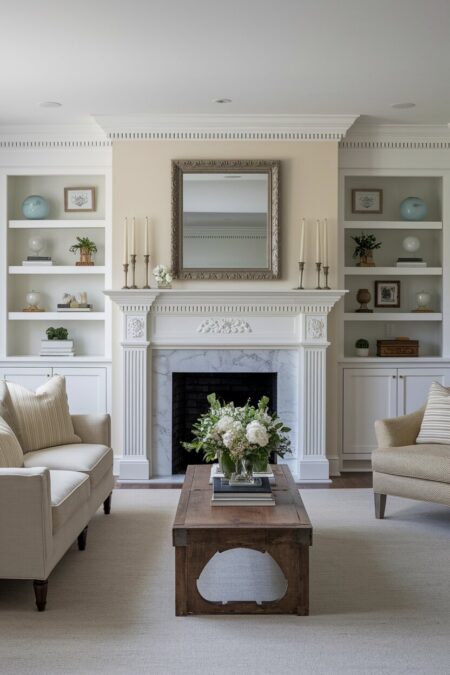
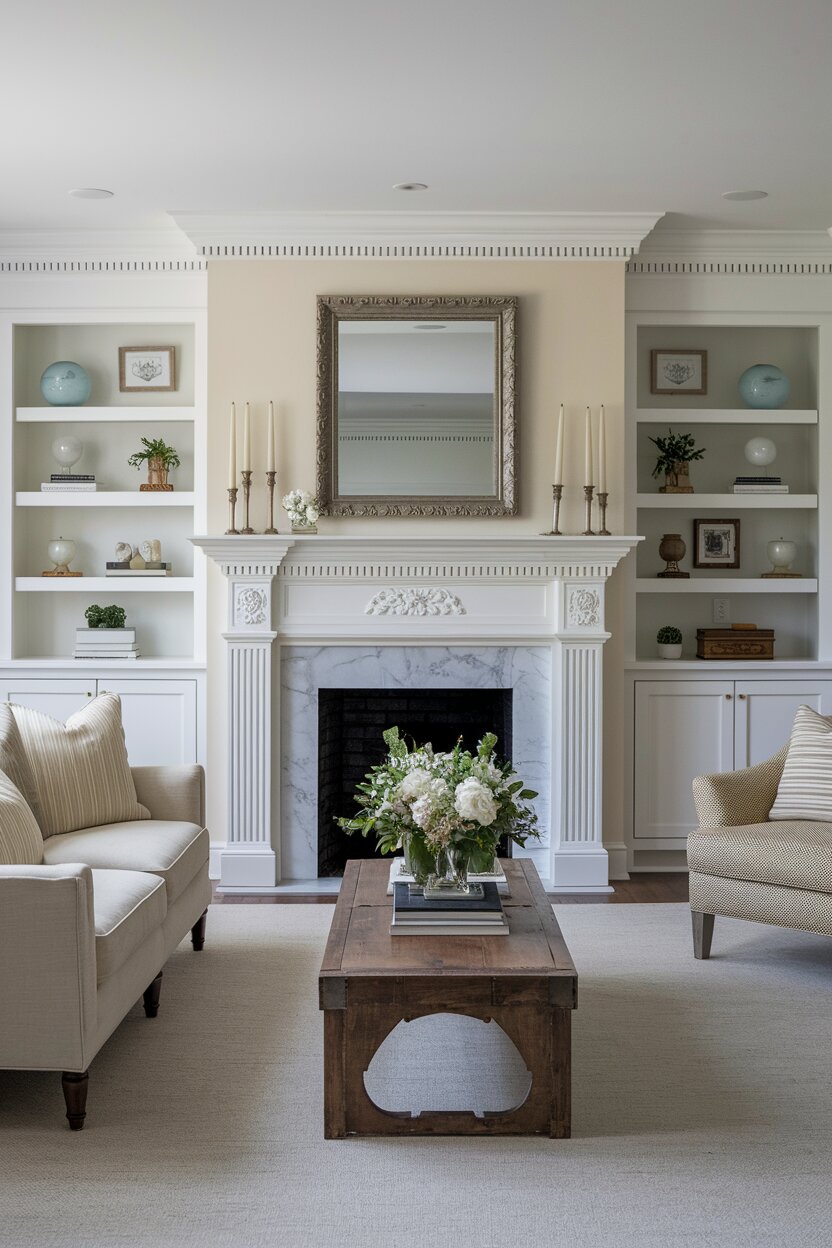
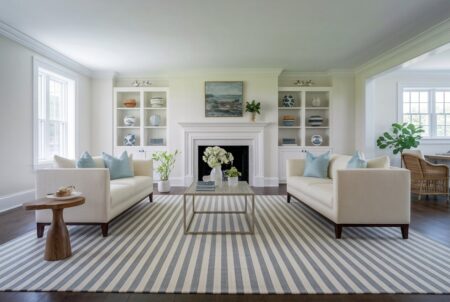
Nothing says traditional living room quite like a fireplace with a detailed mantel. Carved wood or marble. Fluted columns. A raised hearth. These details add real architectural interest. If your fireplace already exists but feels plain, try adding crown molding or an overmantel mirror above it. Flank the mantel with built-in shelving or a pair of matching armchairs. The fireplace becomes the room’s anchor, and everything else can build outward from there.
- 06 of 12
Soft, Neutral Color Palette
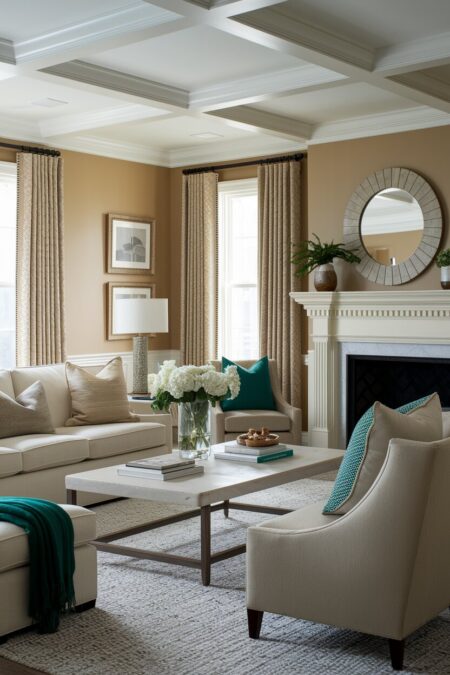
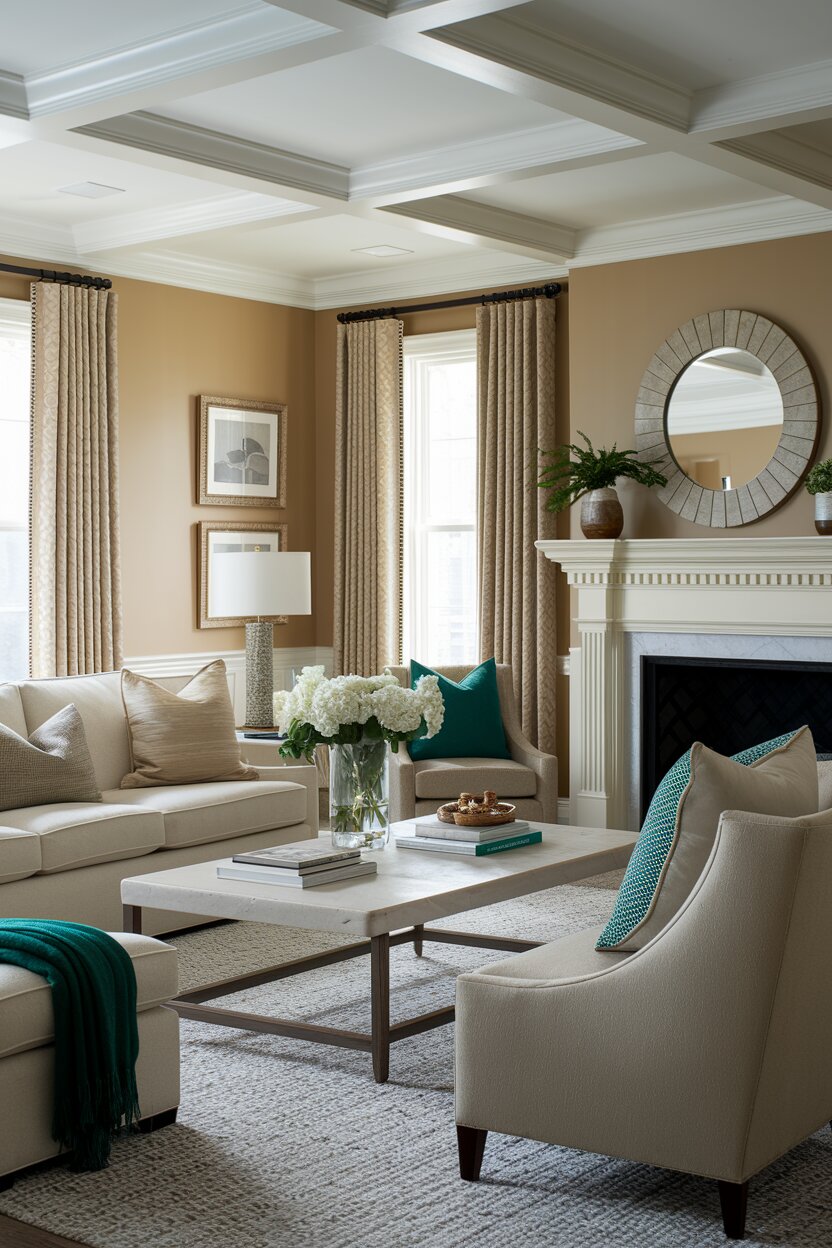
Traditional living rooms lean on warm neutrals rather than stark white or trendy bold colors. Think cream, taupe, soft gold, and warm greige on the walls, paired with deeper browns and greens in the furniture and textiles. This palette stays calm and cohesive, which lets architectural details and furniture shapes take center stage. It also ages well. You won’t feel pressure to repaint every couple of years. A few jewel-toned accents, like an emerald pillow or a garnet throw, keep the room from feeling flat.
- 07 of 12
Vintage-Style Lighting Fixtures
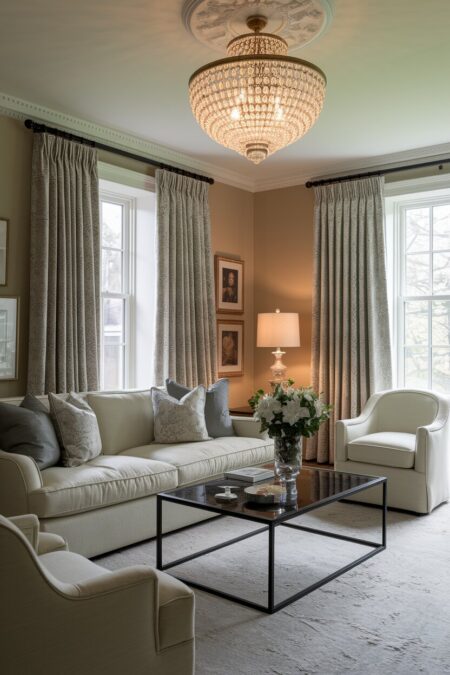
Lighting can make or break a traditional living room. Brass sconces. Crystal chandeliers. Glass-shaded table lamps. Layer a few of these sources rather than relying on a single overhead fixture. A dimmer switch on the main light lets the room shift from bright and functional during the day to warm and cozy at night. Even one antique-style lamp can anchor a reading corner and tie the whole space together.
- 08 of 12
Built-In Bookcases
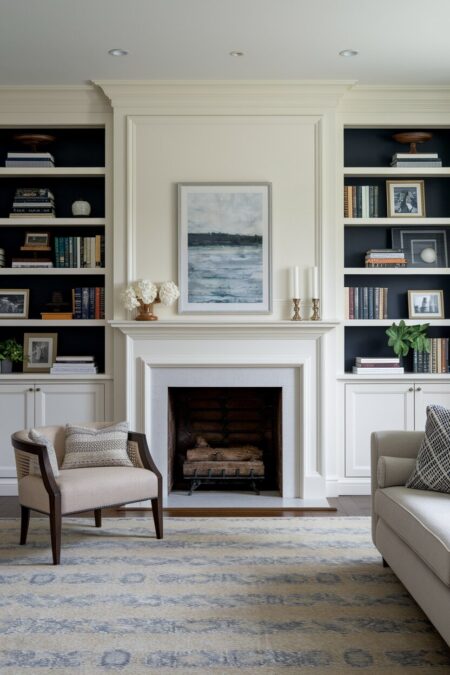
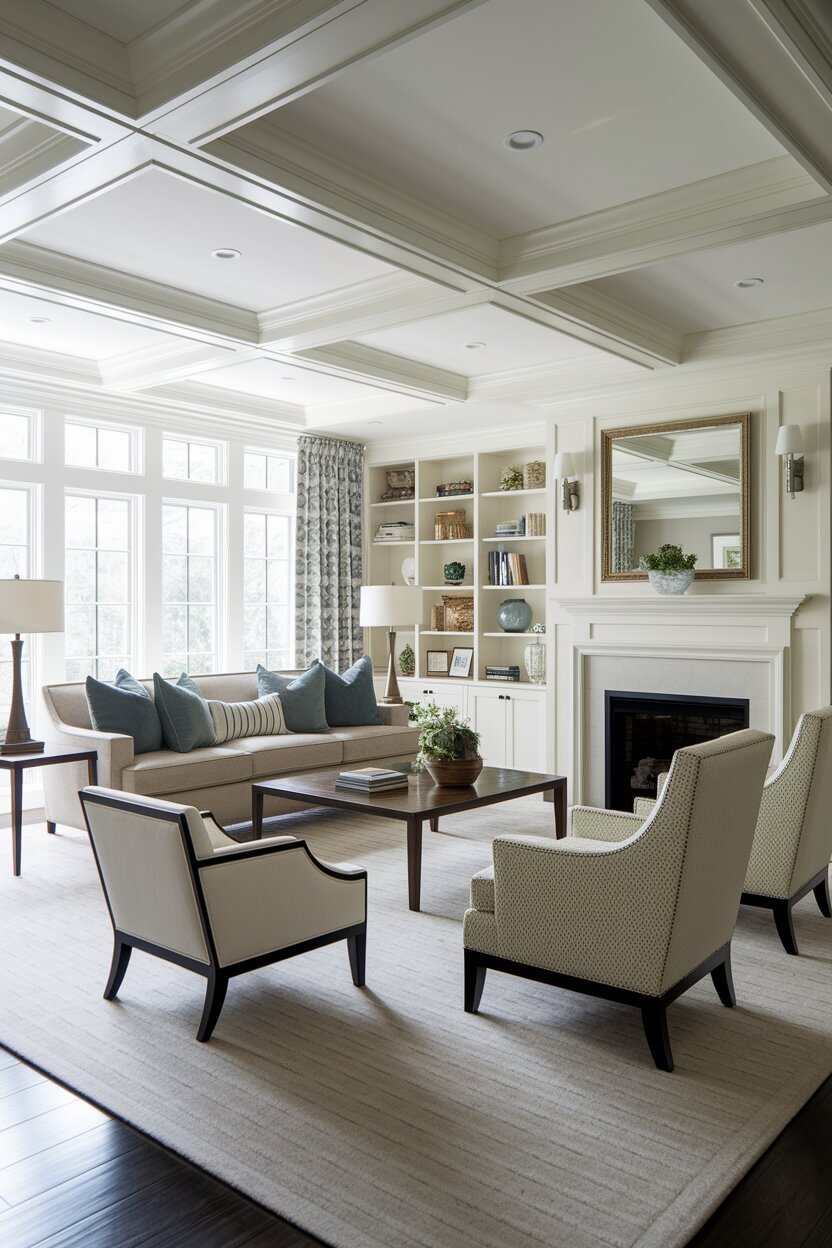
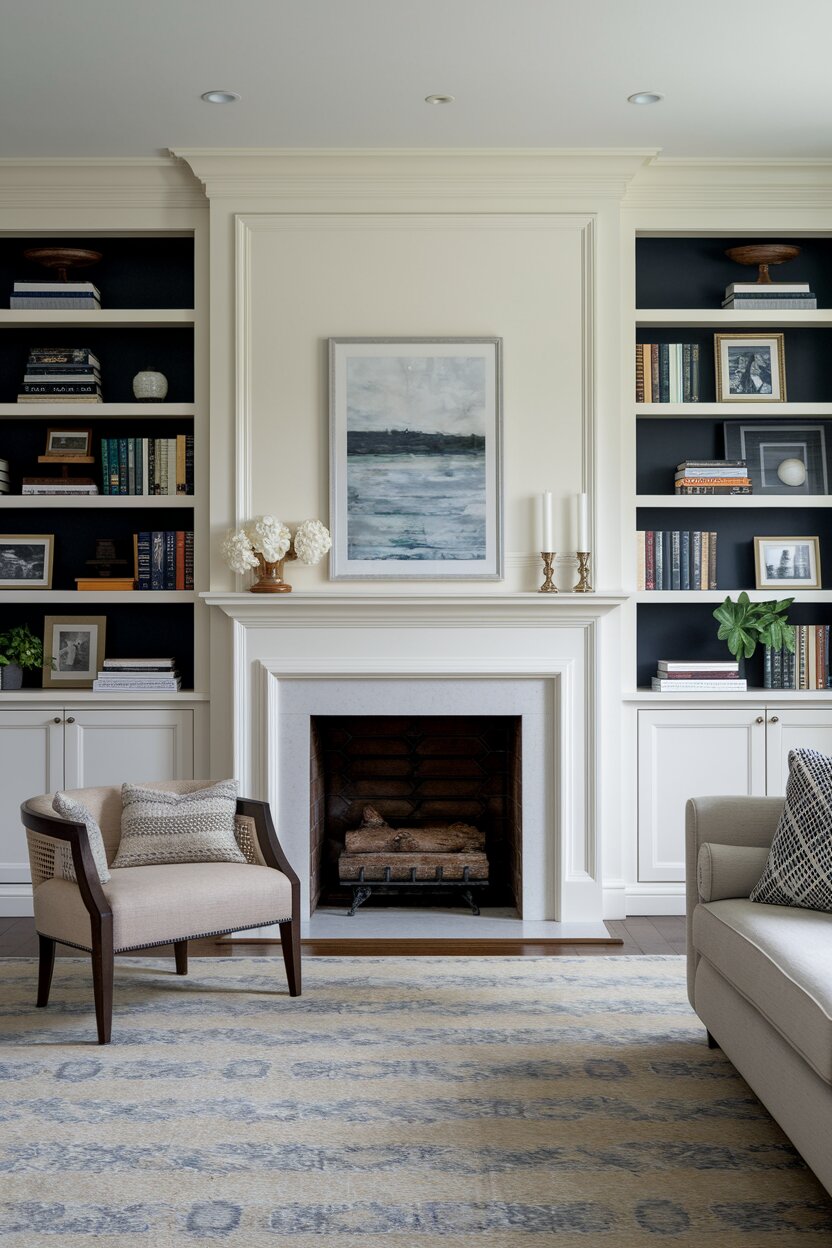
Built-in bookcases are a defining feature of traditional homes, and they’re just as useful now as they were a century ago. Flanking a fireplace or window with floor-to-ceiling shelving adds storage and architectural detail in one move. Fill the shelves with books, framed photos, and a few decorative objects, arranged a little unevenly on purpose. Painting the interior a contrasting color, like deep navy, adds a subtle bit of drama. It’s one of the simplest ways to bring character to a plain wall.
- 09 of 12
Tailored Drapery
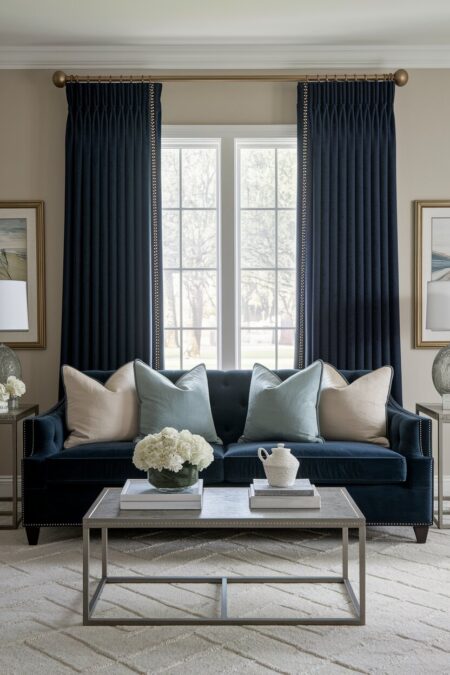
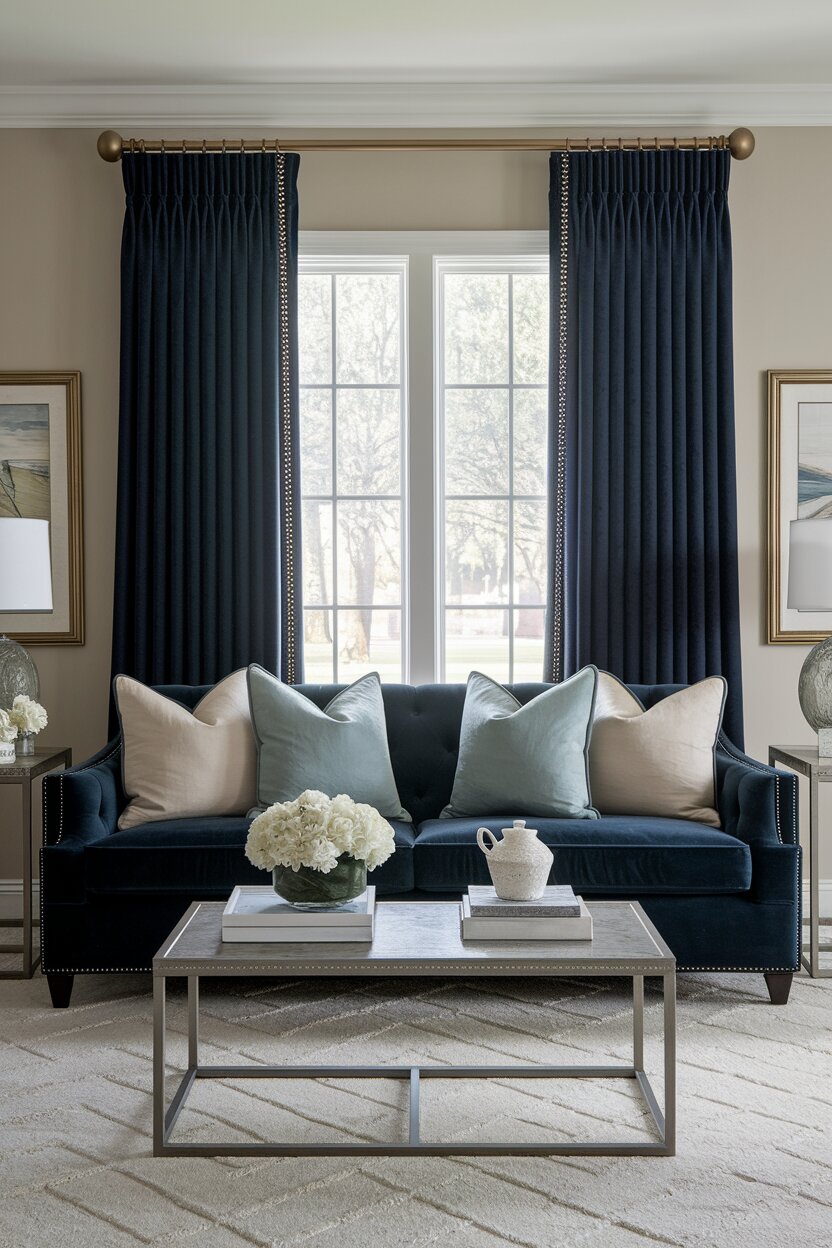
Floor-length drapes in a rich fabric, like velvet, linen, or silk, are a signature of traditional living room design. Let the panels pool slightly on the floor for a formal touch. Hang the rod a few inches above the window frame so the ceiling reads taller. A decorative valance or cornice box adds an extra layer of polish on top. Tiebacks in a coordinating trim keep everything looking tailored instead of sloppy. Even simple curtains feel more traditional once they’re properly lined and finished.
- 10 of 12
Antique Accent Furniture
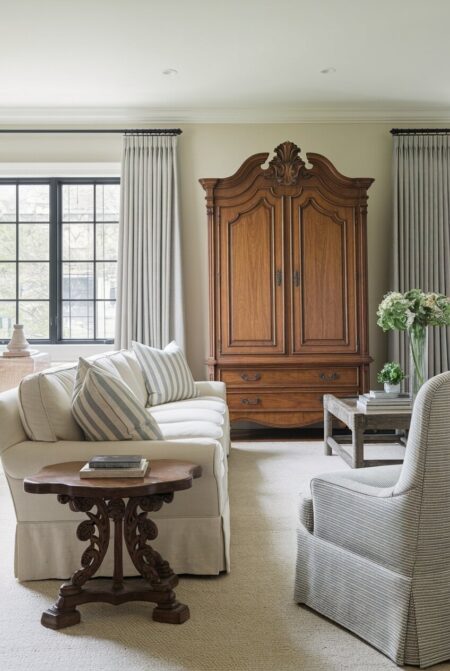
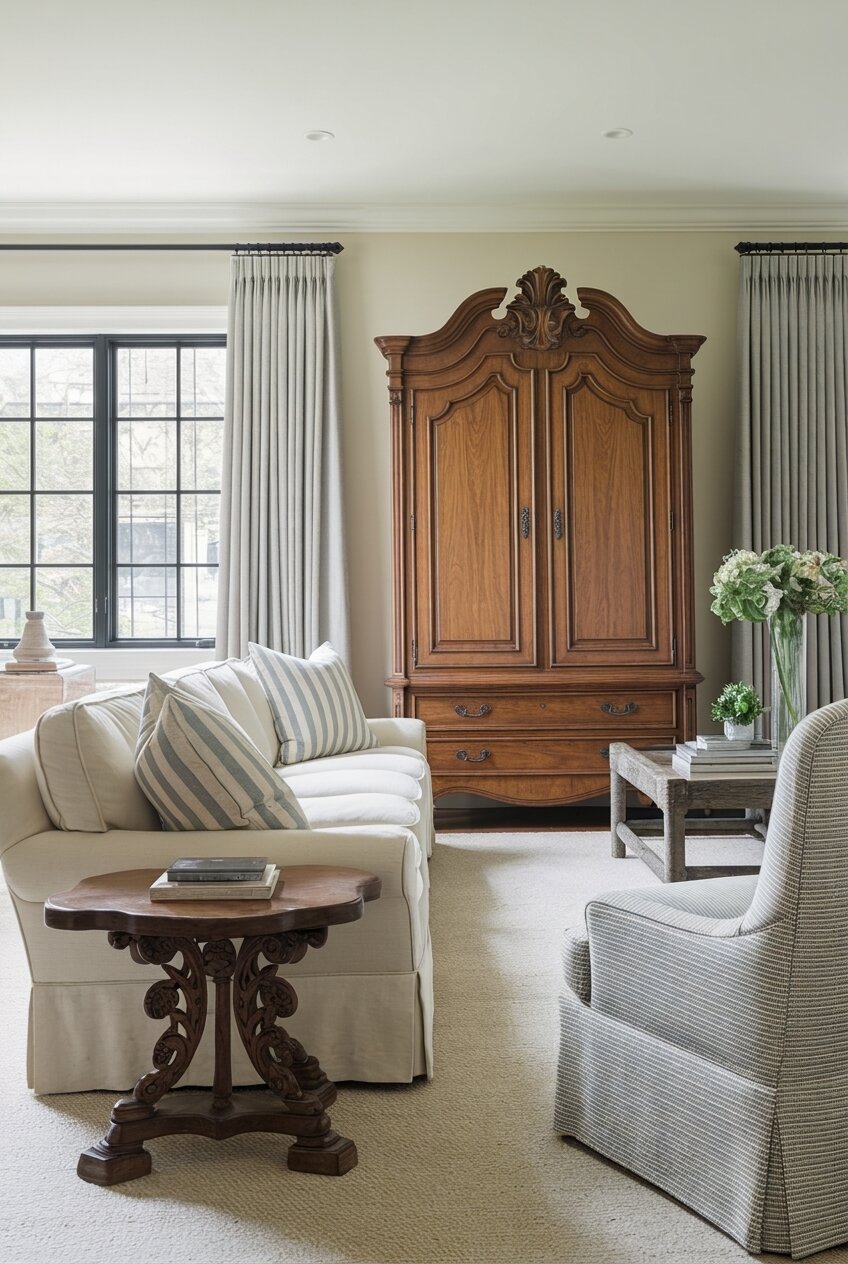
A single antique piece, like a carved side table or an inherited armoire, adds instant history to a room. You don’t need a house full of antiques to get this effect. One or two well-chosen pieces mixed in with newer furniture will feel curated instead of staged. Estate sales, flea markets, and family hand-me-downs are all good places to look. Focus on solid wood construction and good bones. Pieces like that are usually easy to refinish down the line.
- 11 of 12
Classic Plaid and Tartan Textiles
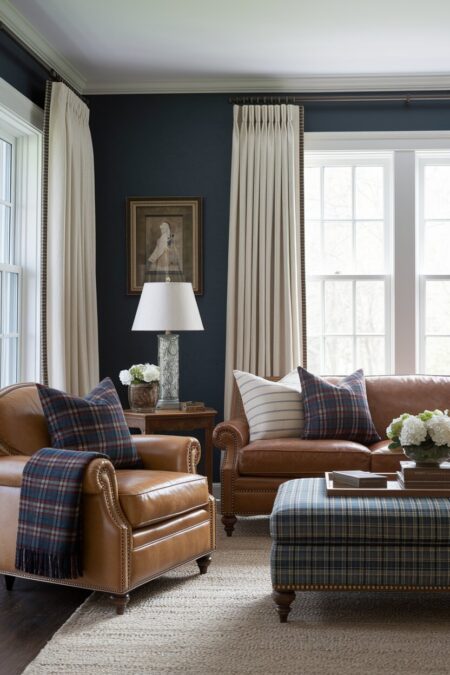
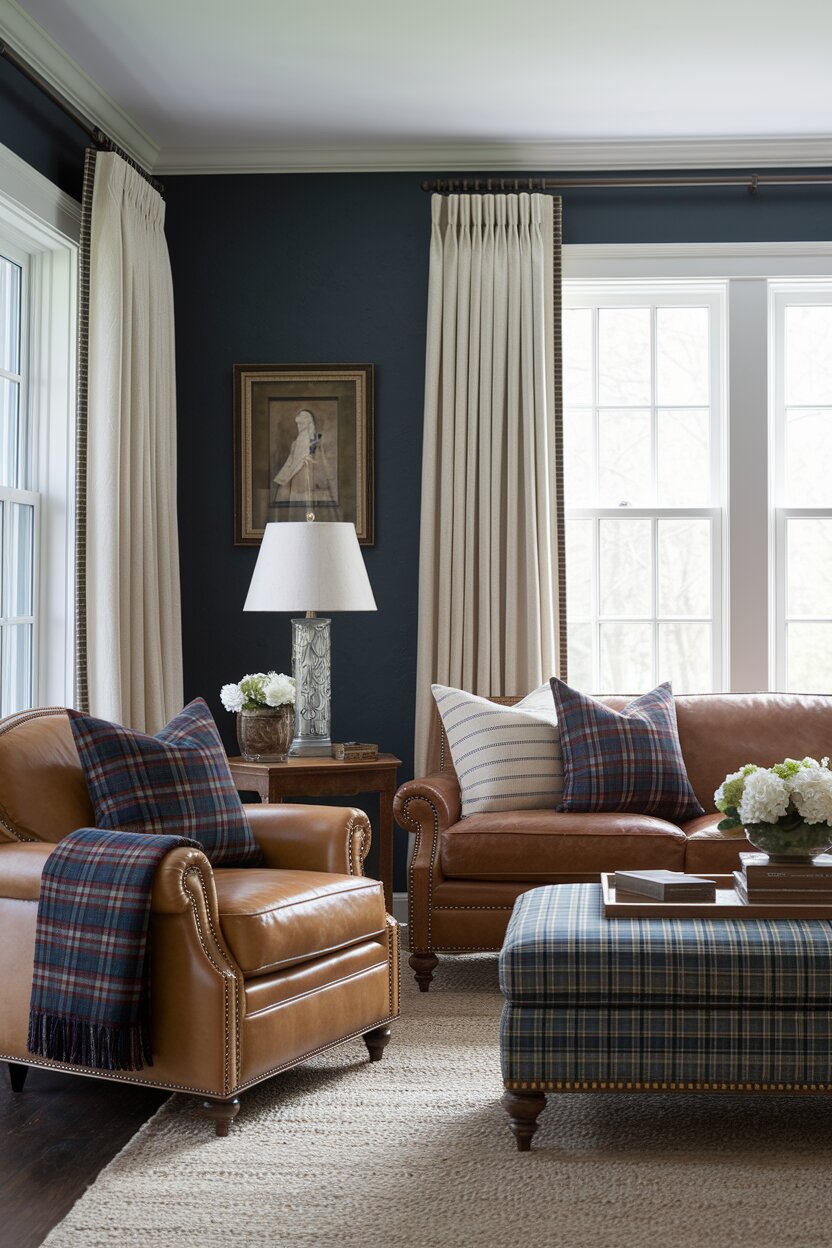
Plaid and tartan patterns have long been tied to traditional and English country-style interiors. A tartan throw, a set of plaid pillows, or an upholstered ottoman in a check pattern all bring in that classic touch. These patterns pair especially well with leather furniture and warm wood tones. Keep the rest of the room’s patterns simple so the plaid doesn’t fight for attention. Even a small dose goes a long way toward a cozy, lived-in feel.
- 12 of 12
A Curated Gallery Wall
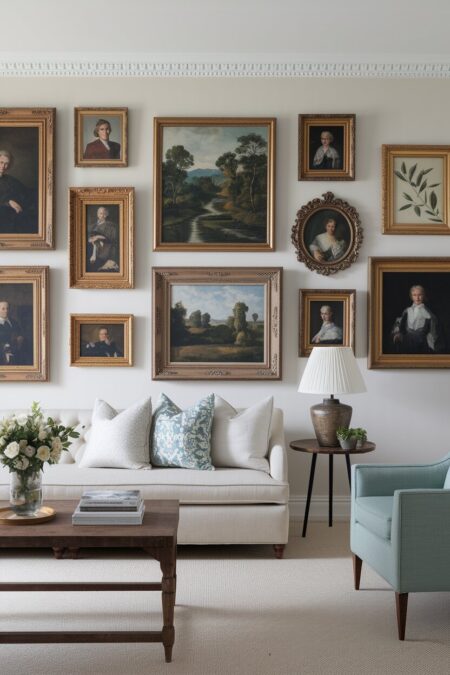
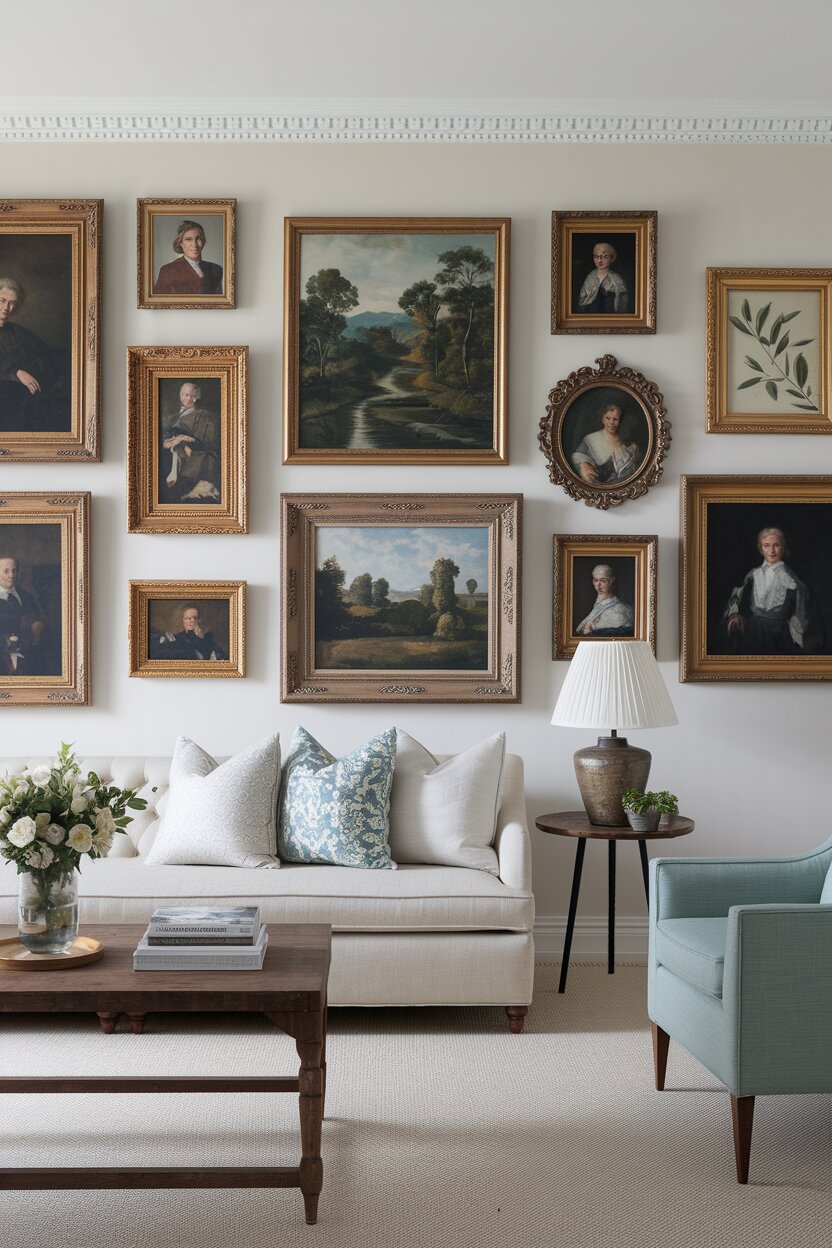
A gallery wall of framed art, family portraits, and mirrors is a traditional way to fill a large stretch of blank wall. Choose frames in similar finishes, like gold or dark wood, so the collection reads as intentional. Vary the size and orientation of each piece, but keep the spacing between them consistent. Landscape paintings, botanical prints, and classic portraiture all fit naturally here. Once it’s hung, a gallery wall often becomes the most personal and memorable feature in the whole room.