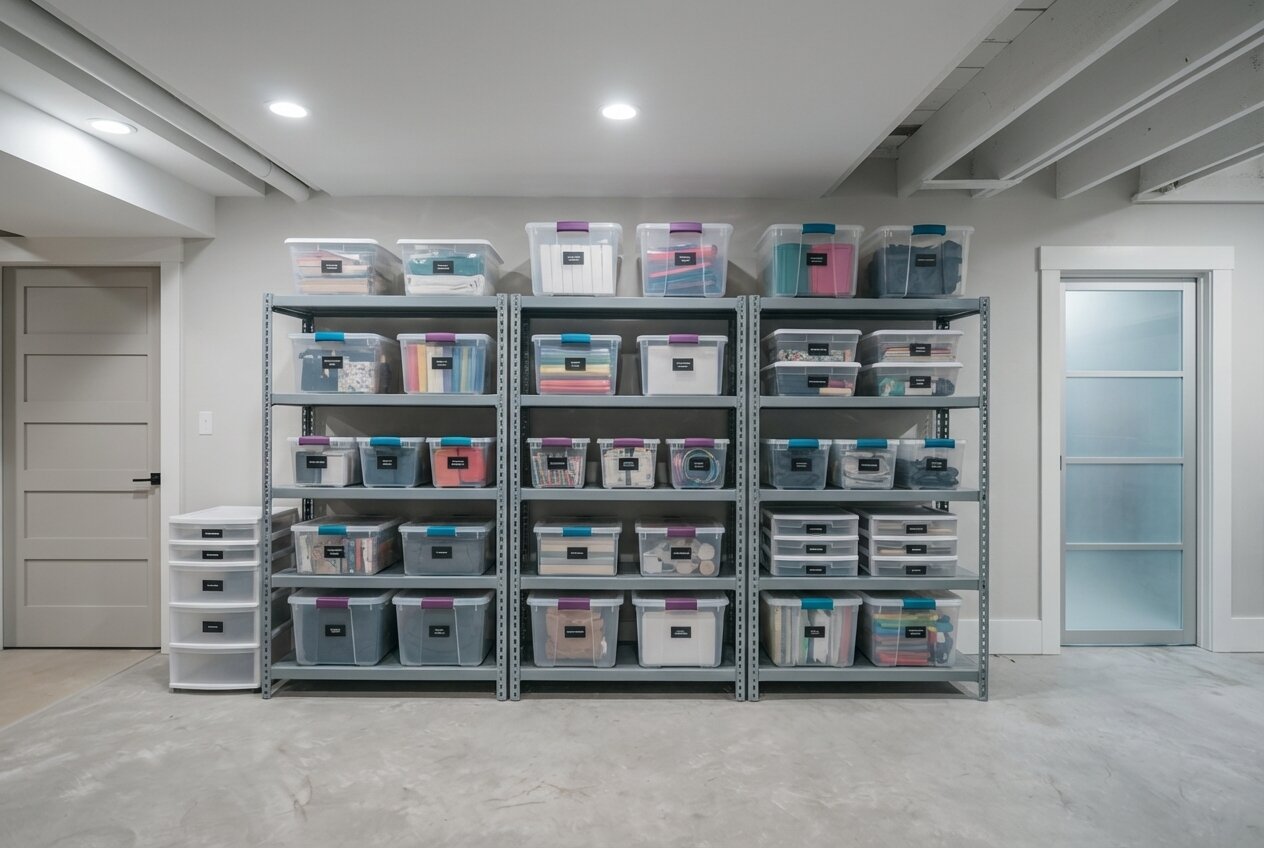
An underutilized basement often serves as a silent catch-all for household overflow, but with strategic planning, it can become the most efficient storage hub in your home. Professional basement organization is not merely about hiding clutter; it is about creating a durable system that protects your investments from environmental factors like humidity while ensuring every item remains accessible. By shifting your mindset from “storage as burial” to “storage as management,” you can reclaim valuable square footage and increase your property’s overall utility.
Effective basement management requires a balance between vertical exploitation and moisture-resistant materials. Because below-grade environments are prone to dampness and temperature fluctuations, the choice of shelving and containers is as critical as the layout itself. The following basement storage ideas offer a blueprint for homeowners looking to implement high-performance organization systems that stand the test of time.
- 01 of 13
Heavy-Duty Industrial Metal Shelving
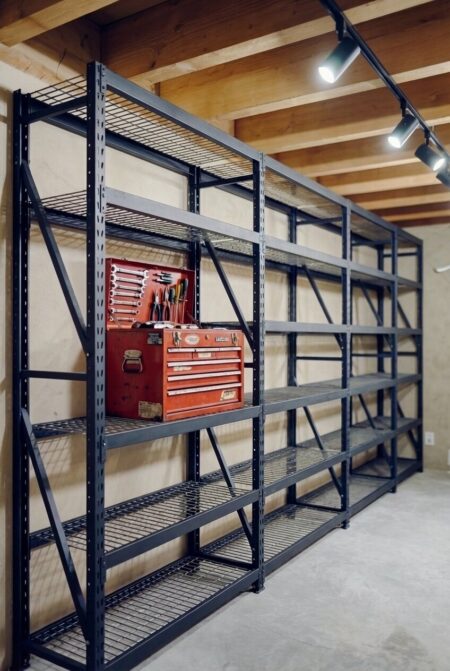
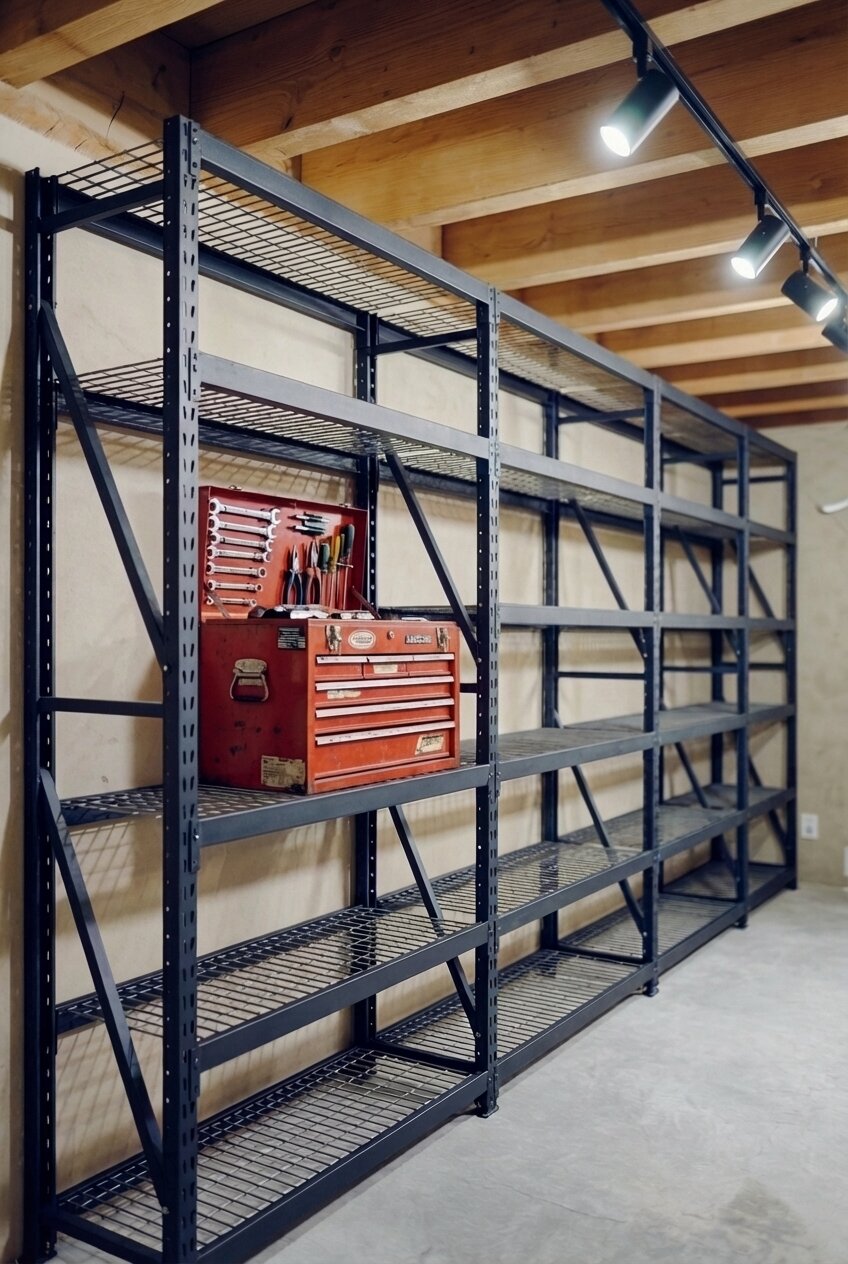
Metal shelving units are the gold standard for basement storage due to their immense weight capacity and resistance to the warping that plagues traditional wood. Unlike organic materials, powder-coated steel does not absorb moisture, making it virtually immune to mold and mildew growth. These units are particularly effective for storing heavy kitchen appliances, bulk pantry supplies, or automotive tools that require a stable, non-sagging surface.
To get the most out of these units, prioritize adjustable wire shelving. The open-wire design allows for maximum airflow around your belongings, which is a vital deterrent against stagnant air and musty odors. Ensure you use a rubber mallet during assembly to lock the shelves firmly into place, and always position the heaviest items on the lowest levels to maintain a low center of gravity and prevent tipping.
- 02 of 13
Weathertight Polypropylene Totes
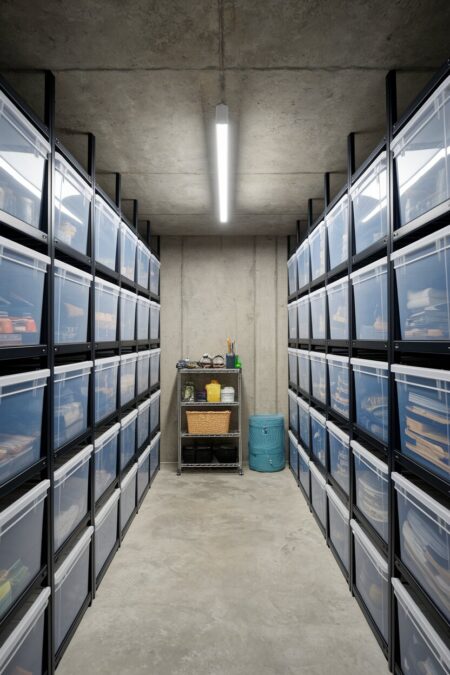
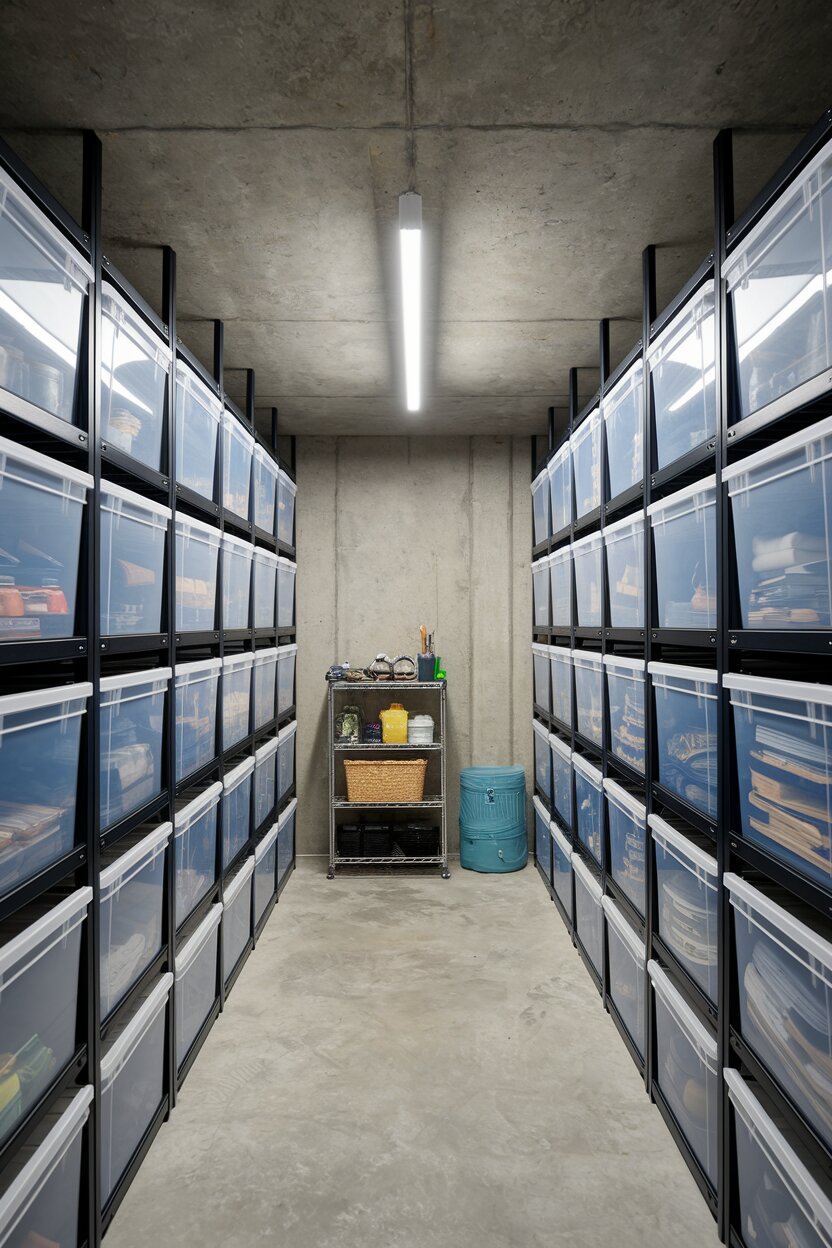
The transition from cardboard boxes to weathertight plastic totes is perhaps the most significant upgrade you can make in a basement environment. Cardboard acts as a sponge for humidity and a beacon for pests, whereas high-quality polypropylene bins with gasket seals create an airtight barrier. These containers protect sensitive items like heirloom textiles, holiday decor, and essential documents from silverfish, spiders, and ambient moisture.
When selecting your totes, opt for clear models rather than opaque ones. Visibility is a key component of long-term organization, as it allows you to identify contents at a glance without unstacking multiple units. For a truly professional look, use a consistent size across your collection to ensure they stack safely and uniformly, and apply large, legible labels to the front-facing side of every bin.
- 03 of 13
Ceiling-Mounted Rack Systems

The ceiling is frequently the most overlooked “acreage” in a basement, yet it offers the perfect solution for items used only once or twice a year. Overhead racks keep bulky belongings like kayaks, ladders, and off-season patio cushions entirely off the floor. This not only clears up walking paths but also provides the ultimate protection against potential floor-level water intrusion or pipe leaks.
Before installation, verify the load-bearing capacity of your ceiling joists and ensure the rack system is bolted directly into the structural timber. It is best to reserve these high-altitude spots for lightweight but voluminous items, as retrieving heavy objects from overhead can be physically taxing. Using a sturdy, multi-position ladder is essential for safe access to these elevated zones.
- 04 of 13
Custom Under-Stair Cubbies
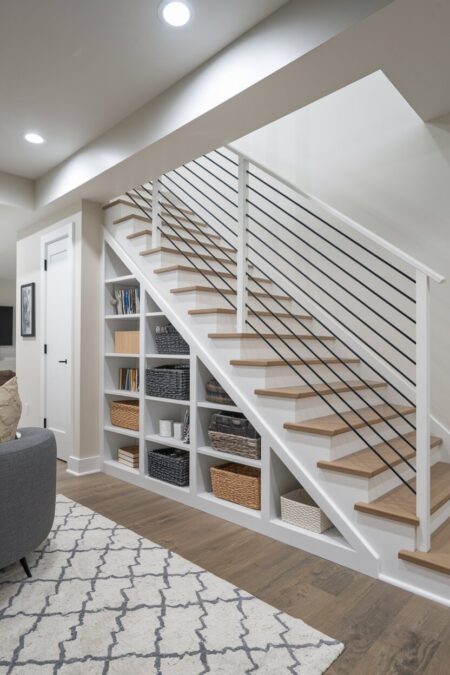
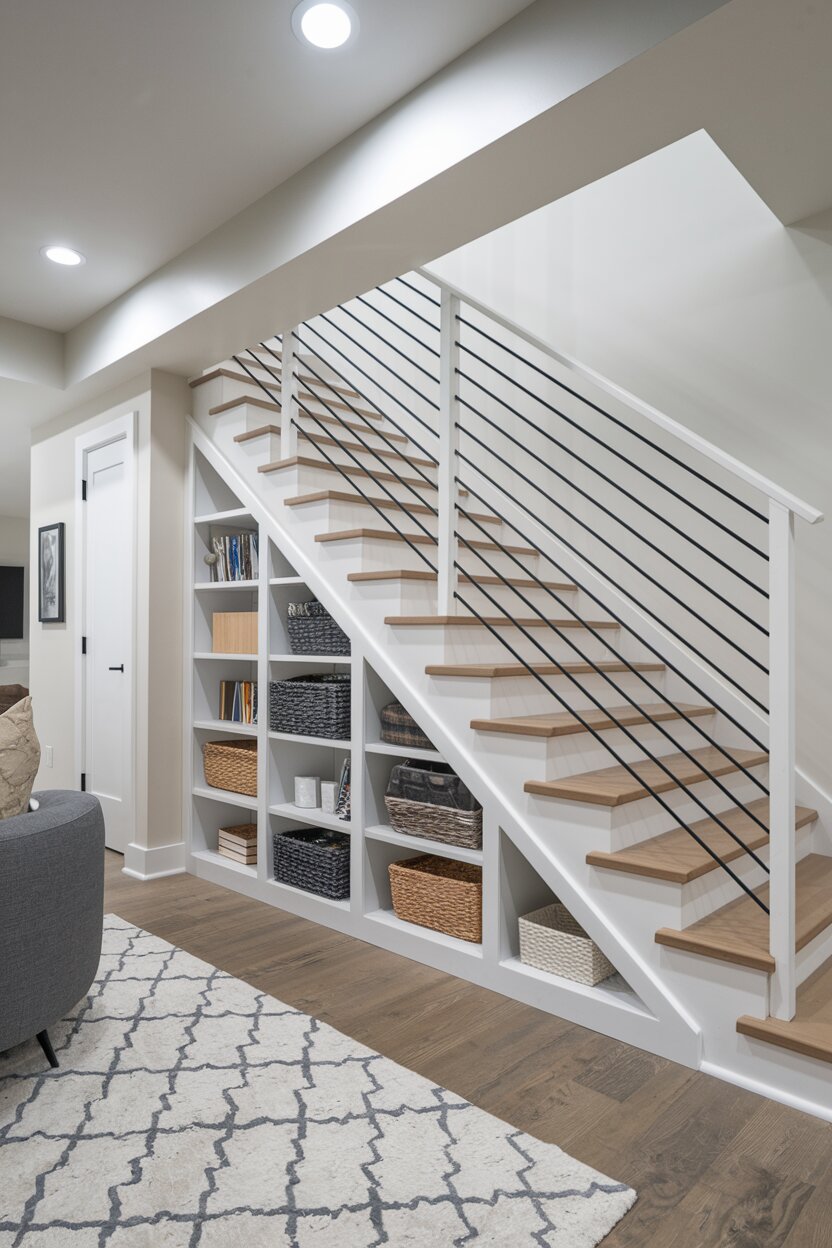
The triangular void beneath the basement staircase represents a prime opportunity for bespoke storage. Rather than letting this area become a dark corner for cobwebs, you can install custom-fitted shelving or pull-out drawers that follow the slope of the stairs. This space is ideal for a dedicated gift-wrapping station, a small wine collection, or a specialized “mudroom” area for seasonal footwear.
If you are dealing with an unfinished staircase, consider building open cubbies that can hold specific bins. For finished basements, integrated cabinetry with sleek doors can hide the clutter entirely, maintaining a polished aesthetic. Lighting this area with battery-operated LED motion sensors will ensure you can always find what you need without fumbling in the dark.
- 05 of 13
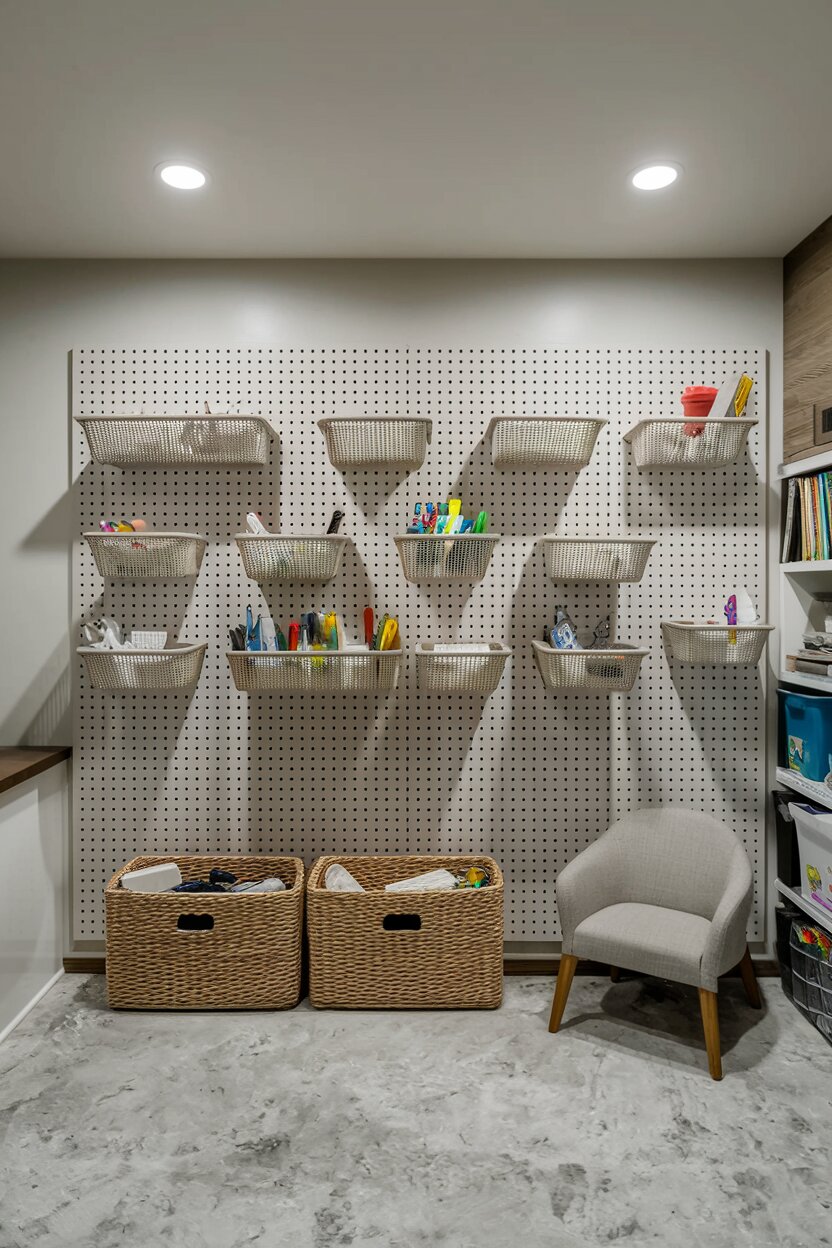
Wall-Mounted Pegboard Arrays
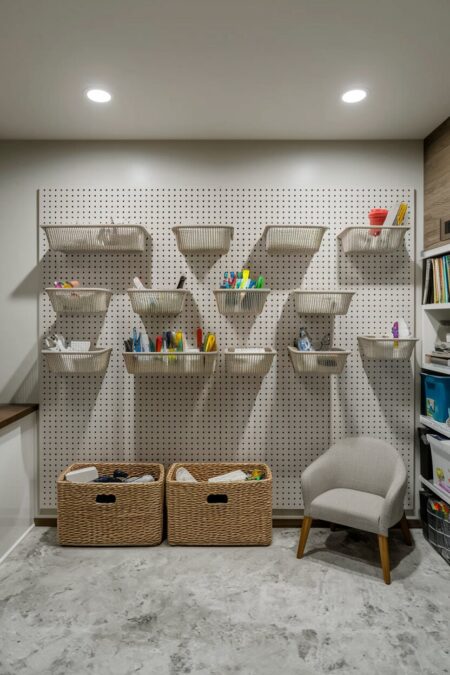
Pegboards are a versatile and cost-effective way to transition small items from cluttered drawers to organized wall displays. By utilizing vertical wall space, you can keep hand tools, craft supplies, and gardening equipment within arm’s reach. The modular nature of pegboard accessories (hooks, baskets, and specialized brackets) allows the system to evolve as your hobbies and storage needs change.
For a basement installation, consider using metal pegboards or plastic variants rather than traditional tempered wood, which can soften in high-humidity areas. Organize your tools by frequency of use, placing daily essentials at eye level and specialty items higher up. Outlining your tools with a permanent marker on the board is a classic but effective way to ensure every item is returned to its rightful place.
- 06 of 13
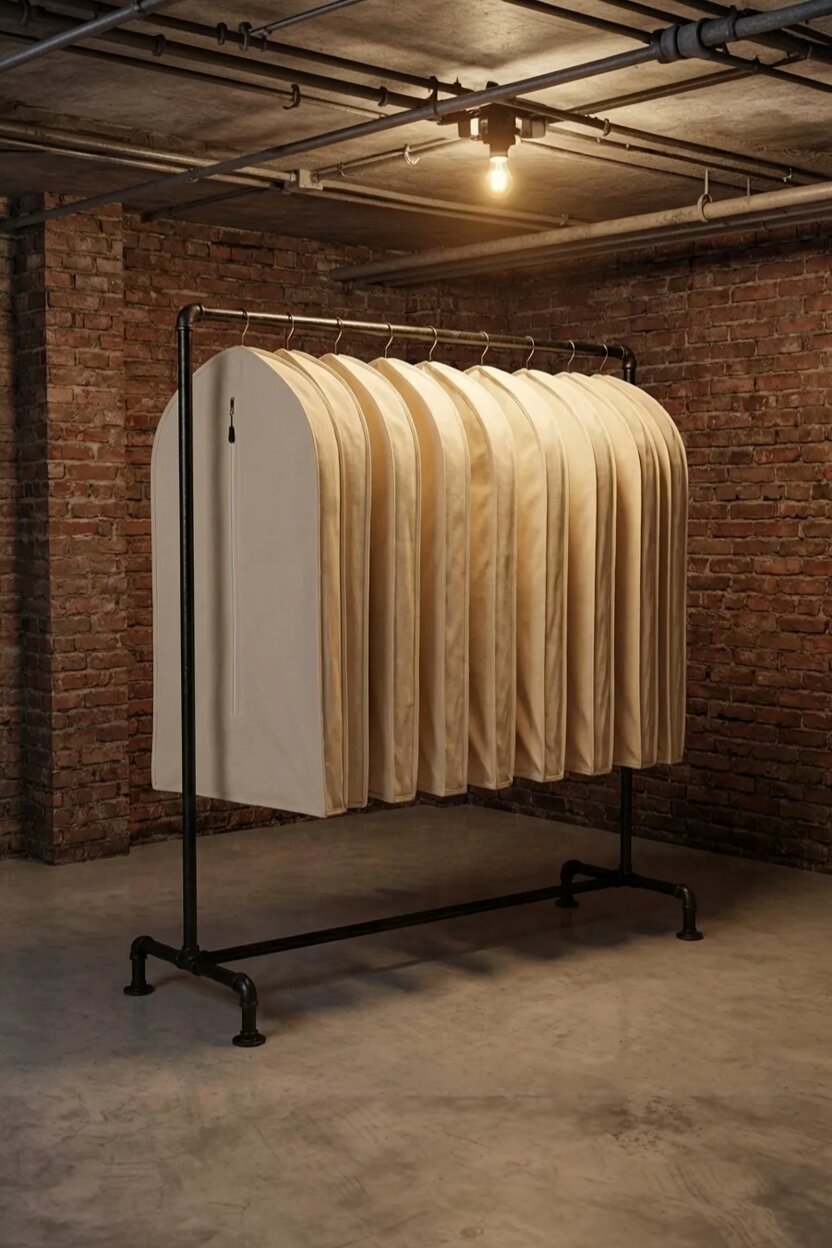
Dedicated Seasonal Clothing Racks
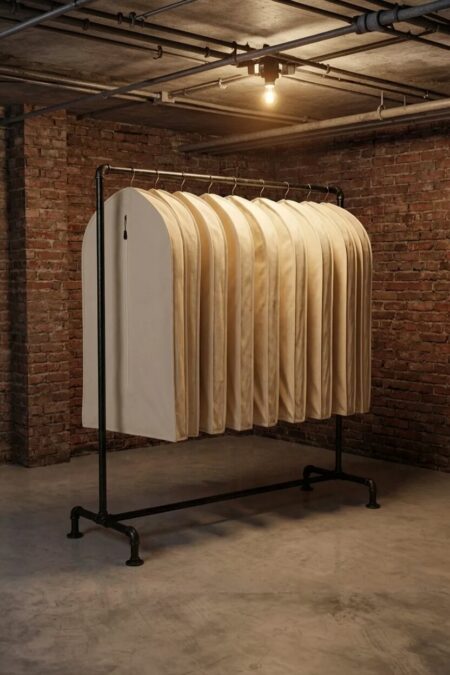
Basements often serve as the “off-season” closet for heavy winter parkas, ski gear, and formal wear. Instead of stuffing these into cramped bins where they can become wrinkled and stale, a freestanding industrial garment rack provides a breathable alternative. Elevating clothes on a rack ensures they stay off the concrete floor, protecting them from dust and potential dampness.
To maintain the integrity of your fabrics, use breathable canvas garment covers rather than plastic bags, which can trap moisture and lead to yellowing. Incorporating cedar rings or lavender sachets on the hangers will provide a natural defense against moths and keep your clothes smelling fresh. Placing the rack in a low-traffic corner ensures your “second closet” stays organized without obstructing movement.
- 07 of 13
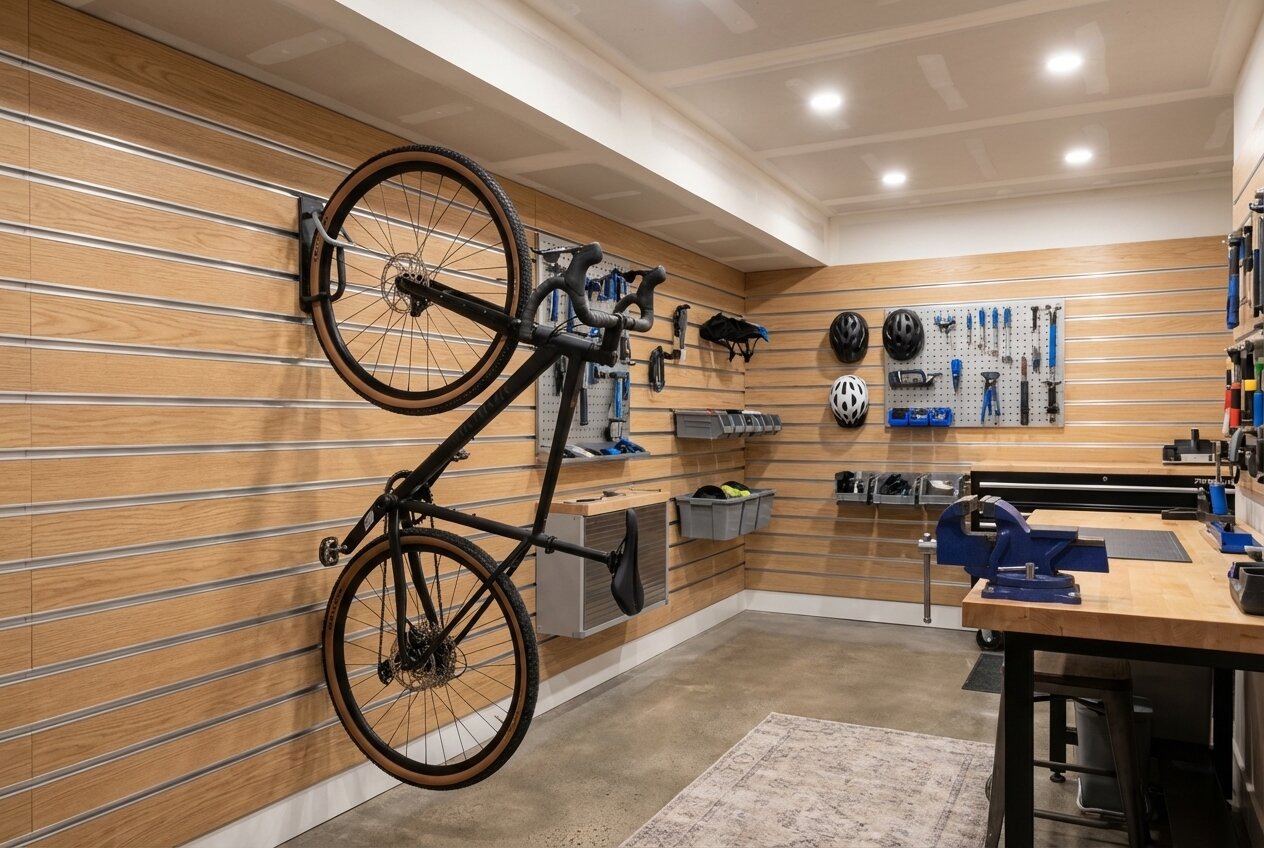
Slotted Wall (Slatwall) Systems
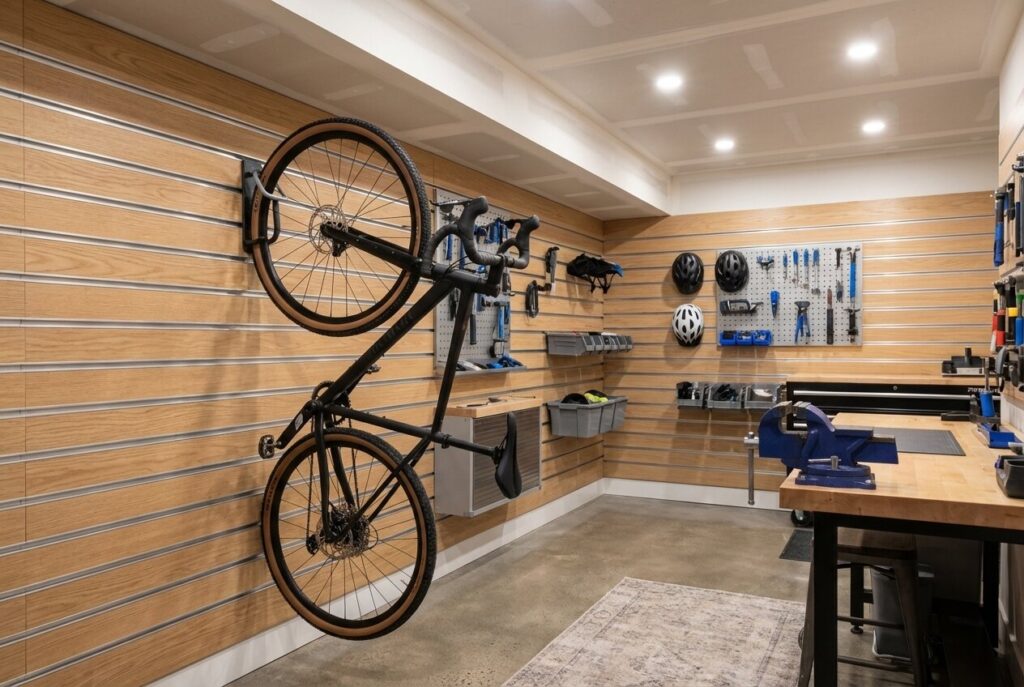
Slatwall panels offer a more heavy-duty and aesthetically pleasing alternative to standard pegboards. These grooved panels can support significantly more weight, making them perfect for hanging bicycles, heavy power tools, and even large storage bins. The seamless look of slatwall can transform a rugged basement wall into a professional-grade workshop or a streamlined sports equipment zone.
When planning your slatwall layout, start by categorizing your gear into “zones”, such as a sports zone, a tool zone, and a gardening zone. Use specialized deep-cradle hooks for bikes and wide baskets for loose items like sports balls or cleaning rags. Because slatwall is easy to wipe down, it remains one of the lowest-maintenance storage solutions for active households.
- 08 of 13
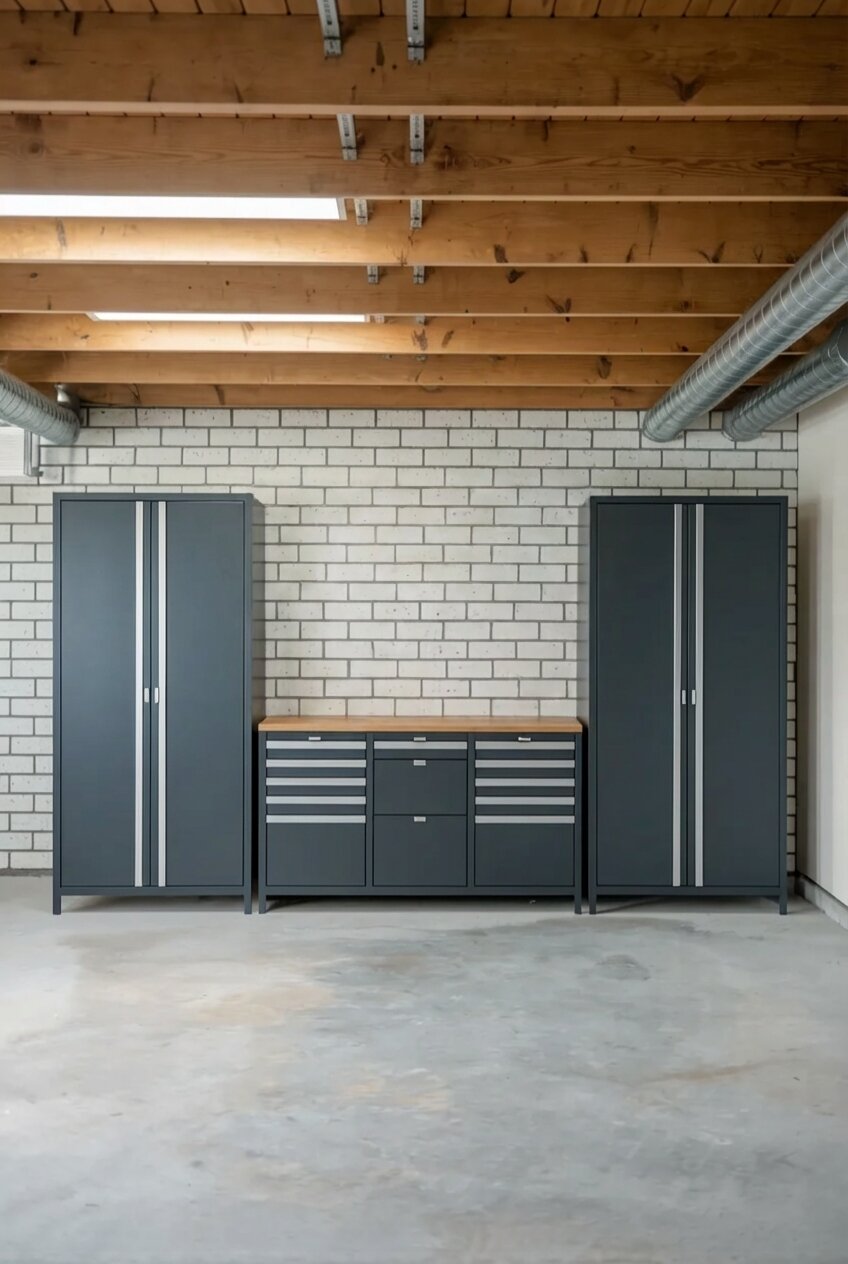
Freestanding Resin Cabinets
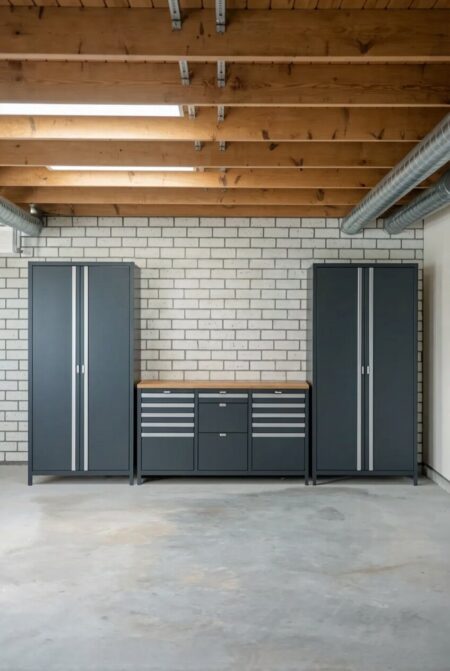
Resin cabinets provide a clean, enclosed look for those who prefer to keep their storage out of sight. These units are lightweight, easy to assemble, and, most importantly, entirely waterproof. They are excellent for storing cleaning supplies, paint cans, and household chemicals that you want to keep away from children and pets.
To maximize the efficiency of a resin cabinet, use interior shelf dividers to prevent small items from getting lost in the back. Since these cabinets are made of plastic, they are easy to hose down if a spill occurs inside. If your basement is prone to floor dampness, look for models with adjustable feet that allow you to raise the cabinet base slightly off the concrete.
- 09 of 13
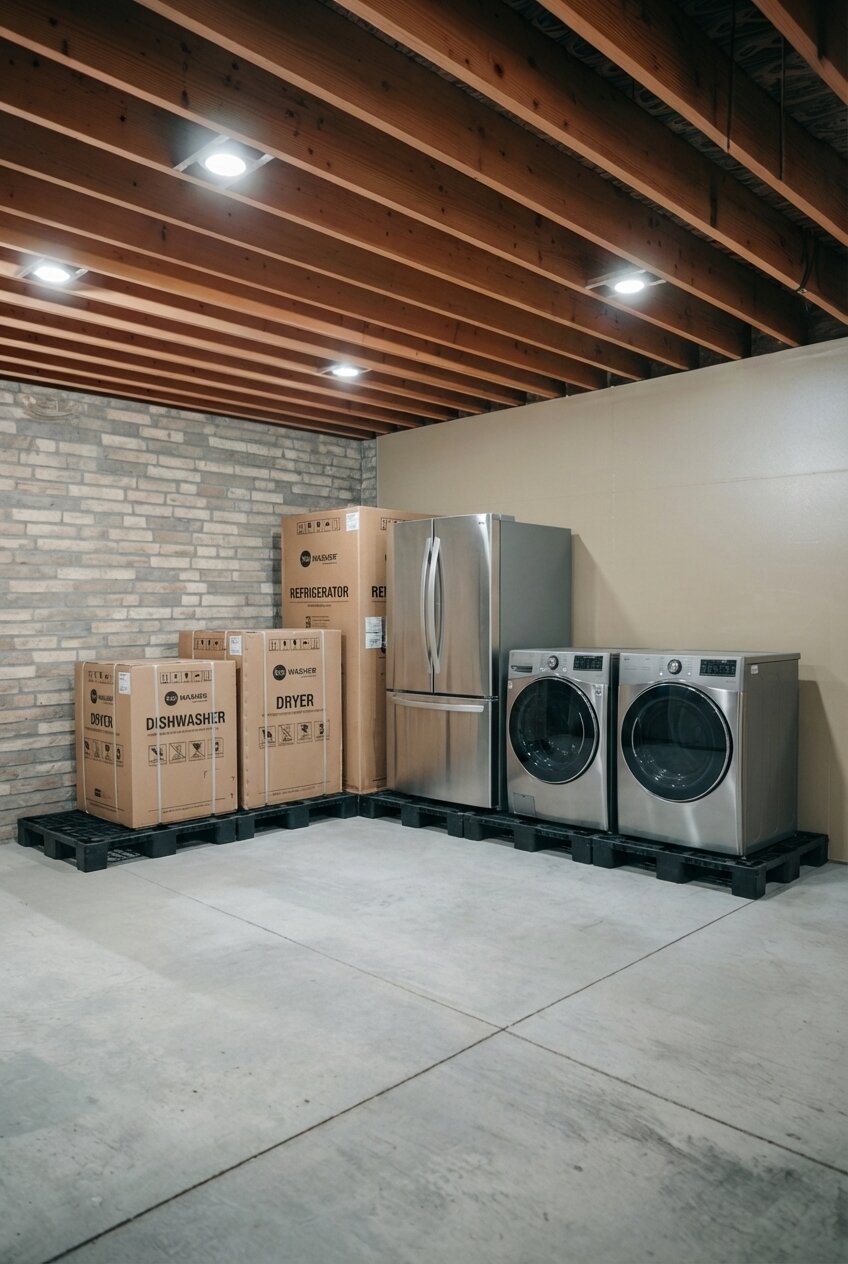
Pallet-Style Floor Risers
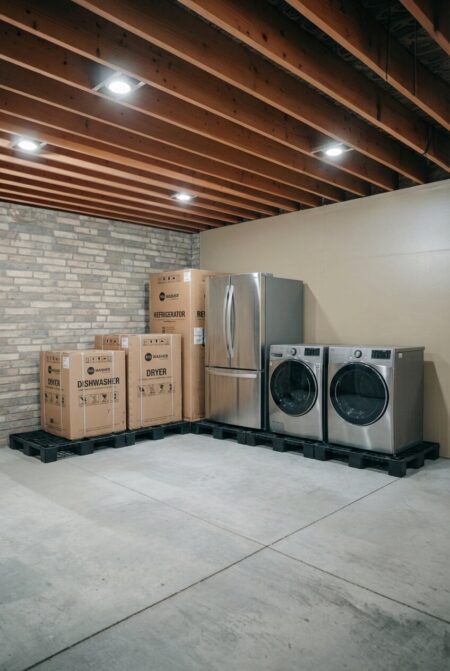
If you must store large, heavy items directly on the floor, such as appliances, furniture, or bulk paper products, using floor risers is a mandatory safety measure. Elevating items even two or three inches can save them from total loss during a minor basement flood or a simple condensation buildup. Plastic pallets or specialized equipment risers are far superior to wooden pallets, which can rot or harbor pests.
Arrange your risers in a grid that allows for easy cleaning underneath with a shop vac. This setup is particularly useful for water heaters or water softeners, where a small leak is always a possibility. By creating this “buffer zone,” you ensure that a minor plumbing issue doesn’t turn into a catastrophic loss of property.
- 10 of 13
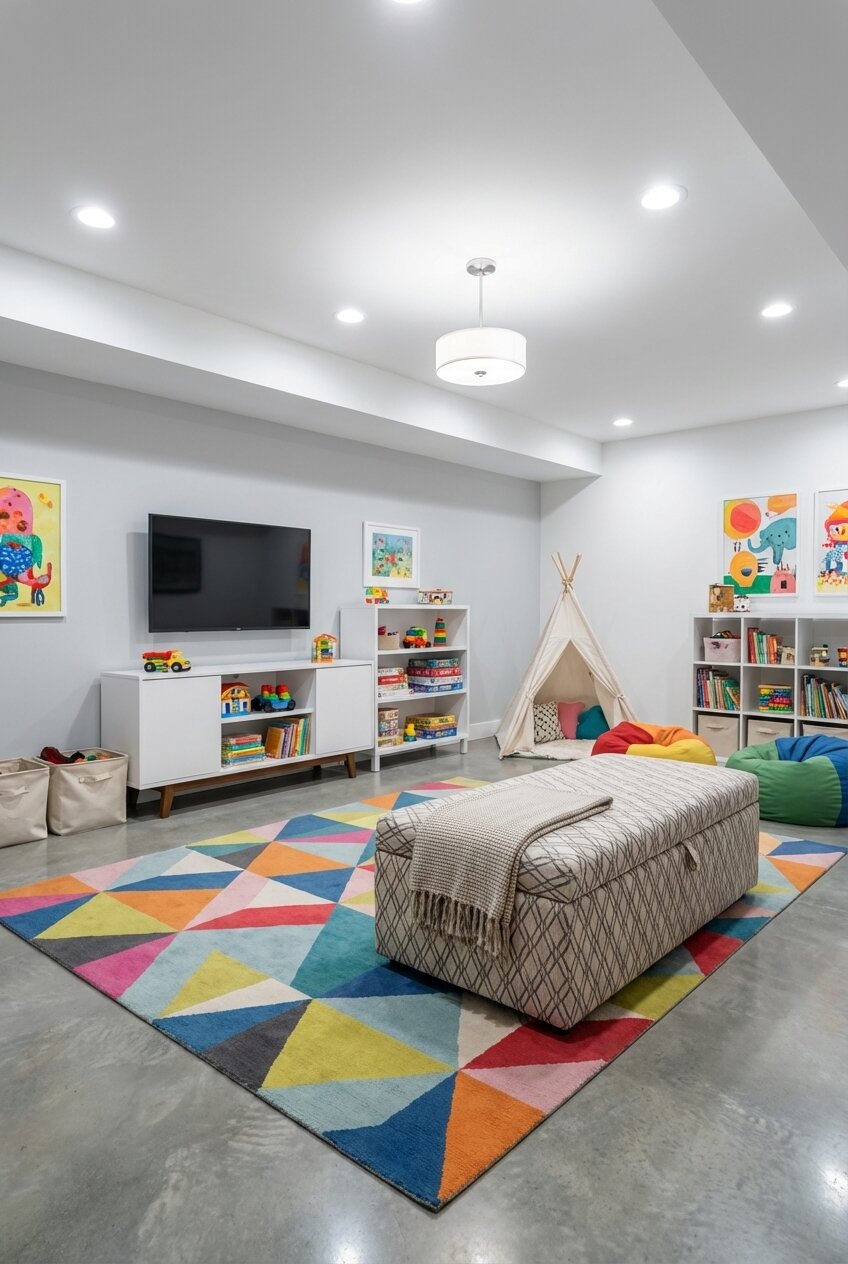
Hidden Storage Ottomans and Benches
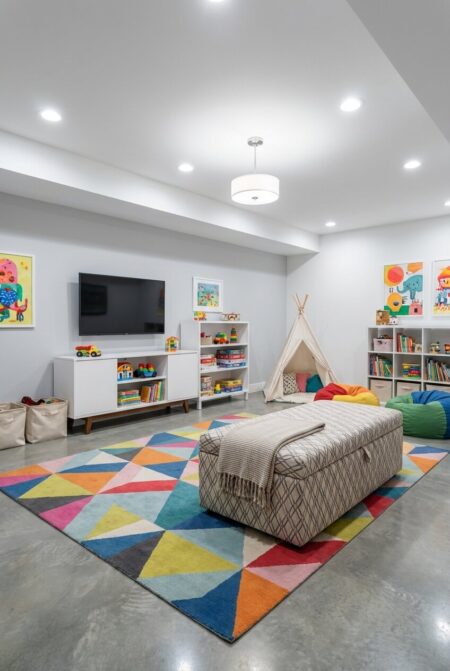
In finished basements used for media or playrooms, multi-functional furniture is the key to maintaining order. Storage ottomans and benches provide comfortable seating while concealing bulky items like extra blankets, board games, or gaming controllers. This “invisible” storage helps the room feel like a living space rather than a warehouse.
When selecting furniture for a basement, look for pieces with moisture-resistant upholstery like treated polyester or faux leather. These materials are easier to clean and less likely to hold onto “basement smells” than natural fibers like cotton or wool. Using internal organizers inside the ottoman can prevent it from becoming a “junk drawer” for the floor.
- 11 of 13
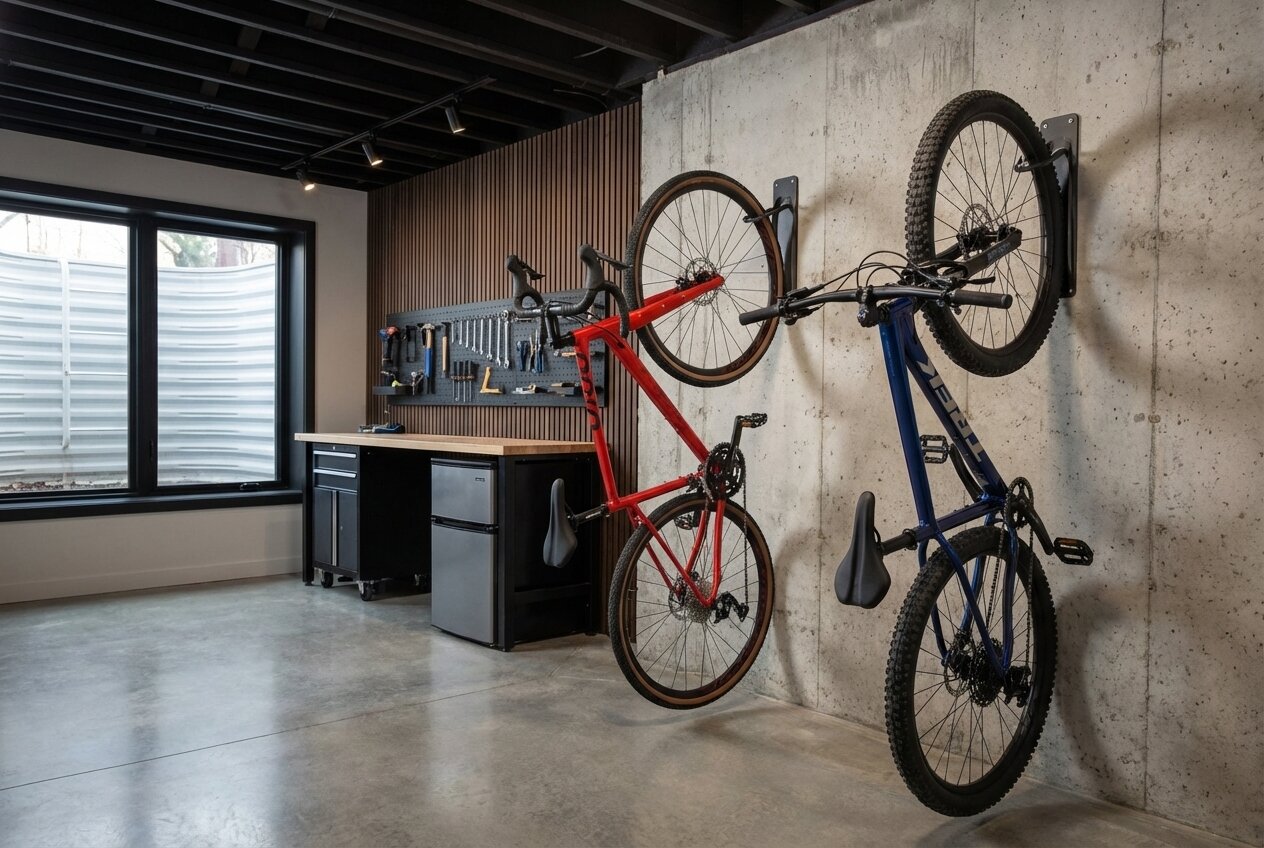
Vertical Bike Racks and Hoists
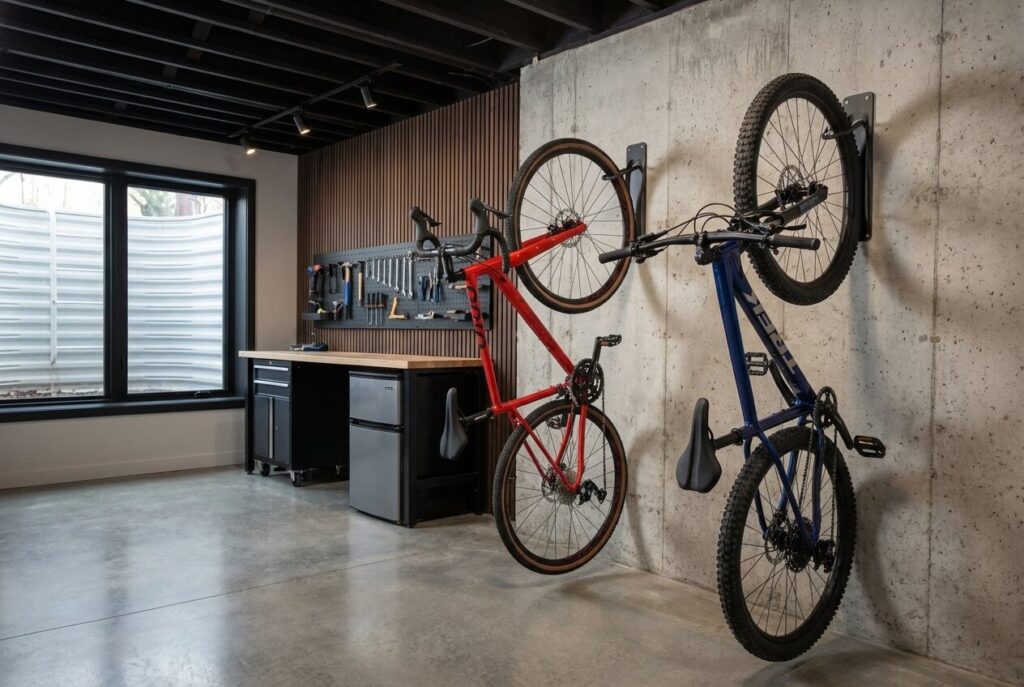
Bicycles are notorious floor-space hogs in any basement. Vertical wall mounts or pulley-based ceiling hoists can reclaim that space while protecting the bike frames and tires from damage. Hanging a bike by its front wheel is a space-efficient method that allows you to line up multiple bicycles along a single wall like books on a shelf.
If you use your bike frequently, a simple wall-mounted hook at shoulder height is the most practical choice. For long-term winter storage, a ceiling hoist is ideal, as it gets the bike completely out of the way. Always test the tension of your mounting hardware periodically, as the vibration from nearby laundry machines or HVAC systems can occasionally loosen screws over time.
- 12 of 13
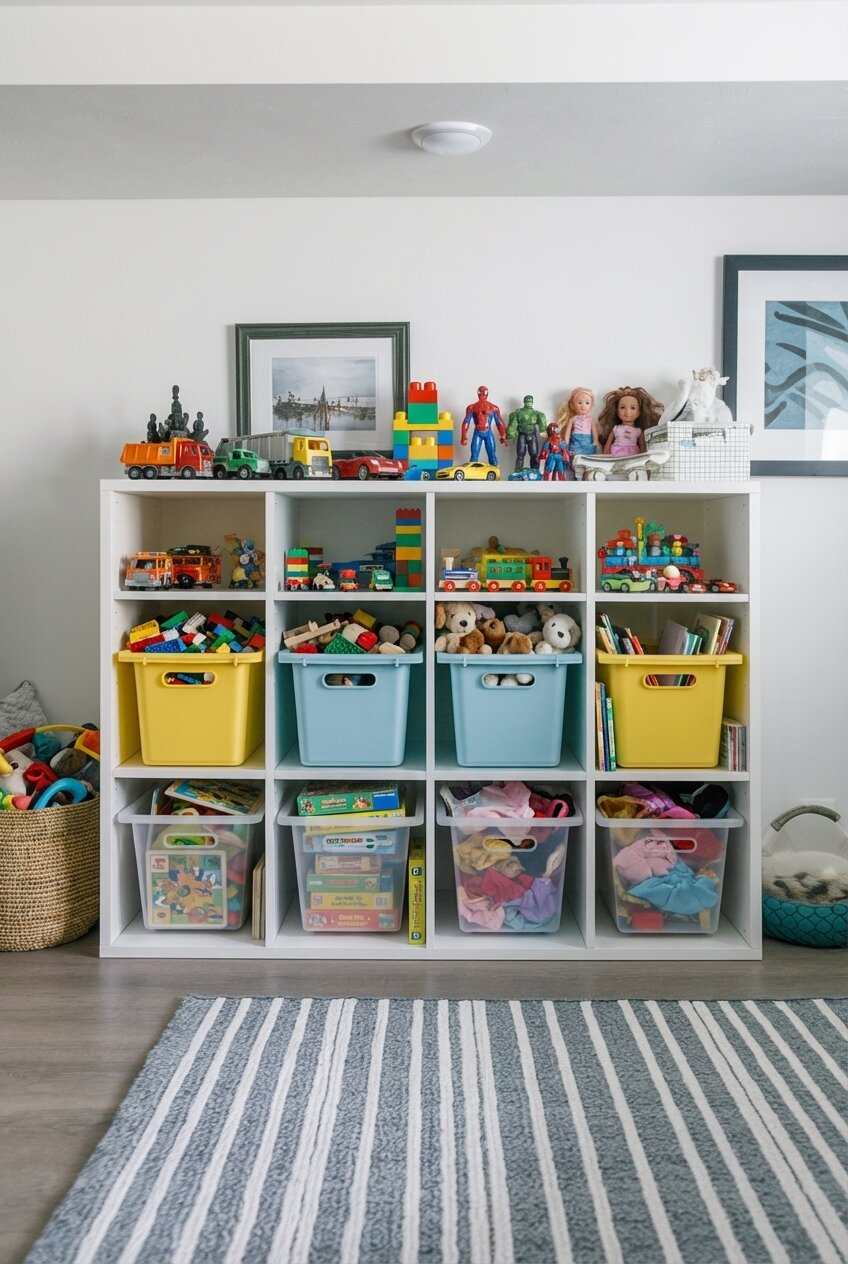
Modular Cubby Systems for Toys
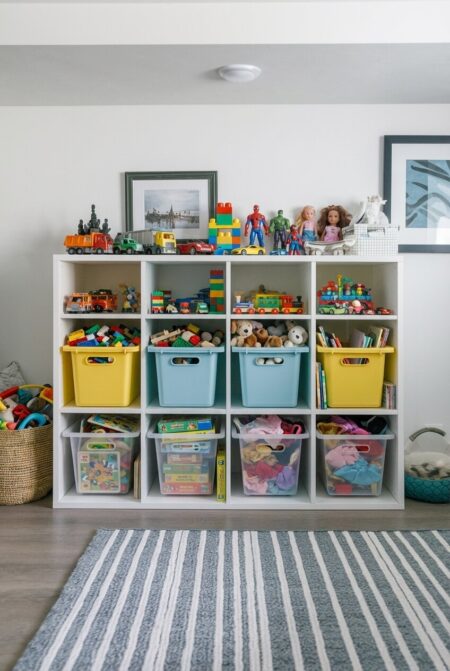
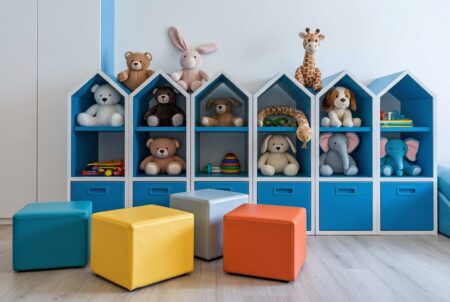
If your basement doubles as a playroom, a modular cubby system is essential for managing the inevitable influx of toys. These systems allow you to categorize items into small, manageable groups, making it easier for children to participate in the cleanup process. The uniform look of cubbies brings a sense of visual calm to an otherwise chaotic environment.
Use fabric or plastic bins within the cubbies to hide the visual clutter of mismatched toys. Labeling each bin with both a word and a picture is an excellent way to help younger children understand where things belong. As the children grow, these cubbies can be easily repurposed for holding books, hobby supplies, or media collections.
- 13 of 13
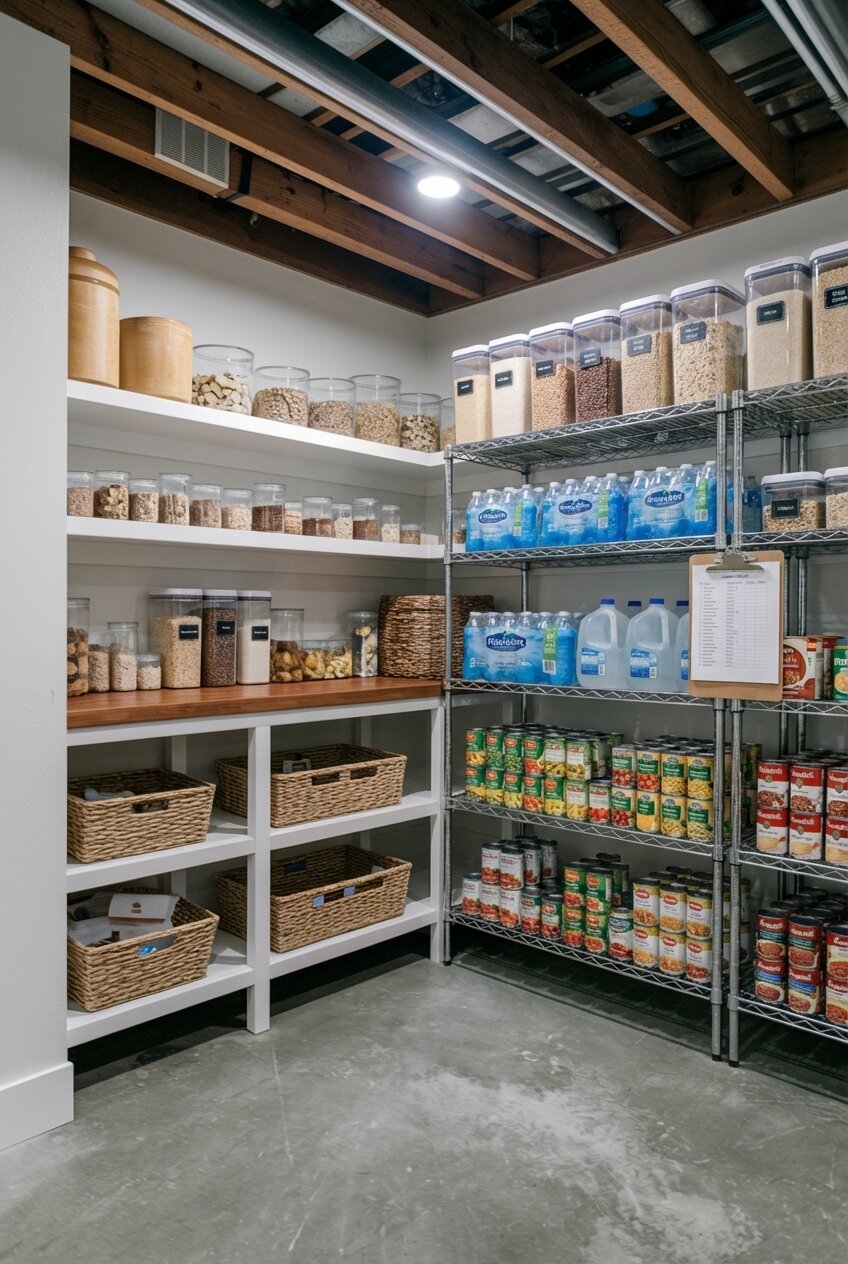
Controlled Pantry Overflow
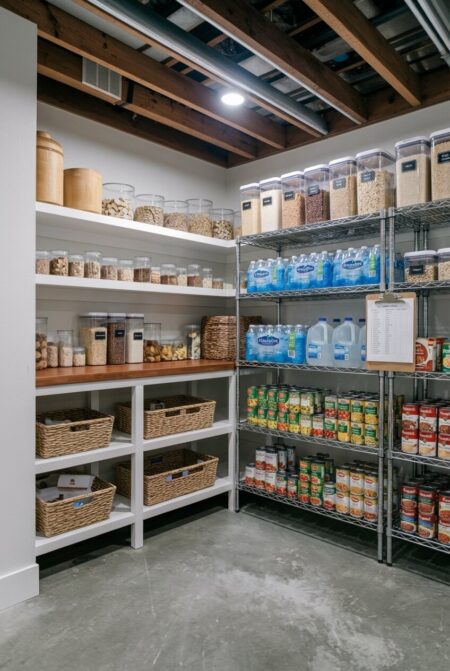
The cool, dark environment of a basement is often ideal for a secondary pantry, allowing you to buy in bulk and reduce trips to the grocery store. Using dedicated wire shelving for canned goods, dry grains, and bottled water can free up significant space in your primary kitchen. This “prepper” style storage ensures your family is always well-stocked for emergencies.
To keep your basement pantry safe, use high-quality airtight glass or plastic containers for all dry goods to prevent pests from being attracted to the area. Implement a “first-in, first-out” (FIFO) rotation system by placing newer items at the back of the shelf. Keeping a simple clipboard inventory attached to the shelving unit will help you track expiration dates and know exactly when it is time to restock.

Implementing these basement storage ideas requires an initial investment of time and resources, but the payoff is a home that feels significantly larger and more organized. By prioritizing moisture protection and vertical space, you can transform your basement into a high-functioning asset that adds long-term value to your lifestyle.