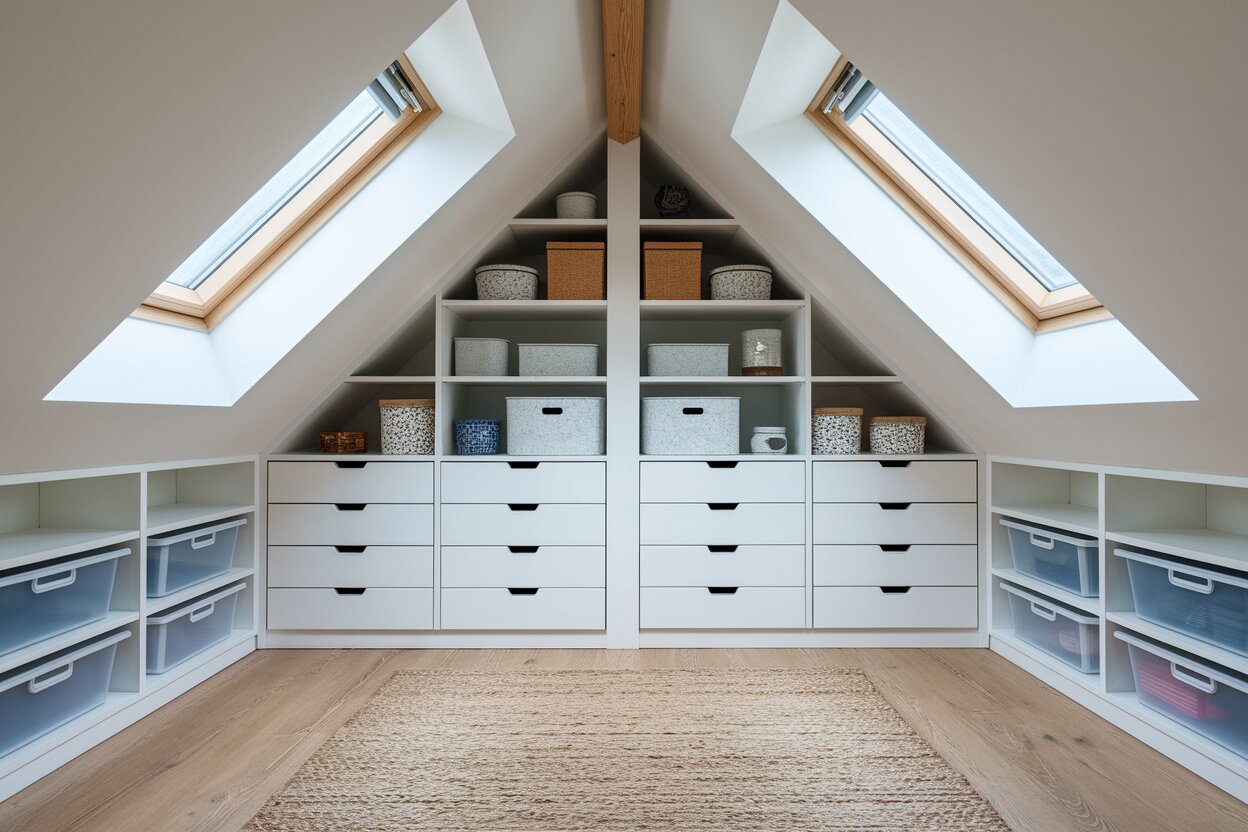
The attic is often the most underutilized area in a home, frequently dismissed as a dark, dusty abyss suitable only for insulation and forgotten heirlooms. However, with strategic planning and the right organizational systems, this unfinished space can transform into a premium storage facility for seasonal gear, holiday decorations, and archival items. By focusing on structural safety and climate resilience, homeowners can unlock hundreds of square feet of valuable real estate that relieves pressure on closets and garages.
Transforming an attic requires navigating unique challenges such as sloped ceilings, exposed floor joists, and fluctuating temperatures. The key to successful attic organization lies in working with the architecture rather than against it, utilizing the odd angles and vertical height that standard rooms lack. The following guide presents professional, high-impact attic storage solutions designed to protect your belongings while ensuring they remain accessible year-round.
- 01 of 10
Construct Inter-Truss Floating Shelves

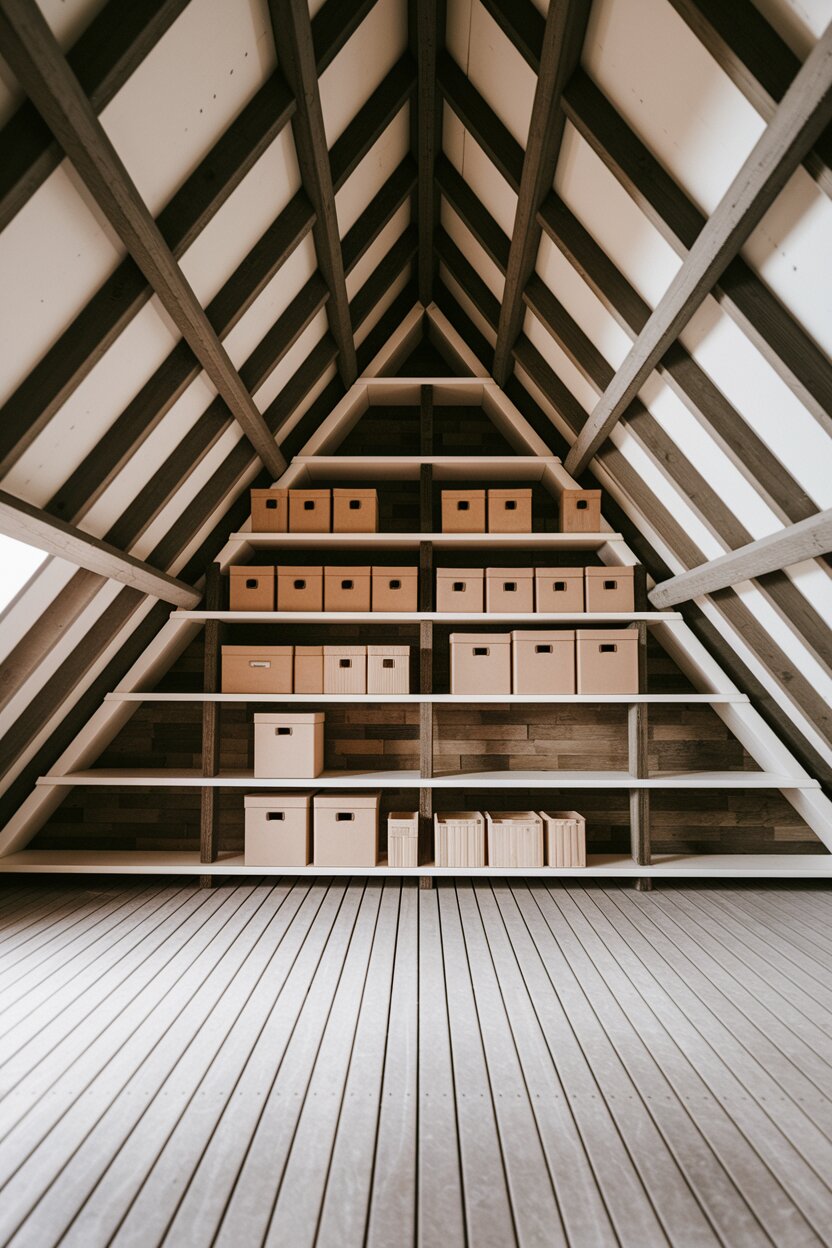
One of the most efficient ways to utilize vertical space in an unfinished attic is to build shelving directly between the wooden trusses or rafters. These structural beams often provide natural, evenly spaced framing that is perfect for securing shallow shelves without requiring bulky furniture. By mounting plywood or finished boards horizontally between the uprights, you create a “floating” storage system that keeps items off the floor and utilizes the dead space along the roofline.
To implement this safely, use heavy-duty L-brackets or cleats screwed into the side of the trusses to support the shelf boards. Ensure the depth of the shelf does not protrude too far into the walkway, which could create a hazard in a low-light environment. This method is particularly effective for storing smaller, rigid items like books, shoeboxes, or small tool kits that might otherwise get lost in large bins. It maximizes the structural footprint of the roof without adding significant weight to the floor joists.
- 02 of 10
Install Knee Wall Built-In Cubbies
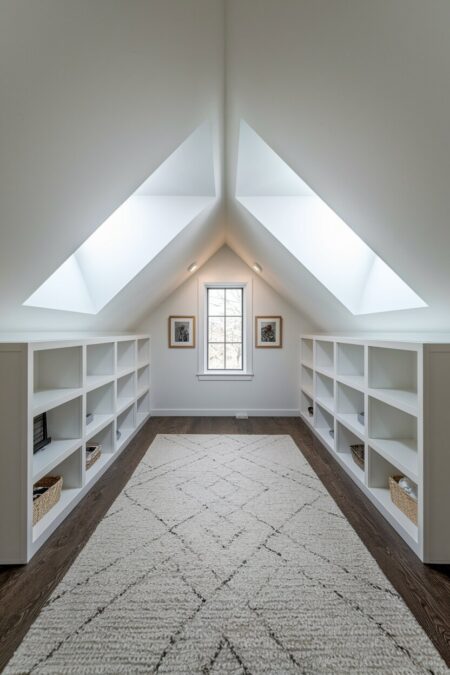
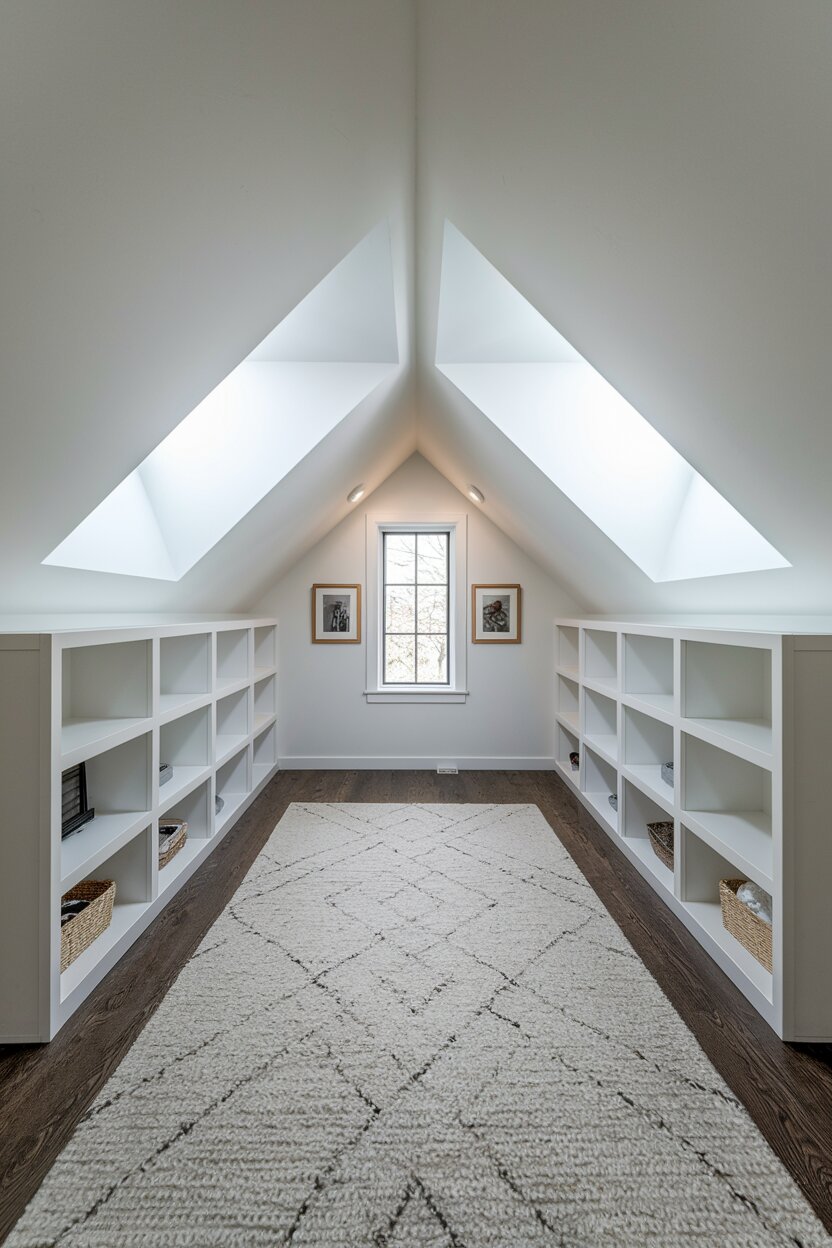
The knee wall is the short vertical wall where the roof meets the floor, often creating a triangular space behind it that is difficult to access. Instead of letting this area go to waste, you can frame out recessed cubbies or cabinets directly into these short walls. This approach turns the most awkward part of the attic into a polished, permanent storage solution perfect for long-term archiving.
For a professional finish, cut openings into the non-structural drywall of the knee wall and insert pre-assembled cabinet boxes or build simple wooden frames tailored to the dimensions of your storage bins. If your attic is unfinished, you can simply build open shelving units that slide into the eaves. This technique effectively pushes storage back into the “dead zone” of the eaves, freeing up the central floor area for walking and moving larger items.
- 03 of 10
Utilize Rolling Bins for Deep Eaves
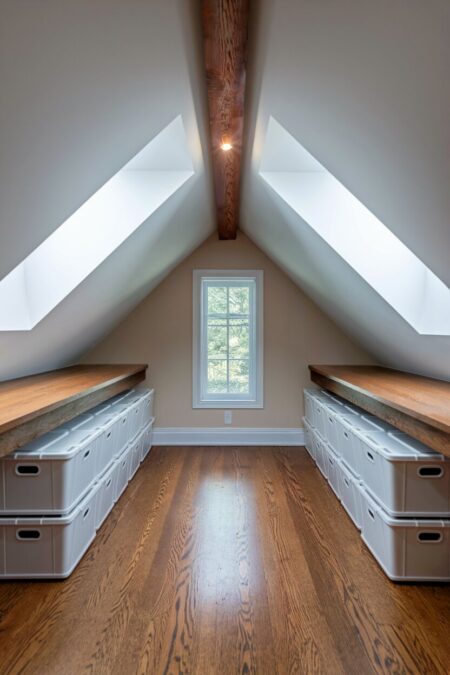
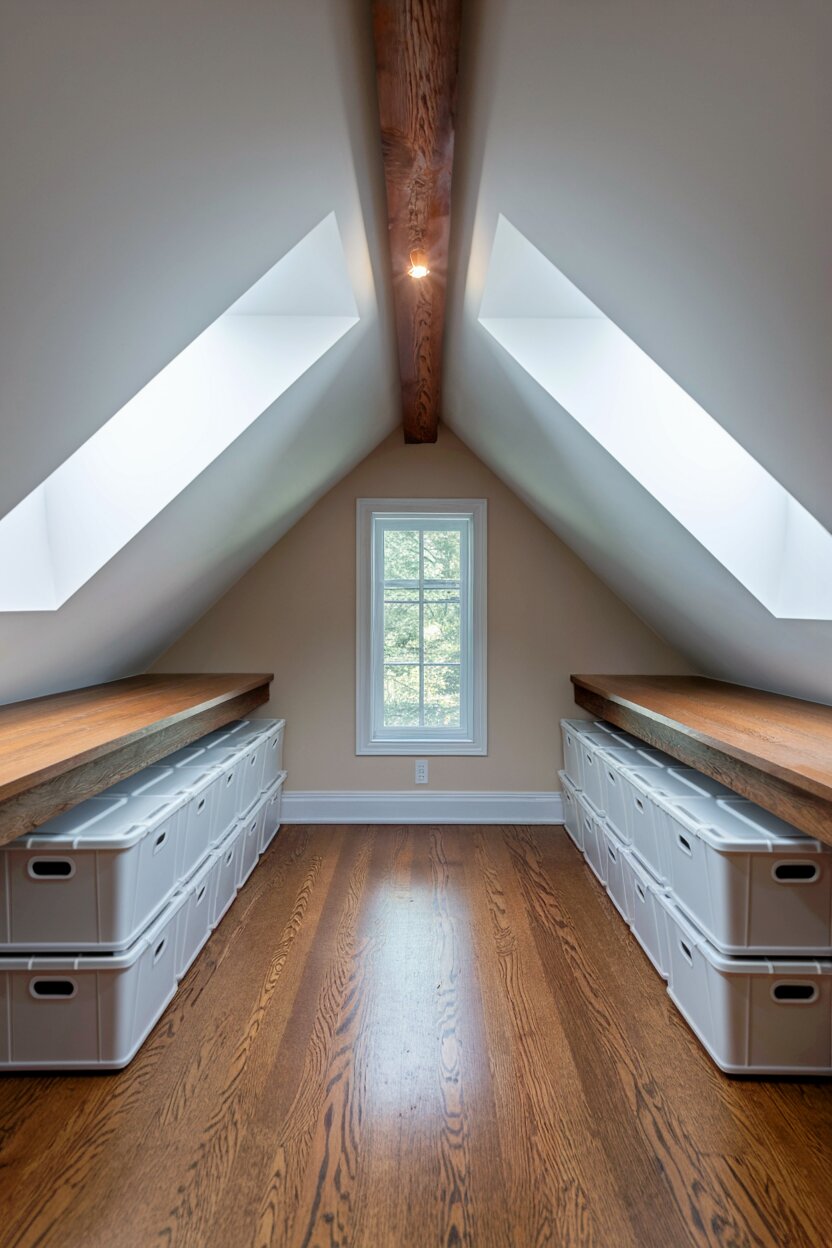
If building permanent shelves isn’t feasible, the deep, low-clearance spaces under the eaves can still be maximized using rolling storage bins. The sharp angle of the roof often makes it impossible to reach the back of these corners without crawling. Placing low-profile bins on casters or buying specialized under-bed storage containers with wheels allows you to utilize the full depth of the eaves while maintaining easy retrieval.
When selecting bins for this purpose, prioritize durable plastic models with sturdy wheels that can roll over plywood decking or uneven floorboards. You can attach a pull-cord or handle to the front of each bin, allowing you to retrieve items stored three or four feet back into the eaves without having to bend comfortably. This system is ideal for rotating seasonal items, such as holiday lights or camping gear, which can be tucked away deep in the corner until needed.
- 04 of 10
Implement a Transparent, Airtight Bin System
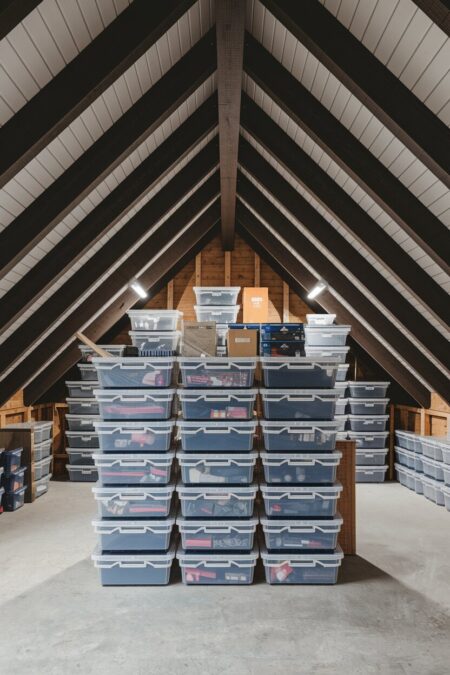
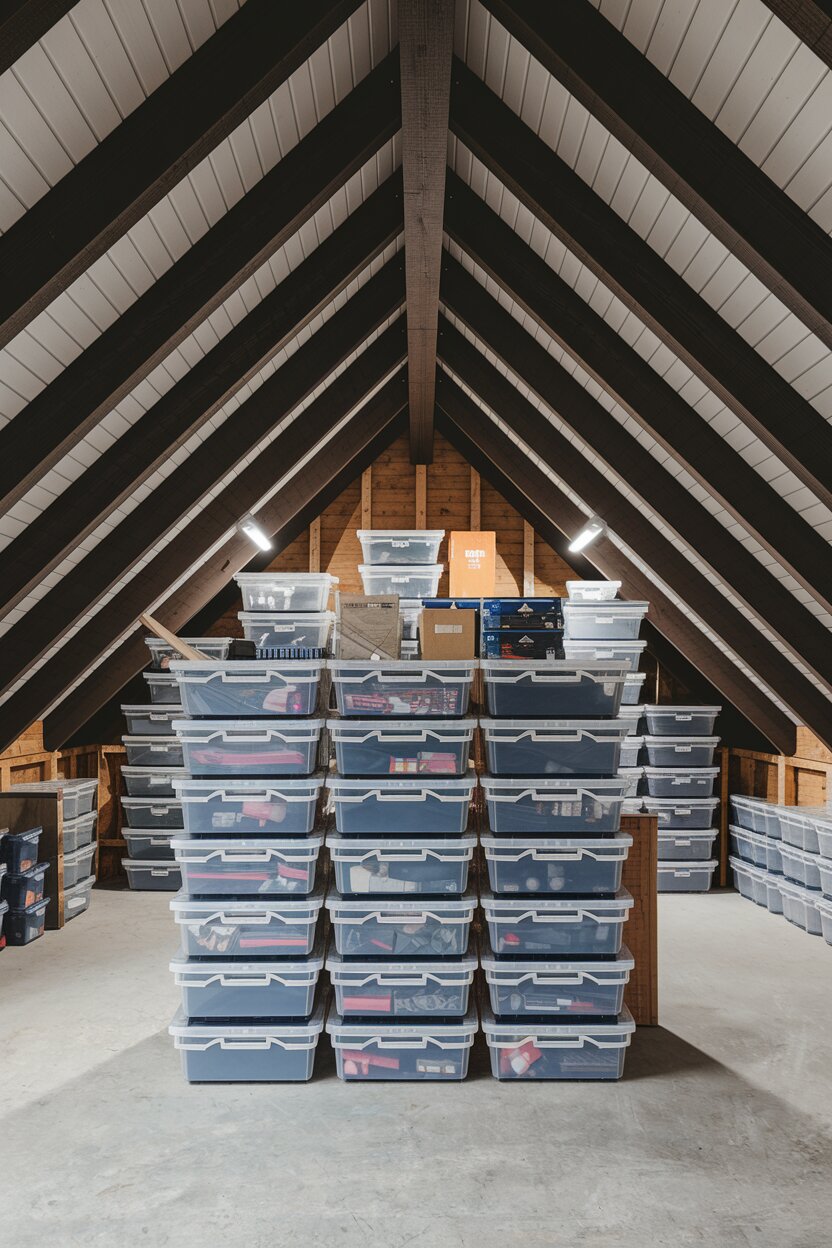
Cardboard boxes are the enemy of attic storage; they degrade over time, attract pests like silverfish and mice, and offer zero protection against humidity. A professional organization strategy begins with replacing all porous boxes with high-quality, clear plastic bins featuring gasket-sealed latching lids. The transparency allows for instant visual inventory, while the airtight seal protects fabrics and papers from the inevitable dust and temperature spikes common in attic environments.
To optimize this system, select a single brand and size of bin to ensure perfect stackability, which prevents toppling and maximizes vertical density. Arrange the stacks in rows with clearly defined aisles, placing the heaviest bins at the bottom and lighter ones on top. For added organization, affix large, laminated labels to the short end of each bin facing the walkway, listing the category and specific contents to avoid unnecessary rummaging.
- 05 of 10
Suspend Bulky Items with Rafter Hooks
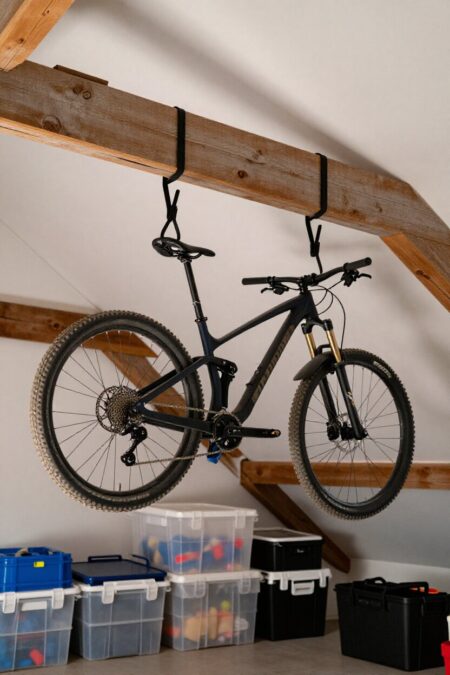
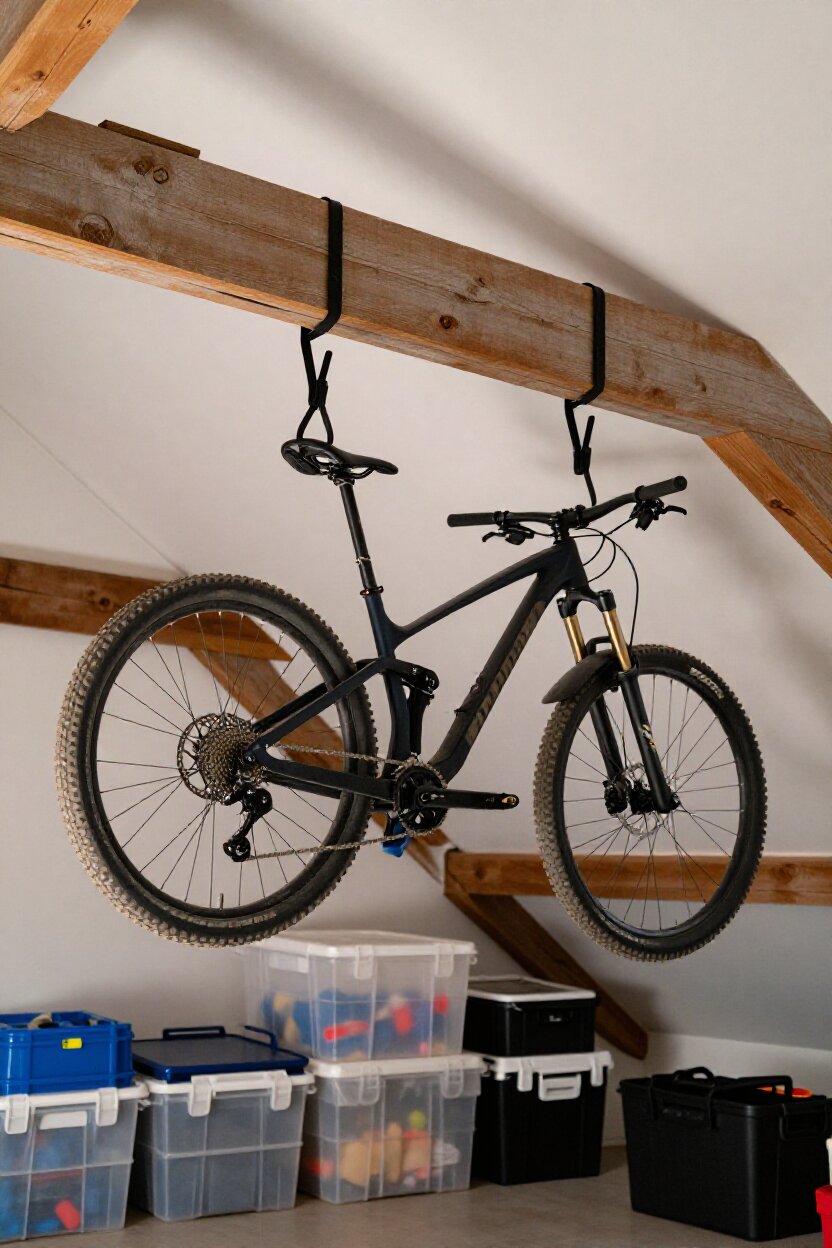
The overhead rafters in an attic offer exceptional strength and are ideal for storing awkward, bulky items that consume too much floor space. Bicycles, folding chairs, empty luggage, and seasonal sports equipment can be hung securely from the ceiling beams using heavy-duty vinyl-coated utility hooks. This gravity-defying approach keeps the floor clear for walking and prevents tripping hazards in a space that often has limited lighting.
Installation involves locating the solid wood center of the rafters and pre-drilling holes for screw-in hooks to prevent splitting the timber. For heavier items like kayaks or large cargo carriers, consider installing a dual-hook system or a horizontal lumber brace across two rafters to distribute the weight evenly.
Caution! Always verify the load-bearing capacity of your specific roof structure before hanging heavy loads to ensure structural integrity is maintained.
- 06 of 10
Create a Hanging Zone with Tension Rods
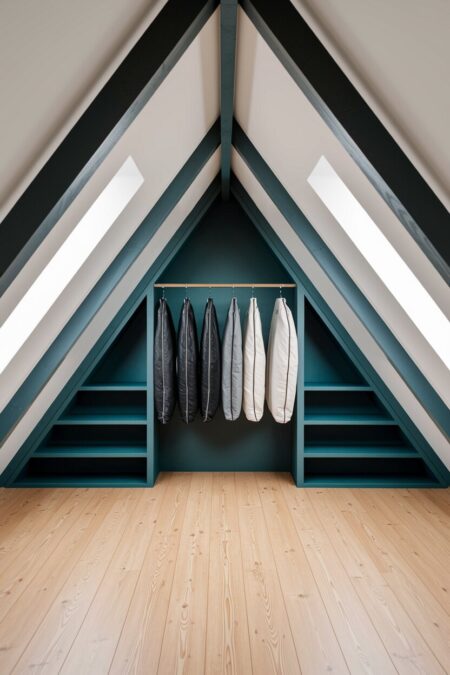
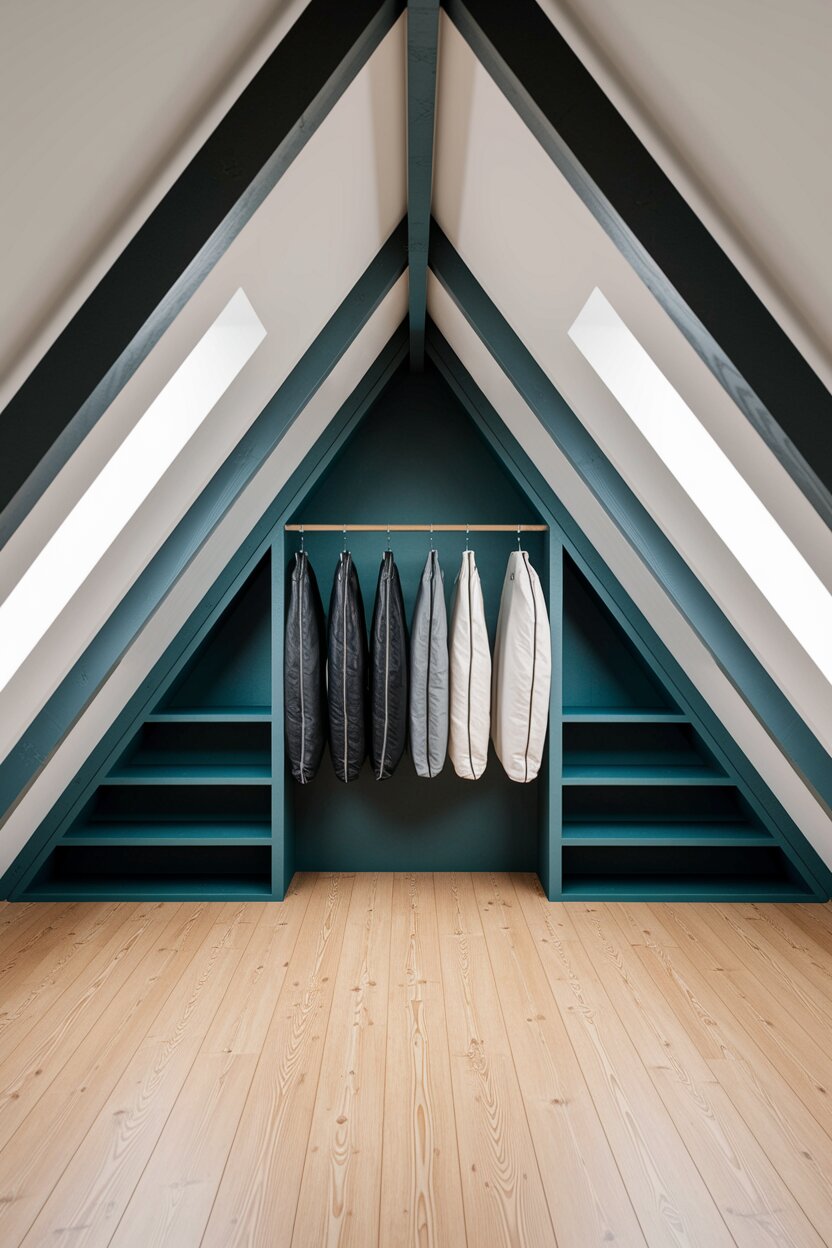
Attics are excellent locations for storing off-season clothing, but packing delicate coats and formal wear into boxes can cause permanent creasing and damage. A superior solution is to create a dedicated hanging zone by mounting heavy-duty closet rods or industrial pipe racks between the slanted truss beams. This mimics a standard closet environment, allowing garments to hang freely and retain their shape.
Position the rods high enough so that the bottom of the longest garment clears the floor, but low enough to fit within the slope of the roof. It is crucial to use breathable, zippered garment bags for every item hung in the attic to shield them from dust, moths, and potential insulation debris. This method transforms an empty gable end or an alcove between trusses into a fully functional seasonal wardrobe.
- 07 of 10
Maximize Gable Walls with Pegboards

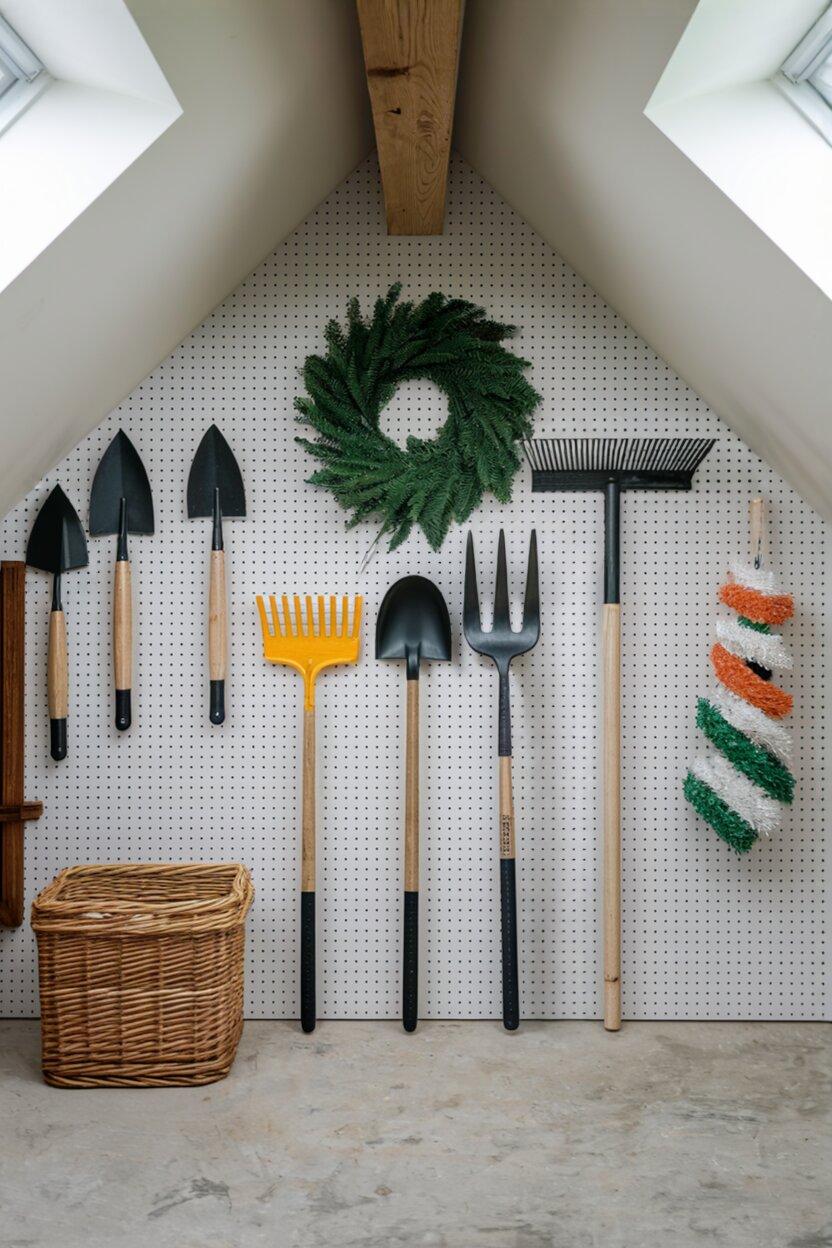
The gable ends — the flat, vertical walls at the ends of a pitched roof — are often the only vertical surfaces in an attic suitable for wall-mounted organization. Installing large panels of heavy-duty pegboard here creates a versatile vertical storage wall for miscellaneous gear that doesn’t fit neatly into bins. This is particularly useful for hanging extension cords, wreaths, gardening tools, or oddly shaped holiday decorations.
Mount the pegboard over furring strips to create the necessary gap behind the panel for hooks to sit correctly. Once installed, outline the shape of frequently used items with a marker to create a visual home for each tool, ensuring the space remains organized. This vertical approach keeps small, easily lost items visible and accessible, preventing them from being buried at the bottom of a deep storage tub.
- 08 of 10
Protect Textiles with Vacuum Sealing
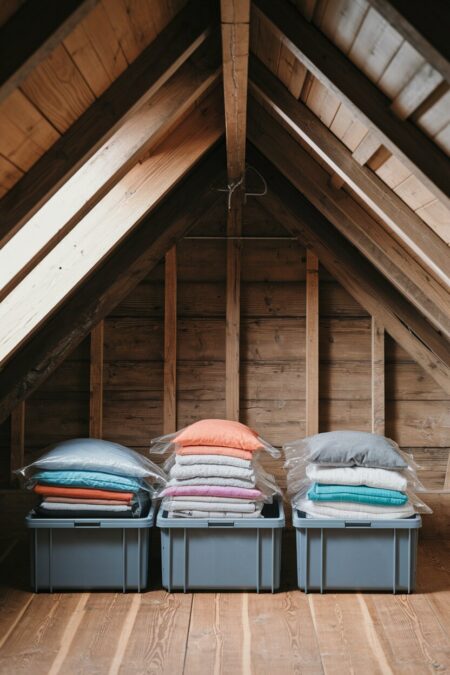
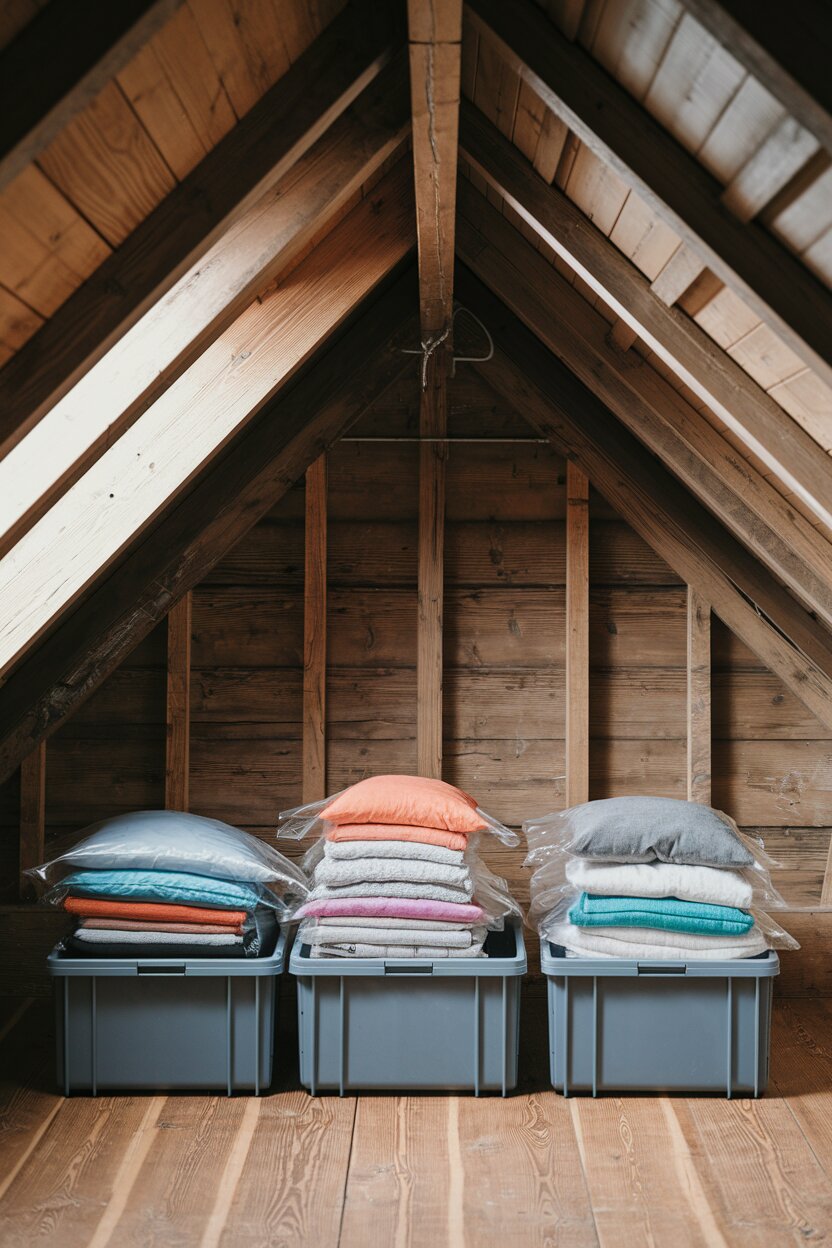
Soft goods like bedding, winter duvets, and puffy jackets occupy a disproportionate amount of space due to the air trapped inside the fabric. Vacuum sealing these textiles before placing them in the attic serves a dual purpose: it compresses the volume by up to 80%, and it provides a hermetic barrier against moisture, mildew, and odors. This is essential in an attic environment where humidity levels can fluctuate drastically throughout the year.
After compressing the items into vacuum-seal bags, place the rigid, brick-like packages inside a hard plastic tub for structural protection. The vacuum bags can sometimes lose their seal if punctured by a sharp object or moved roughly, so the outer bin serves as a failsafe. This technique allows you to store an entire family’s winter wardrobe in just one or two bins, significantly increasing your overall storage capacity.
- 09 of 10
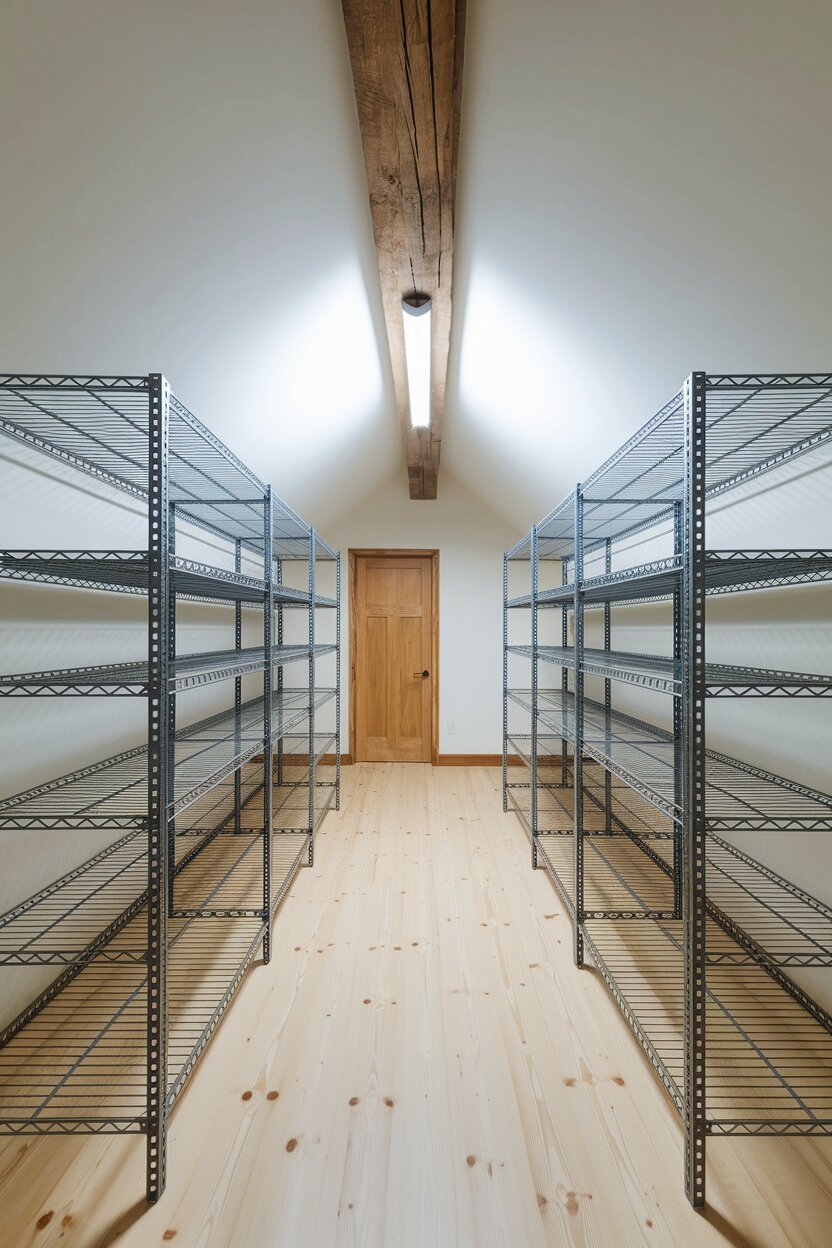
Use Freestanding Wire Racking for Airflow
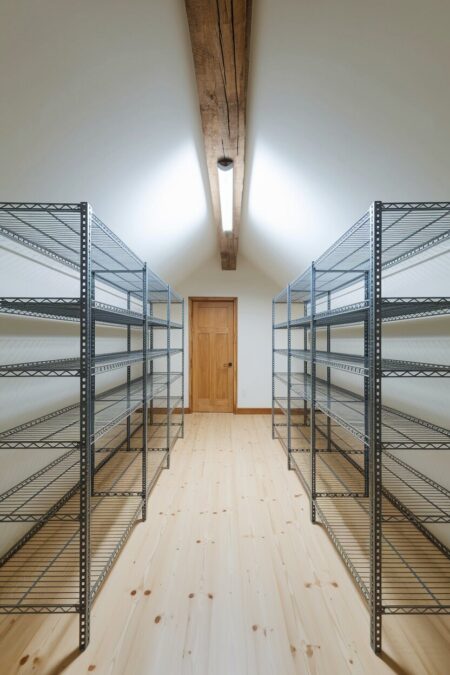
In finished or semi-finished attics with flat flooring, industrial wire shelving units are superior to solid wood bookcases or cabinets. Wire racks promote continuous airflow around your stored items, which is critical for preventing musty odors and mold growth in non-climate-controlled spaces. Additionally, their open design allows light to filter through, improving visibility in dim corners, and they are generally resistant to temperature-induced warping.
Assemble these units along the taller center line of the attic or against gable walls where the headroom is highest. Because wire shelves are often adjustable, you can customize the shelf heights to accommodate your specific stackable bins perfectly, leaving no wasted vertical gaps. For uneven attic floors, look for units with adjustable leveling feet to ensure the shelving remains stable and secure.
- 10 of 10
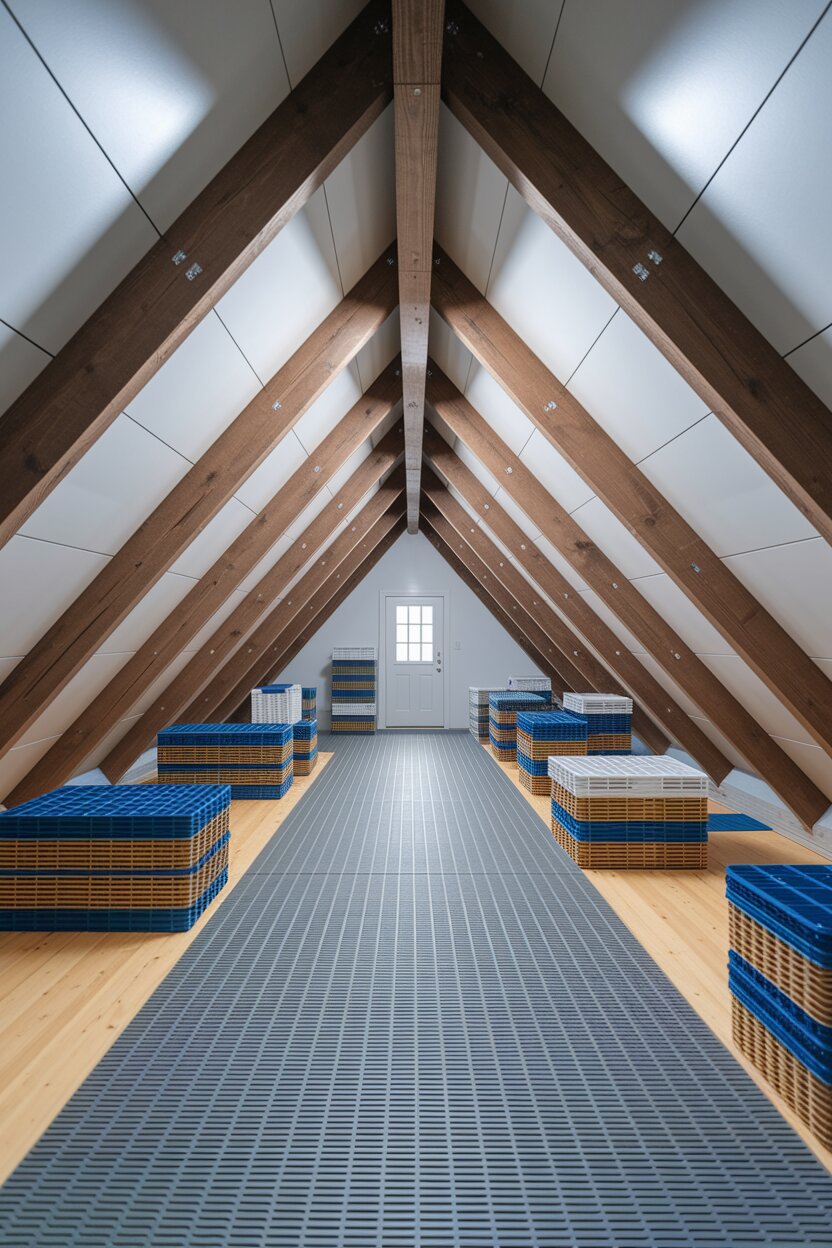
Install a Platform Decking System
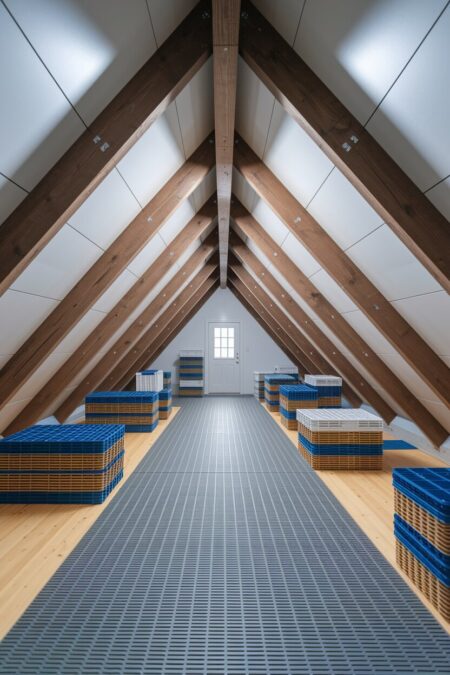
None of the above attic storage ideas are viable if the attic floor consists of open joists and exposed insulation. Creating a safe, stable platform is the foundational step in maximizing attic storage. Installing an attic decking system — either using purpose-built plastic interlocking panels or cut-to-size plywood sheets — creates a continuous floor surface over the joists. This protects the ceiling drywall below from accidental foot-throughs and prevents insulation from being compressed, which would reduce its thermal efficiency.
When laying the decking, ensure you do not cover soffit vents or block essential airflow paths required for roof ventilation. It is often best to create a designated “catwalk” down the center of the attic with branching platforms for storage zones, rather than flooring the entire space wall-to-wall. This strategic flooring defines your storage areas and ensures that you have a safe, level surface to stack bins and move around without balancing on narrow wooden beams.