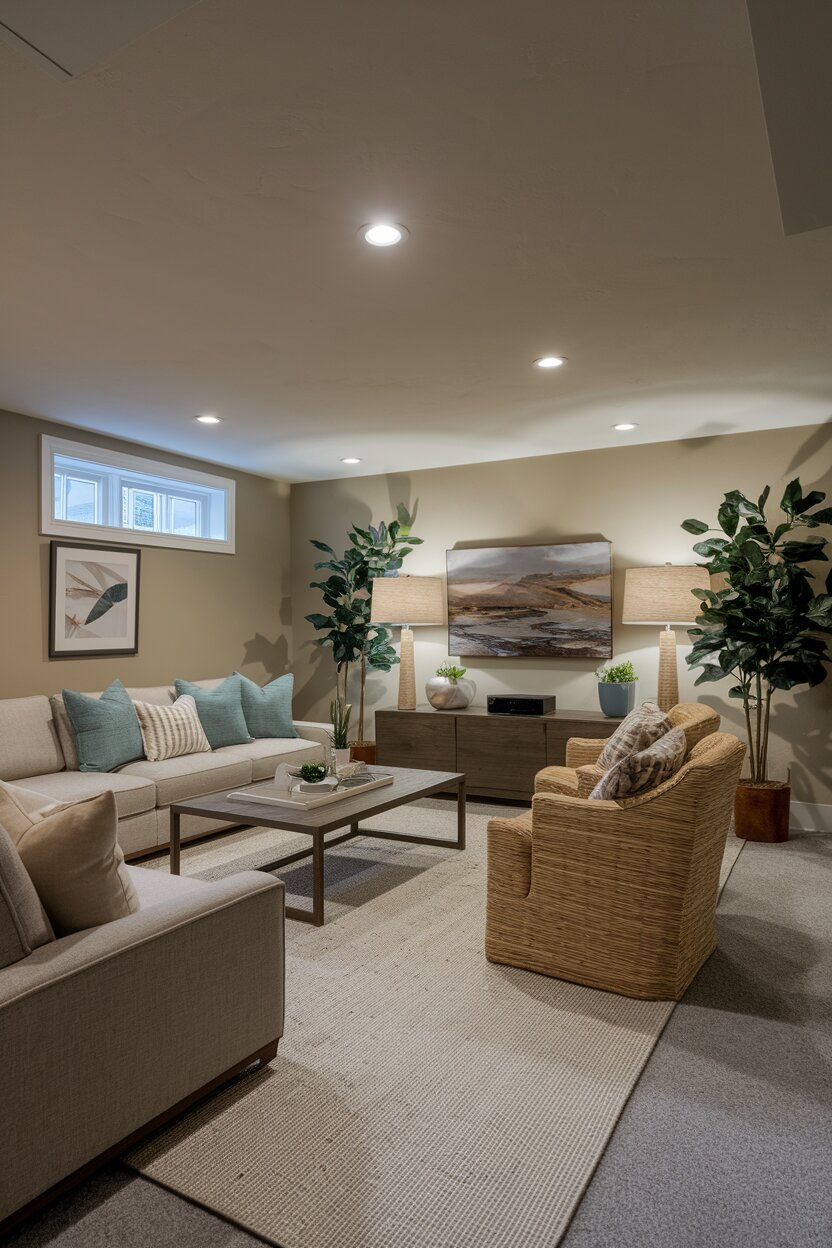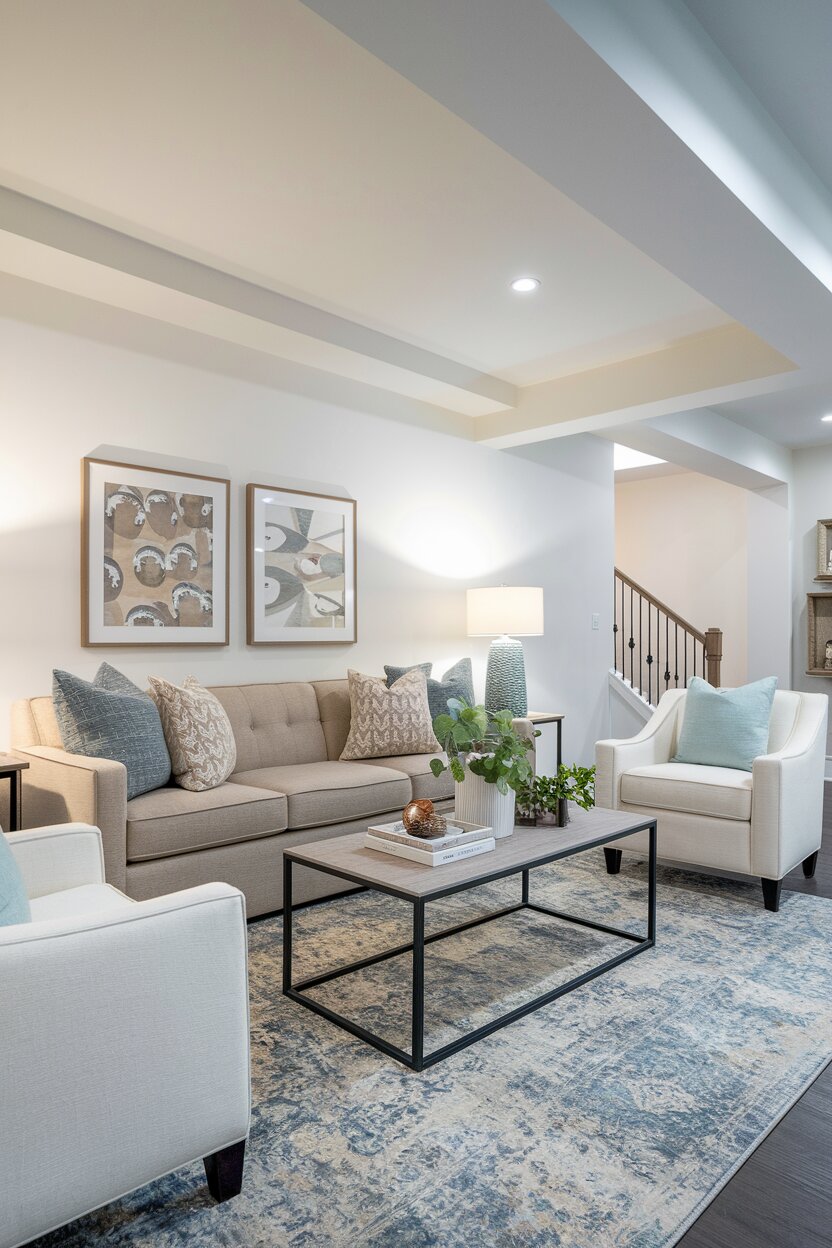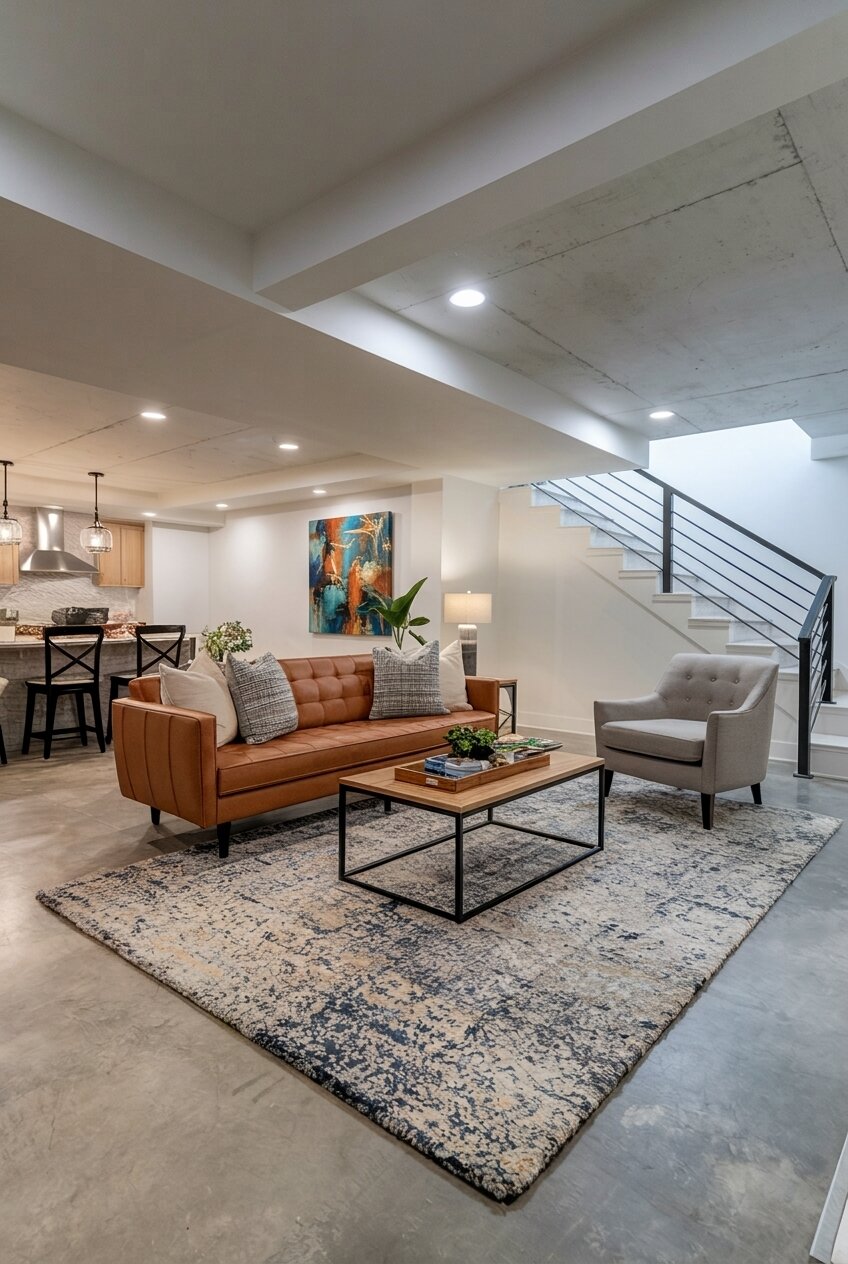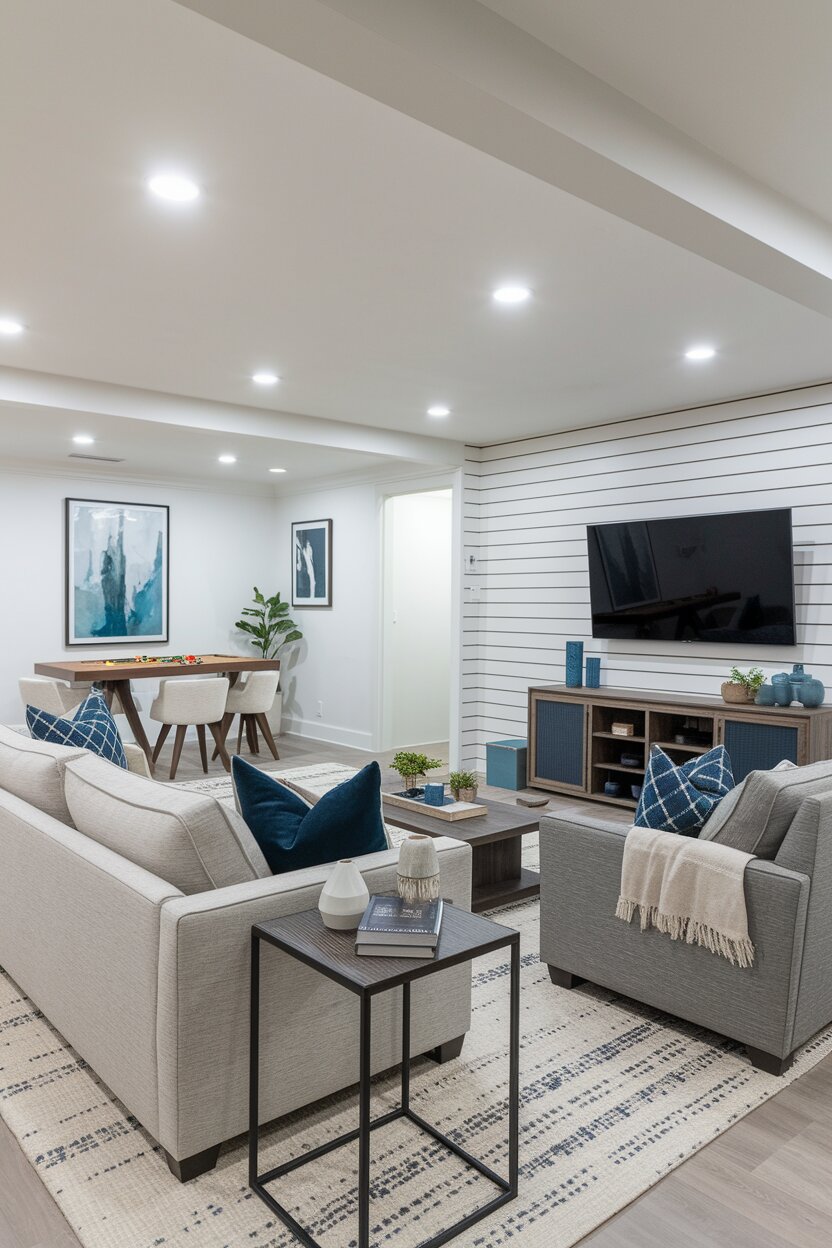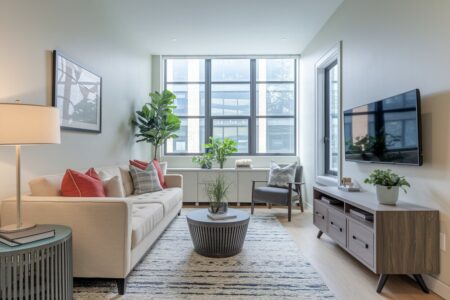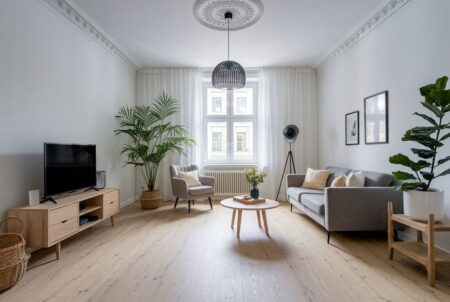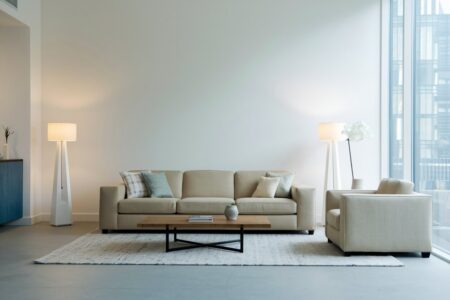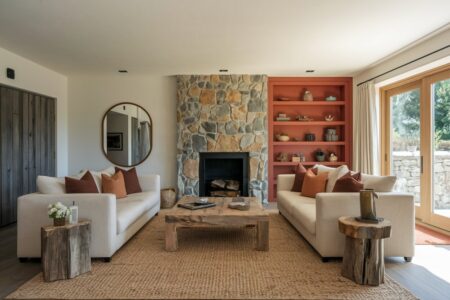
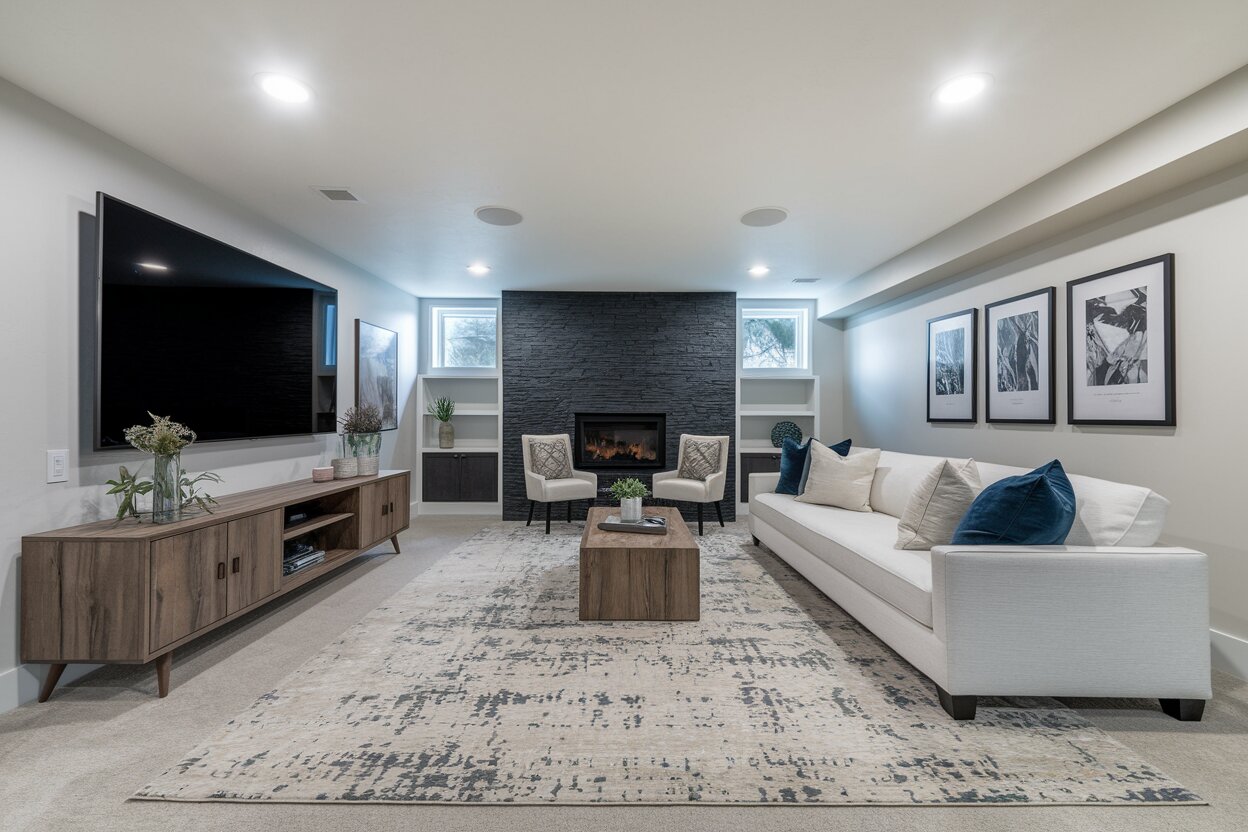
Most basements start out as storage. Boxes pile up, old exercise equipment gathers dust, and the space gets treated like an afterthought. With the right basement living room ideas, though, that same square footage can turn into one of the most-used rooms in the house — a spot for movie nights, game nights, and quiet Sunday afternoons.
The challenges are real. Basements tend to run short on natural light, and low ceilings or exposed pipes can make a room feel cramped before you’ve added a single piece of furniture. Concrete floors bring a chill that good taste alone can’t fix. A handful of smart design choices solves most of this, and the payoff is a basement living room that feels just as inviting as anything upstairs.
Ready to reclaim the space? These ideas can help you plan a basement living room that’s warm, functional, and genuinely enjoyable to spend time in.
- 01 of 10
Layer Your Lighting
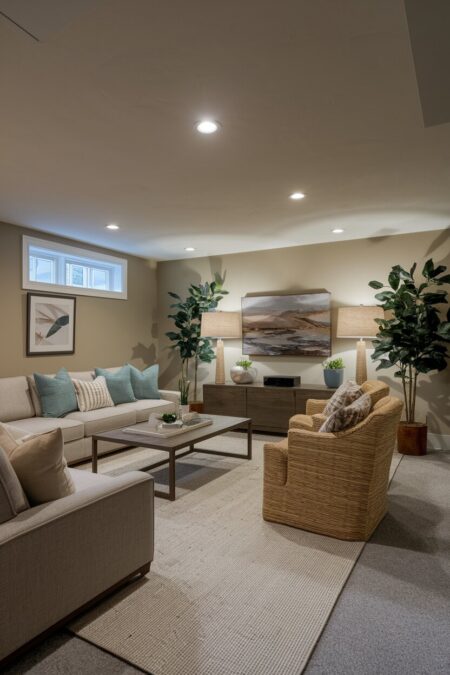
Basements rarely get enough sunlight to rely on one overhead fixture. Combine recessed ceiling lights with floor lamps, table lamps, and a few wall sconces instead. Shadows disappear this way, and the room gains real depth. A basement living room lit from several angles feels warmer immediately, even before the furniture goes in. Dimmer switches help too — flip from bright and functional to soft and cozy in seconds.
- 02 of 10
Keep the Palette Light and Bright
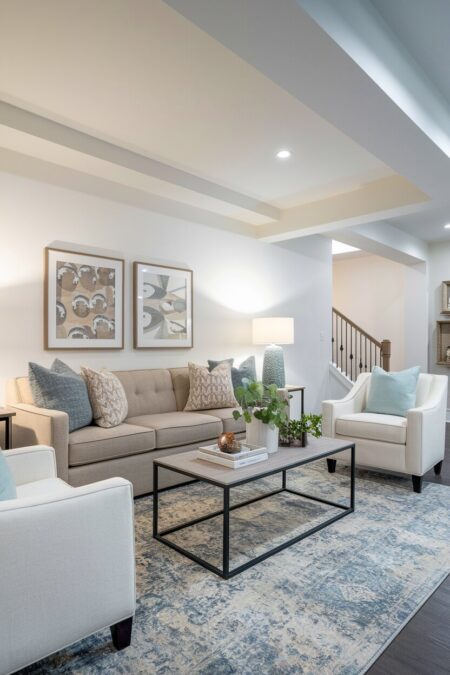
Dark colors swallow up what little light a basement gets. Whites, warm creams, and pale neutrals bounce light around the room and make low ceilings feel a touch taller. That doesn’t mean the space has to be boring. Bring in color through pillows, art, and rugs instead of paint. A light backdrop is simply the easiest way to keep a basement living room from feeling like a cave.
- 03 of 10
Warm Up the Floor With a Rug
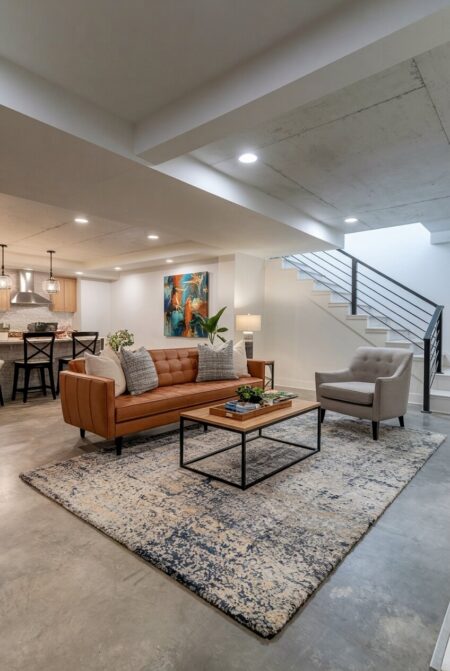
Concrete subfloors are cold, even under vinyl plank or tile. A thick area rug with a supportive pad underneath fixes that fast. It also marks off the seating area in an open basement layout, which is useful when there are no walls to define one. Size matters here — choose a rug large enough for at least the front legs of your sofa and chairs to rest on it. Anything smaller looks like an afterthought.
- 04 of 10
Break the Space Into Zones
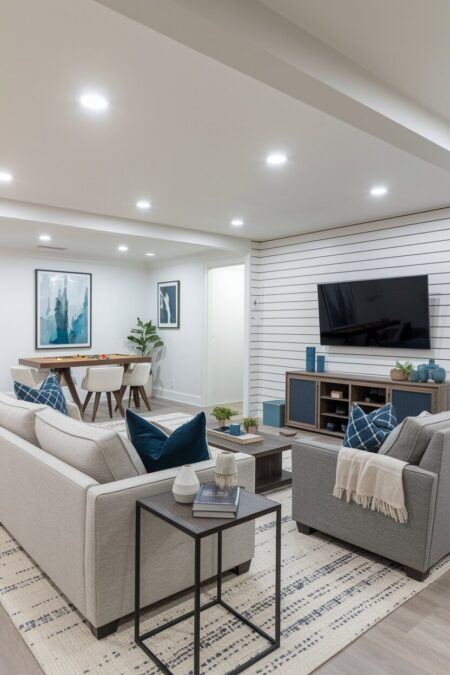
Many basements are one long, open room with no built-in boundaries. Furniture placement can create structure where the architecture doesn’t. Angle a sectional to separate the TV area from a game table or a reading corner. Even a simple bookshelf or console table works as a soft divider. The goal is a basement living room that reads as several distinct spaces, not one big box.
- 05 of 10
Make Peace With a Low Ceiling
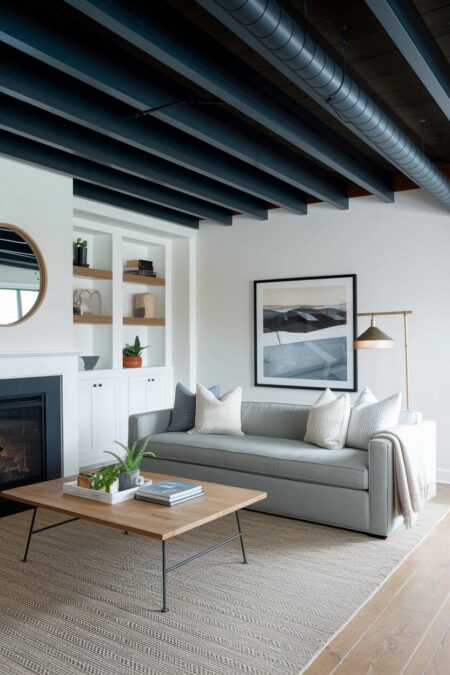
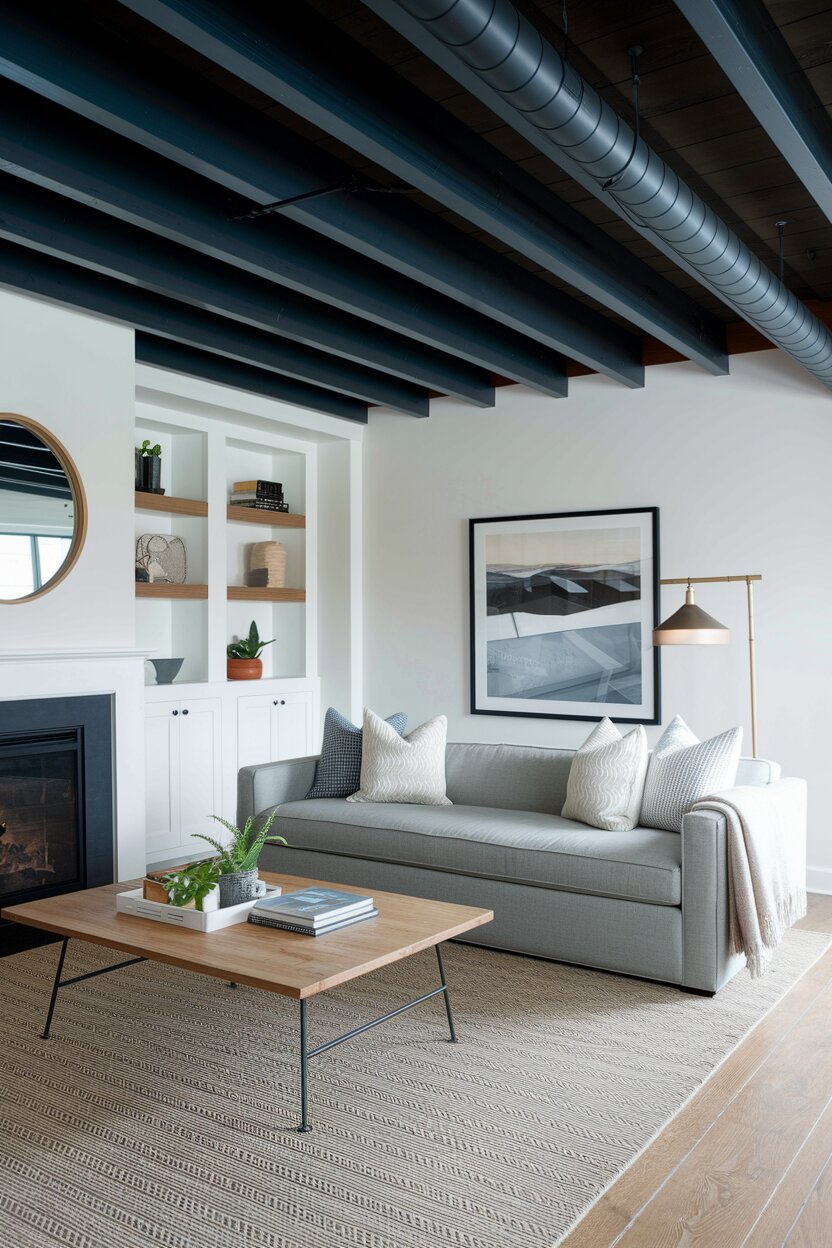
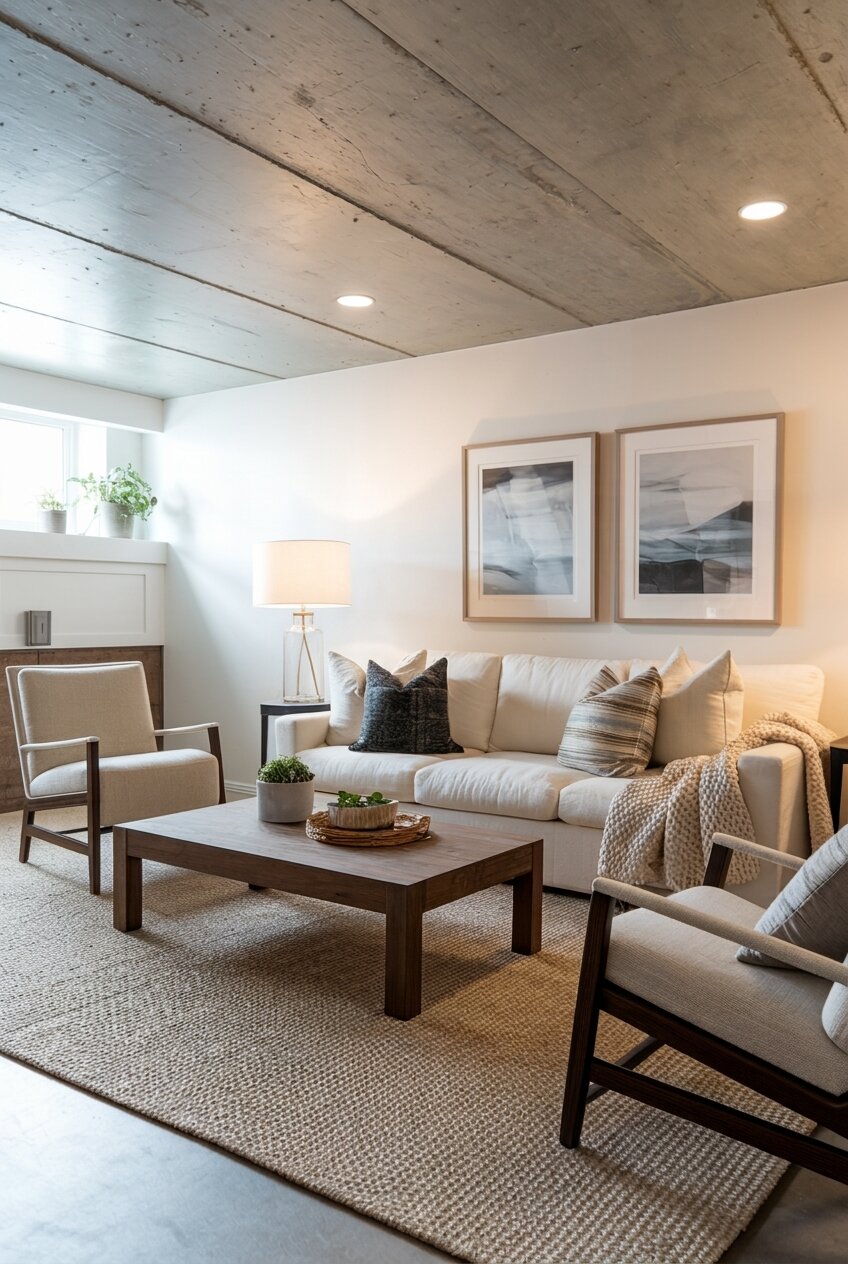
You can’t raise the ceiling. You can trick the eye, though. Painting the ceiling the same color as the walls erases the line where they meet, which makes the room feel taller. Exposed ductwork responds well to the same trick — a coat of matte black paint helps it disappear instead of drawing the eye. Where the height allows, faux wood beams add character and pull attention away from any low spots.
- 06 of 10
Build In Storage
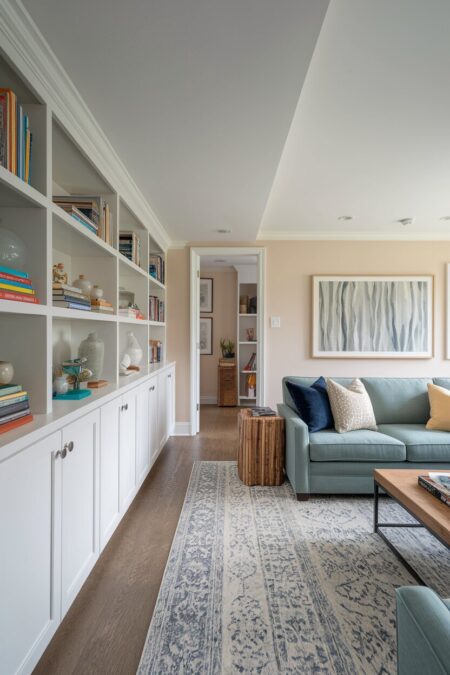
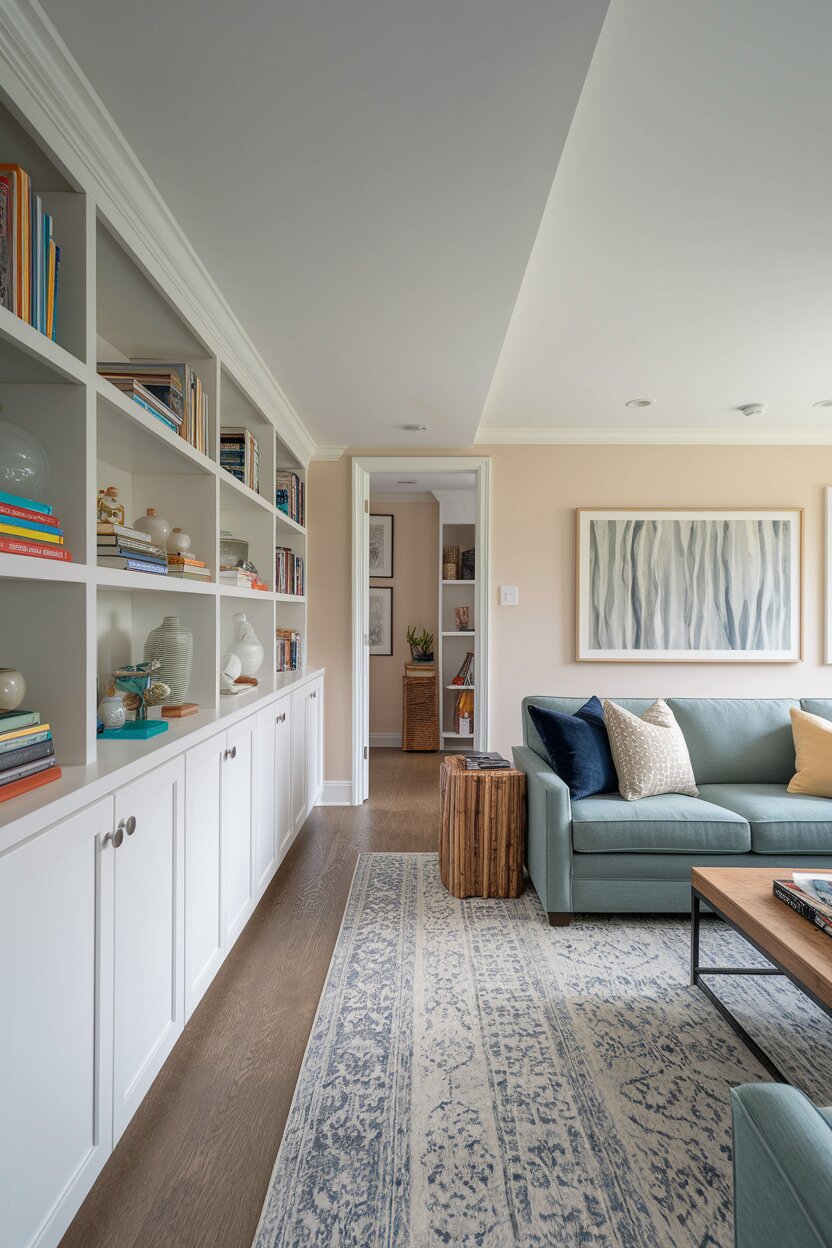
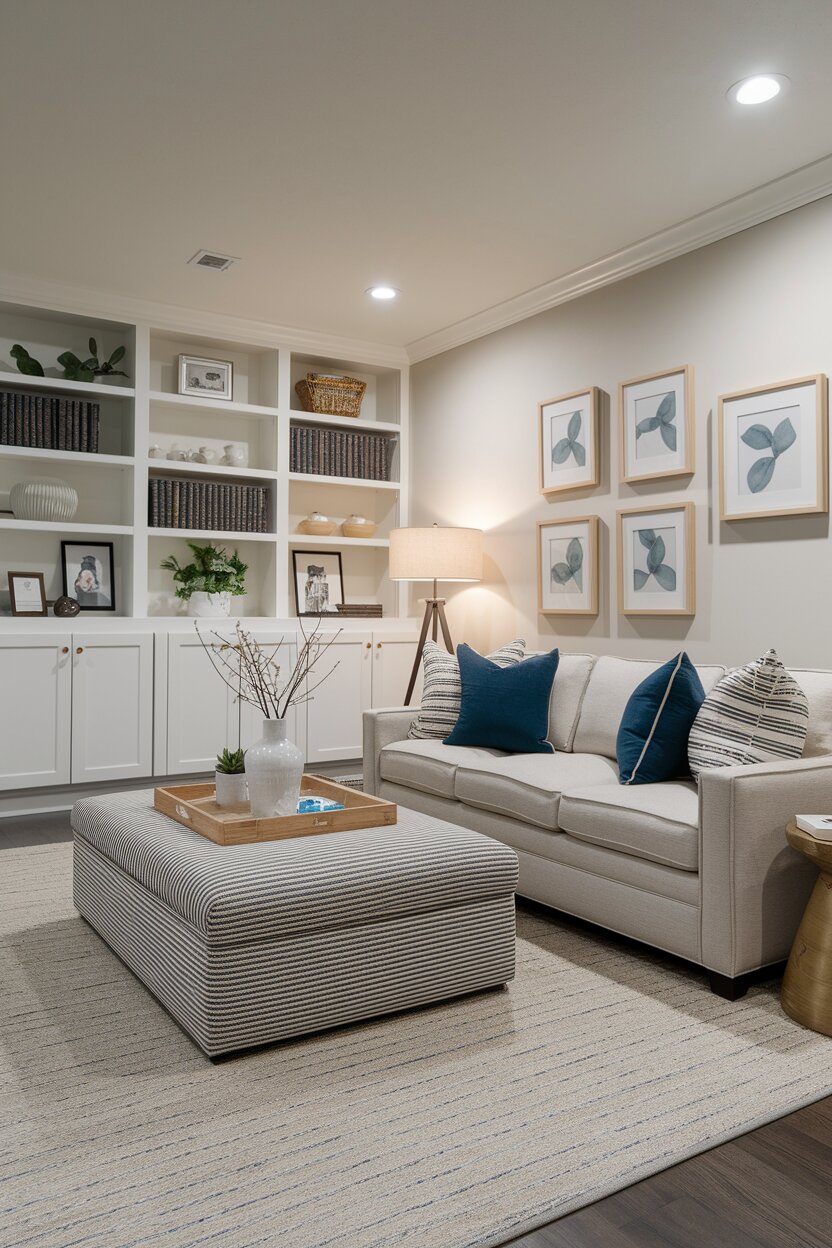
Basement living rooms tend to double as the place where toys, board games, and media equipment pile up. Built-in shelving or cabinetry along one wall keeps it all organized and out of sight when you want the room to read as a living room, not a playroom. Open shelves work well for books and decor. Closed cabinets are for everything else.
- 07 of 10
Design a Cozy Media Nook
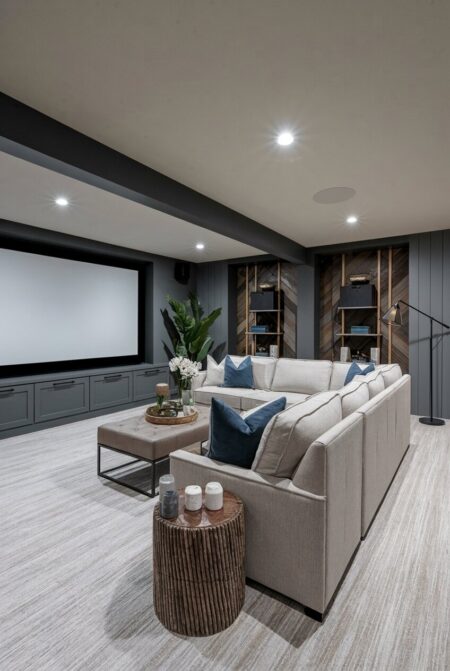
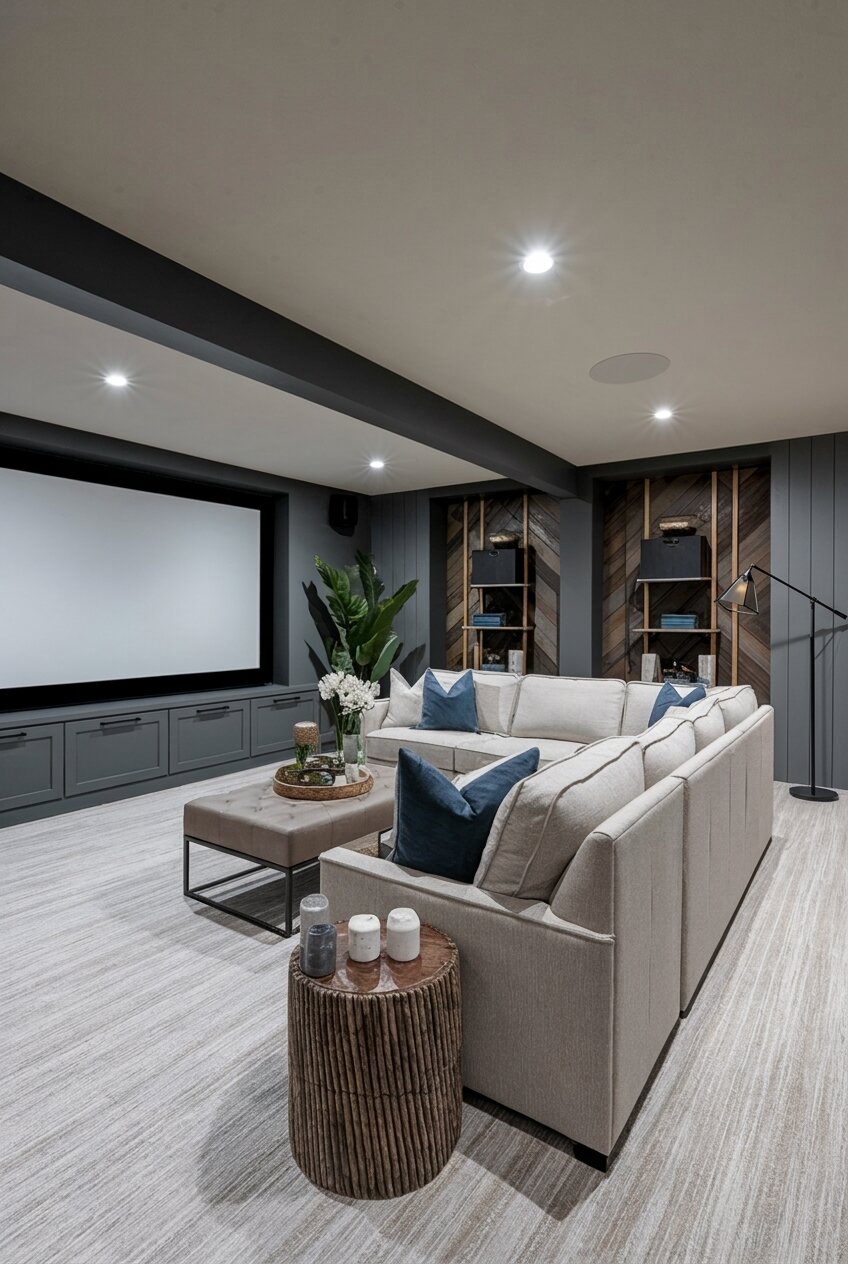
A basement’s lack of windows is an advantage here — there’s no glare to fight on movie night. No windows, no problem. A deep sectional, a big screen or projector, and a couple of floor lamps for reading light cover the basics. Add blackout curtains if there’s a window well nearby, and the result is a basement living room that doubles as the best theater in the house.
- 08 of 10
Add a Small Bar or Beverage Station
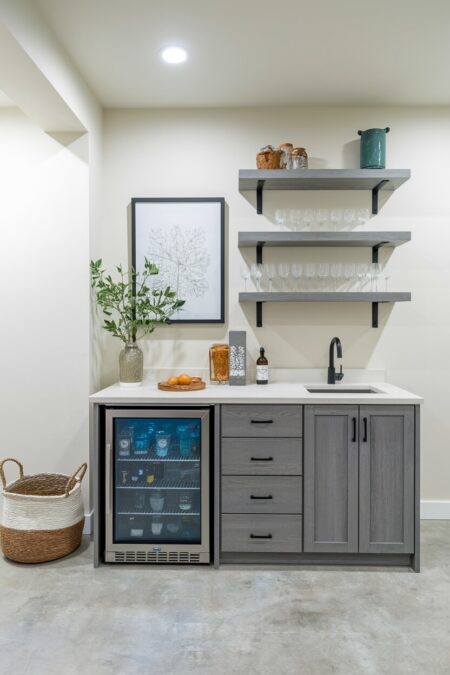
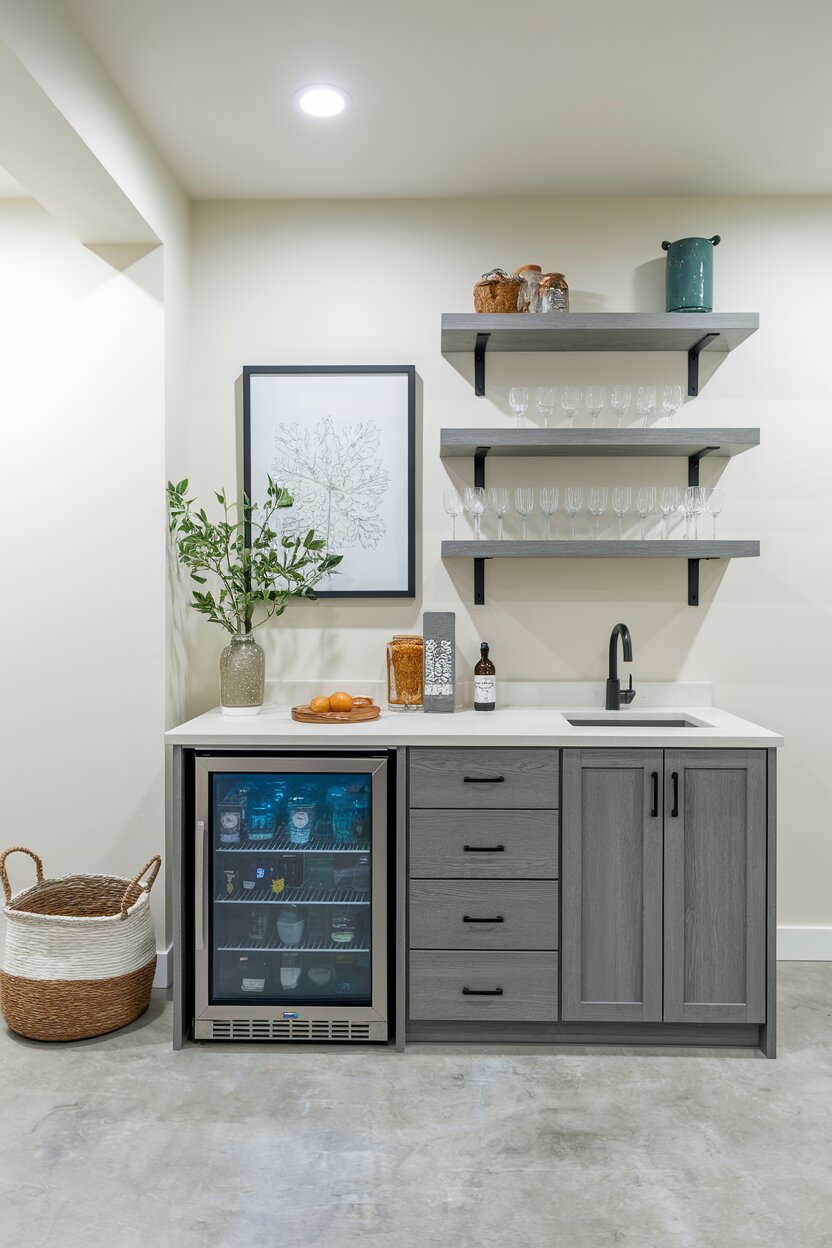
A basement living room is a natural spot for entertaining, so give guests somewhere to grab a drink without trekking back upstairs. A narrow console with a mini fridge, a few floating shelves for glassware, and a small sink if plumbing allows go a long way. Keep it simple. Even a bar cart tucked into a corner adds a hosting-ready touch without much effort.
- 09 of 10
Layer in Warm Textures
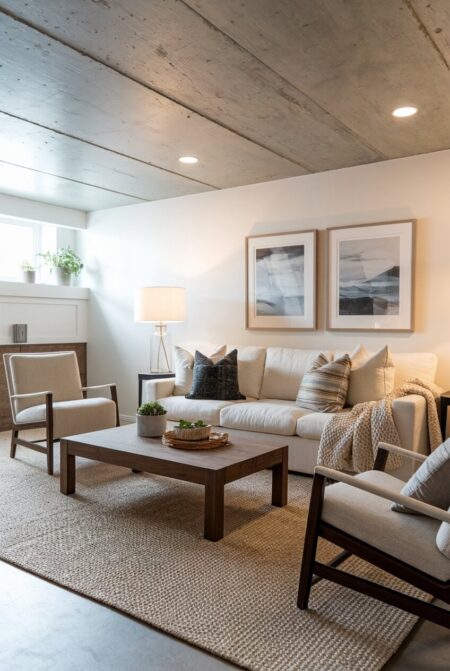
Concrete, drywall, and the occasional popcorn ceiling can leave a basement feeling cold and a little utilitarian. Counter that with texture. A chunky knit throw, boucle or velvet pillows, a solid wood coffee table, and a few woven baskets soften every hard surface a basement is known for. The room stops feeling leftover and starts feeling lived-in.
- 10 of 10
Choose Furniture That Works Overtime
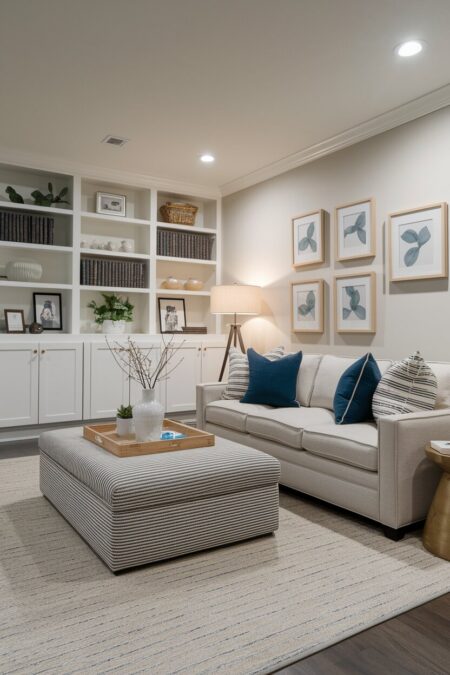
Basements often need to be more than a living room — guest space, playroom, and home office rolled into one. A sleeper sofa handles overnight guests without giving up everyday seating. Storage ottomans hide blankets and toys while doubling as extra seats or a coffee table. A drop-leaf table can host game night one evening and craft projects the next. That kind of flexibility is exactly what a basement living room needs to earn its keep.