The garage often serves as the final frontier of home organization, frequently becoming a catch-all for seasonal decor, yard tools, and various household overflow. However, with a strategic approach to spatial planning, this area can transition from a chaotic dumping ground into a highly efficient, professional-grade workspace. Achieving this transformation requires a departure from traditional floor-based storage and a transition toward integrated systems that utilize every available dimension of the room.
By implementing the following garage storage ideas, you can protect your investments, improve your daily workflow, and finally clear enough space to park your vehicles where they belong. These ideas focus on durability, accessibility, and visual clarity to ensure your garage remains organized for the long term.
- 01 of 11
Heavy-Duty Overhead Ceiling Racks
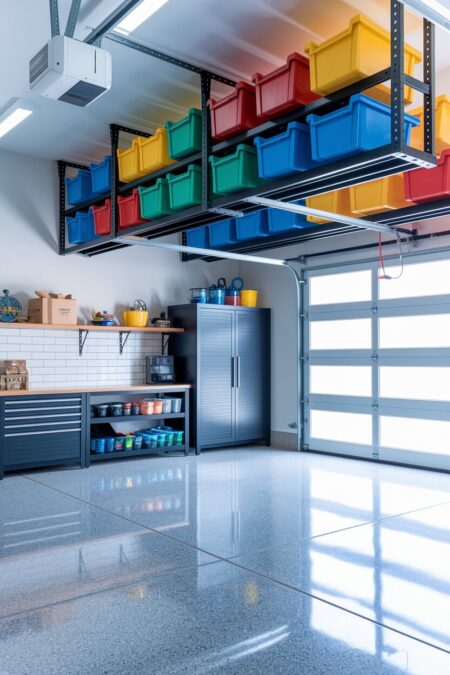
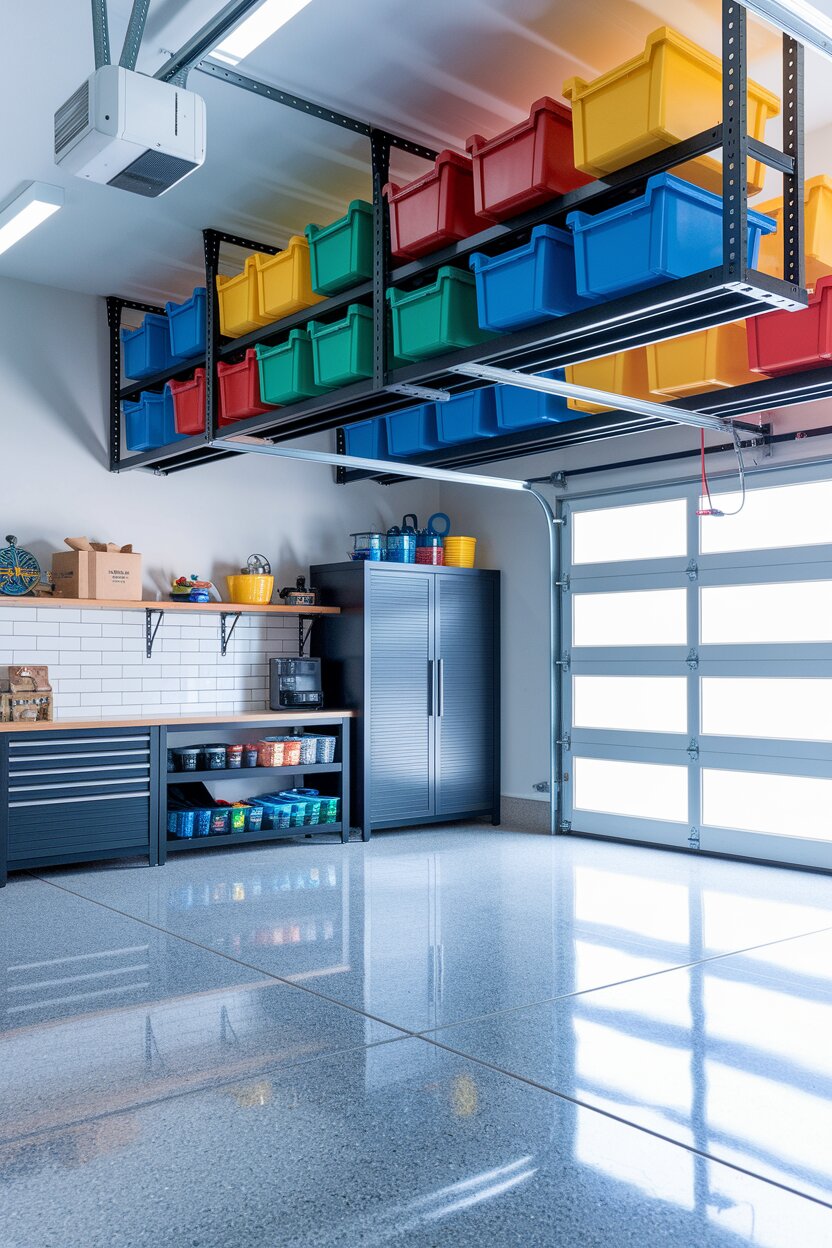
The most underutilized territory in any garage is the vast expanse of air above the garage door and vehicles. Overhead ceiling racks are the premier solution for long-term storage of bulky, lightweight items that you only need to access once or twice a year. By moving large plastic bins, camping gear, and holiday ornaments to the ceiling, you immediately liberate hundreds of square feet of floor space without sacrificing storage capacity.
To successfully integrate these racks, ensure they are anchored directly into the ceiling joists rather than just the drywall to support the necessary weight. It is wise to measure the clearance of your garage door in its open position to avoid any mechanical interference. Grouping your items into color-coded, weather-resistant bins before hoisting them up will make identifying your belongings much easier when the seasons change.
- 02 of 11
Versatile Slatwall Panel Systems
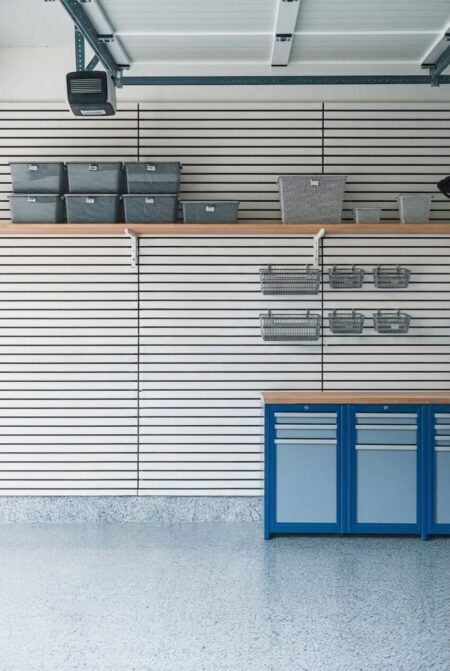
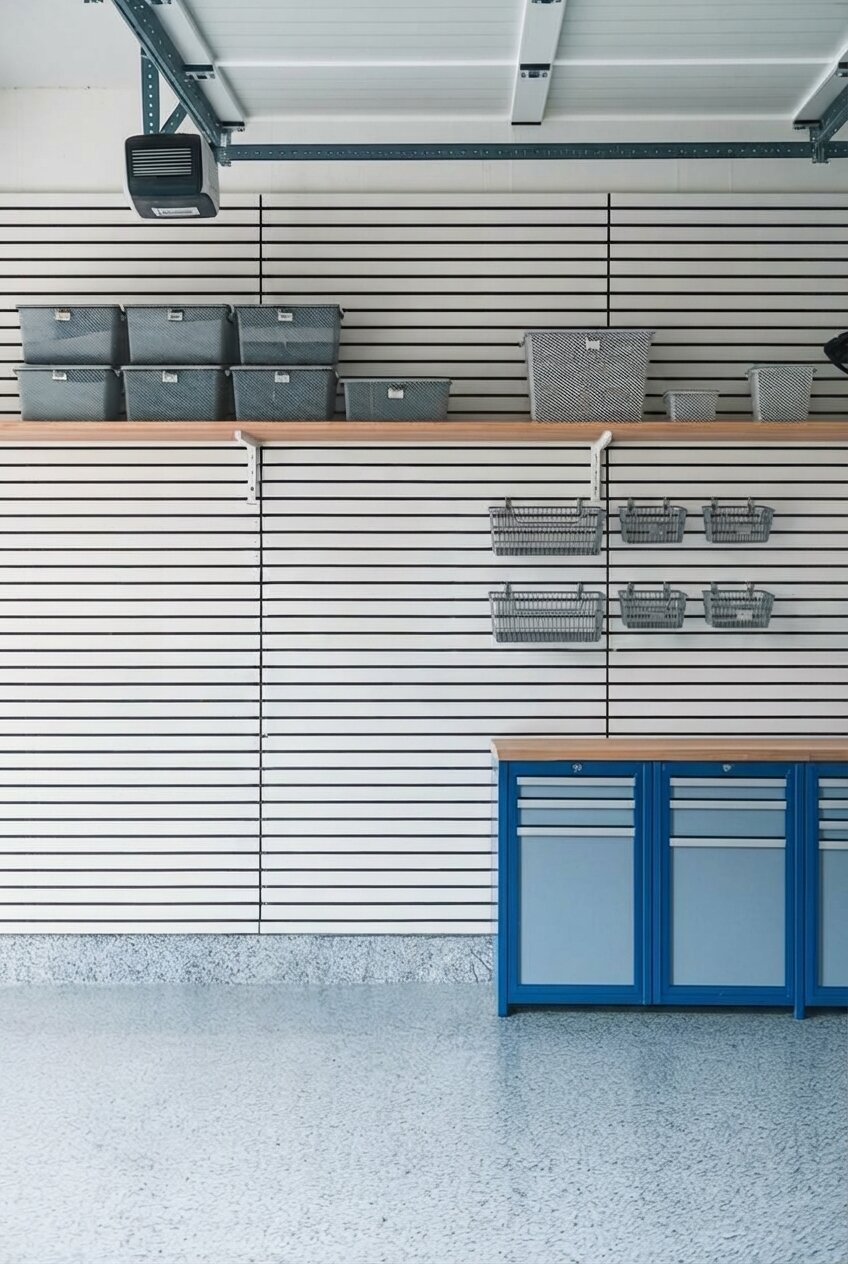
Slatwall systems offer a sleek, retail-inspired aesthetic that provides significantly more flexibility than traditional fixed shelving. These PVC or cellular foam panels consist of horizontal grooves that allow you to slide in various hooks, baskets, and specialized brackets at any height or interval. This adaptability is essential for a growing household where storage needs for sports equipment or gardening tools may shift from year to year.
When installing slatwall, focus on the “primary reach zone” (the area between your waist and eye level) for the items you use most frequently. For a professional finish, install the panels from floor to ceiling on at least one wall to create a uniform look that hides wall imperfections. You can easily reposition a heavy bicycle hook or a small parts bin without ever needing to pick up a drill again, making it the ultimate living storage system.
item. - 03 of 11
Industrial-Grade Modular Cabinetry
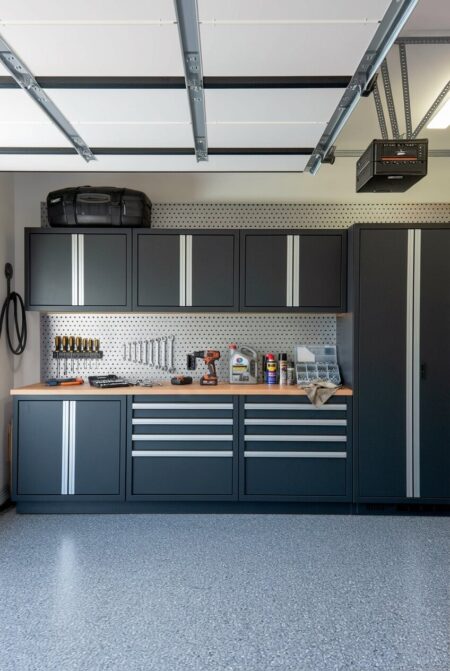
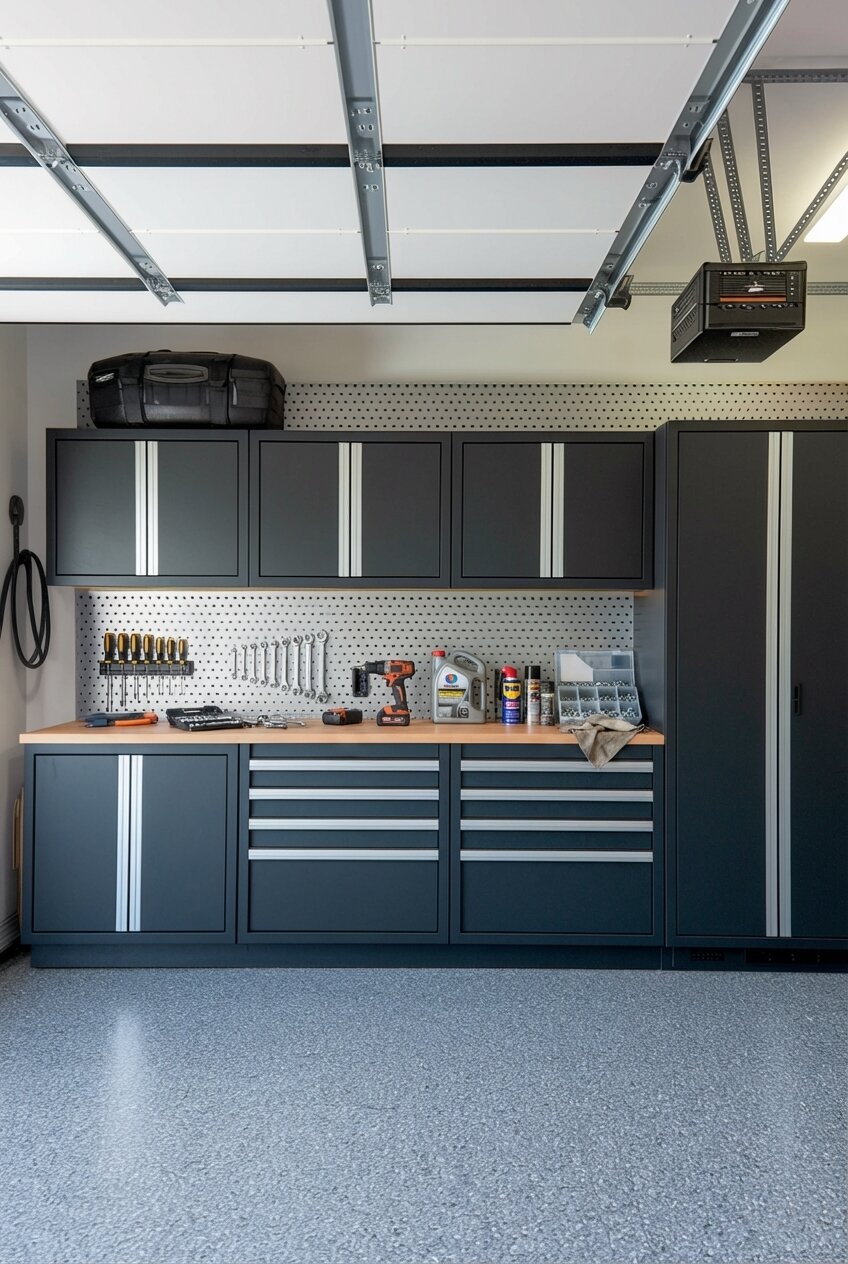
For a garage that feels like a professional workshop, modular cabinetry is the gold standard. Unlike open shelving, cabinets provide a “closed” storage environment that protects sensitive tools and chemicals from dust, moisture, and pests. Steel or high-density laminate units with lockable doors also offer an added layer of safety, keeping hazardous materials like antifreeze or power tools out of the reach of children and pets.
To maximize the effectiveness of your cabinets, look for units with adjustable interior shelving and integrated “feet” that keep the base of the cabinet off the floor. Elevating the cabinetry prevents moisture damage from floor spills or seasonal humidity and makes it significantly easier to sweep or hose down the garage floor. Consider a mix of tall lockers for long-handled tools and base cabinets that can double as extra countertop workspace.
- 04 of 11
Wall-Mounted Track Systems for Long-Handled Tools
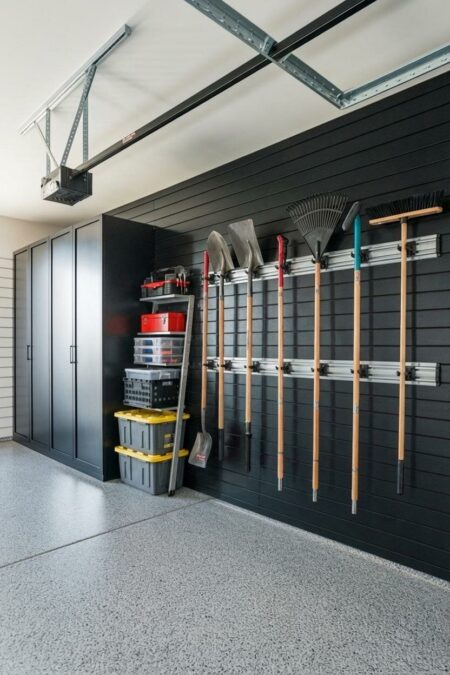
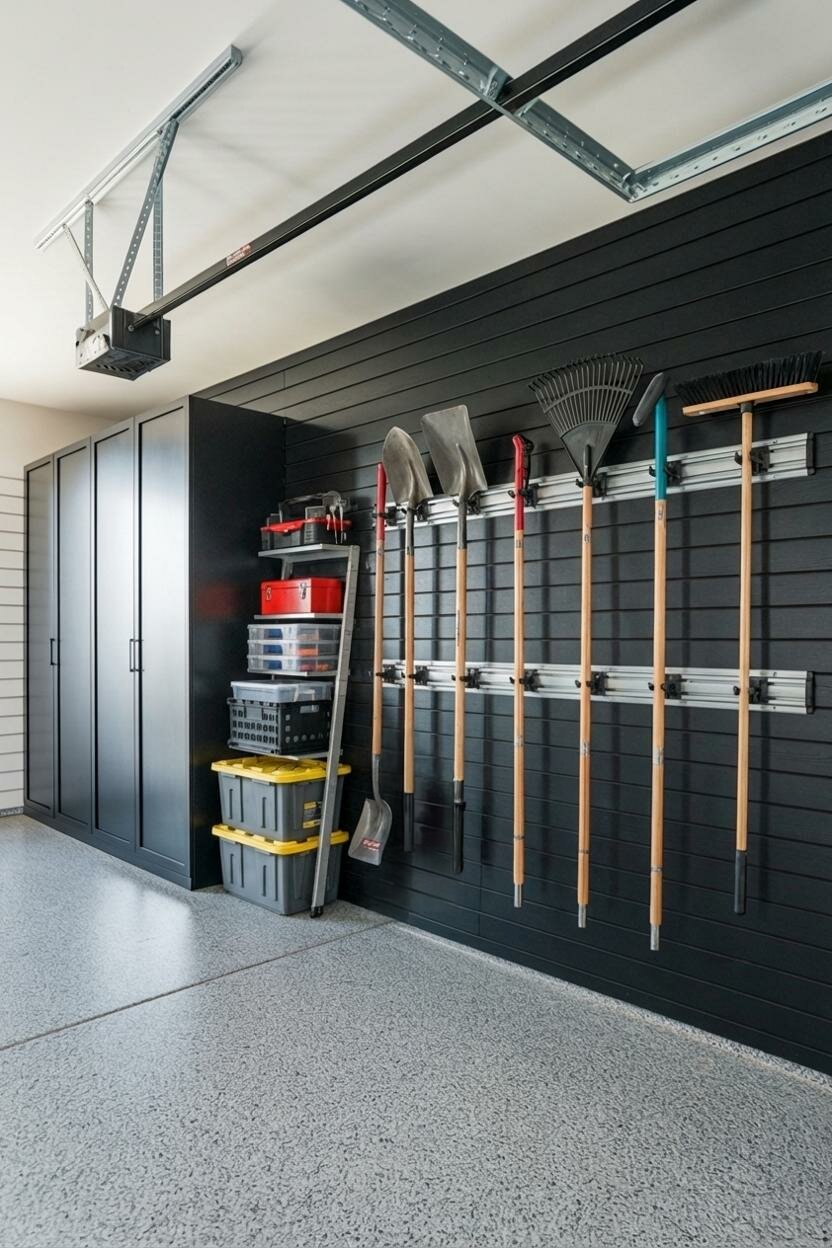
Shovels, rakes, and brooms are notorious for leaning against corners and creating a “domino effect” of clutter. A wall-mounted track system utilizes a sturdy horizontal rail that holds high-capacity hooks designed specifically for these awkward shapes. By hanging these items vertically, you prevent them from taking up depth in the garage, allowing you to park closer to the walls without risk of damage.
For the best results, mount the track at a height that allows the heads of the tools to be near the ceiling while the handles remain accessible. This keeps the heaviest part of the tool high up and out of the way of foot traffic. If you have a collection of similar items, like several different types of shovels, staggering their heights on the track can allow you to fit more tools into a smaller horizontal footprint.
- 05 of 11
Specialized Overhead Pulley Lifts
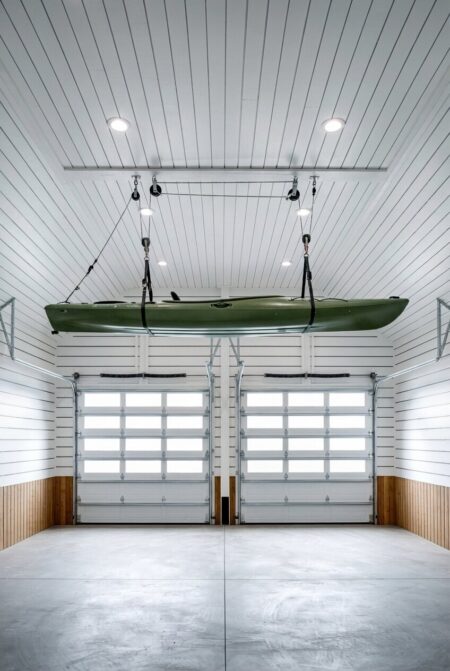
Certain heavy or awkward items, such as kayaks, ladders, or rooftop cargo carriers, are too cumbersome for standard shelving but too valuable to leave on the floor. An overhead pulley lift system allows a single person to safely raise and lower these items using a mechanical advantage. This is particularly useful for seasonal recreational gear that would otherwise dominate a large portion of a wall or floor.
Safety is the priority when installing a pulley system, so it is critical to verify the weight rating of the unit against the item you intend to lift. Always ensure the lifting straps are centered to prevent the load from shifting or tilting during operation. By placing these lifts in the center of the garage ceiling (between the paths of the garage doors), you utilize the “dead space” that is often inaccessible for other types of storage.
- 06 of 11
Folding Wall-Mounted Workbenches
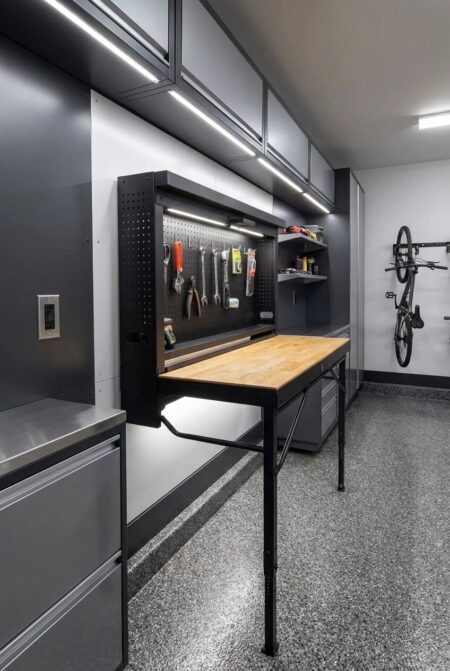
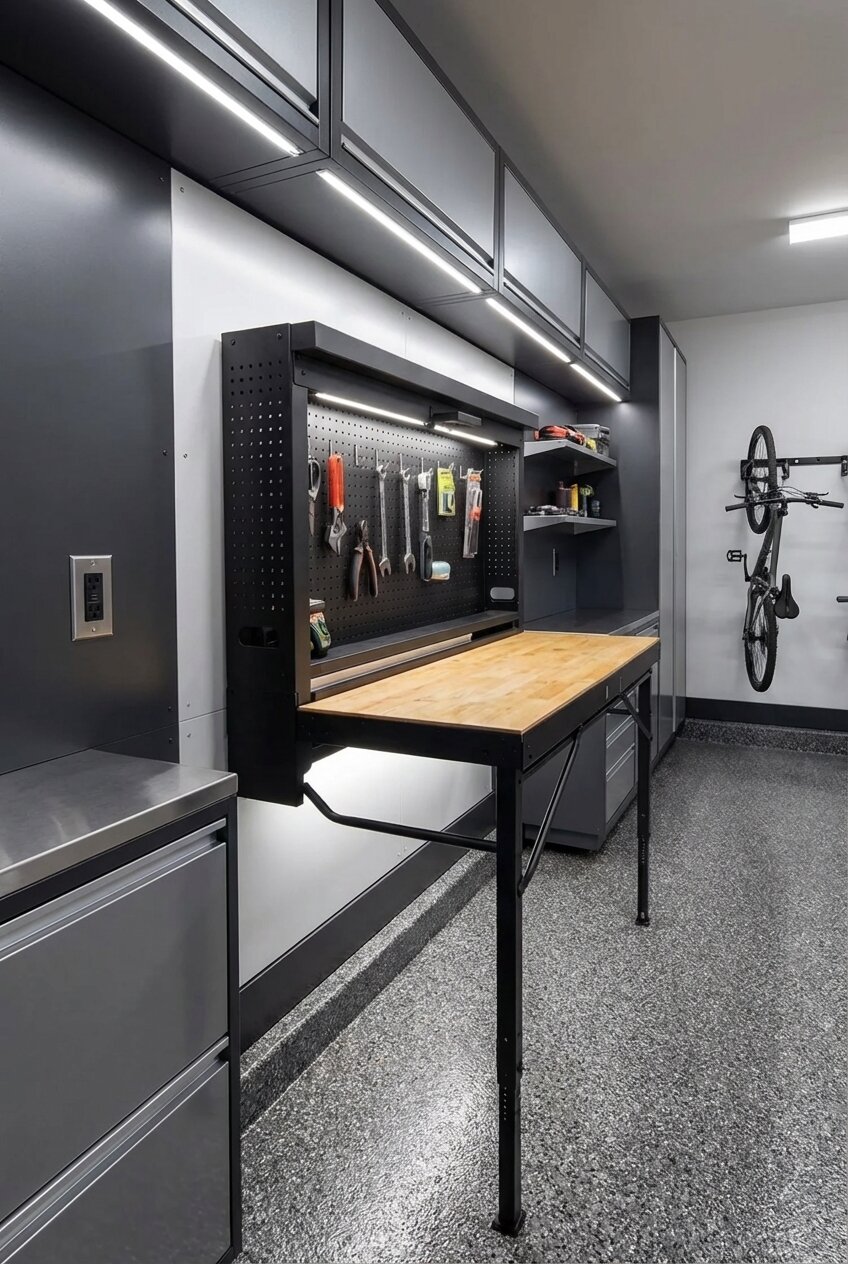
If you enjoy DIY projects but lack the space for a permanent workshop, a folding wall-mounted workbench is a transformative addition. The design of such products often includes space for storing tools such as hammers, wrenches, and pliers. These units provide a rock-solid work surface when needed but collapse nearly flat against the wall when the project is finished. This allows you to maintain a functional workshop environment without permanently sacrificing a parking spot.
Choose a model with a heavy-duty butcher block or stainless steel top to handle the rigors of hammering and sawing. When planning the location, ensure there is an electrical outlet nearby and sufficient lighting for detailed tasks. Maintaining a clear “swing zone” in front of the bench ensures that you can always deploy your workspace in seconds, even if a vehicle is parked nearby.
- 07 of 11
High-Capacity Magnetic Tool Strips

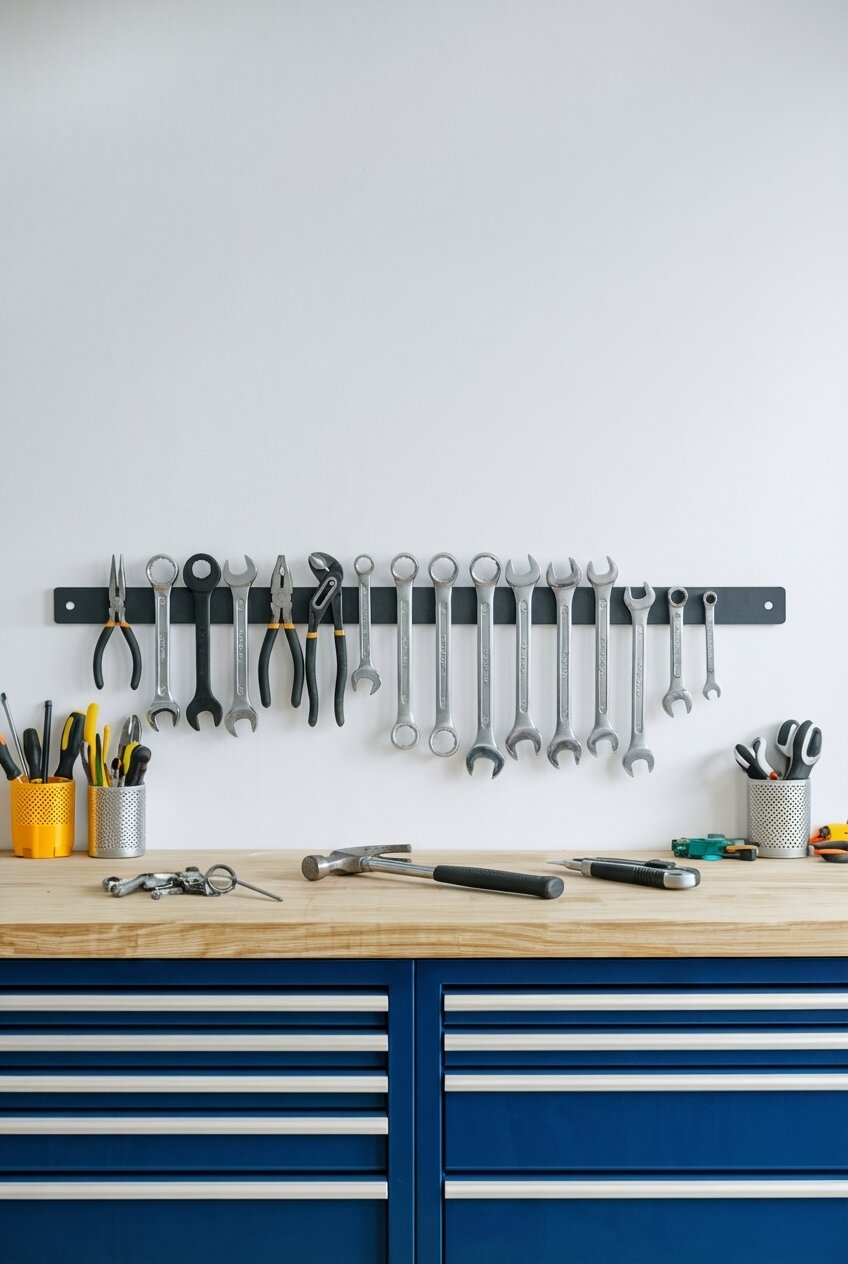
Searching through a cluttered drawer for a specific wrench or screwdriver is a common source of frustration. Industrial-strength magnetic strips provide a high-visibility, space-saving alternative that keeps your most-used hand tools right at your fingertips. These are best mounted directly above a workbench or integrated into a slatwall system to keep the work surface clear of loose items.
To implement this effectively, group your tools by type or size on the strip to create a visual “inventory” that makes it obvious if a tool is missing. Ensure the magnetic force is strong enough to hold heavier items like hammers or large pliers securely. This vertical arrangement not only saves drawer space but also prevents tools from knocking against each other, preserving their sharp edges and finishes.
- 08 of 11
Mobile Storage Carts and Tool Chests
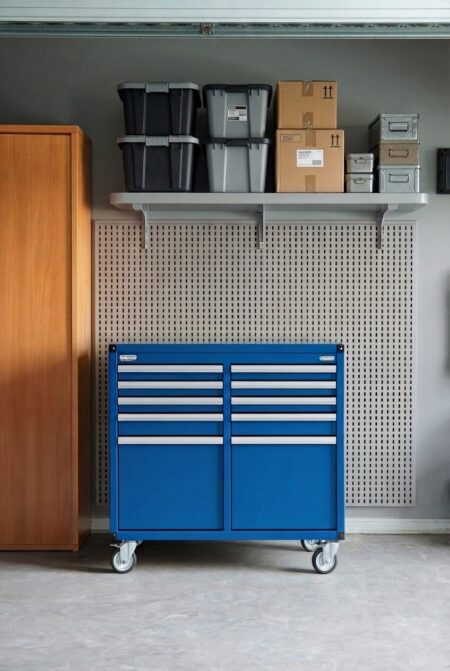
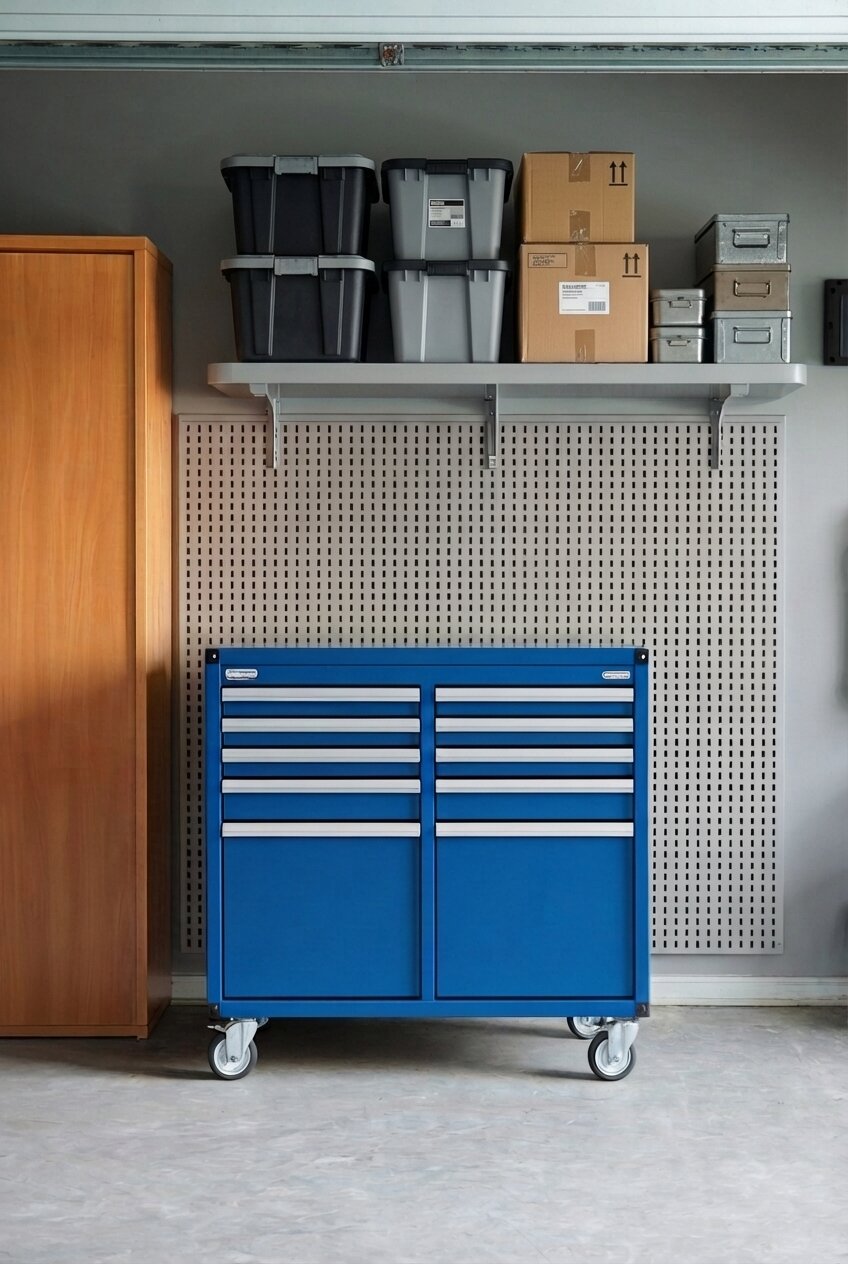
Fixed storage is excellent for organization, but sometimes you need your tools to come to the project. Heavy-duty mobile carts with locking casters allow you to transport a full suite of equipment to the driveway or the far corner of the garage with ease. These are especially useful for automotive maintenance or large-scale woodworking where you need constant access to a variety of supplies.
Prioritize carts with ball-bearing drawer slides for smooth operation even when fully loaded. A smart organizational tactic is to use foam drawer liners with cutouts for each specific tool, which prevents them from sliding around during transport and makes it instantly clear where each item belongs. When not in use, these carts can be tucked neatly under a workbench or inside a large locker to maintain a clean floor plan.
- 09 of 11
Corner Shelving Units
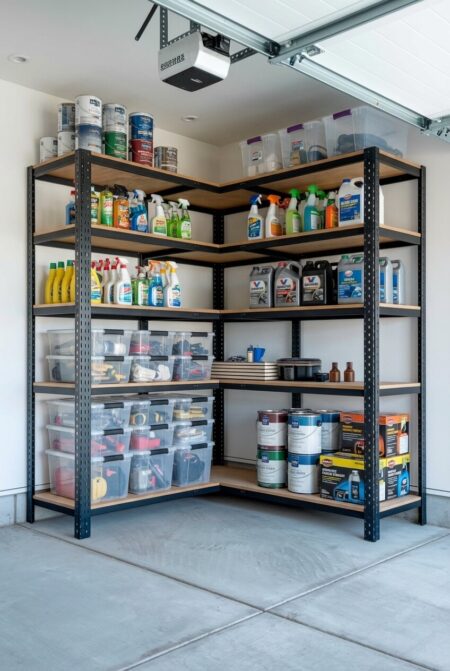
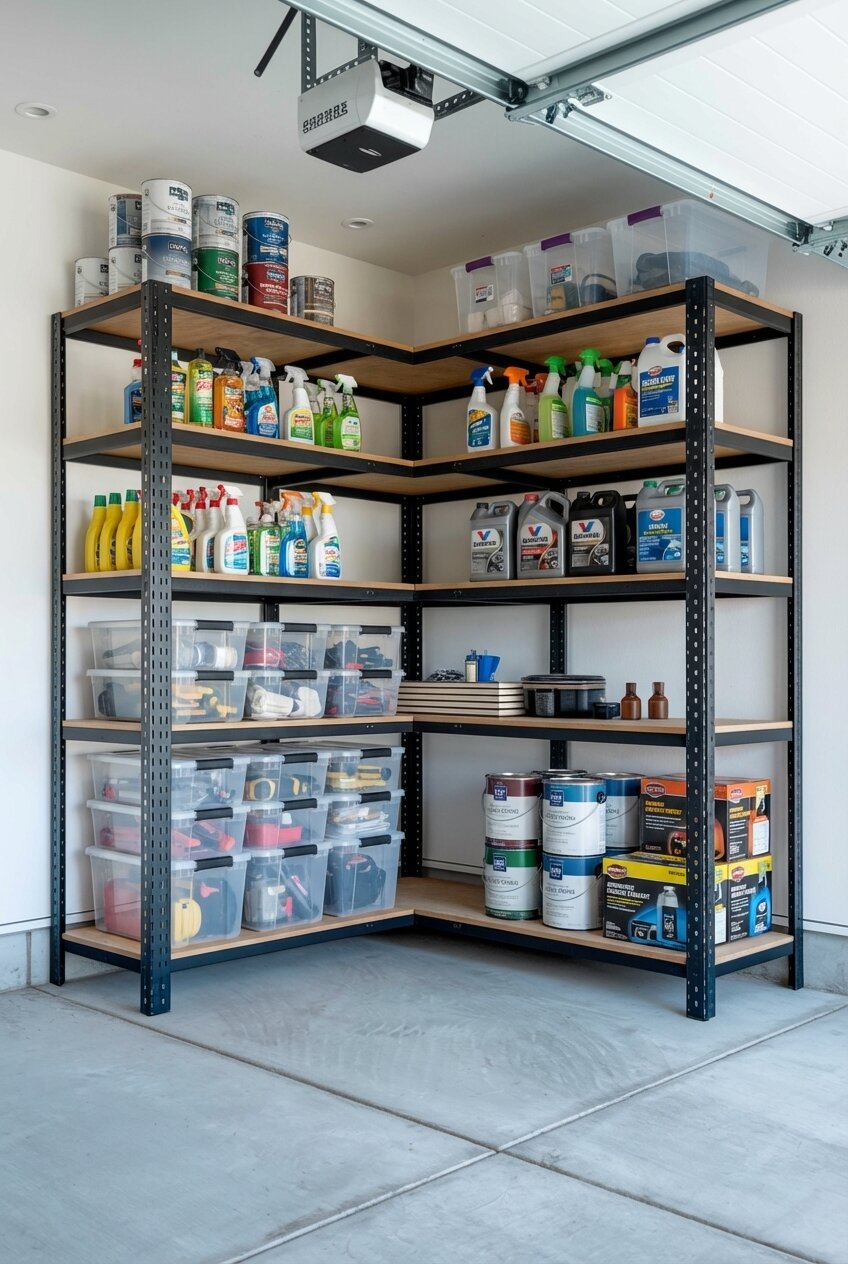
The corners of a garage are often neglected or filled with a haphazard pile of scraps. Corner shelving units are engineered to bridge the gap between two walls, creating a continuous storage surface that maximizes every square inch of the perimeter. These are ideal for storing smaller items like paint cans, cleaning supplies, or automotive fluids that might get lost on deeper, standard shelves.
When selecting corner units, look for “L-shaped” designs that don’t have a front support pole in the very center of the corner, as this allows for easier access to the items tucked in the back. Utilizing clear, stackable bins on these shelves can help you categorize small hardware like nails, screws, and brackets. This approach turns a former “dead zone” into one of the most organized and high-traffic areas of your garage.
- 10 of 11
Vertical Bike Racks and Pulleys
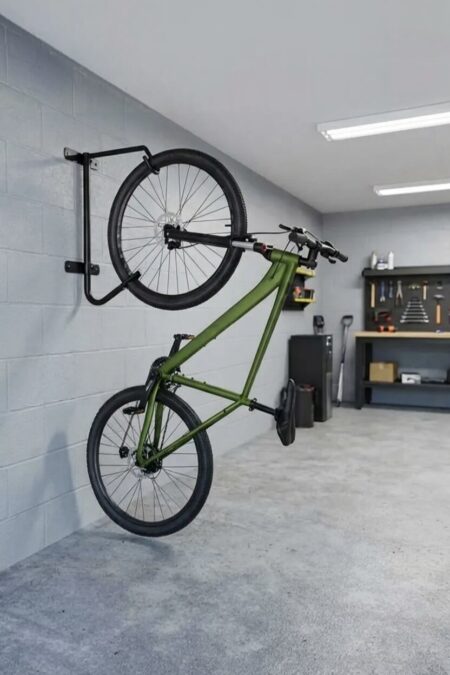
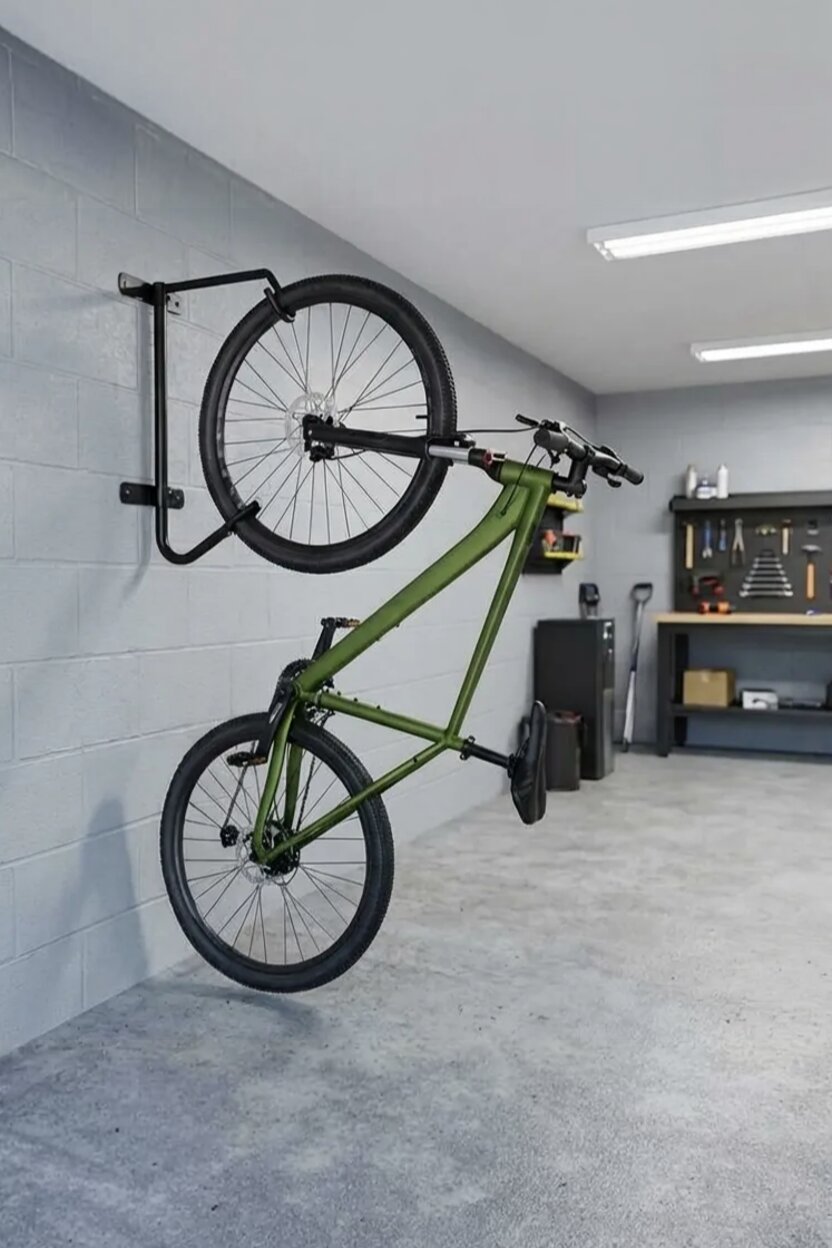
Bicycles are among the most difficult items to store because their handlebars and pedals create a wide, irregular profile. Vertical bike racks that hold the front wheel allow the bike to hang perpendicular to the wall, significantly reducing the amount of wall space required per unit. For those with high ceilings, a ceiling-mounted pulley specifically for bikes can lift the entire frame completely out of the way.
For a family with multiple riders, alternating the height of the vertical racks can prevent the handlebars of adjacent bikes from tangling. If you use the vertical wall method, consider adding a small plastic “tire tray” to the wall to prevent the rubber from leaving scuff marks on your paint. This keeps the bikes safe from being knocked over and ensures they are always ready for a quick ride.
- 11 of 11
Clear, Labeled Bin Systems with Uniform Sizing
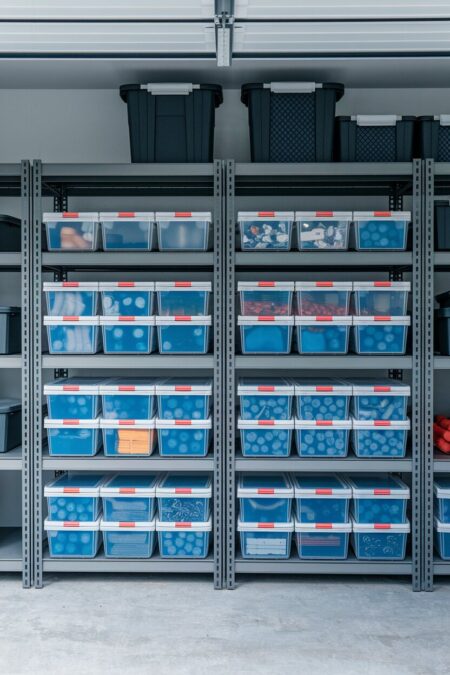
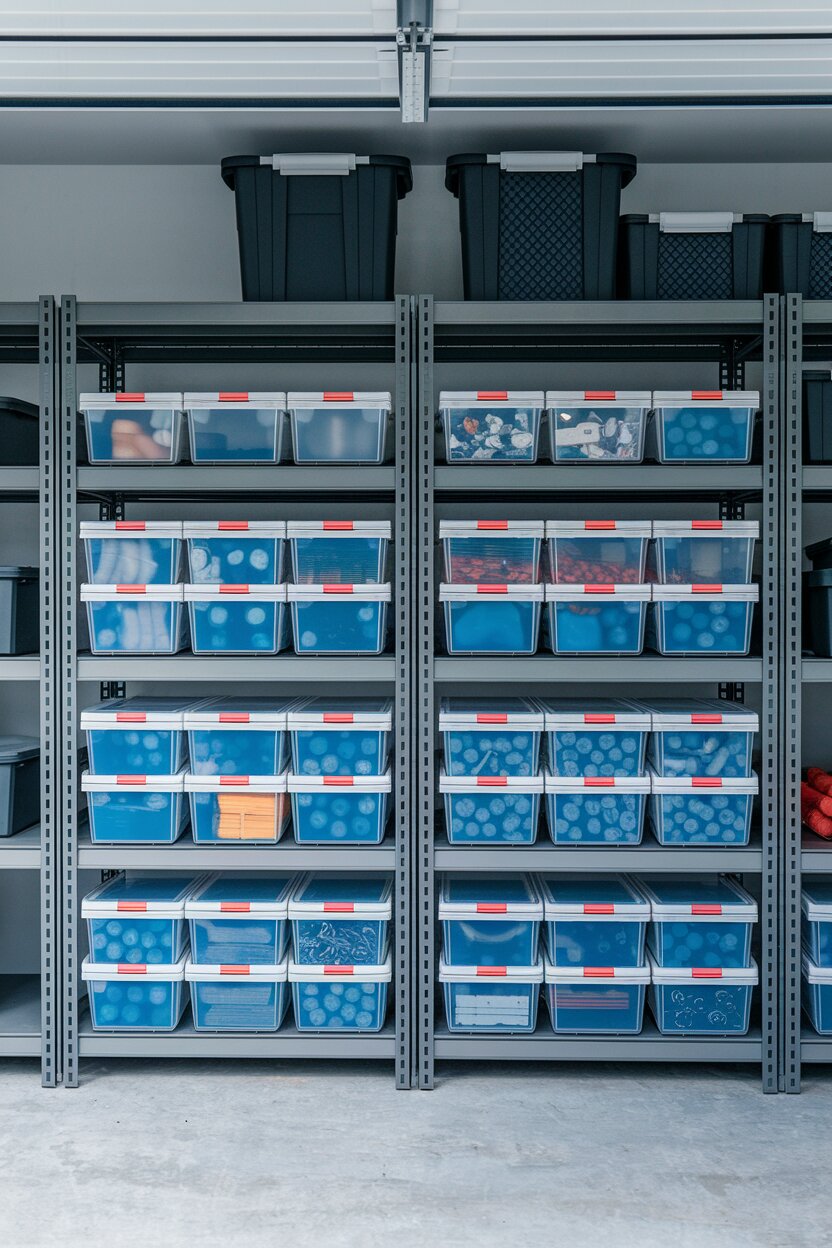
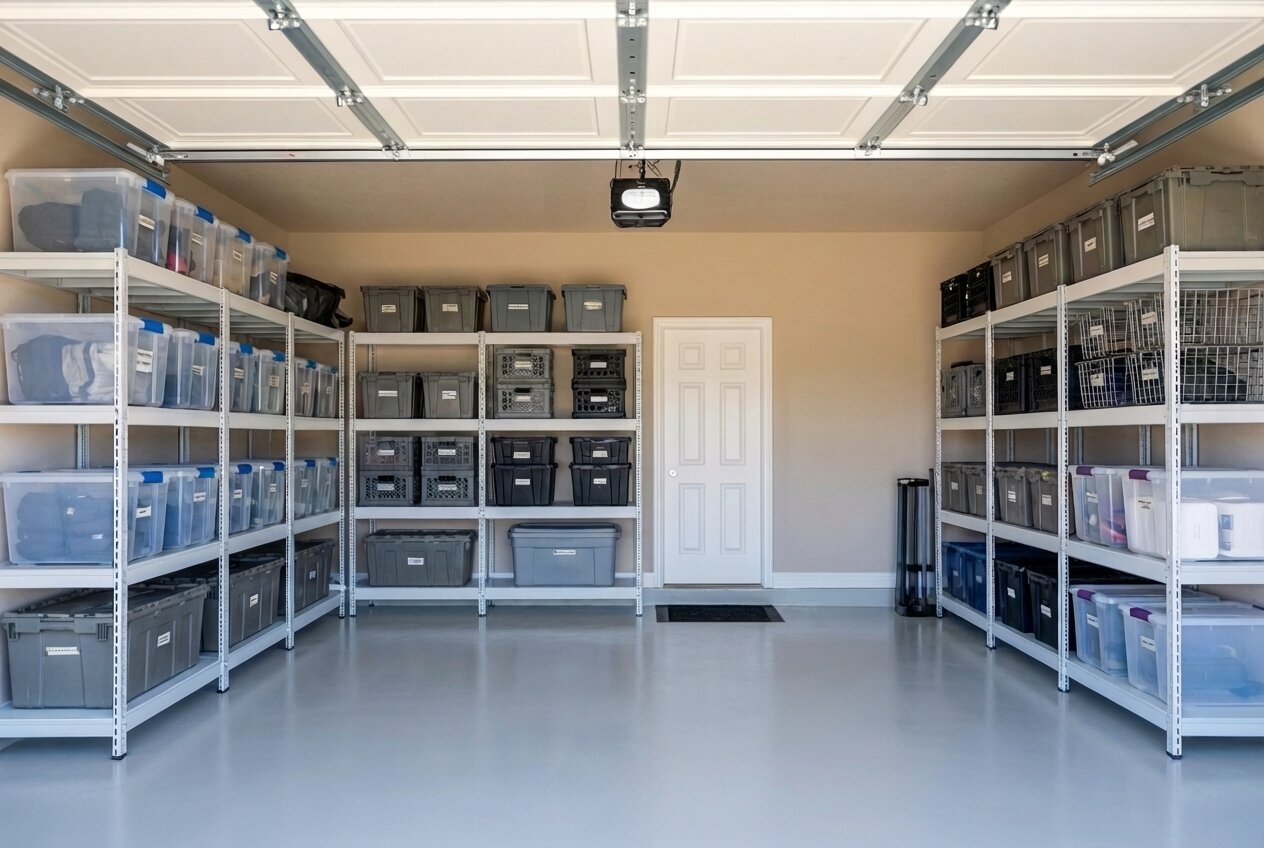
Consistency is the secret to a professional-looking garage. Rather than using a mismatched collection of cardboard boxes and old containers, invest in a uniform set of clear plastic bins. Clear bins allow you to see the contents at a glance, reducing the time spent searching, while uniform sizing ensures they stack perfectly on your shelving units without wasting vertical space.
For the highest level of organization, apply a large, easy-to-read label to the front of each bin. Group bins by category (such as “Plumbing,” “Electrical,” or “Garden Seeds”) and store the heaviest categories on the lowest shelves for safety. Using bins with latching lids will further protect your belongings from the fluctuating temperatures and humidity levels common in a garage environment, keeping your items in “like-new” condition for years.