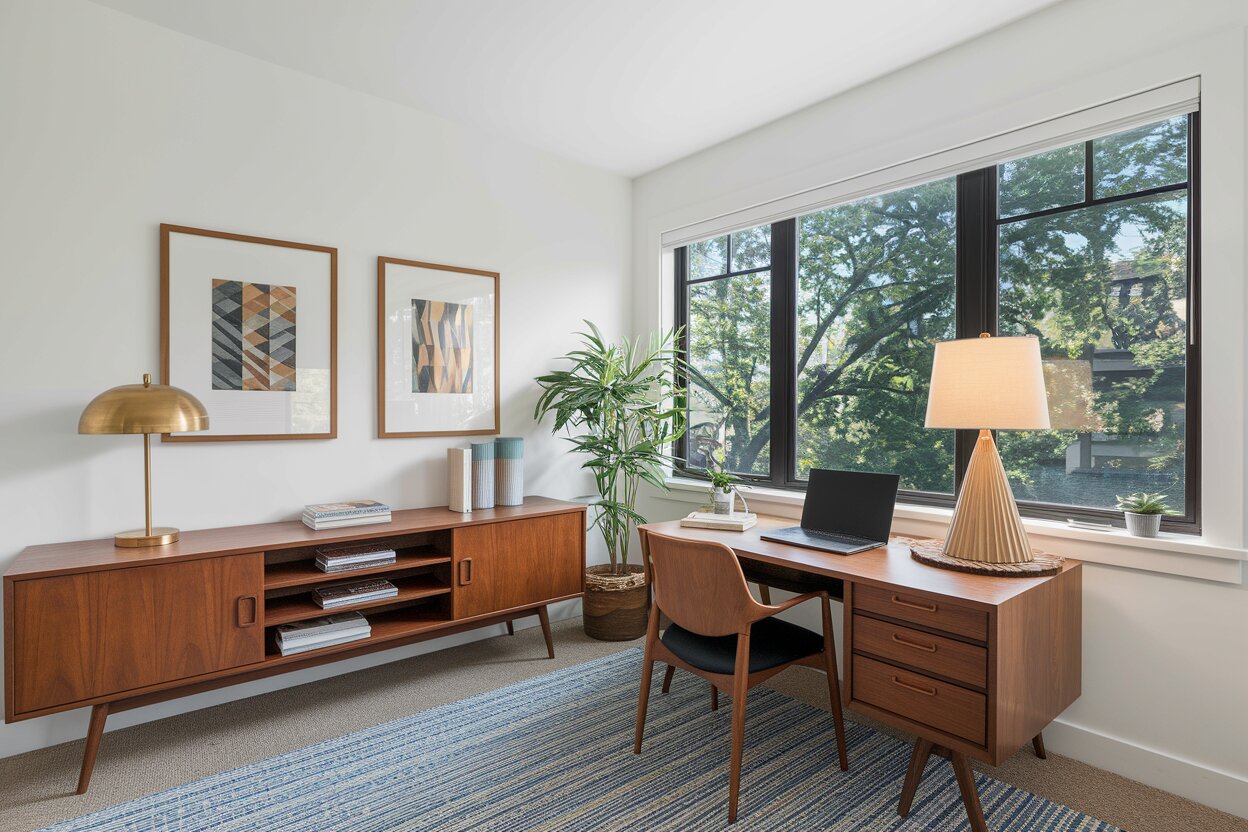
Mid-century modern design never really left. It just spent a few decades waiting for the right room to reclaim, and the home office turned out to be it. Born between the 1940s and 1960s, the style built its reputation on clean lines, organic curves, and materials meant to age well, not just look good on day one. Applied to a workspace, that means warm walnut desks, tapered legs, and low-key color accents standing in for the cold minimalism so many home offices default to. The result is a room that feels considered, not cobbled together.
Part of the appeal is how practical the style actually is. Nothing in a well-designed mid-century room is purely decorative. A sculptural chair still has to hold up through an eight-hour workday. A credenza still has to store files. That mix of craftsmanship and function is a big reason the look has aged so well, and it also plays nicely with other styles. Add a few Scandinavian touches or a boho rug, and the room still hangs together.
None of this requires tearing a room down to the studs. Small, deliberate swaps do most of the work. These mid-century modern home office ideas are a good place to start.
- 01 of 12
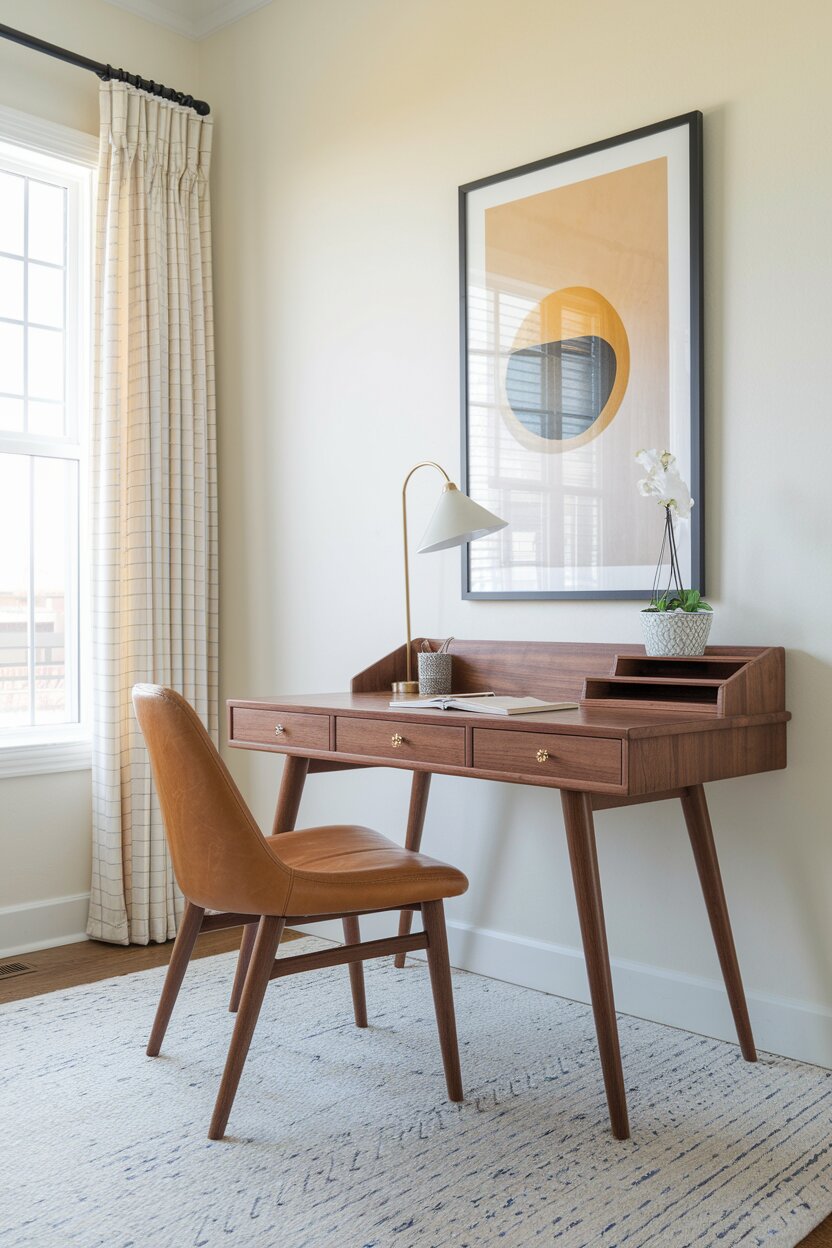
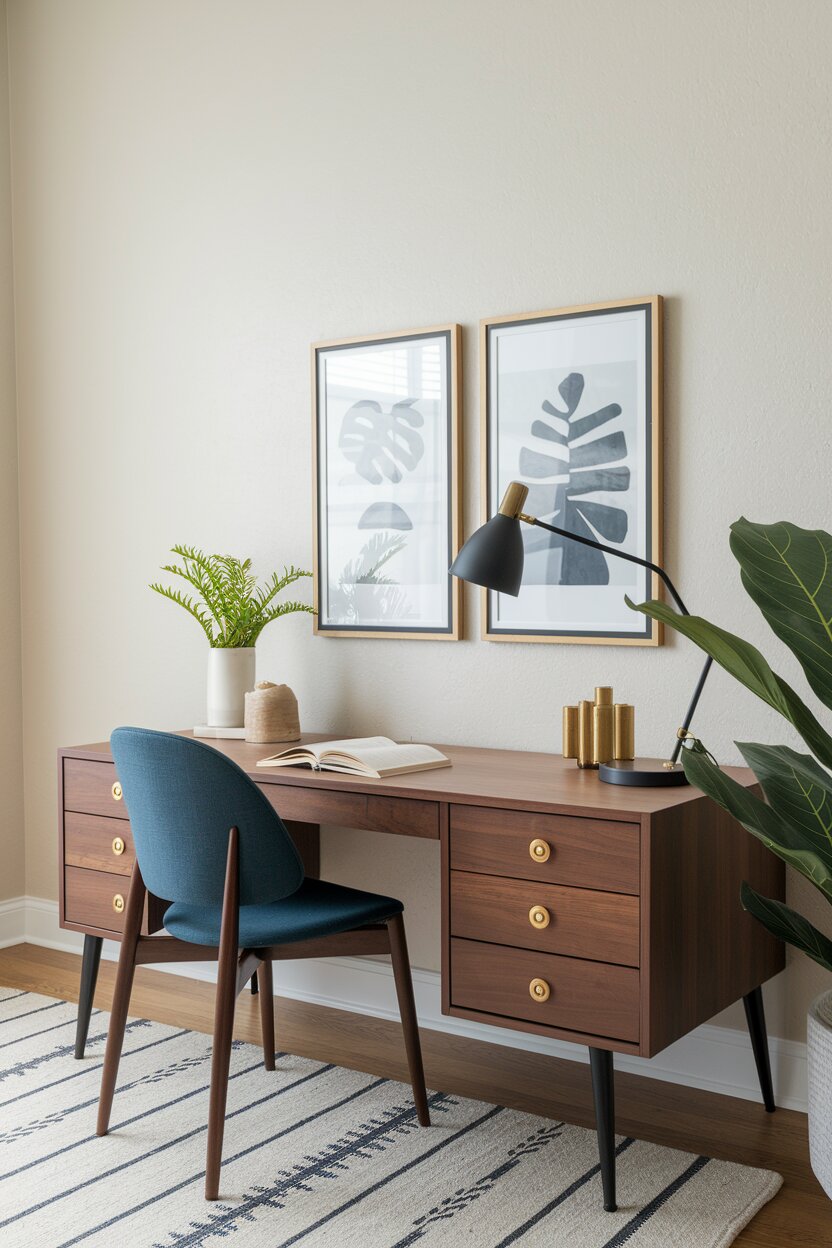
A Walnut Desk with Tapered Legs
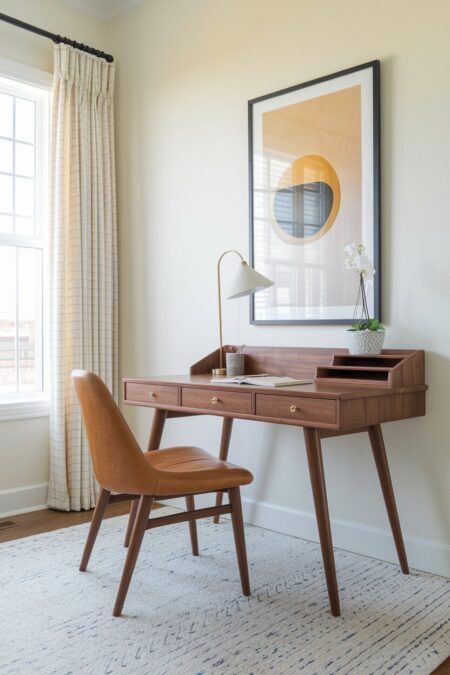
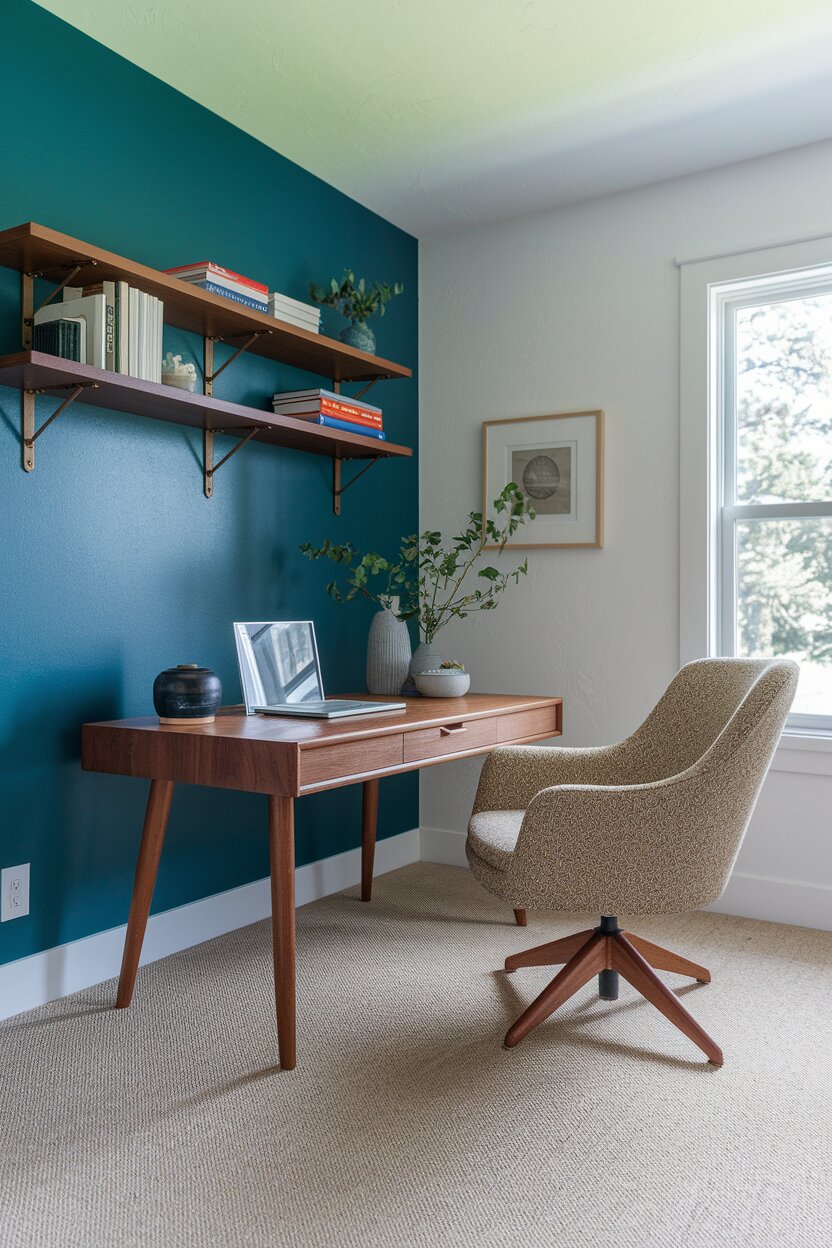
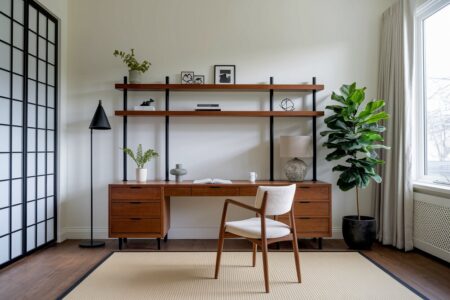
Start with the piece the whole room will build around. A walnut desk with slim, angled legs is about as mid-century as furniture gets. The wood grain brings warmth. The tapered legs keep things light, which matters if your office is on the smaller side. Look for a design with minimalist hardware and a slim drawer profile, so the desk reads as sculptural, not purely utilitarian. Pair it with a chair in a contrasting material, like leather or bouclé, and you’ve already got tension worth looking at.
- 02 of 12
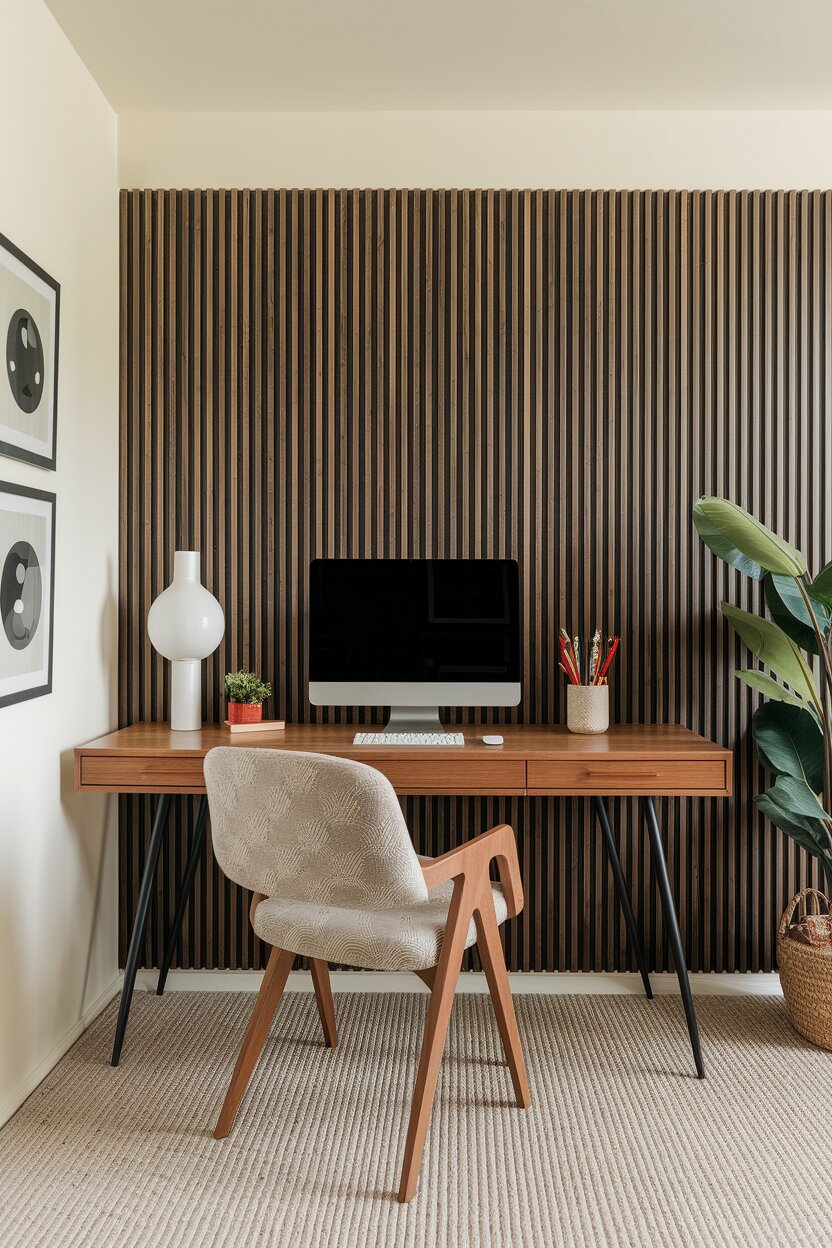
A Wood-Paneled Accent Wall
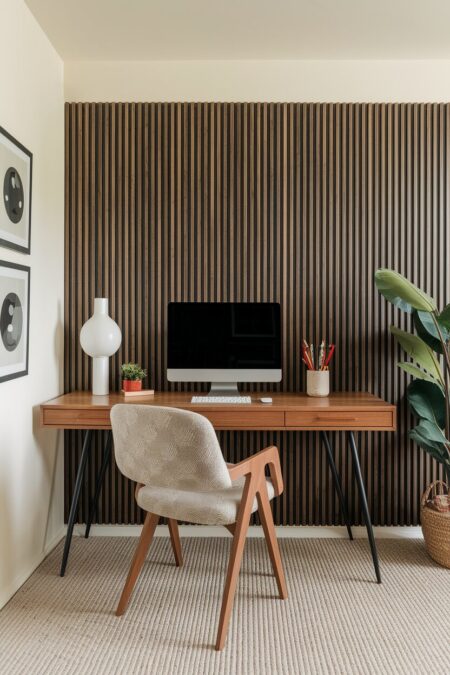
Slatted wood paneling is a signature of the era, and it works especially well behind a desk. The vertical lines add height. The warm tone softens whatever light you’re working under, which helps during long stretches at the computer. A full wall is one option. A single paneled section, positioned right behind your monitor, is another, and it doubles as a good-looking backdrop on video calls.
- 03 of 12
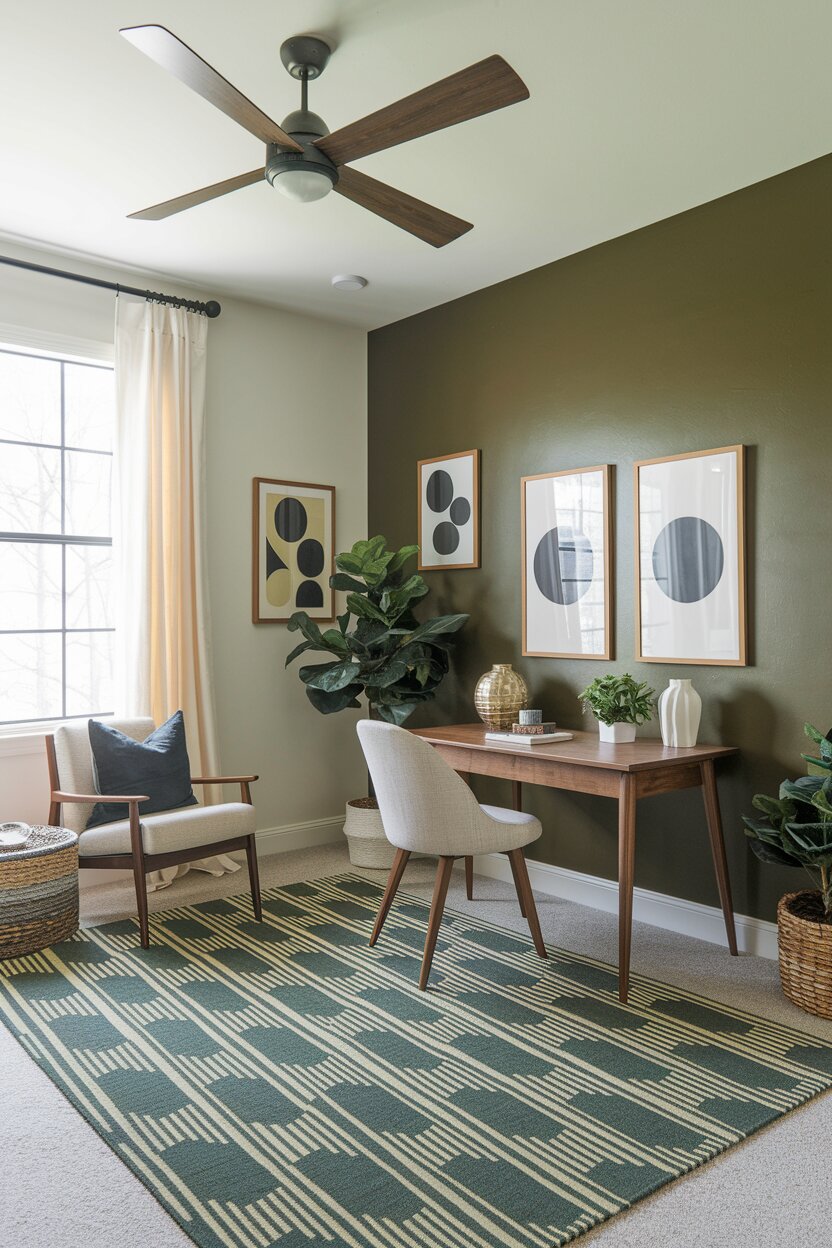
A Bold Geometric Rug
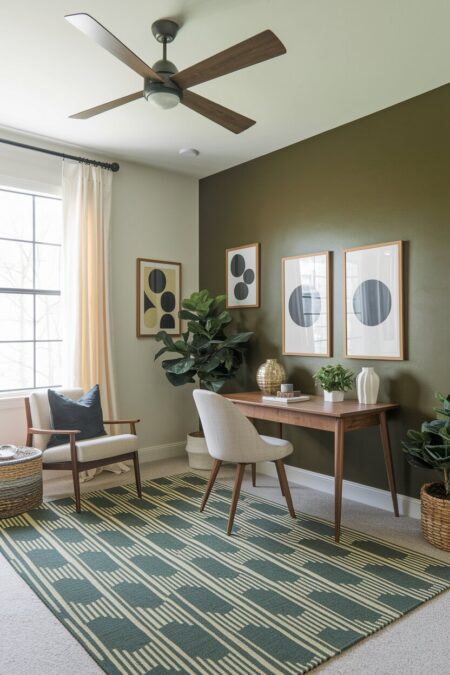
A patterned rug grounds a home office fast. Mid-century patterns tend to lean on abstract shapes, ovals, and repeating geometry in mustard, rust, or olive. Beyond the visual punch, a rug like this helps define your workspace inside a larger room. That matters if your office doubles as a guest room or shares square footage with a living area.
- 04 of 12
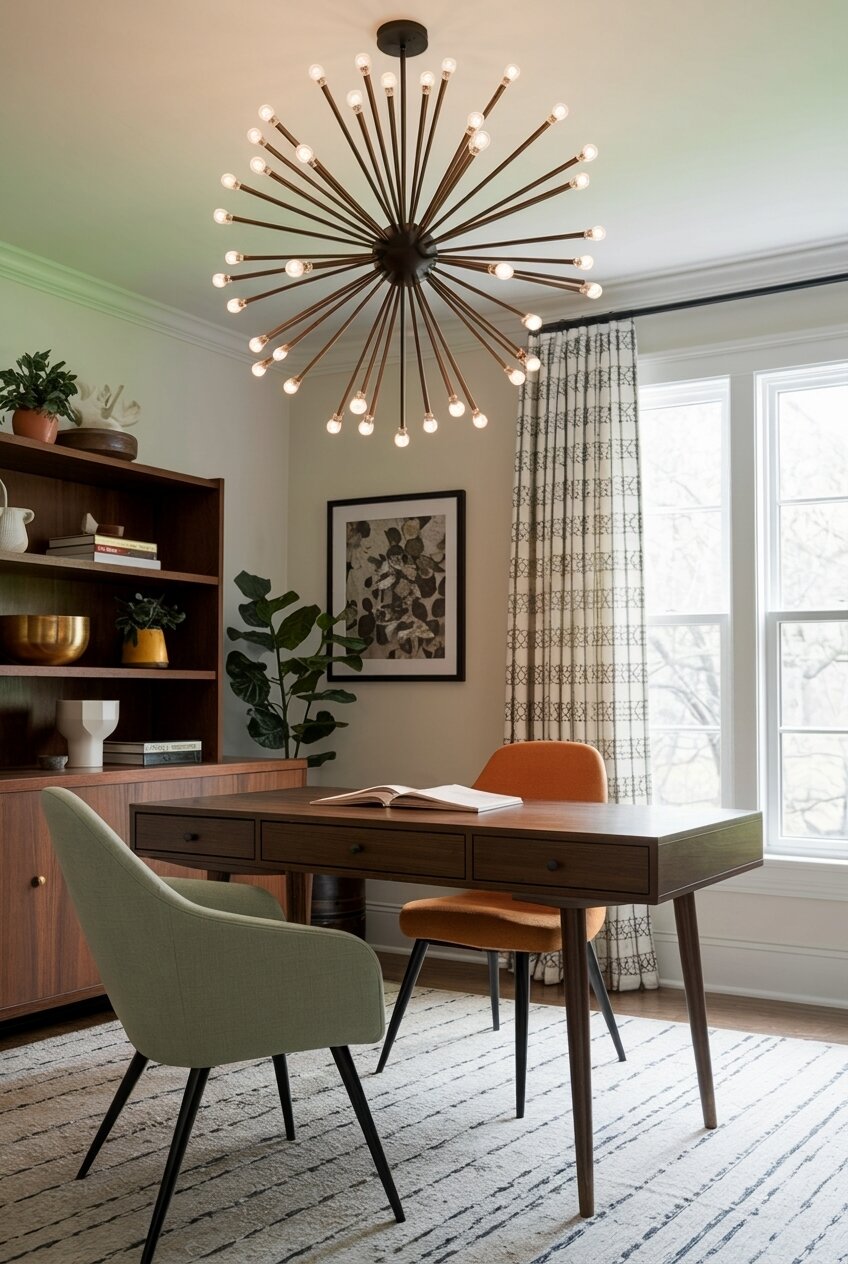
A Sputnik-Style Pendant Light
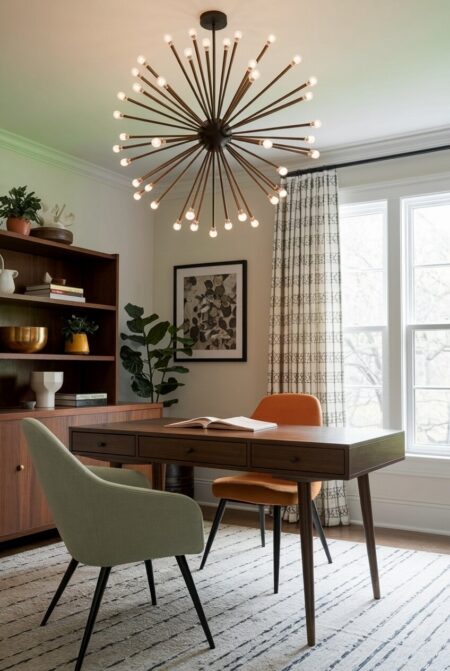
Lighting is where the era really shows off. A starburst or sputnik-style pendant, with its branching arms and small round bulbs, makes a striking centerpiece above a desk. It also frees up surface space that a desk lamp would otherwise take up. Go with brass or matte black finishes.
- 05 of 12
Mustard and Olive Color Accents
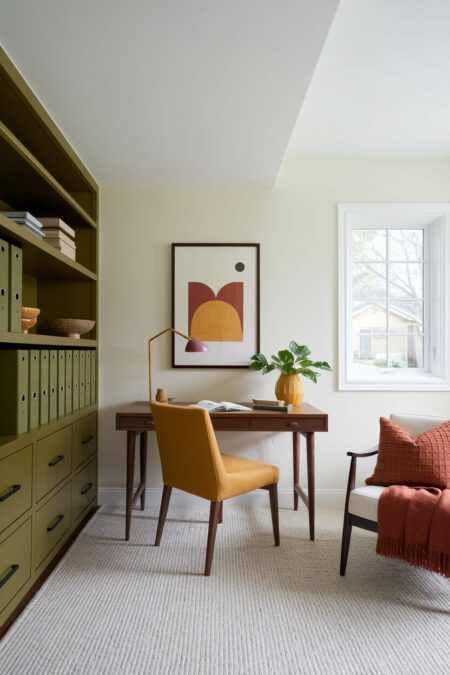
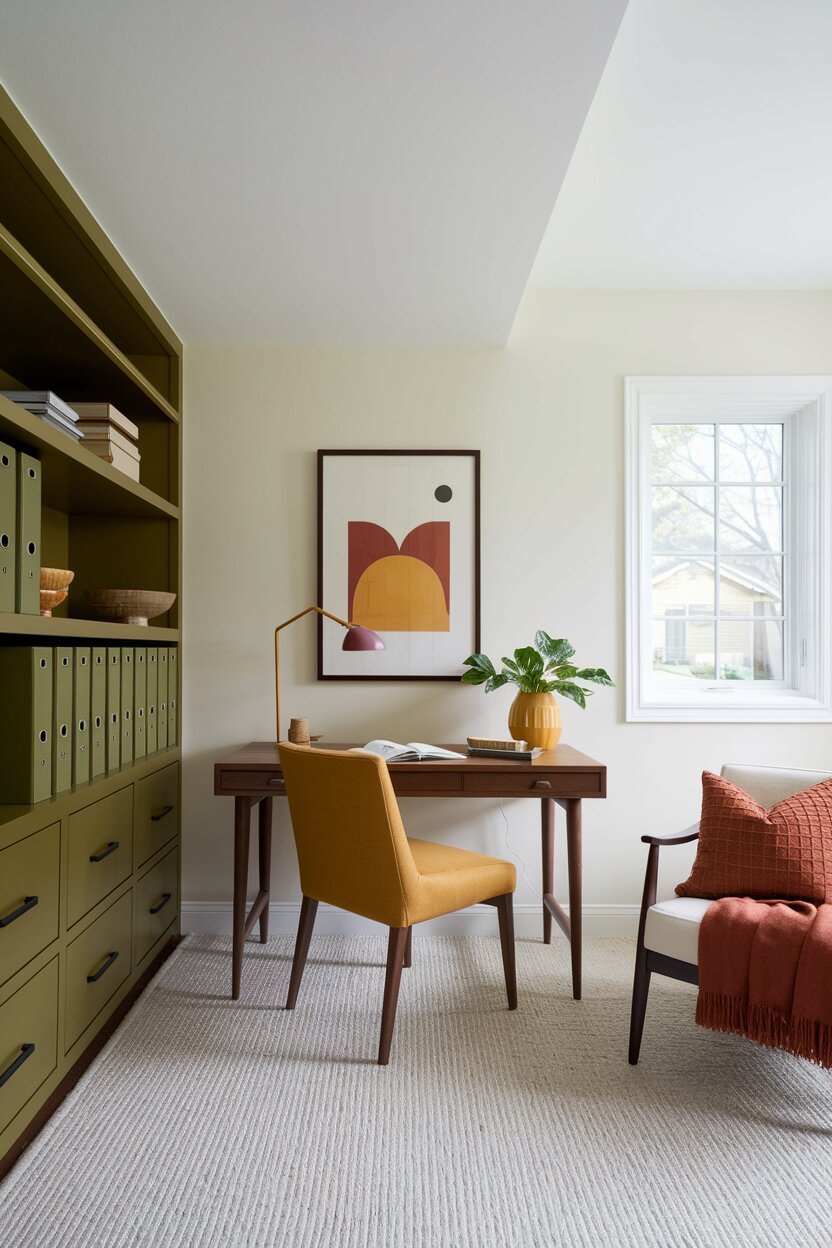
These two colors are shorthand for the whole MCM aesthetic, and neither needs to dominate a room to make an impact. A mustard desk chair. A set of olive file boxes. A single rust-colored throw pillow in a reading corner. Keep the walls in a neutral shade like white, cream, or soft gray, and let these warmer tones carry the character.
- 06 of 12
A Sculptural Task Chair
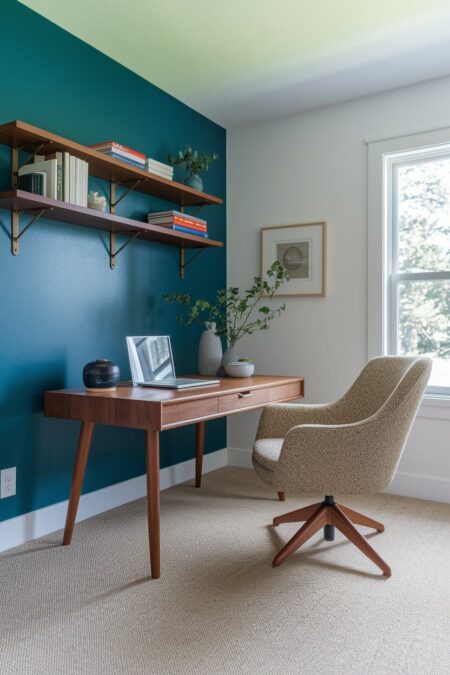
Your chair spends more time in view than almost anything else in the room, so it earns a little personality. Look for molded curves, a swiveling wood base, and upholstery in a textured fabric or leather. Comfort still has to come first, though. A chair that photographs well but ignores ergonomics won’t make it through a real workday.
- 07 of 12
Floating Wood Shelves
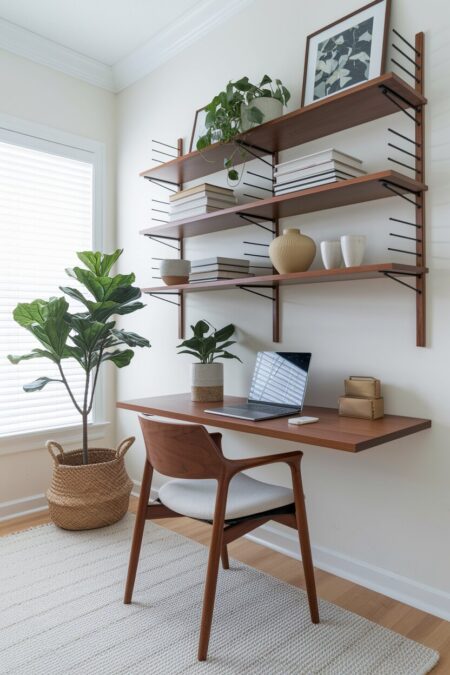
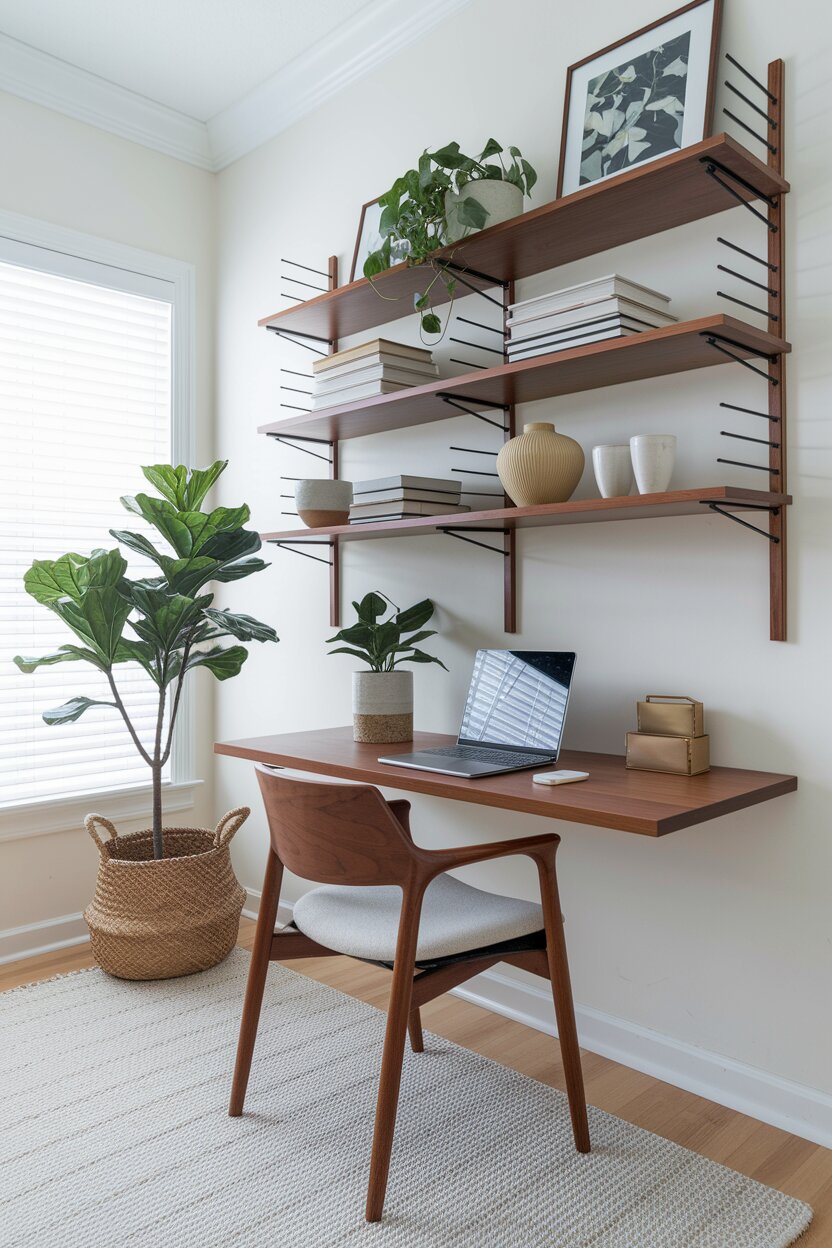
Skip the bulky bookcase. A few floating shelves in walnut or teak keep books and files visible without eating up floor space. Style them the way you’d style a gallery wall: mix in a small plant, a couple of ceramic pieces, and leave some breathing room between objects. Open shelving like this also keeps a small office from feeling boxed in.
- 08 of 12
A Vintage-Style Credenza
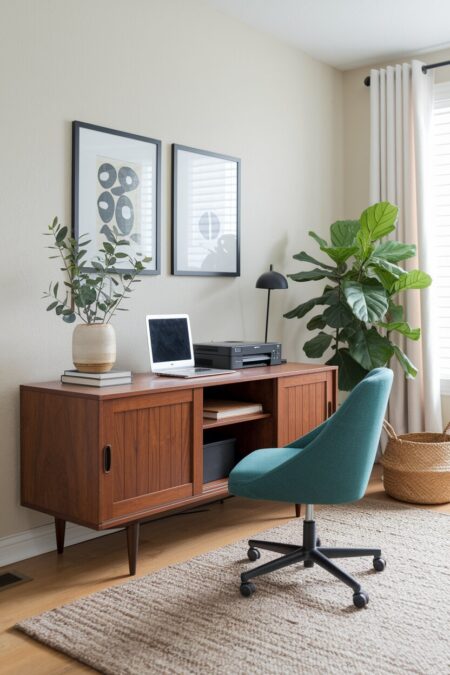
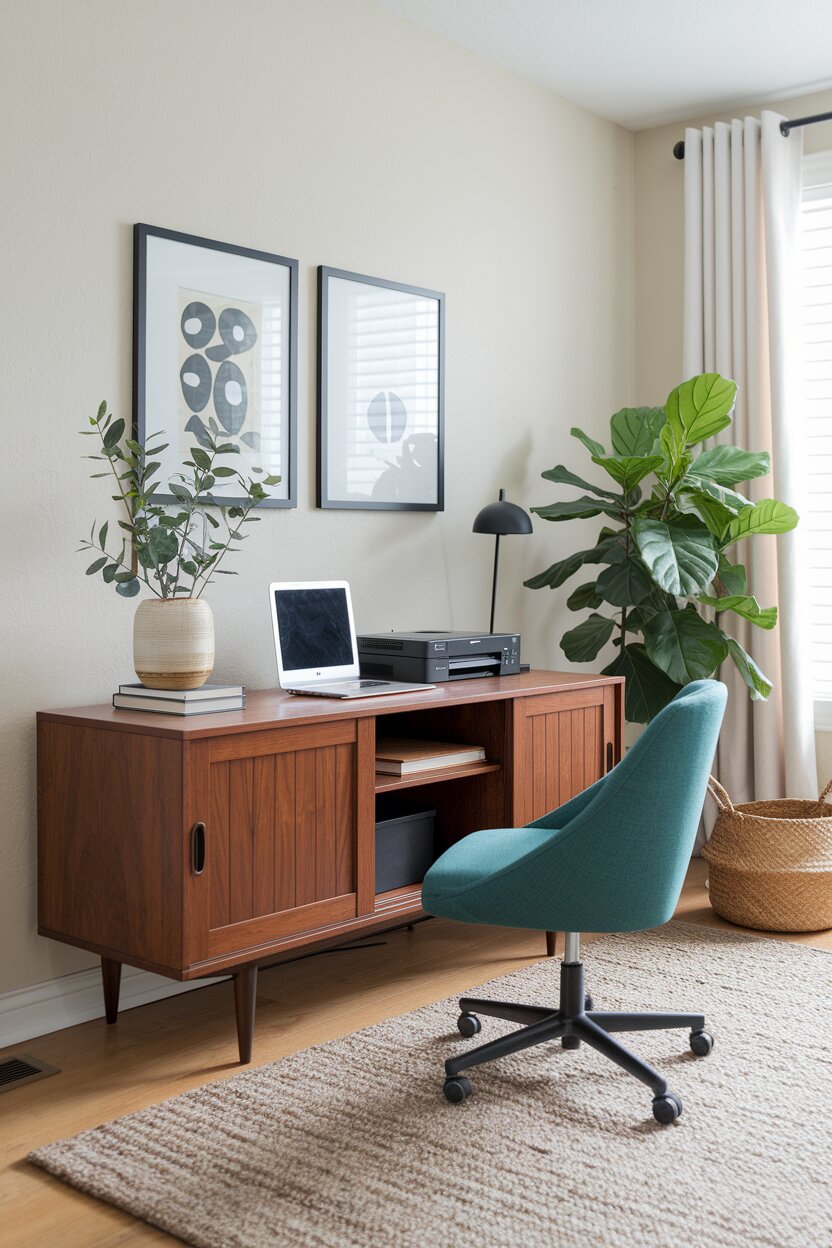
Closed storage matters just as much as open shelving, especially once paperwork starts piling up. A low credenza with sliding or angled doors hides the mess while doing double duty as a stand for a printer or second monitor. Genuine vintage pieces are out there if you go looking. Plenty of newer furniture lines reproduce the look convincingly, too, if hunting through estate sales isn’t your idea of fun.
- 09 of 12
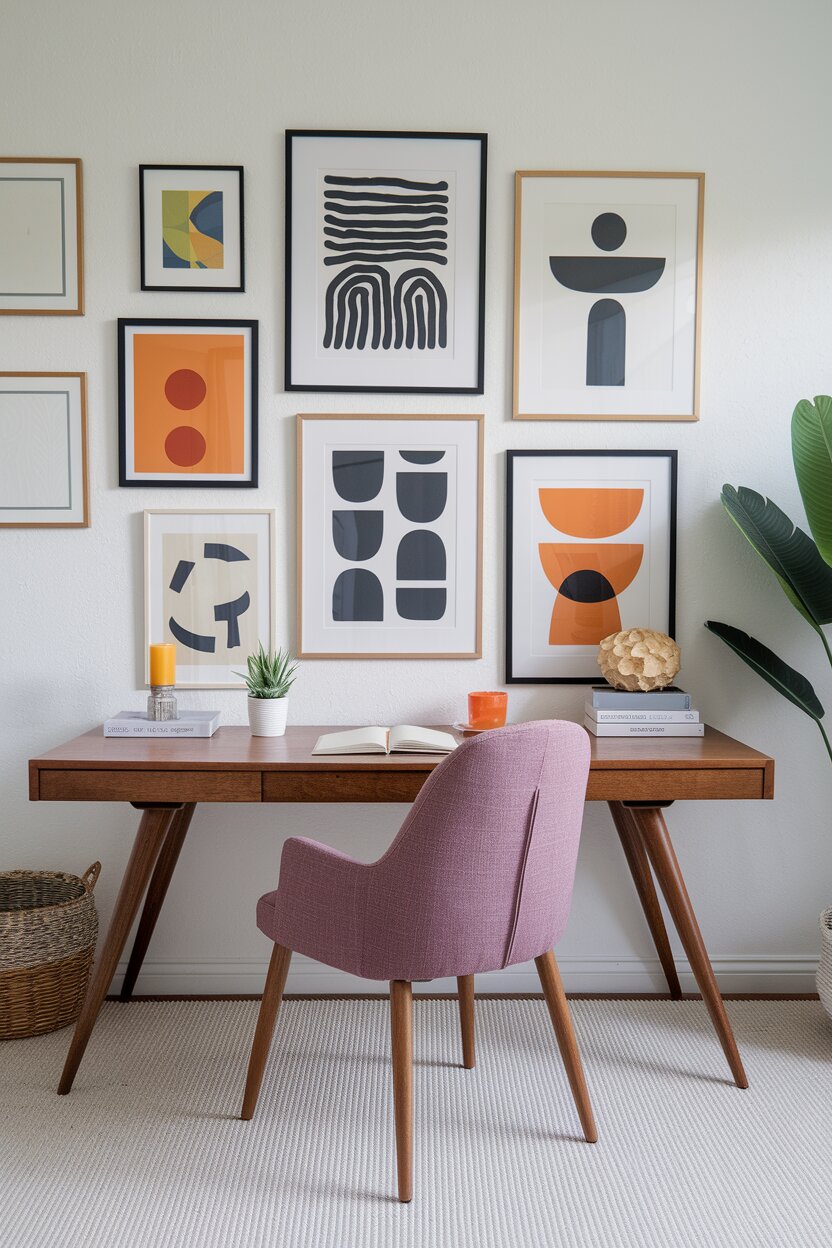
A Gallery Wall of Abstract Art
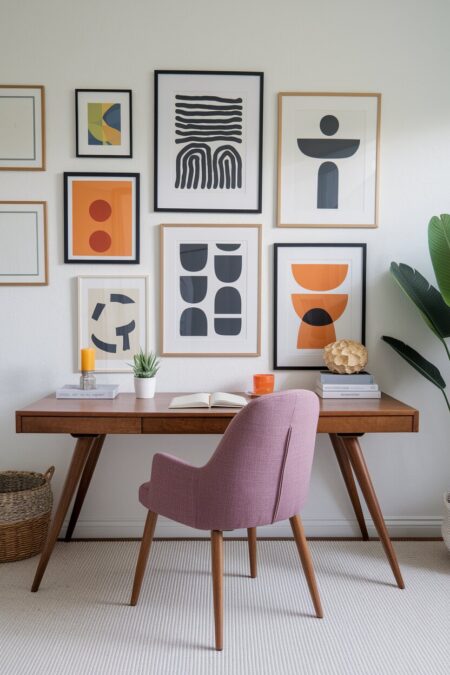
Mid-century interiors leaned hard on abstract art, and a gallery wall is an easy way to bring that energy into a home office. Mix framed prints with a few smaller sculptural pieces. Vary the frame sizes so the arrangement doesn’t feel too rigid. It’s also one of the cheaper ways to add color, which helps if your furniture is leaning neutral.
- 10 of 12
Walnut and Brass Hardware
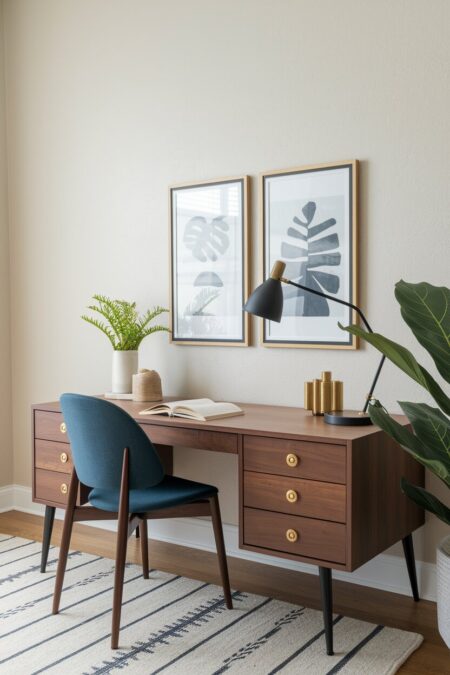
Small details add up fast. Swap standard drawer pulls for brass hardware. Add a brass desk lamp. Either move introduces just enough shine to contrast the matte wood tones around it. Brass against walnut is one of the most recognizable material pairings from the era, and it’s an easy update even if a full furniture overhaul isn’t in the budget.
- 11 of 12
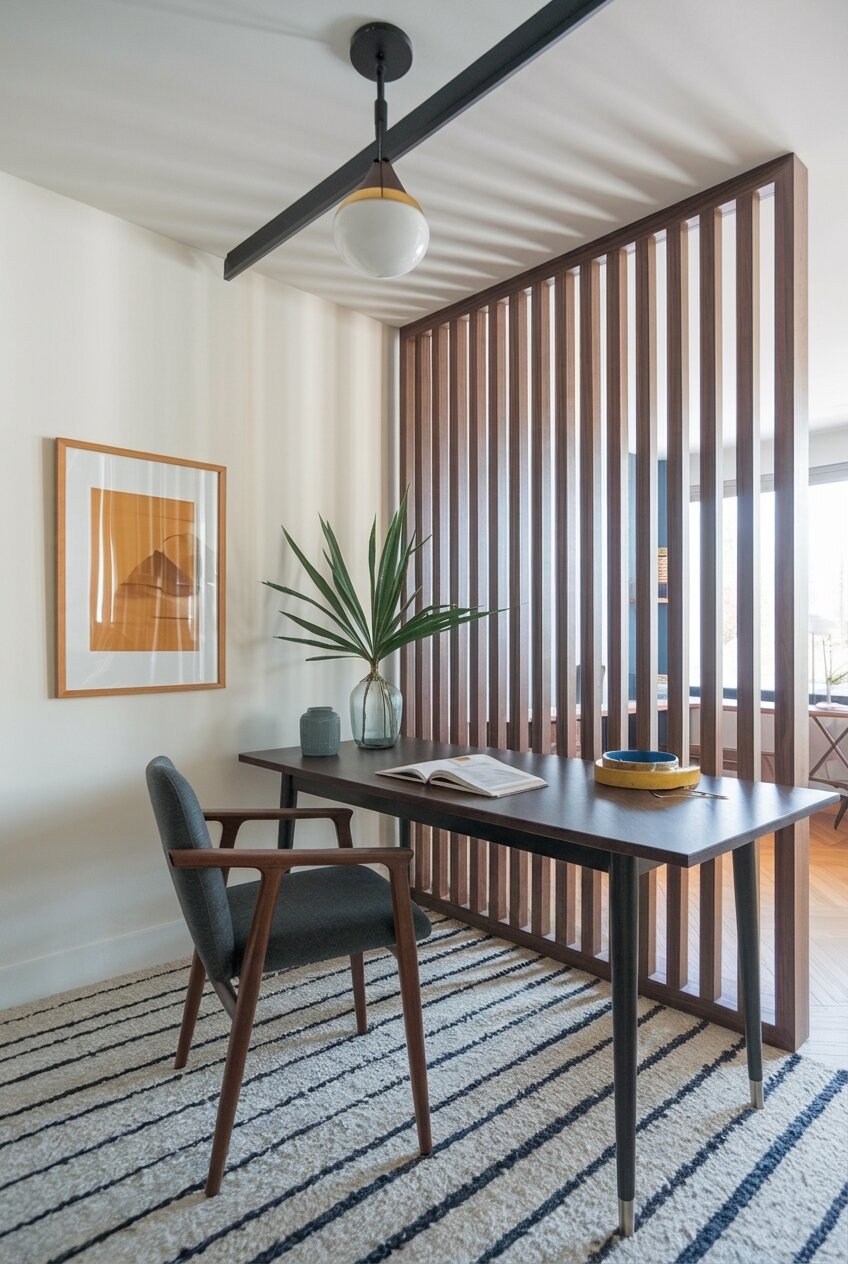
A Wood-Slat Room Divider
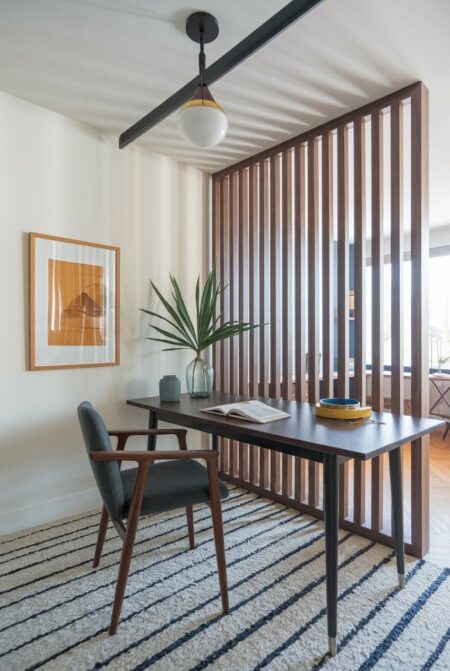
If your office shares space with another room, a wood-slat divider is both functional and true to the style. It creates a visual boundary without a full wall, so the room still feels open. Many versions fold or slide, which makes them easy to move whenever you need to reconfigure the space for guests.
- 12 of 12
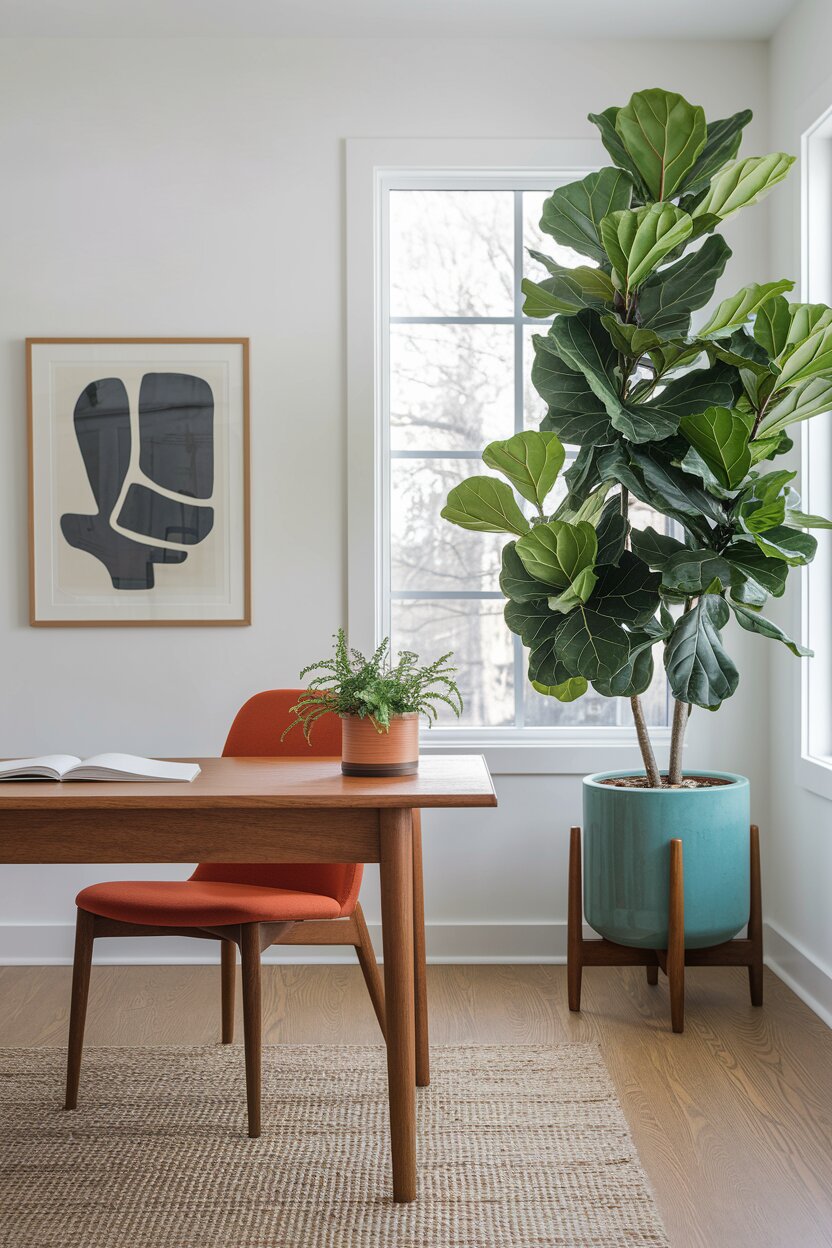
Statement Houseplants in Ceramic Planters
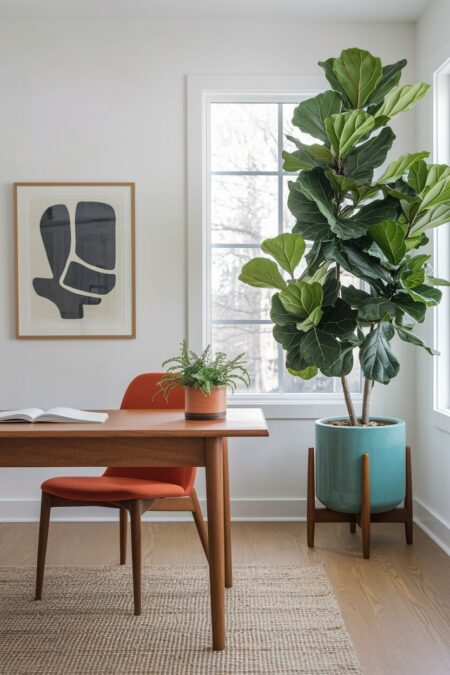
An MCM home office can start to feel clinical without something alive in it. A tall plant, like a fiddle leaf fig or a snake plant, set in a ceramic or wood-toned planter, softens all those clean lines. Place it near a window if you can. Natural light keeps the plant healthy and makes the whole room feel brighter in the process.