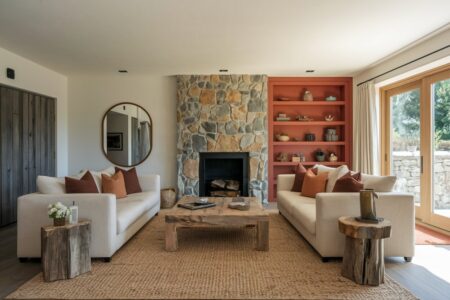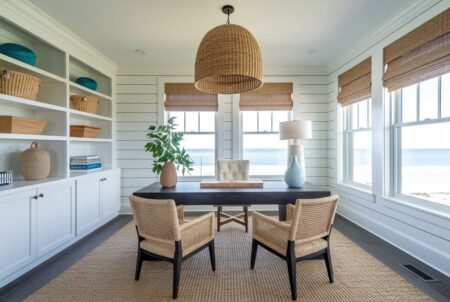
Traditional interior design is a style that never truly fades. It draws inspiration from 18th and 19th-century European decor, specifically from England and France. It is a look rooted in heritage, comfort, and symmetry. Many homeowners choose this style because it feels familiar and sophisticated. Unlike modern minimalism, it embraces detail, history, and a sense of permanence.
DEFINITION
Traditional interior design is a structured and refined decor style characterized by classic furniture, rich color palettes, and a focus on symmetry and architectural details. It prioritizes a sense of order and timelessness over fleeting trends
Why Traditional Interior Design Remains Popular Today
In a world of “fast furniture,” the traditional interior design style offers a sense of stability. People are drawn to the “lived-in” yet formal atmosphere it creates. It feels like a home that has been carefully curated over generations rather than bought from a single catalog.
This style is not about being “old-fashioned.” Instead, it is about being classic. It provides a warm, inviting backdrop for family life. The focus on high-quality materials (solid woods, natural stones, and heavy weaves) means your home won’t just look good; it will last for decades.
Key Characteristics of the Traditional Interior Design Style
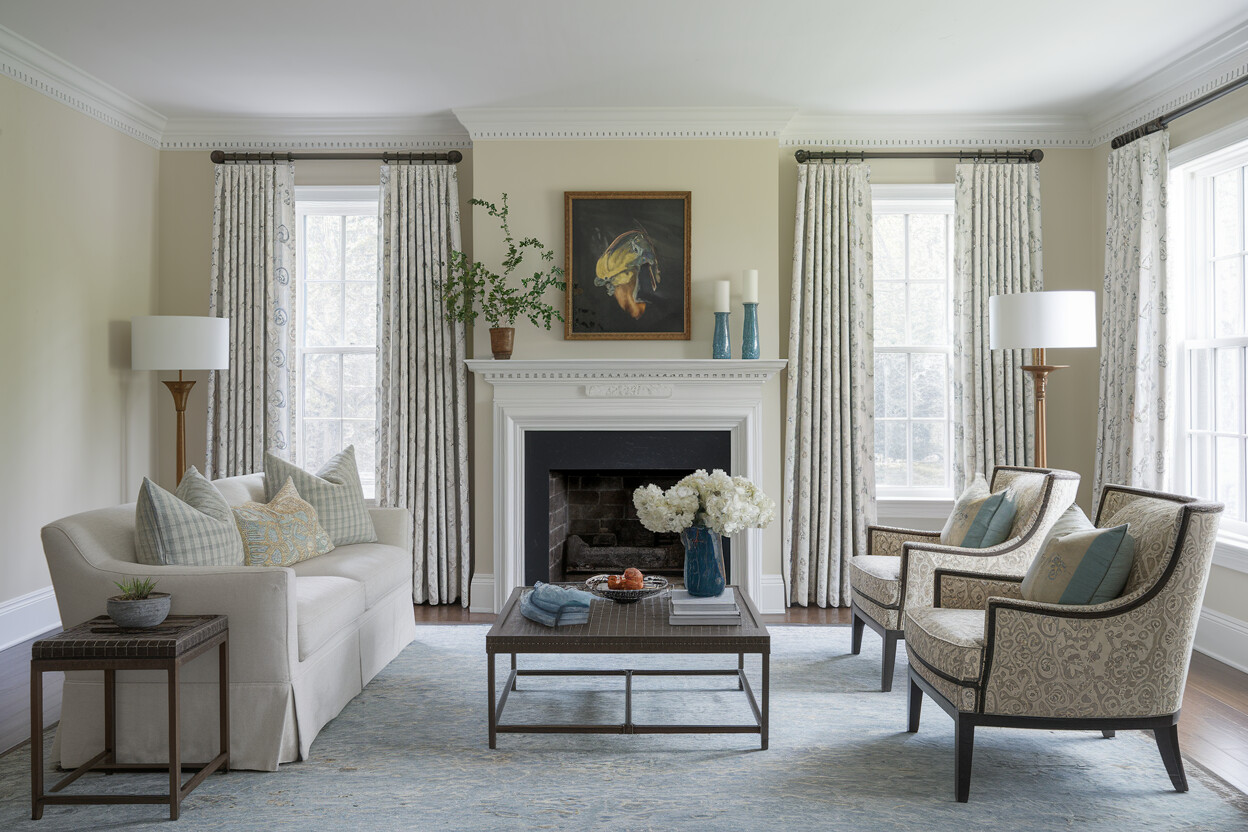
To master traditional design, you must understand its foundation. This style relies on specific visual cues and architectural “rules” to create its signature atmosphere.
1. Symmetry and Balance
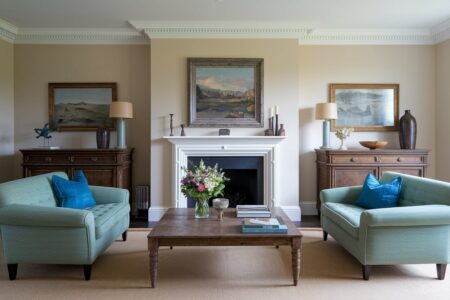
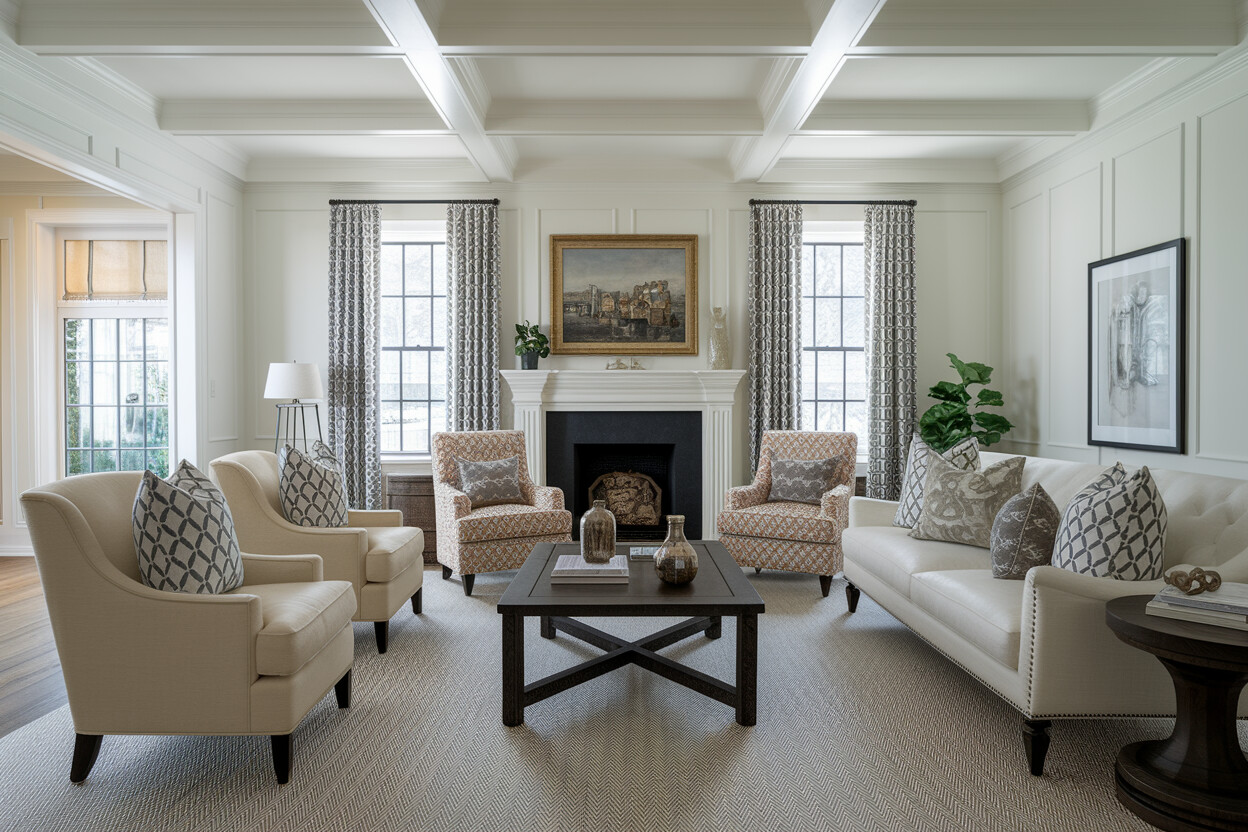
Furniture is almost always arranged in pairs. Think of two matching armchairs facing a fireplace or a pair of lamps on a sideboard. This creates a sense of calm and predictability that is essential to the traditional home.
2. Architectural Flourishes
The “bones” of the room matter. You will frequently find:
- Crown Molding: Thick, ornate trim where the wall meets the ceiling.
- Wainscoting: Wood paneling on the lower half of walls.
- Built-ins: Custom bookshelves or china cabinets that feel part of the architecture.
3. Rich Color Palettes
While modern styles favor stark whites, traditional style embraces depth. You will often see deep jewel tones like burgundy, navy blue, and forest green. These are balanced with warm neutrals like honey-gold, beige, or ivory to keep the room from feeling too dark.
4. Ornate Patterns and Textiles
Texture is everywhere. High-end traditional homes feature:
- Patterns: Damask, floral, paisley, and classic stripes.
- Fabrics: Velvet, silk, brocade, and high-quality wool.
- Window Treatments: Heavy drapes with valances, pelmets, or silk tassels.
Key Elements of the Traditional Design (at a Glance)
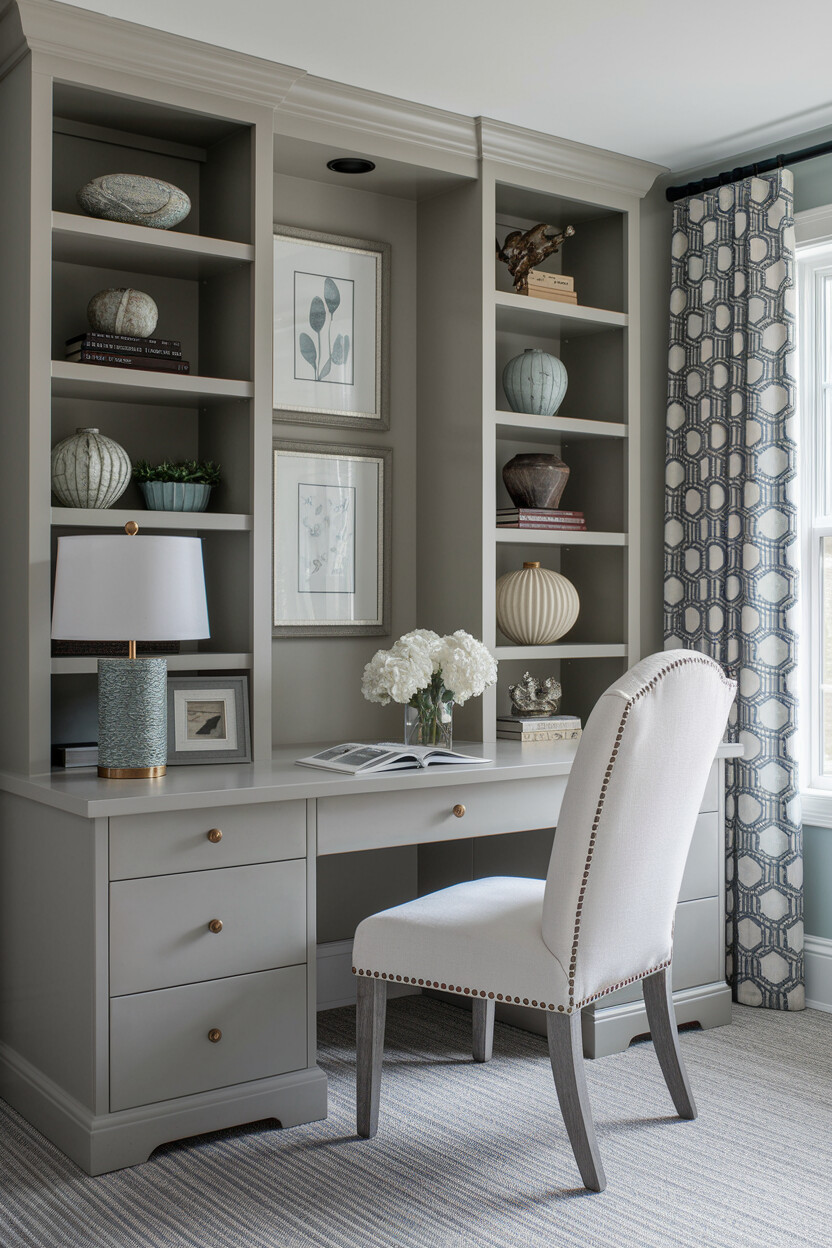
| Feature | Traditional Choice |
|---|---|
| Furniture Shape | Curved lines, cabriole legs, tufted upholstery |
| Wood Tones | Dark (Mahogany, Cherry, Walnut) |
| Flooring | Dark hardwood or parquet with Oriental rugs |
| Metal Finishes | Antique brass, bronze, or polished silver |
Practical Tips for Achieving the Traditional Look
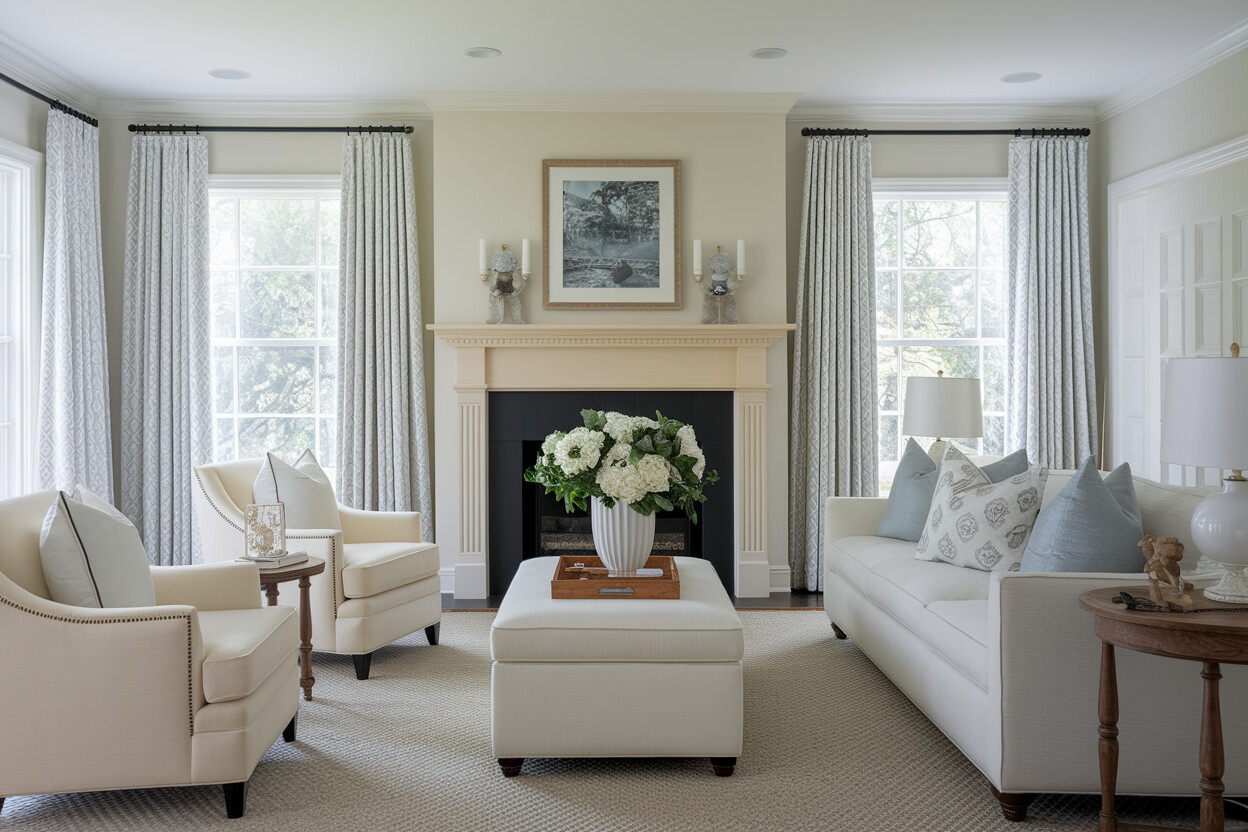
Creating a traditional style home requires a thoughtful approach. You want the space to feel curated, not like a museum.
- Invest in “Anchor” Pieces: Start with a high-quality sofa or a solid wood dining table. Choose pieces with curved lines and carved details. Queen Anne or Chippendale styles are perfect examples.
- Layer Your Lighting: Standard recessed lighting isn’t enough. Use a mix of crystal chandeliers, brass wall sconces, and floor lamps with pleated silk shades.
- Focus on your window treatments: In a traditional room, windows are rarely bare. Use heavy drapes with valances or tassels. This adds a sense of drama and privacy.
- Focus on the Floors: In a traditional room, the floor is never an afterthought. If you have hardwoods, add a large, intricate Persian or Oriental rug to define the seating area.
- Dress the Walls: Use art that feels historical. Oil paintings in gilded frames are a classic choice. Landscapes, still lifes, or portraits work best to reinforce the heritage feel.
Examples of Traditional Interior Design Style in Modern Homes
How does this look in practice today?
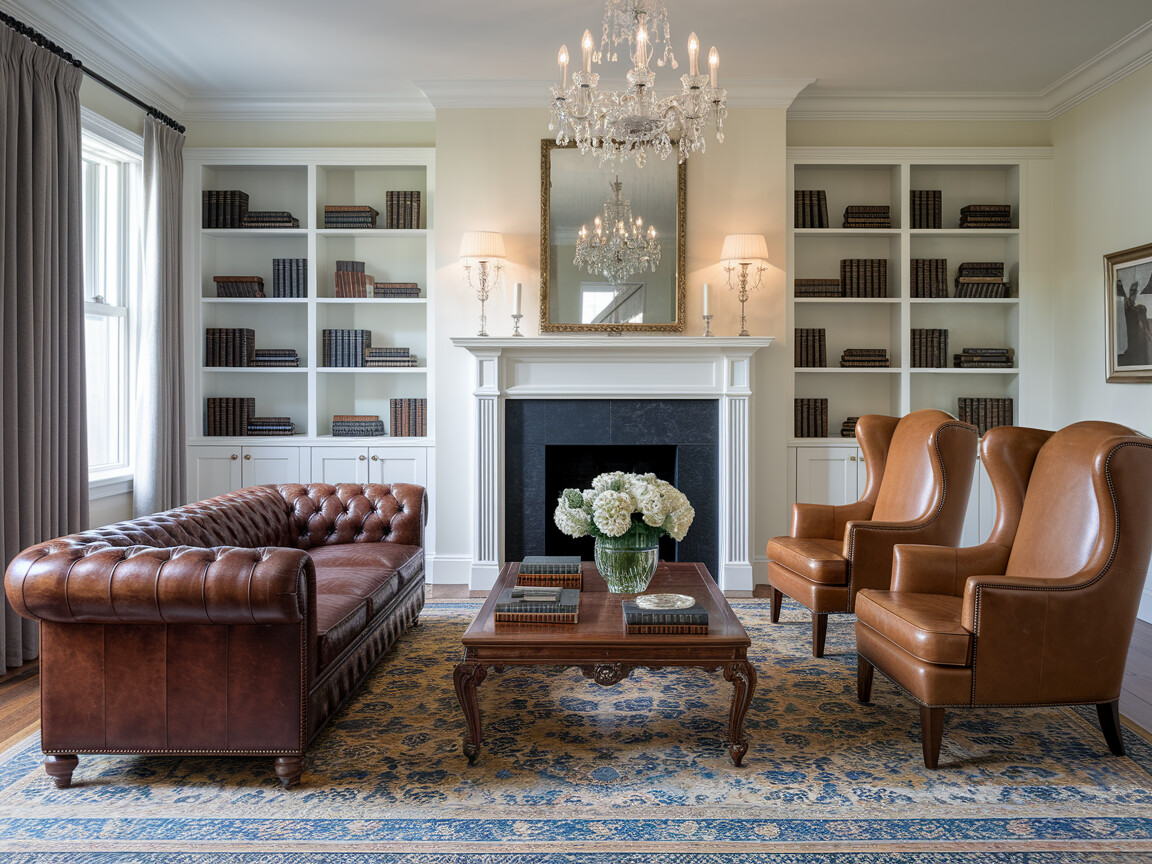
In a traditional living room, you might find a Tufted Chesterfield sofa in a deep cognac leather that sits across from two wingback chairs. A mahogany coffee table holds leather-bound books, and a large mirror above the mantle reflects a soft glow from a chandelier.
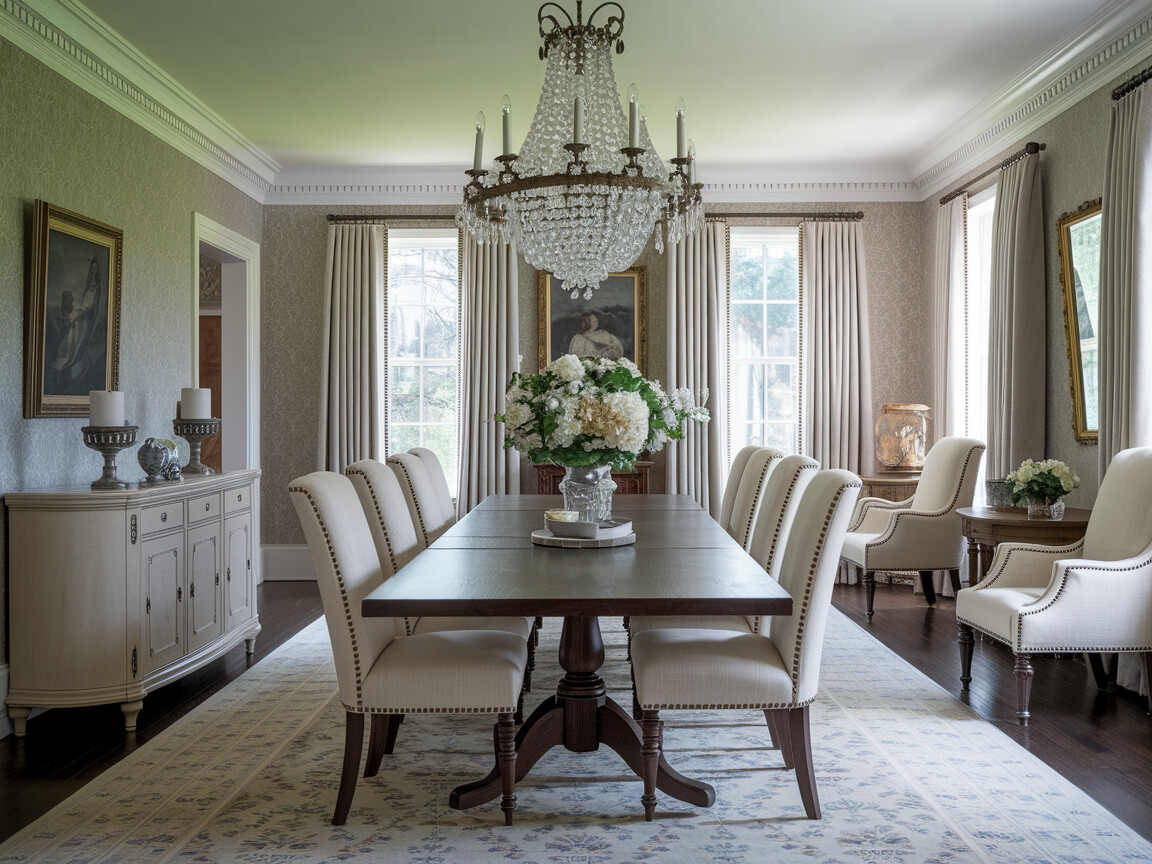
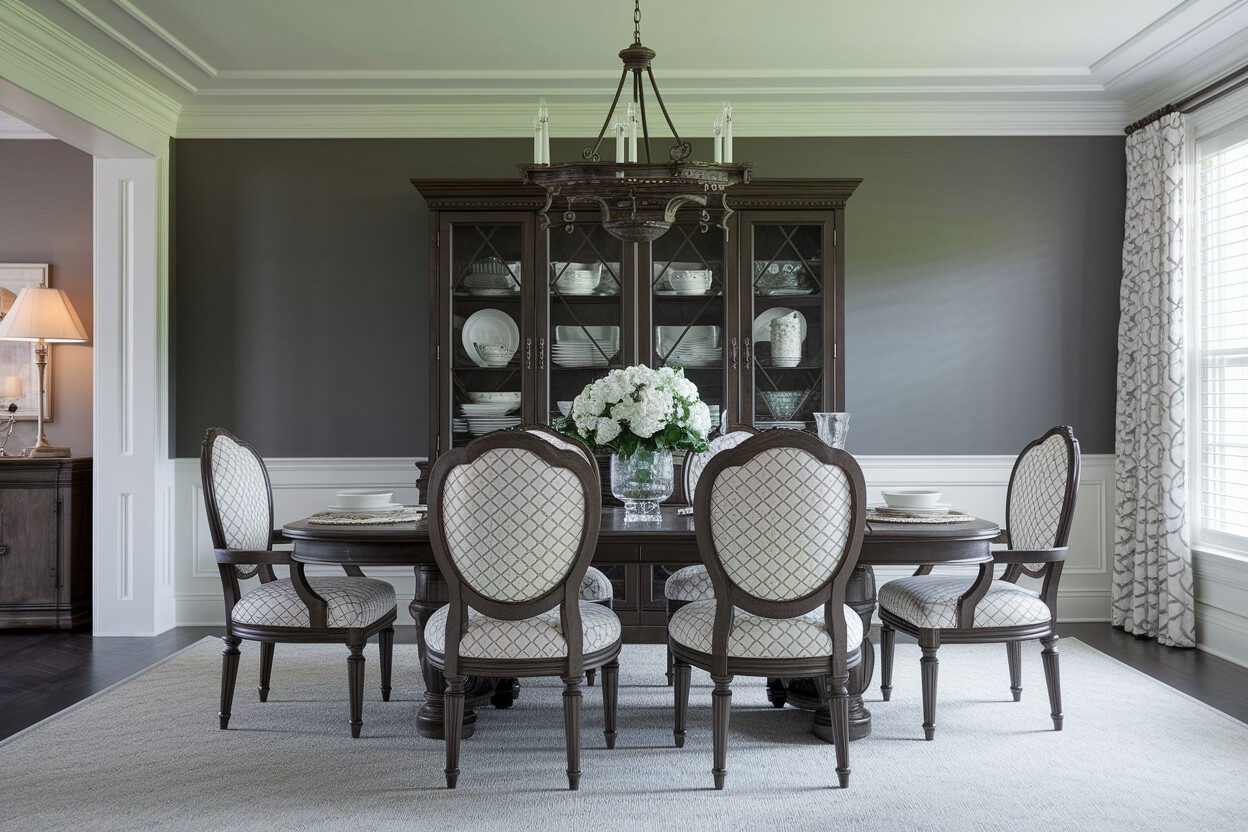
In a traditional dining room, a long pedestal table is the centerpiece, surrounded by upholstered chairs with nailhead trim. A sideboard displays heirloom silver, and the walls are covered in a subtle damask wallpaper.
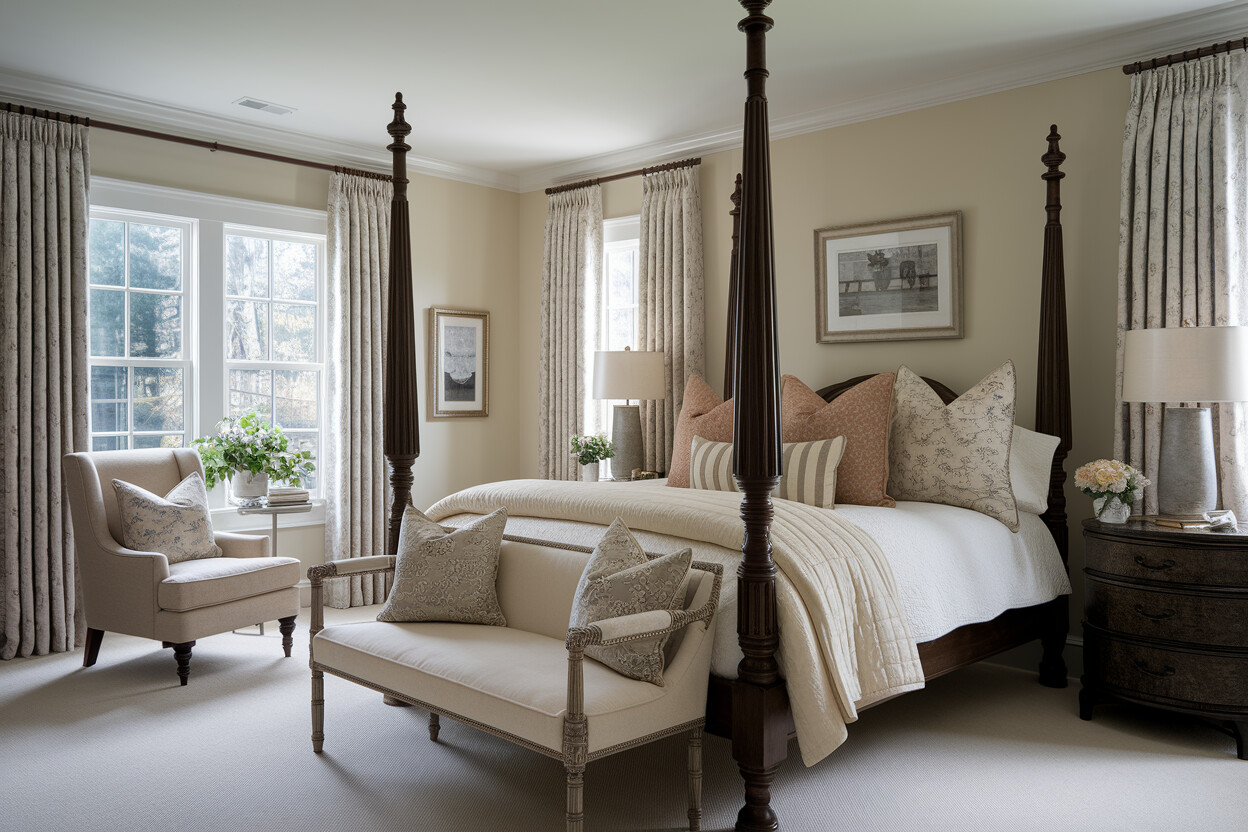
A traditional bedroom might feature a four-poster bed frame with a heavy duvet and multiple decorative pillows. Small “boudoir” chairs in the corner provide a cozy spot for reading. Wall-to-wall carpeting or large area rugs keep the room feeling cozy and quiet.
Traditional vs. Transitional: What’s the Difference?
Many people confuse traditional design with transitional design. While they share roots, they are distinct.
- Traditional: Formal, strictly adheres to historical patterns, uses darker woods, and features more ornamentation.
- Transitional: A hybrid. It takes the comfort of the traditional style and mixes it with the clean lines of modern decor. It uses lighter woods and fewer patterns.
If you find traditional too “stuffy,” transitional might be your middle ground.
Frequently Asked Questions (FAQ)
Is traditional interior design expensive?
It can be, as it emphasizes “real” materials like solid wood and silk. However, the style is perfect for “slow decorating.” You can find authentic, high-quality pieces at antique shops or estate sales for a fraction of the price of new furniture.
Does a traditional house have to be dark?
No. While dark wood is a staple, you can create a “light” traditional look by using cream-colored walls, white-washed architectural moldings, and pale blue or soft yellow textiles.
What are the best colors for a traditional home?
In traditional interior design, stick to warm, rich tones. Think of “library” colors: burgundy, hunter green, gold, and deep brown. Use cream or off-white for the trim to provide contrast.
Is traditional design still in style for the current year?
Absolutely. There is currently a massive movement toward “Grandmillennial” and “Dark Academia” styles. Both of these trends are heavily rooted in traditional aesthetics, proving that classic design always finds a way to reinvent itself.
What is the best flooring for this style?
Dark-stained oak or walnut is the gold standard. For kitchens and entryways, checkerboard marble or limestone tile is a classic choice that adds immediate traditional “weight” to the home.
Final Thoughts
Choosing a traditional interior design means investing in a look that transcends seasons. It is about honoring the past while creating a comfortable, functional present. Whether you live in a historic manor or a modern apartment, the principles of balance, quality, and elegance will always make a house feel like a home.