Minimalist interior design is more than just a passing trend. It is a philosophy that prioritizes intentionality. Many people believe it is about living in a cold, empty box. In reality, it is about curating a space that breathes.
When you strip away the excess, you make room for what truly matters. This style promotes mental clarity and physical comfort. It is the art of “less is more.”
DEFINITION
Minimalist interior design is a style characterized by extreme simplicity, clean lines, and often uses a monochromatic palette (focusing on a single color or neutral tones) with color used only as an accent. It emphasizes the "form follows function" principle, focusing on the essential elements of a room to create a sense of freedom and calm.
Key Characteristics of Minimalist Interior Design
The minimalist interior design style relies on several pillars. These elements work together to create a cohesive look.
1. Functional Furniture
Every piece serves a purpose. There is no room for “filler” furniture. Designers choose items with sleek silhouettes. Think of a sofa with straight legs or a hidden storage coffee table.
2. Open Spaces
Minimalism loves light. It requires a layout that allows air and sightlines to flow freely. Large windows are often left untreated. This invites the outdoors in.
3. Neutral Color Palettes
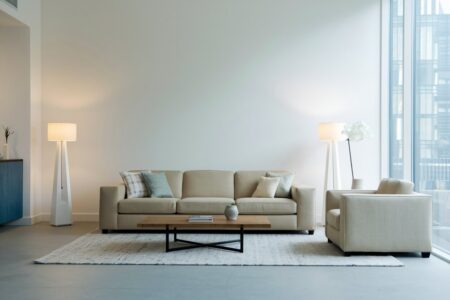
White, beige, and gray are the heroes of this style. These shades create a blank canvas. They make small rooms feel expansive. Occasionally, a single bold texture or a dark wood tone provides contrast.
Why Minimalism Is Growing in Popularity
Modern life is loud. Our homes should be the opposite. Minimalism has surged because it offers a visual break from a cluttered world.
By adopting a minimalist design, homeowners often find they spend less time cleaning. There is less to dust and less to organize. It is a sustainable choice, too. You buy fewer things, but you buy better quality. This shift toward “slow living” is a major driver of the minimalist style.
Essential Tips for Achieving the Minimalist Look
Transitioning to a minimalist home takes patience. You cannot do it overnight.
- Declutter Ruthlessly: If you haven’t used it in a year, let it go. Focus on hidden storage to keep surfaces clear.
- Invest in Quality: Since you have fewer items, those items are more visible. Choose natural materials like linen, stone, and wood.
- Focus on Texture: To avoid a “sterile” feeling, mix textures. Pair a smooth leather chair with a chunky knit throw.
- Let Light Lead: Use mirrors to bounce natural light. Avoid heavy drapery that blocks the sun.
Examples of Minimalist Interior Design Style
To understand the minimalist interior design aesthetic, look at these common applications:
The Scandi-Minimalist Living Room
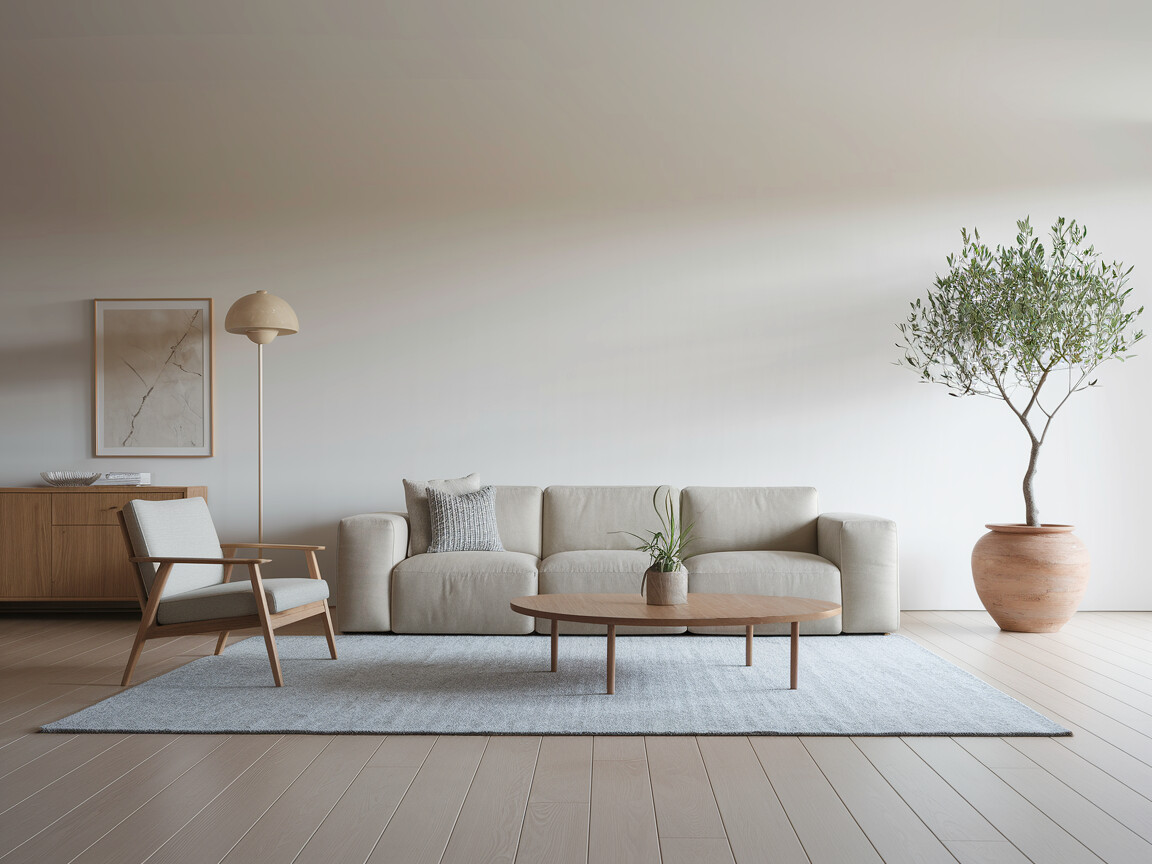
Interior design styles often overlap to avoid a sterile look in the room.
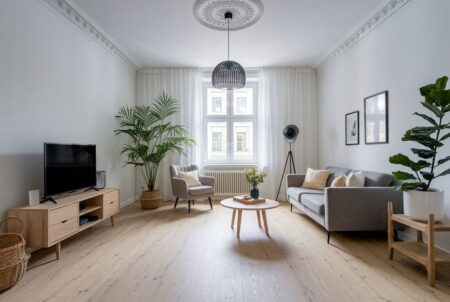
Consider a minimalist living room with a touch of Scandi vibe. This combines Scandinavian warmth with strict minimalism. It features light wood floors, a soft gray rug, and two or three pieces of high-end furniture. A single olive tree in a clay pot adds life.
Minimalist Bedroom
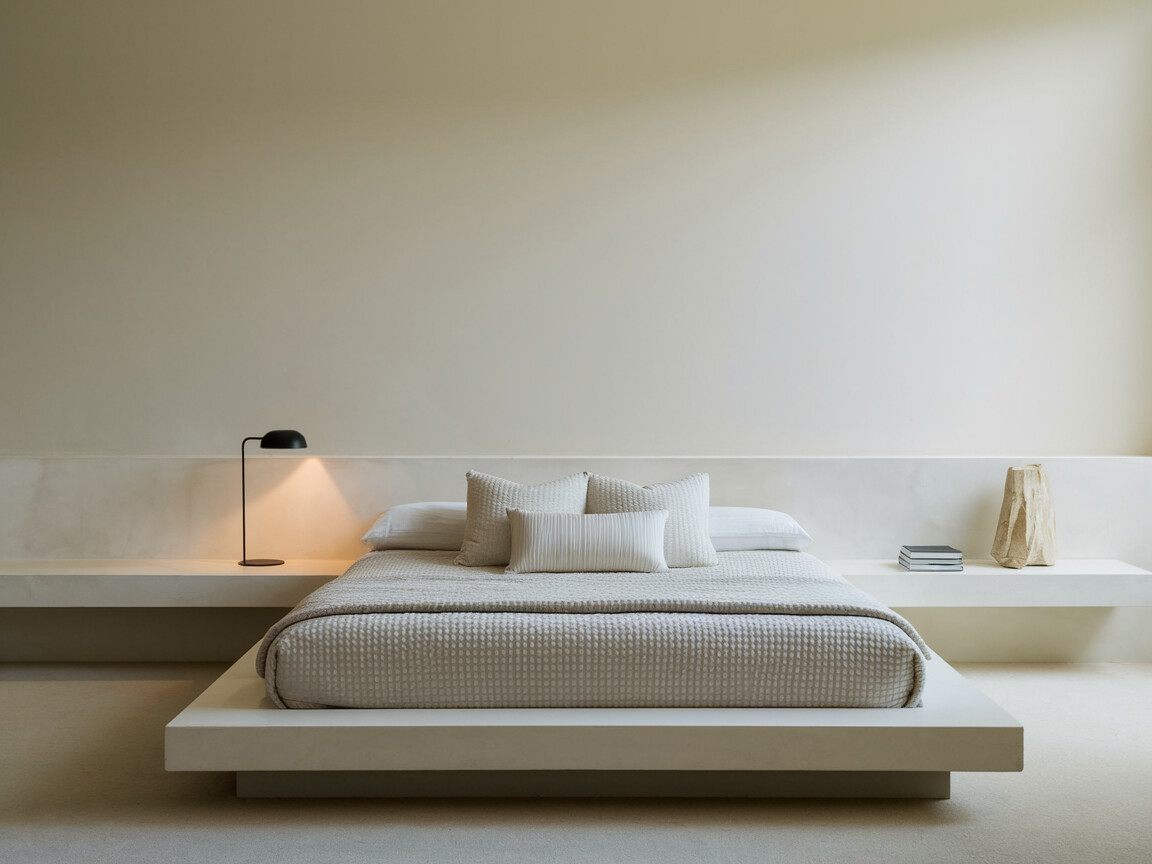
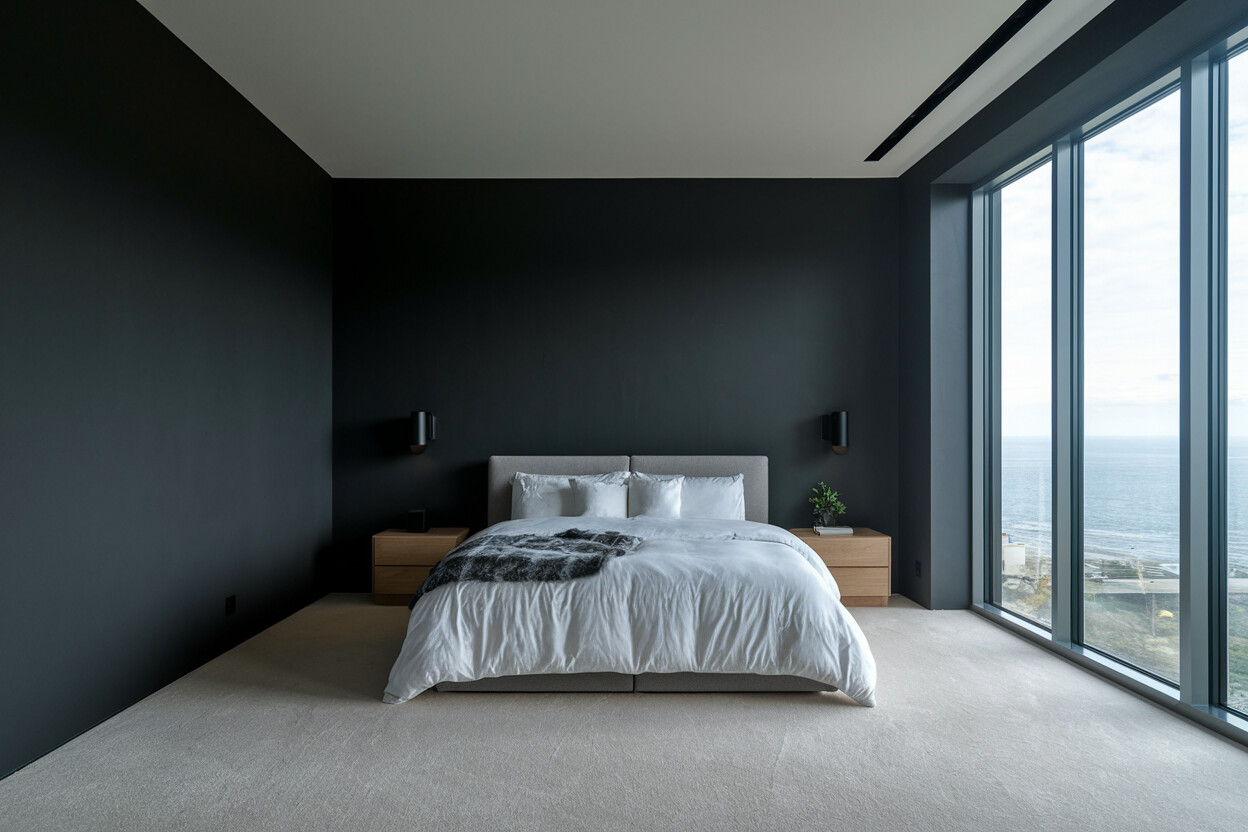
A low-profile platform bed is the center. There are no nightstands with drawers full of junk. Instead, floating shelves hold a single lamp. The walls are an off-white silk finish.
RELATED: 26 Minimalist Bedroom Ideas with a Focus on Clean Lines and Space
Industrial Minimalist Kitchen
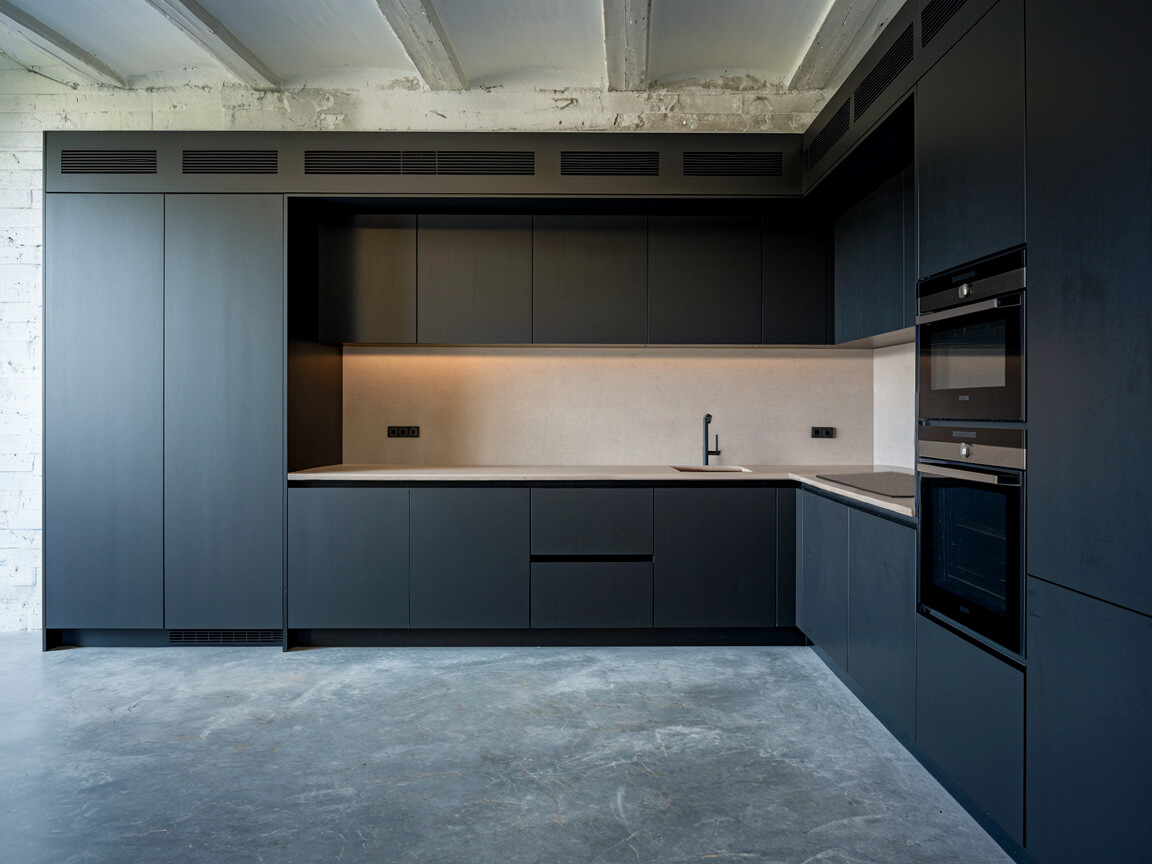
Polished concrete floors meet matte black cabinetry. There are no appliances on the counters. Everything is integrated and hidden behind seamless panels.
The Psychology of Minimalist Style
Our environment impacts our brain. A cluttered room often leads to a cluttered mind. Minimalist design reduces visual stimuli. This helps the nervous system relax.
When you enter a minimalist space, your eyes aren’t jumping from object to object. You feel a sense of immediate order. This order translates to lower stress levels and improved focus. It is a design for the soul.
FAQ: Common Questions About Minimalist Interior Design
Is minimalist design expensive?
Not necessarily. While high-end minimalist furniture can be pricey, the core of the style is owning less. You save money by not purchasing unnecessary decor.
Can I have a family and still be a minimalist?
Yes. It requires smart storage. Use “closed” storage like cabinets, rather than open shelving. This keeps toys and daily items out of sight when not in use.
Does minimalism mean I can’t have color?
No. You can use color, but do so intentionally. A single blue velvet chair in a white room is a classic minimalist move.
What is the difference between modern and minimalist?
Modern design refers to a specific era (like Mid-Century Modern). Minimalism is a broader aesthetic focused on the reduction of elements. They often overlap.
Final Thoughts on Minimalism
The minimalist interior design style is a journey toward value. It challenges us to stop defining ourselves by our possessions. By choosing a minimalist design, you are choosing a life of clarity. Your home becomes a sanctuary rather than a storage unit.
Embrace the empty space. It is where your life actually happens.