In a world often obsessed with “less is more,” the maximalist interior design style offers a refreshing rebellion. It is a celebration of abundance. It is a rejection of the beige and the bland. If you have ever felt restricted by the coldness of modern minimalism, the maximalist style invites you to exhale and embrace your collection of treasures.
DEFINITION
Maximalist Interior Design is an aesthetic centered on the philosophy of "more is more." It prioritizes personal storytelling through a curated layering of bold colors, diverse patterns, rich textures, and meaningful objects. Unlike cluttered spaces, maximalism is an intentional, organized display of visual richness.
The History of Maximalist Design
To understand the maximalist design movement, we must look back. It is not a new trend. Throughout history, wealth and culture were often displayed through grand collections. From the Victorian era’s ornate parlors to the postmodern Memphis Group of the 1980s, the desire for visual stimulation has always existed. Today, it serves as a response to the starkness of Scandinavian minimalism. It represents a shift toward individuality.
Key Characteristics of Maximalist Interior Design
What makes a room truly maximalist? It is more than just “lots of stuff.” It is a specific language of design.
1. Bold Color Palettes
Forget neutral tones. A maximalist interior design style usually starts with a courageous base. Think deep emerald greens, royal blues, or vibrant terracotta. Even the ceiling might feature a daring hue.
2. Pattern Play
Mixing patterns is a hallmark of the maximalist approach. You might see floral wallpaper paired with a geometric rug. The trick is finding a common thread, like a shared color, to keep the look cohesive.
3. Layered Textures
Maximalism feels good to the touch. It incorporates velvet, silk, wool, and wood. These layers add depth. They make a room feel cozy rather than chaotic.
4. Curated Collections
This style is personal. It showcases books, travel souvenirs, and vintage finds. Every item has a story. In a maximalist design, your history becomes your decor.
Practical Tips for Achieving the Maximalist Look
Transitioning to this style can feel overwhelming. You do not want your home to look like a thrift store. Here is how to master the maximalist interior design style with grace.
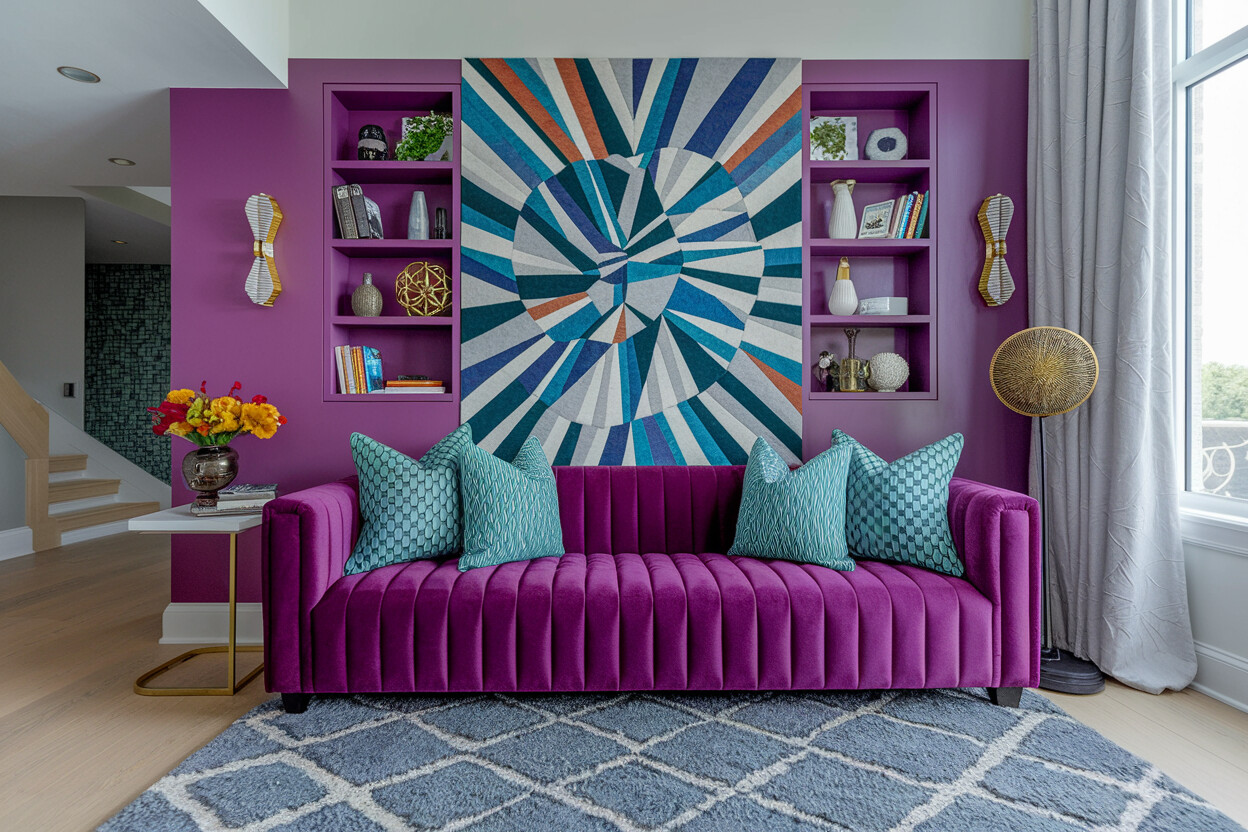
- Start with a Focal Point: Choose one large item. It could be a bright sofa or a piece of statement art. Build the rest of the room around it.
- Use Symmetry: If you have many small items, arrange them symmetrically. This creates a sense of order. It tricks the eye into seeing harmony instead of mess.
- Scale Matters: Mix large-scale patterns with smaller ones. If everything is the same size, the room will feel flat.
- Don’t Ignore White Space: Even a maximalist room needs a place for the eye to rest. Leave small gaps on shelves or keep certain areas simpler to highlight the highlights.
- Invest in Lighting: Multiple light sources are essential. Use floor lamps, table lamps, and sconces to create a warm glow. Avoid harsh overhead lighting.
Examples of Maximalist Spaces
The Library-Style Living Room
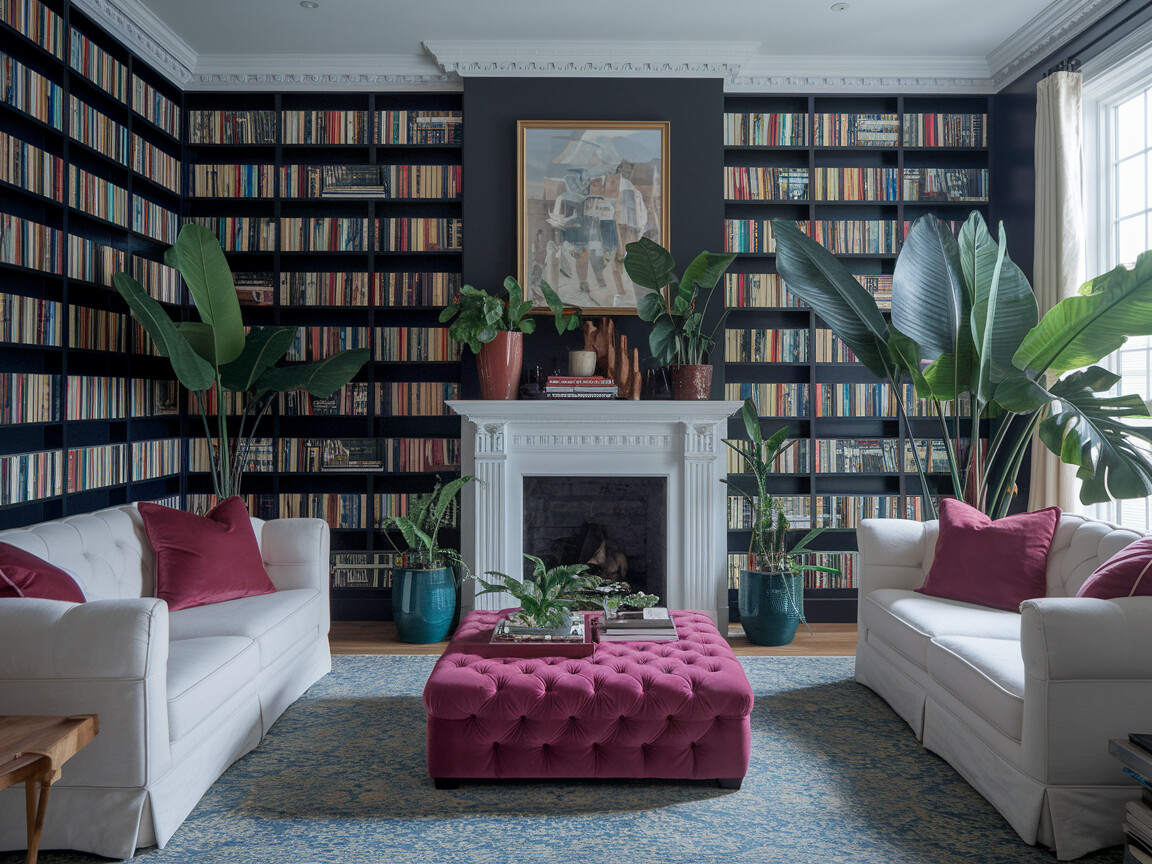
Imagine walls lined with floor-to-ceiling bookshelves. The books are not color-coded; they are lived-in. A plush, tufted velvet ottoman sits in the center. Large potted plants occupy the corners. This is classic maximalist style.
The Eclectic Dining Area
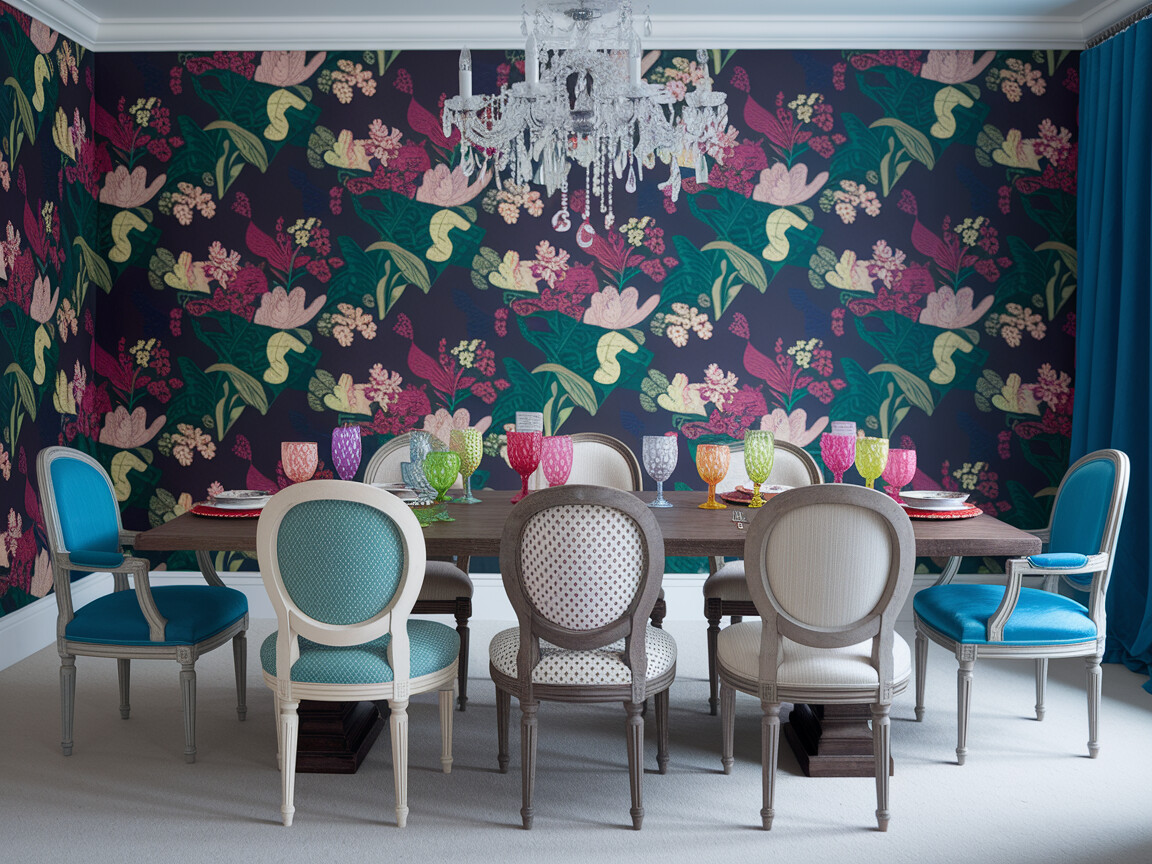
A mismatched set of vintage chairs surrounds a heavy oak table. Above, a crystal chandelier hangs against a backdrop of bold, botanical wallpaper. The table is set with colorful glassware and patterned ceramic plates.
Maximalist Bedroom
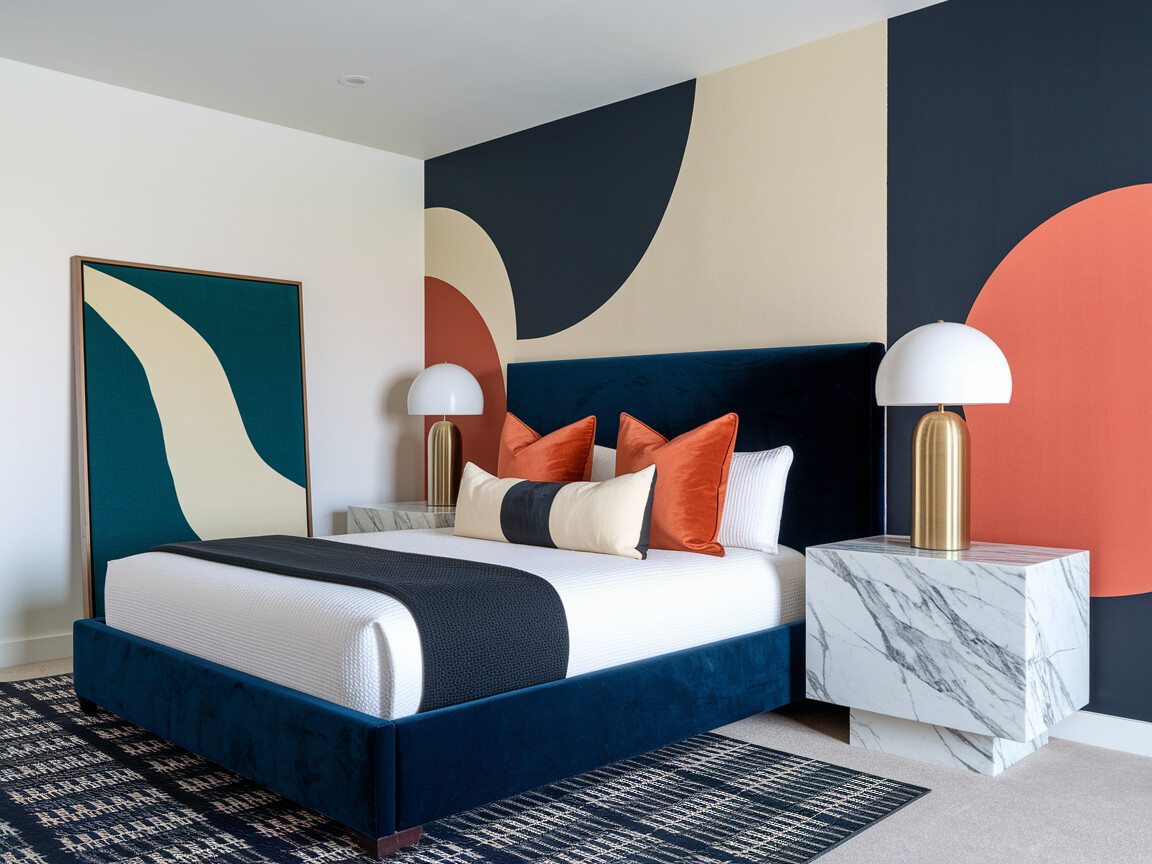
The bedroom blends bold expression with clean, modern lines. A deep navy upholstered bed sits against a graphic mural wall, layered with oversized pillows in burnt orange, cream, and black. A sleek marble nightstand contrasts with a sculptural lamp, while brass accents add warmth without feeling ornate. Large abstract art pieces lean casually against the walls instead of hanging perfectly centered. A patterned rug grounds the space, balancing color and texture with intention. The room feels curated, confident, and lived in, where maximalism is bold but still controlled.
Maximalism vs. Minimalism: Which Is For You?
Minimalism focuses on functionality and clarity. It removes distractions. Maximalism focuses on personality and emotion. It adds inspiration.
Minimalism is about the “void.” Maximalism is about the “fill.”
If you feel energized by your surroundings and love being surrounded by memories, the maximalist design is likely your soulmate style.
Frequently Asked Questions (FAQ) About Maximalist Interior Design
Is maximalism just a fancy word for clutter?
No. Clutter is unintentional and messy. Maximalism is curated and intentional. Every piece is chosen for its beauty or meaning.
Can I do maximalism in a small apartment?
Absolutely. In fact, maximalist interior design often works best in small spaces because it makes them feel “jewel-box” like and cozy.
How do I keep the room from looking “too much”?
Stick to a consistent color family. Even if you use ten different patterns, if they all share a specific shade of red or gold, the room will feel unified.
Is maximalist design expensive?
It doesn’t have to be. Many of the best maximalist homes are filled with thrifted finds, heirloom furniture, and DIY projects. It is about the arrangement, not the price tag.
Why This Style is Trending Now
In the digital age, our lives often feel clinical. We spend hours looking at flat screens. The maximalist interior design style provides a tactile, sensory experience that a digital world cannot offer. It celebrates the “human” element of home. It allows us to be messy, complicated, and colorful.
Embrace the “more.” Let your home tell the full story of who you are.