Defining your home’s aesthetic can feel like a daunting task. Among the many options, one term surfaces more than others: contemporary interior design. But what does it actually mean to live in a contemporary space?
Many people confuse this style with “modern” design. While they share similarities, they are distinct. This guide explores the nuances of the contemporary interior design style, helping you master its fluid and evolving nature.
DEFINITION
Contemporary interior design refers to the styles and trends that are popular in the present moment. Unlike fixed historical styles, it is a "living" aesthetic that constantly evolves, borrowing elements from various eras while focusing on sleek lines, open spaces, and intentional simplicity.
The Evolving Nature of Contemporary Style
The beauty of contemporary style lies in its flexibility. It isn’t anchored to a specific decade. Instead, it reflects the “here and now.”
In the 1970s, contemporary looked different than it does today. Currently, it emphasizes sustainability, smart technology, and a connection to nature. It is a curated mix of comfort and sophistication.
Key Characteristics of Contemporary Interior Design
To recognize this style, you must look for specific visual cues. It is defined by what is absent just as much as what is present.
1. Clean Lines and Geometric Shapes
The foundation of any contemporary space is the line. You will see strong vertical and horizontal lines through architecture and furniture. Curved edges are used sparingly to provide a soft contrast to the otherwise sharp geometry.
2. Neutral Color Palettes
Neutral tones are the heroes here. Designers often use whites, creams, blacks, and grays. These colors create a backdrop that allows architectural details to shine. High-contrast pairings, like a charcoal sofa against a stark white wall, are very popular.
3. Deliberately Sparse Decor
Minimalism plays a role in this aesthetic. Every piece of furniture or art must earn its place. Clutter is the enemy. By leaving “negative space,” the room feels breathable and organized.
4. Natural Materials and Textures
To prevent a neutral room from feeling cold, contemporary design introduces texture. Think of silk, velvet, linen, and wool. Natural materials like light-toned wood, stone, and stainless steel add depth and a tactile quality to the environment.
Practical Tips for Achieving the Contemporary Look
Transitioning your home doesn’t require a total renovation. Small, intentional changes can shift the energy of a room.
- Focus on Flooring: Opt for hard surfaces. Wood, tile, or polished concrete are ideal. If you want warmth, use a geometric area rug with a low pile.
- Update Your Lighting: Lighting is considered art in this style. Look for floor lamps with metallic finishes or track lighting that highlights specific zones.
- Choose Large-Scale Art: Instead of a gallery wall with many small frames, choose one large, impactful piece of abstract art. This maintains the “clean” look.
- Keep Windows Simple: Avoid heavy drapes or ornate valances. Use Roman shades, cellular blinds, or even bare windows to maximize natural light.
Contemporary vs. Modern: Understanding the Difference
This is the most common point of confusion. Modern design (specifically Mid-Century Modern) refers to a specific period in the early-to-mid 20th century. It is a static style with rules involving tapered legs and teak wood.
In contrast, contemporary design is whatever is happening today. It is eclectic. It might borrow a “modern” chair but pair it with a 21st-century smart table and industrial lighting.
Real-World Examples of Contemporary Spaces
Contemporary Living Room
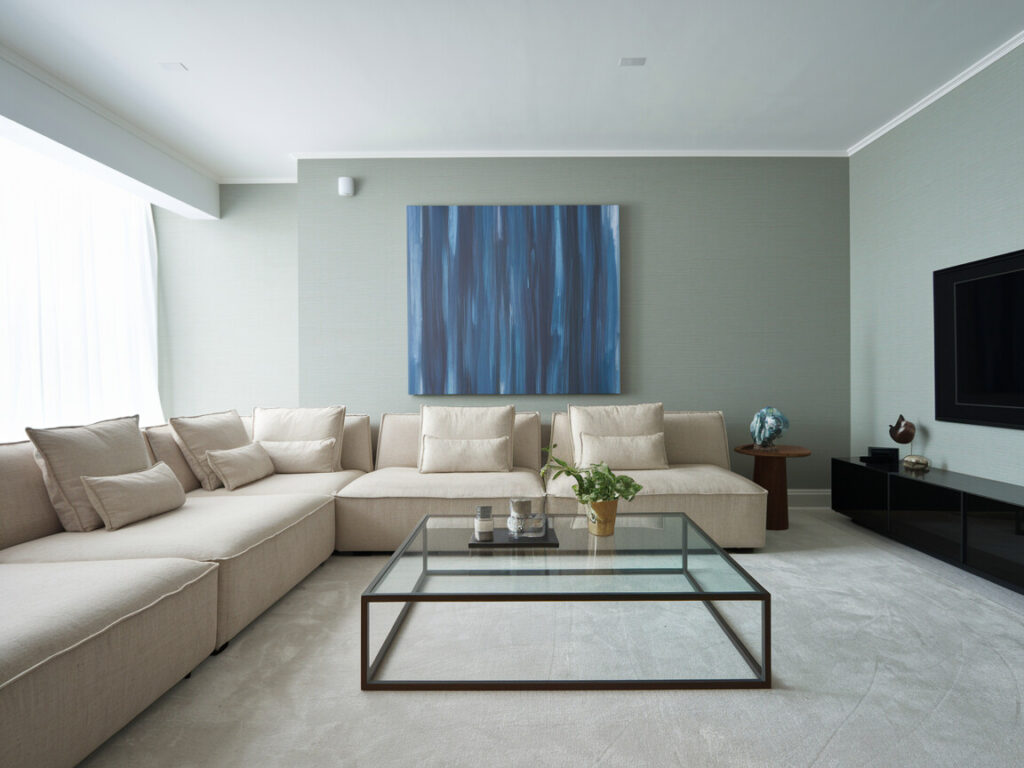
Imagine a room with a large, low-profile sectional sofa in oatmeal linen. In front sits a glass coffee table with a matte black metal frame. The walls are a soft dove gray, featuring a single oversized canvas of blue brushstrokes.
Contemporary Kitchen
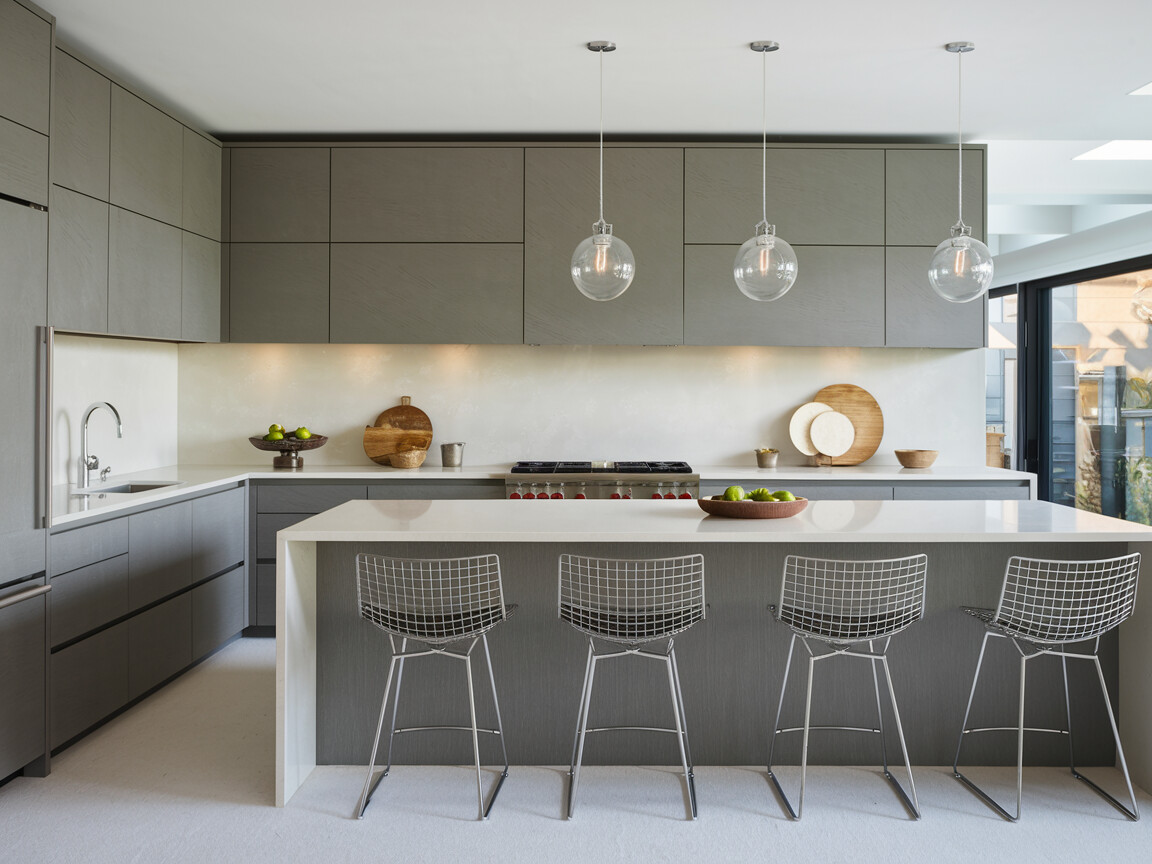
Think of flat-panel cabinetry without visible handles. The countertops are a seamless white quartz. High-backed stools with chrome legs sit at the island, and the pendant lights are simple glass globes.
Contemporary Bedroom
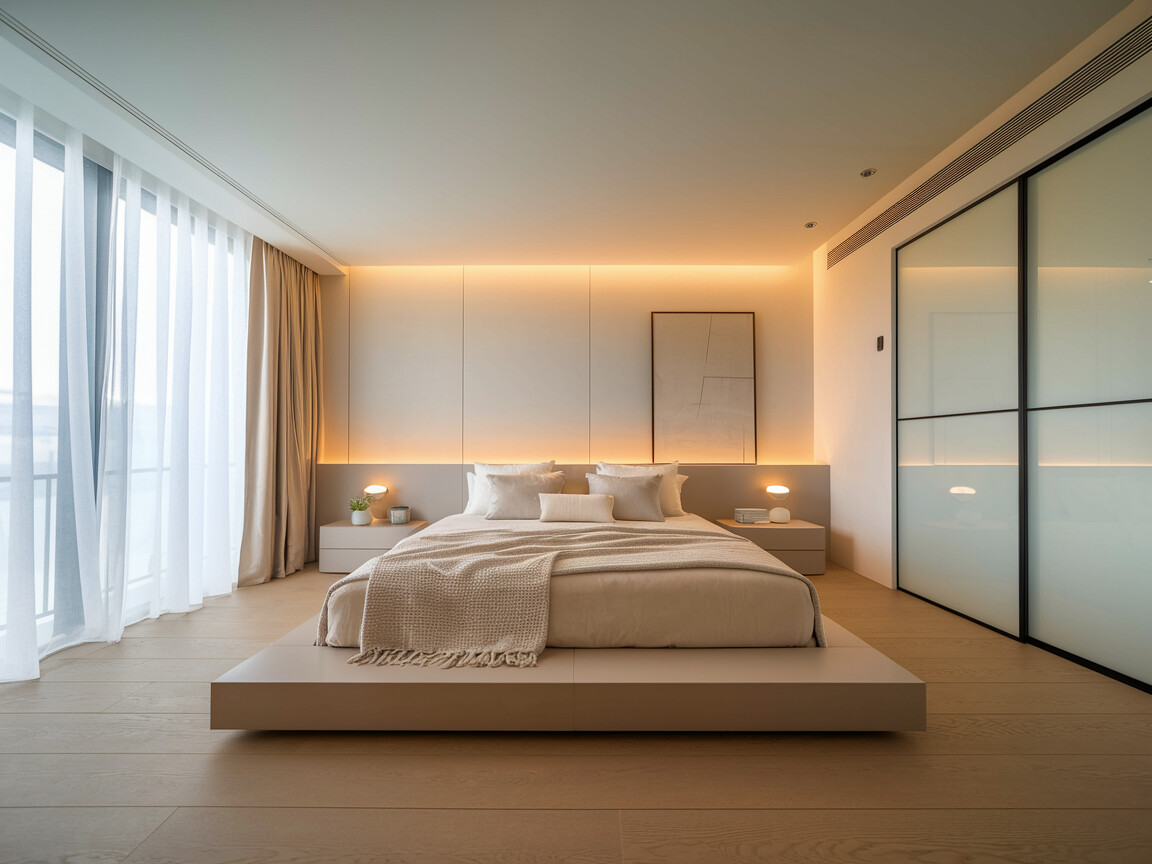
A contemporary-style bedroom interior featuring a neutral color palette of warm beige, soft gray, and white. A low-profile platform bed with crisp bedding, subtle textured throws, and modern accent pillows. Floor-to-ceiling windows with sheer curtains allowing natural daylight to fill the room.
Why Choose a Contemporary Interior Design Style?
Choosing this style is about more than just looks. It is about functionality. Because it prioritizes open floor plans and light, it makes even small apartments feel expansive. It is also highly adaptable. As your tastes change or new trends emerge, the neutral foundation of a contemporary home allows you to swap out accents easily.
FAQ: Common Questions About Contemporary Design
Is contemporary design too cold?
Not necessarily. While it can be “cool,” you can warm it up with textiles. Adding a chunky knit throw or warm-toned wood accents brings immediate coziness.
Can I mix other styles with contemporary?
Yes. Contemporary is inherently a “mix.” You can blend industrial elements or even a few traditional antiques, provided the overall layout remains uncluttered and the lines remain clean.
Does contemporary mean expensive?
No. Since the style focuses on “less is more,” you spend money on fewer, higher-quality items rather than filling a room with cheap decor. It is a cost-effective way to achieve a high-end look.
Final Thoughts
Embracing a contemporary style means embracing the future while staying grounded in comfort. It is a sophisticated way to showcase your personality through subtle textures and bold architectural choices. By focusing on light, space, and intentionality, you create a home that feels timeless, even as it lives entirely in the present.