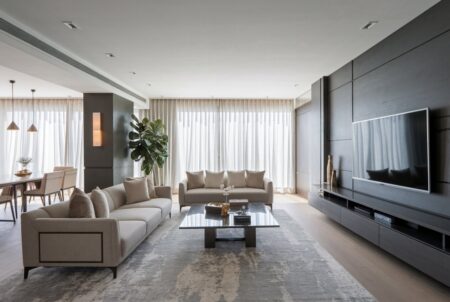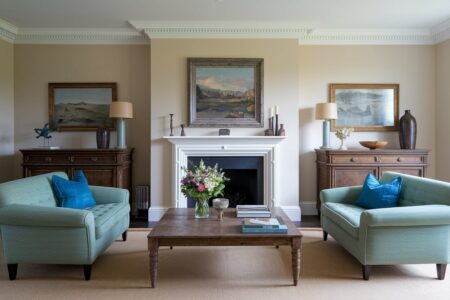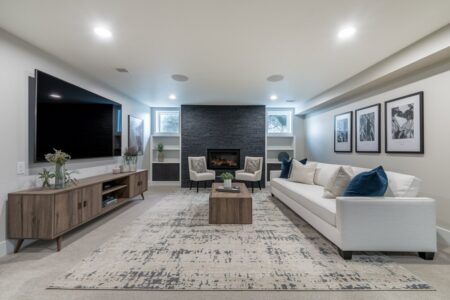
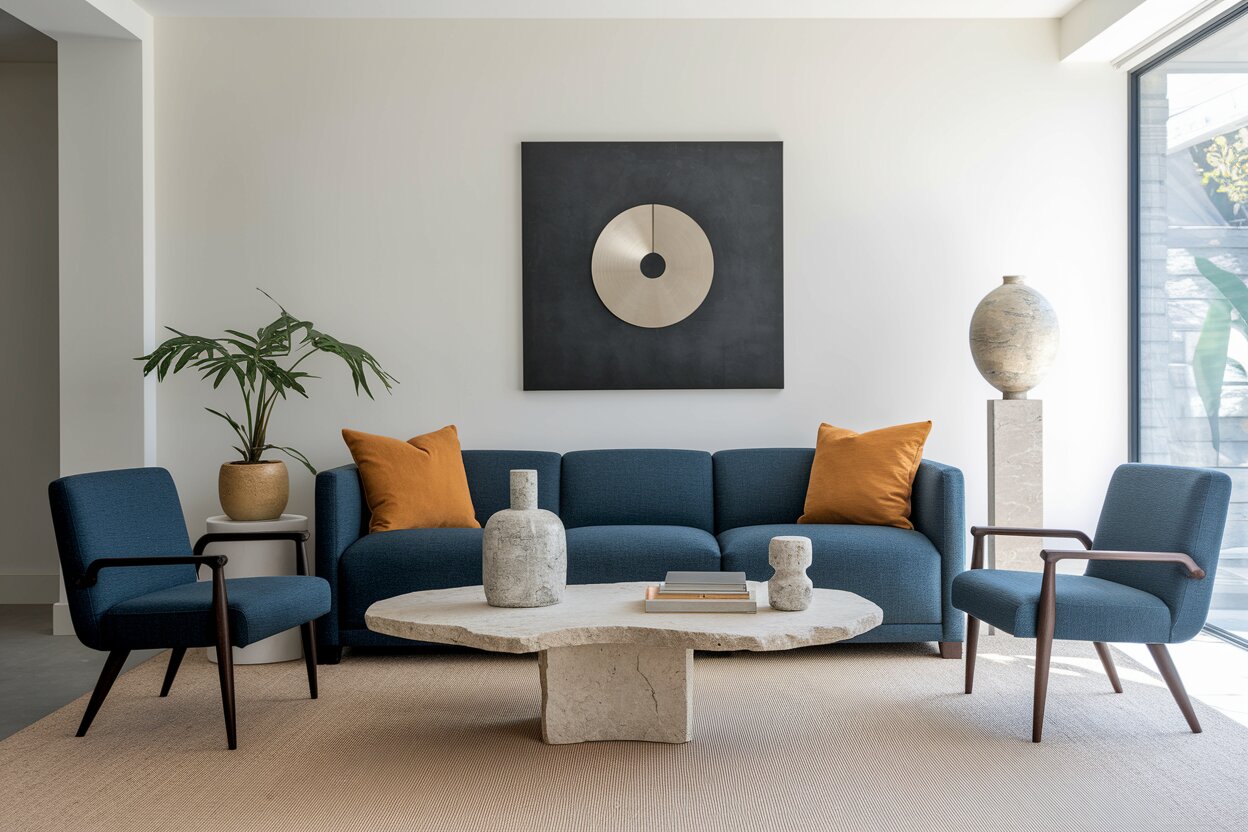
Contemporary design isn’t tied to one era. It moves with the times. It borrows whatever works right now and drops what doesn’t. A contemporary living room usually means clean lines, a calm neutral base, and furniture that earns its place through both looks and function. Nothing about it feels forced. That’s a big part of the appeal.
People often use “contemporary” and “modern” interchangeably. They aren’t quite the same thing, though. Modern design points back to a specific mid-century moment in history. Contemporary design, on the other hand, is always current, so it shifts every decade or so. Right now, that means curved furniture, natural materials, and a mix of textures that keep an otherwise minimalist room from feeling flat or cold.
You don’t need to gut your living room to get this look. A handful of intentional swaps can shift the entire feel of a space. These contemporary living room ideas cover lighting, color, furniture shapes, and small styling details. Borrow what fits your home. Skip the rest.
- 01 of 13
Contemporary Neutral Palette
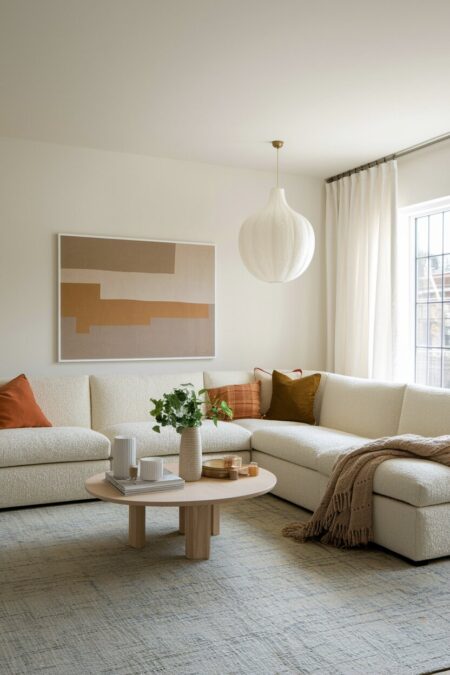
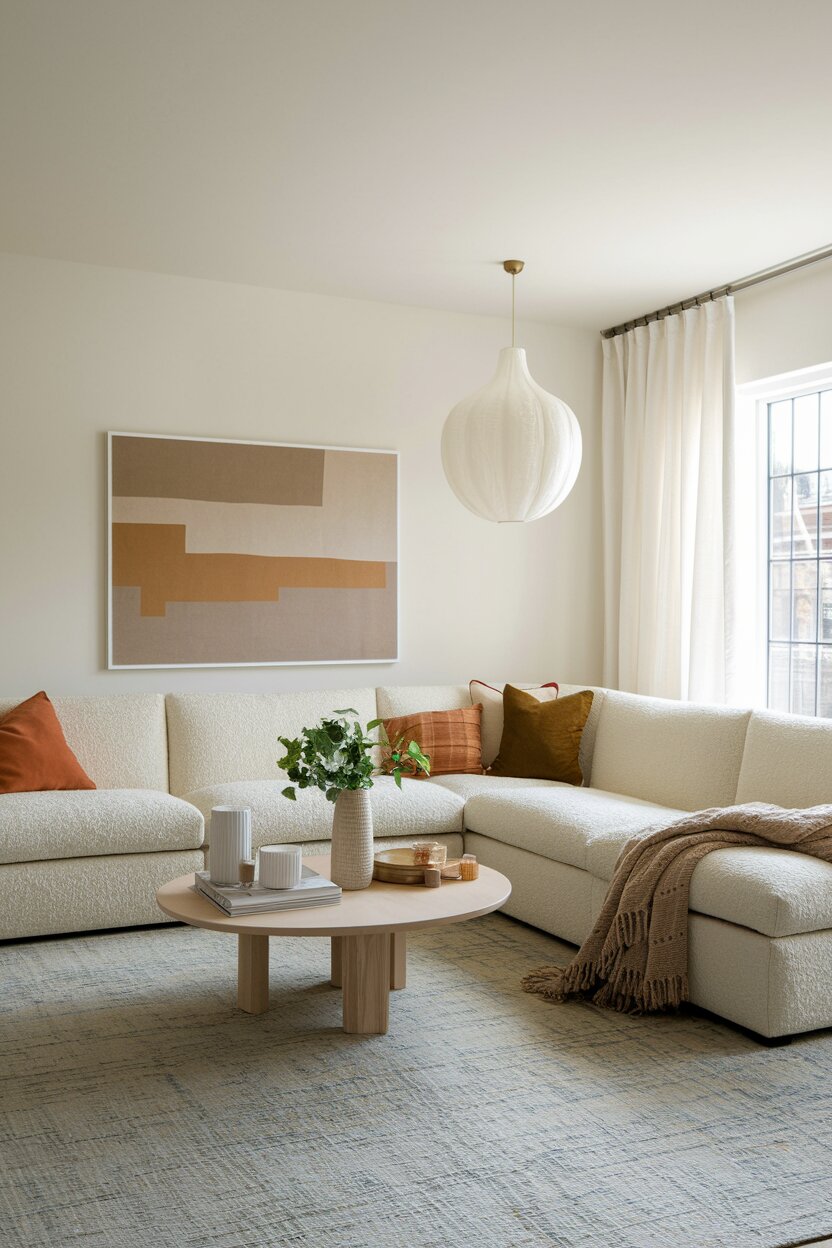
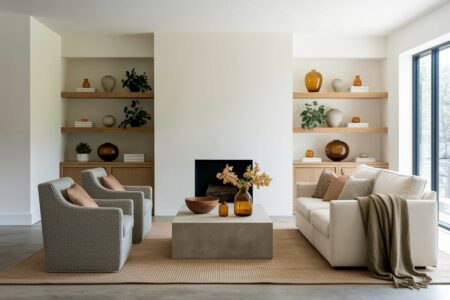
Most contemporary living rooms start with a neutral base: soft white, warm greige, or a muted taupe rather than anything stark or cold. This keeps the eye calm and puts your furniture and art in the spotlight. Layer in texture, like a bouclé sofa or a linen throw, so the room doesn’t read flat. A few earthy accents, terracotta or olive green work well, keep the space from feeling sterile. The effect is a living room that feels current without trying too hard.
- 02 of 13
Statement Pendant Lighting
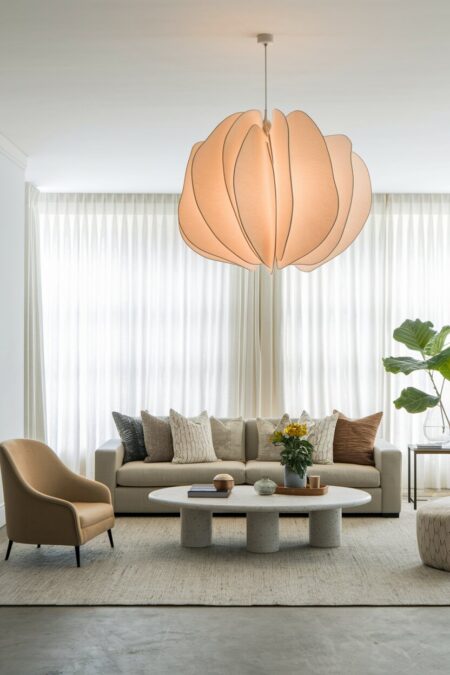
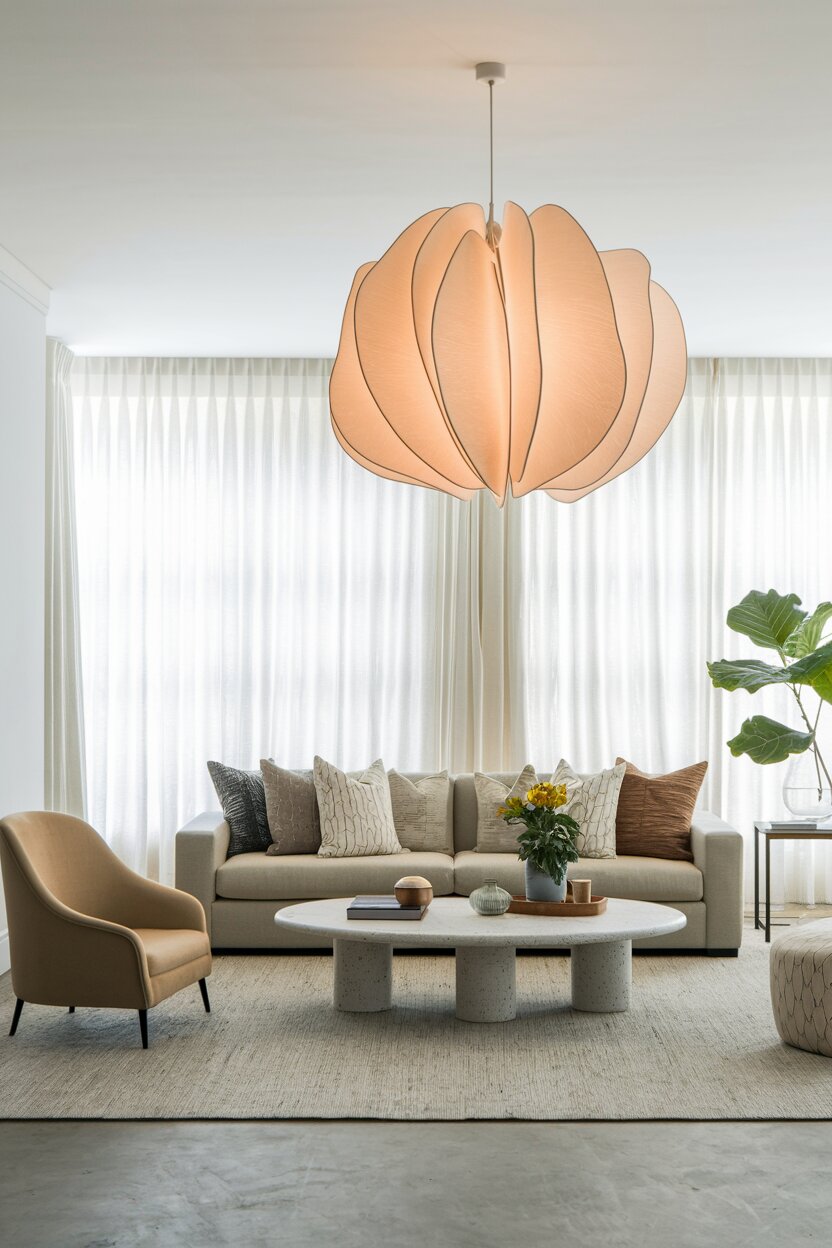
Skip the builder-grade flush mount. A sculptural pendant light signals contemporary style the moment you walk into the room. Oversized globes, asymmetrical shapes, and mixed-metal finishes all work well above a seating area or coffee table. Hang it a little lower than you’d expect. That small choice draws the eye upward and adds drama to an otherwise simple living room. One striking fixture often does more for the space than a dozen smaller accessories combined.
- 03 of 13
Curved Furniture Shapes
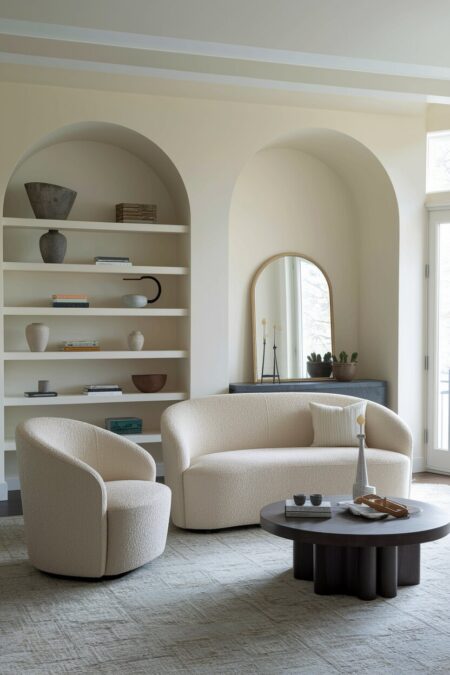
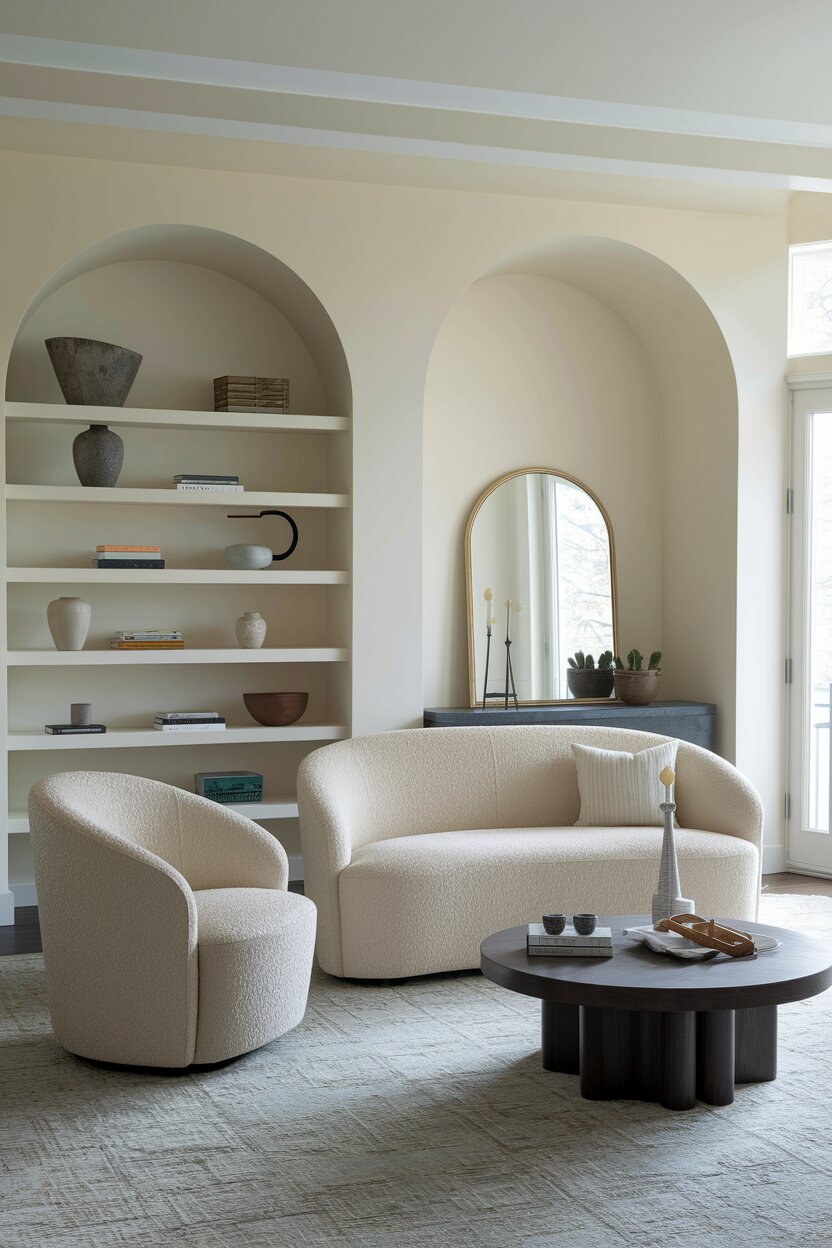
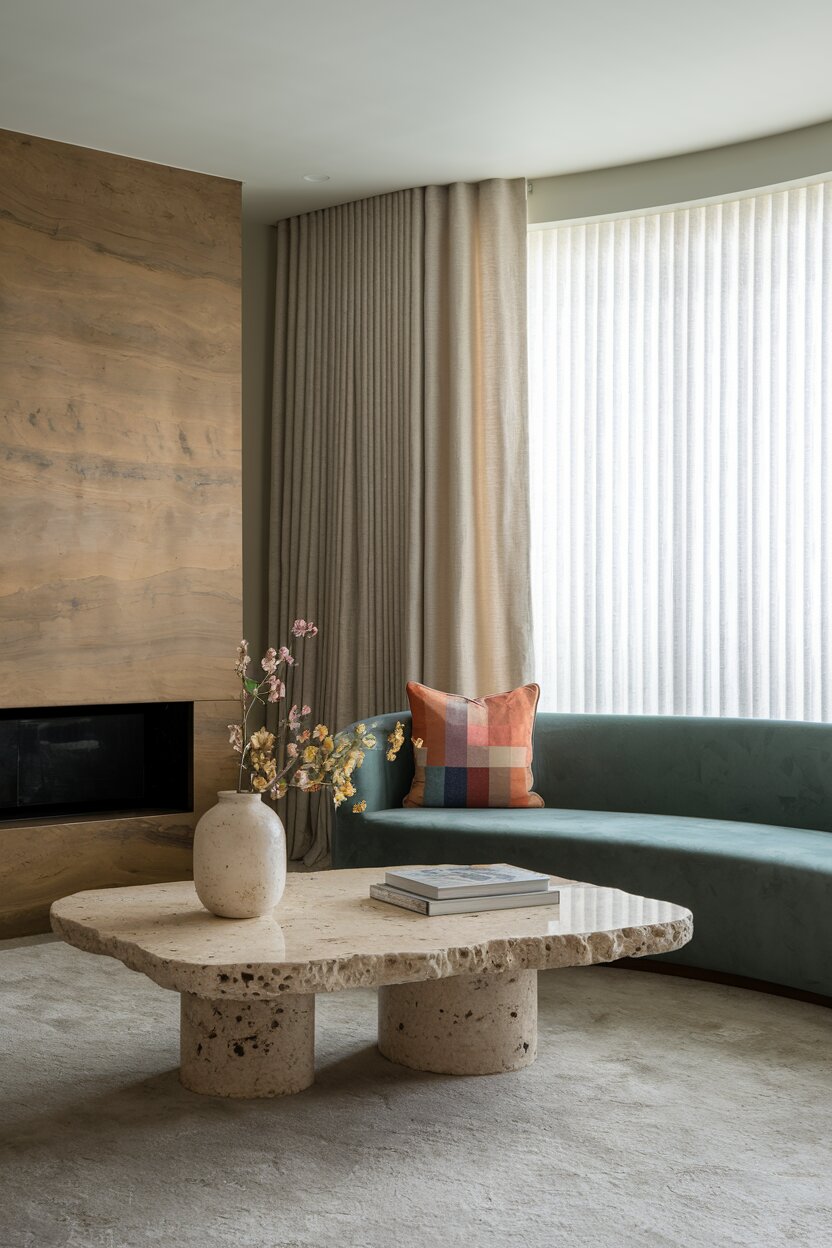
Straight lines used to define modern design. Contemporary living rooms have softened that edge. Curved sofas, rounded coffee tables, and arched mirrors are everywhere right now, and for good reason. They feel more organic and easier to move around a room. One curved piece, an accent chair works well, is enough to introduce the shape without a full furniture overhaul. Pair it with angular shelving nearby for contrast.
- 04 of 13
Floor-to-Ceiling Windows
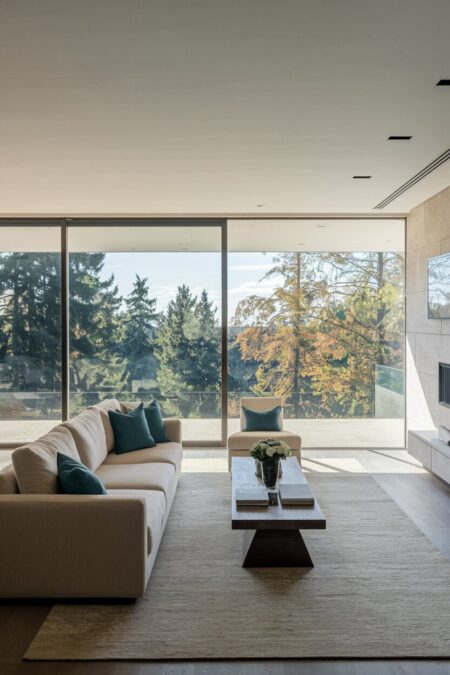
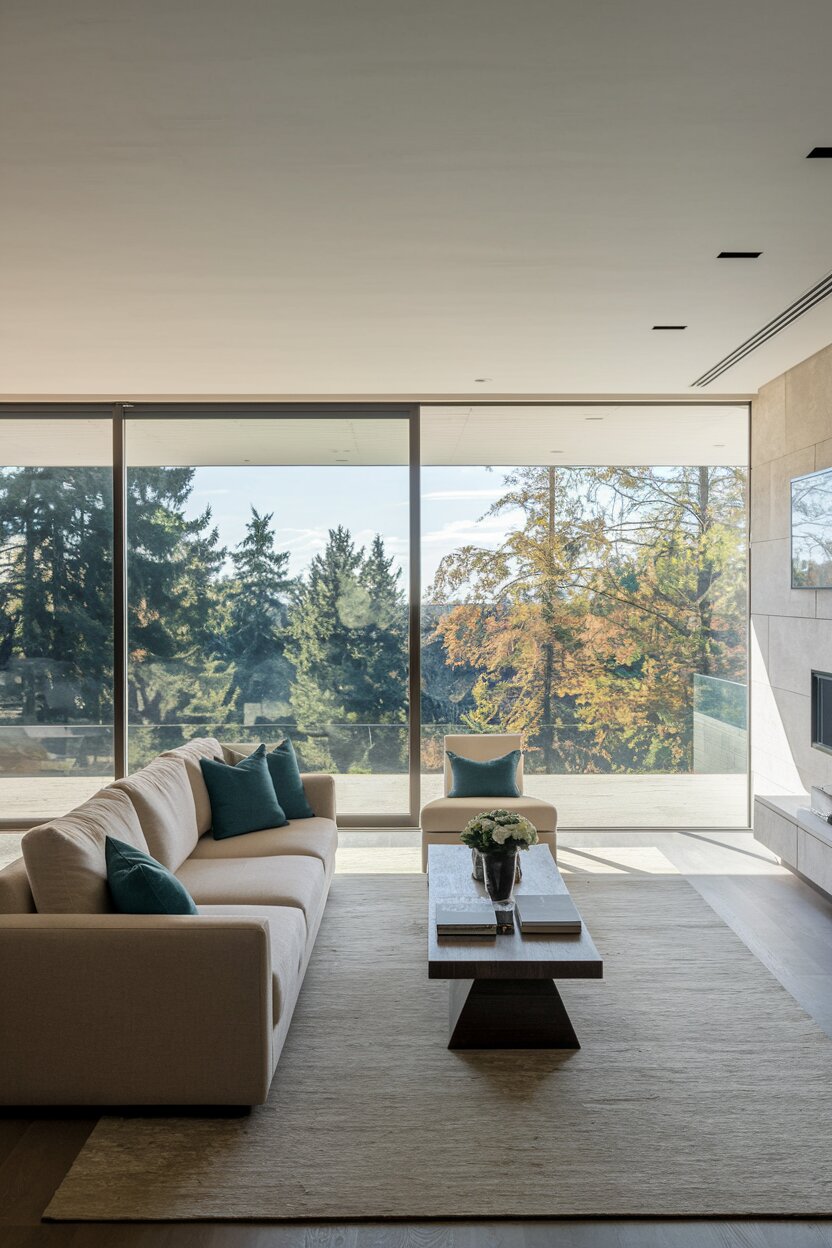
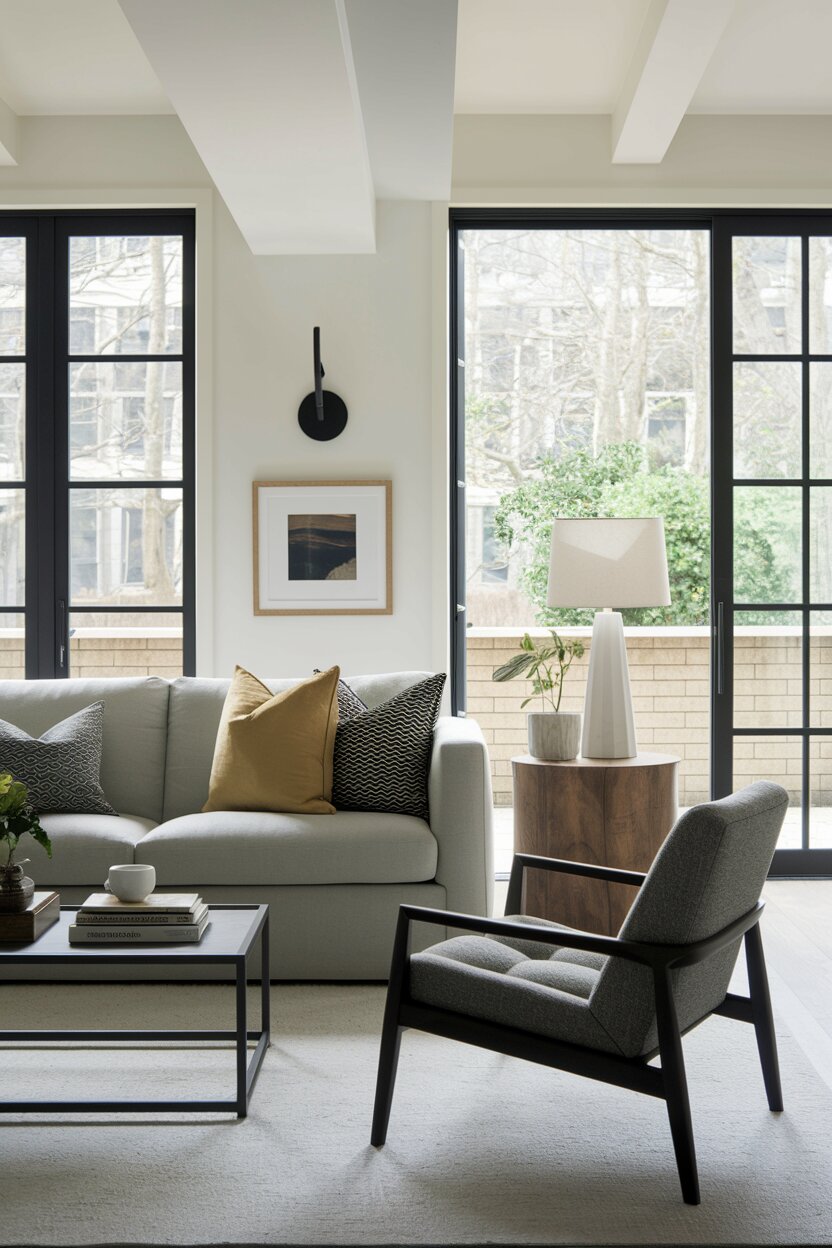
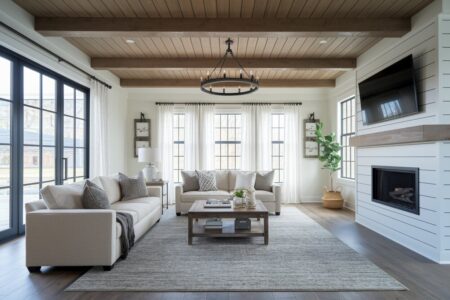
Natural light is close to non-negotiable in contemporary design. If your living room has the bones for it, floor-to-ceiling windows open the space up in a dramatic way. They blur the line between indoors and out, a hallmark of the style. No big windows? Slim curtains and a mirror placed across from a window can fake the effect. Keep window treatments simple so the glass stays the focus, not the drapery.
- 05 of 13
Layered Texture Mix
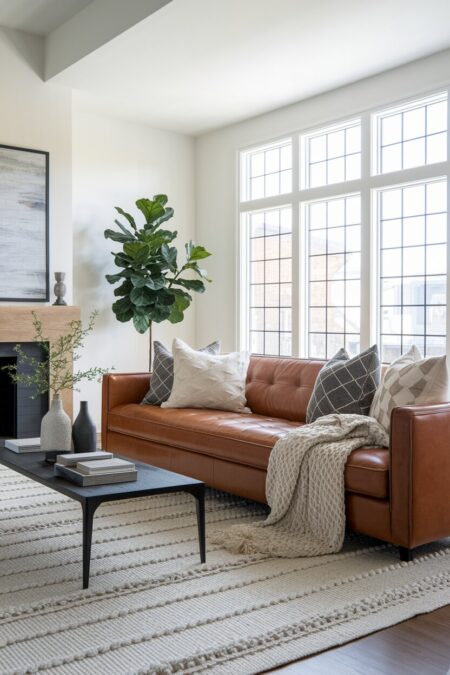
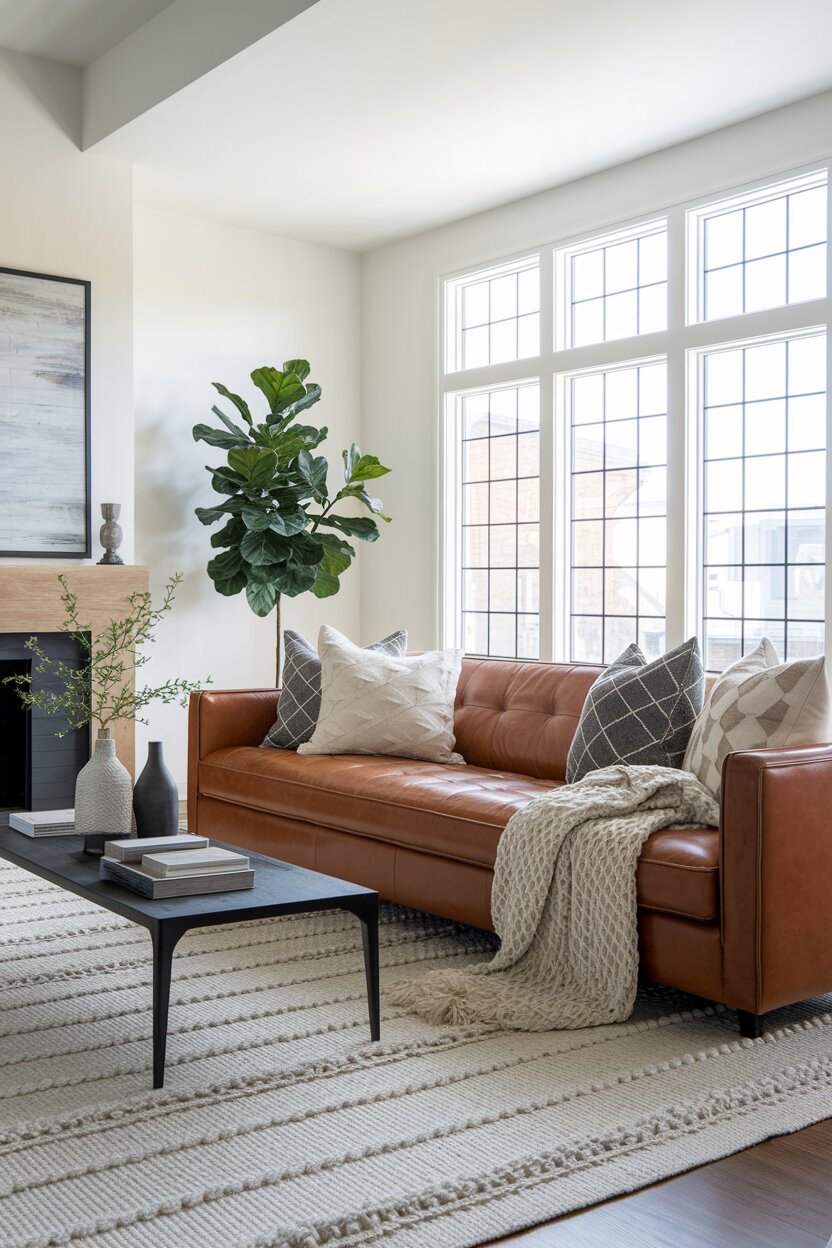
A room full of hard surfaces cools down fast. Balance leather, wood, and glass with softer materials: a wool rug, nubby throw pillows, a chunky knit blanket draped over the sofa arm. Texture does the work that color usually handles in a more traditional room. It adds depth without adding visual noise, which matters most in an all-neutral contemporary living room, where texture becomes the main source of interest.
- 06 of 13
Sculptural Coffee Table
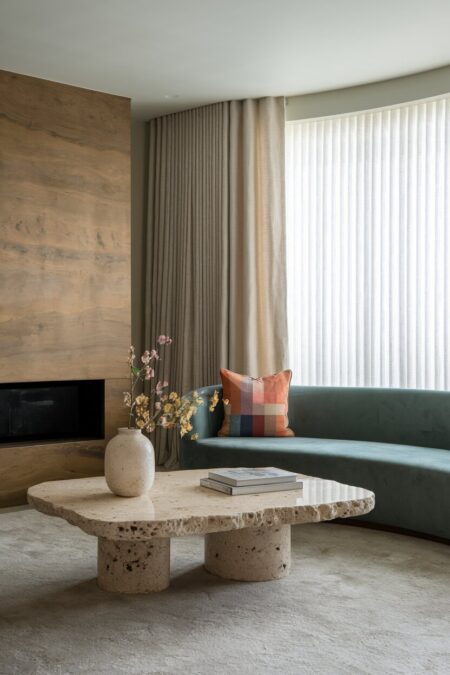
Function matters, but so does form. A coffee table with an interesting shape, organic curves, a stone base, an asymmetrical top, can act as a small piece of art on its own. Choose one material that stands apart from the rest of the room, a travertine table in a space full of wood tones, for instance. It becomes a natural focal point without needing much else on top of it.
- 07 of 13
Monochrome Color Story
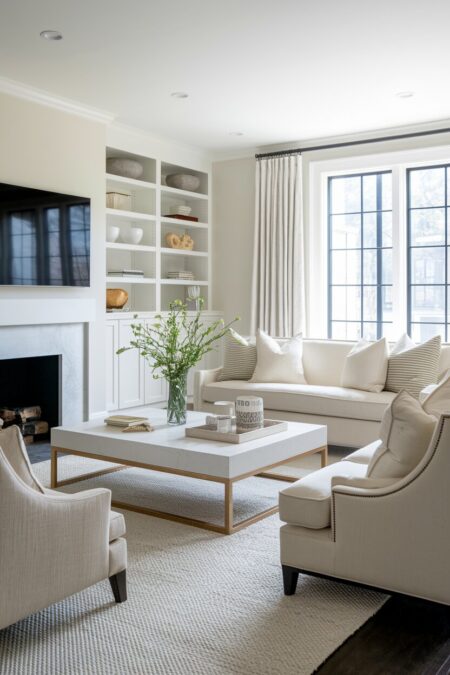
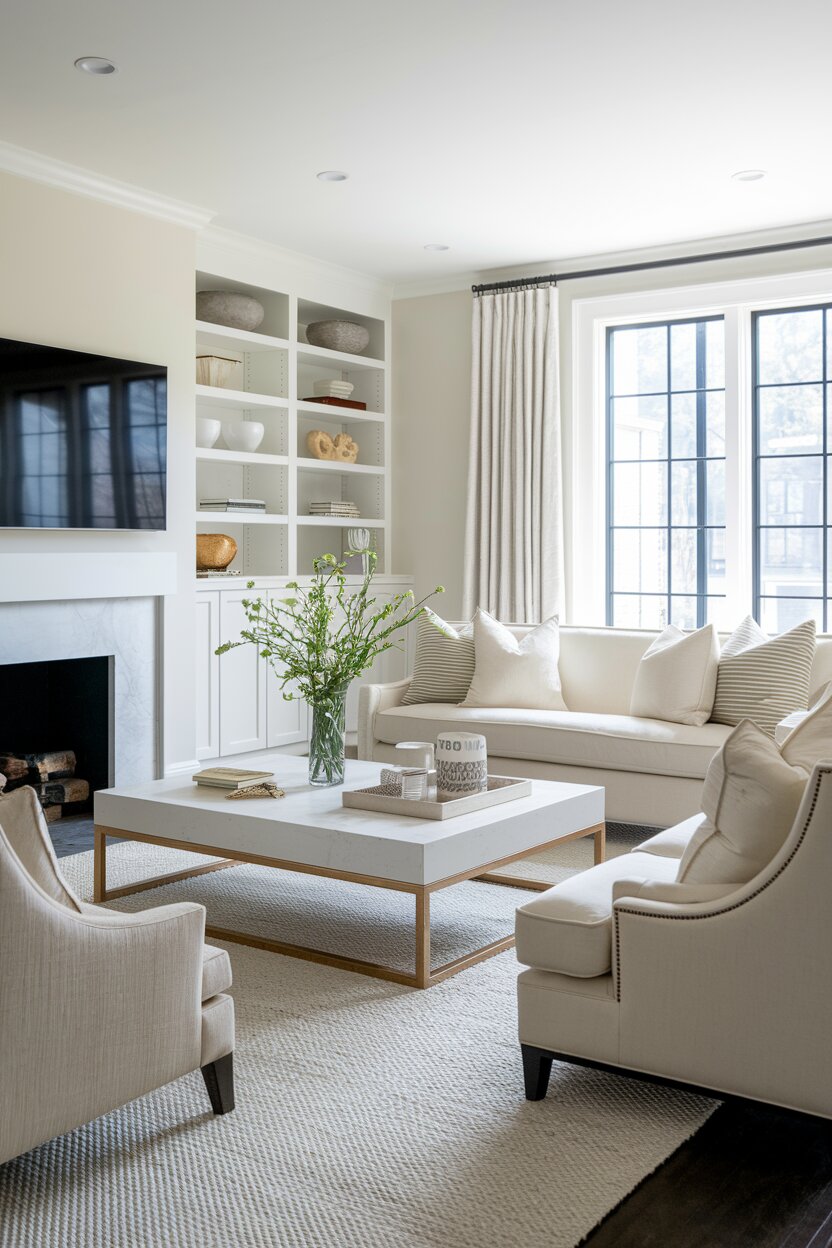
For a sleeker take on contemporary style, stick to one color family and vary only the shade and texture. An all-white living room, with cream, ivory, and bone accents layered in, feels calm and cohesive at once. Tonal rooms like this photograph beautifully too, which matters if you’re chasing that magazine-worthy look. Just mix in matte and glossy finishes so the eye has somewhere to land.
- 08 of 13
Open-Concept Layout
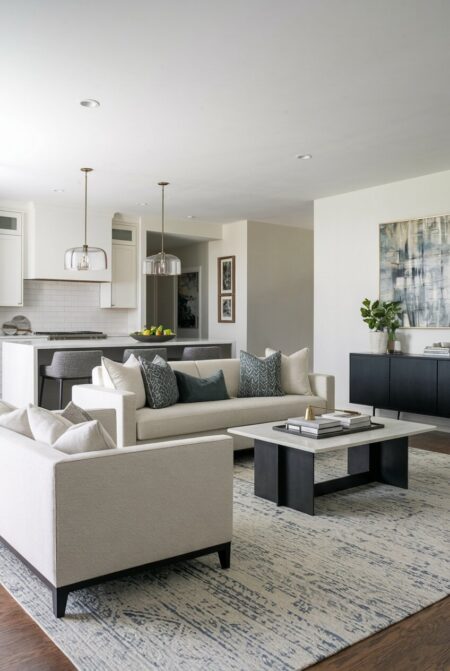
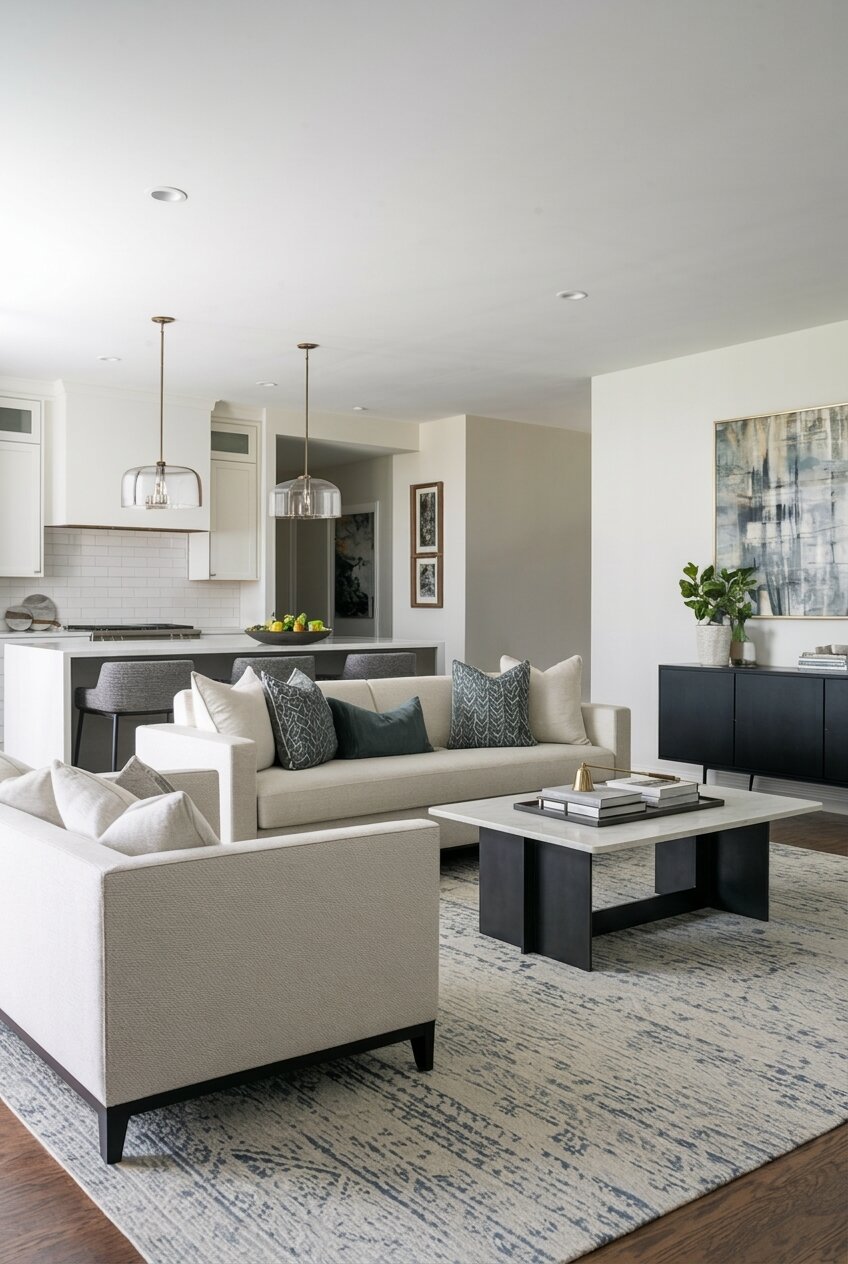
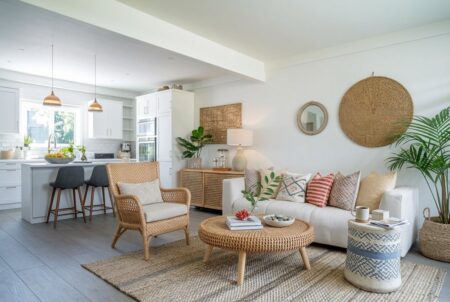
Contemporary living rooms rarely exist in isolation anymore. Many flow straight into a kitchen or dining area, so furniture needs to work from several angles at once. A sofa that floats in the middle of the room, backed by a console table, can define the space without walling it off. Rugs offer another easy way to anchor a zone inside a larger open floor plan.
- 09 of 13
Black Metal Accents
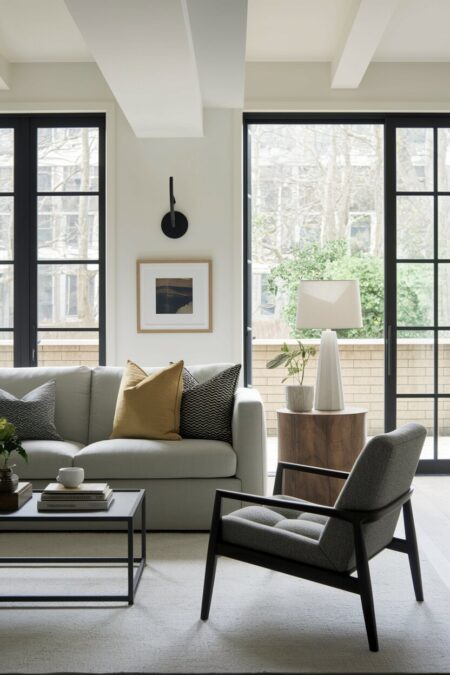
A little black goes a long way. Window frames, light fixtures, and furniture legs finished in matte black add contrast to a lighter room. It’s a small move, but it sharpens the whole space almost instantly. Too much black can feel heavy, though, so use it sparingly: hardware, a side table frame, or a picture rail. Let it punctuate the living room instead of dominating it.
- 10 of 13
Oversized Area Rug
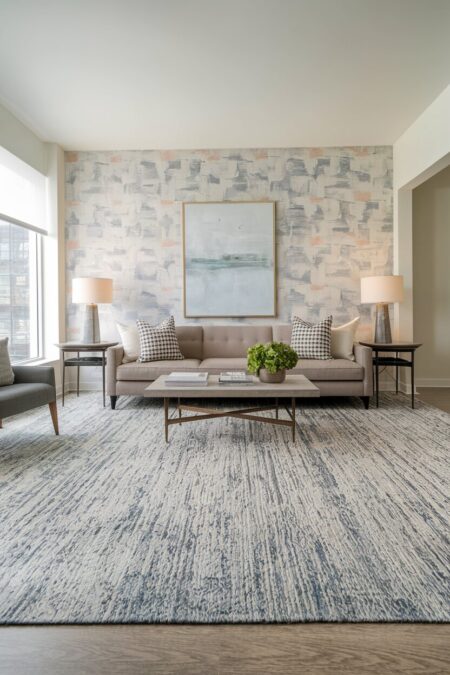
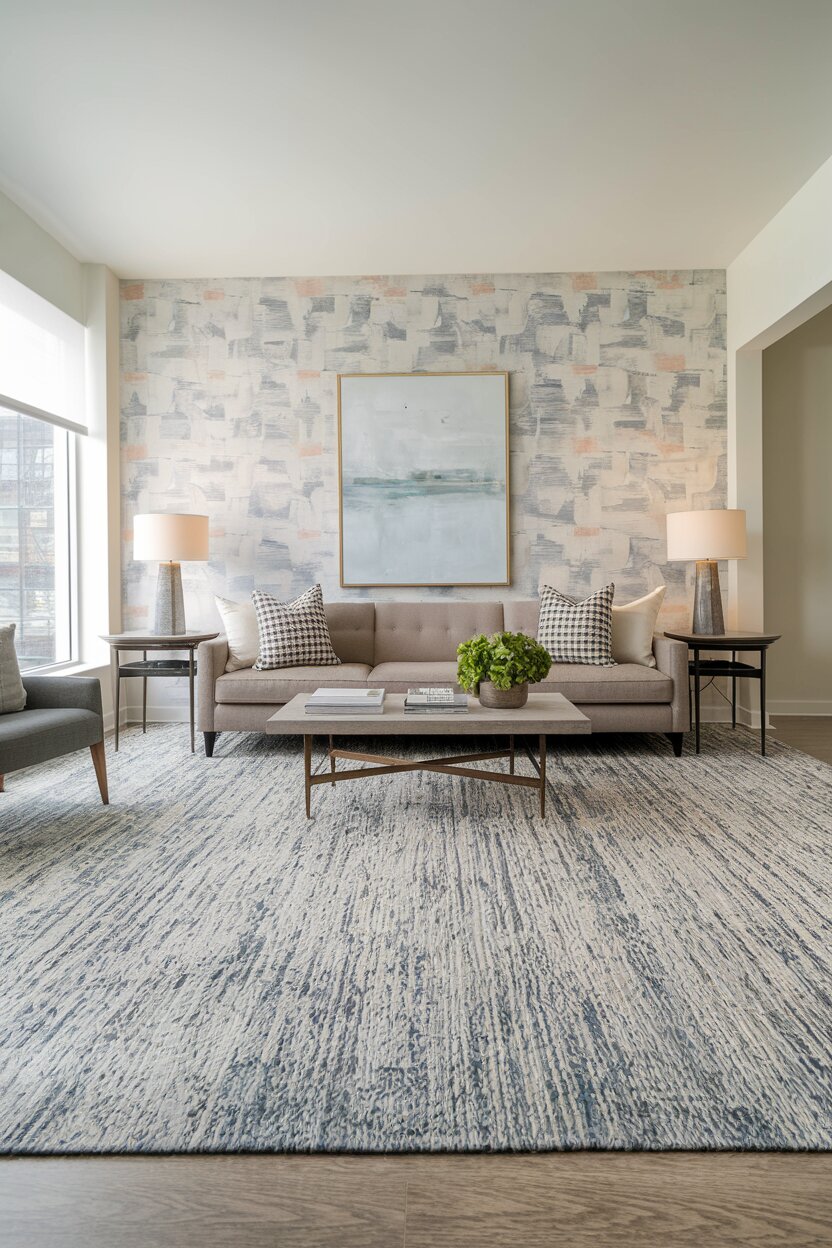
Furniture floating on a too-small rug is one of the fastest ways to make a room look unfinished. Size up. In a contemporary living room, an oversized rug grounds the seating area and makes the whole room read as intentional rather than accidental. Look for a low-pile design in wool or a wool blend. It holds up to daily use and won’t compete with the other textures already in the room.
- 11 of 13
Modern Gallery Wall
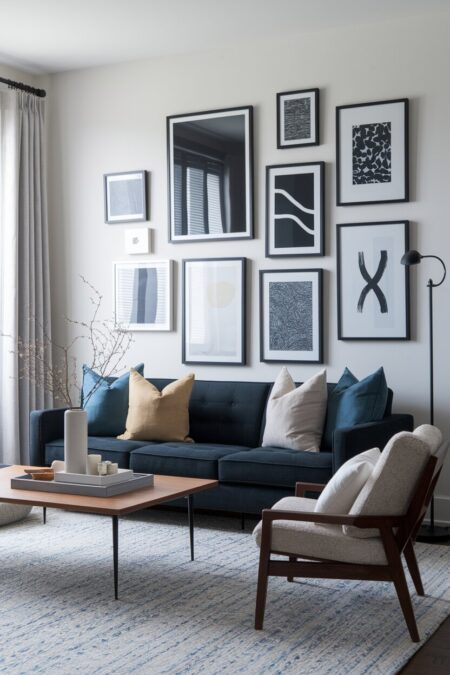
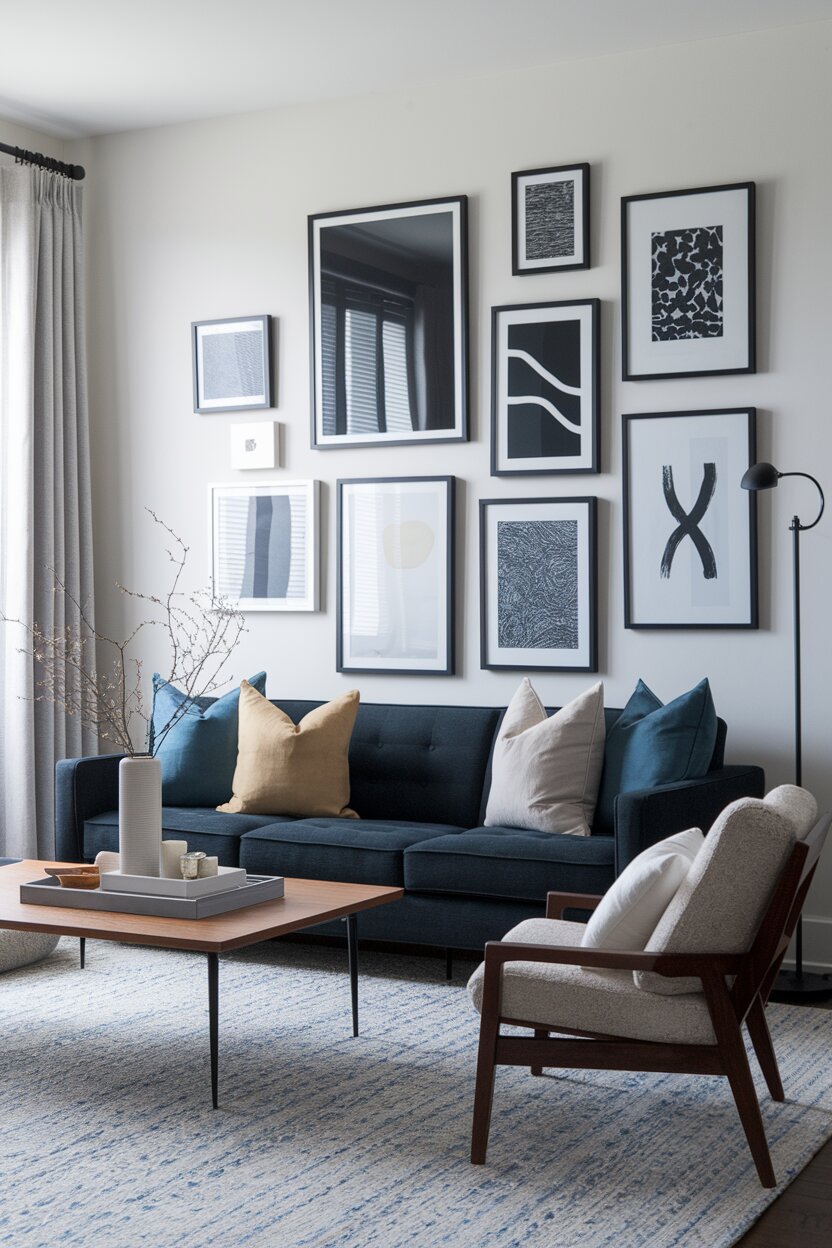
Traditional gallery walls tend to be busy: dozens of small frames in mismatched styles crowding one wall. The contemporary version is more restrained. A handful of larger pieces, hung with generous space between them, reads as curated instead of cluttered. Stick to two or three frame finishes so the wall feels intentional. Abstract prints, black-and-white photography, and textured fiber art all suit a contemporary living room particularly well.
- 12 of 13
Indoor Greenery
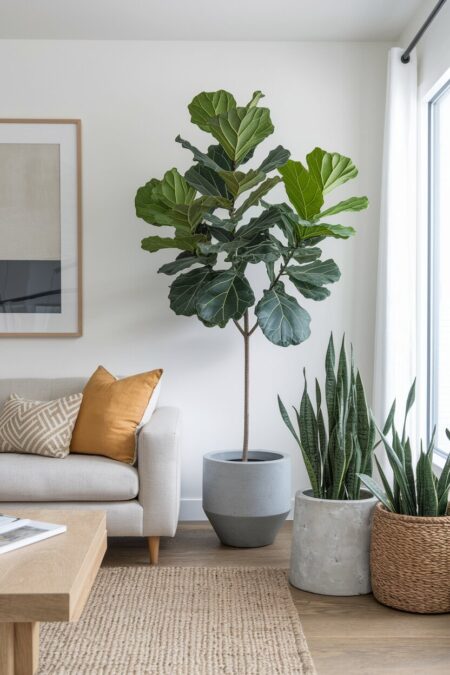
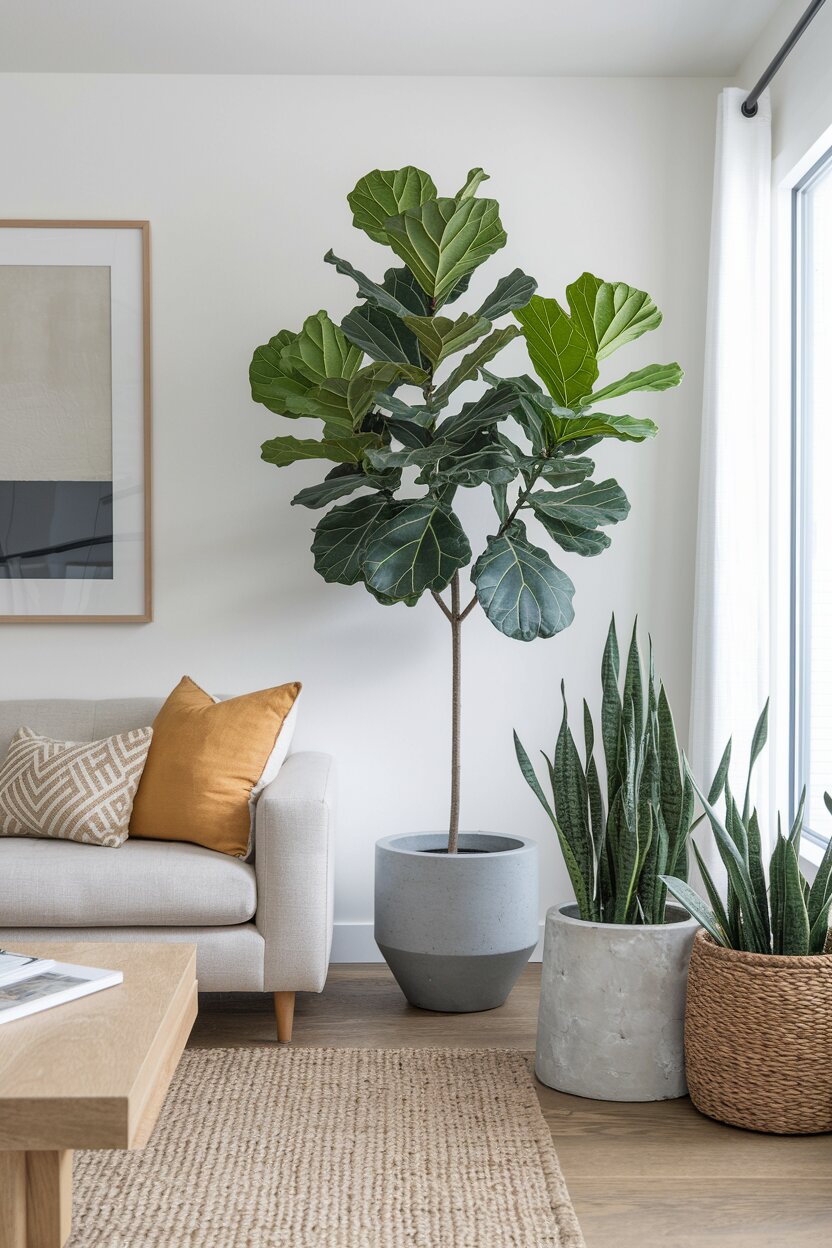
Plants soften every hard edge in a room. A single fiddle-leaf fig, or a cluster of smaller potted plants, brings life into an otherwise streamlined living room. Greenery does something color and furniture can’t: it changes slightly day to day, which keeps a minimalist space from feeling static. Choose planters in a material that echoes something else nearby; concrete, ceramic, or woven rattan all work.
- 13 of 13
Built-In Shelving
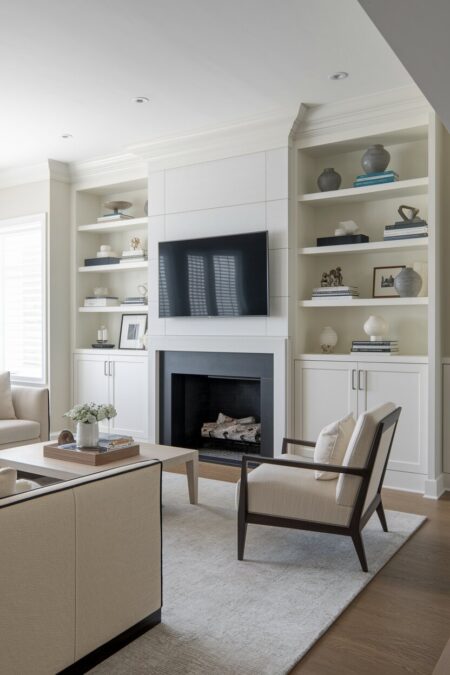
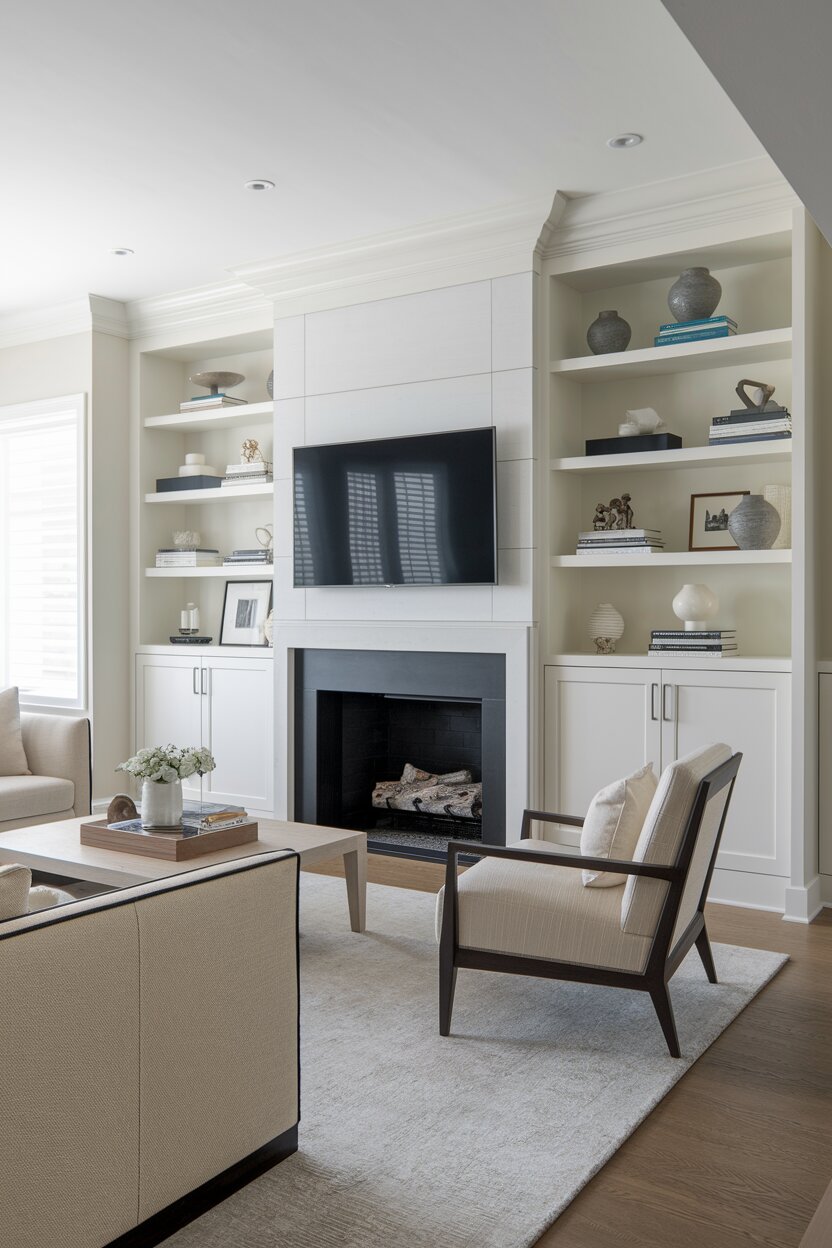
Built-ins add storage without cluttering the floor plan. Floor-to-ceiling shelving flanking a fireplace or television keeps books, art, and personal objects organized and on display. Leave a few shelves empty, or nearly empty. Negative space is part of what makes a contemporary living room feel calm instead of cramped. A handful of large-scale objects will almost always read better than many small ones scattered around.